
Missing a production deadline because your supplier “forgot” to mention a 90-day lead time? That’ll ruin a good Tuesday fast.
Sourcing OEM cooling vests takes real planning — for a construction crew working in July heat or an athletic team grinding through summer training, timing is everything. So how long does it take to produce OEM cooling vests? The honest answer has more moving parts than most suppliers will tell you upfront.
This guide covers every phase of the timeline — fabric sourcing, sample approvals, customization complexity, and factory capacity. You’ll know what to ask, what to watch for, and how to plan so nothing catches you off guard.
Content Framework: “How Long To Produce OEM Cooling Vests?”
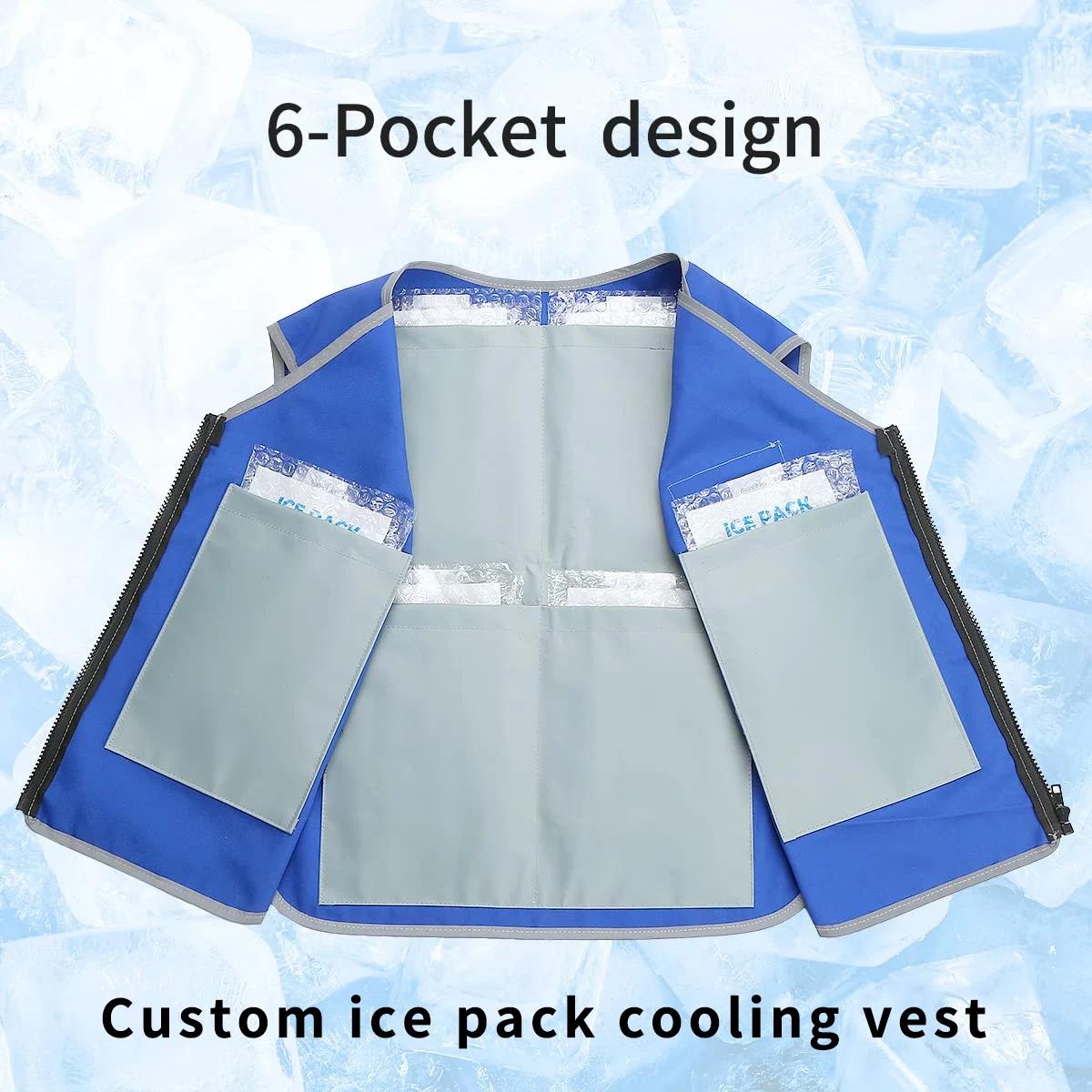
Two things decide your production timeline: order size and customization level.
|
Order Size |
Lead Time |
|---|---|
|
25–50 units |
3–4 weeks |
|
101–250 units |
5–7 weeks |
|
500+ units |
8–12 weeks |
Full custom designs take 6–10+ weeks. Stock base models ship in as little as 1–2 weeks. Pantone colors or multi-position embroidery? Add 1–2 weeks on top of that.
Search Intent Analysis
People searching “how long to produce OEM cooling vests” aren’t browsing for fun. They have a deadline to meet.
This keyword carries commercial investigation intent. Buyers already know they want OEM cooling vests. They’re comparing suppliers, checking timelines, and deciding who can deliver. That’s a bottom-of-funnel mindset.
What that means for this content:
-
Answer the timeline question with real numbers and clear details
-
Include data buyers can bring straight to a planning meeting
-
Cover the variables that affect lead time — one number is never enough
Google’s top-ranking pages for production timeline queries are detailed guides, not product pages. That’s your signal: depth wins here.
Content Framework
Production timelines for OEM cooling vests don’t exist in a vacuum. A handful of variables shape them, and those variables stack on top of each other. Miss one, and your whole schedule shifts.
Knowing how the pieces fit together separates a buyer who plans well from one scrambling two weeks before an event.
Here’s how to think about the moving parts:
The Variables That Drive Lead Time
Customization complexity is the biggest wildcard. A simple logo print on a stock vest moves fast. A full sublimation design with custom color-matched panels, multi-position embroidery, and a private label woven tag? That’s a different job. Every addition needs its own prep time before a single unit hits the production floor.
Fabric sourcing matters more than most buyers expect. Performance cooling fabrics — phase-change materials, moisture-wicking composites — aren’t always sitting in a warehouse ready to cut. Some need to be ordered in advance. That step alone can add 1–3 weeks before production even begins.
Factory capacity is the variable nobody talks about. Peak seasons — late spring through midsummer — fill production slots fast. A factory running at 80% capacity in April is a very different situation from one running at full tilt in June. The same order placed two months later might take two weeks longer.
So build your timeline around the worst-case version of each variable, not the best. Map out what happens if fabric sourcing takes the full three weeks. Plan for peak-season delays. Add buffer for complex customization reviews. That’s the honest way to plan — and the way that keeps you out of trouble when things don’t go perfectly.
Standard OEM Cooling Vest Lead Times: What to Expect
Here’s the truth about lead times — the number your supplier quotes and the number that counts are not the same.
The industry baseline for OEM cooling vest production is 8–12 weeks for orders of 500+ units. That’s the straight figure for full custom bulk orders through a standard manufacturer. Your order size, vest type, and order date all affect your real timeline.
Here’s the full picture, broken down by quantity:
|
Quantity |
Standard Lead Time |
|---|---|
|
25–50 units |
3–4 weeks |
|
51–100 units |
4–5 weeks |
|
101–250 units |
5–7 weeks |
|
251–500 units |
7–9 weeks |
|
500+ units |
8–12 weeks |
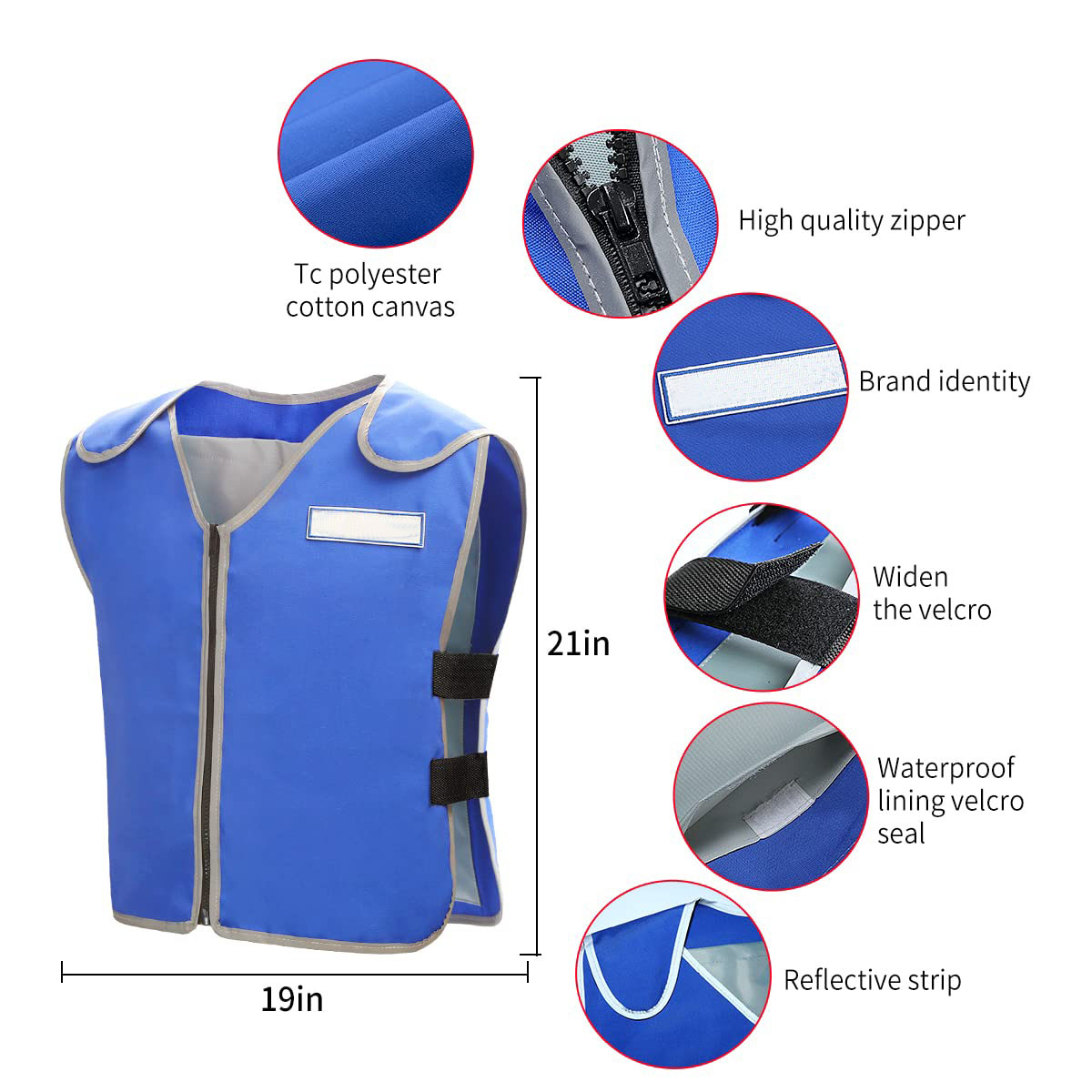
Vest type matters just as much as quantity. A stock base model ships in 1–2 weeks. A modified stock version runs 2–4 weeks. A full custom design — your colors, your panels, your branding built from scratch — takes 6–10+ weeks and costs a good deal more. Pick based on your deadline, not just your budget.
Supplier type is the hidden variable. Direct manufacturers with integrated production lines deliver custom logo vests in 15–30 days — about half the industry standard. Their on-time delivery rate averages 98.5%, versus the industry average of 84%. Standard procurement suppliers? Plan on 30+ days at minimum, and that’s with zero backlog.
Order timing changes everything. Place your order in February or March and you get priority queue access, standard 15-workday production, and room to breathe. Wait until June? A two-week production slot plus a three-week backlog puts you at five weeks minimum before a single vest ships.
The smart move: order early, know your vest type, and match your supplier to your real deadline.
How Cooling Vest Type Affects Your Production Timeline
Not all cooling vests are built the same. That difference alone can swing your production timeline by six weeks or more.
The technology inside the vest controls how long it takes to source materials, assemble the product, and clear testing. Pick the wrong type for your deadline, and no amount of supplier pressure will close that gap.
Here’s how the four main cooling vest types break down by total lead time:
|
Vest Type |
Materials Sourcing |
Assembly |
Testing |
Total Lead Time |
|---|---|---|---|---|
|
Evaporative |
2–4 weeks |
2 weeks |
2 weeks |
6–8 weeks |
|
Thermoelectric |
3–5 weeks |
3 weeks |
4 weeks |
10–12 weeks |
|
Gel-based |
4–6 weeks |
3 weeks |
4 weeks |
11–13 weeks |
|
PCM (Phase-Change) |
4–8 weeks |
4 weeks |
4 weeks |
12–16 weeks |
Why PCM Vests Take the Longest
PCM vests are the top performers in the cooling category. They keep workers comfortable for 8–12 hours at a stretch. But that performance comes with a production cost.
Phase-change materials need specialized sourcing. Certain applications also require certification — that adds 2–4 weeks on top of the standard procurement window. Bio-based PCM formulations — like those used in KANOX’s 2024 line — can add another 6 weeks of certification time on their own.
Testing adds even more time. PCM and gel-type vests need a 4-week cooling duration validation to confirm the 8–12 hour performance window holds. That testing phase makes up about 30% of total production time across manufacturing applications. Build that number into your planning calendar before you lock in a delivery date.
Evaporative Vests Move Fastest
Tight deadline? Evaporative vests are your best option. The construction is simple — fabric plus water. That means no special certifications, faster sourcing, and a total lead time of just 6–8 weeks.
Inuteq’s 2023 patent on improved heat-dissipation fabric has pushed that window even shorter. Their production cycle runs 20% faster than the previous generation. The tradeoff is cooling duration. Evaporative vests rely on ambient conditions and don’t hold cooling as long as PCM alternatives.
Thermoelectric: Mid-Range Timeline, Maximum Complexity
Thermoelectric vests land in the middle at 10–12 weeks total. Don’t let that mid-range number suggest they’re simple to produce.
Battery integration and electronic module setup add steps that fabric-only vests don’t require. Techniche’s 2023 modular system shows this clearly — custom configurations pushed delivery timelines out by 3 additional weeks compared to standard builds. Add mandatory battery cycle testing on top of that — an extra 2 weeks beyond standard durability checks — and thermoelectric orders demand earlier planning than almost any other vest type.
The bottom line: Match your vest type to your real deadline, not just your cooling requirements. A PCM vest that arrives two weeks late doesn’t cool anyone down.
The 6 Key Factors That Extend (or Shorten) Your OEM Lead Time
Six things. Just six. Every single one of them can push your delivery date back by weeks — or pull it forward right when you need it most.
Understand what drives your timeline. Then you’re in control of it.
1. Supplier Location: Local vs. International
Where your factory sits on the map matters more than most buyers realize. Domestic suppliers ship faster — full stop. International sourcing adds 2+ weeks per shipment, minimum, before a single vest reaches your hands. A tight deadline means a local or regional supplier isn’t just a convenience. It’s a smart business decision.
2. Demand Forecasting Accuracy
Factories using predictive analytics see an 85% improvement in forecasting accuracy. That means fewer surprises, better use of resources, and production schedules that hold. A supplier flying blind on demand puts your order at risk — delays, bottlenecks, and missed windows all follow.
3. Order Processing Speed
Manual order systems are slow. Digital work orders and automation cut days off internal lead times before production starts. Ask your supplier how they process orders. The answer tells you a lot about how the rest of the relationship will go.
4. Production Scheduling and Bottlenecks
Idle time and factory bottlenecks are quiet deadline killers. More capacity at random steps won’t fix the problem. Find the slowest constraint first, then solve that. Cross-department teams clear bottlenecks faster than single-department fixes. Plus, factories using SMED lean techniques cut changeover times between products. That frees up production slots that used to disappear between orders.
5. Supplier Consolidation
Fewer vendors mean tighter coordination, bulk shipping efficiency, and much better planning visibility. Fragmented supplier networks bring in variables you can’t control. A consolidated network — built on scorecards that prioritize lead-time transparency and dual regional sourcing — gives you both leverage and predictability. You get both in the same package.
6. Design for Manufacturability (DFM)
Early engineering collaboration is the factor nobody brings up until it’s too late. Build manufacturability into the design phase — not the revision phase. First-article timelines shrink. Post-award changes stop eating your calendar. Front-load the hard conversations. It’s the fastest way to shorten your OEM cooling vest production timeline without touching your order size at all.
Phase-by-Phase Production Timeline Breakdown
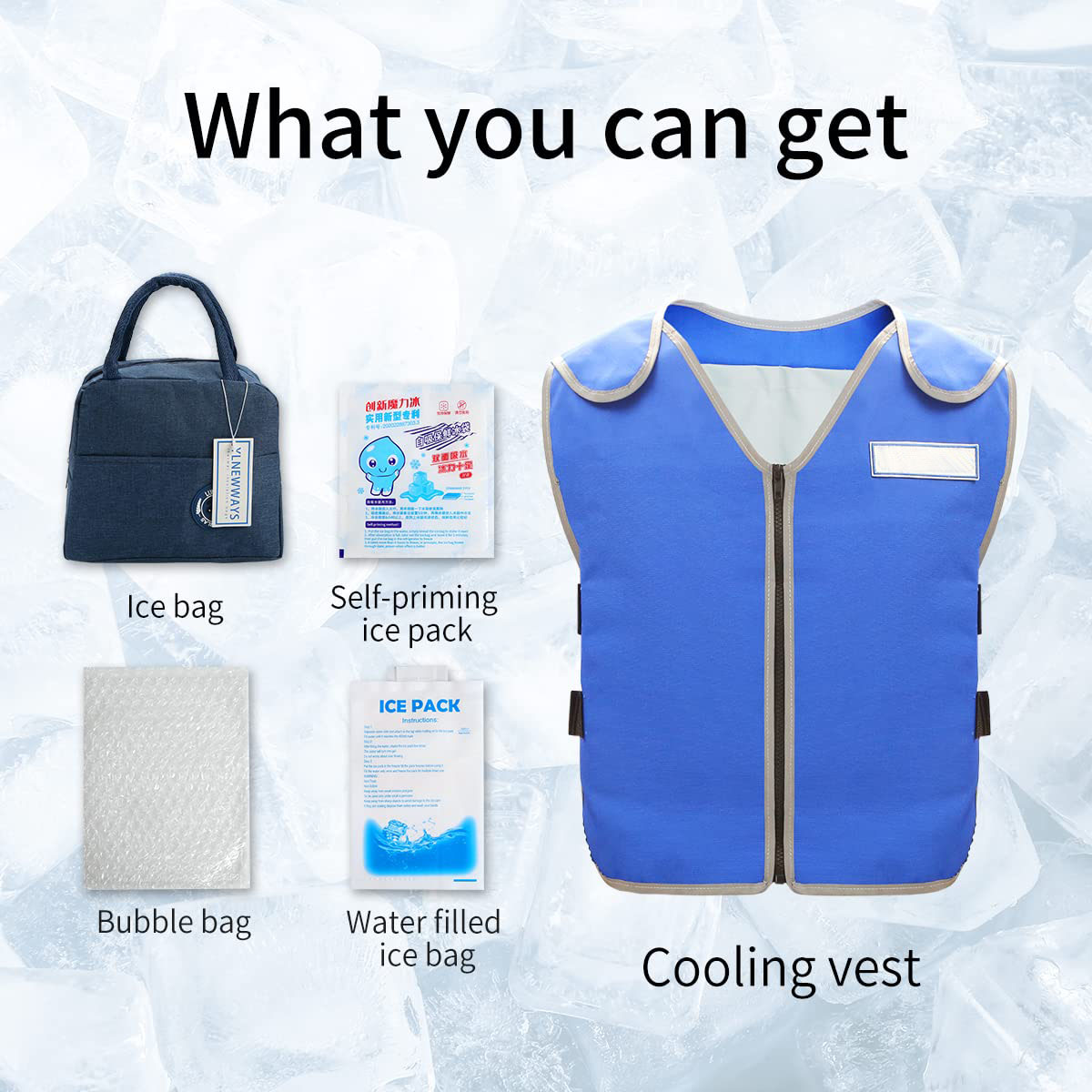
Every OEM cooling vest that lands on a loading dock started its life weeks — sometimes months — earlier. It moves through a series of distinct production stages. Miss one, rush one, or misunderstand one, and the whole schedule unravels. Here’s what happens between the moment you place your order and the moment your vests ship.
Stage 1: Design Confirmation & Tech Pack Review (Days 1–5)
Before a single bolt of fabric gets touched, your supplier locks down the tech pack. This is the blueprint — materials, dimensions, cooling technology specs, branding placement, color codes. Any back-and-forth here adds days. Come prepared with finalized artwork and clear specs. Do that, and this stage wraps in under a week.
Stage 2: Material Sourcing & Procurement (Weeks 1–3)
This is where timelines slip without warning. Performance fabrics — PCM inserts, moisture-wicking composites, evaporative panels — aren’t always sitting on a shelf. Specialty materials get ordered, and then you wait. Budget 1–3 weeks for this stage alone. Add more time if your design calls for certified or bio-based PCM materials.
Stage 3: Sample Production & Approval (Weeks 2–4)
The factory builds a physical sample and ships it for your review. This stage has one big variable: you. Fast feedback means fast approval. Revision requests — fit adjustments, logo repositioning, color corrections — reset the clock. Each round of changes adds 3–5 business days.
Stage 4: Bulk Production (Weeks 3–10)
Approved sample in hand, the factory moves to full production. Production time scales with order volume and vest complexity:
-
Small runs (25–100 units): 2–3 weeks on the floor
-
Mid-range (101–500 units): 3–5 weeks
-
Large orders (500+ units): 5–8 weeks
Peak season — late spring through midsummer — stretches every one of those windows.
Stage 5: Quality Control & Pre-Shipment Inspection (Days 3–7)
The factory inspects finished vests before they leave. Cooling performance, stitching integrity, branding accuracy — all checked against the approved sample. A clean QC pass moves straight to packing. Failed units go back for correction. That adds 3–5 days minimum.
Stage 6: Shipping & Customs Clearance (Weeks 1–3)
Domestic freight moves in 5–7 business days. Ocean freight from Asia runs 3–5 weeks port to port, plus customs clearance time. Air freight cuts that to 7–10 days, but at a premium.
The honest takeaway: Stack all six stages end to end. Even a smooth OEM cooling vest order needs 6–8 weeks minimum from confirmed purchase order to delivery. Complex builds with PCM technology or multi-position custom branding can push past 12–14 weeks. Plan backward from your drop-dead date — not forward from when you hope to order.
How to Cut Your OEM Production Timeline Without Sacrificing Quality
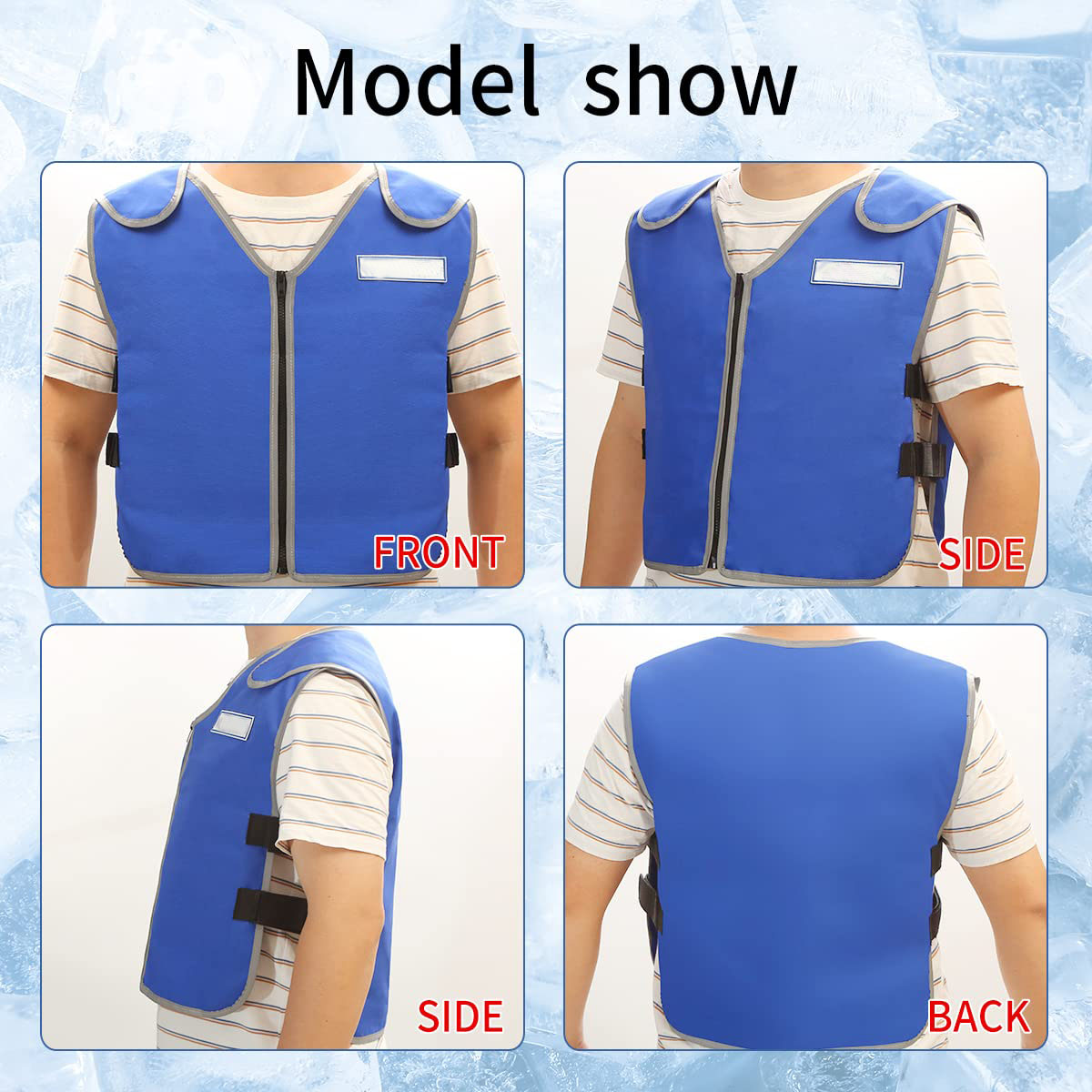
Speed and quality aren’t opposites — they just need the right system behind them.
Four moves shorten OEM cooling vest production timelines without cutting corners. Each one targets a different friction point in the process.
Lock In Materials Before You Finalize the Design
This one surprises people. You don’t have to wait for a finished design to start sourcing fabric. Suppliers with existing stock can cut material lead times by 4–8 weeks in apparel OEM. Order bulk fabric before the design is final. This removes 20–30% of timeline slippage caused by shortage delays. It feels backward. It works.
Use Digital Samples for Approval Rounds
Physical sample shipping eats time in silence. Every round trip adds 1–3 weeks — and most buyers go through two or three rounds. Digital confirmation cuts out the shipping step, saving 2–4 weeks per cycle. Factories with DFM-integrated digital review hit 80% first-pass approval rates. Fewer revisions. Faster sign-off. Production starts sooner.
Choose a Factory With an Integrated Supply Chain
Fragmented vendors create handoff problems. One partner handling fabrication, assembly, and testing under one roof removes scheduling conflicts between suppliers. It also cuts quality variation. No half-finished vests passing between three different facilities with specs getting lost in translation.
Split Large Orders Into Staged Shipments
For orders over 500 units, partial shipments reduce total lead time by 15–25%. A typical split: 30% of units ship at week four, the balance follows at week eight. You get product in hand earlier. Staged testing keeps quality consistent across batches. Yes, logistics coordination adds 5–10% overhead — but arriving two weeks early beats arriving on time, every time.
Planning Your Order: A Practical Timeline Checklist for Buyers
Here’s the truth about ordering OEM cooling vests — buyers who stay calm are the ones who started early.
Work backward from your delivery date. That’s the whole secret. Build your checklist around that one fixed point. Every decision gets easier from there.
4–6 months out: Lock in your specs. Nail down quantity, vest type, cooling technology, and customization level. Then confirm your supplier. Book them on the calendar before peak-season slots fill up.
2–3 months out: Submit your artwork. Finalize Pantone colors and confirm branding placement. Sample production starts here. Stay responsive. Slow approvals at this stage can push your timeline back by weeks.
6–8 weeks out: Approve your sample. Give clear, concise feedback in one round. That keeps bulk production on track.
3–4 weeks out: Bulk production finishes. The quality team runs inspection. Freight gets booked.
1–2 weeks out: Domestic freight arrives. For international orders, factor in customs clearance time before this window. It can add days you don’t want to lose.
The honest rule: Add two weeks of buffer to your supplier’s quoted timeline. Capacity shifts. Materials run late. Weather delays happen. Customs takes longer than expected. Buyers who cut the timeline too tight end up scrambling at the last minute — don’t be that buyer.
Red Flags: Supplier Lead Time Promises You Should Question
Some suppliers will tell you what you want to hear. That’s the moment to start paying closer attention.
Here are the warning signs that a quoted OEM cooling vest lead time isn’t worth the email it came in on:
“We can do anything you need” — without a single detail to back it up. Vague assurances are contract talk, not production talk. A supplier who can’t explain how they’ll meet your timeline hasn’t figured that out yet. You’ll find out the hard way — two weeks before your delivery date.
Samples that don’t match your approved specs. The prototype drifts from what you signed off on. Different stitching. Shifted logo placement. Wrong panel color. That’s not a one-time mistake. That’s a quality control gap showing itself upfront. Ask to see production reports from the last 30 days: quantities produced, scrap rates, corrective actions taken. Those numbers don’t lie.
Lead times that keep shifting without explanation. Some suppliers extend timelines with no clear reason, blame vague “capacity issues,” or can’t connect promised dates to actual shipping records. They absorb your risk and pass the cost back to you — through expedited freight and emergency sourcing.
No real capacity planning process. Ask them how they manage production scheduling or handle demand surges. No clear answer means your order gets shuffled the moment a bigger client calls.
The verification move that works: Pull their last 60 days of shipping records. Compare promised delivery dates against actual ship dates. A consistent gap tells you everything.
Conclusion
Here’s the honest truth about OEM cooling vest production timelines — there’s no magic number, but there is a smart way to plan.
A simple rebranding job takes about 4 weeks. A phase-change design with full customization can run 12+ weeks or more. Either way, three things decide your timeline:
-
How clearly you share your specs upfront
-
How ready your supplier is to deliver
-
How much buffer you’ve added before your hard deadline
The buyers who get their orders on time aren’t the lucky ones — they’re the prepared ones.
So pull out that timeline checklist. Ask your supplier the hard questions. Watch out for lead time promises that sound too good to be true. Knowing how long it takes to produce OEM cooling vests is half the battle. Acting on that knowledge before it’s too late? That’s how you win.
Ready to get started? Reach out to a trusted OEM partner today — your future self will thank you.