
Buying a cooling vest for high-heat work environments isn’t just a comfort decision — it’s a safety one. In the EU, that safety comes with a paper trail.
A genuine CE mark tells you the product has been tested and confirmed to meet strict European safety standards. But here’s the truth: not every CE mark you see is real. Counterfeit markings, incomplete documentation, and non-compliant products slip through the supply chain more often than most procurement teams know.
So who needs to verify CE marking?
-
HSE managers checking their company’s existing PPE
-
Buyers comparing suppliers before placing an order
-
Individuals who want to know the vest they bought will actually protect them
CE marking verification is a skill worth having — no matter which group you fall into.
This guide walks you through how to check, step by step. You’ll use official EU tools and documentation to confirm compliance with confidence.
How To Check If A Cooling Vest Is CE Certified
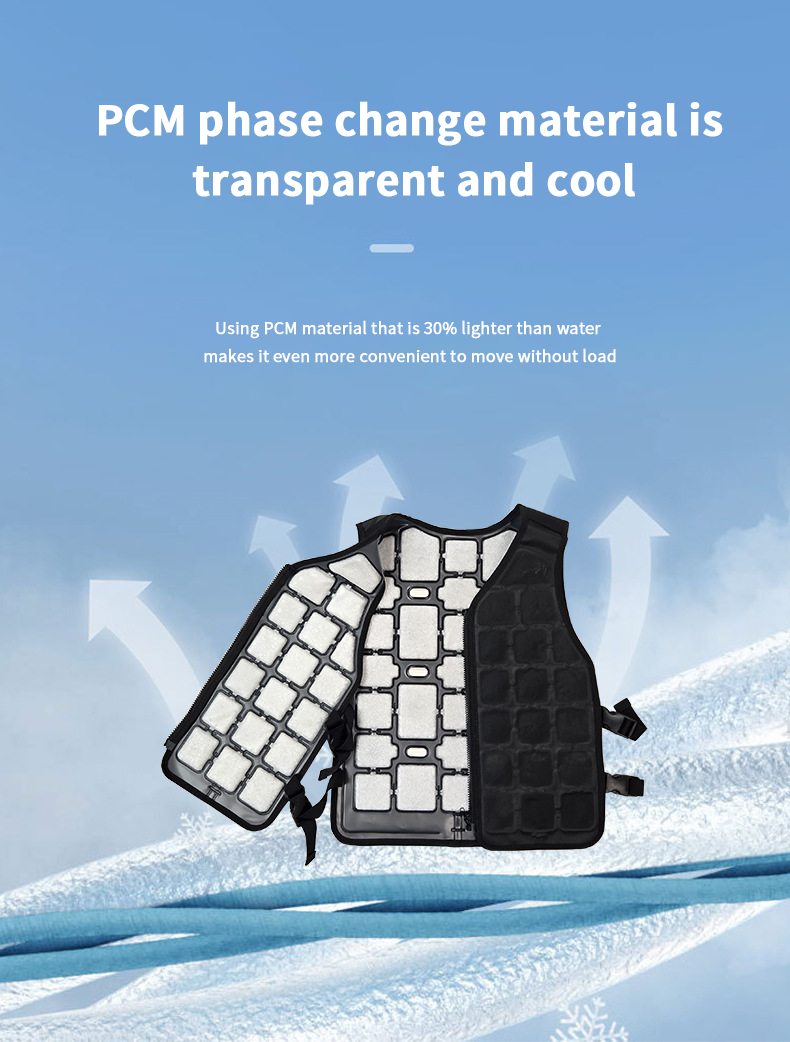
Five things. That’s all it takes to verify CE certification on a cooling vest — and none of them require a regulatory lawyer.
1. Find the CE mark on the garment itself. Check the tag, label, or printed marking on the vest. No mark visible anywhere? Stop there.
2. Read the product documentation. A real manufacturer states compliance with EU Regulation 2016/425 — the PPE directive that covers personal protective equipment sold in the European Economic Area. Look for that reference by name. No mention of it? That’s a problem.
3. Confirm Notified Body involvement. CE certification for cooling vests needs third-party verification from an accredited Notified Body — Intertek is one example. The manufacturer should name which body verified their product. Ask for it if it’s not listed.
4. Check the PPE category. Certified cooling vests sit under cold protection or general body protection categories within the regulation. Make sure the vest’s category matches its intended use. A mismatch is worth questioning.
5. Look for temperature specifications. Certified products define their thermal performance with hard numbers — cooling duration, temperature range, test conditions. Vague specs or missing data are a red flag. Take it seriously and ask the supplier for the full test report before buying.
What CE Certification Actually Means for Cooling Vests
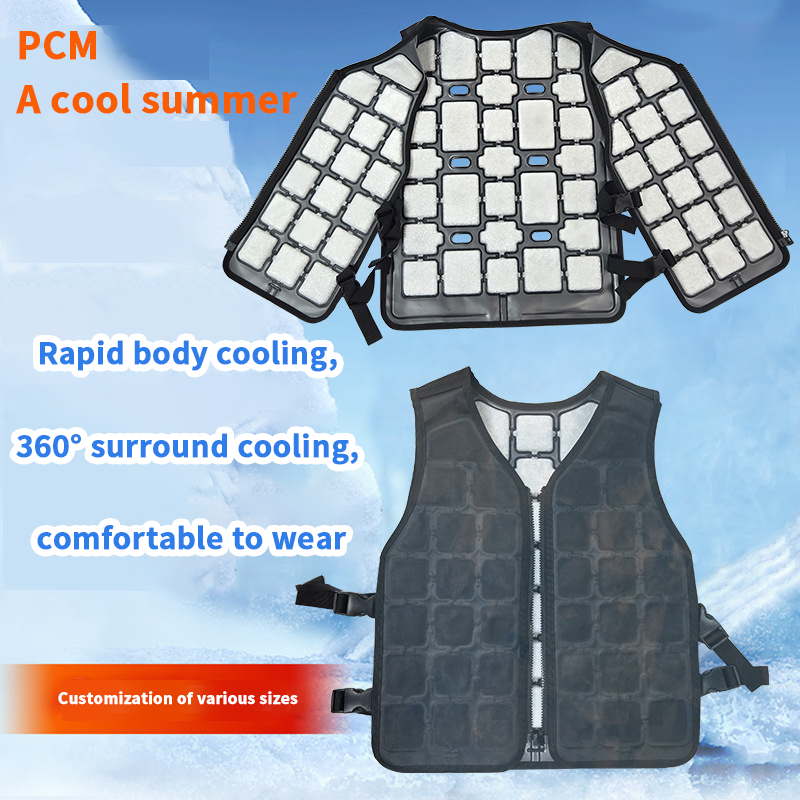
CE certification isn’t a sticker. It’s a legal declaration that a product has passed a specific set of tests — and for cooling vests sold in the EU, those tests are tougher than most buyers expect.
EU PPE Regulation 2016/425 covers cooling vests worn in professional heat-stress environments. These vests fall under Category II or Category III PPE. Category III is the highest risk level. A third-party Notified Body must be involved — no exceptions, no self-declarations allowed. The manufacturer submits a full technical file: materials, construction drawings, and performance data. The Notified Body reviews everything, runs independent tests, and either issues certification or rejects it.
What kind of tests? Abrasion resistance, burst strength, and dimensional stability. That last one carries a hard number: no more than 5% shrinkage after five regulated wash cycles. Vague promises don’t pass. Numbers do.
Here’s why this matters beyond paperwork:
-
No CE-certified PPE in an EU/EEA workplace = potential fines up to €100,000 per violation, depending on member state
-
Whoever placed the non-compliant product on the market takes on full liability for worker injuries
-
Authorities can pull products from shelves and ban them from sale
Standard CE marking on low-risk consumer goods works on a self-declaration model — manufacturers confirm compliance themselves. PPE CE is not that. The Notified Body requirement exists because the stakes are far higher. Someone’s safety depends on it, not just a product label.
Cooling vests used in environments above 110°F, or worn under protective suits in industrial settings, fall under EU law as serious protective equipment. The certification process matches that level of seriousness — step by step, test by test, number by number.
Step 1: Inspect the CE Mark on the Vest and Label
The CE mark on a cooling vest isn’t decorative. It carries legal weight, and the physical mark tells you a lot before you open a single document.
Start with the mark’s size. EU law sets a hard minimum: 5mm tall. A mark smaller than that fails compliance on sight. Letter proportions matter too. Each character follows a strict 5:1 height-to-width ratio. A “C” that’s 5mm tall should be about 1mm wide. Letters that look squat, wide, or unevenly spaced — that’s your first warning sign.
Then look for the Notified Body number. For Category II and Category III cooling vests — which covers most professional-use products — a 4-digit NB code must appear right after the CE mark, formatted like this: CE 0123. No number? The vest has no third-party certification. Full stop.
Now check the label for these specifics:
-
Manufacturer name and address
-
Product model or reference number
-
Directive reference: 2016/425/EU
-
Applicable standards: EN ISO 15743 or EN ISO 20471
-
Size, washing limits, and usage instructions
Where should the mark appear? On the vest itself — not just the box. A mark that sits on the packaging alone is invalid. The only exception: the manufacturer proves that placing it on the garment would damage safety or structural integrity. Even then, the mark must appear on the nearest packaging, and technical file documentation must support that decision.
Run a quick durability check too. Certified marks hold up through product life. For hi-vis cooling vests under EN ISO 20471, that means 50 wash cycles. A mark that smears when you scratch it fails the permanence standard.
|
What You See |
What It Means |
|---|---|
|
CE mark under 5mm |
Non-compliant — fails minimum size requirement |
|
No 4-digit NB code (Cat II/III) |
No third-party certification — do not accept |
|
Mark on packaging only |
Invalid — request technical file proof |
|
Faded or blurred lettering |
Fails permanence standard — treat as unverified |
|
Missing directive/standard references |
Incomplete — cross-check with Declaration of Conformity |
Step 2: Spot the Difference Between a Real CE Mark and a Fake “China Export” Mark
Two letters. That’s all it takes to fool a buyer who doesn’t know what to look for.
The “China Export” mark looks almost identical to the European CE mark — same two letters, same general shape. But it carries zero legal weight in the EU. No testing. No standards compliance. No Notified Body. Just a mark designed to look official enough to pass a quick glance.
Here’s the one detail that separates them: spacing.
On a genuine CE mark, the letter E sits flush against the circular profile of the C. The gap between them matches the stroke width of the letters — a fixed, proportional rule set by EU guidelines. On a fake China Export mark, the letters are pushed together. The spacing collapses. It looks like a printing error, but it’s done on purpose.
Four fast checks before you trust any CE mark:
-
Measure the C-E gap. It should match the stroke width of the letters. Too tight? Flag it as unverified.
-
Scan for a 4-digit Notified Body number. A real CE mark on a Category II or III cooling vest reads CE 0123 (or similar). No number means no third-party certification — full stop.
-
Check the label for directive references. The applicable EU directive — 2016/425/EU for PPE — must appear on the label. A CE mark with no directive citation is incomplete. Don’t accept it.
-
Request the Declaration of Conformity. A real manufacturer hands it over without delay. It includes test reports, the technical file, and a list of applicable standards. No DoC means no verification trail. There’s nothing to check.
|
What to Check |
Real CE Mark |
Fake “China Export” Mark |
|---|---|---|
|
Letter spacing |
Proportional — E aligns with C’s curve |
Cramped — letters close to touching |
|
Notified Body number |
Present (e.g., CE 0197) |
Absent |
|
Directive reference on label |
Listed (e.g., 2016/425/EU) |
Missing |
|
Declaration of Conformity |
Available on request |
Does not exist |
|
EU database verifiable |
Yes — traceable |
No — unrecognized |
The China Export mark has no regulatory body behind it. Any manufacturer can print it on any product. No tests required. No approval needed. No accountability attached. In an EU workplace, a cooling vest with that mark gets treated the same as a vest with no mark at all — non-compliant, and a real liability risk.
Spacing looks off? Ask for the DoC. That document will either confirm everything — or confirm nothing at all.
Step 3: Request and Review the Declaration of Conformity (DoC)
The CE mark gets your attention. The Declaration of Conformity earns your trust — or kills it.
Every manufacturer selling a CE-certified cooling vest in the EU must provide a DoC on request. No exceptions. No delays. A supplier who hesitates? That hesitation is your answer.
Be specific with your request. Ask for the original signed PDF — not a screenshot, not an excerpt, not a summary. Include the exact product model number and batch number. State that you need the document under EU PPE Regulation 2016/425/EU. Set a firm deadline: 14 days is standard.
What a Valid DoC Must Contain
A real DoC isn’t a one-pager with a logo slapped on it. It has seven required elements:
-
Manufacturer name and address (plus EU Authorized Representative, if the manufacturer sits outside the EU)
-
Product description: model number, specific cooling vest specs — not vague, generic language
-
Directive reference: EU PPE Regulation 2016/425/EU, stated by name
-
Applicable standards: such as EN ISO 15743 or EN ISO 20471
-
Notified Body details: name, ID number, and CE certificate number — mandatory for Category II and III vests
-
Authorized signatory: a real name, job title, and actual signature
-
Issue date: anything signed more than 3 years ago with no reissue deserves a hard question
Red Flags That Invalidate a DoC
Scan for these problems before you accept any document:
|
Red Flag |
What It Signals |
|---|---|
|
Vague product description, no model number |
Document does not cover your specific product |
|
Missing signature or signatory title |
Not a valid declaration — no legal standing |
|
Standards cited don’t match PPE category |
Manufacturer used the wrong compliance framework |
|
No Notified Body info on a Category III vest |
Third-party certification never happened |
|
Signing date over 3 years old, no reissue |
Document is outdated and no longer current |
A DoC built on generic wording — phrases like “this product complies with applicable EU directives” with no specific directive, no standards, no model number — is worthless. That kind of language protects no one. It proves nothing.
A clean DoC closes the loop. It ties the mark on the vest directly to the tests that justified it.
Step 4: Verify the Notified Body Using the EU NANDO Database
The 4-digit number next to the CE mark is only as trustworthy as the database behind it. NANDO is the European Commission’s official registry of Notified Bodies. It’s where you confirm whether that number is real.
Go to ec.europa.eu/growth/tools-databases/nando. It’s free, public, and updated by the EU’s own designating authorities. No account needed.
How to Run the Search
Work through these steps in order:
-
Open NANDO and filter by country — start with the manufacturer’s country of origin if you know it, or leave the field open
-
Select the legislation: choose Regulation (EU) 2016/425 — that’s the PPE directive that covers cooling vests
-
Enter the 4-digit NB number from the vest’s CE mark (e.g., CE 0321)
-
Check the designation scope — this is where most people stop too soon
That last step is the one that matters most.
What the Results Tell You
Finding the number is not enough. You need to confirm the NB holds authorization for PPE under 2016/425 — and that its scope covers Category II or Category III conformity modules.
An NB designated for medical devices or construction products does not count here. The scope must match your product category.
|
What to Confirm |
Why It Matters |
|---|---|
|
NB number appears in NANDO |
The body has official EU recognition |
|
Scope includes Regulation 2016/425 |
Confirms PPE authority — not just any category |
|
Category II/III modules listed |
Third-party certification was required and carried out |
|
NB status shows active |
The designation was valid at the time of certification |
If the Number Doesn’t Check Out
Three outcomes are possible — and none of them are neutral:
-
Number not found: The NB has no record in the EU system. Contact the manufacturer and ask for documentation. No explanation? Report the product to your national market surveillance authority.
-
Number found, wrong scope: The NB exists but carries no PPE authorization. That certification is invalid for this product. Treat the vest as non-certified.
-
Number found, NB inactive: Compare the NB’s active period against the vest’s certificate date. A certificate issued during the NB’s active period stays valid. A lapsed NB, though, cannot issue new certifications.
NANDO does not attach expiry dates to certificates. So the verification work falls on you — match the certificate issue date to the NB’s designation history. Still unsure? Request a current certificate from the supplier.
Step 5: Request Product Test Reports and Technical Documentation
Documentation is where suppliers either prove themselves or reveal themselves.
A CE mark and a clean DoC get you far. But test reports show the real gap between what a manufacturer claims and what a product delivers. For cooling vests, four test categories matter:
-
Thermal protection (EN ISO 13506): The vest must hit an RTPP value above 10. No material melt or drip after 24 seconds of flame exposure.
-
Seam strength (EN ISO 13935-2): Minimum 200 N/50mm tensile strength, holding through 500+ fatigue cycles without breaking.
-
Material safety (EN ISO 10993-5 / EN 71-3): No cytotoxicity, heavy metal migration below 100 mg/kg, pH between 4.0–7.5, zero formaldehyde above 75 ppm.
-
Durability (EN ISO 6330): 90%+ performance retention after 50 wash cycles, tensile strength loss under 20%.
Be specific with your report requests. Ask for the original signed PDF scans — not summaries, not screenshots. Name each EN standard by number. Give suppliers 7 days to respond. No third-party laboratory stamp? No accredited lab reference (UKAS, CNAS, or any ILAC/IAF-recognized body)? Report dates that fall after the product’s first sale record? Reject it.
What a Legitimate Test Report Looks Like
Three details separate real reports from fabricated ones:
-
Unique report number — traceable to the issuing laboratory’s registration
-
Product description that matches the physical vest — model number, material composition (e.g., PCM content at 150g/m²), and dimensions must all line up
-
Test date at least 30 days before the product’s market launch
Industry data puts the average non-compliance rate at 12% for thermal protection tests and 10% for durability testing. That means one in ten vests you evaluate could fail on paper. Check the details — the numbers tell you fast.
Manufacturers must keep full technical documentation for 10 years by law. You won’t get the entire file, and you don’t need it. Request a summary package: the DoC plus a test report digest under 50 pages. That’s your procurement compliance record. Full file access, if needed, goes through NDA.
CE Certification Verification Checklist for Cooling Vests
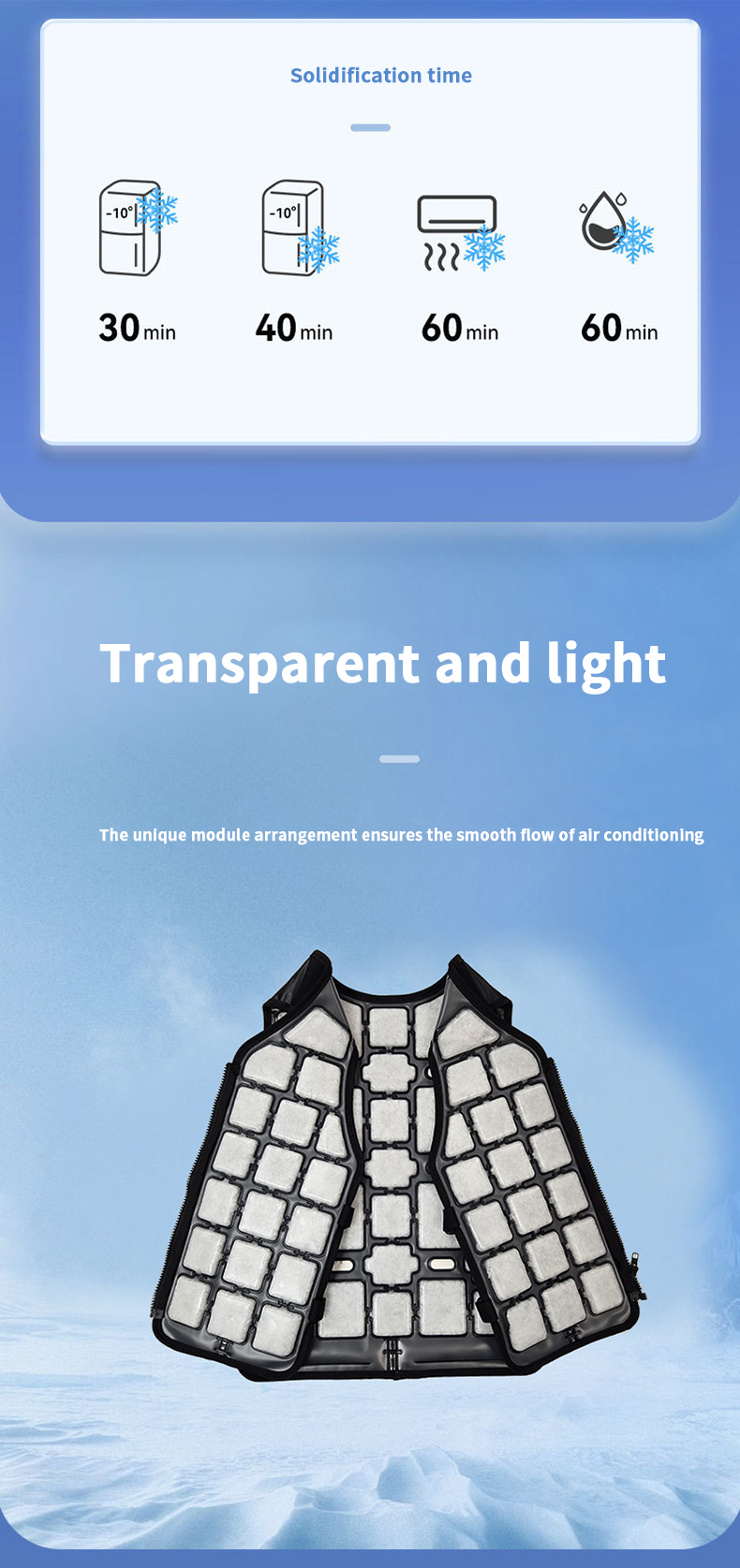
Five steps. Dozens of details. One printable summary to keep them straight.
Use this checklist before you sign any purchase order — or before you hand a vest to someone about to work in 100°F heat.
CE Mark & Label
– [ ] CE mark is at least 5mm tall with correct proportional spacing
– [ ] 4-digit Notified Body number appears right after the CE mark
– [ ] Directive reference 2016/425/EU is printed on the label
– [ ] Mark appears on the garment itself, not on the packaging alone
Declaration of Conformity
– [ ] Original signed PDF received (not a screenshot or summary)
– [ ] Specific model number matches the vest in hand
– [ ] Notified Body name, ID, and certificate number are listed
– [ ] Issue date falls within the last 3 years
Notified Body (NANDO)
– [ ] 4-digit NB number confirmed in the NANDO database
– [ ] Scope covers Regulation (EU) 2016/425 PPE
– [ ] NB designation was active on the certificate issue date
Standard Alignment by Vest Type
|
Vest Type |
Required Standard |
|---|---|
|
Cold / severe cold protection |
EN 342 |
|
Cool environment protection |
EN 14058 |
|
Flame-resistant |
NFPA 2112 / ASTM F1506 |
|
High-visibility |
ANSI/ISEA 107 |
-
Correct standard applied for the intended use environment
-
An ILAC/IAF-recognized accredited laboratory ran the tests
Test Reports
– [ ] Thermal protection result: RTPP value above 10 (EN ISO 13506)
– [ ] Seam strength: minimum 200 N/50mm (EN ISO 13935-2)
– [ ] Durability: 90%+ performance retention after 50 wash cycles
– [ ] Test date precedes the product’s market launch by at least 30 days
Overall Status: [ ] Pass [ ] Fail [ ] Further Review Required
What To Do If a Cooling Vest Fails CE Verification

A failed verification isn’t a dead end — it’s a decision point. Your next move decides whether your workplace stays protected or gets left exposed.
For procurement managers and HSE officers:
-
Stop use now. EU Product Liability Directive 85/374/EEC is clear: deploying non-compliant PPE puts liability on your organization. Don’t wait for confirmation.
-
Give the supplier 48 hours. Ask for the full signed DoC plus a NANDO screenshot showing the Notified Body ID. Any legitimate supplier can pull that together fast.
-
Escalate if they can’t deliver. Take it to your national market surveillance authority and report through the EU’s Safety Gate (previously known as RAPEX). In 2023 alone, over 1,200 non-compliant PPE cases were flagged through that system. Your report carries real weight.
For individual buyers:
-
Use your consumer rights. EU Consumer Rights Directive 2011/83/EU covers you here. A product that doesn’t match its stated conformity qualifies for return within 14 days.
-
File a complaint. Reach out to your national consumer body — UK Trading Standards, Germany’s Verbraucherzentrale — or go through the EU’s Online Dispute Resolution platform for cross-border purchases.
One failed check doesn’t always point to fraud. Sometimes it’s just an admin gap — an expired DoC, a supplier who missed a reissue. Ask the question straight. The response tells you everything.
FAQ: CE Certification for Cooling Vests
These questions come up all the time — from procurement teams, importers, and safety officers who want straight answers without the regulatory jargon.
Can a cooling vest be used in the EU without CE certification?
No. Full stop. Category II PPE cooling vests cannot go on the EU market or into a workplace without CE marking. That’s the PPE Regulation (EU) 2016/425 — and it doesn’t bend. Products must meet EN 14058 (cool environments above -5°C) or EN 342 (cold environments below -5°C). A Notified Body must verify this through a type-examination under Module B. No certification means no legal use. Period.
Does an ISO certificate count as CE certification?
No — and this trips up a lot of buyers. ISO certificates are add-ons. They don’t replace CE marking. CE marking needs a specific conformity assessment. That includes Notified Body approval and full compliance with Essential Health and Safety Requirements. ISO alongside CE? Great. ISO instead of CE? Not valid for PPE. Full stop.
Does CE marking expire? What happens after a design change?
CE marking has no fixed expiry date — as long as the technical documentation stays current. Change the design in any meaningful way, though, and the rules reset. Major modifications need a fresh Notified Body assessment and a new CE marking. “Meaningful change” isn’t always clear-cut. If you’re unsure, check with your Notified Body before production moves forward.
Who owns the CE certification on an OEM product?
Whoever puts the CE mark on the product takes legal ownership of compliance. The OEM must hand over the full technical file. An importer or distributor rebranding the product can’t carry over the original CE certification. They need their own conformity assessment to place it on the EU market under a different name.
If I’m importing cooling vests from China into the EU, am I responsible for CE compliance?
Yes — completely. As an EU importer, you carry full responsibility. That means verifying CE compliance, confirming technical documentation exists, and making sure the CE mark is applied correctly before the product hits the market. Non-compliant imports face fines and seizure at customs. The manufacturer’s CE paperwork doesn’t shift liability to them. That stays with you.
Conclusion
CE certification isn’t bureaucratic box-ticking. It’s the line between a vest that actually protects your workers and one that just looks like it does.
You now have the full toolkit. Inspect the physical mark. Cross-reference the Declaration of Conformity. Run the notified body through NANDO. Demand test documentation that holds up under scrutiny. A supplier who hesitates at any of these steps? That hesitation is your answer.
Here’s what nobody says out loud — most counterfeit CE-marked products get bought by people who didn’t know what to check. Now you do.
So before your next procurement decision, run every cooling vest candidate through this verification process. Bookmark the NANDO database. Keep the checklist close.
Want to skip the guesswork? Browse our CE-certified cooling vests. Every product ships with full documentation — ready for your compliance audit before you even ask.
Your workers’ safety shouldn’t depend on someone’s word. Verify everything.