
Ordering cooling vest samples should be straightforward. For most B2B buyers, though, the process feels unclear and hard to follow.
You know you need to test before you commit. Bulk orders carry real financial risk. What’s less clear is how to move from “I’m interested” to “sample approved and ready to scale.”
Sourcing an evaporative cooling vest for outdoor crews? Evaluating a phase change solution for industrial workers? Either way, the sample stage is where smart procurement decisions get made — or fall apart.
This guide covers every step of the cooling vest supplier sample process:
-
Defining your spec requirements
-
Understanding MOQ policies
-
Evaluating what arrives at your door
-
Preparing your first bulk order with confidence
What the Sample Process Actually Looks Like
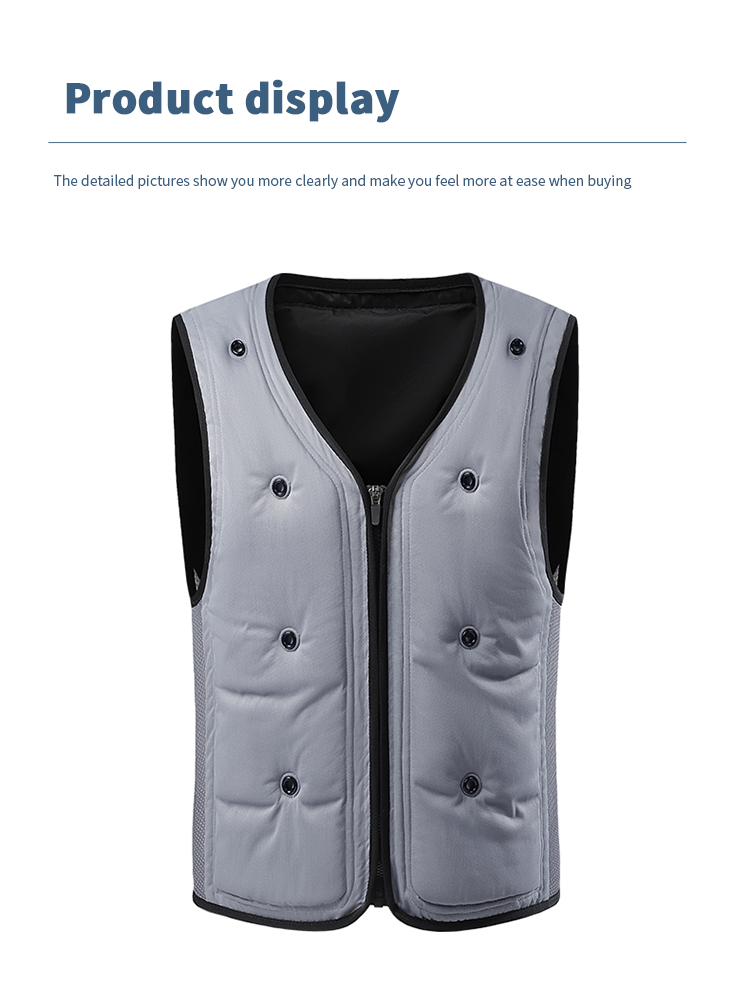
Most suppliers follow a similar structure. Once you know it, the path from inquiry to doorstep delivery is straightforward.
Here’s the standard flow most cooling vest manufacturers use:
-
Submit your sample request with product specs, quantity needed, and intended use case
-
Pay a nominal sample fee — a small processing and shipping charge. Most manufacturers credit this against your first bulk order
-
Sample ships after payment clears — processing runs 1–2 business days
-
Receive, test, and evaluate — cooling duration, fit, material comfort, and build quality
A few things worth knowing before you request:
-
Sizing matters. Most cooling vest sizing runs smaller than standard apparel. Pick your sizes carefully before submitting the request.
-
Cooling duration varies by insert type. Shorter-duration packs last 1–2 hrs. Extended options run 2–3 hrs. Each suits a different deployment environment, so choose based on your actual use case.
-
Bulk orders of 100+ units need a separate quote process. This sits outside the standard sample channels entirely.
Get these details right upfront. It saves weeks.
What Types of Cooling Vest Samples Can You Request?
Five cooling technologies exist in this market — and each one performs in a distinct way based on where you use it.
That difference matters more than most buyers expect. Requesting the wrong sample type wastes weeks. Worse, it pushes bulk order decisions based on flawed performance data.
Here’s what’s available:
-
Evaporative vests (e.g., Duracool, HyperKewl) — Soak in water, then wear right away. Lightweight and dry to the touch. These work well in low-humidity environments. In humid climates, evaporation slows down and cooling drops off fast.
-
Ice pack vests (e.g., FlexiFreeze, Polar Products) — Fast, intense cold. You get 1–2 hours of cooling, but the load weight jumps to 3–5 lbs once packs are inserted. Best for short, high-exertion bursts in any climate.
-
Phase change material (PCM) vests (e.g., TechKewl, ThermApparel, Glacier Tek) — The go-to option for industrial and warehouse use. Packs freeze at 55–70°F, deliver 2–4 hours of steady, dry cooling, and produce zero condensation. Loaded weight runs 3–5.5 lbs.
-
Fan-powered vests (e.g., Kuchofuku) — Battery-driven airflow. Built for humid conditions where evaporation-based cooling fails outright.
-
Circulatory systems — Ice-water moves through the vest in a closed loop. A niche choice, used mainly in medical settings or extreme-heat industrial work.
Matching Sample Type to Your Deployment Scenario
The starting point isn’t the vest — it’s the environment your workers operate in.
|
Scenario |
Best Sample Type |
Why |
|---|---|---|
|
Industrial long shifts |
PCM (TechKewl, ThermApparel UltraCool) |
2–4 hrs stable, dry, no power needed |
|
Outdoor dry heat |
Evaporative or PCM |
Maximum evaporation efficiency |
|
Humid outdoor work |
Fan-powered or ice pack |
Evaporative cooling stalls above ~70% humidity |
|
Warehouse (mixed movement) |
PCM |
Long wear time, no recharge infrastructure needed |
|
Short burst / high exertion |
FlexiFreeze ice pack |
Fast cold, works in any climate |
PCM Pack Specs Worth Knowing Before You Request
PCM on your shortlist? Spec selection matters at the unit level:
|
Pack Type |
Dimensions |
Weight |
Freeze Point |
Cooling Time |
|---|---|---|---|---|
|
ExtendedCool |
9.6″ × 3.5″ × 0.75″ |
6.5 oz |
70°F (21°C) |
3–4 hrs |
|
SlimCool |
9.6″ × 3.5″ × 0.5″ |
5.1 oz |
70°F (21°C) |
2–3 hrs |
|
CoolSleeve66 |
9.1″ × 2.4″ × 0.75″ |
3.8 oz |
66°F (19°C) |
~1 hr |
Thinner profile means shorter cooling time. A heavier pack gives you longer output. Build your sample request around your workers’ real shift length — not the top number on the data sheet.
Step 1 — Define Your Sample Requirements Before Reaching Out

Suppliers move fast with prepared buyers. The ones who aren’t prepared? They loop back three times, lose two weeks, and still end up with the wrong vest.
Before sending a single inquiry, lock down four things:
1. Application scenario
Where are your workers operating? A warehouse with 12-hour shifts in 85°F heat needs a different solution than a construction crew doing short outdoor rotations. Your work environment drives every downstream decision — cooling type, pack duration, and vest weight tolerance.
2. Target body types and sizing range
Don’t assume standard sizing fits your workforce. It rarely matches. Know your spread — S through 3XL, or whatever your actual range looks like — before you request samples.
3. Customization scope
Logo placement, colorways, material preference. Flag these at the inquiry stage if any apply to your procurement spec. Late customization talks push sample timelines back by weeks. Start that conversation early.
4. PCM temperature zone (if applicable)
This one catches buyers off guard. PCM vests aren’t all calibrated the same way. Freeze points range from 16°C to 25°C. That gap matters. A pack rated for 21°C underperforms in a 28°C facility. Get this right before the sample ships — not after it arrives.
Nail these four parameters upfront. Your supplier conversation moves faster and cleaner. You also cut the chance of receiving a sample that misses your actual needs.
Step 2 — How to Contact a Cooling Vest Manufacturer for Samples
Most buyers lose days — sometimes weeks — at this exact stage. Not because suppliers are hard to reach, but because the outreach itself is weak.
Here’s the reality: a vague inquiry gets a vague response. A precise one moves straight to sample dispatch.
Choose Your Contact Channel
Three channels exist. Each one works in its own way:
-
Email or inquiry forms — Best for complex specs. Response window runs 1–3 business days. Use this for detailed requirements upfront — PCM temperature range, sizing spread, customization scope. Lay it all out in one message.
-
Online sample request forms — Faster confirmation, often 24–48 hours. Processing fees run $10–$50 plus shipping. Sample delivery lands in 7–12 days via tracked courier (DHL or UPS).
-
Trade show or direct contact — Fastest path to audited, high-volume suppliers. This works best for targeting Gold or Diamond Member manufacturers on platforms like Made-in-China.
Write an Inquiry That Gets Results
Generic messages stall. Suppliers move fast for buyers who signal seriousness up front.
A strong cooling vest inquiry covers five things:
-
Your company background — size, target market, and projected annual volume. A number like 500–5,000 units gives suppliers something real to work with.
-
Intended order scale — State your MOQ intent up front. Something like “initial run of 100–300 sets” marks you as a serious buyer.
-
Specific product type — PCM vest (with temperature phase: 16°C, 18°C, 20°C, 22°C, or 25°C), ice pack, or evaporative. Ask for CAD files and full spec sheets in the same message.
-
Customization requirements — logo placement, colorways, packaging, and application context (e.g., tropical outdoor deployment).
-
Technical documentation — Ask for SGS reports, MSDS, and first-article test data in your first exchange. Don’t wait for a follow-up to request these.
Verify Before You Commit
Before the sample ships, check three things:
-
Certifications — ISO9001, CE, REACH, and SGS documentation are the baseline. Any credible custom cooling vest manufacturer should have these ready.
-
QC process — Look for three-stage inspection: incoming materials, in-line production, and a 100% final check with pre-shipment audit capability.
-
Supplier status — Check “On-time Delivery” ratings and “Quick Response” flags on B2B platforms. These two data points cut through a lot of noise fast.
Most reputable suppliers will credit your sample fee against the first bulk order. That policy isn’t always offered upfront — so ask for it. It’s standard practice across the industry.
Step 3 — Understanding Sample Fees, MOQ and Refund Policies
Sample fees exist for a reason. Manufacturing setup, material allocation, quality inspection — none of that is free. As a buyer, you need to know what you’re paying, what you get back, and under what conditions.
Here’s the short version: sample fees run $20–$50 per unit for custom cooling vest manufacturing. That’s not a sunk cost. Most reputable suppliers credit 100% of that fee against your first bulk order — but only after you hit the production MOQ threshold. Get this in writing before the sample ships. It’s standard practice, but not every supplier brings it up on their own.
What MOQ Means at the Sample Stage
Sample MOQ and production MOQ are two different numbers. Don’t mix them up.
At the sample stage, most suppliers cap requests at 1–5 units. That’s your evaluation window. Production MOQ is a separate number. The industry standard sits at 500 units minimum. Suppliers set it there to cover fixed setup costs across the full run.
Not ready to commit to 500? Negotiate a trial batch of 50–100 units. Most manufacturers will work with you on this. Expect a 20–30% price premium over standard production pricing. The supplier takes on a larger setup cost for a smaller run, so you absorb that gap. The upside is real risk reduction before you scale.
Refund Terms — What to Confirm Before You Sign Off
Refund policies vary more than most buyers expect. Here’s the breakdown:
|
Supplier Type |
Refund Terms |
Exchange Policy |
|---|---|---|
|
Standard Manufacturer |
100% refund on defective samples within 7 days; no refund on approved samples |
Free exchange for defects under 5% |
|
High-MOQ Supplier |
50% pre-production; full refund only if MOQ threshold unmet |
Exchange if variance exceeds 10% |
|
Trial Batch Supplier |
Full refund if quality testing fails; 30-day window |
Unlimited exchanges on first batch |
Your Sample Agreement Checklist
Before you sign anything, confirm these six points:
-
Sample fee amount ($20–$50) and the exact deduction percentage (should be 100%) from your bulk order value
-
Trial batch eligibility — maximum 50–100 units, and the premium rate that applies
-
Refund triggers — defect percentage thresholds, inspection window (7–14 days), and the testing standards that define “defective”
-
Offset expiry — bulk order deduction windows run 30–60 days from sample approval. Know your deadline.
-
Setup cost liability — reject after production starts, and someone pays the machine changeover cost. Settle upfront who that is. A fair cap sits under $500.
-
Force majeure clauses — some suppliers exclude refunds for supply chain disruptions. Spot this clause early and address it before you sign.
Pin these terms down now. The buyers who skip this step are the same ones disputing invoices three months later.
Step 4 — What Happens During the 7–12 Day Sample Production Cycle
Seven to twelve days sounds simple. It isn’t.
Your sample moves through three stages inside that window. Each stage is a gate. Pass all three, and what arrives at your door reflects what a bulk order will deliver. Skip one, and you’re flying blind.
Stage 1: Engineering Review (Days 1–2)
Nothing goes into production until specs are locked. The supplier’s engineering team reviews the full Specification Sheet — dimensional tolerances, material composition, Pantone color codes, functional performance benchmarks, and packaging requirements.
This is also where defect classifications get set before a single unit is cut:
-
Critical defects — zero tolerance. One found means the batch is rejected outright.
-
Major defects — functional failures. AQL threshold sits at 1.0–1.5.
-
Minor defects — cosmetic issues. AQL runs 2.5–4.0.
Miss this stage or let it run loose, and your QC report at the end has nothing to measure against. The numbers become meaningless.
Stage 2: Production Execution (Days 3–9)
Your sample batch must run under identical, controlled conditions — same shift, same production line, same raw material batch, same tooling. No exceptions.
Most buyers underestimate this. Here’s a common supplier failure: defective night-shift output gets “diluted” by clean day-shift units inside the same lot. The batch looks acceptable on paper. It isn’t. Mix production conditions and the sample no longer represents what a real bulk run will look like. It’s useless data.
Evaluating multiple vest models — say, both a PCM version and an evaporative version? Each model gets its own independent inspection lot. That means:
-
Separate batch definitions
-
Separate checklists
-
Separate AQL judgments
Pooling results across versions hides quality gaps between models. You end up making a purchasing decision on bad data.
Stage 3: QC Inspection (Days 10–12)
Three inspection layers run in sequence:
-
Visual inspection — surface defects, stitching, color consistency
-
Dimension and function testing — pack fit, closure integrity, cooling performance benchmarks
-
Reliability and safety testing — material stress, wash durability, structural load
Every defect gets photographed. Each photo includes precise location and size. Every issue gets classified by severity and logged in real time.
The final inspection report should contain:
-
Total units inspected
-
CR/MA/MI counts measured against AQL thresholds
-
Annotated defect photos
-
A clear Accept / Reject / Pending verdict
Any defect category that breaches its AQL limit freezes the batch. A critical defect triggers an immediate senior management alert. Root cause analysis starts before re-sampling — using either a 5W2H framework or a fishbone diagram to trace where the problem began.
What this means for your timeline: a clean first sample run reaches your door in 7–12 days. A batch that fails QC resets that clock. Build buffer into your procurement schedule. Plan for the possibility of a second run before you commit to bulk.
Step 5 — How to Evaluate Your Cooling Vest Samples
The sample landed on your desk. Now the real work starts.
Most buyers get this part wrong. They put the vest on for twenty minutes, decide it feels fine, and greenlight a bulk order. That’s not evaluation — that’s guessing with extra steps. A structured approach is what separates a confident procurement decision from an expensive mistake.
Measure What Really Matters
Start with the numbers, not the feel.
Core temperature and skin temperature are your primary indicators. These physiological readings tell you whether a vest is cutting heat load — or just feeling cool for the first few minutes.
Heat storage rate is the metric that cuts through marketing language fast:
-
Liquid-cooled vests: ~9.89 W heat storage rate
-
Air-cooled vests: ~12.58 W
-
Frozen polymer vests: ~14.76 W
-
No cooling at all: ~28.24 W
Liquid and air systems reduce heat storage by about 55% compared to no cooling. Frozen polymer lands around 50%. That gap matters when your workers are pulling eight-hour shifts in 35°C humidity.
Run your tests under set conditions — 35°C at 50% relative humidity for warm-humid environments, 40°C at 30% for hot-dry. Set your target metabolic rate at 300 watts (moderate work intensity). Run each evaluation for a minimum of 120 minutes. Anything shorter doesn’t reflect real shift conditions.
Track heart rate and sweat rate as secondary indicators alongside temperature. Use calibrated monitors — devices like Log-Tech sensors work well. Document sensor placement the same way across every sample. Upper pocket versus lower pocket produces different readings. Keep placement identical across all vests you’re comparing.
Score the User Experience
Physiological data tells half the story. Worker acceptance tells the other half.
Give a structured five-point Likert scale questionnaire to the people wearing these vests. Cover nine attributes:
-
Perceived cooling effect
-
Overall comfort
-
Convenience
-
Acceptability
-
Appearance
-
Heat stroke protection effectiveness
-
Degree of satisfaction
-
Clothing permeability (skin wetness)
-
Durability
Any mean score above 3.0 shows satisfactory performance. Below that, you have a problem — regardless of what the physiological data says. A vest your workers refuse to wear is not a solution.
Pair this with the Borg CR10 Scale to capture perceived exertion. It gives you a clear single-item measure of physical effort and fatigue. It’s also easy to run across different worker groups.
Match Evaluation to Environment
One evaluation protocol doesn’t fit every deployment. Three variables shape the results: environment, work intensity, and PPE compatibility.
Test your samples in the conditions your workers face daily — construction sites, warehouse floors, kitchen environments, outdoor loading areas. A PCM vest that scores well in a controlled 35°C test can fall short in a humid 38°C loading dock. Limited airflow and PPE layered on top of the vest change everything.
Track performance for three groups: outdoor-only, indoor-only, and mixed-environment workers. The gap between groups is often bigger than buyers expect. Those numbers tell you which vest type belongs in which part of your operation.
Customization Options Available During the Sample Stage
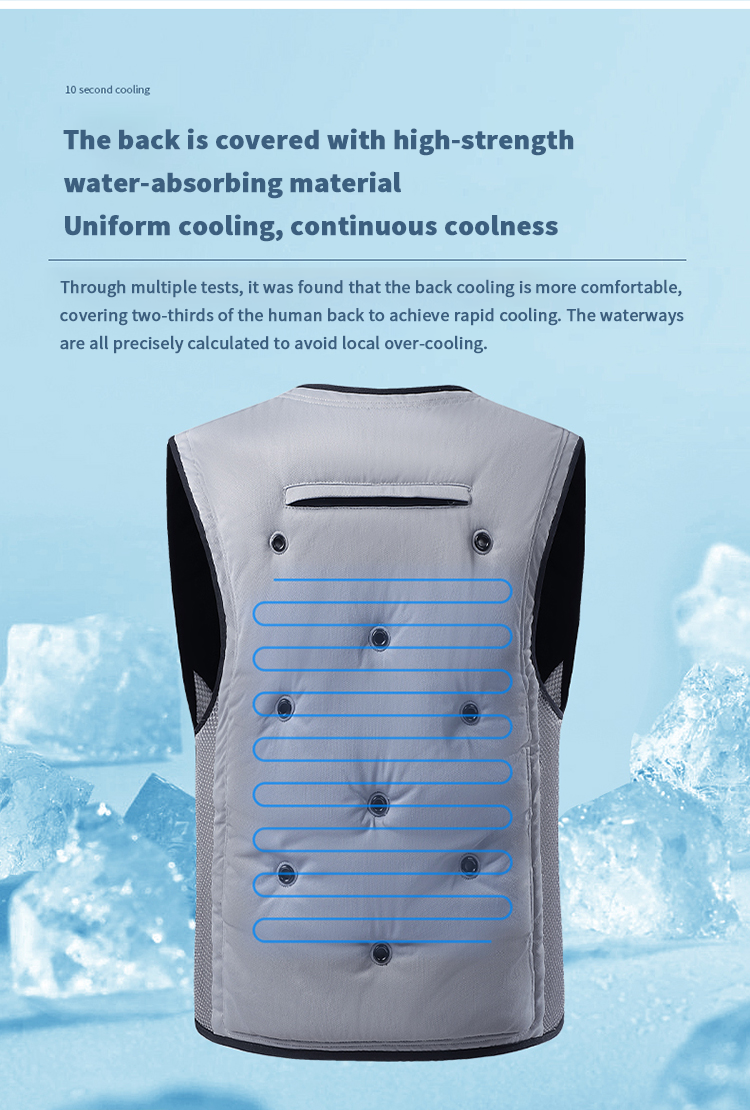
The sample stage isn’t just about testing performance. It’s your lowest-risk window to validate branding, sizing, and packaging decisions before they lock into a 500-unit run.
Most manufacturers support three levels of customization at this stage. Each one has a different impact on your timeline:
Low-complexity personalization — logos, names, and initials applied via embroidery or screen printing. No new tooling. No timeline extension. These options fit straight into batch-ready production processes. Your 7–12 day sample window stays intact.
Modular size and fit adjustments — plus sizes, gender-specific cuts, and extended sizing ranges. Suppliers pull from pre-stocked component libraries, so the delay stays small. Flag your full sizing spread during the initial inquiry. Don’t wait until the sample arrives.
Configure-to-order (CTO) elements — color selection, high-visibility colorways (orange, yellow), and custom packaging. Assembly kicks off after sample approval. That keeps inventory risk low on both sides.
A few numbers worth keeping in mind as you spec this out:
-
40% fewer returns — buyers who validate customization through samples before bulk production report this drop
-
71% of B2B buyers will pay a premium for personalized products. Your custom cooling vest investment carries real commercial value down the line
-
48% of consumers accept longer lead times in exchange for customization. That same tolerance shows up on the B2B side too
One practical note: keep your sample customization scope tight. Testing three colorways and two logo placements at the same time breaks up your evaluation data. Pick your top configuration, validate it clean, then iterate from there.
Cooling Vest Sample FAQ: What B2B Buyers Ask Most
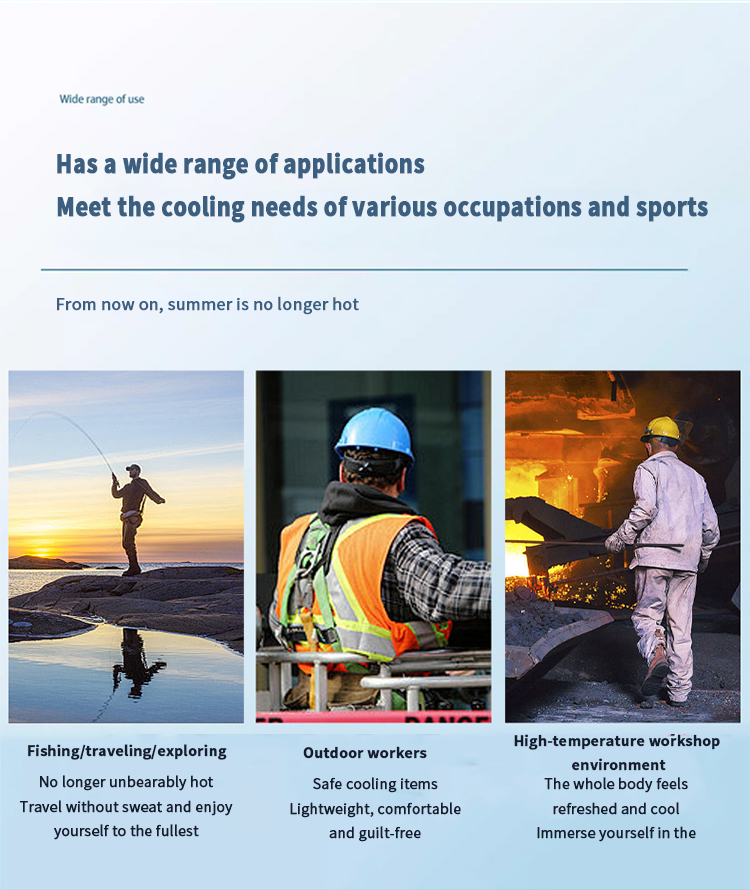
Real questions from real buyers. Here’s what comes up most often — and the answers that matter.
Does the vest meet ANSI Class 2 Type R compliance?
For safety officers, this is the first question on the list. Get the certification documentation before the sample ships. Don’t accept a verbal assurance. Ask for the paperwork — every time.
What PCM specs support insurance reimbursement claims?
The number to look for: 108 kJ/kg latent heat, with a phase change range of 24–34°C. DSC-tested paraffin with aluminum-sealed packs holds consistent phase change performance — from the sample unit all the way through full production. That consistency keeps your efficacy documentation solid and defensible during claims review.
How many packs come with each vest?
Standard configuration is 17 aluminum packs per vest — 8 front, 9 back — with 135g of paraffin each. Total loaded weight sits around 2.5kg. Any supplier offering fewer than 8 packs per set is cutting corners on cooling capacity. That’s a spec worth checking early.
What does “free sample” mean?
It doesn’t mean zero cost. A proper evaluation unit needs the full 17-pocket configuration. Anything less and you’re not testing a real product. Expect a paid sample. A supplier offering a stripped-down version for free isn’t giving you anything worth testing.
What sizing specs should I request?
Three standard ranges cover most workforces:
– Standard: 100–175 lbs, 34–44″ chest
– XL: 175–250 lbs, 46–48″ chest
– XXL: 250+ lbs, 50–52″ chest
Request all three in your sample order. That way you can verify fit across your full workforce before committing to a production run.
What questions differ by role?
|
Role |
Primary Focus |
|---|---|
|
Distributor |
SKU profitability — pack count (8–10 per vest), multi-size range, pack weight (140g each) |
|
Safety Officer |
Compliance — ANSI guidelines, PCM melt range 15–35°C, clean-room fabric specs, aluminum pack conductivity (237 W/m·K) |
Know which role you’re in. The specs that matter to you are not the same ones that matter to the person beside you at the procurement table. A distributor cares about margins and SKU range. A safety officer wants documentation and material certifications. Both matter — just not equally to everyone.
Conclusion
Ordering cooling vest samples isn’t complicated. But doing it right is what separates a confident bulk purchase from an expensive mistake.
You now know what to ask for. You know how to communicate with a cooling vest supplier. And you know what to look for once the sample arrives. Treat it as a structured evaluation — not just a formality — and the process stays simple.
Here’s the real takeaway: the sample stage is where partnerships are built or broken. A manufacturer who is open about fees, lead times, and customization options isn’t just selling you a product. They’re showing you how they’ll handle your next 500-unit order.
So don’t wait on this.
Submit your cooling vest product inquiry today. Get your samples into production. Make your bulk order decision from a place of certainty — not guesswork.
Your workers’ comfort is worth getting right the first time.