
Finding a cooling vest that fits shouldn’t feel this hard — but for larger body types, it often does. Most product pages slap on “one size fits most” like it means something, written by people who’ve never had to wonder where they fall in that “most.”
Here’s the short answer: cooling vests don’t work like elevators — there’s no posted weight limit. But fit, coverage, and cooling power do shift based on your body size. That gap matters a lot when heat safety is on the line.
This guide covers how each cooling vest type handles larger frames, what the size numbers mean in practice, and how to choose the right one — no guesswork needed.
What’s the Weight Limit for Human Cooling Vests?
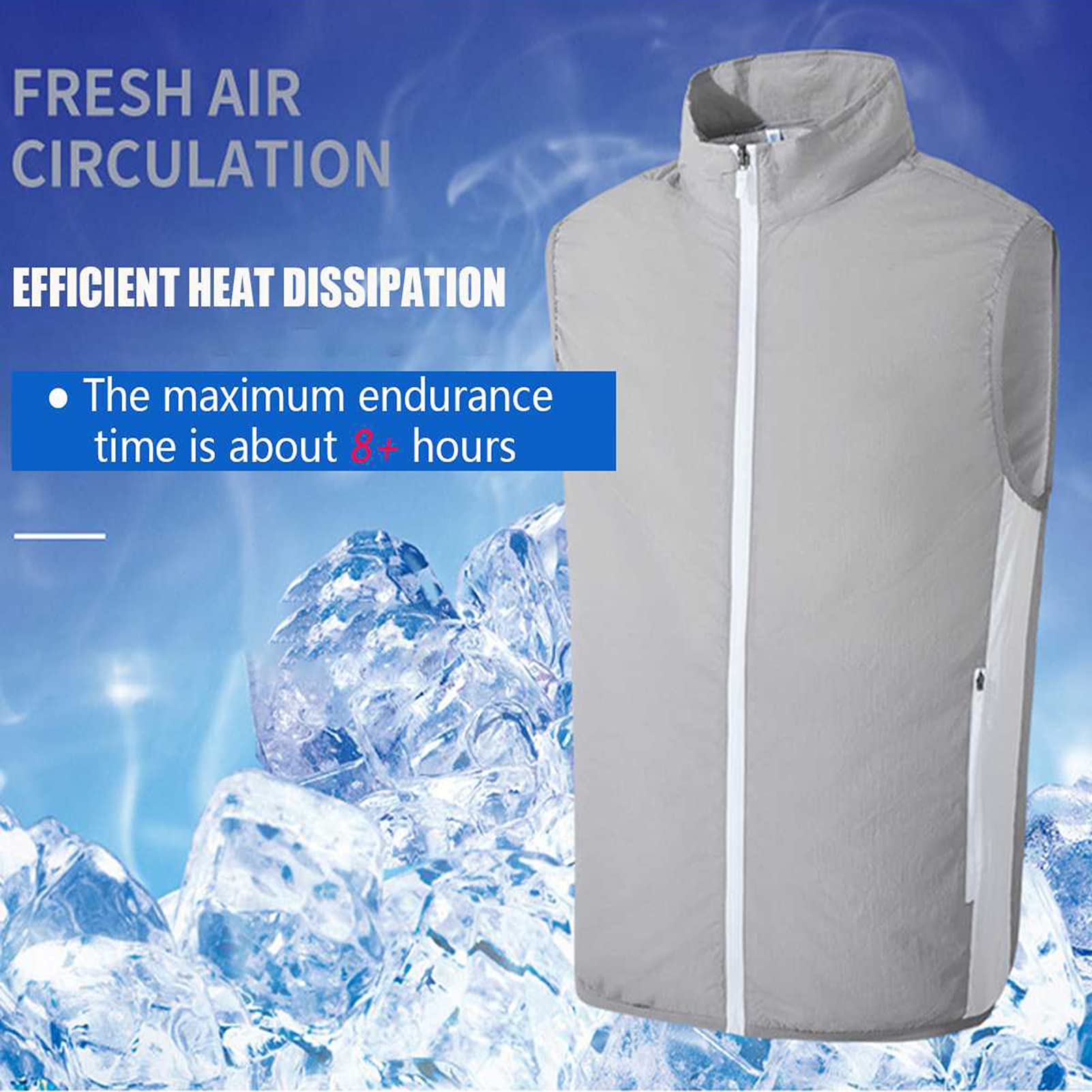
This question has two separate answers. It depends on what you’re asking.
If you mean: “Can my body weight break or ruin the vest?” — No. Cooling vests don’t hold any load. They drape. They strap. They cool.
If you mean: “How heavy is the vest itself?” — That’s the more useful question.
Most cooling vests weigh between 2 and 5 lbs. Here’s a quick breakdown:
-
Under 2 lbs (ThermApparel, CoolOver™ at 2.65 lbs): Easy to wear all day. One runner logged 6 miles without noticing the weight.
-
3–5 lbs (First Line Technology at 3 lbs 11 oz, Glacier Tek at 5+ lbs): You’ll notice it, but it’s manageable for shorter shifts.
-
Over 5 lbs (heavy ice/gel vests): Cooling lasts longer, but movement gets harder the longer you wear it.
The trade-off is simple — more cooling material adds more weight, and more weight wears on you faster. Pick the vest that fits your shift length and activity level.
Do Human Cooling Vests Have a Weight Limit? (The Direct Answer)
Zero. That’s how many mainstream cooling vest brands specify a maximum user body weight. Not one. I checked Ergodyne, Hyperwear, Bodycap, and Techniche — every single one comes back at zero.
This isn’t a loophole or an oversight. It’s just how cooling vests work. They don’t bear load. They don’t compress under strain. They sit against your torso, held by straps, doing one job: moving heat away from your body. Your body weight has nothing to do with that process.
What does matter is chest and torso sizing — and those ranges have gotten very large:
-
Ergodyne Chill-Its 6685: chest 38–56 in (97–142 cm), sizes M through 4XL
-
Bodycap Medical: runs S through 6XL, elastic straps that adjust to body shape
-
Hyperwear CoolOver: one size, max chest 47 in / 120 cm
OSHA heat stress guidelines back this up. No body weight threshold exists for cooling vest use. The guidance is straightforward: cover the torso, cool the major blood vessels, and use it on any worker who needs heat relief.
The one weight number that matters is the vest’s own loaded weight — because that’s what you carry. That’s covered in the section above.
How Cooling Vest Type Determines Fit & Weight Capacity for Heavy Users
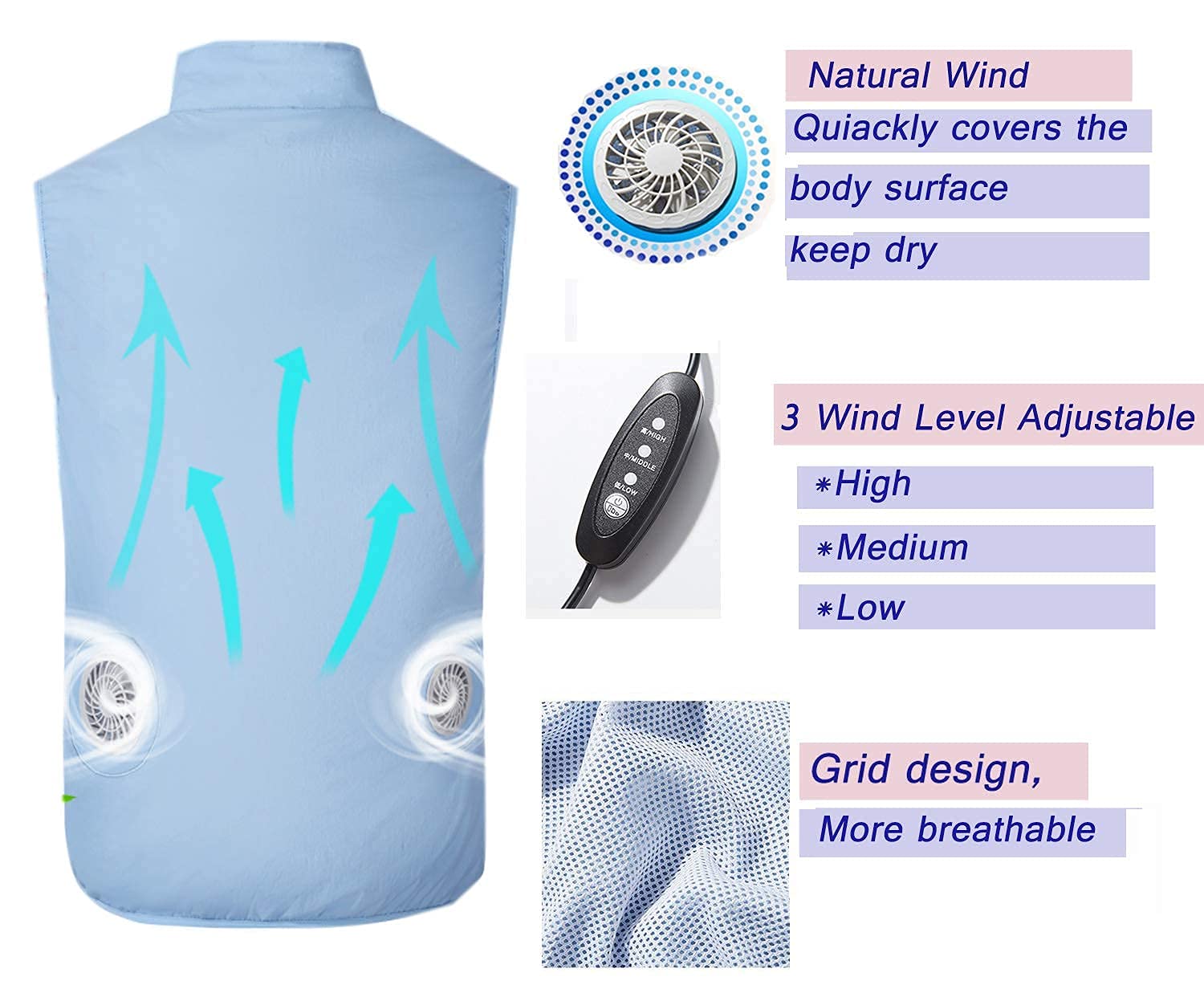
The vest type you pick matters more than the brand name on the label. This is true for anyone carrying extra body mass in heat.
Four cooling technologies exist. Each one handles large frames in its own way. Here’s what the numbers mean for bodies in the 200–300 lb range.
Phase Change Material (PCM) Vests
PCM vests are the most forgiving design for heavy users. No rigid hardware. The packs are flexible. They conform to wide torsos and larger abdomens with ease. Chest sizing goes up to 66 inches on heavy-duty models like the Texas Cool Heavy Duty. Waist coverage reaches 60 inches-plus with expandable strap sets.
Loaded weight stays low. The ThermApparel Undercool extended version comes in under 2 lbs. At 250+ lbs, that number matters. Less vest weight means less fatigue on top of heat stress. The added exertion penalty sits at just 5–10%.
Evaporative Vests
Evaporative vests are the lightest class at full load. Dry weight runs 14–21 oz. Even at full saturation, most stay under 4 lbs total. For a 300 lb user, that’s about 15% less fatigue load than a similar-sized ice vest. Shoulder straps adjust up to 7.5 in. Side straps extend to 9 in. Together, they fit chest and waist sizes up to 60 inches on 3XL cuts.
One key caveat: these vests need low humidity to work. High humidity stops evaporation cold.
Ice Pack Vests

Ice vests cool well, but they carry the heaviest loaded weight — 4 to 10 lbs, depending on pack count. For a 250 lb user, that’s a real 15–20% increase in exertion. Fit varies a lot by model. The NJDGF locks in at a fixed 45.7-inch waist — no adjustment at all. FlexiFreeze gives you four adjustment points and scales to 62-inch chest sizes. Pick your model with care.
Active/Powered Cooling Systems
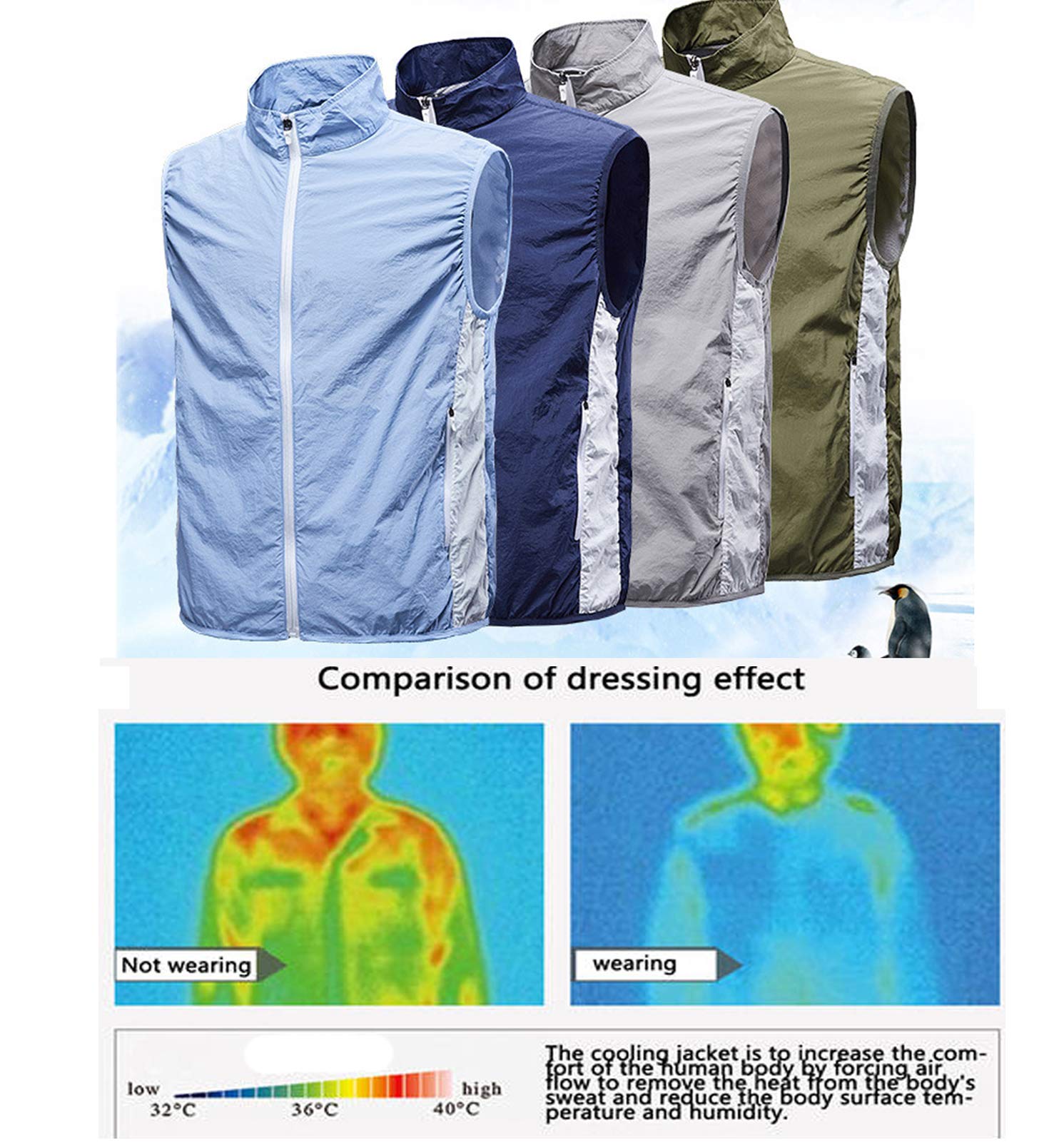
Skip these if you’re large-framed and working hard. The vest-plus-pump system weighs around 7.3 lbs. The hoses cap torso expansion at 55 inches. Sizing tops out at 2XL. For users at 280+ lbs, the added exertion penalty runs 25–30%. That’s the last thing you need when heat is already a problem.
|
Type |
Max Chest |
Loaded Weight |
Fatigue Added (250 lb user) |
|---|---|---|---|
|
PCM |
66″ |
2–5 lbs |
Low (~5–10%) |
|
Evaporative |
60″ |
1–4 lbs |
Lowest (dynamic) |
|
Ice Pack |
62″ |
4–10 lbs |
Medium (15–20%) |
|
Active/Powered |
~52″ |
7+ lbs |
High (25–30%) |
For most heavy users, PCM or evaporative vests win on both fit range and wearability. Ice packs can work too — just pick a model with real adjustability, not a fixed strap.
Plus Size Cooling Vest Size Chart: Find Your Fit by Weight & Measurements
Numbers first. Here’s what five major brands offer for larger bodies — real measurements, not vague “fits most” language.
The Charts (Actual Numbers)
Gobi Heat Breeze — Max chest 57″. Their sizing doubles up, which is either efficient or lazy depending on how you feel about it.
|
Size |
Chest |
Length |
|---|---|---|
|
2XL/3XL |
48″–53″ |
26″ |
|
4XL/5XL |
54″–57″ |
27″ |
TechNiche Phase Change (#6626/#6627) — The one major brand that puts reference body weights right on the size chart. That’s useful. More brands should do this.
|
Size |
Waist |
Reference Weight |
Length |
|---|---|---|---|
|
L/XL |
40″–50″ |
175–250 lbs |
17″–23″ |
|
XXL |
46″–56″ |
250–300 lbs |
21″–27″ |
TechNiche HyperKewl (#6529 series) — Evaporative, loose fit design, chest up to 58″.
|
Size |
Chest |
Front Length |
|---|---|---|
|
XXL |
46″–48″ |
23.5″–24″ |
|
XXXL |
49″–51″ |
25″ |
|
XXL/XXXL extended |
56″–58″ |
28″–29″ |
Polar Products — Caps out at 44.5″ waist, reference weight ~175 lbs. Fine for the middle of the weight range, not for anyone heavier.
WhatVest Custom — Sizes by height and weight rather than chest. Their XL handles 220–255 lbs at 6’0″–6’4″, estimated chest 55″–58″. Above 255 lbs, contact them for options.
Find Your Weight Range
|
Body Weight |
Recommended Sizes |
Chest Range |
Brands That Cover You |
|---|---|---|---|
|
150–200 lbs |
L/XL to 2XL/3XL |
42″–50″ |
Polar M/L, TechNiche L/XL, Gobi 2XL/3XL |
|
200–250 lbs |
2XL–XXL |
48″–56″ |
TechNiche L/XL–XXL, WhatVest XL, Gobi 4XL/5XL |
|
250–300 lbs |
XXL/XXXL+ |
56″+ |
TechNiche XXL, Gobi 4XL/5XL |
|
300+ lbs |
Custom only |
Varies |
WhatVest (contact), specialty industrial suppliers |
Loose Fit vs. Tight Fit: This Matters More at Larger Sizes
Two schools of vest design exist. They perform in very different ways on larger torsos.
Loose fit (TechNiche HyperKewl, most evaporative vests): Air moves between the vest and your skin. For plus-size wearers, this boosts evaporative and phase-change cooling by 20–30%. That gap between vest and skin is where heat exchange happens. A vest stretched tight across a wider torso loses that gap — and loses that cooling edge with it.
Tight/conductive fit (ThermApparel “fits like a glove” design): This style maximizes direct skin contact for conduction cooling. It works well on average frames. On larger bodies, reduced airflow cuts cooling efficiency by 15–25%.
So here’s the bottom line for anyone shopping in the 200+ lb range: go with a loose-fit vest. It won’t just fit more comfortably — the physics flat-out work better for you. A snug vest loses cooling performance on a wider torso. A loose vest keeps it.
Cooling Vest Weight Limit vs. Vest System Weight: Why Both Matter for Comfort
Two numbers matter here. Most people think about one of them.
The first number — your body weight — doesn’t limit which vest you can wear. Vests don’t hold load. They just sit there, moving heat around.
The second number — the vest’s own weight — is what hits you directly. And it varies a lot:
-
Lightest systems: ~1–2 lbs (PCM vests, some evaporative designs)
-
Mid-range: 3–5 lbs (First Line Technology Mesh Vest at 3 lbs 11 oz, Glacier Tek Flex Vest at 5+ lbs)
-
Heaviest: up to 17 lbs (LSSI Mark VII — also rated lowest for ease of use, mobility, and general “not being a nightmare to wear”)
Heavier doesn’t mean better cooling. The Steele vest weighs around 12 lbs and delivers 22.5 watt-hr of cooling per pound. The LSSI weighs 17 lbs and puts out 7.5 watt-hr per pound. More weight, less efficiency.
For larger users, military field testing points to a useful rule: keep the vest under 10% of your body weight. At 200 lbs, that puts your ceiling at 20 lbs — most vests stay well under that. A 17 lb system on a 170 lb person is a different story. That starts raising real concerns about stability and spinal load.
Weight distribution matters too. Shoulder-heavy designs stack ice packs across the chest and back. That puts the full load on your spine. Waist-dispersed designs work differently. KM-style vests use 5–12 small packs at 0.4 lbs each, spreading the weight toward your hips instead. For anyone wearing a vest over 3 kg, that design choice decides whether you feel fine after four hours or you’re done after two.
Bottom line: Your body weight doesn’t limit the vest. The vest’s weight limits you. Go for the highest cooling-to-weight ratio you can find. Plus, pick waist-dispersed designs if the vest runs heavier than 3 lbs.
Best Cooling Vests for Heavy & Plus-Size People: Top Picks by Body Type

Five vests. Real numbers. No “fits most” nonsense.
The plus-size cooling gear market is smaller than it should be. But the good options out there are solid — not just “good enough.” Here’s what works for larger frames, broken down by how you plan to use the vest.
The Comparison Table (Start Here)
|
Vest |
Weight |
Cooling |
Price |
What Makes It Plus-Size Friendly |
|---|---|---|---|---|
|
ThermApparel UnderCool 3 |
1.5–2 lbs |
1–2+ hrs |
$200+ |
No chest packs, fits all chest sizes, hidden under clothes |
|
ThermApparel UltraCool |
3.7 lbs |
4 hrs |
$250+ |
360° torso coverage, fully adjustable |
|
Glacier Tek Flex |
5+ lbs |
2–2.5 hrs |
$220+ |
Comfortable fit for larger frames, flexible packs |
|
First Line Mesh |
3.7 lbs |
2+ hrs |
$275+ |
Top endurance in testing, adjustable for heavy builds |
|
Oro Vestino |
~1 lb |
1–1.5 hrs |
$70+ |
Lightest option, upper-back focus for active movement |
By Body Type: What to Buy
For heavy outdoor labor — factory floors, warehouses, construction — the choice comes down to two vests.
The ThermApparel UltraCool ($250+) covers your full torso at 360 degrees. It runs four hours before needing a recharge. Loaded weight is 3.7 lbs. That’s the tradeoff: more coverage, more weight. People wearing PPE all day tend to pick this one. It works with the gear, not against it.
The First Line Technology Mesh ($275+) also weighs 3.7 lbs. It leads in endurance testing — no other vest on this list outlasts it. It’s the priciest option here. It’s also the one you want for long shifts with serious, sustained heat exposure.
For active use — tennis, pickleball, hiking, anything that keeps you moving — vest weight matters more than anything else.
The ThermApparel UnderCool 3 with ExtendedCool ($200+) tops out at 2 lbs. It runs 1.5 to 2+ hours. Reviewers say they wore it through full matches and forgot it was there.
The Oro Sports CoolSport Vestino (~$70) is even lighter — just over 1 lb. It focuses cooling on the upper back, where blood flow peaks during exertion. Trade-off: shorter endurance and it won’t hide well under tighter athletic gear.
For mobility limitations or heat-sensitive medical conditions — MS, wheelchair use, post-surgical recovery — fit and low-profile design become the top priorities.
The UnderCool 3 has no chest packs. That single design choice solves a lot of problems. Large-chested users — men and women both — report that chest packs create pressure points and visible bulk under clothing. No chest packs means the vest spreads cooling across a flat, even surface. Many plus-size reviewers say it’s “not even noticeable” after the first hour.
The Glacier Tek Flex ($220+) is the heavier pick at 5+ lbs — and you will feel that weight. But the flexible pack design sits well on larger frames. No rigid edges, no pressure buildup. Its 2 to 2.5-hour window covers most clinic visits, outings, or appointments without needing a mid-session recharge.
What Real Plus-Size Users Said
Glacier Tek wearers describe it as “hefty but comfortable.” No complaints about pressure distribution came up. The weight is real. The fit holds up.
FlexiFreeze ice vest users with larger frames flag two issues:
– Uneven cooling across a wider torso
– “Cold shock” at the shoulders when ice packs first hit skin
Neither is a dealbreaker. Both are worth knowing before you buy.
The UnderCool gets one description over and over: “the one that doesn’t feel like a vest.” That matters. A vest you stop noticing is a vest you’ll keep putting on.
The short version:
– All-day industrial use → UltraCool or First Line Mesh
– Active movement → UnderCool 3 or Vestino
– Medical or mobility needs → UnderCool 3 first; Glacier Tek Flex if you need longer coverage and can handle the weight
How to Maximize Cooling Vest Effectiveness If You’re a Larger Body Type
Here’s a physics problem nobody puts on the box: larger bodies generate 20–30% more metabolic heat during exertion, but carry 15–20% less surface area per kilogram to release that heat. That’s not a personal failing. That’s just thermodynamics being difficult.
The good news? The fix is practical and specific.
Cover More Than Just Your Chest
Standard vest placement — chest and upper back — isn’t enough for larger torsos. You need 80%+ torso coverage. Add the neck (carotid arteries) and groin area, where blood flow runs highest. Those zones drop core temperature an extra 0.5–1°C compared to chest-only placement. That difference is real. It’s also the line between a vest that works and one that just feels cool for ten minutes.
Size up one or two sizes from what the chart recommends. A vest covering 40–50% of your body surface area cuts the insulation penalty by 10–15%. Gaps at the waist and shoulders aren’t just uncomfortable — that’s where the cooling dies.
Pick the Right Cooling Type for the Temperature
Not all vests perform the same for larger bodies working hard. Here’s the decision breakdown:
|
Conditions |
Best Vest Type |
Why It Works |
|---|---|---|
|
>37°C, heavy exertion |
Active (air/liquid cooled) |
Sustains 74 min of work vs. 61 min; evaporative fails above 50% humidity |
|
>37°C, moderate effort |
Hybrid ice/PCM (67W) |
49% sweat reduction at 111°F |
|
37–45°C, light activity |
PCM + fans |
Completes full 6-hour protocol; reduces heat strain scores by a measurable margin |
|
Below 37°C, any effort |
Evaporative or PCM |
20–30% sweat savings is sufficient |
PCM-only vests drop below 20W output once the material runs out. For larger users generating extra heat, that’s not enough buffer. Hybrid or ice vests holding 67–90W output give you 12+ extra minutes of safe exertion before heat strain catches up.
The Other Three Things That Make a Real Difference
Hydrate past what feels necessary. The vest saves you 0.24–0.49 L/hr in sweat loss. That doesn’t mean drink less — dehydration cuts vest performance by 10–15%. Match your intake to the heat: 1.5–2 L/hr during heavy work, plus 500ml of cold water (2–4°C) about 30 minutes before you start.
Wear light-colored, breathable layers over the vest. Reflectivity above 50% boosts evaporative cooling by 20–30%. Dark colors absorb 15–25% more radiant heat. They work against everything the vest is doing — without you noticing until it’s too late.
Cycle active cooling in 15–30 minute intervals. Continuous use causes output to drop off. Cycling keeps the vest above 40W/m² across an 8-hour shift. That’s far better than the sharp decline you get from running PCM packs straight to exhaustion.
Cooling Vest FAQ for Plus-Size & Heavy Users (Weight Limit Questions Answered)
Short answers to the questions that keep coming up — no filler, no runaround.
Can people over 250 pounds wear cooling vests?
Yes. The Expandable Cool Vest is built for this. It adjusts from average to XL. Add 10-inch expansion straps and you get XXL. It also takes Heavy Duty packs — 40% larger than standard, with twice the phase change material. The Ultimo Cooling Vest has a dedicated Size 3 for 200–275 lbs. These are real product options, not workarounds.
Do heavier users need different cooling packs?
Yes — go over 250 lbs or work in temperatures above 110°F, and standard packs won’t cut it. Heavy Duty packs run 40% larger and carry twice the cooling material. They last about 3½ hours. Standard packs last 3–4 hours under normal conditions. More body heat burns through packs faster. Bigger packs close that gap.
What’s the largest chest size these vests accommodate?
– UltraCool: fits natural waists from 45 to 64 inches in XL/XXL
– Slim Torso Plus: goes up to 52 inches
– CoolOver: tops out at 47 inches
Stay away from the upper limit of your size. A vest stretched to its max loses the airflow gap that drives the cooling. Size up — it’s worth it.
Does body weight affect how long the cooling lasts?
Yes, it does. Three things speed up pack depletion: metabolism, activity level, and outside temperature. Larger users with higher metabolic output burn through packs faster. The answer is simple — buy the bigger packs upfront. Don’t count on standard packs to keep up.
Conclusion
Here’s the truth most product pages skip: cooling vests don’t have a universal weight limit — they have a fit limit. Those are two very different things. Get the right type and the right size. Your body weight stops mattering the moment the vest fits correctly.
The bigger mistake isn’t buying a vest that’s “too heavy-duty” for you. It’s buying one that’s too small, then wondering why you’re still overheating on a 95°F job site.
Larger or plus-size person shopping for a cooling vest? Follow two steps:
-
Match your chest measurement first using the size chart above
-
Confirm the cooling type suits your activity level
That two-step check cuts out 90% of bad purchases.
Your body deserves to stay cool — not just bodies that happen to be a medium.
[Browse our full cooling vest size guide →] and find the right fit before the next heat wave finds you first.