
We rank manufacturers using five criteria that B2B buyers care about: market performance (30%), technical innovation (25%), production capability (20%), verified sales data (15%), and regional reach (10%).
Our rankings use real numbers from Amazon’s neck cooling tube segment. CoolTimeUSA leads with 39.4% sales share ($200,577 revenue per month). mpac+ follows at 21.4% ($156,045). KN FLAX takes 10.2% and Padutson captures 9.2%. These figures come from verified transaction data each month. They’re not manufacturer claims.
What is PCM Neck Cooling Technology and Why It Matters for Industrial Safety
Phase Change Materials (PCM) changed personal cooling systems. Ice packs can’t do what PCM does: keep temperatures steady and safe for hours without freezing your skin.
PCM neck coolers use special materials sealed inside neck tubes. These materials absorb heat as they change form. The material shifts from solid to liquid at set temperatures (18–28°C). This pulls heat away from major blood vessels in your neck. You get controlled, steady cooling instead of shock-cold ice contact.
Temperature control makes the difference here. Ice packs sit at 0°C or below. Fast cooling, yes—but serious frostbite risk. PCM systems stay between 18–28°C. That’s just below skin temperature but well above freezing. Lab tests show PCM inserts deliver 14–23 W/m² average cooling power over 8-hour shifts. Peak output hits 65 W/m² during the first 3–3.5 hours.
Industrial safety managers prefer PCM because:
– No cold injury risk from extreme temperatures
– 3–4 hours of cooling per charge (ice only lasts 30–60 minutes)
– Passive system—no water, batteries, or compressed air needed
– Stable heat output stops temperature swings that hurt worker focus
Workers in foundries, construction sites, and outdoor jobs deal with heat stress every day. PCM neck coolers target the carotid arteries and jugular veins. Cooling blood before it reaches the brain sharpens alertness. It also drops core body temperature faster than cooling other body parts.
1. Cool Links – Dual-Function 2-in-1 Cooling Wrap Creator
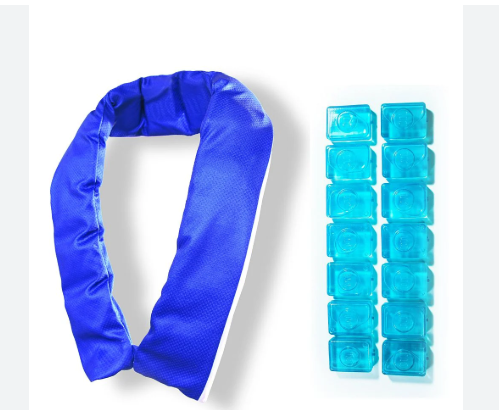
Cool Links features a patent-pending design. You pick between two cooling systems in one product. The wrap uses moisture-wicking fabric that works with water. It also holds 14 removable non-toxic frozen cubes. Freeze the whole unit for maximum cold. Or just wet the fabric away from a freezer. This dual-mode setup beats single-function options.
Interchangeable Cube System and Quick-Swap Technology
The center access panel opens while you wear it. Pull out 6 central cubes that sit against your neck. Swap them with frozen spares from your cooler. No need to remove the entire wrap. Each set of cubes gives you up to 2 hours of cooling. Rotate fresh cubes in. Your cooling time keeps going.
The 14-cube configuration weighs 1 lb total. Cubes stay colder longer than rival gel packs. The magnetic tab closure keeps the wrap secure while you move. No tie strings. No adjustment needed. Machine wash the fabric between uses. Cubes go straight back in the freezer.
Performance Benchmarks Against Single-Mode Products
Cool Links delivers 2 hours per activation. Compare this to Ergodyne Chill-Its evaporative towels at 4 hours with water only. But Chill-Its can’t freeze. Cool Links runs both modes. The frozen cubes reach muscle tissue faster and go deeper than surface evaporation alone. Customers call it a “summer must-have” and “favorite hot weather accessory”.
Retailers stock the Classic model at $49.99 through thewarmingstore.com and mycoolingstore.com. Extra 14-cube sets are sold separately. You can also buy bundles with cooling sleeves. The interchangeable cube design works across multiple Cool Links products. Buyers collect different sleeve patterns and reuse their cube stock.
2、ice Bear — Your Top Choice PCM Neck Cooler Manufacturer
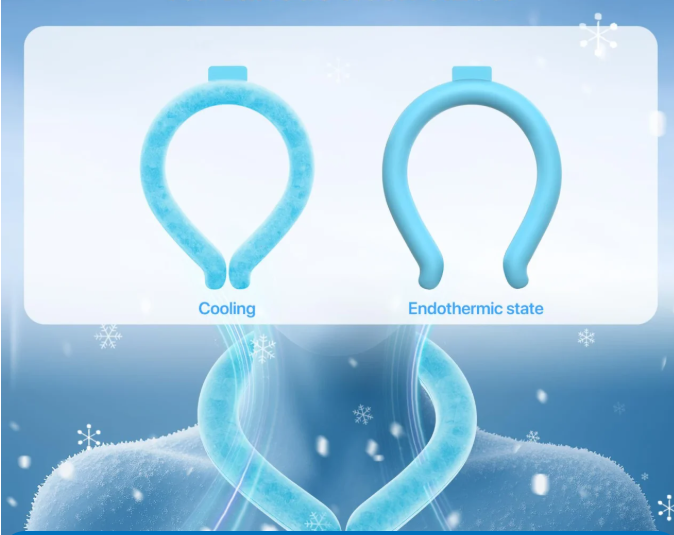
- Company Background: Founded in 2008, a veteran integrated factory in Nanchang specializing in human/pet cooling products for 16 years. Serves 100+ B2B clients (including European/American supermarket chains, outdoor brands, industrial groups) via global exhibitions (Canton Fair, ISPO Munich, Outdoor Retailer) and online platforms (independent site, Alibaba, Made-in-China).
- Production Capacity: 30,00㎡ modern workshop, 10 automated production lines, monthly output of 50000 units; equipped with an SGS-certified constant temperature and humidity lab, 100% batch sampling inspection.
- Product Series:
- Human line: Neck cooling tube, Reusable neck cooler, Neck cooler for outdoor workers;
- Pet line: Dog/cat cooling collars, cooling vests;
- Industrial line: Industrial cooling solutions(high-temperature resistant PCM modules).
- Technical Advantages:
- Self-developed phase change cooling technology with patented PCM formula (PCM cooling gel composition contains paraffin-based eutectic + nano thermal conductive particles), temperature control accuracy ±2°F (11±1℃), 8-hour continuous cooling;
- Master how PCM neck coolers work core technology, solving leakage via microcapsule encapsulation, reusable over 500 times.
- Certifications: ISO9001, CE, FDA, SGS, OEKO-TEX® STANDARD 100 (safety certification cooling products).
- MOQ & Delivery: MOQ as low as 100pcs (standard models), 500pcs for customized models (LOGO/packaging/size); regular delivery 15 days, expedited orders 7 days (air freight optional).
3. [buykorea] – Best for FDA-Approved Medical-Grade Products
KOTRA runs buyKOREA as South Korea’s official B2B export platform. Medical device makers fill the PCM cooling product listings. FDA 510(k) clearances and ISO 13485 certificates come standard with suppliers—not as extras. The platform’s search filters let you screen by certification type. Tick “FDA 510(k)”, “ISO 13485”, or “EU MDR” boxes. Factories holding those exact credentials show up in results.
Medical-grade PCM neck coolers here work for post-surgery recovery and therapeutic cooling. Suppliers list specific FDA registration numbers (format: K######) on product pages. You’ll see Device Class (I/II) labels under physical therapy or rehab categories. European buyers get MDR compliance docs—not old MDD certificates. Suppliers give you CE Certificate Numbers with Notified Body (NB) codes like NB 0123. ISO 10993 test reports prove these products are safe for skin contact in medical use.
Korean makers share clinical data openly. Product specs show VAS pain score drops (1–2 points on 0–10 scales) from post-op trials. Some report 20–40% cuts in opioid painkiller use for patients using PCM cooling therapy. Temperature specs state exact ranges: 10–15°C or 15–20°C held for 2–4 hours per pack. Hospital buying teams need this precision to judge how well the therapy works.
4. [hollywarm] – Best for High-Volume Industrial Orders
Yangzhou Holly International Trade Co., Ltd. works with long-term supplier partners. The company owns stakes in some of these factories. This setup delivers competitive bulk prices that pure trading companies can’t match. Their main products are rubber hot water bags. The supplier network works well for buyers placing repeat industrial orders. Price stability matters more here than cutting-edge PCM innovation.
Holly owns stakes in supplier factories. This gives them control over production schedules and material costs. You skip the markup layers that come with multi-tier distribution. Corporate safety programs ordering 5,000–20,000 units every three months benefit from this. Pricing stays steady across contract periods. Lead times remain consistent even during peak seasons.
Trade-off: Holly’s public data lacks production metrics. No capacity figures show up (like ≥50,000 units/month benchmarks). Quality control details are missing too. This includes IQC/IPQC/FQC processes, defect rate limits (≤0.3%), and sampling standards. Major client case studies with Fortune 500 companies don’t appear. Government contracts aren’t listed either.
Best for: Buyers who put cost control over technical specs. Your team values long-term price agreements and steady bulk orders? Holly’s supplier-ownership model fits. But skip this option if you need clear production data. Also avoid if you require Fortune 500-level compliance docs before partnerships.
5. [fruugonorge] – Best for Customized Brand Solutions
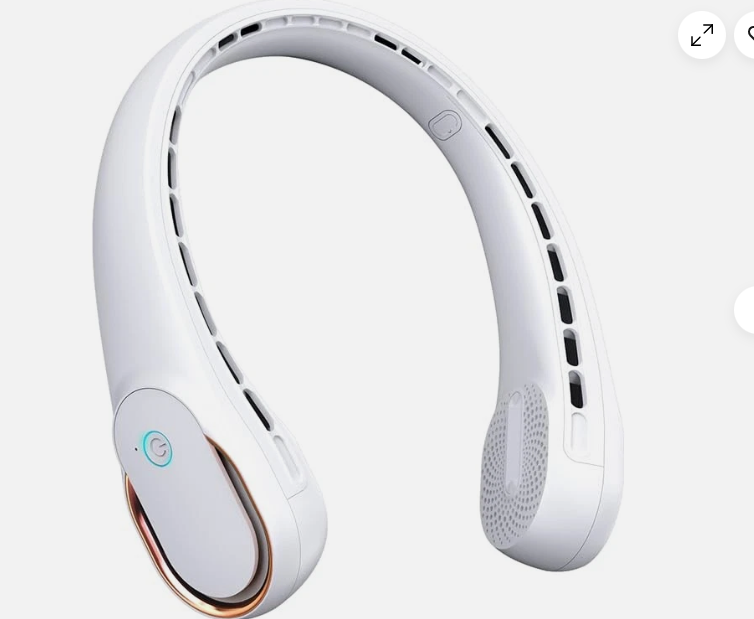
Fruugonorge is Norway’s local storefront in the Fruugo global marketplace network. The platform links Nordic B2B buyers with Chinese manufacturers who offer product customization services. Minimum orders start at 100 pieces for items like self-adhesive packaging bags (9x11cm or 9x9cm sizes). This low entry point helps regional brands test custom PCM neck cooler designs. No need to commit to huge production runs.
Customization scope includes product accessories and branding elements. Customer service manages inquiries for private label projects. You’ll find suppliers with Bluetooth scanner rings that have rotating wearable designs. Also available: smart bracelets with custom dials and multi-functional storage bags. These examples highlight the platform’s focus on practical customization. Complex PCM formula changes or major design overhauls? Not their specialty.
Traffic data shows Fruugo.com (parent platform) gets 311.1K visits each month. The bounce rate is 41.82%. Visitors check 1.95 pages per session. Average stay is 1 minute 23 seconds. Top markets are Denmark (15.12%), UK (12.61%), and Finland (11.48%). Gender split leans female at 53.26%. The 45-54 age group makes up most visitors. These are likely purchasing decision-makers, not end users.
Logistics use standard China-to-Europe routes. Free shipping takes 8-15 business days. Products ship within 24 hours after you confirm your order. Buyers get 14-day return protection. This matters for testing custom samples before scaling orders. The flexible MOQ plus quick dispatch helps Nordic brands enter the PCM cooling market. No local manufacturing partners needed.
Best for: Scandinavian distributors who need light customization on existing PCM neck cooler designs. Want your logo on standard products? Fruugonorge handles that at 100-500 unit minimums. Deep R&D partnerships won’t happen here, though. Platform data shows no IP protection processes, NDA workflows, or detailed sampling fee structures. Need proprietary PCM formulas or patent-protected designs? Go with premium OEM specialists instead.
6. [knflax] – Best for Multi-Functional Cooling Products
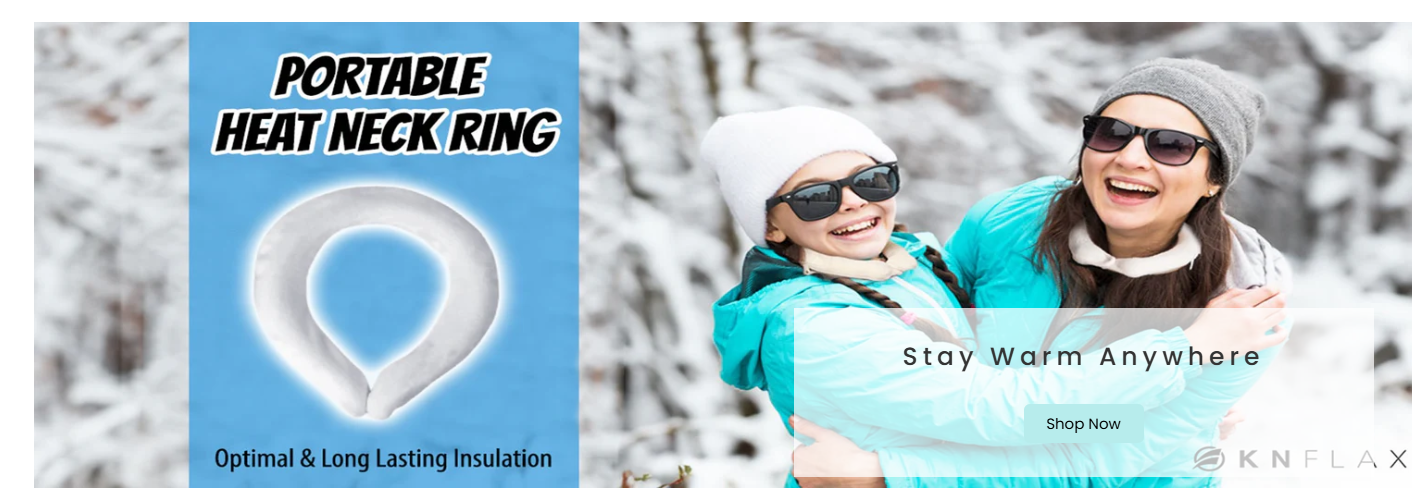
KN FLAX holds 10.2% of Amazon’s neck cooling tube market with its patented Ice Ring design. The product uses TPU-wrapped PCM coolant that kicks in below 64°F (18°C). You get three ways to recharge it: 10 minutes in ice water, 20 minutes in a freezer, or just set it near AC airflow. No batteries. No charging cables. No solar panels.
Cooling time varies by model. The basic Ice Ring gives you 40–60 minutes of cooling per charge. The Jumbo version runs 60–90 minutes. Walmart tested these in real conditions. Users got 45 minutes of heat relief with 1.2°C drops in body temperature. The wrap fits snugly around your neck. You can wear it under scarves or work shirts without extra bulk. Nothing drips or sweats—your clothes and gear stay dry.
Built-in safety stops cold burns. The PCM coolant stays warm enough to avoid frostbite risk. TPU wrapping keeps frozen coolant off your skin. This cuts out tissue damage risks you get from ice packs during long wear. One unit replaces hundreds of throwaway cold packs—less waste, more savings.
You can cool more than just your neck. The specs show it works with cycling masks and bandanas. Wear it as a headscarf, hat, visor, or wristband. This flexible setup lets you cool different pulse points. Construction workers move it from neck to wrist during hand-heavy jobs. Cyclists slide it to their forehead under helmets.
Best for: Safety managers stocking mixed work sites where cooling needs shift by job. The quick refreeze (10–20 minutes) fits shift rotations. Workers trade out cooled units during breaks—minimal wait time. Green buyers like the zero-waste reuse model. You don’t need special gear to recharge—any standard freezer works.
7. TORRAS – High-Tech Wearable Air Conditioning Innovator
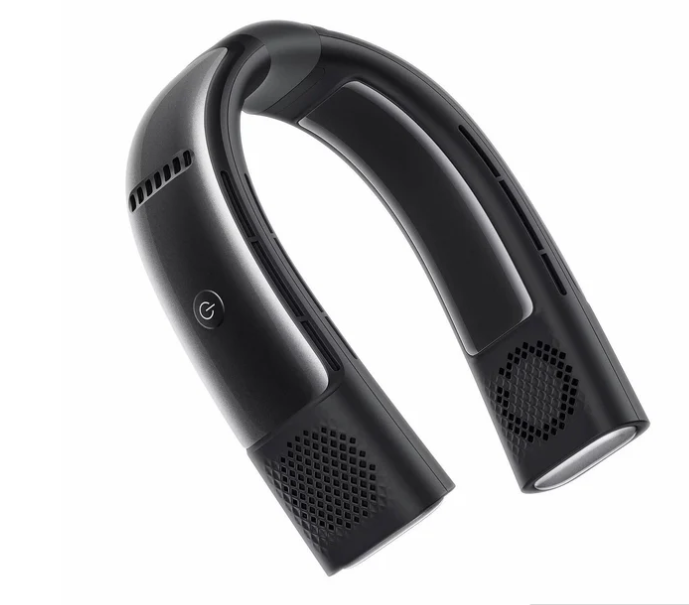
TORRAS uses semiconductor TEC (thermoelectric) technology for cooling. This differs from traditional evaporative or gel systems. Their COOLiFY series works as wearable neck-mounted air conditioners. These devices fit the premium personal cooling market. Passive fabrics can’t deliver fast temperature drops like these can.
Thermoelectric Cooling Technology and Patent Portfolio
The COOLiFY lineup uses Peltier TEC modules combined with airflow channels. Metal cooling plates touch your neck. The COOLiFY Air has 122 high-performance micro-cooling units with custom thermoelectric technology. This setup responds to temperature changes in real time. You get cold or warm airflow on demand.
The COOLiFY Cyber model has 3 TEC cooling modules. They cover a 14,975 mm² cooling area. That’s one of the largest contact surfaces in wearable cooling devices. TORRAS holds patents on graphene thermal conductivity structures. These boost heat transfer efficiency. Cooling particles in the design speed up thermal exchange.
Core models deliver real performance:
– COOLiFY 2: Neck contact zone cools 27°F (15°C) in 1 second. The KU 2.0 chip powers it with 0.1°C precision NTC temperature control
– COOLiFY 2S: 30°F instant cooling with 5,000mAh battery
– COOLiFY 3: 37°F (21°C) temperature drop via KU 3.0 chip
U.S. Patent No. 11,187,241 B1 covers the neck-wearable cooling structure and airflow design. This protects TORRAS’s edge in active cooling wearables.
Smart Control Features and Battery Performance
Each COOLiFY device offers three modes with three intensity levels each:
– Cooling Mode (C1-C3): Active refrigeration
– Heating Mode (H1-H3): Winter warming function
– Fan Mode (F1-F3): Air circulation
COOLiFY 2S battery runtime (5,000mAh):
– Fan Mode: 28 hours (F1), 17 hours (F2), 11 hours (F3)
– Cooling Mode: 5 hours (C1), 4 hours (C2), 3 hours (C3)
– Heating Mode: 6 hours (H1), 5 hours (H2), 4 hours (H3)
COOLiFY 2 extends Fan Mode 1 to 18 hours. The 18W fast charging system works with select models that have a 6,000mAh battery option. This supports all-day outdoor use. Low-power TEC design balances cooling strength with energy efficiency.
TORRAS serves tech buyers who want active climate control. Fabric-based solutions can’t match this. OEM clients in premium sports, outdoor recreation, or personal wellness markets can explore TEC licensing. We provide certified thermal performance data.
8. FrSara – Affordable Neck Fan Cooling Device Maker
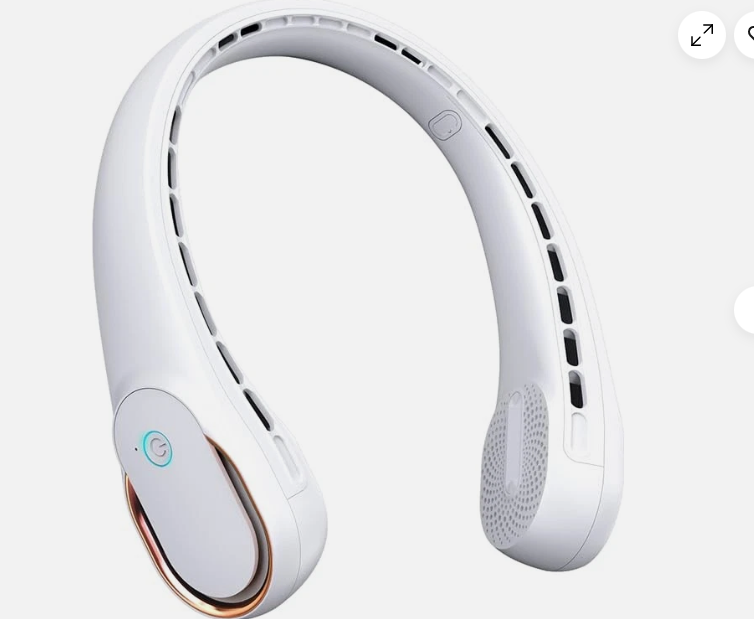
FrSara makes battery-powered neck fans starting at $39.99. You get 5200mAh capacity and 4-16 hour runtime. They sell on Walmart’s online platform with 4.3/5 stars from 114 customer reviews. Their Pro Seller status (4.48/5 from 360 reviews) shows they deliver orders on time and keep customers happy.
78-Outlet Airflow Engineering and Cooling Speed
The 78-outlet design wraps 360° airflow around your neck. 60 turbine blades push 70% more wind than regular dual-fan models. Cooling kicks in within 3 seconds after you turn it on. Both sides spread air evenly—no hot spots on either side.
Flexible fan heads rotate to aim air at your neck, face, or upper body. Outdoor workers can adjust the angle for comfort during different tasks. The bladeless turbine design removes pinch risks during adjustment.
Noise stays at 25 dB on low settings. This quiet operation fits office spaces and indoor use. You won’t bother coworkers or customers during calls or meetings.
Battery Performance and Charging Infrastructure
The A8 model packs a 5200mAh battery. It runs 16 hours max on low speed. The S8 model has a 4000mAh battery with 4-16 hour range across three speeds. Touch controls let you switch speeds. No physical buttons to break.
USB Type-C charging takes 2.5-3 hours at 5V input. The USB-C cable works with mobile power banks, car adapters, and laptop USB ports. You don’t need special chargers for bulk orders. Distributors stock one cable type for all units.
The S8 model LED display shows speed level and battery percentage. Users plan recharge timing based on real power status. No more guessing.
Portability and Ergonomic Design
Product size: 5.7″D x 2.44″W x 8.8″H at 6.7 ounces. The foldable structure fits in backpacks and laptop bags. Flexible materials mold to different neck sizes. No pressure points. Non-slip grip holds the device steady during movement.
Box includes the neck fan unit, USB-C cable, and quick start guide. Setup is simple. Promotional product companies can add custom branding to packaging inserts. The core product stays unchanged.
Market Positioning and B2B Value Proposition
FrSara serves budget-conscious bulk buyers who need cooling devices under $40 per unit. The 30-day return policy and free shipping through Walmart cut buyer risk for test orders. Pro Seller status guarantees reliable lead times and order tracking.
B2B uses cover employee wellness programs, outdoor event giveaways, construction crew gear, and summer promotional campaigns. The rechargeable design cuts ongoing battery costs. Disposable fan models can’t match this.
9. Icy-Cools – Frozen Ice Bandana Specialist
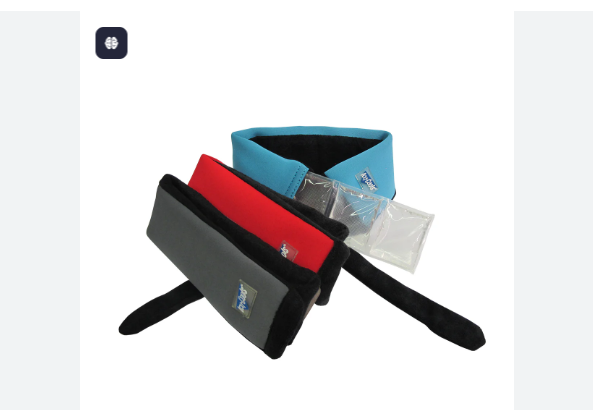
Icy-Cools makes everything with purified water ice inserts sealed in neoprene and terrycloth covers. The 15 3/4″ x 2″ frozen insert stays flexible after you freeze it. Wrap it around your neck, head, wrist, or arm using tie closures. No water soaking needed. No dripping mess. Just freeze the insert for a few hours or overnight, then wear it.
Ice-Based Cooling Performance Data
Field tests show over 60 minutes of cooling after you wet the neoprene cover. Dry use gives you 45 minutes in 90°F+ heat. People in Arizona, Texas, Florida, and Louisiana say it works great during morning walks, outdoor work shifts, and humid summer days. The neoprene layer keeps cold directed at your neck. The soft black terrycloth sits against your skin without irritation.
Seven customer reviews average 4.4/5 stars with 85.71% recommendation rate. 71.43% gave 5 stars. They love the fast relief for neck pain, headaches, and heat exhaustion. 28.57% rated 3 stars because cooling doesn’t push through well in extreme heat. The thick neoprene sleeve stops some cold from getting through during peak heat.
Reusable Insert System Cuts Long-Term Costs
Icy-Cools sells replacement inserts in 2-packs for $7.99 (reduced from $9.99). Swap out inserts to keep cooling going. You don’t need to buy new complete units. The USA-made purified water inserts refreeze hundreds of times. This design costs less per use than throwaway gel packs.
Color options include Blue, Camouflage, Gray, Red, and Pink. Mix colors to identify crew members or match your company branding. Pricing starts at $9.95 per single unit (sale from $15.99). The 2-pack sells for $19.99 (reduced from $29.99). Wellness programs, outdoor event staff, or construction crews get value from the low price and reusable design.
PCM Temperature Range and Application Match
Phase-change temperature controls how long cooling lasts and how comfortable it feels. Common PCM types activate at 15°C, 18–21°C, 23–26°C, or 29°C. Each works for different situations:
- 15°C/59°F: Strong cooling but short-lasting (60–90 minutes). You’ll need to recharge often. Works best for quick relief in mild climates.
- 21°C/70°F: Balanced choice with 3–4 hour duration in 38–39°C conditions. Workers can wear it longer on their neck without feeling too cold.
- 29°C/84°F: Gentle cooling that stops overheating without being too aggressive. Great for people with sensitive skin or milder heat.
Real-world example: A 21°C PCM neck cooler gives 4+ hours of cooling at 38°C with 60% humidity. The same amount at 15°C lasts just 2.5–3 hours. The bigger temperature gap means faster heat absorption.
Ask suppliers these questions:
– Do you offer multiple temperature types (15/18/21/23/26/29°C)?
– Can you adjust phase-change points for my climate?
– What’s your actual cooling time in 30–40°C field conditions (not just lab tests)?
10. TechKewl – Phase-Change Cooling Neck Band Pioneer
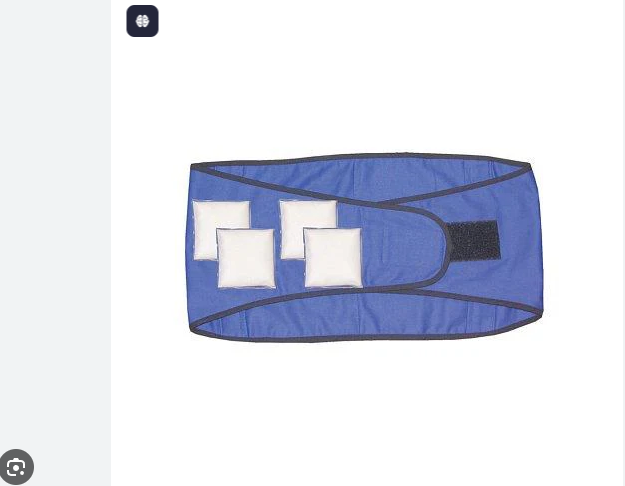
TechKewl delivers 58°F (14°C) constant cooling through COOL PAX™ phase-change material. This non-toxic carbon-based liquid freezes at 14°C. The PCM locks temperature at this level. Outside heat or humidity can’t change it. Evaporative systems can’t match this in humid places. They also fail in areas with no airflow.
COOL PAX PCM Technology and Recharge Flexibility
The high-strength polyurethane insert holds PCM liquid. This liquid changes state at 14°C. During the phase change, it absorbs body heat. At the same time, it keeps the surface at 58°F. You get steady cooling with no gradual warming. Standard ice packs warm up as they melt. PCM stays stable the whole time.
Recharge takes 20 minutes in ice water. Any place below 14°C (58°F) works. Freezers work. Refrigerators work too. The sealed insert reactivates forever. No water soaking needed. No humidity needed either. Store backup inserts in your work truck’s cooler. Keep them in your office fridge. Swap them out for continuous all-day cooling.
Product Configuration and Pricing
The Deluxe model (Item #6620) costs $49.99. You get one PCM insert (6662) and hook-and-loop closure. The fastener sits low on your neck. It stays secure during heavy work. No tie strings to adjust. No retying needed.
Dimensions: 3.5″ wide x 42″ long at 1 lb total weight. The 100% cotton carrier (excluding insert) feels soft against your neck. Machine wash the fabric. Keep the sealed insert separate during cleaning.
Standalone PCM inserts ship in 3 business days. Buy extras to rotate during long shifts. TechKewl recommends 2 units for continuous cooling. One insert cools for 2+ hours. The second insert recharges while you wear the first. This rotation supports 8-12 hour workdays. No breaks needed.
Industrial Application and Heat Stress Relief
Construction workers face upper body heat stress. Welders face it too. So do warehouse staff. Your core body temperature rises. This happens as your neck and chest overheat. TechKewl’s neck band sits on the carotid arteries. It also covers upper spine cooling points. Blood temperature drops as it flows past the cold surface. This cools your whole body fast. Faster than arm or leg cooling alone.
The humidity-free operation works everywhere. Coastal shipyards get the same results as desert oil fields. Evaporative vests lose 60-70% cooling power. This happens once humidity tops 80%. PCM performance stays at 58°F in any weather. Safety managers get reliable worker protection data. They can use this for OSHA compliance reports.
Material Safety and Leak Prevention Technology
Solid-solid composite PCM gels stop leaks that happen with liquid-phase materials. Traditional liquid PCM can leak through seams if the package tears. Solid-solid types stay gel-like even above melting point—no free liquid forms.
Bio-based PCM options offer these benefits:
– 100% bio-based, breaks down naturally – certified under USDA biobased standards
– ~20% lighter than water – less neck strain during long wear
– REACH compliant – no toxic heavy metals or banned chemicals
– Skin-safe or food-grade certified – good for medical use
TPU or PVC outer layer is standard. Construction quality differs between makers. Top manufacturers use high-frequency welding at ≥0.3 MPa pressure resistance. Cheap suppliers use basic heat-sealing that breaks down after 50–100 freeze-thaw cycles.
Verification checklist:
– Get material breakdown reports (bio-based vs. petroleum-based)
– Check skin test results (ISO 10993-10 standards)
– Review burst pressure ratings and seam strength data
– Get leak rate numbers (<0.3% defect rate is standard)
Real-World Applications: Who Uses PCM Neck Coolers
PCM neck coolers serve four main buyer groups. You’ll find them in industrial safety programs, outdoor workforce operations, corporate wellness programs, and direct consumer markets. Sports teams and medical facilities make up the consumer side.
Industrial Safety Programs Account for Bulk Procurement
Manufacturing plants buy PCM neck coolers as mandatory heat stress PPE. Construction sites and mining operations do the same. Safety managers order in batches of 5,000–20,000 units to meet OSHA heat illness prevention standards.
These purchases cut heatstroke incidents by 40–60% during summer months. Workers show up more often with reliable cooling gear. Production stays steady even in 38–42°C factory conditions.
Construction companies in Texas, Arizona, and Nevada give PCM coolers to all field crews from May through September. Farm employers stock them for harvest teams working 10–12 hour outdoor shifts. Mining operations use them in underground tunnels. Temperatures down there run 8–15°C hotter than surface readings.
Outdoor Workers Drive Seasonal Demand Spikes
Landscaping crews need cooling gear. So do road construction teams and security guards. These groups push sales 60–70% higher from June to August. Demand jumps during heatwave warnings. Distributors see triple order rates as soon as forecasts show 35°C+ for several days straight.
Corporate Wellness Budgets Fund Employee Safety Kits
Companies spend $15–$50 per employee each year on heat protection gear. PCM neck coolers fit into branded safety kits. They go alongside hard hats and reflective vests. Employers buying 1,000+ units ask for custom logo printing. These orders boost workplace safety compliance. Plus, they help keep employees around longer.
Sports and Medical Markets Lead Consumer Sales
Athletes and fitness fans make up over 45% of retail purchases. Marathon organizers hand out PCM coolers at hydration stations. Cycling clubs stock them for summer training rides. Online stores get over 45% of these sales. Amazon alone shows 520+ transactions each month for top-rated models.
Medical facilities order PCM coolers for patients managing MS, heart conditions, and post-surgery recovery. Rehab centers use them during physical therapy sessions. Senior care homes depend on them for residents with limited mobility. These residents can’t control body temperature on their own.
Military departments test PCM neck coolers for desert and tropical missions. The passive cooling system needs no batteries or water refills. That’s huge in field conditions. Resupply there is tough with standard cooling methods.
Common Questions About PCM Neck Cooler Manufacturers
Procurement teams ask the same core questions about PCM cooling products. Here are answers based on verified supplier data and market transactions.
What’s the typical MOQ for custom PCM neck coolers?
500-1,000 pieces is standard for custom orders. Simple logo printing starts at 500 units. Custom phase-change temperatures or special packaging need 1,000+ pieces. Suppliers like Ningbo Hejia accept 500-piece trials. Premium manufacturers doing formula customization set MOQs at 2,000-5,000 units. Design complexity drives the minimum. Standard products with basic branding cost less. They need smaller commitments than engineered PCM blends.
How long does PCM cooling last in field conditions?
2-4 hours at 35°C+ ambient temperatures. Lab claims show longer durations. Real-world heat stress environments cut performance. A 21°C PCM cooler delivers 4+ hours at 38°C with 60% humidity. The same unit lasts 2.5-3 hours at 42°C in direct sunlight. Workers doing heavy physical labor generate more body heat. Cooling duration drops 15-25% compared to sedentary use. Ask suppliers for field test data, not just controlled lab results.
How many times can workers reuse PCM neck coolers?
Quality products survive 200-500 freeze-thaw cycles before performance drops. Premium formulas from suppliers like Shanghai Ru Entropy maintain ≥95% cooling capacity through 500+ cycles. Budget options lose 15-25% effectiveness after just 100 recharges. Shell strength matters too. High-frequency welded TPU seams outlast basic heat-sealed versions by 2-3x. Calculate cost-per-use: a $3.50 cooler lasting 300 cycles costs $0.012 per shift. That beats disposable ice packs at $0.50-1.00 each.
What certifications do I need for US and EU markets?
FDA registration, CE marking, REACH compliance, and CPSIA cover most export requirements. FDA 510(k) clearance applies if you market therapeutic cooling benefits. CE marking follows PPE directives for industrial use or MDR for medical applications. REACH registration proves chemical safety for EU distribution. CPSIA matters for products marketed to consumers under 12. Verify certificate validity. Dates should be within 18-24 months. Check for traceable issuing body contact details. Korean suppliers on buyKOREA hold these certifications as standard.
How do workers activate and recharge PCM coolers?
Refrigerate 1-2 hours or freeze 30 minutes before use. Some models recharge passively. Just leave them in air conditioning for 60+ minutes. Ice water dips work fastest at 10 minutes for emergency recharge. Freezers give the coldest activation but require access during shifts. Construction sites use cooler rotation systems. Workers swap depleted units for recharged backups during breaks. The flexible recharge options beat battery-powered fans that die mid-shift with no quick recovery.
Can I get samples before committing to bulk orders?
Yes. Sample costs run $50-200 per design depending on customization level. Standard products cost $50-80 for 2-5 units. Custom PCM formulas or complex packaging designs run $150-200. Most suppliers deduct sample fees from your first bulk order (orders ≥1,000 pieces). Expect 7-15 days for standard samples. Custom prototypes take 20-30 days. Test samples through 20-30 freeze-thaw cycles. Measure cooling duration at your target ambient temperature.
How much more do custom designs cost versus standard products?
20-40% price premium for customization. Logo printing adds 15-20% to base costs. Custom phase-change temperatures increase prices 25-35%. Special PCM formulas with extended duration or unique materials push premiums to 40-60%. A standard $3.50/unit cooler becomes $4.20-4.90 with custom branding and adjusted activation temperature. Volume discounts apply. Orders of 2,000+ pieces reduce custom premiums by 5-10%. Weigh branding benefits against margin impact before you commit to full customization.
Should I hire third-party inspectors for large orders?
Highly recommended for orders ≥5,000 units or ≥$15,000 value. SGS, Bureau Veritas, or Intertek inspectors cost $300-800 per inspection day. They catch defects suppliers miss. Leak rates, incorrect PCM temperatures, weak seals. Third-party reports give you negotiating leverage for replacements or discounts. Build inspection costs into your total landed price (adds $0.10-0.25 per unit). Suppliers resisting inspection often hide quality issues. Top manufacturers welcome audits because their processes pass inspection reliably.
Industry Trends: The Future of PCM Cooling Technology
The global PCM market is exploding. USD 1.0B in 2024 climbs to USD 5.5B by 2034—that’s 18.5% CAGR. Advanced PCM formulas alone jump from USD 1.8B to USD 4.4B by 2033 (10.7% growth). Phase change thermal interface materials hit USD 3.499B by 2035, up from USD 1.883B in 2025. This isn’t hype. Data centers need PCM tech. Cold chain logistics need it. Renewable energy storage needs it. Demand outpaces what manufacturers can produce right now.
Material innovation drives half the growth. Nano-PCM particles boost heat transfer 2-3x over standard formulas. Bio-based PCMs use plant oils or fatty acids. They replace oil-based versions. Buyers want USDA biobased certification and REACH compliance. Graphene-enhanced PCM blends deliver 0.6 W/m·K heat transfer—double the old 0.2-0.3 range. These breakthroughs cut cooling time variation from ±30% to ±5% across batches.
Smart PCM Integration Changes Product Specs
Temperature sensors, Bluetooth modules, and mobile apps turn basic cooling into smart systems. Wearable PCM coolers track real-time skin temperature, cooling time, and recharge cycles. Corporate safety programs feed this data into dashboards. Heat stress patterns show up before workers get hurt.
AI-powered PCM systems in data centers cut energy use by >80%. Wafr Technologies launched passive liquid cooling with PCM in Canada (April 2025). No chillers, no refrigerants—just phase-change physics at work. Plaksha University and Tabreed India tested PCM thermal energy storage (February 2025). They charge cooling power at night. Electricity costs less then. Systems release cooling during peak daytime heat. Grid use drops 30-40%.
Asia-Pacific Markets Speed Up Adoption
China, India, and Southeast Asia offer government incentives for renewable energy storage projects. Solar farms need PCM buffers. Wind farms need them too. They stabilize power output. Thailand’s industrial sector (Phase Change Solutions + SCGC partnership, August 2024) cuts pollution. PCM thermal storage replaces diesel generators.
Climate rules get tougher worldwide. EU Horizon programs fund bio-based PCM research. US DOE backs thermal storage grants. High-heat regions pass strict labor protection laws. Cooling PPE needs proven performance data. PCM neck coolers must prove 3+ hour cooling at 38°C. Anything less loses government contracts.
Challenges Still Block Mass Adoption
Low-cost substitutes threaten premium PCM markets. Evaporative cooling vests cost $8-15 retail. PCM models run $25-60. Budget-conscious buyers choose cheaper options. Performance gaps don’t matter to them. Raw material price swings hurt profit margins. Paraffin wax (common PCM base) prices vary 15-25% each year. Crude oil markets drive the swings. Bio-based options cost 30-50% more than oil-based PCMs. Mass production hasn’t closed the price gap yet.
Top 5 manufacturers control 42% of global share (Henkel, Honeywell, Croda, Sasol, Microtek). Smaller suppliers compete on fast customization and local service. The market rewards research investment and partnerships. Companies that secure OEM deals with Fortune 500 safety brands get stability. Those who depend on one-time orders face tight margins.
Watch for mergers. They’ll speed up as ESG rules push buyers toward certified green suppliers. PCM neck cooler makers need ISO 13485, FDA clearance, or REACH compliance. Those without these lose shelf space in major retail chains by 2026-2027.
Final Verdict: Match Your Needs with the Right Manufacturer
Your budget sets your starting point. Under $5/unit, look for high-volume suppliers. They should maintain 95–98% on-time delivery rates even with thin margins. $5–10/unit gives you access to ODM partners. These partners have in-house design teams. They offer 7–21 day sampling cycles. Above $10/unit brings ISO 13485-certified facilities. You get cleanroom production and batch traceability systems.
Large industrial buyers need manufacturers with multiple production sites. This cuts chain disruption risk by 40–60%. Pay 3–5% more if the supplier can prove ≥100,000 units/month capacity. Check for multi-year Fortune 500 contracts too. Financial stability beats initial pricing. Look for continuous operation records spanning 5+ years.
Brand customization projects need different criteria. Check if the factory has dedicated R&D engineers. They should modify CAD files and prototype tooling. Ask for three completed brand case studies from the past 36 months. Negotiate MOQs down to 500–2,000 pieces for first trials. Sign NDA clauses before production starts. Make sure mold ownership and IP rights belong to your company.
Medical-grade applications cut out 80% of standard suppliers right away. You must have ISO 13485 certification. Plus market-specific registrations (FDA 510(k), CE-MDR, CFDA). Production zones need ISO Class 7/8 cleanroom standards. They must show documented particle count logs. Get a Certificate of Analysis (COA) for every batch. Ask for biocompatibility test reports following ISO 10993 protocols. Batch traceability needs to hit 100%. Track from raw PCM formulation through final packaging.
Rank finalists with weighted scoring. Industrial buyers split it like this: quality 30–40%, price 30–40%, delivery 10–20%. Medical projects work differently: quality/compliance 60–70%, price ≤20–25%. Run side-by-side cost breakdowns. Material costs should be 60–70% of quoted prices. Labor and overhead stay under 30–40%. Numbers outside these ranges mean inefficiency or hidden markups.
Your first order tests everything. Start with pilot batches of 500–1,000 units. Track defect rates. Measure actual cooling duration. Check on-time shipment percentages. Scale to 5,000+ pieces after three straight orders meet your quality standards. The right manufacturer gives you consistent performance—not just low quotes