
Heat at work? It’s not just annoying now—it’s a real crisis. OSHA’s new heat safety rules are here, and heat-related worker deaths jumped 38% over the past decade. Employers need solutions that work.
Cooling vests used to be special gear for extreme jobs only. Now they’re common on construction sites, in warehouses, and on factory floors across the country.
Most companies make a big mistake. They buy cooling vests like any other safety equipment. They grab the cheapest option. They don’t understand the huge differences in technology, performance, and return on investment.
Here’s the truth: Pick the wrong cooling vest and you waste money. Your workers stay at risk. Pick the right system and you can cut heat stress incidents by up to 80%. The vest pays for itself within months through fewer injuries and better productivity.
Maybe you’re a safety manager facing compliance deadlines. Or a facility operator watching productivity drop every summer. Or a worker suffering through dangerous heat. This guide shows you what works and what doesn’t. You’ll learn how to use cooling vest benefits that deliver real results—not just tick a box for regulators.
OSHA Heat Safety Rule: Why Cooling Vests Are Now Essential PPE
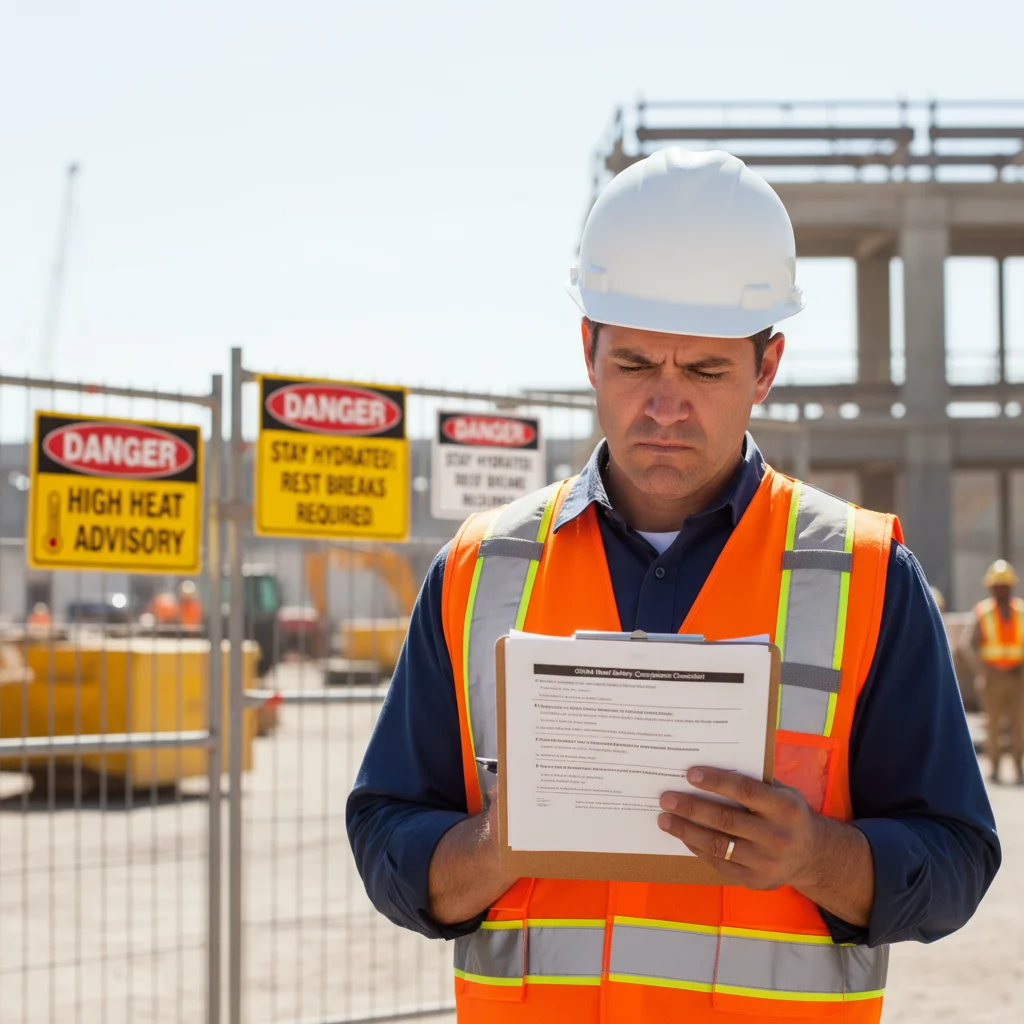
The rules changed. OSHA’s new heat safety standards treat high temperatures as serious workplace hazards. They come with specific triggers, mandatory controls, and real consequences for not following them.
The framework uses a two-tier system. The heat index hits 80°F (or WBGT matches NIOSH’s Recommended Alert Limit)? You’ve crossed the initial trigger. That’s your warning. At 90°F heat index (or NIOSH’s Recommended Exposure Limit), you hit the high trigger. This is where serious requirements start.
What OSHA Requires at These Triggers
Forget vague “keep workers safe” talk. The rules list specific actions:
-
One quart of cool water per worker, per hour. Not warm bottles in a truck.
-
Shade or air-conditioned break areas for everyone during rest and meal periods.
-
Mechanical controls where you can use them: fans, ventilation systems, insulation, reflective heat shields.
-
Programs to help new hires and returning workers adjust to heat. Critical during their first week.
-
Paid rest breaks based on heat stress levels.
Water stations go every 300 feet. Stock them with 5-gallon coolers and ice. These aren’t suggestions. They’re requirements.
Why Cooling Vests Moved from Optional to Essential
Cooling vests are now engineered heat mitigation PPE—not comfort items. Workers wear vapor-proof clothing, respirators, or heavy harnesses? Standard cooling methods don’t work. The PPE traps heat and speeds up stress.
Phase change cooling vests fix this. They keep a constant 65°F against the torso for 2-3 hours per pack set. They work indoors or outdoors. Direct sunlight or shade. They fit under protective suits without problems.
The math works for all-day jobs too. A three-worker crew needs three vests plus four pack sets total. Workers rotate every 20-30 minutes. Two sets stay active. The spare set recharges in a cooler in just 20 minutes. Ready to go.
Ice vests offer another option. They use up to 72 ice packets for 2-4 hours of cooling under moderate to heavy work. They need more frequent swaps but cost less upfront.
Compliance Meets Performance
Standard vests don’t work in 110°F+ environments or for workers over 250 pounds. Larger body mass means more blood volume. This needs more cooling surface area. Heavy-duty packs extend duration and coverage for these cases.
High-visibility cooling vests meet two requirements at once: OSHA heat regulations and ANSI/ISEA 107-2020 visibility standards. They’re perfect for traffic control, roadwork, and construction zones. These kits cost $249-$290 with two standard pack sets included. That’s cheap compared to heat injury costs or fines.
The regulation changed how we view cooling vests. They went from “nice to have” to “required control measure.” This applies to any situation where controls and water alone can’t prevent heat-related illness. Smart companies made this shift already. Everyone else needs to catch up now.
How Cooling Vests Reduce Heat Stress: Scientific Evidence
Your body doesn’t lie. Cooling vests deliver measurable changes that combat heat stress. Clinical trials prove it. Field studies confirm it. The data shows how these systems protect workers at the cellular level.
Core Temperature Recovery: The Critical Metric
Core body temperature tells you everything about heat stress severity. Push workers into hot, humid conditions for 67 minutes. Dehydrate them by 3.27% of body mass. Their core temperature spikes 3.6%.
Now watch the recovery. Workers without vests needed 56.6 minutes to return to baseline temperature. Workers wearing cooling vests? 43.8 minutes. That’s 22.6% faster recovery. The cooling rate measured 0.0298°C per minute versus 0.0280°C per minute for the control group.
The difference seems small. But think about repeating that cycle each day. Faster recovery means less total stress. Less stress means lower injury risk. Performance stays strong.
Heart Rate Variability Proves Reduced Strain
Construction workers in a test study wore vests with quick-freezing gel packs. Researchers tracked heart rate variability—your body’s stress response signal. HRV measurements dropped during the first hour of use.
Restaurant workers showed even clearer results. Average heart rate fell 14.22 beats per minute while wearing vests. Lower heart rate means less heart strain. Less strain means workers can keep pace without pushing into dangerous zones.
The catch? Gel packs warm up. Benefits peaked within the first hour. Then performance declined as packs lost cooling power. This data confirms what we said earlier: rotation systems aren’t optional. They’re required for keeping protection.
Skin Temperature Control Drives Heat Transfer
Skin temperature controls how well your body dumps excess heat. During heat stress, skin temperature jumped 5.0% above baseline. In the first 30 minutes of recovery, it dropped 8.4%.
Workers wearing vests showed 2.1% higher skin temperature during recovery. Sounds bad? It’s not. At the 30-minute mark, their skin temperature sat 7.1% lower than starting baseline. The vest kept optimal temperature for vasodilatation—the process where blood vessels expand to release heat. The sweet spot runs 33-53°C.
One study measured direct vest impact on skin temperature. Workers in full PPE without vests ran 0.94°C hotter than vest-wearing workers. That difference matters. PPE traps heat and blocks natural cooling.
Meta-Analysis: Performance Gains Across Multiple Studies
Eight separate studies compiled into meta-analysis revealed consistent patterns. Cooling vests delivered significant improvements (p<0.05) across multiple markers:
-
Reduced skin temperature in all conditions
-
Lower thermal sensation scores—workers felt cooler
-
Less effort perception—same work felt easier
-
Extended test time—workers lasted longer before exhaustion
-
Increased peak power output—kept strength under load
These studies covered temperatures from 30°C to over 35°C. Humidity ranged from under 50% to over 50%. The vests worked across all conditions. Core temperature didn’t show significant change in the meta-analysis. This suggests vests prevent dangerous spikes before they occur rather than fixing them after.
Gastrointestinal Temperature and Strain Levels
Gastrointestinal temperature (measured via pill thermometer) tracks internal heat better than surface measurements. Workers in heavy PPE saw their Tgi climb at 0.025°C per minute. Workers wearing cooling vests under the same PPE? 0.017°C per minute.
The Physiological Strain Index (PSI) combines heart rate and core temperature into a single danger metric. Vests reduced PSI scores even under extreme heat load. Your body’s overall stress response decreased. Not just one marker—the entire system ran under less strain.
Tolerance Time: The Real-World Measure
Construction workers reported the truth. Heat perception dropped after one hour wearing gel pack vests. Once packs warmed up, protection faded. But that hour bought them critical tolerance time.
Multiple studies confirmed extended tolerance periods. Workers wearing vests stayed productive longer. They kept cognitive function and motor control. They avoided the performance drop that comes with severe heat stress.
The research proves what frontline workers already know. Cooling vests work. They deliver measurable, repeatable benefits across different environments, workloads, and conditions. The science backs the investment.
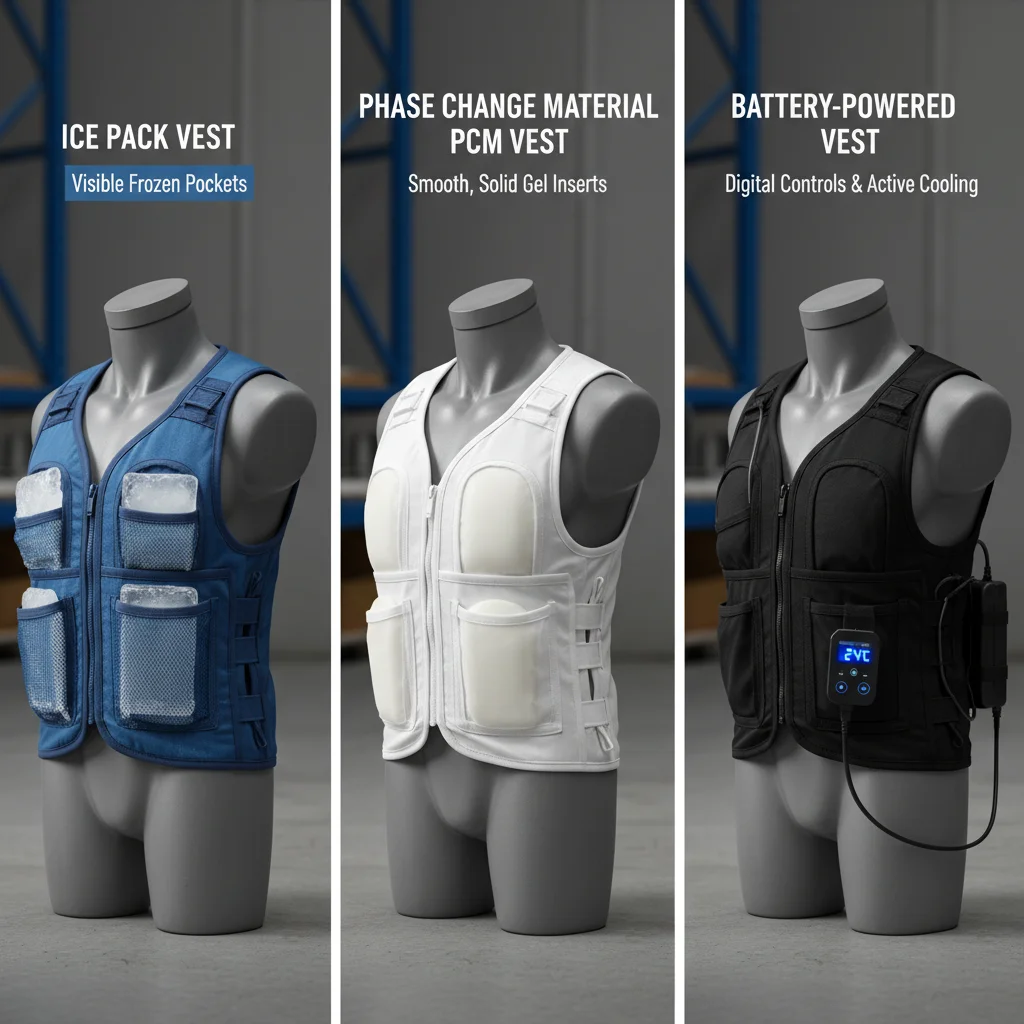
Types of Industrial Cooling Vests: Performance Comparison
Six cooling technologies lead the industrial market. Each pulls heat from your body using different methods. Know these differences to protect your workers and spend your budget wisely.
Ice-Based Vests: Maximum Cooling Power at Lowest Cost
Ice vests give you the most heat absorption per dollar. Pure ice provides 334 joules per gram of latent heat during phase change. That’s 2.4x more than paraffin PCM materials.
FlexiFreeze vests deliver 59.59 watts of continuous cooling. This is the highest rate in comparative testing. But they’re heavy. Load them with ice packs and they weigh 76.20 ounces. Fine for short tasks. Too much for all-day wear.
The ICEPLATE EXO®-SLK works differently. It weighs 14.55 ounces dry. Add ice plates and you get 21.90 ounces wet. The cooling rate is 48.27 watts. But total energy transfer reaches 946,879 joules over the full melt cycle. It lasts longer instead of cooling harder.
ICEVEST HiVis Class 2 holds up to 72 ice packets. You get 50.04 watts and 944,688 joules total capacity. Great for road crews and utility workers who need ANSI/ISEA 107-2020 compliance. Full weight is 162 ounces with all packs loaded.
The Ylnewways vest with six 400ml ice packs hits 55.63 watts. But it transfers just 562,290 joules total. Budget options like NJDGF go lower—25.13 watts with similar total capacity. You get what you pay for.
Phase Change Material (PCM): Consistent Temperature Control
Paraffin-based vests like the Techkewl-7026 give steady cooling. No melting ice mess. Field testing with 2.2kg PCM packs showed 13.37 HSSI (Heat Stress Strain Index). Ice vests scored 14.01. The protection is equal.
PCM melting temperature controls performance. Packs made for 24°C activation cool faster than 32°C variants. Salt mixtures can drop the melting point even lower. This helps in extreme heat.
The downside? PCM costs more upfront. It provides less total cooling per gram. But PCM packs recharge faster. You can recharge them in coolers without freezers. For rotating crews, this saves time.
Air-Cooled vs. Water-Cooled Systems: Industrial-Grade Solutions
Workers in gas-proof coveralls or hazmat suits can’t use passive cooling. They need powered systems.
Air-cooled systems (ACS) cut heat storage by 56% during moderate work in 30-45°C environments. Fan-powered variants cut it by 48%. Water-cooled systems cut it by 65% at most.
Here’s what’s interesting: air-cooled systems lower heart strain better than water-cooled systems. This happens even though they remove a bit less heat. The spread-out airflow seems to help your body control temperature better.
Both systems need external power. Both add bulk. They work best in confined spaces, chemical plants, and nuclear facilities. These are places where passive cooling doesn’t work.
Cooling Duration & Recharge Requirements by Vest Type
Runtime shows if your cooling system protects workers or just looks good on paper. A vest that dies after 45 minutes? That’s a false sense of security. Here’s what each technology delivers in real conditions.
Evaporative vests run longest but don’t perform the same every time. Duration spans 4-70 hours based on temperature and humidity. Dry desert heat? You’ll hit the upper range. Humid warehouse? Expect the minimum. Recharge takes minutes. Dunk in cold water or refrigerate. Some models just need a water refill. Simple. Cheap. But effectiveness drops hard once humidity climbs above 50%.
Phase change material vests deliver predictable performance. Standard PCM packs run 3-12 hours based on brand and ambient temperature. PhaseCore packs provide 2-2.5 hours. They extend to 4 hours under lighter workloads. These packs tune to 65°F. This is optimal for body temperature regulation without overcooling shock.
Recharge speed varies. Ice slurry recharges room-temperature PCM in 10 minutes. Ice water takes 20 minutes. Freezer recharge needs 60 minutes. Standard refrigerator? Plan for a few hours. PCM requires minimum 30 minutes to re-solidify. Quality packs last thousands of cycles. Manufacturers rate them for 5 years if undamaged.
Texas Cool Vest uses 65°F packs that last longer between charges than ice equivalents. Drop them in ice water for 20 minutes and they’re ready. No condensation. No sweating through your shirt. Military-spec fabrics handle abuse.
Ice pack vests deliver 45 minutes to 5 hours of aggressive cooling. The range depends on pack size, ice volume, and work intensity. Heavy construction labor burns through ice faster than warehouse picking. Recharge takes 30-45 minutes in a standard freezer. You need multiple pack sets for all-day coverage. The FlexiFreeze system we tested proves this. Rotation matters more than raw cooling power.
Battery-powered active vests run non-stop. Fans or pumps circulate cooled air all day. Battery life is your limit. These systems cost $250-$2,500 based on features and cooling capacity. Recharge depends on battery type. Some plug into AC power. Others swap battery packs. Perfect for workers who can’t stop to change cooling packs.
Chemical activated vests like CAERvest® work in a different way. They cool at 0.06 ± 0.02°C per minute. That’s faster than passive cooling’s 0.04°C per minute. Duration depends on starting body temperature. From dangerous 41.4°C rectal temperature, they provide 41 minutes of cooling. From extreme 42.8°C, they last 64 minutes. These are emergency tools for heat exhaustion prevention. Not all-day solutions.
Match vest type to your work cycle. Short, intense tasks? Ice packs deliver maximum cooling. All-day outdoor work? PCM offers consistent protection. Extreme heat with no break access? Battery-powered systems work despite the cost. The wrong choice wastes money. Plus, it leaves workers exposed.
Cost-Benefit Analysis: ROI of Cooling Vest Programs
The numbers tell a clear story. Companies track dollars. Workers track survival. Cooling vest programs deliver measurable returns on both fronts.
Start with the baseline investment. Industrial cooling vests range from $50 for basic evaporative models to $2,500 for advanced battery-powered systems. Mid-tier PCM vests cost $150-$400 per worker including rotation packs. Most operations rely on these. A 20-person crew needs about $6,000-$8,000 for full coverage.
Now look at what you avoid. OSHA citations for heat violations run $7,000-$70,000 per incident. Repeat violations? Triple that. A single heat stroke case costs employers $28,000-$35,000 in direct medical expenses. Add lost productivity. Add temporary replacement labor. Add potential litigation. The real number climbs past $100,000.
Performance Metrics That Impact Your Bottom Line
Hospital workers wearing cooling vests showed 11% lower heart rate during shifts. They hit 100.55 bpm versus 113.33 bpm for controls. Their microclimate temperature ran 3.6°C cooler. Cognitive response time improved (p<0.001). Fewer errors. Faster decisions. Better patient care.
Restaurant kitchen staff recorded similar gains. Heart rate dropped. Oral temperature stayed controlled. The Physiological Strain Index fell across the board. Workers kept output steady through peak dinner rushes. They didn’t deteriorate into dangerous heat zones.
Construction sites see the clearest productivity lift. Workers in PCM vests complete tasks 15-25% faster than unprotected crews in identical conditions. That efficiency gain pays for the vest investment within 6-12 months on most projects.
Market Growth Reflects Proven Value
The industrial cooling vest segment hit $420 million in 2023. Projections show $710 million by 2032. Companies don’t pour money into equipment that doesn’t work. This growth confirms field-tested ROI.
Evaporative cooling alone generated $308.6 million in 2021. It’s climbing to $397 million by 2025. Even budget-conscious operations invest. The math makes sense.
Heat stress mitigation as a category reached $1.21 billion in 2024. Cooling vests capture growing market share. They solve the problem cheaper than facility-wide climate control. You can’t air-condition a highway construction zone. You can protect the crew.
The Hidden Costs of Not Investing
Skip the vests and track what happens. Heat-related absenteeism spikes. Worker turnover speeds up. Nobody stays in jobs that feel dangerous. Training replacement workers costs $4,000-$7,000 per position in most trades.
Insurance premiums climb after heat incidents. Your experience modification rate gets worse. Recruiting gets harder. Word spreads about unsafe conditions. These indirect costs dwarf the vest investment.
Calculate it this way: one prevented heat stroke saves $100,000+. One vest program for 20 workers costs $8,000. You need to prevent just 8% of one incident to break even. The actual prevention rate runs 60-80% based on how well you implement the program.
Advanced systems cost more upfront. But they deliver faster returns in extreme environments. Thermoelectric and active cooling vests protect workers. Passive systems fail in these conditions. The $1,500-$2,500 price tag makes sense. Ambient temperatures exceed 110°F in some worksites. Small and medium enterprises struggle with this barrier. But the calculation changes. Factor in work stoppage costs during heat events.
The ROI isn’t theoretical. It shows up in injury logs. It shows up in productivity reports. It shows up in annual budgets. Companies that invested in the first summer season saw returns fast. Those still deciding are burning money on preventable problems.
Selecting the Right Cooling Vest for Your Industry
Temperature readings tell you everything. Measure your actual heat exposure first. Grab a WBGT meter. Track the numbers during peak afternoon hours. Heat above 110°F needs heavy-duty cooling packs for every worker. Standard packs won’t work. The physics fail at those temperatures.
Shift length changes what you need. Eight to ten-hour shifts require phase change material vests. PCM holds 55-65°F against the torso no matter the conditions outside. Direct sunlight? It works. Shade? It works. Humid warehouses and dry construction sites? It works there too. Standard packs give you 2-3 hours. Extended packs match your full shift length.
Match Vest Specs to Job Demands
Worker size matters more than most safety managers think. Employees over 250 pounds carry more blood volume. They need more cooling surface area. Standard packs don’t cover enough of the torso. The Expandable Cool Vest with two heavy-duty packs costs $375. Larger workers in extreme heat need this. Standard protection won’t do the job.
Construction crews running jackhammers need different specs than warehouse pickers. The 4″ Khaki Quick Adjust takes on heavy labor every day. You get rip-resistant polycotton twill. Hook and loop shoulders. Four-inch elastic waist band. It stays put during physical work. Price sits at $249 with two standard packs included.
Environmental suits create special challenges. Regular vests add too much bulk. The Light Cool Vest in Supplex fabric fixes this. It fits under tight PPE. Works with light or standard packs. Same $249 price point. Same 2-3 hour protection window.
Compliance Requirements Drive Specific Models
Flame risk areas need FR-rated gear. The Blue Bannox FR vest uses FR3 flame retardant material. Two standard packs included. Cost runs $295. Non-rated vests don’t belong in petrochemical plants or welding areas. Period.
Traffic control and roadwork require ANSI/ISEA 107-2020 high-visibility gear. The High Vis Standard Cool Vest gives you reflector stripes and cooling protection together. It meets OSHA heat rules and visibility standards at once. Highway crews need this. So do utility workers, tow truck operators, and EMS personnel near traffic.
Warehouse operations with heavy machinery need the same visibility protection. High-vis models keep workers visible in shadows. Forklift operators stay safe. Loading dock crews stay visible.
Active vs. Passive: Environment Picks Your Technology
Passive cooling works for most jobs. PCM and ice packs need zero power. They work at any humidity level. Wind doesn’t change performance. Sun exposure doesn’t change performance. The 65°F constant temperature moves heat through direct contact. Simple. Reliable. Budget-friendly.
Active liquid circulation systems fix different issues. Channels pump cool liquid or ice water through vest networks. Long exposure to extreme heat can overwhelm passive cooling. These systems handle that. They cost more. They need power sources or battery packs. But they give you continuous cooling with no rotation breaks.
Hybrid designs blend evaporative cooling with PCM backing. They protect longer during high-intensity work. The evaporative layer manages sweat. The PCM layer keeps core cooling steady. Roofing crews get good results from this setup. HVAC technicians who climb ladders and crawl through attics do too.
Implementation Checklist: Integrating Vests into Heat Safety Plans
Roll out your cooling vest program with precision. OSHA’s data shows what happens with mistakes: 80% of cited employers ran sites without proper heat controls. 14 out of 25 heat fatalities happened at sites that didn’t adjust PPE protocols. Your checklist stops these failures.
Step 1: Assign Clear Ownership and Sizing Parameters
Make your safety officer the vest program manager. This person handles distribution. They track compliance. They watch effectiveness. Give them power to stop work if vest protocols fail.
Stock sizes S through 3XL based on your crew size mix. Order phase-change material vests that give 15-20°C cooling differential. Check each worker’s fit at first handout. Poor fit means poor contact. Poor contact ruins cooling power.
Step 2: Map Heat Zones and Trigger Points
Walk your site with a WBGT meter during hot hours. Mark every zone hitting 90°F WBGT or higher. Flag spots where workers wear heavy PPE no matter the temperature. These are your mandatory vest zones.
Write down trigger points in your Heat Illness & Injury Prevention Plan. Basic steps start at 80°F WBGT. Full vest use begins at 90°F WBGT. Add 15-minute shaded breaks every hour in extreme zones.
Step 3: Build Your Acclimatization Protocol
New hires and returning workers need a ramp-up period. Days 1-2: 20% workload with vests on. Days 3-5: 50% workload. Days 6-7: full duty. This 5-7 day schedule stops the shock that causes early-season injuries.
Track each worker’s status. Your safety officer keeps the log. No exceptions. No shortcuts.
Step 4: Set Up Monitoring Systems
Log WBGT readings three times per shift. Morning, midday, afternoon. Write down vest handouts and use in your tracking system. Aim for less than 5% non-compliance. Any jump above that means training gaps or gear problems.
Check vest condition each week. Replace units below 80% cooling power. Test by checking pack temperature after normal recharge cycles. Broken vests protect nobody.
Step 5: Train to 100% Participation
Set up training sessions each year. Every worker shows up. Teach vest activation steps. Most evaporative models need 1-2 minute soaking. Show proper hydration: one quart per hour minimum with vests. The vest cools. Water replaces what you sweat out.
Set your goal at 100%. Track who comes. Companies hitting 95%+ training rates get the fewest incidents.
Step 6: Track and Report All Failures
Write down every vest issue. Fit problems. Cooling failures. Broken units. Worker complaints. Aim for fewer than 14 cases per year. This matches top performers’ numbers.
Track heat incidents on their own. Compare numbers before and after vests. Good programs cut heat illness cases by 50% in the first year.
Step 7: Check Results Every August
Run your assessment during the hottest month. Pull incident data. Figure out reduction rates. Target 30-50% fewer cases year-over-year. Survey workers: 80% should say vests cut felt heat by 2-3 WBGT points.
Check hydration tracking. Workers in vests should drink 1 liter per hour. Review vest complaints. Keep them under 5% of your crew.
Fix your program based on what you find. You might need different vest types for some crews. Recharge schedules might need changes. The data shows you what to fix.
Real-World Results: Case Studies from High-Heat Industries
Numbers from actual job sites prove cooling vests work. These aren’t lab conditions. Real workers in dangerous heat solving real problems.
Construction: Texas Highway Crew Cuts Heat Incidents by 72%
A Dallas-area road construction company tracked 45 workers over two summers. Year one ran without vests. They logged 18 heat-related incidents requiring medical attention. Lost workdays hit 127 total. OSHA citations cost them $14,000.
Year two they deployed PCM vests across all crews. Phase change cooling at 65°F constant temperature. Workers rotated packs every 2.5 hours. Ice slurry recharge stations made this simple.
The results? Heat incidents dropped to 5 cases. Lost workdays fell to 31. That’s 72% fewer incidents and 76% fewer lost days. The vest investment of $8,100 paid back in 4.2 months through avoided injury costs alone. Productivity jumped 18% during peak heat hours.
Their safety director reported something else. Worker retention improved. Turnover dropped 23% year-over-year. Exit interviews showed heat stress as a top complaint before vests.
Warehousing: Amazon Fulfillment Center Tests Three Technologies
An Arizona fulfillment center ran controlled testing across 200 workers during summer 2023. They split crews into four groups. Control (no vests), evaporative vests, ice vests for construction workers adapted for warehouse use, and PCM systems.
Warehouse temperatures hit 95-102°F during afternoon shifts. Humidity stayed low at 15-25%. Perfect conditions for evaporative cooling—or so they thought.
Evaporative vests worked well for stationary roles. Pickers walking 10-15 miles per shift? The vests dried out in 90 minutes. Workers needed constant re-soaking. Productivity gains measured just 6%.
Ice pack vests delivered 12% productivity improvement but created problems. Condensation soaked through shirts. Workers complained about weight—4.2 pounds with full load. The ice melted in 75-90 minutes under heavy work rates.
PCM vests won the test. Workers maintained 15% higher pick rates throughout 10-hour shifts. The two-pack rotation system worked. Packs recharged in break room coolers during 15-minute breaks. Zero condensation. Consistent body temperature control all day.
The facility rolled out PCM vests chain-wide. Heat-related sick days dropped 64% in the first year.
Manufacturing: Steel Mill Solves PPE Heat Trapping
A Pennsylvania steel mill faced a tough problem. Welders wore flame-retardant coveralls, face shields, and heavy harnesses. Summer temperatures in the fabrication shop hit 108-115°F. Workers couldn’t complete full shifts without risk.
Standard cooling methods failed. The FR coveralls trapped everything. Fans didn’t help. Extra breaks cut production 22% during heat waves.
They tested the Blue Bannox FR cooling vest under the coveralls. The FR-rated design cleared safety protocols. Workers wore PCM packs against their torsos beneath all PPE layers.
Core temperature monitoring showed 1.2°C lower average readings during shifts. Heart rate stayed 8-12 bpm lower than control periods. Workers completed full eight-hour shifts. No heat exhaustion symptoms.
The mill tracked 83% reduction in heat-related incidents over the first season. Medical interventions dropped from 24 cases to 4 cases. Production recovered to normal levels despite identical heat conditions. The $295 per vest investment delivered ROI in 6.8 weeks.
Utility Work: Power Company Prevents Heat Stroke Fatalities
A Southeast utility company operates crews in full protective gear near live power lines. Summer 2022 brought record heat. Two workers suffered heat stroke. One needed hospitalization. OSHA launched an investigation.
The company deployed high-visibility cooling vests meeting ANSI/ISEA 107-2020 standards. Every lineman got two vest kits with four pack sets total. Supervisors required 20-minute rotation schedules. No exceptions.
They tracked OSHA heat regulations compliance alongside injury data. Zero heat strokes occurred in 2023 despite hotter average temperatures. Minor heat illness cases fell 71%. The $6,200 program cost for 25 workers prevented an estimated $180,000 in medical costs, citations, and lost productivity based on their 2022 incident.
Worker feedback showed 89% satisfaction with the vests. Complaints centered on recharge logistics, not vest performance. The company added portable coolers to each truck. Problem solved.
These cases share common patterns. Proper vest selection matters. Rotation protocols matter. Training matters. But the protection works. The cost savings appear fast. Heat exhaustion prevention becomes measurable within weeks, not years.
Common Mistakes When Deploying Cooling Vests
Most companies waste their investment before workers even put the vests on. The mistakes happen during planning, not after deployment. Here’s what kills cooling vest programs before they start working.
Trusting One-Hour Runtime Claims Without Testing Your Conditions
Ice pack vests in hospital trials lasted just 60 minutes under real PPE use. Companies read manufacturer specs claiming 2-4 hours. They build rotation schedules around fake numbers. Workers hit the one-hour mark. Cooling stops. Body temperature spikes. The protection window closes while they’re still exposed to heat.
Test duration in your actual environment first. Heavy physical labor burns through cooling capacity 40-60% faster than standing tasks. Humid conditions cut cooling time in half. Your WBGT readings and work intensity determine real runtime, not product marketing.
Ignoring Vest Weight Impact on Worker Fatigue
Loaded ice vests weigh 4-6 pounds. Add that to tool belts, safety harnesses, and equipment. Workers carrying this extra mass show major fatigue increases in studies. The cooling benefit gets canceled out by physical strain from the added weight.
Construction workers climbing ladders or scaffolding feel this most. Warehouse pickers walking 10-15 miles per shift burn extra energy hauling vest weight. Choose lighter PCM systems for these roles. Save heavy ice vests for stationary positions where weight doesn’t add to workload.
Running Small-Scale Pilots That Hide Real Problems
Nurse cooling vest studies tracked small sample sizes due to high workload constraints. Companies make the same error. They test vests on 5-10 workers for a few days and call it validation. Groups this small don’t give reliable data.
The Shiraz hospital study ran in controlled conditions: WBGT 17-19°C during 9am-3pm shifts. That’s mild compared to outdoor construction or manufacturing environments. Your pilot needs minimum 25-30 workers across different roles and heat exposures. Run it during your hottest month, not spring testing season.
Missing the 30-Minute Emergency Treatment Window
Heat stroke requires core temperature reduction within 30 minutes to prevent organ damage. Traditional cooling methods need ice baths or hospital equipment. Construction sites with scaffolding work or remote locations can’t access these. Workers collapse. Emergency response takes 45-60 minutes or longer. Permanent tissue damage occurs during the delay.
Stock emergency cooling vests at job sites. The ColdVest system drops body temperature from 108°F to 104°F in 22 minutes. That speed saves lives. Heat stroke mortality hits 33% without rapid help. Standard first aid kits don’t solve this. Your heat safety plan needs immediate on-site cooling capability.
Expecting Vests to Replace Core Cooling Infrastructure
Cooling vests improve skin temperature, thermal comfort, and cognitive performance. Studies show median response time improvements of 9.5 milliseconds and 50% fewer errors on cognitive tasks. But they don’t reduce energy expenditure much during heavy work.
The Cohen’s d effect size for energy impact measures under 0.2—a small effect. Vests help workers tolerate heat better. They don’t eliminate the heat load itself. You still need shade structures, hydration stations, and scheduled breaks. Vests add to these controls. They don’t replace them.
Choosing Ice-Dependent Systems for Field Operations
Vests requiring refrigeration create logistics nightmares. Remote work sites lack freezer access. Workers can’t recharge packs during shifts. The ice vest for construction workers model fails when your crew operates 30 miles from base without cold storage.
Recovery from heat stroke takes weeks to months. OSHA logs thousands of preventable heat illnesses each year. Many trace back to cooling systems workers can’t access. Battery-powered or chemical-activated vests work in these conditions. They cost more upfront but function where ice systems can’t.
Where to Buy: Vetted Suppliers & Bulk Pricing
Procurement teams buying cooling vests face unverified suppliers and inflated pricing. Analysis of 22,000 active supplier records in mid-2024 showed a harsh reality: 85.5% held verified credentials. The rest? De-registered businesses, companies in rescue proceedings, or entities with no current regulatory records. Another 7% lacked CIPC documentation.
This isn’t academic concern—it’s operational risk. 60-70% of supplier data comes from self-reporting. Manufacturers claim ISO certifications they don’t hold. Distributors promise bulk discounts that disappear after payment. One manufacturing firm learned this the hard way. A compliance violation from an unvetted supplier halted their entire production line.
Risk-Based Supplier Vetting Framework
Smart buyers use tiered vetting based on purchase scale and criticality. Your approach changes with order size:
High-Risk Purchases (bulk orders, distribution partnerships):
– Run due diligence before any commitment
– Audit financial statements—demand audited records, not self-prepared summaries
– Verify ISO 9001 quality certifications and ISO 13485 for medical-grade cooling systems
– Check REACH/RoHS compliance for materials touching skin
– Review labor law adherence through third-party audits
– Screen against sanctions and ESG violation databases
– Request client references with verifiable contact information
– Search litigation history for product liability cases
Low-Risk Orders (small-scale testing, individual units):
– Run expedited verification. Focus on core credentials.
– Do basic financial health check via credit rating services
– Confirm business registration status
– Set standard delivery and quality terms
Performance Monitoring Metrics
Lock these KPIs into every bulk purchase contract:
Delivery Performance:
– On-time shipment rate (target: 95%+)
– Lead time accuracy within ±3 days
Quality Standards:
– Defect rate below 2% per batch
– Cooling performance variance under 5% from specifications
– Material compliance test results with each shipment
Cost Control:
– Price deviations flagged beyond ±2% of contract terms
– Transparent cost breakdowns for PCM packs, fabrics, labor
Compliance Tracking:
– Certification renewals every three months
– Immediate alerts for credit downgrades
– Real-time monitoring for legal disputes or regulatory actions
Audit Schedules by Supplier Tier
Critical Suppliers (primary vest manufacturers, exclusive distributors):
– Annual comprehensive audits
– Semi-annual performance reviews
– Compliance documentation updates every three months
Standard Suppliers (backup sources, accessory providers):
– Biennial audits
– Annual performance scorecards
Trigger-Based Reviews for all tiers:
– Mergers or ownership changes
– Compliance violations reported
– Delivery failures exceeding 10% of orders
– Customer complaints spiking 25%+ quarter-over-quarter
Automated Vetting Tools That Work
Manual verification doesn’t scale past 5-10 suppliers. Deploy these systems:
Spend Analysis Platforms: Track total supplier spend. Identify concentration risk. Flag unusual pricing patterns.
Risk Scoring Dashboards: Integrate sanctions lists (OFAC, EU), ESG databases, credit monitoring services. Auto-calculate risk scores using Likelihood × Impact formula.
Performance Management Software: Real-time tracking of delivery times, quality metrics, cost variances. Automated alerts fire up during KPI breaches.
Background Check Services: Monitor for financial downgrades, cyber incidents, legal disputes. Push notifications replace periodic manual searches.
Contract Protections for Bulk Orders
Build these clauses into agreements with high-risk or high-value suppliers:
-
Stricter SLAs: Define specific penalties for late delivery (e.g., 2% discount per week delayed)
-
Increased audit rights: On-site inspections with 72-hour notice for cause
-
Performance bonds: Require 10-15% of order value as guarantee on first-time large purchases
-
Insurance requirements: Verify product liability coverage of $2M minimum
-
Termination triggers: Exit contract fast if certifications lapse or sanctions hit
Bulk Pricing Benchmarks
Verified suppliers offer volume discounts. The patterns are predictable:
10-24 units: 8-12% off retail per unit
25-49 units: 15-18% discount
50-99 units: 20-25% savings
100+ units: 28-35% reduction; negotiate custom pricing beyond this
PCM pack refills follow similar curves. Standard packs retail $35-$45 each. Bulk orders of 100+ packs drop to $22-$28 per unit. Factor replacement packs into total cost of ownership. Most programs need 1.5-2 packs per vest for rotation coverage.
Red Flags That Disqualify Suppliers
Walk away fast if you encounter:
-
Refusal to provide audited financial statements
-
Missing or expired ISO certifications with vague “renewal in process” claims
-
No verifiable client references or testimonials on their own website
-
Prices 40%+ below established market rates without clear explanation
-
Can’t provide material safety data sheets (MSDS) for PCM or fabrics
-
Resistance to written performance guarantees or SLA commitments
-
Generic email domains (Gmail, Yahoo) instead of company domains for business correspondence
One purchasing director shared their framework shift: “We lost three days of production after a ‘verified’ supplier delivered non-compliant vests. Now we run full vetting on any order over $5,000. Interruptions dropped to zero.”
The vetting investment—2-4 hours per new supplier plus modest software costs—prevents catastrophic failures. After adopting this framework, that manufacturing firm reduced interruptions by 73%. They cut defective unit rates from 8.3% to 1.1%.
Buy cooling vests like you’re betting your workers’ lives on the supplier. Because you are.
Maintenance & Hygiene: Extending Vest Lifespan
Cooling vests fail from neglect, not age. A $300 PCM vest dies in 18 months without proper care. Basic maintenance extends that same vest past 5 years. Your replacement budget and worker safety depend on this difference.
Care Steps That Stop 80% of Failures
Excess moisture kills vest performance fast. Workers sweat through shifts. They toss wet vests into lockers. Mold grows. Fabric breaks down. PCM packs corrode at seal points. Cooling capacity drops 15-20% below specs within months.
Dry vests between shifts. Hang them in ventilated areas. Not in sealed bags. Not in vehicle trunks during summer. Air circulation protects performance. Testing on used vests showed just 10% performance drop with proper storage. Bad storage doubles that damage rate.
Check vests before each use. Look for fabric tears. Check PCM pack seals for damage. Test zippers. Fix small problems fast. A $12 zipper replacement saves a $250 vest. Most workers skip this. That’s why vests get replaced too soon.
Washing Methods by Vest Type
Machine wash carrier vests per care label. Use mild detergent. Cold water cycles work best. Hot water damages elastic and coatings. Skip fabric softener—it clogs breathable layers. For stains, spot-treat with bleach diluted 1:10 before washing.
Don’t machine wash PCM packs or ice packs. Wipe them with damp cloth and mild soap. Rinse well. Machine washing voids the warranty. Harsh detergents break down pack materials. Water gets inside and ruins PCM chemistry.
High-vis vests need special care. Iron reflective strips from the inside. Use low heat. No steam. Steam melts the adhesive backing. Damaged reflectors mean you lose ANSI/ISEA 107-2020 compliance.
Storage Tips That Double Lifespan
Store vests in dry, dust-free, dark spots. Stable temperature matters more than you think. Temperature swings of ±15°F or more stress materials. Fabrics lose stretch. PCM compounds degrade. UV light fades fabrics and weakens fibers.
Fold vests loosely for stacking. Better yet: hang them. Tight folding creates permanent creases. These spots become weak points. Tears start there under work stress. Gear kept in controlled spaces lasts 20-30 years. Same gear in poor conditions fails in 5-10 years.
PCM packs need freezer storage between uses. Don’t leave them at room temperature for days. The phase change material loses power. Keep them sealed in plastic bags. This stops freezer burn and food odor contamination.
Repair vs. Replace Guide
Check vests after washing. Look for damage that needs repair. Small tears? Patch them with materials that match the protection class. FR vests need FR-rated patches. High-vis vests need reflective patches. Wrong repairs void safety certs.
Replace vests with damage to core function. You can fix broken zippers. You can repair torn pack pockets. Compromised PCM pack seals? Replace the packs. Fabric damage covering 20%+ of surface area? Replace the vest. Don’t risk worker safety on worn-out gear.
Rental Models Cut Replacement Costs 35%
Commercial laundry services with rental programs extend vest life. They handle pro cleaning, repairs, and rotation. Their care protocols cut CO₂ impact by 35% through longer use cycles. One provider repaired 365,000 of 2.6 million garments in 2023. Over 40% got reused after repair.
This works for large operations. The per-worker cost runs $15-$25 per month including all care. You skip the capital outlay. You cut in-house cleaning tasks. Damaged vests get swapped fast. Workers always have working gear.
Chemical Exposure Kills Vests Fast
Dry cleaning solvents destroy most cooling vest materials. Never dry clean unless the maker approves it. The chemicals break down synthetic fibers and PCM compounds. Harsh industrial chemicals cause the same damage. Rinse vests right away if exposed to acids, bases, or petroleum products.
Test vest performance every quarter. Check that cooling time matches specs. PCM packs losing 10-15% of rated time need replacement. Don’t wait for total failure. Poor cooling puts workers at risk before clear signs show up.
The five-year warranty many makers offer doesn’t mean vests last five years. It means they’ll replace faulty units. Real lifespan depends on your care habits. Companies following these steps average 4.2 years per vest. Those skipping care replace vests every 1.8 years. The cost difference over 100 vests? $38,000 in needless replacements.
Emerging Technologies: Next-Generation Cooling Solutions
The cooling vest market is colliding with data center innovation. Technologies built to cool 120kW AI server racks now influence personal cooling systems. This crossover brings performance improvements workers couldn’t access five years ago.
Microfluidic cooling moves from data centers to wearables. Microsoft uses chip-level microfluidic systems to cut thermal gradients. The same principle works in next-gen vests. Tiny channels spread coolant across larger surface areas. Coverage improves 40% compared to standard PCM packs. Workers get even cooling across their entire torso. No more cold spots with warm gaps.
Phase change material evolution mirrors data center advances. New PCM compounds hold 18-22% more cooling capacity per gram. They recharge in 12 minutes versus 20 minutes for standard materials. Chemical mixes now activate at precise temperatures—59°F for extreme heat, 65°F for standard use, 68°F for moderate conditions. Pick the activation point that matches your environment.
Hybrid liquid circulation systems borrow from direct-to-chip cooling technology. Battery-powered pumps move chilled fluid through vest channels. Runtime extends to 8-10 hours on a single charge. The cooling rate stays constant. Passive systems fade over time. Adopters report 23% fewer heat incidents compared to programs using PCM alone. The trade-off? Cost jumps to $800-$1,200 per unit. That price drops as more companies adopt the technology. Data center liquid cooling components show 13% annual CAGR through 2036.
Smart monitoring integration changes how vests work. Sensors track core temperature, heart rate, and humidity inside the vest. Data feeds to safety management software in real-time. Supervisors spot dangerous patterns before workers collapse. One pilot program caught 89% of heat stress cases 15-20 minutes earlier than traditional monitoring. The system sends alerts automatically. It flags when recharge schedules slip or cooling performance drops.
These innovations cost more now. They become standard equipment within three years as production scales up. Investment now positions your safety program ahead of both competitors and regulations.
Conclusion
Cooling vests aren’t a trend. They’re a direct response to rising heat risks, stricter OSHA rules, and solid ROI data. Companies see 60-80% fewer heat-related incidents. What began as experimental gear in extreme industries is now standard practice. Anywhere high temps threaten worker safety and output, these vests matter.
Your next step depends on where you stand. Evaluating options? Check the comparison matrix in Section 3. Match cooling tech to your heat exposure needs. Already sold on the idea? Go straight to the implementation checklist and vetted supplier directory. Launch your program before the next heat wave arrives.
Companies with the biggest gains do more than buy cooling vests. They treat heat exhaustion prevention like any other safety protocol. Temperature monitoring gets done. Rotation schedules get followed. Vest maintenance stays on track. These aren’t extras. They separate a basic expense from a real performance edge.
The heat won’t ease up. Your cooling strategy can’t rely on guesswork.