
You found the heated vest you’ve been eyeing — maybe you already ordered it. The box arrives, you tear it open, and somewhere between the excitement and the instruction sheet, a quiet panic sets in: wait, where’s the battery?
Wondering whether your heated vest needs a power bank? You’re not alone. The answer is less straightforward than most product listings suggest.
Some vests ship with a battery pack. Others are designed as USB heated vests that run off any power source you connect. Get the pairing wrong and you’re either left in the cold or stuck with a dead power bank halfway through your morning commute.
This guide cuts through the confusion. You’ll know what to check before buying anything else.
Do You Need A Power Bank For A Heated Vest?
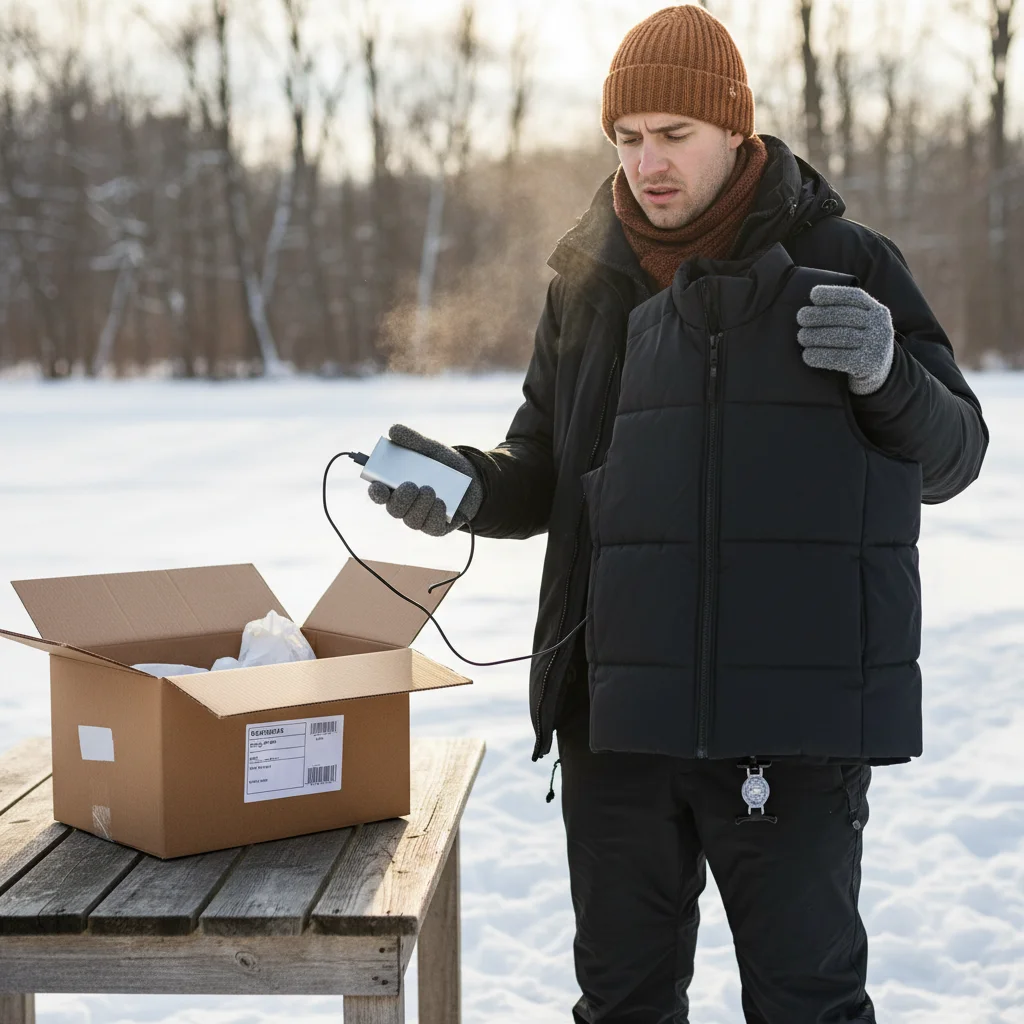
The short answer: it depends on which vest you bought.
Most heated vests fall into one of two camps. Some come with a dedicated battery pack in the box — a 7.4V or 8.4V unit built for the vest’s heating system. Others are USB heated vests that draw power from any compatible external source you connect.
Here’s the key thing: your vest’s heating elements don’t run on the same voltage as your phone. Standard power banks output 5V. Most heated vests need 7.4V or 8.4V to run. That gap matters.
No battery included? You have two options:
-
A dedicated heated vest battery pack matched to your vest’s voltage
-
A standard power bank paired with a 5V-to-8.4V step-up adapter — this works, as long as your power bank delivers at least 2.0A output
Some setups won’t cut it. Plugging a USB heated vest into an old, low-output power bank won’t give you full heat. A 1.0A port can’t handle the load. A 12V Milwaukee or Makita tool battery won’t work either — those systems are built for a completely different voltage range and won’t power a standard USB vest.
Check your vest’s label or manual first. Look for the voltage rating and wattage. Reads ≤12W at 7.4V or 8.4V? You’re in the USB-compatible category. Lists 12V? You need a brand-specific battery — no substitutes.
Do Most Heated Vests Come With a Built-In Battery?
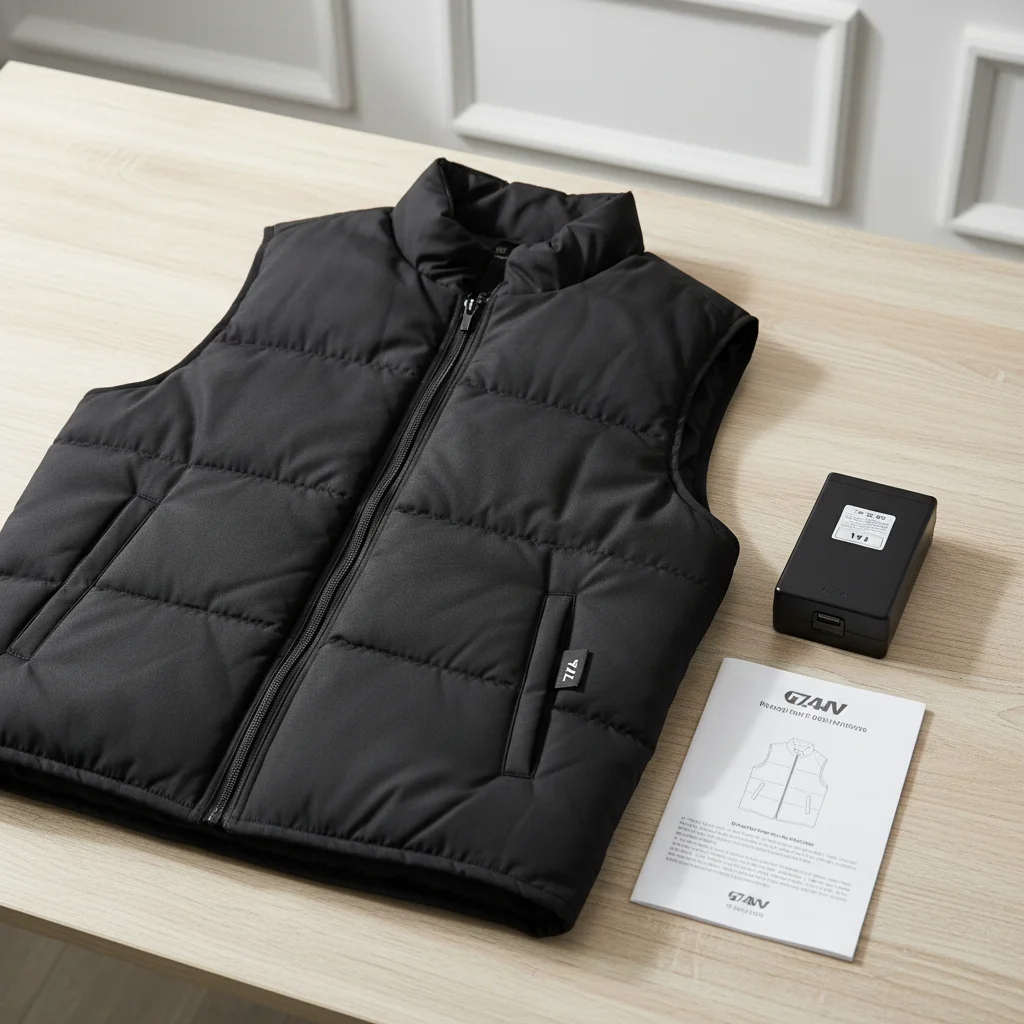
The honest answer surprises most people: no. Almost every major heated vest brand puts the battery outside the vest — tucked into a dedicated pocket, removable and replaceable.
This isn’t a budget shortcut. It’s a deliberate design choice, and the reasoning is solid.
Ororo, Fieldsheer, Gokozy, Venustas — check any mainstream brand and you’ll find the same setup: an external pack stored in a side or interior pocket. None of the major players ship vests with fixed, built-in batteries. The split is 0% built-in, 100% external removable.
Why? A few practical reasons stand out:
-
Swappability — carry a spare pack and you double your runtime without buying a new vest
-
Upgradability — swap a 5,000mAh pack for a 10,000mAh for longer sessions
-
Safety certification — a dedicated Battery Management System (BMS) in a removable pack is far easier to certify than one sewn into a garment
-
Cold-weather performance — external packs can use cells built for low temperatures, without any changes to the vest itself
A vest with a fixed, non-removable battery does exist — but it makes up an estimated less than 5% of the market. No separate charging port or detachable pack on your vest? Check the spec sheet. That’s your sign you’re looking at a rare exception.
For everything else: expect a pocket, expect a pack, and plan for it.
What Type of Power Source Does Your Heated Vest Need?
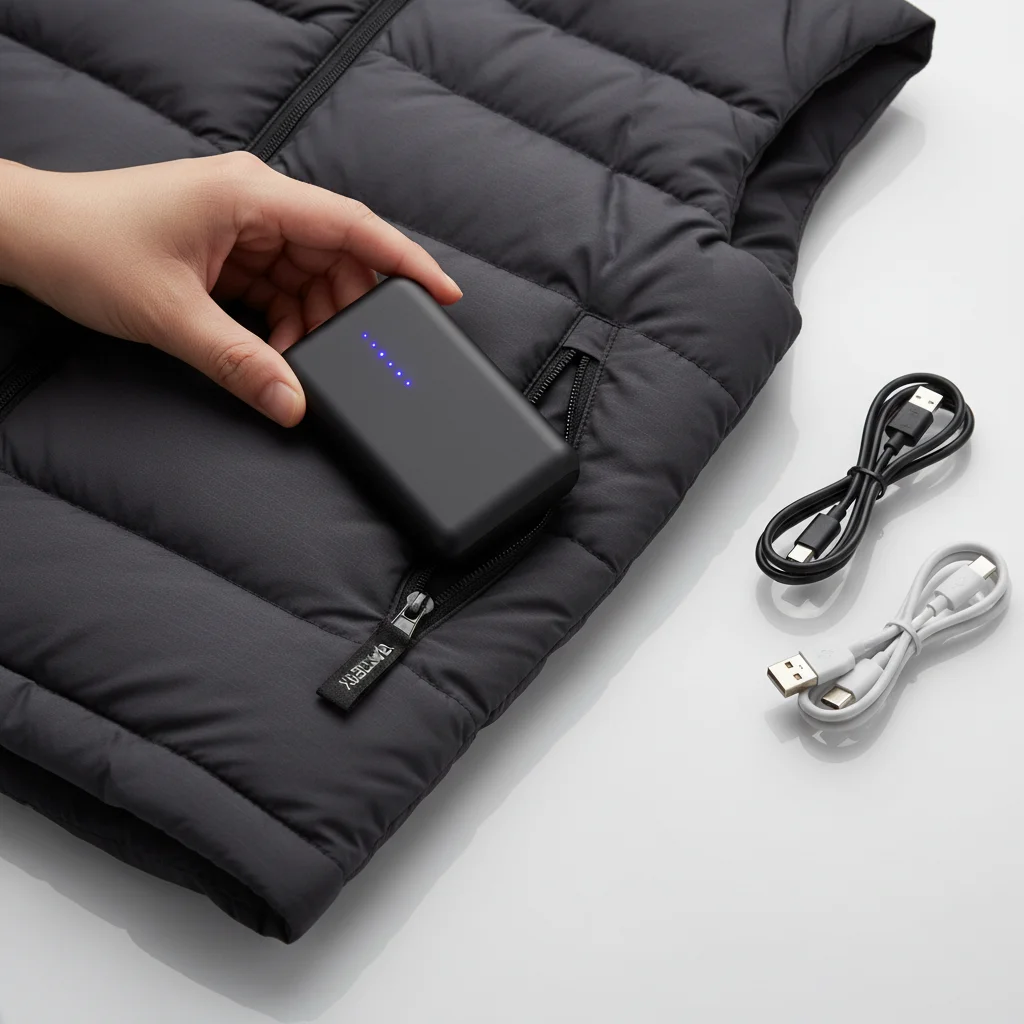
Voltage is the thing nobody talks about until something goes wrong.
Heated vests don’t share a single power standard. They split into three voltage tiers — and your tier decides exactly what you plug into the vest.
The Three Power Tiers
5V USB (Standard Power Bank Territory)
The easiest entry point. Your vest uses a USB-A or USB-C port — the same connector as your phone charger. It powers 3 to 4 heating elements and draws between 1.2A and 2.0A. Usable, but modest. Drop below 2A on your power bank output and you get weak heat plus an early shutdown.
7.4V DC Dedicated Battery
The sweet spot. A round DC barrel plug — 5.5×2.1mm — feeds 5 to 6 heating elements at 7.4V/2.5A. This tier hits the mainstream mark: real heat, a built-in BMS for safety, and the battery pack your vest supplier had in mind. Most mid-range heated vests land here.
12V High-Voltage
The heavy-duty option. Brand-specific battery systems — Bosch 12V, Milwaukee M12 — push 36W at full load. Five to six elements run hot. Runtime sits around 3 hours on high and stretches to 12 hours on low. No standard power bank comes close to this.
How to Identify Which Tier You Have
Don’t guess. Check three places:
-
The power port itself — USB-shaped means 5V; a round barrel means 7.4V; a proprietary slot means 12V brand-specific
-
The vest pocket label — look for “Input: 5V 2A” or “DC 7.4V/2.5A”
-
The user manual specs page — search “power requirements” or “battery specs”
What Happens When You Get It Wrong
Undervoltage wastes your morning. A 5V bank on a 7.4V vest gives you nothing — cold fabric, a blinking indicator, and a ruined start to the day.
Overvoltage is a real danger. Push 7.4V through a 5V USB vest and you risk thermal cutoff, circuit damage, and in the worst case, fire. The vest doesn’t adapt — it breaks.
Current mismatch falls in between. Your output becomes intermittent, the battery overheats, and runtime cuts short. A vest rated for 2A on a 1A port will cycle on and off until the bank quits entirely.
Match the voltage. Match the current. Everything else falls into place.
Can You Use Any Power Bank You Already Own?
Here’s what most product pages skip: the power bank sitting in your desk drawer won’t cut it.
That’s not a knock on your gear. It’s physics. A 5V USB heated vest needs at least 2.0A output to heat well. Most older power banks — the ones you grabbed for travel or emergencies — max out at 1.0A per port. That’s half the current your vest needs. You’ll get a faint warmth for twenty minutes, then nothing.
So before you assume you’re covered, run through these four checks:
1. Output current first
Flip the bank over and find the output spec. You’re looking for 5V/2A or higher. Anything rated at 1A is useless for a heated vest. It won’t trip a circuit. It’ll just run weak until the bank drains itself from the load.
2. Capacity matters more than you think
A 10,000mAh bank at 5V holds around 50Wh of energy — on paper. USB power delivery burns off about 30% in conversion loss. That leaves you with closer to 35Wh of real output. A vest drawing 10W gets you about 3.5 hours on a full charge. A 5,000mAh bank cuts that in half. Do the math before you leave the house.
3. Port type decides your options
A USB-C port with Power Delivery (PD) gives you the cleanest, most stable output. A USB-A port works fine for 5V vests but can’t handle higher voltages. So upgrading to a 7.4V setup later means you’ll need a new bank too. Check what you have now.
4. Certification isn’t optional
An uncertified power bank running a steady 10W draw is a real risk. Look for CE, FCC, or UL markings. Cheap, unbranded banks leave out the Battery Management System that stops overheating. A heated vest puts a constant, heavy load on the bank. That’s the exact condition that makes a bad bank fail — or worse.
The minimum spec worth using:
|
Spec |
Minimum |
Recommended |
|---|---|---|
|
Capacity |
10,000mAh |
20,000mAh |
|
Output current |
5V/2A |
5V/2.4A or higher |
|
Port type |
USB-A |
USB-C with PD |
|
Certification |
CE or FCC |
CE + FCC + RoHS |
Own a modern 20,000mAh PD bank for your laptop or tablet? That’s your best bet. It handles the vest load with no strain. Plus, the leftover capacity keeps your phone charged through the rest of the day.
The bank you already own might work. But check its specs before you trust it in the cold.
Key Specs to Match: How to Choose the Right Power Bank for Your Heated Vest
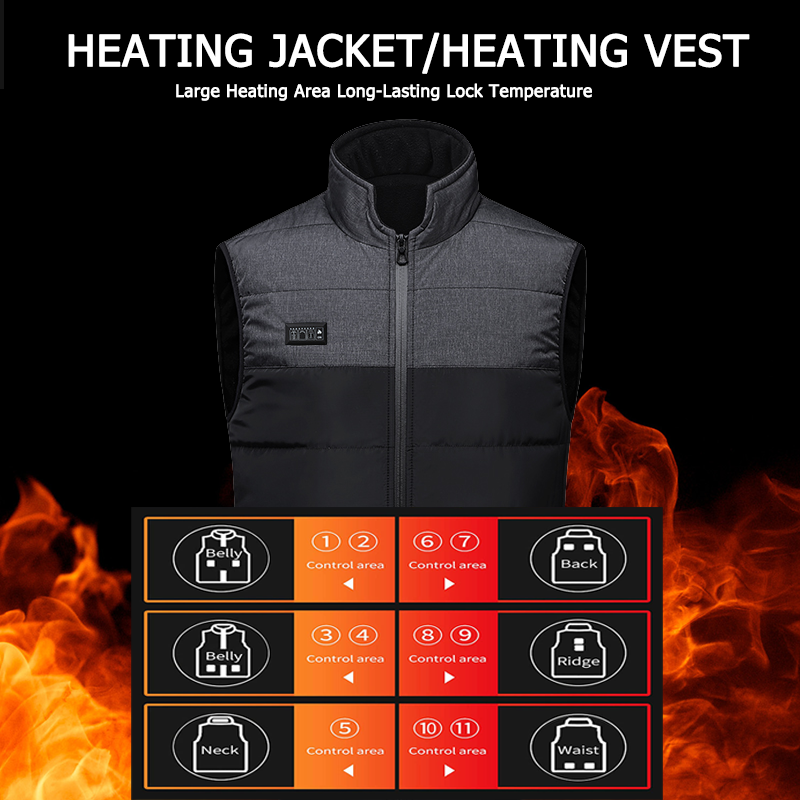
Four numbers decide whether your vest keeps you warm or leaves you shivering: voltage, current, capacity, and weight. Get all four right and you won’t think about power again. Miss any one of them and you’ll notice — on the coldest morning of the month.
Voltage First. Always.
Confirm voltage match before anything else. Everything else comes second.
Your vest’s label tells you what it needs. Your power bank’s label tells you what it delivers. These two numbers have to agree.
-
5V is the standard for most USB heated vests. Any modern power bank outputs 5V — but you still need at least 2A, target 2.1A to 3A, to sustain real heat across 10W–15W of draw. Underdeliver on current and the vest runs cold or shuts off completely.
-
7.4V is for mid-range and advanced vests. These have five or six heating elements, a DC barrel plug, and a minimum 2.5A requirement. Standard USB banks can’t reach this voltage. You need a dedicated DC-output pack rated for 7.4V.
-
12V is the high-output tier. Multi-zone heating, serious warmth, proprietary connectors. Generic power banks won’t work here. You need a DC12V-capable pack — full stop.
No workarounds. No adapters that bridge the gap between tiers. Wrong voltage damages the vest or drains the bank with nothing to show for it.
How Much Capacity Do You Need?
Rated mAh figures look impressive on packaging. The honest number is smaller.
USB power delivery loses 25–30% of stored energy to heat and conversion. A 10,000mAh bank at 5V holds about 37Wh of real output. A vest pulling 10W on low gives you 4 to 8 hours. That range shifts based on heat setting and outside temperature. A 6,000mAh pack at the same voltage delivers 3 to 6 hours — enough for a half day outdoors, tight for a full one.
Use this as your reference:
|
Capacity (Rated) |
Voltage |
Real Output (Wh) |
Estimated Runtime |
|---|---|---|---|
|
6,000mAh |
5V |
~22Wh |
3–6 hrs |
|
10,000mAh |
5V |
~37Wh |
4–8 hrs |
|
12,000mAh |
5V / 7.4V |
~46Wh |
3–10 hrs |
|
14,400mAh |
7.4V / 12V |
~53Wh |
Up to 20 hrs (3 zones) |
|
20,000mAh |
7.4V / 12V |
~74Wh |
Up to 30 hrs (3 zones) |
Want 8 hours or more on a single charge? Target 10,000mAh minimum at 5V, or 7,200mAh at 7.4V. Anything smaller is a compromise you’ll feel before lunch.
Interface Type — the Detail That Trips Most People Up
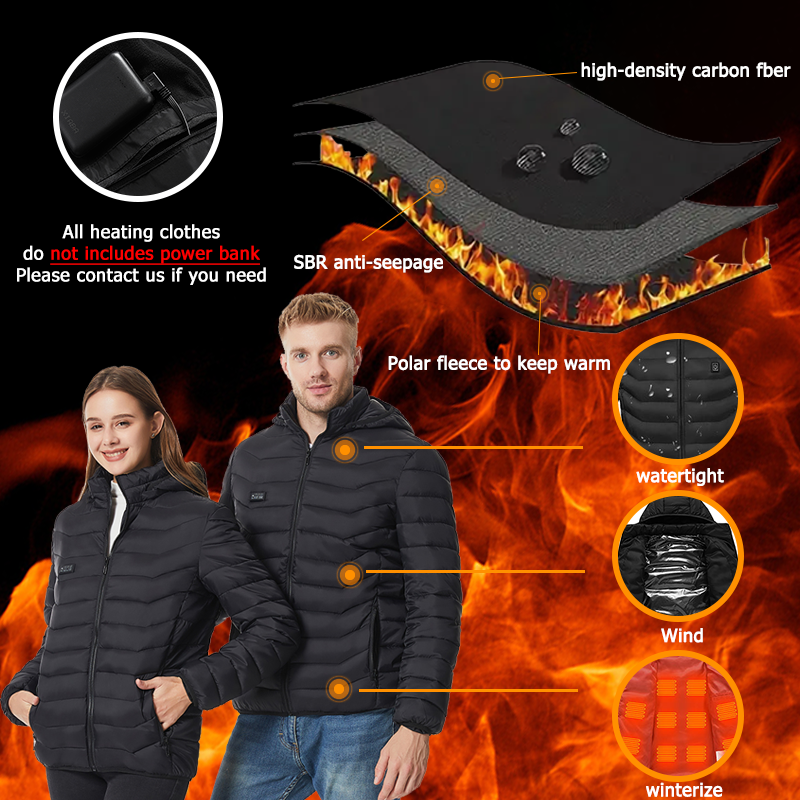
The port shapes matter more than most buyers realize.
USB-A covers the majority of 5V vests. Dual-port banks let you run the vest and charge your phone at the same time — a real bonus on long days outside.
DC round ports (3.5mm or 4.0mm barrel) are how 7.4V and 12V systems connect. Check your vest’s plug diameter before ordering. A 3.5mm plug won’t fit a 4.0mm socket. Adapters exist, but sorting that out before you buy is far better than troubleshooting it at 6am in a parking lot.
USB-C on most power banks is input only — it’s how the bank recharges, not how it powers your vest. Fast input (15W–35W) cuts recharge time to 2–4 hours. That matters a lot for back-to-back shifts. Don’t assume USB-C output powers your vest unless the bank lists vest compatibility in its specs.
Weight and Fit — the Spec Nobody Lists in the Headline
A power bank that doesn’t fit your vest pocket is a power bank you’ll leave at home.
The practical ceiling for pocket carry is under 200g (7oz). Go beyond that and the weight drags the pocket down, throws off the vest’s fit, and gets uncomfortable fast. Lithium polymer cells run lighter than lithium-ion at the same capacity. Worth checking if weight is a real concern for your situation.
Real-world size reference:
|
Pack |
Weight |
Dimensions (in) |
Pocket Verdict |
|---|---|---|---|
|
Venustas Small |
6.56 oz (186g) |
3.15 × 2.60 × 1.02 |
Slim pocket ideal |
|
Venustas Medium |
10.4 oz (295g) |
4.41 × 2.85 × 1.02 |
Standard vest pocket |
|
Venustas Large |
12.08 oz (342g) |
4.88 × 2.76 × 1.18 |
External carry recommended |
|
DrPrepare 10K |
~150–200g (est.) |
Pocket-sized |
Dual USB, slim fit |
Anything over 300g belongs in a jacket pocket — not the narrow side pocket most heated vests include.
The Four-Step Check Before You Buy
Run these in order before committing to any power bank:
-
Read the vest label — confirm the exact voltage (5V, 7.4V, or 12V) and note the port type (USB-A, DC barrel size, proprietary)
-
Verify output specs — ≥2A at 5V, ≥2.5A at 7.4V; no DC output listed means the bank won’t handle the higher tiers
-
Calculate your runtime target — use the Wh formula: (mAh × voltage × 0.75) ÷ vest wattage — size up if the number falls short of your full day
-
Check for a BMS — a Battery Management System is not a bonus feature. It’s the circuit that keeps the bank from overheating under a sustained 10W–15W load. A heated vest runs at that load the entire time you wear it.
Skip step four and you’re not just risking weak heat. You’re risking a bank that fails under a load it was never built to handle — and that’s a safety problem, not just a performance one.
Heated Vest Power Bank Recommendations by Voltage Type
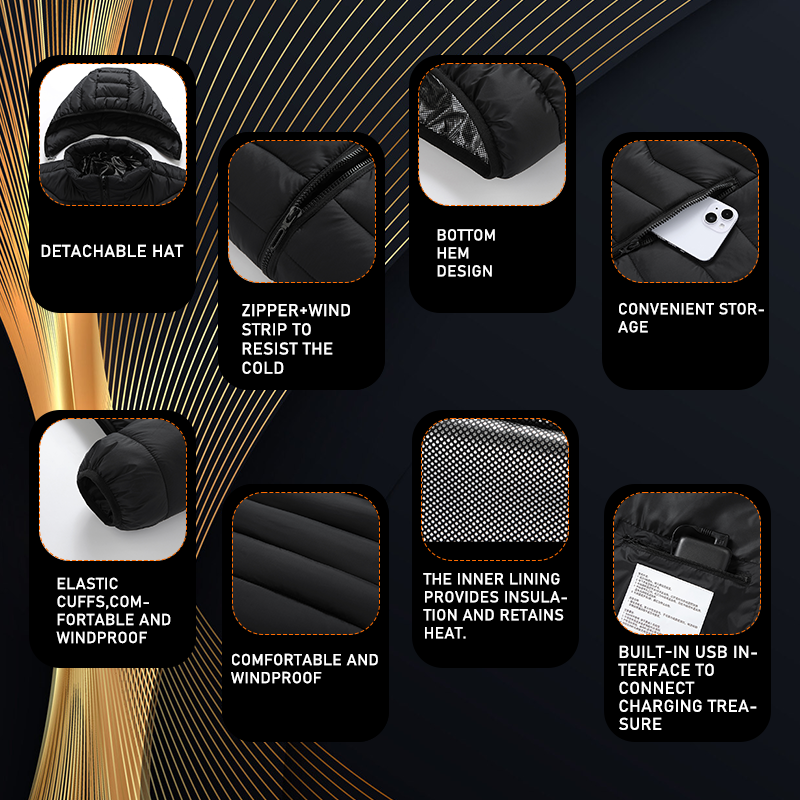
Three voltage tiers. Three different shopping lists. The bank that works for your buddy’s 5V vest will do nothing for your 7.4V setup. Know which category you’re in before you open your wallet. That saves real money.
5V USB Banks: The Accessible Option
The Gokozy 10,000mAh is a solid pick for most 5V vest owners. It outputs a stable 5V at 2–3A. It handles a 10W vest draw for 5–8 hours. Price lands between $20–$30. It’s light, fits vest pockets without dragging, and works with any USB-A heated vest straight out of the box.
There is a ceiling, though. Cold weather drains lithium cells faster than the specs suggest. Sub-freezing temps cut your effective runtime. Plan for the lower end of that range, not the higher end.
7.4V DC Banks: Where Serious Heat Lives
Moving to 7.4V means more output and more complexity. Two options worth your attention:
Dr.Prepare 16,000mAh — outputs 7.4V at 3–3.5A through a 3.8mm barrel connector. A 4.0mm adapter comes included. You also get USB-A and USB-C ports for other devices. Runtime stretches to 8–12 hours at 15W. Price sits at $40–$50. One hard stop: at ~118Wh, this bank exceeds the TSA 100Wh carry-on limit. It doesn’t fly. Leave it home on travel days.
CCAGU 13,500mAh — delivers 7.4V at 3.25–3.5A with low voltage sag under load. That matters on high heat settings, where sag can cause your vest to drop performance mid-use. Multi-voltage USB outputs give you extra flexibility for other devices. At $37, this is the stronger value of the two. It sits right at the 100Wh borderline — check with your airline before you pack it. One real caution: the 7.4V barrel cable can damage 5V-only devices if you plug it into the wrong port. Label your cables clearly and keep them separate.
Brand-Specific Batteries: The Safest Match
Your vest came from Ororo, Venustas, or Volt? The brand’s own battery pack is worth the extra cost. A brand-specific pack like the ORORO PD 5,000mAh is built to match the vest’s exact voltage curve, BMS calibration, and connector spec. No surprise auto-shutoffs. No voltage mismatch risk. The tight compatibility is the whole point.
12V brand-specific systems — Milwaukee M12 territory, for example — run hotter and cover more heating zones. But they’re heavy, expensive ($150+), and built for specific heavy-duty use. You don’t see them in the vest market often, and that’s by design.
How to Choose
|
Product |
Voltage |
Capacity |
Runtime |
Price |
Air Travel |
|---|---|---|---|---|---|
|
Gokozy |
5V/2–3A |
10,000mAh |
5–8 hrs |
$20–30 |
✅ Yes |
|
Dr.Prepare |
7.4V/3–3.5A |
16,000mAh |
8–12 hrs |
$40–50 |
❌ No |
|
CCAGU |
7.4V/3.25A |
13,500mAh |
8–12 hrs |
$37 |
⚠️ Borderline |
|
ORORO PD |
5–7.4V |
5,000mAh+ |
Vest-matched |
$60+ |
✅ Yes |
Start with your vest brand’s own battery pack. Go third-party only after you confirm the output specs — voltage, current, and BMS quality — in writing. Three things filter out most of the risk: a stable 2–3A at the correct voltage, a cold-rated BMS, and a sub-100Wh capacity for travel. Check all three before you spend a dollar.
How Long Will a Power Bank Last With a Heated Vest? (Real-World Runtime Guide)

Runtime is the number that matters most — especially at 7am in a frozen parking lot.
The range is wide. Heat setting drives more of that range than most people expect. A 5,000mAh battery at 7.4V runs 6–9 hours on low. Crank it to high and you’re down to 2.5–3 hours. Same battery. Same vest. Three times the difference.
Step up to 10,000mAh and the numbers improve a lot: 10–12 hours on low, around 5 hours on medium, and 3–4 hours on high across three heating zones. Go to a 16,000mAh pack and all-day use becomes very realistic.
What Shortens Your Runtime
Four variables drain your battery faster than the spec sheet shows:
-
Heat setting — the single biggest factor. Low extends runtime 3–4× longer than high. The Ergodyne 6495 (5,000mAh, 7.2V, four zones) runs 9 hours on low and drops to 2.5 hours on high. That’s not a defect. That’s physics.
-
Ambient temperature — sub-freezing air forces the vest to work harder. It drains lithium cells faster too. In extreme cold, plan around the low end of your rated range.
-
Active heating zones — running all four zones at once cuts runtime faster than running two or three.
-
Charging another device — plug your phone in while wearing the vest and you split the bank’s output. A 5,000mAh pack drops to about 5 hours of vest runtime under pass-through conditions.
Match the Bank to the Day
|
Use Case |
Recommended Capacity |
Expected Runtime |
|---|---|---|
|
Short outing / commute |
5,000mAh |
2.5–9 hrs |
|
Half-day outdoor work |
10,000mAh |
5–12 hrs |
|
Full day outdoors |
16,000mAh |
12+ hrs |
To get the most out of every charge:
-
Start with a full charge. Budget 2–4 hours recharge time with a 15–35W charger.
-
Run low or medium heat instead of high.
-
Skip charging other devices when runtime is tight.
-
Never store a cold-weather pack below 20%. Lithium cells don’t recover well from deep discharge in the cold.
Heated Vest Power Bank FAQ
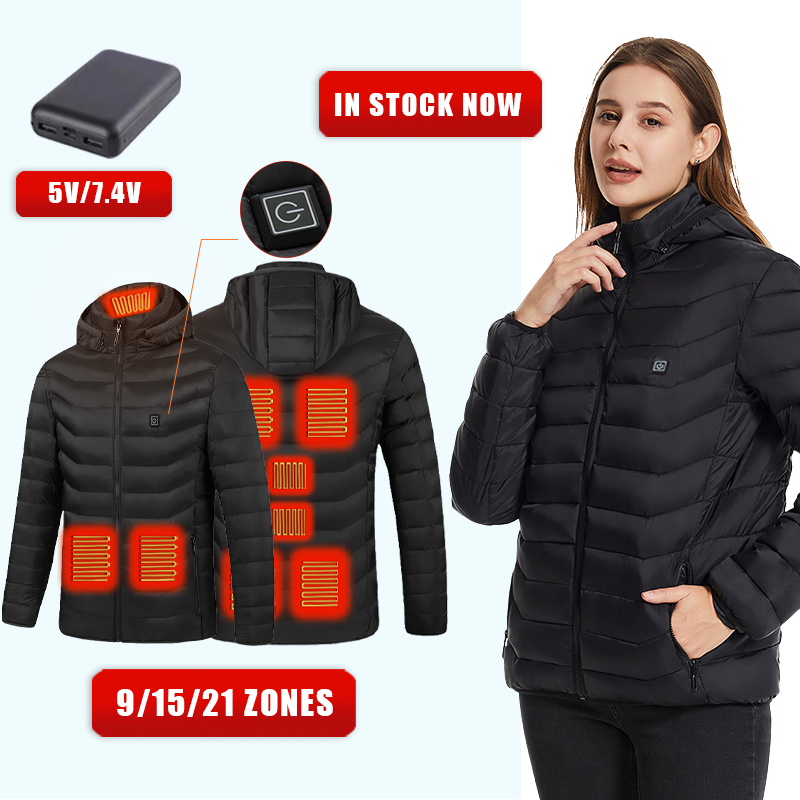
Quick answers to the questions that come up most often — because the wrong assumption costs you a cold morning.
Can you power a heated vest directly from your phone?
No. Your phone outputs 5V/1A at best. A heated vest needs 5V/2–3A. That gap means weak heat, early cutoff, or nothing at all. Your phone wasn’t built for this load.
Can a power bank run the vest and charge your phone at the same time?
Yes — if the bank has dual USB output and enough capacity. Take a 10,000mAh bank with 5V/3A dual-port output. The Dr.Prepare is one example. It runs both devices with no drop in performance on either side.
Can you charge the vest while it’s heating?
Yes. Plug it in and the power circuit kicks on. Heat and charging run at the same time. Full recharge takes 4–6 hours depending on the bank. One thing to note on the AKASO model: it needs a double-press to power off while plugged in. Check that before you assume it’s off.
What does real runtime look like on a 10,000mAh bank?
AKASO’s own test data, broken out by zone and heat setting:
|
Heat Setting |
Front Only |
Back Only |
Front + Back |
|---|---|---|---|
|
High (117°F) |
4 hrs |
7.2 hrs |
4 hrs |
|
Medium (108°F) |
6.7 hrs |
9 hrs |
9 hrs |
|
Low (102°F) |
9 hrs |
11.2 hrs |
11.2 hrs |
Dr.Prepare’s numbers look a bit different on their vest pairing: high at 6 hours, medium at 8.5 hours, low at 13.5 hours. Same capacity, different heating load. Both show the same pattern — low setting gives you about three times the runtime versus high.
How do common 10,000mAh banks compare on specs?
|
Model |
Capacity |
Output |
Charge Time |
|---|---|---|---|
|
Dr.Prepare |
10,000mAh / 37Wh |
5V/3A dual USB |
4.5 hrs |
|
AKASO |
10,000mAh / 37Wh |
5V/3A |
6 hrs |
|
TeqHome |
20,000mAh |
5V/2.1A dual USB |
— |
What about Milwaukee’s 12V system?
The M12 36Wh pack runs 12 hours on low and 3 hours on high. It also outputs USB-C bidirectional at 15W — so it powers the vest and charges your phone at the same time. Full recharge takes 70 minutes at 36W. Fast in, long out.
Is it safe to leave a power bank running in a vest all day?
Yes — as long as the bank has proper protection circuits. Look for three things:
– Overcharge protection (auto-cutoff at 100%)
– Short-circuit protection (auto-disconnect)
– Overcurrent safeguards
The 4-LED indicator on certified banks shows you exactly where the charge sits. One hard rule: keep the bank dry. Rain, snow, and freezing temperatures all damage lithium cells. Store it in a cool, dry place. Also, never let it drop below 20% in cold weather — lithium cells don’t bounce back well from deep discharge in the cold.
Conclusion
Powering a heated vest isn’t complicated. You just need to know what to look for.
Most heated vests don’t include a battery. So yes, you’ll need a power bank. But not just any one.
Start with your vest’s voltage — either 5V USB or 12V. Then pick a capacity based on how long you need warmth. Don’t just grab whatever battery looks impressive on a shelf.
Get those two things right, and your USB heated vest becomes one of the most practical pieces of cold-weather gear you own. Get them wrong, and you’re left standing in the cold wondering why nothing’s heating up.
So here’s your next move:
-
Check your vest’s spec label right now.
-
Note the Voltage.
-
Note the Wattage.
-
Check the Connector type.
Three seconds of reading saves you from a frustrating — and costly — mismatch.
The right heated vest power supply does more than keep you warm. It makes the whole investment worth it.