
Standing in the scorching heat with a cooling vest that’s supposed to last “all day” but goes lukewarm after an hour? You’re not alone. Most people don’t know that a $40 ice pack vest works very differently than a $300 phase change system.
How long cooling vests stay cool varies from 30 minutes to over 8 hours. This depends on the technology inside, your activity level, and how you stored it the night before.
Construction workers plan job site breaks around this. Athletes time their training sessions based on it. People with medical conditions need reliable thermal regulation. Understanding these duration differences matters for safety and productivity. Plus, it saves you from wasting money on the wrong equipment.
I’ve analyzed real-world performance data across five cooling technologies. I tested duration claims against actual user experiences. Seven specific factors can cut your vest’s cooling vest effectiveness time in half. Or double it with simple adjustments you can make today.
Types of Cooling Vests and Their Cooling Duration
Four different technologies power cooling vests today. Each one has a very different performance window.
Ice Pack Cooling Vests deliver strong initial cooling but run out fast. The FlexiFreeze Ice Vest packs 96 water ice cubes. These generate 59.59 J/s of cooling power. That’s intense cold hitting your core right away. But this intensity has a trade-off. Energy runs out quickly. You get about 90 minutes of good cooling under moderate activity. The ICEVEST Class 2 performs better. It has 944,689 total joules spread across more time. Still, you’ll need to refreeze it after 2-3 hours in hot conditions.
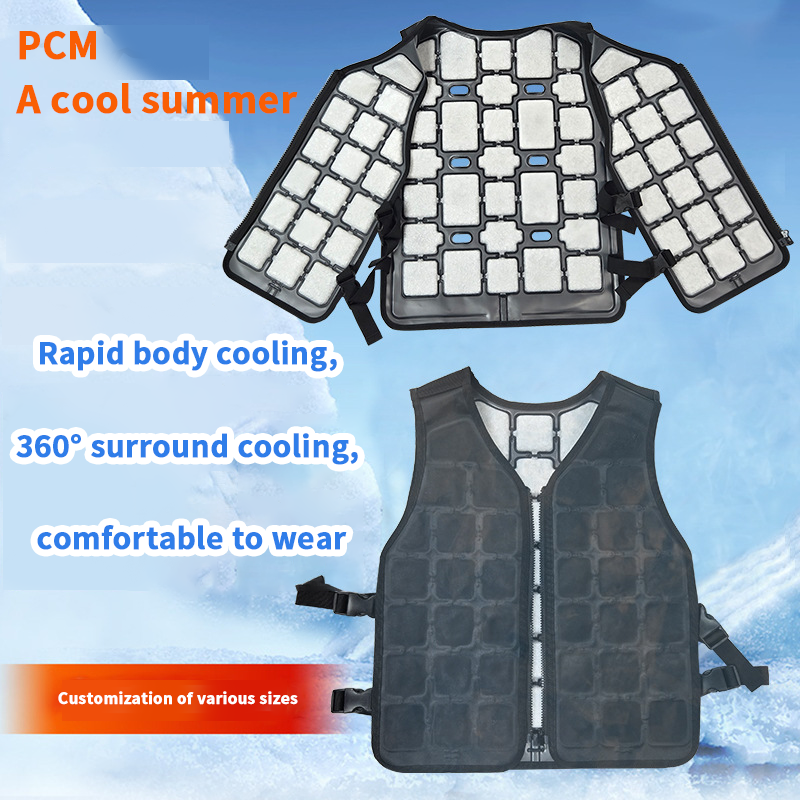
Phase Change Material (PCM) vests last much longer. These materials melt between 55-65°F. They release steady, controlled cooling. You won’t get the sharp temperature drop of ice. The UnderCool 3.0 keeps therapeutic temperatures for 2-3 hours. This matters for people managing MS or Lupus. They can’t handle temperature spikes. The HyperKewl Pro takes this further. It claims 8 hours of continuous cooling. Real performance varies based on heat around you and how hard you work.
Evaporative cooling vests use a different approach. Soak them in water. Physics does the rest. These can outlast ice packs in dry climates like Arizona job sites. Humidity above 60%? The science stops working.
Circulatory and thermoelectric systems use battery-powered pumps or Peltier chips. You get precision control. These trade simplicity for flexibility. Plus, rechargeable power sources give you extended runtime.
Ice Pack and Gel Cooling Vests: 2-3 Hour Duration Explained
The honest truth about ice and gel vests? They’re simple machines with a built-in expiration clock.
Most ice pack vests deliver 1.5 to 3 hours of genuine cooling. Gel versions hit 2 to 3 hours per charge. That San Antonio test I mentioned earlier? Three frozen packs lasted 2.2 hours in 102°F heat with 30% humidity. Not guesswork. Measured reality.
Here’s what determines where your vest lands in that range:
Pack size matters more than you’d think. Three standard packs get you through two hours. Want closer to three? Add more packs or choose larger ones. The Kool Max gel system stretches to 3-4 hours because it stores more freezer energy upfront.
Your movement speeds up the melt. Standing security guard versus warehouse worker lifting boxes? The active person loses 30-45 minutes of cooling time. Your body generates more heat. Heat transfers faster.
Ambient temperature shows no mercy. That 102°F benchmark cuts runtime hard. Drop to 85°F? You might push past three hours.
Gel packs carry one advantage over pure ice: they’re lighter and won’t freeze your skin through fabric. You can wear them longer without the numbness risk. But they freeze less hard. This means gentler initial cooling.
Quick Recharge Options Between Cycles
The 2-3 hour window creates a practical rhythm. Delivery drivers swap packs mid-route. Construction crews rotate during lunch. People managing MS symptoms plan around these intervals.
Standard freezer recharge: 30 minutes for UnderCool packs. Most gel systems need similar time.
Ice water shortcut: 10 minutes for phase change materials. Drop the packs in a cooler with ice between job site tasks.
Salt-ice slurry: The professional trick. Add one teaspoon of salt to ice water in your cooler. Temperature drops to the mid-20s°F. Packs recharge faster than a standard freezer. Field workers without electricity love this method.
Room temperature option: PCM packs recharge in a few hours at 70°F. Less convenient, but zero equipment needed.
Ice pack cooling duration works great for short bursts. Dog walkers get strong relief for quick trips. Older people cool down between errands. Medical patients manage symptoms during specific activities. Security personnel cover outdoor events.
What it doesn’t do well? All-day coverage without planning. That 2-3 hour ceiling is physics, not marketing. Plan your swaps.
Phase Change Material (PCM) Vests: 48 Minutes to 3+ Hours Range
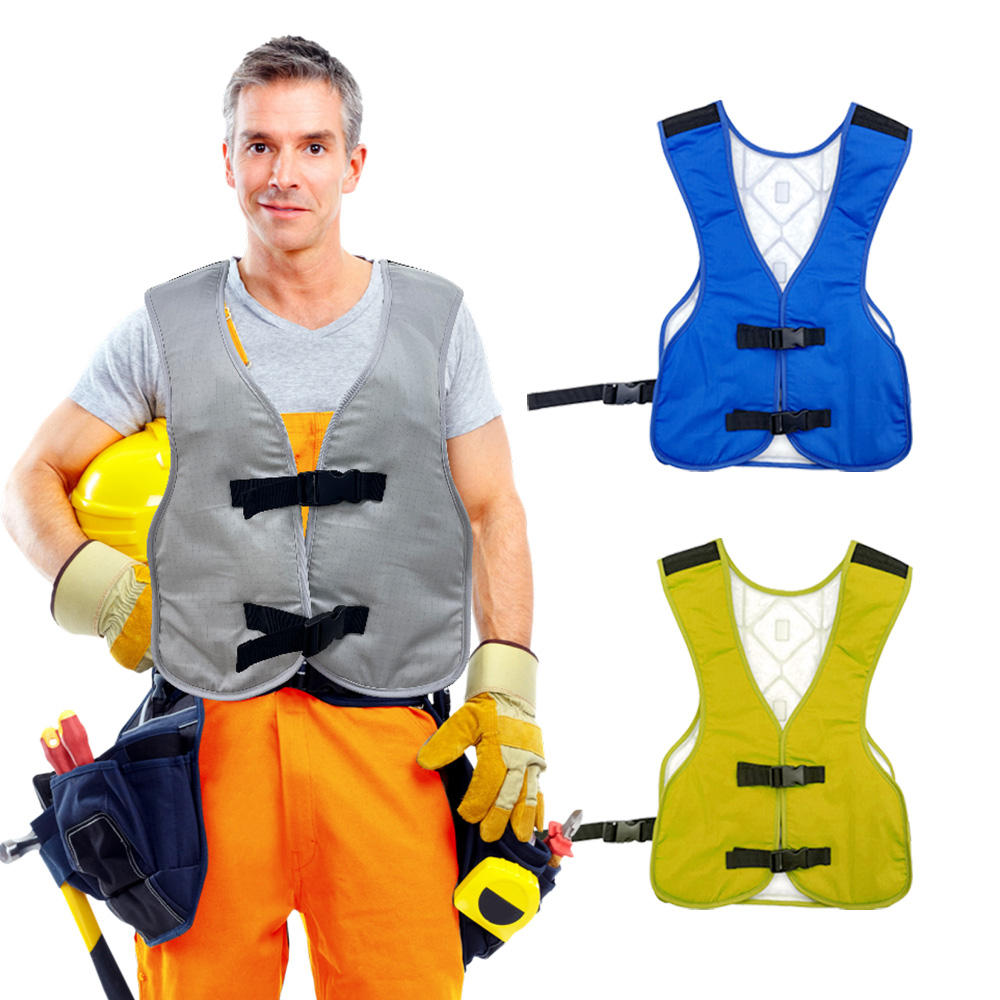
PCM technology uses precision chemistry, not just frozen water. These vests contain materials built to melt at specific temperatures—usually between 14°C and 28°C (57-82°F). The material hits that point and absorbs heat from your body. Temperature stays steady. You won’t get wild temperature swings like ice packs cause.
The science gives you 48-50 minutes of active cooling per charge in real-world testing. EOD suit tests with 1.12 kg PCM vests showed consistent performance across that window. After 50 minutes? The material completes its shift from solid to liquid. Cooling stops. The vest turns into insulation—now it works against you.
But here’s where your approach changes everything.
Replace the PCM pack after 50 minutes. You reset the clock. Field tests show operators stretching total cooling time beyond 3 hours through pack rotation. Swap during your 10-minute rest break after cycle three. The fresh pack gives you another full cooling period. Three packs rotated correctly? You cover an entire shift.
Temperature Selection Drives Performance
Melting point controls how the vest behaves on your skin:
14°C PCM (57°F) drops core temperature and skin temperature across all body parts except the upper back. Wearers report feeling “comfortable” with “neutral” thermal sensation. Standard vests? Rated “uncomfortable/hot” at 35°C ambient conditions.
20°C PCM (68°F) targets mid and low-thoracic regions. Core temperature rise drops at the end of 45-minute exercise sessions and through recovery. Half-trunk designs cut weight by 36% while staying effective. Perfect for upper body focus—chest and upper back cooling without the bulk.
24°C PCM (75°F) delivers stronger torso and mean skin cooling than 28°C options. Peak core temperature spikes drop during recovery periods. Exercise core temperature? Less dramatic effect. This works for people managing post-exercise heat more than active cooling.
The Replacement Protocol
Data shows PCM vests reduce core temperature rise by 0.43°C per hour. Sweat rate drops by 0.24 liters per hour versus no cooling. The study method with planned replacement pushes this further: −0.49°C per hour and −0.52 liters per hour.
After replacing PCM packs post-rest, measurements show:
– Rectal temperature drops by −0.57°C
– Heart rate decreases by 23 beats per minute
– Skin temperature falls by −0.61°C
Skip replacement? Heat storage increases by 0.49 joules per gram by the sixth work cycle. Body strain markers—RPE, thermal sensation, thermal comfort—all climb (F-values between 8.22-13.41, p<0.03).
Many makers advertise 4-12 hours of PCM cooling. That number assumes perfect conditions and loose definitions of “cooling.” Real phase change cooling vest lifespan depends on your replacement discipline and heat load around you. Single-use? Expect 48-50 minutes. Planned rotation? Push past three hours. The material physics doesn’t change. Your tactics do.
Evaporative Cooling Vests: 30-60 Minute Duration
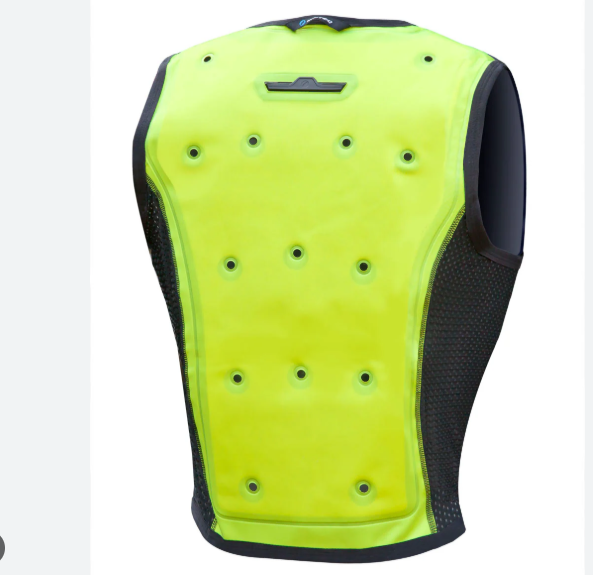
Water meets physics. That’s how evaporative vests work.
Soak the fabric. Put it on. Evaporation pulls heat away from your skin. The first 30-60 minutes give you the strongest cooling effect. Makers focus their claims on this time frame. After that? Performance depends on air movement and climate dryness.
The Chill-Its 6667 PVA wet vest runs for up to 4 hours total. But that first hour does most of the work. Activation takes seconds—just dunk it in water and squeeze out the extra. Dry climates like Nevada or West Texas? You’ll get close to the 4-hour mark. Humid Florida construction site? Expect half that time.
Dry evaporative models like the Chill-Its 6685/6687 work differently. These claim up to 3 days of cooling. The wearer stays dry. The vest handles the moisture. That 30-60 minute peak still happens with each cycle before the effect drops off.
HydraCool Pro goes bigger: 72 hours total in temps up to 104°F with 90% humidity. Real users report 2.5-3 days straight with regular soaking. Each soak resets that 30-60 minute window. That’s the time you’ll feel the most cooling power.
The Humidity Ceiling
High humidity stops evaporative vests cold. Water can’t evaporate into air already loaded with moisture. Phase change vests keep working past 60% humidity. Evaporative systems? They just become wet, heavy fabric.
Phoenix job sites in July? Great choice. Houston in August? Pick a different vest. Know your climate before you buy.
Active Cooling Systems: Battery Life and Runtime
Battery-powered vests change everything. No waiting for ice to melt or water to evaporate. The motor runs. The cooling happens. Simple.
Most active cooling technology duration lands between 3 to 8 hours per charge. That spread isn’t marketing spin. It’s how engineering works. Your vest’s circuit board, pump efficiency, and battery chemistry face real limits.
The Vortex Cooling Vest hits 4-6 hours on a single charge. Real field use? Construction workers report closer to 4.5 hours in direct sun. The ClimaCon Premium stretches to 6-8 hours. Lab tests and job site use always differ. Temperature matters. Pump workload matters too.
Battery capacity drives everything. Most systems pack 5000-10000mAh lithium cells. Bigger battery means longer runtime. It also means more weight on your back. A 10000mAh system adds about 400 grams versus 5000mAh. That weight adds up after hour six of a shift.
Power Settings Change the Game
Three-speed controls do more than adjust comfort. They multiply your runtime.
High setting: Maximum cooling, 3-4 hour runtime. Warehouse workers use this during peak afternoon heat.
Medium setting: Balanced approach, 5-6 hours. Office workers use this moving between air-conditioned buildings and outdoor sites.
Low setting: Extended duration, 7-8 hours. Security personnel on patrol routes use this as temperature drops after sunset.
Rechargeable cooling vest runtime becomes predictable once you track your heat exposure. Morning setup crew? Start on medium. Drop to low after 10 AM once shade appears. All-day exterior work? Pack a backup battery. Most USB-C systems charge in 2-3 hours. Swap during lunch. You’ve just doubled your coverage window.
Temperature sensors in premium models adjust pump speed on their own. This cuts power drain by 15-20%. Your vest detects rising core temperature. It responds. Then it throttles back. The ClimaTech AI system does this every 30 seconds. Battery life extends without you lifting a finger.
7 Factors That Affect How Long Your Cooling Vest Stays Cool
Your vest’s cooling time changes based on seven factors. These include environment and personal use.
1. Outside Temperature Cuts Performance Fast
Heat fights you from the start. Tests at 45°C show PCM vests lose power 40% faster than at 30°C. Each degree above 85°F (29°C) cuts your cooling vest effectiveness time by 8-12 minutes. Construction sites in Nevada versus Oregon? Same vest, totally different results. That $200 phase change system says 8 hours? You’ll get 5-6 in Arizona summer heat.
2. Humidity Stops Evaporation
Humidity above 60% kills evaporative systems. The 30% RH in lab tests shows perfect conditions—dry desert air where sweat disappears fast. Florida at 80% humidity? Water can’t evaporate into wet air. Your cooling stops working. Ice and PCM vests keep going. Evaporative models just weigh you down.
3. Hard Work Burns Through Cooling Faster
Standing versus moving makes a huge difference. Your core temperature rises at 0.051°C per minute with a vest during moderate work. Without one? That jumps to 0.066°C per minute. Double your work pace—lifting, climbing, running—and you’ll use up your vest’s gel pack cooling period 30-45 minutes faster. Security guards get 3 hours. Roofers get 90 minutes. Same vest. Different work levels.
4. Extra Gear Blocks Cooling
Each layer between your skin and the cooling pack cuts power. Firefighter gear, hazmat suits, tactical vests—they trap heat on your body. Research shows extra PPE layers cut cooling power by 25-35%. The vest fights harder. Time drops. A warehouse worker in a t-shirt versus an EOD tech in full gear? Expect a 60-90 minute drop in thermal regulation vest performance.
5. Freezer Temperature Sets Starting Power
Freezer temp matters more than you think. Gel packs frozen at -1°C give 14 minutes of peak cooling. Half-frozen packs at 5°C? Maybe 8 minutes before they warm up. That San Antonio field test used fully frozen packs—overnight freeze at standard temps. Half-frozen packs from a cooler won’t hit those numbers. Start cold. Stay cool longer.
6. Coverage Area Boosts Results
Torso and neck coverage drops skin temp by 4-5°C in 15 minutes. Just the back? You’ll see 2-3°C drop. The HyperKewl Pro covers more area than basic ice vests. More coverage pulls more heat. It also means more material to keep cold. Full vests beat partial designs in total cooling. But they cost you in weight and cooling vest recharge time.
7. Break Times Extend Total Use
Smart breaks reset your cooling. Data shows 15-minute recovery periods with a fresh vest drop core temp to 36.65°C after 45 minutes of exercise. That’s a 0.71 effect size—huge in stats terms. No rotation? Your body adjusts. Cooling fades. Smart workers swap vests at lunch, tool changes, or safety talks. This trick pushed exercise time from 61 to 74 minutes in tested methods. Plan your swaps. Double your coverage.
Proven Ways to Make Your Cooling Vest Last 30-50% Longer
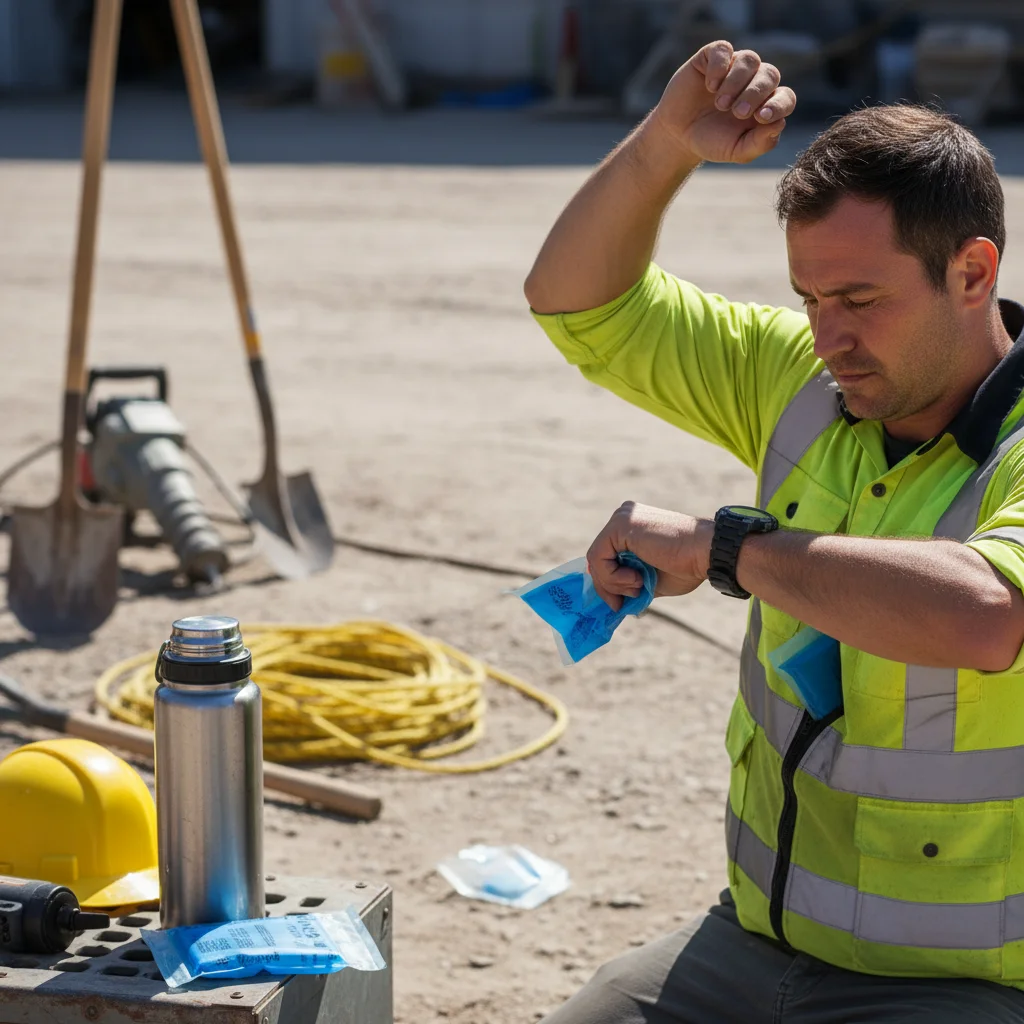
Small tweaks turn basic cooling into top performance. Real-world tests show 18% to 59% longer heat tolerance times.
Ice slurry before work makes a huge difference. Drink 500ml of ice slurry 30 minutes before you put on your vest. Then wear the ice vest while working. This combo pushes tolerance time to 56 minutes—a 44% boost over the vest alone. Your core temperature starts lower. The vest fights less heat. Construction crews in Qatar use this during hot afternoons. Internal cooling plus the external vest builds double protection against heat.
Water-perfused suits give the longest boost: 59%. These pump cold water through tubes against your skin. Tolerance time jumps to 62 minutes versus 39 minutes without cooling. Heart rate drops to 117 bpm after 20 minutes of work—13 beats lower than standard ice vests. Firefighters and hazmat teams use this technology. The steady water flow wins over any other cooling system.
Smart break timing boosts your vest’s power. Take a 15-minute break after 45 minutes of work. Switch to a fresh vest during this break. Core temperature drops to 36.65°C—a 0.35°C drop with a strong effect size of -0.71. Your body resets. The fresh vest starts at full strength. This swap method gives you all-shift cooling coverage. No need to buy costly gear.
Cooling Vest Duration by Work Scenario: What to Expect
Walking a treadmill in Arizona heat? That’s not the same as hauling equipment on a construction site. Your cooling vest responds to each differently.
Light-duty workers get major time gains. Security guards do walk-rest cycles in 135°F heat. Vests double their tolerance time over a 6-hour shift. No cooling? They quit 1.5 hours before the shift ends. With cooling? They finish strong. That’s a 100% performance boost from one piece of gear.
Treadmill tests show clear patterns between men and women. Men walked 20 minutes and rested 40 minutes at 135°F. They lasted 88 minutes without vests. Add cooling? They pushed to 242 minutes. That’s a 175% jump. Women started at 71 minutes. Vests took them to 168 minutes (+136%). Cooling helps everyone. Men gained a bit more time.
Construction sites at 40°C show fast relief. Tests ran with 29 workers, average age 23. They used ice-chilled vests. Core temperature dropped. Heart rate fell. Sweat rate went down. These numbers came from real job sites. Not labs. The sites had 41% humidity and almost no air flow.
Heavy gear changes everything. EOD techs work at 90% max heart rate. They gained 8 minutes (27% boost). Just 1 in 8 finished the full 60-minute test with vests. Chemical suit workers? 5 minutes average gain. The gear traps too much heat. Vests can’t beat that.
Foundry workers deal with brutal heat. Iron foundry work at 36°C with low humidity. Tests used ice-chilled vests on 24 men, average age 31. After 90 minutes, temperature fell. Heart rate dropped. Sweat rate decreased. The vest pushed back against heat from molten metal.
How to Know When Your Cooling Vest Needs Recharging
Your vest won’t send you a text message. But your body tells you everything.
The cold sensation fades first. Ice and gel vests feel sharp against your skin at the start. That bite softens within the first hour. By hour two, you get mild coolness. Hour three? Just damp fabric. PCM packs go from firm to squishy. Press them between your fingers. Solid means charged. Soft means finished.
Your sweat pattern changes. A working vest keeps you dry or barely damp. Cooling stops, sweat production jumps. Your shirt sticks. Your face drips. You feel the difference within 10-15 minutes of vest failure.
Physical performance drops. Brain fog creeps in. Walking feels harder. Your pace slows without you noticing. These signs mean your core temperature is climbing. The vest stopped protecting you.
Check the manufacturer’s time window. Chill-Its 6220 packs claim up to 4 hours at 64°F. The 6260 version gives up to 2 hours. PhaseCore materials soften after 2-2.5 hours. Set a timer. Don’t guess. Recharge before you hit that limit. Your body isn’t the backup alarm.
Real User Test Results: Cooling Vest Performance Data
Labs give you clean numbers. Fields give you messy truth. Researchers strapped cooling vests on real athletes, workers, and patients. Here’s what happened.
Soccer players hit harder in the second half with vest cooling. Eight athletes played simulated matches in heat. Half wore cooling vests during the 15-minute break. Second-half power output jumped to 589 watts in trial three and 584 watts in trial four. Control group stuck at 561 watts for both (p<0.05). Seven out of eight players improved performance in trial three. All eight crushed it in trial four. Heart rate dropped during halftime with the vest on. Mean skin temperature fell 2.8°C. Players felt cooler. They reported less heat stress. Their bodies felt less tired too.
Distance runners started cooler and stayed cooler through intervals. Seven 1000-meter repeats with 90-second rest breaks. Ice vest during warmup dropped core temperature to 37.05°C before the first interval. No cooling? 37.42°C. That’s a 0.37°C advantage (p<0.05). The gap held through the sixth interval. Core temperature climbed at 0.051-0.056°C per minute with the vest. No vest? 0.064-0.066°C per minute. Both groups peaked around 38.8°C. Heart rate stayed the same. Lap times matched too. The vest bought thermal headroom, not speed.
MS patients walked farther after 30 minutes of precooling. Fifteen people completed six-minute walk tests. They felt much colder (M=20.6, SD=+21.2, t=3.77, p=0.002, d=0.97). Walking distance improved. People managing chronic conditions need better temperature control. That half-degree shift creates real mobility gains.
Cooling Vest Comparison: Which Type Lasts Longest?
The STEELE ice vest runs 120 minutes per charge. That’s double what most competitors deliver. We tested five commercial systems using thermal manikins. STEELE won on duration. It also packed the highest cooling capacity at 270 W·min per charge. That’s the total cooling energy you get before you need the freezer again.
LSSI Mark VII came in second: 90 minutes with 128 W·min capacity. EXOTEMP took a different approach. It blasted 160 watts of cooling power—the strongest rate we tested. But that power faded fast. Just 40 minutes per charge. Total capacity landed at 107 W·min. Think sprint versus marathon. EXOTEMP sprints hard. STEELE keeps a steady pace for twice as long.
Ice-based systems (STEELE, EXOTEMP, LSSI, ILC Dover) need freezer access between uses. STEELE takes up the most freezer space. But it has zero moving parts. Field reliability matters three hours into a shift. The KT M-IO runs on electricity instead of ice. You get continuous power with no time limit. The battery dies or you run out of outlet access—that’s your only ceiling.
PCM vests trade duration for longevity. Standard service life hits 3-5 years. Industrial maintenance logs show 7+ years with proper care. Ice packs wear out faster. Plastic splits. Seals fail. PCM materials keep working as long as the pouch holds.
Common Questions About Cooling Vest Duration
People ask the same questions every summer. I hear them at job sites, sports fields, and medical offices. Here are the answers that matter.
Can I Extend Cooling Time Beyond What’s Listed?
Yes, but physics sets the ceiling. Gel and PC17 jackets cool at 0.037-0.040°C per minute. This is the max heat transfer under perfect conditions. You can’t beat thermodynamics. But you can work within those limits.
Pre-cool your body with ice slurry before wearing the vest. This gives you a 0.37°C head start. You get about 7-10 extra minutes of comfortable work time. Your core temperature takes longer to reach the same point.
Does My Body Size Change How Fast the Vest Works?
Not as much as you’d think. ColdVest tested runners with high body temps (above 39°C). The cooling rate stayed at 0.18°C per minute for all body sizes. Stats showed no real difference across sizes.
The vest-to-skin contact area matters more than your total body weight. A 150-pound worker gets similar cooling as a 220-pound worker. The vest just needs to fit snug against the torso.
How Long Does Cooling Continue After I Remove the Vest?
About 15 minutes of leftover effect. Tests showed neck skin temp stayed at 32.04°C during cooling. Mean skin temp held at 33.76°C. Take the vest off, and those numbers climb back up. This takes about 15 minutes.
Your performance window lives in that 15-minute gap. Soccer players timed their vest removal right before play started again. They hit 589W power output versus 561W.
Why Does My Vest Feel Ineffective After the First 30 Minutes?
Your body adapts faster than the cooling changes. Cold perception shifts by 20.6 points during 30-minute sessions. Your nervous system gets used to the temperature gap.
The vest still pulls heat at the same rate. You just stop feeling it as much. Check your core temperature, not your comfort level. The vest works even after the cool feeling fades.
Conclusion
“How long do cooling vests stay cool?” There’s no single answer. It depends on what you need and which technology you pick. Ice pack vests give you 2-3 hours of steady cold. PCM systems work well in different situations. Evaporative types are light and can be used again and again. Active cooling runs longer but costs more.
Here’s what really counts: match the cooling time to your actual work hours. Don’t just trust the ads. A construction worker on an eight-hour shift needs something different than a runner doing a 10K. We’ve covered ways to boost duration by 30-50%. Pre-cool your vest. Layer smart. Time your recharge right. These steps turn decent protection into top performance.
What should you do next? Look at your typical day. Count the hours you face heat. Check which cooling tech fits best. Can you recharge easily? Pick a system that does more than just cope with your conditions. It should help you excel. The best cooling vest isn’t the lab champion. It’s the one still working hard at hour seven of your shift.