
It’s a hot summer afternoon. Your pup is sprawled on the kitchen floor, panting hard. They just walked from the couch to their water bowl. That heavy breathing and drooling? Not drama (though dogs can be dramatic). These are real warning signs. Your dog’s body is working hard to cool down, and they need your help fast.
Dogs can’t peel off a sweater or grab a cold drink. They depend on you to spot overheating and know what to do. You might be dealing with an emergency right now. Or maybe you want to be ready before the next heat wave hits. Either way, I’ll cover everything you need.
You’ll learn quick cooling methods. I’ll share the best cooling products, like cooling mats that work great. I’ll explain why cool water and frozen treats help so much. Plus, I’ll point out mistakes that can make things worse.
Recognize Dog Overheating Symptoms Fast
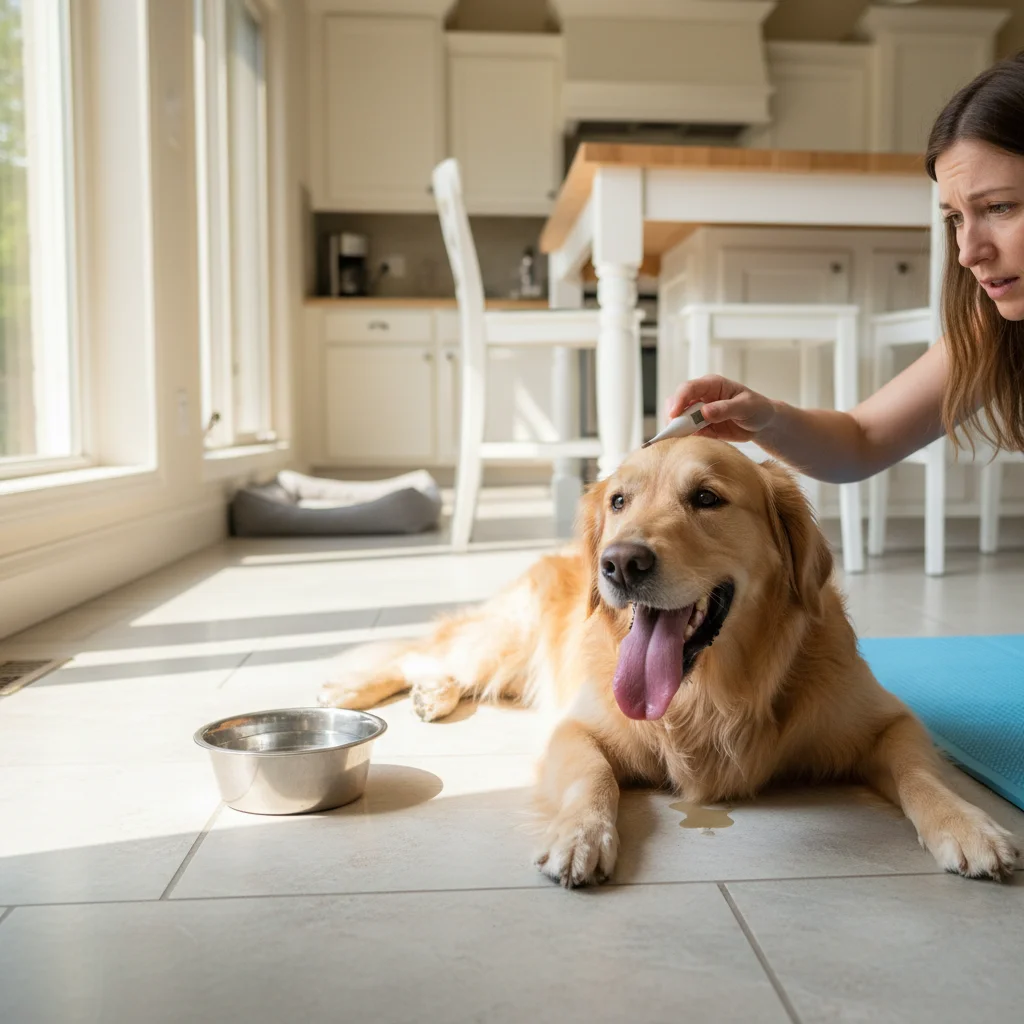
Every dog owner needs to spot the difference between normal panting after fetch and frantic breathing. Your dog’s body sends clear signals during heat stress. Missing these signs could waste precious minutes in an emergency.
Normal panting looks relaxed. The tongue hangs out. Your dog’s mouth stays part-way closed. But excessive, frantic panting changes everything. The mouth opens wide. The tongue stretches out long and far. Breathing speeds up and sounds almost desperate. This isn’t your pup catching their breath after playtime.
Check your dog’s gums and tongue next. Pull back their lip with care. Healthy gums look pink and moist. Overheating turns those tissues bright, fire-engine red. As things get worse, they fade to pale pink, then purple, then an alarming gray. That color change shows oxygen isn’t reaching tissues the right way.
Excessive drooling comes next. Not the normal drool you see before dinner. This saliva looks thick, sticky, almost ropey. Your dog might leave puddles on the floor. The drool gets thicker as dehydration sets in.
Touch your dog’s body. They should feel warm but not hot. Burning hot skin means grab a rectal digital thermometer. Normal sits between 100-102.5°F. Anything over 103°F means trouble’s brewing. Above 105°F? Head to the vet while you start cooling. Over 106°F puts your dog in serious heatstroke territory.
Watch how your dog moves. Lethargy, weakness, or stumbling means the brain and muscles aren’t working right. Some dogs get disoriented. They walk into walls or furniture. Others just lie down and won’t get up.
Flat-faced breeds like Bulldogs, Pugs, and Boston Terriers hit the danger zone faster. Puppies and senior dogs can’t control temperature as well. Thick-coated dogs struggle more in heat too.
The five-point emergency checklist works fast:
1. Panting check – frantic versus normal rhythm
2. Gum color – red, pale, or purple signals
3. Body temperature – use that thermometer
4. Heart rate – place hand on chest behind front leg, count beats
5. Coordination test – can they walk straight
Severe cases bring vomiting or diarrhea (sometimes bloody), glazed eyes, muscle spasms, or even collapse and seizures. You see excessive panting, odd gum color, vomiting, weakness, or temps above 105°F? Drop everything. Get to the emergency vet. Start cooling on the way, but don’t delay that trip.
Emergency Cooling Steps (Immediate Action Protocol)
Time matters more than perfection. Your dog overheats. You’ve got a 30-minute window to drop their body temperature below 102°F (39°C). That’s not a suggestion—it’s the difference between a scary afternoon and a tragedy. Your goal: cool them by at least 0.15°C per minute. That means dropping 4.5°C in half an hour. Sounds technical, but the methods are simple.
The Gold Standard: Cold Water Immersion
Nothing beats ice-cold water immersion for speed. Fill your bathtub with 1-5°C water (that’s freezing cold—add plenty of ice). Here’s the key: you’re not dunking your dog’s whole body like a tea bag. Keep their head and neck above water at all times. Hold them under their front legs with a towel or sheet for support.
The water needs to cover as much of their torso as possible. Dump more ice on top—keep it floating on the surface the whole time. Now stir that water around their body. Agitate it. The movement speeds up cooling. It pushes warm water away from their skin. Cold water replaces it. Place ice packs or wet towels on their head and neck (the parts staying dry).
Stop cooling at 102.5-103°F (38.6-39°C). Going lower risks hypothermia. That trades one emergency for another. You’ll need that rectal thermometer again—check temperature every few minutes.
Without a Bathtub
Maybe you’re hiking. Maybe your bathroom’s too small. Maybe your Great Dane won’t fit in the tub. You’ve got backup options that work almost as well:
Body bag method sounds weird but works great in the field. Lay your dog in a large plastic bag (or tarp shaped like a bag). Pour ice water inside until it covers their chest. Close the bag around their neck—not tight, just snug enough to hold water. Monitor temp until you hit 102°F.
Tarp sling works if you’ve got helpers. Spread a tarp flat. Four people grab corners to form a hammock-style sling with your dog inside. Pour ice water over their body up to chest level. Rock the tarp back and forth. The motion moves cold water across their skin just like stirring.
Evaporative cooling requires a spray bottle, a fan, and 60°F (15°C) water. Spray your dog’s entire body—soak their fur. Aim a fan at them on high speed. The moving air evaporates moisture from their coat. Heat pulls away. This method cools about 0.02-0.03°C per minute (much slower). Pack ice into their armpits and groin while you spray.
Wet sheet technique uses damp towels or sheets instead of immersion. Soak sheets in cool water (not ice-cold—that slows evaporation). Drape them over your dog’s body, leaving head exposed. Place them in shade on a flat surface. Point a fan at them. Change sheets every few minutes as they warm up.
Ice packs alone won’t cut it for serious overheating. The old advice about packing ice on armpits, neck, and groin? That’s marginal at best. Ice packs your sole option? Cover their entire torso with crushed ice or multiple packs. Don’t waste time on just the “special spots.”
The Three-Step Emergency System
Here’s the protocol that saves lives:
Step 1: Recognize Fast – You already checked symptoms. Now act. High body temp? Weather hot? Got a bad feeling? Move to step two right now.
Step 2: Cool Hard – Start external cooling right now. Don’t wait to remove gear, collar, or harness. Don’t wait to call the vet. Cool first. You’re more than 10 minutes from the vet? Temp reads 104°F (40°C) or higher? Start ice water immersion in your yard before loading the car.
Step 3: Support and Monitor – Check their ABCs: airway clear, breathing steady, circulation strong (feel for heartbeat). Keep taking rectal temp every 3-5 minutes. Proper cold water immersion gives you about a 1°F drop every 3-5 minutes. No drop? You need a vet now.
Temperature-Based Action Guide
Your thermometer reading tells you how hard to act:
-
102-104°F (38.9-40°C): Use rotating cold wet towels. Soak towels in ice water. Place on torso for 3-4 minutes. Swap for fresh cold towels. Repeat until temp drops below 102°F.
-
104°F (40°C) and above: Full emergency protocol. Call 911 or your emergency vet line while you start cooling. This is exertional heat stroke territory. Begin ice water immersion now. Transport to vet while continuing cooling in the car if possible.
Cool First, Transport Second
That phrase should become your mantra. Veterinary hospitals are amazing. But cooling happens faster at home with quick immersion. Your dog hits 104.5°F (40.3°C) or higher? Get them below 102°F before you start driving—unless you live 2 minutes from the clinic. Time in the car without hard cooling wastes precious minutes.
One exception: your dog collapses, seizes, vomits blood, or loses consciousness? Start cooling and get moving to the vet. Have someone drive while you cool in the backseat with ice packs and wet towels.
After Cooling: Watch for Rebound
You reach 102°F? Stop active cooling. Remove ice and cold water. Let them rewarm on their own to 98.6-100°F (normal range). Some dogs overshoot into mild hypothermia after hard cooling. They start shivering hard? Wrap them in a dry towel. Let body heat return on its own. Don’t use heating pads—that can swing temp too far the other way.
Your dog seems fine after cooling? Call your vet. Heat stroke damages organs you can’t see—kidneys, liver, intestines, brain. Those problems show up hours or even days later. Your vet might want blood work to check for organ damage before it gets bad. Better safe than sorry about cool water for dogs saving lives.
Best Dog Cooling Products That Work
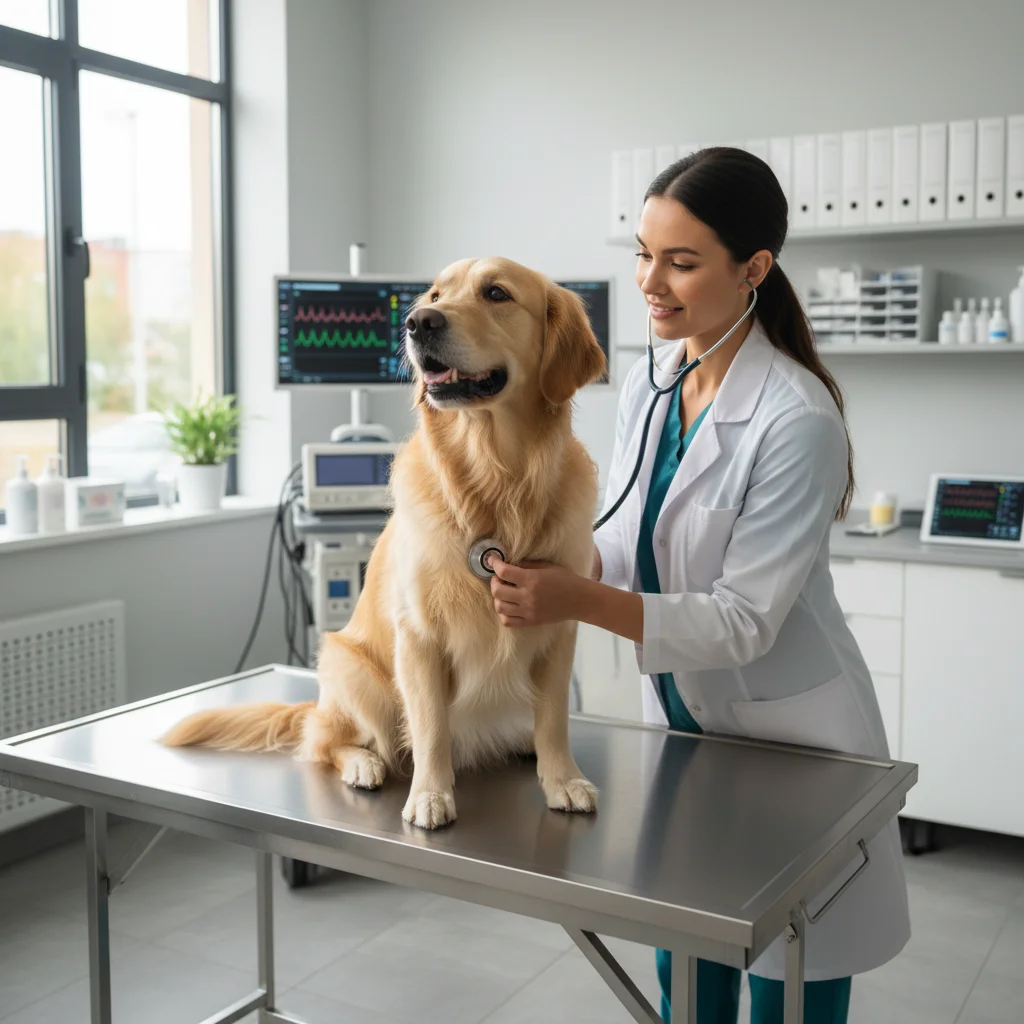
The global market for dog cooling products hit $300 million in 2023. That number’s expected to jump to $520 million by 2032. Why? Pet parents are ditching old myths. They’re grabbing gear that works. Not every cooling product delivers. Some help a little. Others just drain your wallet. Let me tell you what the research shows—and what’ll keep your dog safe.
Cooling Mats: Cold Floors Win
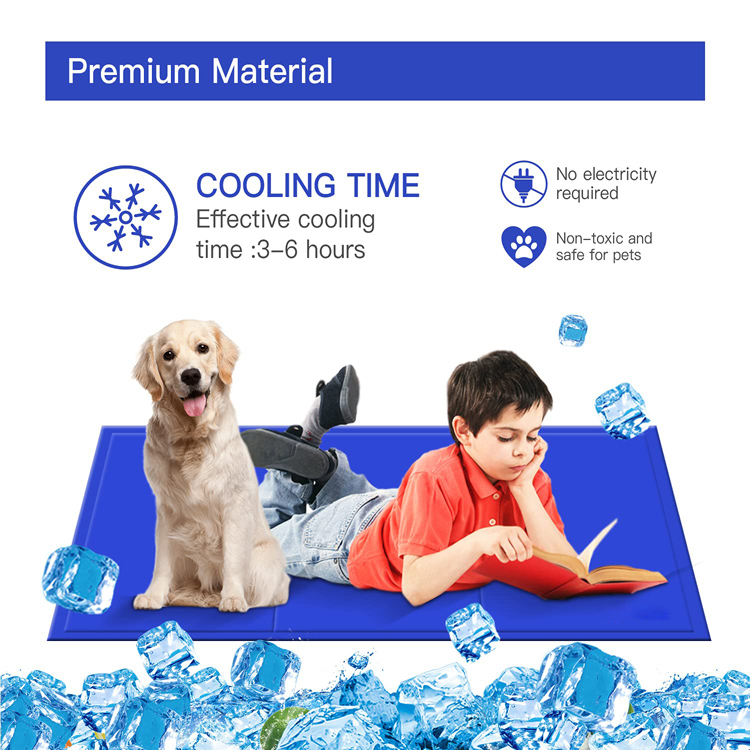
Those gel-filled cooling mats you see everywhere? Chilled to 39.2°F (4°C), they work—but not as well as good old water immersion. They’re a support player, not your star. Place them in shade with a fan blowing air across the surface. Your dog lies down. The mat pulls heat from their body. It’s passive cooling at best.
Want better results without buying anything? Find cold concrete or tile floors. They work almost as well as fancy mats. Your basement floor in summer? That’s free cooling right there.
Phase Change Materials: The Upgrade
Phase change materials (PCMs) sound fancy because they are. These materials soak up heat. They release it at set temperatures. They’re built into cooling vests and pads. Gel packs warm up fast. PCMs keep working longer.
Dog Body Temperature Regulation Science
Your dog’s body runs a natural 101-102.5°F (38.3-39.2°C) at rest. That’s their sweet spot—the baseline temperature every system depends on. Mine stays right at 39.1°C (±0.377) lounging on the porch. The moment they start moving, that number climbs fast.
Watch a healthy, fit dog chase a ball for ten minutes. Their temperature shoots up by about 2.4°C. That’s normal. Well-conditioned working dogs can hit 41-42°C during hard exercise. No trouble at all. Greyhounds racing around a track? They peak at 40.5°C about five minutes after they stop running. Military dogs doing detection work? Some keep climbing for 8-12 minutes after the work ends. Their bodies make heat faster than panting can dump it.
Here’s the catch: dogs that sit around all winter show a different pattern. Restrict their activity for eight weeks, then ask them to exercise. Their rectal temperature jumps up to 3°C during moderate work. That’s way more than a conditioned dog doing the same job. Both dogs reach similar exhaustion temperatures. But the untrained dog gets there much faster.
Your dog’s brain runs the whole show from a tiny spot called the hypothalamic-preoptic area. This control center reads temperature signals. Too hot? Blood vessels widen (vasodilatation) and panting starts. Too cold? Vessels tighten (vasoconstriction) and shivering kicks in. The system works great—until the environment pushes too hard.
Panting does the heavy lifting for cooling. Your dog can’t sweat through their skin like you do. They’ve got sweat glands in their feet and scattered across their body. But those handle about 20% of heat loss at 31°C (88°F). The rest? All panting. Flat-faced breeds struggle so much because their shortened airways can’t move air well.
Between 20-30°C (68-86°F), dogs live in their thermal neutral zone. They don’t burn extra energy to heat up or cool down. Step outside that range? Every degree costs them. A hot summer day at 35°C? Your dog’s working overtime just to stay alive.
Body size matters more than you’d think. Research on winter working dogs found a strong link (p = 0.017) between body mass and mouth temperature. Bigger dogs handle heat different than small ones. The effect gets muddier in summer, but it’s there.
Training and fitness reshape how dogs handle heat. Conditioned dogs hit a temperature plateau during hard work. Their systems adapt. Green dogs without conditioning? Their temps rise faster. Though they adapt to similar levels after proper training.
Coat type and length play different roles depending on the season. Winter versus summer trials show distinct patterns. A thick double coat that protects in January becomes a problem in July. Genetic markers like GORAB and IGF1 genes influence how individual dogs control temperature. They affect body size, cell energy function, and coat traits.
Scientists ran a wild experiment years ago. They cooled a dog’s hypothalamic-preoptic tissue down to 32°C while the dog sat in a -5°C room. The dog’s back skin measured over 35°C—plenty warm. But that chilled brain tissue? The dog pressed a bar for heat hundreds of times more than baseline. The brain’s temperature signal overrode everything else. That tiny control center calls all the shots.
Your dog responds to heat stress two ways. Physiological means automatic body changes like panting and shivering. Behavioral means seeking shade, lying on cool floors, dunking in puddles. Both matter. The hypothalamus sends the orders. The body obeys.
Dogs exercise hard, and peak temperature shows up at specific times. Working dogs hit their highest temps during power and resistance phases. Not during active running (χ² = 166.3; p < 0.001). That timing makes sense. The hardest muscle work generates the most heat from metabolism. Some dogs keep rising for 8-12 minutes after work stops. Metabolism hasn’t caught up with the cooling systems yet.
This science changes how you protect your dog. Panting runs the show. Conditioning helps. Their thermal neutral zone sits between 68-86°F. You can spot trouble right away with that knowledge. And cool them the right way.
Prevent Dog Overheating in Hot Weather
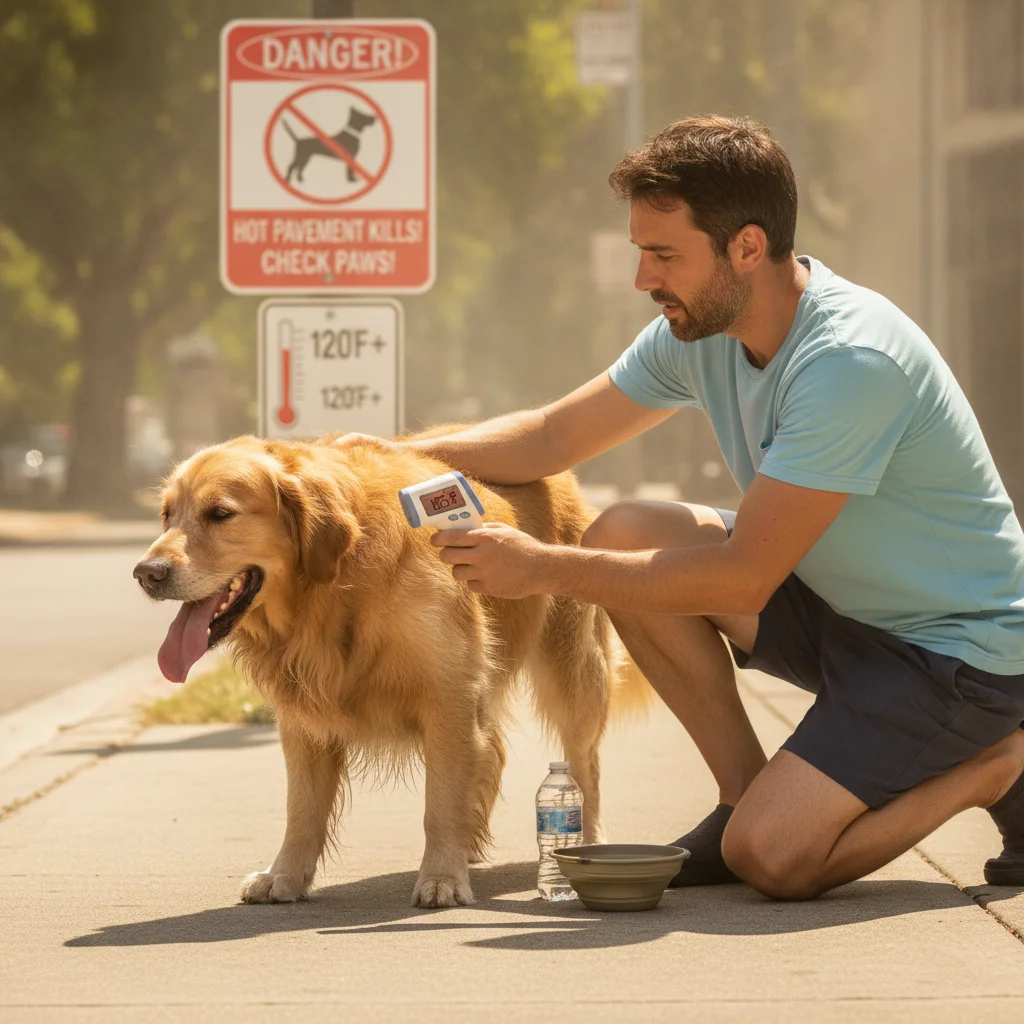
Summer heat kills dogs. That’s not meant to scare you—it’s just the truth we need to face head-on. The numbers tell a brutal story. Heatstroke cases jump five times higher during those scorching June-through-August heatwaves. UK vets logged this pattern back in 2022, and it hasn’t changed. Here’s what shocked me most: 38% of heatstroke cases came from dogs out on walks. Hot car incidents? Those accounted for just 9%. We worry about parking lot rescues, but the real danger lurks on our regular routes.
Vet insurance claims for heatstroke surge 78% during summer. The mortality rate sits at a heartbreaking 25%—one in four dogs doesn’t make it. Days that crack 32°C (90°F)? Death risk climbs 10% on those days alone. Then it ticks up another 1% for every degree the thermometer rises. Vets reviewed over 900,000 dog records. The data proved what many suspected: exercise triggers most heat-related illness, not cars or kennels.
Know Your Dog’s Risk Level
Flat-faced breeds like Pugs and Bulldogs face twice the heatstroke risk of long-nosed dogs. Those pushed-in faces can’t move air well. Overweight dogs carry 1.6 times the risk compared to fit dogs. That 2020 UK study made the connection clear. Older dogs face higher risk too. So do large breeds, double-coated types, and any pup with breathing issues.
Temperature-Based Walking Rules
I stick to this chart like my life depends on it—because my dog’s life does:
|
Air Temperature |
Risk Level |
What To Do |
|---|---|---|
|
Below 20°C (68°F) |
🟢 Safe |
Normal walks and play |
|
20-25°C (68-77°F) |
🟡 Safe |
Most dogs handle this fine |
|
26-31°C (79-88°F) |
🟠 High Risk |
Skip midday walks; flat-faced breeds stay home |
|
32°C+ (90°F+) |
🔴 Extreme Danger |
Cancel outdoor exercise |
The Pavement Burns Nobody Talks About
Air temperature reads 30°C (86°F). Feels warm but manageable, right? Meanwhile, that asphalt under your feet is cooking at over 60°C (140°F). Your dog’s paws will burn in under one minute on that surface. Use the seven-second paw test every single time. Press the back of your hand flat on the pavement. Can’t keep it there for seven full seconds? Too hot for your dog’s feet. Switch to grass, use protective booties, or wait until evening.
Car Dangers Demand Respect
Car interiors climb to 50°C (122°F) or higher within 30 minutes. This happens even with windows cracked open. Surveys show just 58% of people avoid leaving dogs in vehicles. That means half of us still take that gamble. The rule’s simple: never leave your dog in the car during warm weather. Not for “just a minute.” Not with the windows down. Never.
Water Needs Triple in Heat
Your dog requires two to three times more water than usual during high temperatures. Keep multiple bowls scattered around your house and yard. Check them often. Refill them before they run dry. Cool water—not ice-cold, just refreshing—works best for steady hydration.
Schedule Walks Like a Morning Person
Morning and late evening become your new walking windows. Dawn breaks cool and calm. Dusk brings relief after the day’s heat fades. Shorten those walks during heatwaves. A quick ten-minute loop beats a thirty-minute march through dangerous temps.
Create Shade Sanctuaries
Your dog needs shade access at all times. This isn’t optional—it’s survival equipment. Trees, awnings, umbrellas, covered patios. Stack your cooling options. Keep your dog indoors on brutal days. Run air conditioning or fans in every room they use. No midday backyard zoomies. No beach marathons. No long hiking adventures until fall returns.
Check Tomorrow’s Forecast Tonight
I pull up weather forecasts every evening before bed. Heat waves don’t surprise me anymore. I adjust our whole routine two days ahead. Cancel the dog park trip. Skip the afternoon training session. Plan indoor enrichment games instead. My dog’s calendar follows the thermometer now.
The Head Dunking Secret
Penn Veterinary researchers discovered something remarkable. Dogs trained to dunk their heads in room-temperature water cool down faster than any other method. This works better than ice packs, cooling vests, or spray bottles. The technique prevents post-exercise temperature spikes and uses minimal water.
Training takes anywhere from a few days to a couple weeks. Use positive reinforcement—toss a favorite toy or treat into a bucket of water. Let your dog figure out they need to submerge their head to grab it. Why does this work so well? Dunking increases blood flow to the head, nose, tongue, and ears. Those areas dump heat fast. Whole-body cooling follows. Plus, it flushes debris from their nose and eyes.
Emergency Response in Three Steps
Spot the warning signs—heavy panting, weakness, stumbling, drooling. Act now:
Step 1: Stop all activity right where you stand. Don’t walk another foot.
Step 2: Does your dog know head dunking? Get them to a water source now. No training? Put cool water on their head, neck, ears, paws, and groin. Drench those areas.
Step 3: Cool them on-site before you even think about driving to the vet. Remember: cool first, transport second. Bring their temperature down below 40.6°C (105°F) where you are. Then load the car and head for help if needed.
The threshold’s clear: body temperature over 105°F means heatstroke. Every prevention step matters. Every schedule change matters. Every head dunking session matters. It all comes down to keeping your dog below that line. Heat doesn’t negotiate. Neither should you.
Special Considerations for High-Risk Dogs
Some breeds face bigger heat risks. Brachycephalic dogs—those cute flat-faced pups like Bulldogs, Pugs, French Bulldogs, Boston Terriers, Boxers, and Shih Tzus—carry twice the heatstroke risk of dogs with longer noses. That pushed-in snout looks adorable. But it creates real cooling problems. Their short airways can’t move air well. Panting becomes hard work instead of a cooling tool.
The stats tell a harsh story. Flat-faced breeds make up way too many heatstroke cases every summer. Their body design fights them. Narrow nostrils. Long soft palates. Some have collapsed tracheas. Air can’t pass through those tight spaces. Heat piles up faster than they can release it.
Large and giant breeds—Great Danes, Mastiffs, Saint Bernards, Newfoundlands—carry huge body mass. More muscle means more body heat. Their core temp rises during basic activity. Size hurts them in hot weather.
Double-coated breeds wear heavy fur all year. Huskies, Malamutes, Chow Chows, Golden Retrievers, German Shepherds—that thick undercoat holds heat against their skin. The outer hairs stop air from reaching the surface. They’re made for cold climates, not hot summers.
Overweight dogs face 1.6 times the heatstroke risk compared to fit dogs. Extra fat works like a blanket around vital organs. It stops heat from escaping. Every extra pound makes cooling tougher.
Senior dogs and puppies both have trouble with heat control. Older dogs lose function in their brain’s temp centers. Their hearts and blood vessels can’t react as fast. Puppies haven’t built full cooling systems yet. Both need careful watching.
Dark-coated dogs soak up more sun than light-colored ones. Black fur heats up faster in direct sun. This gets worse with thick coats or large size.
Adjust Everything for High-Risk Dogs
Lower the temp limits by 5-10°F for these at-risk pups. I mentioned 26-31°C (79-88°F) as high risk for most dogs. Your Bulldog or heavy Lab hits danger at 21-26°C (70-79°F). Reset your prevention plan lower.
Stop all outdoor exercise at 25°C (77°F) for flat-faced breeds. Cancel walks for heavy or senior dogs at 27°C (81°F). Large breeds with thick coats? 29°C (84°F) is their limit. These are life-or-death rules, not tips.
Move exercise indoors during summer. Teach nose work games. Run obedience drills in air conditioning. Give them puzzle feeders for brain work. Mental tired equals physical tired.
High-risk dogs need more water. Put bowls in every room. Toss in ice cubes on hot days. Some dogs prefer moving water—try a fountain bowl. Test hydration by lifting the skin on their neck. It should bounce back fast. Slow return means dehydration.
Cooling vests and mats are must-haves, not extras. Soak a cooling vest in cold water before going outside. Put cooling mats where they rest. Give them frozen treats made from low-sodium broth or plain yogurt. These tools give you extra safety.
Watch these dogs close during any warm weather time outside. Check their breathing every few minutes. Look at gum color. Touch their body to feel temp. You spot warning signs—hard breathing, moving slow, seeking shade—stop right then.
Never leave high-risk dogs outside alone in warm weather. Not even in shade with a fence. Not even for ten minutes while you grab something. Temp can jump. Shade moves. Bad things happen fast.
Your Pug, your older Golden, your heavy Rottweiler—they all need special heat care. Normal rules aren’t enough. Tighten everything. Watch closer. Their life depends on knowing they face bigger risks than that fit, young Border Collie down the block.
Common Dog Cooling Mistakes to Avoid
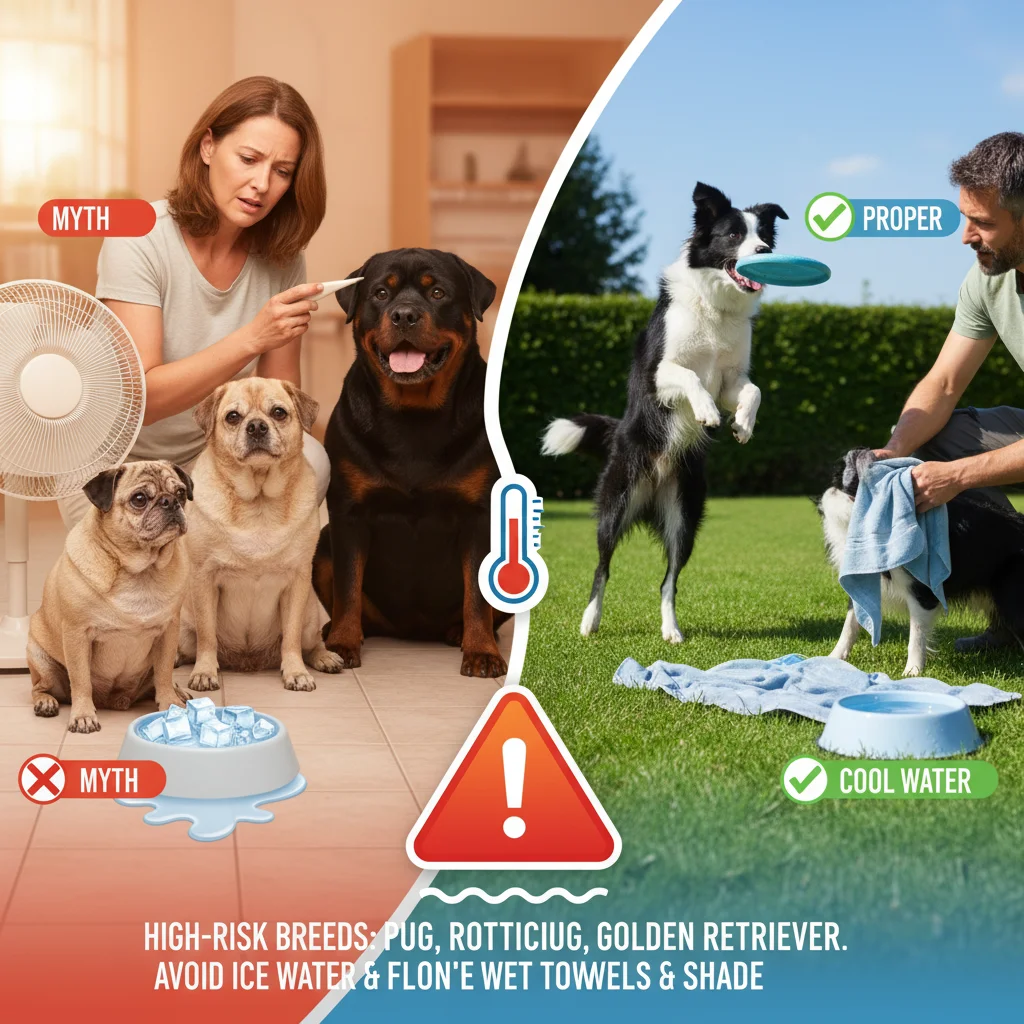
Half the advice floating around about cooling dogs is just plain wrong. You know those myths your neighbor swears by? Or that random post you saw three summers ago? These mistakes don’t just fail to help. Some make things worse for your pup.
Ice water doesn’t cause bloat or shock. That old wives’ tale needs to die. Cool water and ice are safe, effective cooling tools. The real issue? Ice cubes themselves. A panicked, overheated dog might gulp them down whole. That creates choking risks or chips their teeth. Solution? Crush the ice or drop a few cubes in their bowl to keep water cold longer. Let them drink at their own pace.
Fans alone won’t save an overheating dog. Your pup doesn’t sweat like you do. They cool through panting, not skin evaporation. A fan blowing on dry fur does almost nothing. But pair that fan with wet, damp cloths on their body? Now you’ve got evaporative cooling working for you. The fan pushes air across wet fur. Heat pulls away. Without moisture, you’re just moving hot air around.
Shaving won’t hurt double-coated breeds if done right. Experts like Dr. David Marlin debunked the old “never shave a Husky” rule. That thick coat regulates temperature, sure. But it doesn’t block cooling. It just slows it down. Shaving helps heavy-coated dogs in extreme heat. Just don’t buzz them down to bare skin. Leave about an inch for sun protection.
Not all cooling products work the same. Some cooling mats and jackets trap heat once they warm up. Check them every few minutes. Wet cooling jackets need ventilation. Without it, they turn into steamy insulation blankets. Touch the product. If it feels warm, swap it out or re-wet it.
Any cool water works in an emergency. Don’t waste time hunting for “room temperature” water. Don’t worry about exact degrees. Anything cooler than your dog’s 101-102°F body temp helps. Wet them down right away. Use whatever water you’ve got—hose, pool, bottles, puddles. Every second counts. Delaying cooling risks organ damage or death.
The “transport first, cool later” mistake kills dogs. Royal Veterinary College updated old guidelines in 2016. The new rule? Cool first, transport second. Get that body temperature dropping before you load them in the car. Temps above 104°F (40°C) for too long cause severe damage. Cool them where you stand. Then drive to the vet if needed.
Stop cooling at 103°F (39.4°C). Going lower risks overcooling. One case report showed a dog dropped to 96°F (35.6°C) after ice water immersion. The poor pup started shivering hard. You’re aiming for normal range—100-102.5°F—not hypothermia. Pull back once you hit that target.
Some methods just don’t work:
|
Method |
Why It Fails |
|---|---|
|
Alcohol rubs |
Flammable, irritates skin, covers too little surface area |
|
Rest alone |
Temperature keeps climbing without active cooling |
|
Pool immersion (resisted) |
Gold standard if your dog tolerates it; many panic |
Head dunking beats everything for field cooling. Dr. Cindy Otto’s research proved it. Dogs trained to dunk their heads in cool water for 30 seconds drop their temperature below pre-exercise baseline. This works better than ice packs, vests, or spray bottles. The key word? Voluntary. Forcing a stressed dog’s head underwater creates panic and danger.
Here’s what works: immerse or wet their body fully in cool water. Focus on the head and trunk. Aim fans at them for evaporation. Keep air moving to avoid that “steaming” effect. Offer fresh cool water with ice cubes for drinking. Use cooling mats that you’ve checked for warmth. Let them lie on cold tile or concrete in shade.
Heat stress means uncomfortable and slowing down. Heat injury means organ damage starting. Don’t wait to see which one you’re dealing with. Act before rectal temp hits 104°F (40°C). That’s your line in the sand.
Conclusion
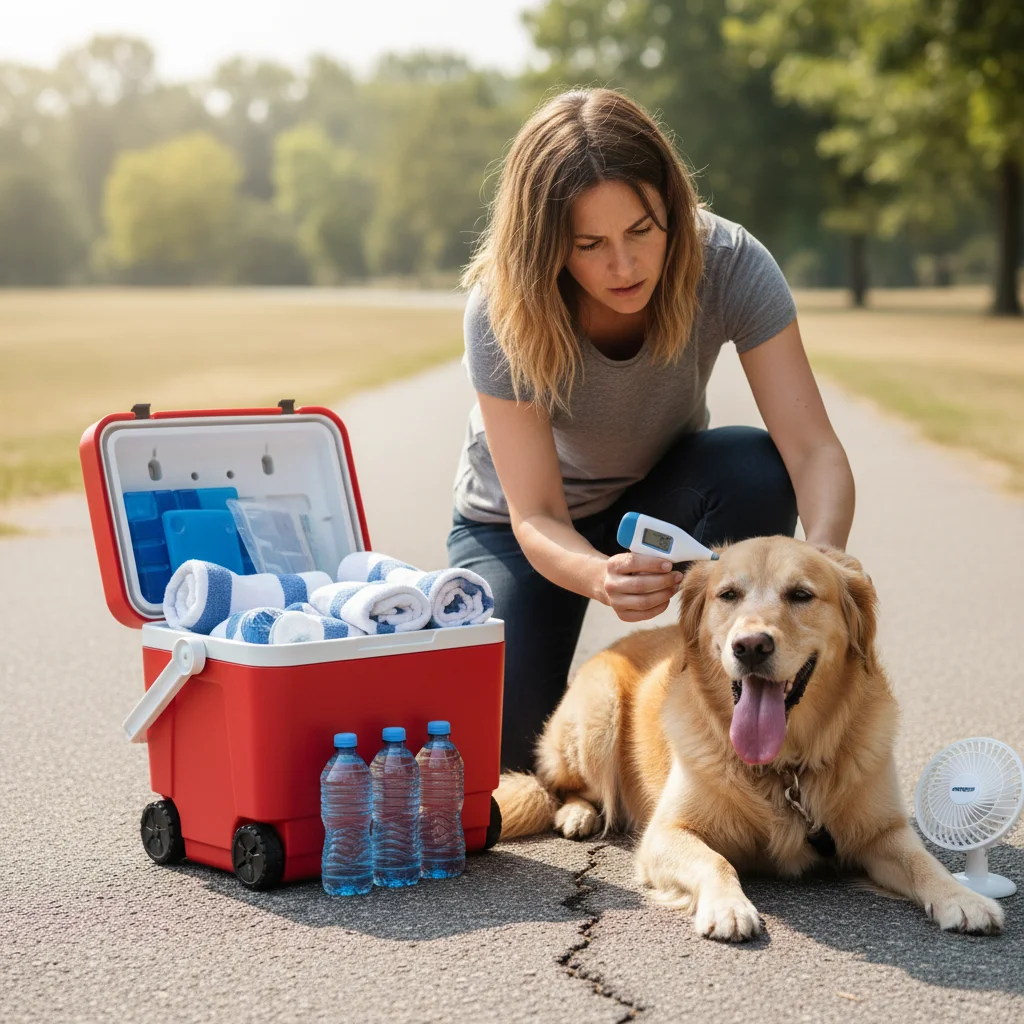
Keeping your furry friend comfortable in the heat goes beyond survival. You want a summer where both of you enjoy the sunshine without stress. Spot those warning signs of excessive drooling in dogs. Have your emergency cooling kit ready. You’re now equipped to be your dog’s hero as temperatures rise.
How to cool down a dog starts before the heat gets extreme. Stock up on cooling mats now. Keep fresh water in multiple spots. A shady area and a frozen treat work wonders. Your pup depends on you to notice their struggles. They can’t peel off a sweater or turn on the AC like we can.
This summer, make a promise to your four-legged companion. You’ll stay alert. You’ll stay prepared. You’ll keep them safe. Check out quality cooling solutions at coolheatech.com to give your dog the comfort they need. A cool dog is a happy dog. Nothing beats seeing that tail wag with pure joy, even on the hottest day of the year.