
You’ve clicked “buy” on that cooling vest for your overheated pup. Then it hits you—did you order a small, medium, or “is my dog a small bear?” The sizing chart showed chest measurements. But do you know your dog’s exact girth? Most people don’t.
Here’s the thing about proper cooling vest measurement. Don’t eyeball it. Don’t hope your 45-pound mixed breed fits “average medium.”
A loose cooling vest won’t touch your dog’s body. You end up with an expensive, soggy cape. A tight vest? Your dog will wiggle uncomfortably every time they move.
How to measure pet cooling vest fit comes down to three simple measurements. I’ll show you which numbers matter for different breeds. You’ll get the sizing confidence to order once and get it right. Your dog’s summer comfort shouldn’t need a return shipping label.
How to Measure Your Dog for a Cooling Vest (3 Essential Measurements)
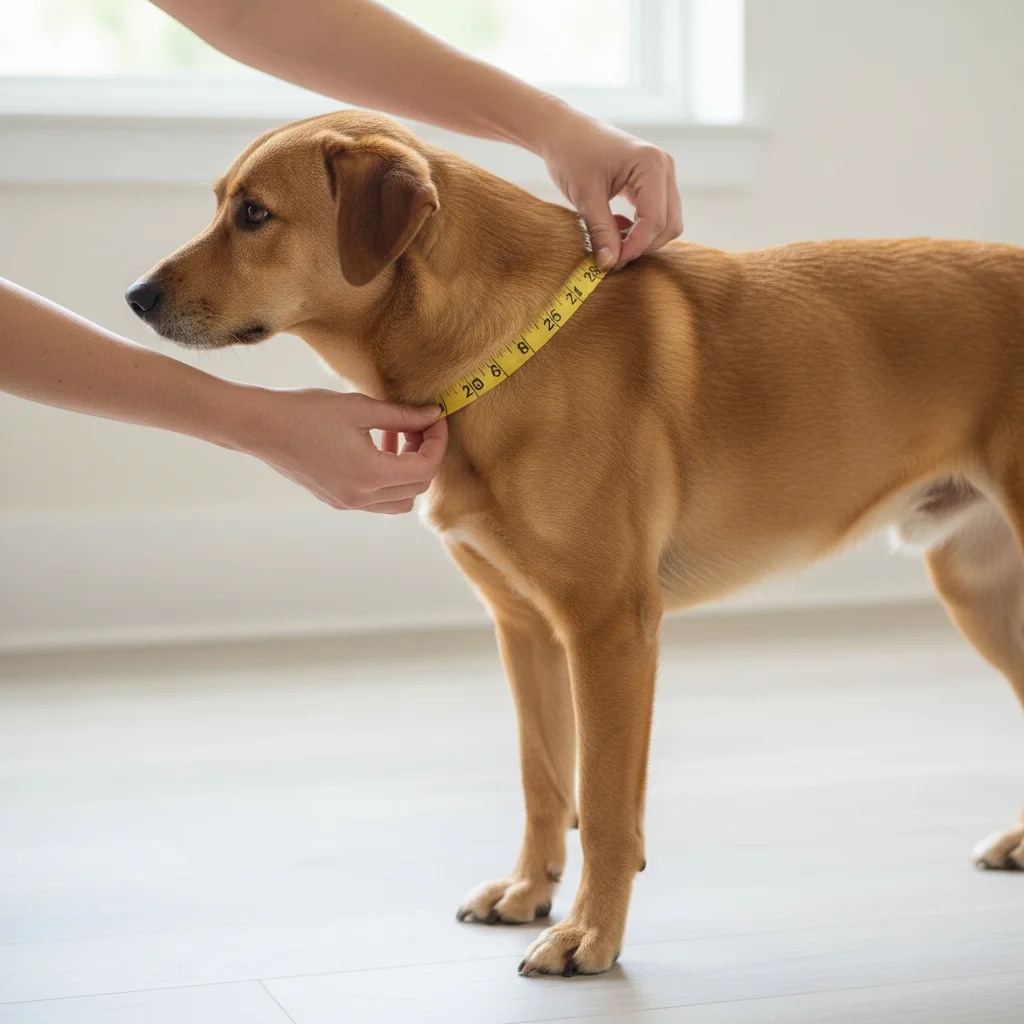
Grab a soft measuring tape—the flexible fabric kind you’d use for sewing, not the metal contractor’s tape that retracts with a snap. Your dog needs three numbers. You need about five minutes of their cooperation.
Measurement #1: Chest Girth (The Deal-Breaker Number)
This is your most critical measurement. Get this wrong, and nothing else matters.
Find the widest part of your dog’s chest. That’s right behind the front legs, where the ribcage expands the most. Wrap the measuring tape for pets around this area.
Keep the tape snug. Not choking-tight. Not loose-enough-to-slip. Snug.
Here’s the finger test: You should fit two fingers between the tape and your dog’s body. That’s your sweet spot for chest girth measurement dogs.
Example sizing guide:
– Small: 16″ or 48-69 cm (19-27″)
– Medium: 22″ or 66-89 cm (26-35″)
– Large: 26″ or 76-99 cm (30-39″)
– Extra Large: 30″
– 2X Large: 34″
– 3X Large: 38″
This measurement decides whether the adjustable pet cooling vest will close around your dog’s body. Too tight? Your dog walks like they’re wearing a corset. Too loose? The cooling fabric floats away from their skin. It does nothing.
Measurement #2: Back Length (Coverage Territory)
Start at the base of your dog’s neck—where their collar sits. Run your measuring tape in a straight line down their spine to the base of their tail. Not the tip of the tail. The base, where tail meets body.
This body length measurement cooling gear tells you how much of your dog’s torso the vest will cover.
Standard back length sizes:
– Small: 9″
– Medium: 14″
– Large: 19″
– Extra Large: 23″
– 2X Large: 26″
– 3X Large: 30″
A Corgi and a Greyhound might share the same chest girth. But they need very different back lengths. This number stops you from buying a vest that covers just your dog’s shoulders. Or one that drags past their rear end like an evening gown.
Measurement #3: Neck Circumference (The Comfort Zone)
Measure around the base of your dog’s neck where their collar rests. This sets the neck circumference pet vest opening size.
Typical neck measurements:
– Small: 10″ or 41 cm (16″)
– Medium: 14″ or 48 cm (19″)
– Large: 18″ or 58 cm (23″)
– Extra Large: 22″
– 2X Large: 26″
– 3X Large: 30″
Same rule applies: Keep the tape snug. One or two fingers should slip between the tape and your dog’s fur.
Getting Accurate Numbers
Your dog should stand during all measurements. Sitting, lying down, or doing that weird twisted pretzel thing changes their body dimensions.
Keep the measuring tape level around their body. If it tilts up toward their shoulders or down toward their belly, your numbers will be off.
Write down each measurement right away. Don’t trust yourself to remember whether that was 23 inches or 25 inches.
Compare your three numbers to the manufacturer’s sizing chart. Every brand sizes a bit different. A “medium” from one company might fit like a “large” from another.
Your dog’s measurements fall between two sizes? Choose the larger one. A snug fit cooling jacket that’s a bit roomy beats one that restricts movement every time. You can adjust straps. You can’t add fabric.
The goal of proper cooling vest measurement: One finger should slip between the finished vest and your dog’s body. That’s close enough for the evaporative cooling to work. Loose enough for your dog to breathe, run, and do normal dog things without fighting their clothing.
Universal Cooling Vest Size Chart (By Chest Girth and Weight)
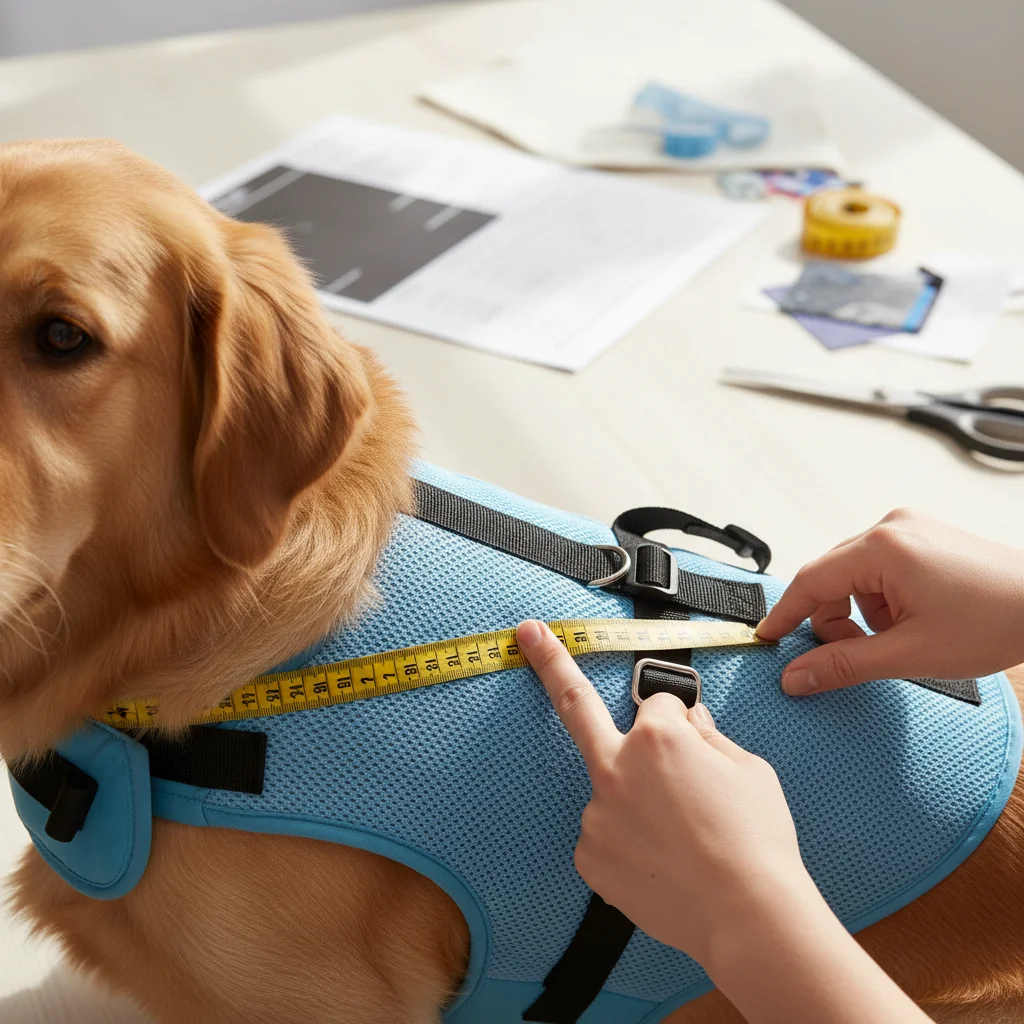
Most cooling vest brands don’t agree on what “medium” means. One company’s large fits like another’s extra-large. There’s no industry standard. Online shopping feels like a guessing game with your credit card.
I’ve pulled measurements from major cooling vest makers. These charts show you the actual numbers that matter. Use your dog’s chest girth as your main guide. Weight comes second. A stocky Bulldog and a lanky Whippet can weigh the same but need different vest sizes.
Chest-First Sizing (Standard Method)
Breeze Cooling Vest (Gobi Heat):
– XXS/XS: 28″-35″ chest, 22″ length
– S/M: 36″-41″ chest, 24″ length
– L/XL: 42″-47″ chest, 25″ length
– 2XL/3XL: 48″-53″ chest, 26″ length
– 4XL/5XL: 54″-57″ chest, 27″ length
Ergodyne Chill-Its 6230/6235:
– S/M: 32″-40″ chest (81-102cm)
– L/XL: 40″-52″ chest (102-132cm)
TechNiche #6626F Performance Vests:
– XS/S: 30″-36″ chest
Weight-Based Sizing (TechNiche)
TechNiche’s phase change vests mix waist measurement with weight ranges. These models use a different fit system than regular cooling vests.
TechNiche #6626/#6627 Phase Change Vests:
– M/L: 36-46″ waist, 110-175 lbs (45-79kg), 15-21″ length
– L/XL: 40-50″ waist, 175-250 lbs (79-113kg), 17-23″ length
– XXL: 46-56″ waist, 250-300 lbs (113-136kg), 21-27″ length
TechNiche measures waist instead of chest for these models. That’s unusual. Most brands stick with chest girth as their main measurement.
Your dog falls between two sizes on these charts? Go bigger. A vest that’s a bit roomy keeps your dog comfortable during activity. One that’s too snug restricts breathing and movement. That’s what you’re trying to avoid on a hot day.
Breed-Specific Sizing Guide (Popular Dog Breeds)
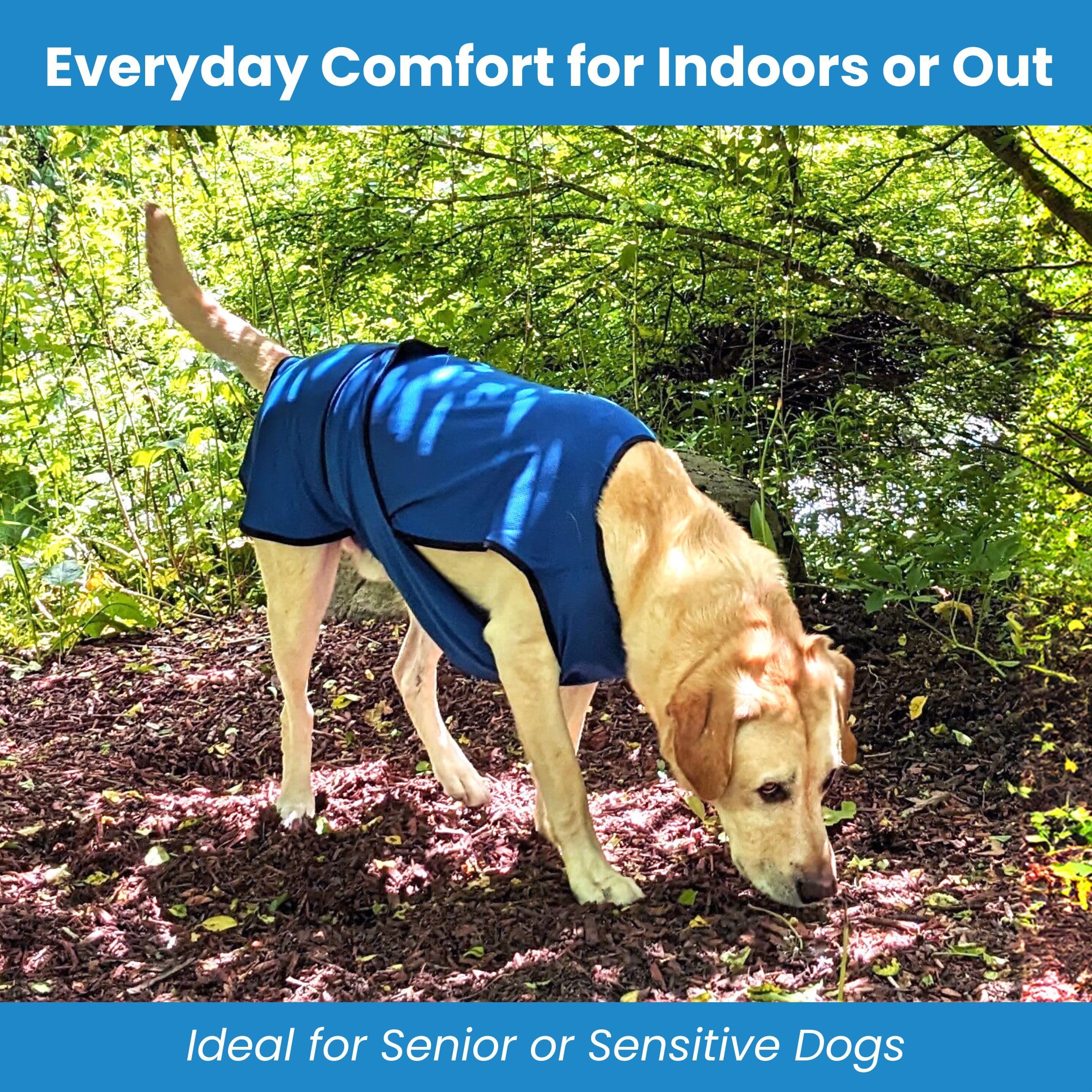
Your Labrador isn’t shaped like your neighbor’s Bulldog. Same weight? Sure, maybe. Same body? Not even close.
Breed-specific cooling vest recommendations matter. A 50-pound Lab has a long torso and deep chest. A 50-pound Bulldog is compact, barrel-chested, and built like a fire hydrant. They need different vest cuts.
Here’s what works for the breeds I see most at dog parks in July.
Small Breeds (Under 25 lbs)
Chihuahuas (2-7 lbs): These tiny dogs need XS or XXS sizes. Measure with care—most standard “small” vests swallow them whole. Chest girth runs 10-14 inches. Back length stays under 8 inches in most cases.
Yorkshire Terriers (4-7 lbs): Similar sizing to Chihuahuas. Look for vests with adjustable neck straps. Yorkies have delicate builds. A vest that shifts around won’t help.
Pomeranians (3-7 lbs): Their thick fur tricks you into thinking they’re bigger than they are. Measure the body under all that fluff. Chest girth: 12-16 inches. XS works for most.
Border Terriers (11-15 lbs): Stockier build means you might need a Small instead of XS. Check chest girth against manufacturer specs. These dogs often measure 16-20 inches around the chest.
Medium Breeds (25-55 lbs)
Beagles (20-25 lbs): Classic medium build. Chest girth: 20-24 inches. Back length: 12-16 inches. Most fit in standard Medium sizes. Watch for barrel-chested individuals who need more girth room.
Cocker Spaniels (20-30 lbs): Medium sizing works for most. Their longer coats mean you want a snugger fit so the cooling fabric contacts skin. Chest measurements fall in the 22-26 inch range.
Bulldogs (40-50 lbs): Here’s where weight-based vest sizing fails you. Bulldogs are dense, wide, and short-backed. They often need Large chest girth (26-30 inches) but Small to Medium back length (12-16 inches). Look for brands offering “stocky breed” or “wide chest” cuts.
Large Breeds (55-100 lbs)
Labrador Retrievers (55-80 lbs): This is your reference breed for standard Large sizing. Chest girth: 28-34 inches. Back length: 20-24 inches. Most cooling vests use Labs as their Large size model. Females often fit Medium-Large. Males need full Large or XL.
Golden Retrievers (55-75 lbs): Almost the same as Lab sizing. Chest: 28-32 inches. Some Goldens carry more coat weight, which doesn’t change vest size but does affect how the vest sits. Don’t size up for fur—measure the body.
German Shepherds (50-90 lbs): Leaner build than Labs despite similar weight. Females (50-70 lbs) often wear Medium-Large with 26-30 inch chest girth. Males (65-90 lbs) need Large to XL, measuring 30-36 inches around the chest. Their longer backs mean you need good length coverage—19-25 inches.
Dalmatians (45-70 lbs): Athletic, lean build. They carry their weight different than stockier breeds. Most fit Large sizes despite being on the lower end of the weight range. Chest girth: 26-32 inches. Back length: 20-24 inches.
Giant Breeds (100+ lbs)
Great Danes (100-200 lbs): You need XXL to 4XL depending on the dog. These dogs aren’t just big—they’re tall and deep-chested. Measure with care. Chest girth can hit 40-50 inches. Back length stretches 26-32 inches. Few standard cooling vests fit Danes well. Look for brands offering true giant breed options.
Between two sizes for your breed? Consider your dog’s body condition. A lean, athletic Shepherd wears a smaller size than a well-fed couch potato of the same breed. Measure the dog in front of you. Don’t assume the breed standard matches your individual.
How to Check Proper Cooling Vest Fit (4 Fit Tests)
You’ve measured your dog. You’ve ordered the vest. The package arrives. Now comes the moment of truth: Does this thing fit?
Don’t assume it works because it fastens. A cooling vest that closes around your dog’s body isn’t the same as a snug fit cooling jacket that cools. The difference shows up in how your dog moves, breathes, and whether the cooling fabric touches their skin.
Run these four tests before you cut off the tags.
Test #1: The Two-Finger Rule (Contact Check)
Put the vest on your dog. Fasten all the straps. Now slide two fingers—just two—between the vest and your dog’s chest.
They should fit. Snug, but they should fit.
Can’t get even one finger in there? Too tight. Your dog’s wearing a straightjacket, not a cooling vest. They can’t breathe right. The fabric blocks their ribcage from expanding.
Can you fit your whole hand between vest and dog? Too loose. The cooling fabric floats away from your dog’s body. It won’t transfer the cooling effect to their skin. You’ve bought them a cape. A soggy, expensive cape that does nothing.
The sweet spot: Two fingers slip under the vest with slight resistance. The fabric stays in contact with your dog’s body during movement. That’s your proper cooling vest measurement confirmation.
Test #2: The Movement Range Test (15-Minute Activity Simulation)
Your dog doesn’t stand still all day. Neither should their vest fitting session.
Watch your dog walk, trot, and do normal dog activities for fifteen minutes minimum. Take them outside if you can. Let them sniff things. Let them do that weird sideways hop they do when they’re excited.
What you’re checking:
The vest stays put. It shouldn’t ride up toward their neck. It shouldn’t shift sideways. It shouldn’t rotate around their body like a loose belt.
Your dog moves like normal. They can lift their front legs without the vest pulling tight across their shoulders. They can turn their head without fighting the neck opening. They can sit, stand, lie down without the vest bunching up.
The straps hold tension. Hook and loop closures don’t loosen during activity. The adjustable pet cooling vest features stay adjusted.
Signs of poor fit during movement: Your dog tries to shake the vest off. They walk stiff-legged. They keep stopping to scratch at the straps. They give you that betrayed look dogs reserve for baths and nail trims.
A vest that fits right becomes invisible to your dog after the first few minutes. They forget they’re wearing it.
Test #3: The Breathing and Restriction Check
Put your hand on your dog’s ribcage while they’re wearing the vest. Feel them breathe.
Their chest should expand with each breath. No hesitation. No shallow breathing because the vest’s too tight. You want to feel the same deep, easy breathing pattern they have without the vest.
Watch them pant. Dogs cool themselves by panting. A cooling vest that restricts breathing defeats its own purpose. Your dog should be able to open their mouth wide, extend their tongue, and pant without the vest pressing into their throat or chest.
Check the shoulder straps. They should sit at the highest point of your dog’s shoulders without digging into the muscle. Slide your fingers under each strap. You should feel the same two-finger clearance here as you do at the chest.
The waist closure—if your vest has one—needs its own check. It should sit at your dog’s natural waistline. Not squeeze their stomach like they’re wearing Spanx. Your dog should be able to take a full breath without the waist strap cutting in.
Here’s what bad fit does to cooling: Research on thermal manikins shows that air-cooling vests with poor fit manage just 1.0 W cooling rate for five minutes. The same vests with proper fit? 114.8 W cooling rate for over eight hours. That’s 114 times better performance. Poor fit doesn’t just feel bad—it doesn’t work.
A bad fitted vest becomes a burden. It adds weight and an extra clothing layer. It traps heat instead of releasing it. It blocks sweat from evaporating off your dog’s body. You’ve made your overheated dog hotter.
Test #4: The Coverage and Position Verification
Look at where the vest sits on your dog’s body.
The neck opening should rest where their collar sits—at the base of the neck. Not halfway up toward their ears. Not sliding down onto their shoulders.
The back length should cover your dog’s torso from shoulder blades down toward their hips. It shouldn’t stop short at mid-back. It shouldn’t extend past the base of their tail and flap around their rear end.
The chest panels need to make contact with the sides of your dog’s ribcage. That’s where the cooling happens. If the vest touches the top of their back and hangs loose everywhere else, it’s not cooling anything.
Walk around your dog. Check the vest from all angles. The fabric should lay smooth against their body without gaping holes. But it shouldn’t pull tight across any area either.
Check the cooling pack pockets if your vest has them. You need enough space to insert the cooling packs without creating bulges. These bulges push the vest away from your dog’s body. Small vests don’t fit the cooling packs right. The packs either won’t fit or they’ll create pressure points.
Do one final position test after your dog’s been wearing the vest for fifteen minutes: The vest should sit in the same position as when you first fastened it. No migration up toward the neck. No rotation to one side. No riding up to expose your dog’s stomach.
If your vest fails any of these four tests, you need a different size. Don’t convince yourself it’ll “break in” or your dog will “get used to it.” A cooling vest either fits or it doesn’t. There’s no middle ground when you’re trying to keep your dog safe in hot weather.
Sizing Troubleshooting (Between Sizes & Special Body Types)
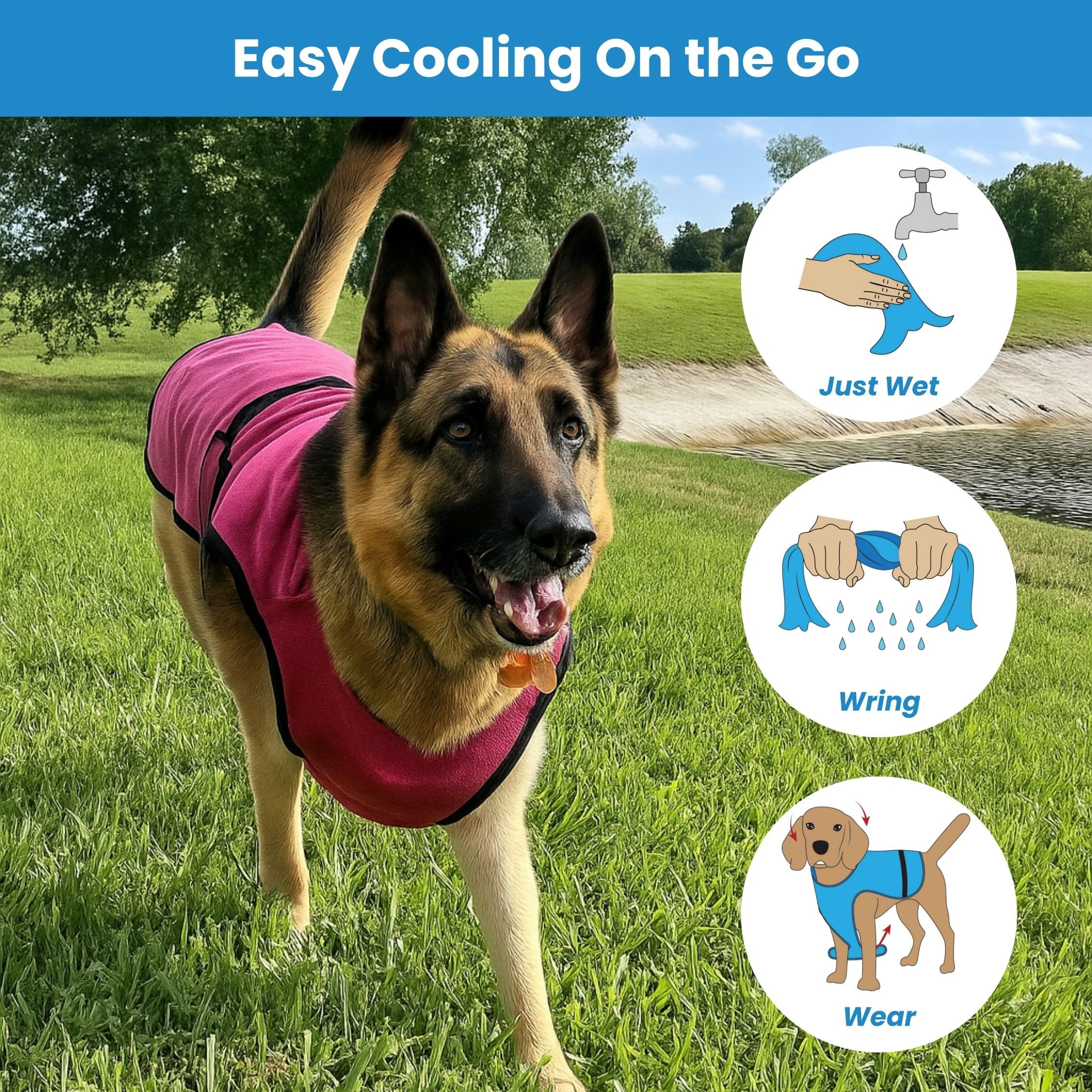
Your dog’s chest girth measured 24 inches. The sizing chart shows Small stops at 23 inches. Medium starts at 25 inches. Most pet owners panic-buy both options and deal with returns later.
This isn’t your measurement problem. It’s the pet cooling vest industry’s dirty secret: There’s no standard sizing system. A Medium from one brand fits like a Large from another. A Small might work for your 20-pound Beagle but strangle your 20-pound Bulldog.
Your Dog Falls Between Two Sizes
Always size up. Not sometimes. Always.
Here’s why: A cooling vest works through evaporative cooling. The fabric needs to touch your dog’s skin. But it doesn’t need to squeeze them like shrink wrap. A roomy vest still makes skin contact during movement. Your dog sits, stands, walks—the fabric shifts and touches different areas of their body.
A vest that’s too small? It restricts movement from minute one. It digs into your dog’s armpits. It cuts across their chest during deep breaths. A comfort tool becomes a torture device.
The numbers prove this matters: Incorrect sizing drives 40% of all online pet product returns. You’re not alone with this problem. Nearly 50% of U.S. shoppers buy multiple sizes of the same item just to find one that fits. Pet owners do the same thing—order two vests, keep one, ship one back. That’s extra money, extra time, and extra hassle.
Adjustable straps save you here. Most quality cooling vests include chest straps, torso straps, or both. These give you 2-4 inches of adjustment room. A Medium vest with adjustable straps can often fit dogs who measure into Small or Large territory. Check the product specs for adjustment range before you size up.
The Breed Shape Problem (Why Weight Charts Lie)
Weight-based sizing charts tell you a 50-pound dog needs a Large. But which 50-pound dog?
A 50-pound Greyhound is long, lean, and narrow-chested. A 50-pound Bulldog is compact, barrel-chested, and wide. Same weight. Different body builds. They need different vest cuts.
Stocky, barrel-chested breeds (Bulldogs, Pugs, French Bulldogs, Boston Terriers, Corgis): These dogs measure wider around the chest than their weight suggests. A 30-pound French Bulldog might need the same chest girth as a 45-pound Beagle. Ignore the weight recommendation. Follow the chest girth measurement dogs number. Size up if you’re between measurements. These breeds also have shorter backs. Check that the vest’s back length doesn’t extend past their rear end.
Deep-chested, athletic breeds (Greyhounds, Whippets, Dobermans, Boxers, Weimaraners): Their chest drops deep but stays narrow side-to-side. Standard sizing often gaps at their sides while fitting the chest depth. Look for brands offering “athletic cut” or “deep chest” options. No luck finding those? Measure your dog’s chest at the widest point and choose the size that matches. The vest might look loose from the side view, but it’ll contact their body where it counts.
Long-backed breeds (Dachshunds, Basset Hounds, Corgis): Their back length doesn’t match their chest girth category. A Dachshund might have a Small chest measurement but need Medium or Large back length. Few cooling vests fit this body type well. You might need to hunt for brands making “long body” sizes. Or accept that a standard vest will cover less of their torso than it would on a proportional dog.
Giant breeds with loose skin (Mastiffs, Bloodhounds, Shar-Peis): That skin isn’t all body mass. Measure under the folds and wrinkles to get accurate chest girth. The loose skin will shift around the vest during wear. This is normal. The vest just needs to make contact with the body underneath to cool them. Don’t size up trying to fit skin folds. You’ll end up with a vest that’s too large for their frame.
Special Considerations for Senior Dogs and Puppies
Senior dogs change shape. A 10-year-old Lab doesn’t carry muscle the same way they did at age three. They might have arthritis that changes how they stand. They might have gained weight around the middle while losing muscle mass in the shoulders.
Measure your senior dog fresh. Don’t use measurements from five years ago. Don’t assume they still wear the same size vest. Their body has changed. The vest size needs to change with it.
Watch for extra sensitivity around arthritic joints. A vest strap that crosses a sore shoulder might bother your senior dog more than it would a younger, healthier dog. Choose vests with padding on the straps. Or position adjustable straps away from problem joints.
Puppies grow. Fast. That fitted vest you bought in June won’t fit in August.
You’re buying a cooling vest for a puppy who hasn’t reached full size? You have two choices: Buy for their current size and replace it in a few months. Or buy one size up and use adjustment straps to make it work now. It’ll fit better later.
Don’t buy two sizes up trying to get more wear time. A vest that’s too large won’t cool your puppy. It’ll just frustrate both of you. Cooling vests aren’t expensive enough to justify a poor fit for months of wear.
The industry data backs up these fit problems: 66% of UK consumers cite poor fit as their main return reason. In the pet product space, that percentage climbs higher. Animals can’t tell you “this pinches under my left leg” or “the neck hole is too tight.” They just refuse to wear it. You end up with a $40 vest your dog won’t let you put on.
Stuck between sizes or dealing with a special body type? The vest works if your dog will wear it with ease. Choose the size that lets them move, breathe, and act like themselves. That matters more than perfect coverage or optimal cooling fabric contact. A loose vest they’ll tolerate beats a fitted vest they’ll fight you over every single time.
Adjustable Features in Quality Cooling Vests
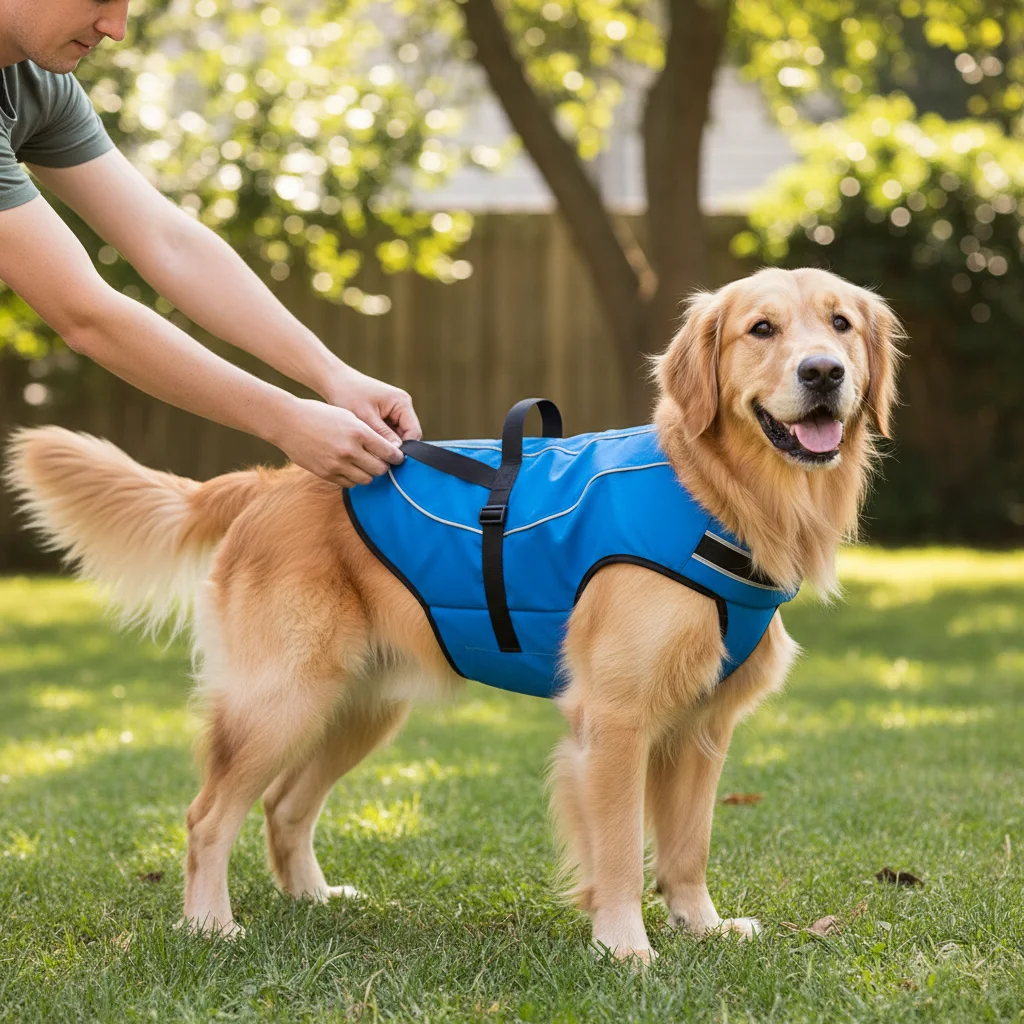
Your dog will wear a cooling vest if it fits right. Adjustment straps make that happen.
Adjustable pet cooling vests vary widely. Some brands add one hook-and-loop strap and call it a day. Others give you four or five points to dial in a custom fit.
Adjustment points beat cooling tech every time. Premium phase-change material won’t help if the vest hangs loose or shifts around. Straps keep the cooling fabric pressed against your dog’s body.
Hook-and-Loop Closures (The Industry Standard)
Most cooling vests use hook-and-loop fasteners. You’ll see them at the shoulders, chest, and waist.
Ergodone Chill-Its 6235 puts adjustable closures at the shoulders and waist. The S/M size fits 32-40 inches. The L/XL works from 40-52 inches. That’s 8 inches of range per size. This means a lean 35-inch Dalmatian and a stocky 39-inch Bulldog both fit the Medium.
Polar Products Adjustable Zipper Vest adds adjustment points at chest, waist, and shoulders. Three separate straps let you customize each section of your dog’s torso. Dog measures Medium in the chest but Large at the waist? Tighten the chest strap. Loosen the waist strap. The vest shapes to your dog instead of forcing a standard fit.
Hook-and-loop closures adjust anywhere within their range. No pre-set holes like buckle systems. Position the strap where your dog needs it.
Side Straps and Elastic Adjustability
Texas Cool Vest Standard uses six side straps—three per side. Plus adjustable shoulders and a zipper front. Seven adjustment points total. One size fits dogs up to a 49-inch waist. The straps handle different body shapes.
Glacier Tek Sports Vest builds in dual elastic side straps with over-shoulder adjustment. The elastic gives you dynamic fit. Your dog inhales—the elastic expands. They exhale—it contracts. The vest moves with them. No fighting their ribcage.
This vest fits 30-inch torsos up to 46 inches in standard size. Need bigger? The extender pushes fit to 58 inches. Same vest, three size ranges, all from adjustment features.
Elastic matters for active dogs. Static straps hold tension while your dog stands still. They run, jump, or play? Body shape changes. Elastic straps keep pressure contact through all that movement.
Zipper Closures Combined with Straps
A front zipper does the main closure work. Adjustment straps fine-tune the fit.
Glacier Tek and Texas Cool Vest both use this setup. The heavy-duty front zipper closes the vest fast. Shoulder and side straps let you tighten or loosen specific areas after.
Zippers beat straps for speed. Hook-and-loop needs patient alignment. A zipper? One pull finishes it. The straps become fine-tuning tools, not primary closures.
Temperature Control Adjustment (Vortex Air-Cooled)
Vortec Air-Cooled Vests add something other cooling vests skip: an adjustable temperature knob.
You can dial cooling intensity up or down with gloved hands while wearing the vest. The Large size delivers 1500 BTU/hr at 25 scfm. Turn the knob to control the 60°F temperature drop. XL and 2XL sizes push 2500 BTU/hr at 35 scfm.
Conditions change? This helps. Morning walk in 75-degree weather? Dial it down. Midday sun hits 95 degrees? Turn that knob up. The waist belt handles fit. The temperature control handles cooling power.
What “One Size Fits Most” Means
Some brands claim “one size fits S-XL” through heavy adjustment features.
Glacier Tek Sports Vest says their single size handles 30-46 inch torsos. That’s a 16-inch range. Dual elastic side straps and shoulder adjustment make it possible. But “fits most” doesn’t mean “fits best.” A 30-inch dog wears a different vest than a 46-inch dog. Same model, very different tightness.
A vest sized closer to your dog’s measurements cools better. Even with adjustment features. The straps fix minor size differences. They can’t work miracles.
Multi-Point Adjustment vs. Single-Point
Count the adjustment points before buying.
A vest with shoulder, chest, waist, and side strap adjustments fits your dog’s body better than one with a single strap. More adjustment points give you more control over cooling pack placement against your dog’s torso.
Polar Products gives you three points. Texas Cool Vest gives you seven. Both work. But the Texas vest handles more body shapes. You can fine-tune each section separately.
Dog between sizes or has an unusual build? Look for vests with four or more adjustment points. Extra straps might look complex. They’re not. They protect you from poor fit and wasted return shipping costs.
Conclusion
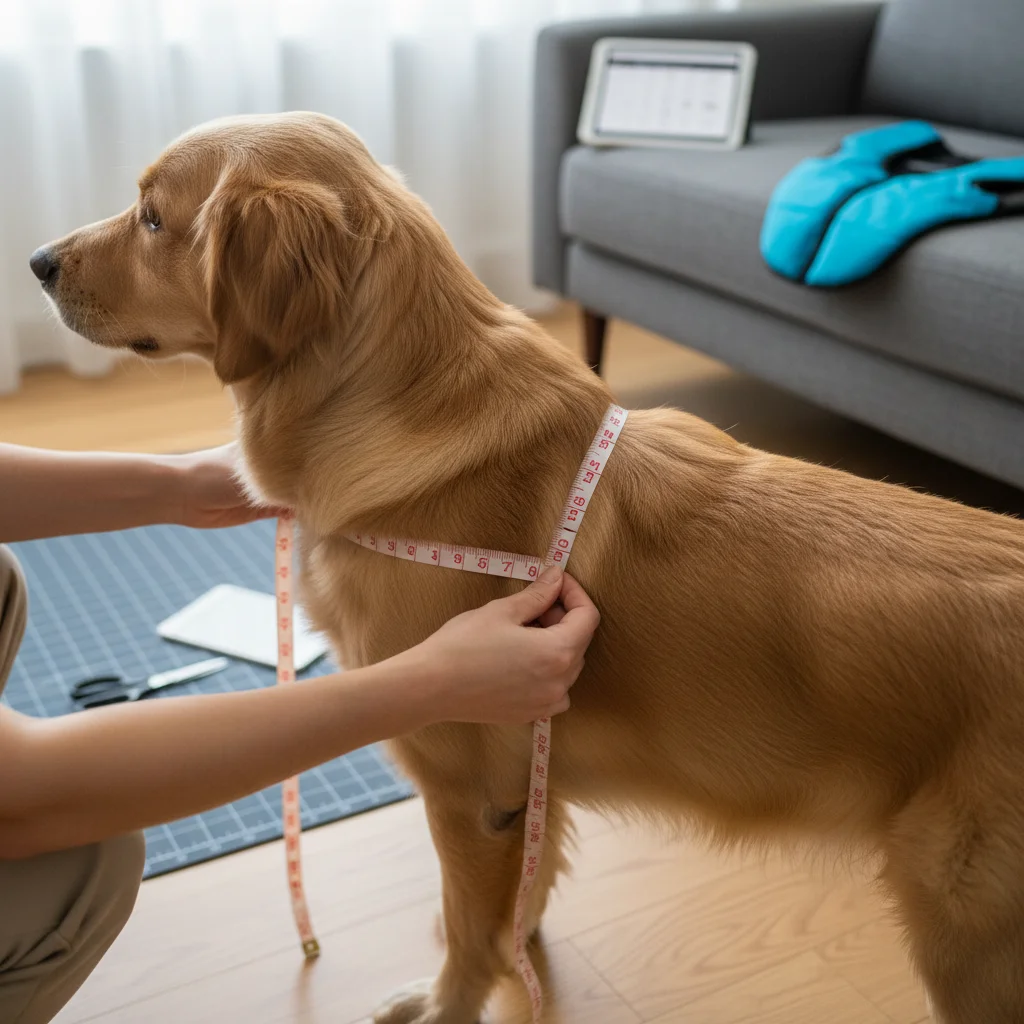
Getting the right cooling vest fit is simple. You need three quick measurements and some common sense. Measure the chest girth at the widest point. Check the neck circumference. Note the body length. Done.
What separates a vest that keeps your dog cool from one gathering dust in your closet? Two minutes with a measuring tape before you hit “add to cart.”
Between sizes? Go bigger for thick-coated breeds. Go smaller for lean athletes. See the vest shifting during your fit test? Adjust those straps or try the next size. Does your dog have a barrel chest or extra-long torso? Focus on chest girth measurement over breed recommendations. Every dog has a unique build.
Ready to keep your pup cool this summer? Grab your measuring tape. Follow the steps we covered. Check out our breed-specific cooling vest collection. Your dog’s comfort is worth a few extra minutes of proper measurement. Your peace of mind too. They’ll appreciate it on the next hot day.