
You scored a heated vest — game changer, right? But then you go to put it on and wonder… wait, what goes under this thing? A thick hoodie feels like overkill. Bare skin feels risky. And that old cotton tee you grabbed off the chair? Not it.
Here’s the reality: what you layer under your heated vest makes or breaks the whole experience. The wrong choice cuts heat efficiency, drains battery faster, and can even irritate your skin. The right choice does the opposite.
Going on a ski trip? Commuting by bike? Just taking a cold morning walk? Your thermal base layer for your heated vest changes everything. Get it right, and the vest performs at its best. Get it wrong, and you’re fighting against it.
This guide covers what to wear, what to skip, and how to build a heated vest clothing system that works for your life.
What Do You Wear Under A Heated Vest?
Let’s cut straight to it: never wear a heated vest against bare skin. Full stop.
This is the rule that matters most — and the one most people skip over in the excitement of unboxing. A thin, breathable layer between your skin and the heating elements isn’t just about comfort. It keeps you safe from prolonged heat exposure. Plus, it spreads warmth better across your whole torso.
So what does that layer look like?
Think lightweight and functional — not bulky. You want a fitted base layer that sits flush against your body without bunching under the vest. Too thick and it blocks heat transfer. Too loose and it traps air unevenly, creating hot spots. The sweet spot: snug, breathable, thin.
Here’s the basic system that works:
- Step 1 — Put on your base layer first (we’re getting into materials next)
- Step 2 — Place your heated vest over it
- Step 3 — Before powering on, do a quick check — wiring, battery connections, no visible damage
- Step 4 — Start on a low heat setting, then adjust up as needed
That last point matters more than most people think. Starting low gives your body time to adjust. It also stretches battery life — so you stay warm longer.
The right heated vest clothing system isn’t complicated. It’s just intentional.
Is It Safe to Wear a Heated Vest Against Skin?
Skin burns from heated vests are real — and they happen more often than manufacturers like to admit.
Here’s what the data shows: divers have reported burn injuries from direct skin contact with heating elements. These aren’t freak accidents. They’re the predictable result of skipping one simple step — a base layer.
Your heated vest is built with one key assumption: there will be fabric between the heating elements and your skin. That’s not a suggestion buried in the fine print. That’s the entire safety model the product is built around. High-end vests with soft rubber-sheathed heating elements — the ones marketed as “skin-safe” — are still built for double protection, not zero protection. The sheath is layer one. Your clothing is layer two. Take away layer two, and the whole system breaks down.
What Happens If You Skip the Base Layer?
- Prolonged heat exposure causes skin irritation before you feel any discomfort
- Hot spots form where elements press against your body
- Low-temperature burns can develop without warning — you won’t feel them until damage is done
But What About All the Safety Features?
Quality heated vests come with adjustable heat settings, automatic shut-off systems, and certified batteries. These features prevent the vest itself from overheating. They do not protect your skin from sustained direct contact.
Think of it this way: a car has airbags, but you still wear a seatbelt.
The bottom line: Heated vests are safe — used as designed. One thin, breathable layer between you and those heating elements is all it takes to keep that safety promise intact.
The Best Base Layer Materials for Wearing Under a Heated Vest
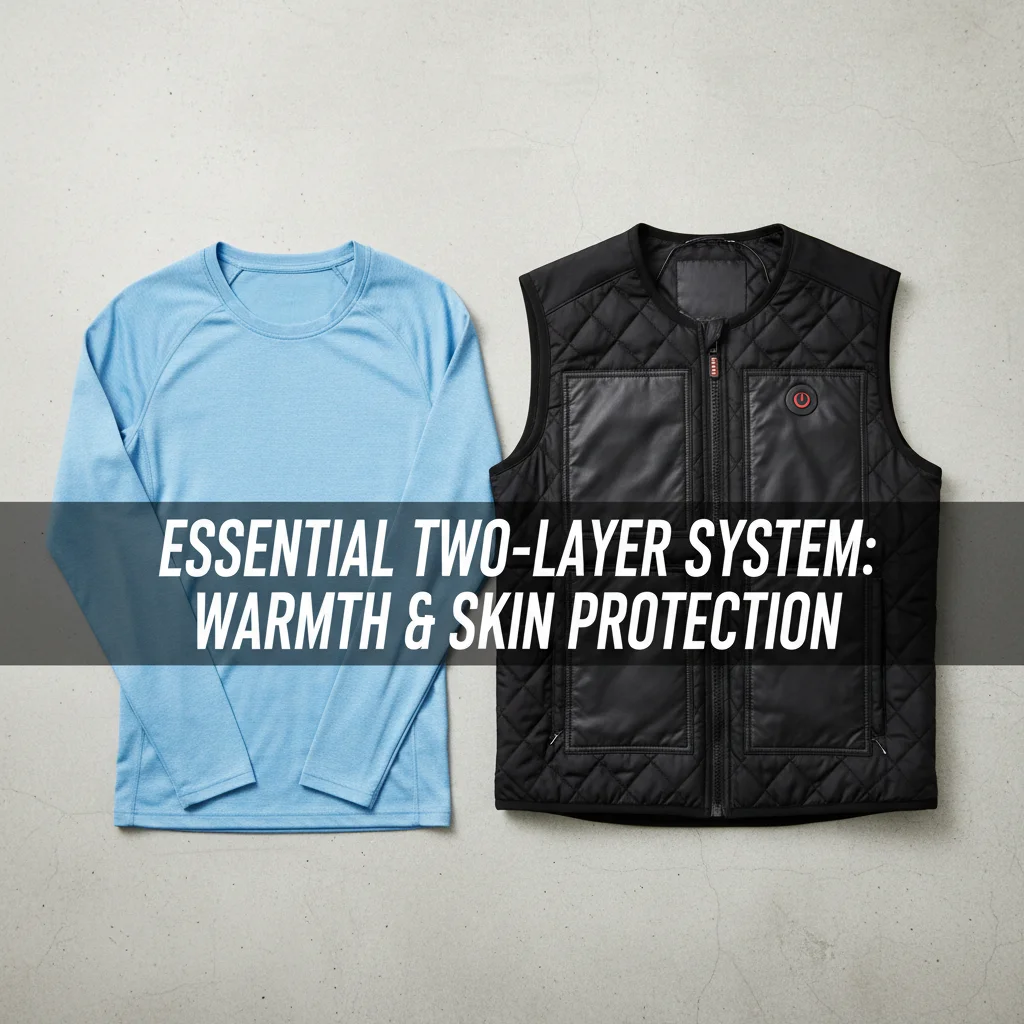
Material choice is where most people leave serious warmth on the table — and they don’t even realize it.
The fabric sitting between your skin and your heated vest isn’t just filler. It’s an active part of the system. It either moves heat toward your body or it fights against it. Three materials dominate this conversation: merino wool, synthetic blends, and cotton. One of these is the wrong answer every single time.
Merino Wool: The Gold Standard
Merino wool is the overachiever of base layers. It wicks moisture on its own, resists odor without chemical treatments, and holds steady temperature as conditions shift. That’s what your body needs under a heat source that cycles on and off.
The fibers are fine enough that sensitive skin won’t protest. No scratchiness, no irritation, no regrets. For long days outdoors — a full ski run, a multi-hour hike — merino thermal base layers under a heated vest deliver sustained warmth. You won’t get that suffocating, swampy feeling either. The Smartwool Classic Thermal Merino 1/4 Zip sits at the top of most rankings for its warmth-to-breathability ratio. It’s the kind of layer you forget you’re wearing.
Synthetic Fabrics: Best for High-Intensity Use
Moving hard and sweating fast? Synthetics win. Polyester blends with hollow-fiber technology — like HydroWick construction — pull moisture away from your skin and dry in no time. No sweat pooling. No clammy chill the moment you slow down.
Moisture-wicking shirts under a heated vest are lightweight, durable, and low-bulk. They keep the vest’s heat channels clear and working at full capacity. You run hot or layer for active sports? A quality synthetic base layer for your heated vest is the right call.
Cotton: Just Don’t
Cotton absorbs moisture like it has a personal vendetta against comfort — up to 27 times its own weight. It traps sweat against your skin, slows evaporation to a crawl, and builds a cold, clammy barrier. That’s the opposite of what a heated vest is designed to do. Cotton vs. synthetic for a heated vest isn’t even a real debate. Cotton loses.
The Material Comparison at a Glance
| Material | Wicking Speed | Dry Time | Warmth Retention | Best For |
|---|---|---|---|---|
| Merino Wool | High | Medium | Excellent | Cold weather, extended wear |
| Polyester/Synthetic | Excellent | Very fast | Good | Active use, high output |
| Cotton | Poor | Slow | Poor | Not recommended |
The Smartest Pick: A Merino-Synthetic Blend
Want one base layer that handles everything? Go hybrid. Merino-synthetic blend base layers — like the ororo Aoraki Unisex — pair wool’s insulation and natural odor resistance with synthetic’s stretch, durability, and fast moisture management. The result: even heat distribution under your heated vest, zero bulk, and solid performance that holds up as conditions change.
One more non-negotiable: fit. Your base layer needs to sit close to the body — athletic and snug, not tight and restrictive. Flat seams prevent chafing. Multi-directional stretch keeps you moving without restriction. A loose, baggy layer creates uneven air pockets under the vest. That means inconsistent heating and wasted battery. The goal is seamless contact — fabric to skin, vest to fabric, heat to you.
Heated Vest Layering by Activity: What to Wear in Each Scenario
Same vest. The layering strategy changes based on what you’re doing that day.
That’s what nobody tells you upfront. Your heated vest clothing system isn’t one-size-fits-all. It shifts based on how hard you’re moving, how long you’re out there, and how exposed you are to the elements. Here’s what to wear in each scenario, broken down so you can just get dressed and go.
🏔️ Outdoor Hiking & Mountaineering
You’re generating serious body heat on the ascent. The last thing you want is a thick, heavy base layer trapping sweat against your skin.
Go lighter than you think you need to.
- Base: A lightweight, fitted moisture-wicking shirt under your heated vest — quick-dry synthetic or a thin merino. No cotton, ever.
- Mid: Heated vest goes straight over that base. No thick fleece in between. Direct contact means maximum heat transfer.
- Outer: A breathable, waterproof shell. Gore-Tex-style fabric lets sweat escape while blocking wind and weather.
The priority here is wicking first, warmth second. Your vest handles warmth. Your base layer handles the sweat.
🏍️ Motorcycle Riding
Wind chill at speed is relentless. It’s a different challenge than hiking cold. You’re not generating much body heat. You need steady core warmth for the long haul.
- Base: A compression shirt under your heated vest or a snug thermal layer. Keep it fitted and non-bulky — bulk under riding gear creates problems.
- Mid: Heated vest sitting close to your body. Core-focused heat is what wind exposure demands.
- Outer: A windproof shell or softshell jacket that fits over everything without binding your arms. You need full range of motion — overhead reach, shoulder rotation, all of it.
Three layers working together trap heat. One loose layer fights against you.
⛷️ Skiing & Snow Sports
Extreme cold at the lift. High-output heat on the run. Your heated vest insulation layer has to handle both.
- Base: Merino wool or a synthetic thermal base layer for your heated vest — midweight, snug, breathable. It needs to manage sweat during hard effort without leaving you soaked at rest.
- Mid: Heated vest as your core insulator. It holds warmth through intense effort phases and freezing standstill moments.
- Outer: Hard-shell waterproof jacket with pit zips or ventilation panels. Not optional.
Heat drops fast once you stop moving on the mountain. Layer up before rest breaks — not after you’re already cold.
🏙️ Daily Commuting & Urban Wear
For commuting, the best fabric for a heated vest base layer isn’t just about performance. It’s about looking put-together at the office or on the street.
- Base: A fitted long-sleeve thermal, a Henley, or a slim office shirt. Low-profile is the goal.
- Mid: Your heated vest sits clean underneath — no bulk.
- Outer: Trench coat, peacoat, blazer, or commuter jacket on top. On milder days? Skip the outer layer. The vest is your outerwear.
Pair with jeans or tailored trousers. You’ve got a heated vest clothing system that carries you from morning commute to afternoon meeting — no wardrobe change needed.
🧓 Elderly Users & Low Circulation
Heated vest temperature control matters more here than in any other scenario. Delayed heat perception is a real safety concern. Reduced circulation means the body is slower to register overheating.
- Base: A fleece-lined long-sleeve or midweight thermal. The extra insulation layer helps cover the gap between what the body feels and what’s happening temperature-wise.
- Mid: Heated vest on a low setting — start at level 1 or 2, every time.
- Outer: A roomy down or insulated jacket that traps warmth without compressing the vest.
Set a timer. Check in every 20–30 minutes. Don’t use discomfort as your signal — with reduced circulation, that signal arrives late.
The Quick-Reference Layering Guide
| Activity | Base Weight | Key Fabric | Outer Layer |
|---|---|---|---|
| Hiking/Mountaineering | Lightweight | Synthetic or thin merino | Breathable shell |
| Motorcycle Riding | Fitted/compression | Quick-dry synthetic | Windproof shell |
| Skiing/Snow Sports | Midweight | Merino or synthetic | Hard-shell with vents |
| Daily Commuting | Low-profile | Merino blend or thermal | Coat or blazer (optional) |
| Elderly/Low Circulation | Midweight+ | Fleece-lined thermal | Insulated down jacket |
One rule applies to all of it: vent early, layer before rest, and start your heated vest on the lowest setting. Work with your body’s heat — not against it. That’s how you get the most out of every battery charge.
How Fabric Thickness and Fit Affect Your Heated Vest Performance
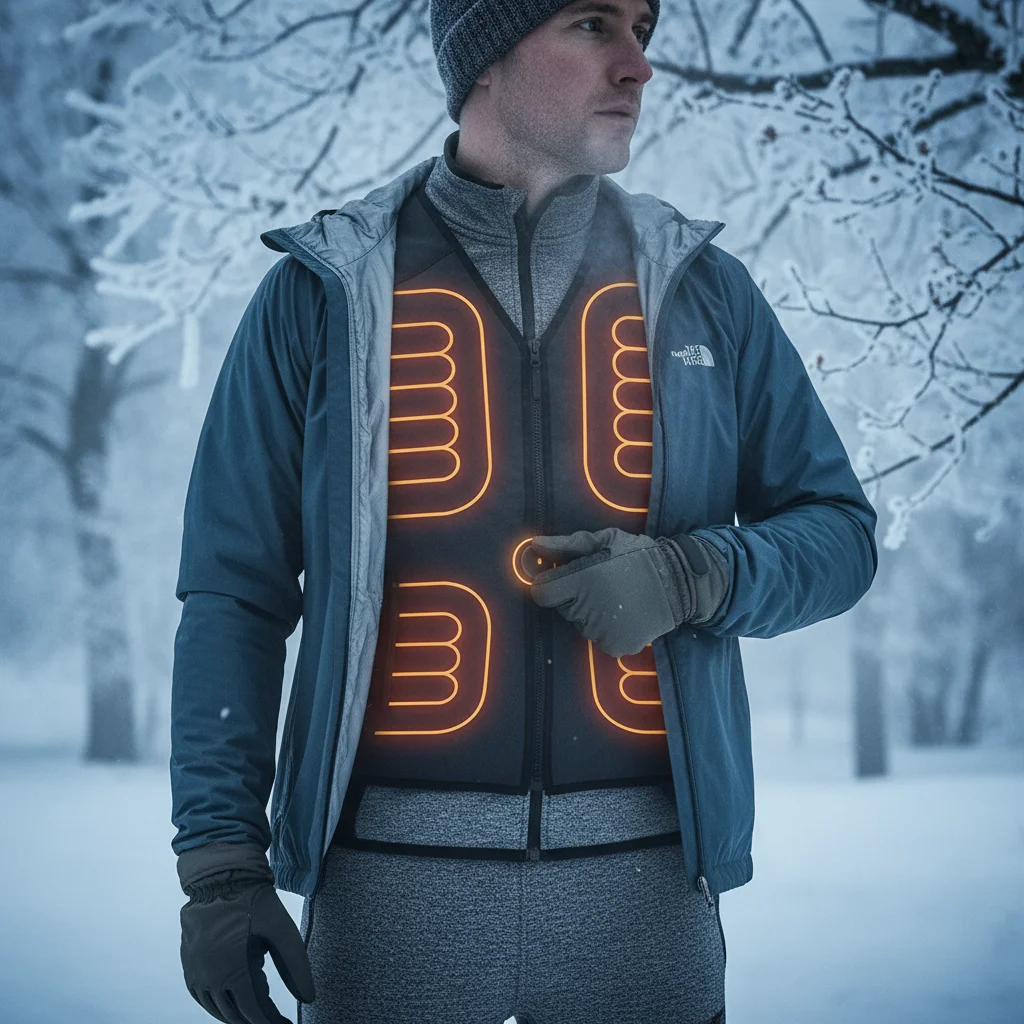
Thickness and fit aren’t styling details — they’re performance variables. Get them wrong, and your heated vest works against itself.
Here’s the core physics: heat travels the path of least resistance. A thick insulating layer under your vest doesn’t support it — it fights it. That bulky fleece or oversized hoodie? It pulls heat away before any of it reaches your skin. Research on heated vest systems shows that extra inner layers cut direct heat transfer to the body. The result: you crank the setting to high just to feel what low could deliver with a smarter setup.
The 150–200gsm Rule
The right under-layer sits at 150–200gsm — think a fitted merino long-sleeve or a thin synthetic thermal. Go beyond that weight and the fabric starts acting as a barrier, not a conductor. You want fabric that moves warmth to your skin. Not fabric that traps it for itself.
Fit Is Everything
A loose vest creates air gaps between the heating elements and your body. Those gaps are dead zones. Infrared camera studies on heated vest systems show that poor fit causes uneven heat spread across the surface — hot spots in some areas, almost no heat sensation in others. A snug fit presses the elements flat against the base layer. You get steady, even warmth across every zone.
Too tight causes its own problems, though. Restricted movement and compressed battery pockets are real trade-offs.
The fit checklist that works:
- Measure your chest with no extra room and size from that number
- Test on medium heat — warmth should reach all zones within 2–3 minutes
- Keep inner layers to one thin piece, never stacked
- Cinch adjusters should close all gaps at hem and waist
- Zero bunching under the vest means zero heat loss
The vest does the work. Your job is to let it.
Common Layering Mistakes to Avoid With a Heated Vest
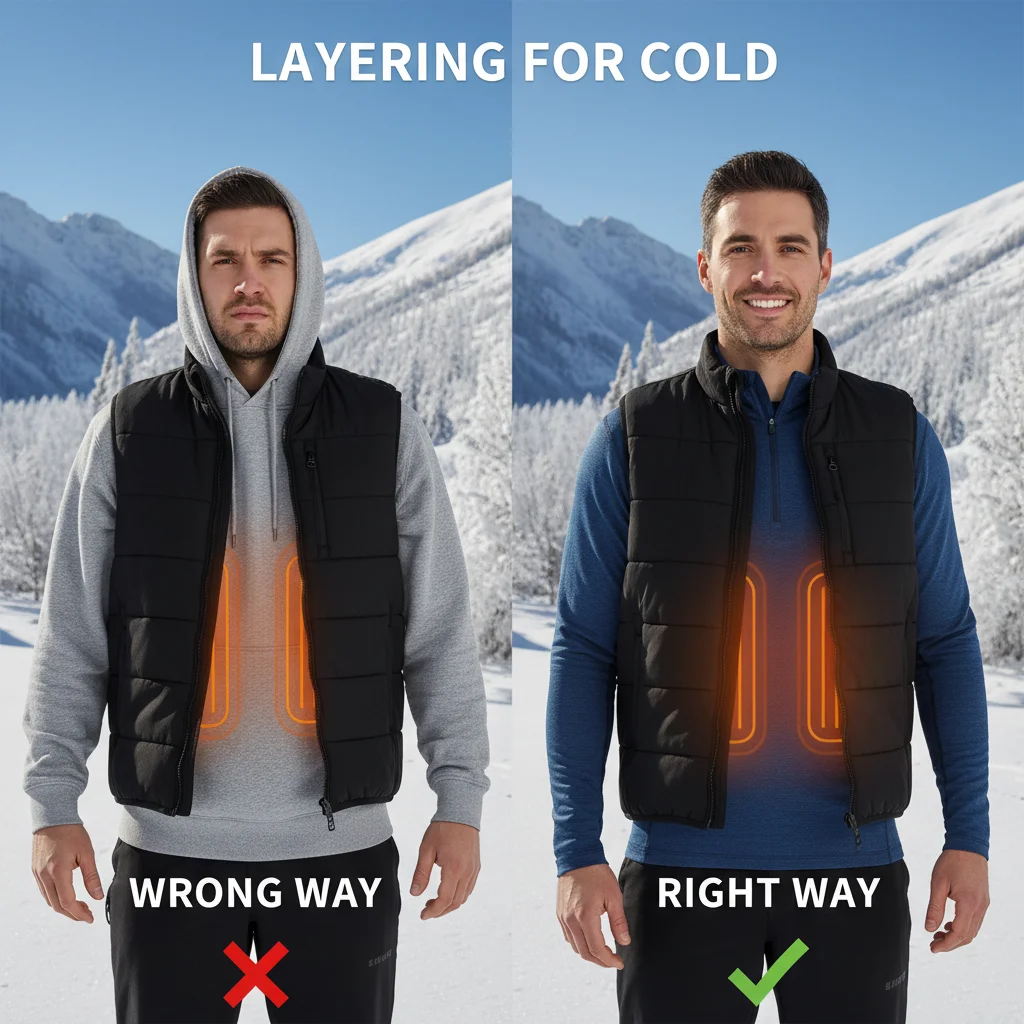
Most people don’t ruin their heated vest experience by buying the wrong vest. They ruin it by layering wrong underneath it.
These are the mistakes worth knowing before they cost you warmth, battery life, or worse — a burn you never saw coming.
Grabbing a cotton tee or hoodie as your base layer. Cotton soaks up sweat and holds it there. That creates a wet-cold barrier between you and your heat source. Some synthetic fabrics make things worse — nylon and polypropylene can melt under intense heat and transfer onto your skin. That’s a serious risk. Stick to merino wool or performance polyester instead.
Stacking too many thick layers underneath. More fabric doesn’t mean more warmth. A bulky inner layer crushes insulation, blocks heat transfer, and pushes you to crank the setting to max. That drains the battery fast. It also raises real overheating risk. Each air gap between layers adds +0.38 clo of insulation value. Crush those gaps, and you lose that benefit completely.
Skipping a long-sleeve base. The vest covers your core. Your arms are on their own. That torso-warm, arms-freezing imbalance is easy to fix. A fitted long-sleeve merino or synthetic base takes care of it right away.
Wearing the heated vest as your outermost layer. Rain and wind hit it head-on. Moisture builds up underneath. Heat distribution turns uneven. The vest belongs under a weather-resistant shell — never on top of it.
Getting fully dressed before you start moving. Layer up heavy before activity, and your base soaks through in sweat before the vest does anything useful. A soaked base layer kills heating efficiency fast. Dress lighter at the start. Add warmth as your body calls for it.
Recommended Base Layer Products to Wear Under a Heated Vest
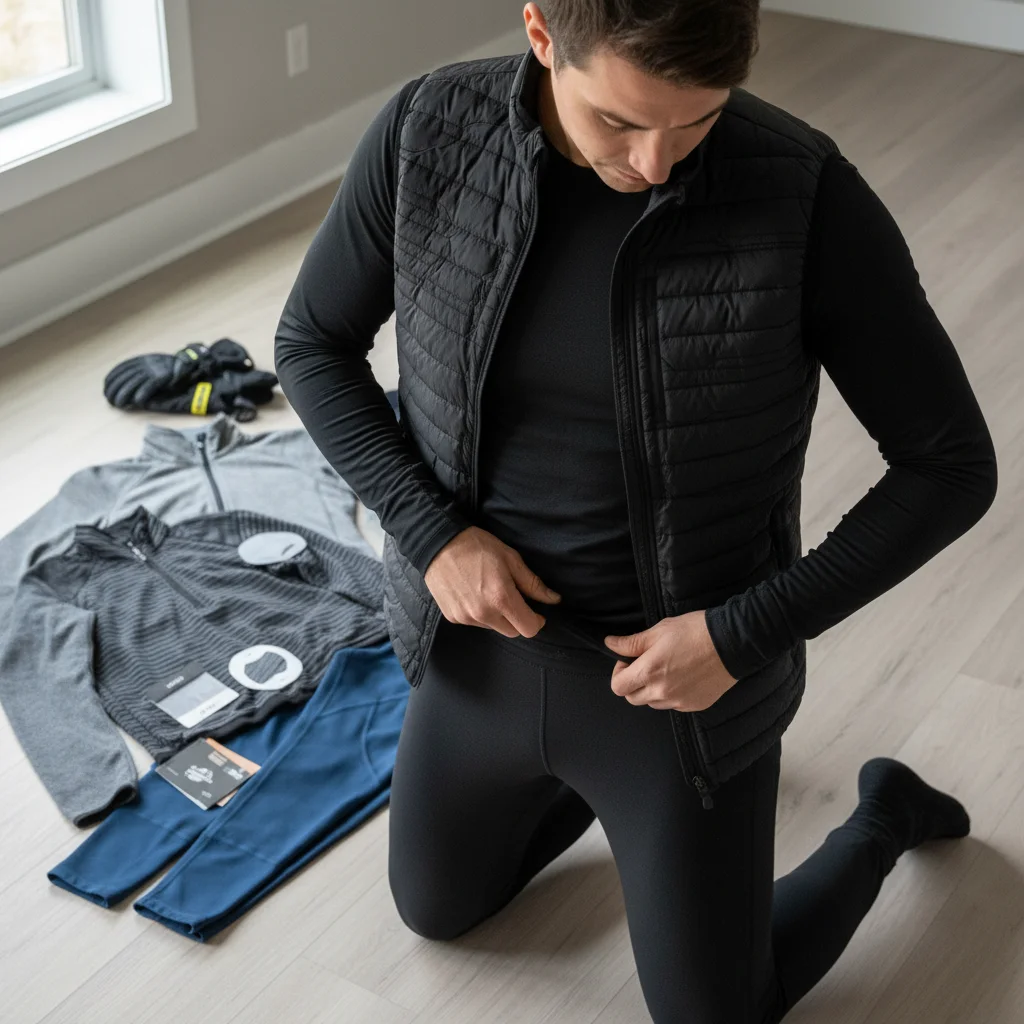
Outdoor Gear Lab tested forty-two base layers. One rose to the top for pairing with heated vests. That’s no accident. The right base layer makes a real difference in how your vest performs.
Here’s what works, broken down by material and activity.
Merino Wool: The Non-Negotiable Top Picks
Smartwool Classic Thermal Merino 1/4 Zip is the gold standard for men. It ranked #1 after rigorous multi-product testing. You get strong warmth-to-breathability, a soft next-to-skin feel, and steady heat distribution under your vest. Price sits in the mid-range ($80–120), and this one earns every dollar.
For women, the Arc’teryx Rho Hoody wins. It offers a high warmth-to-weight ratio and breathable construction. It also softens with wear over time. Yes, it’s premium-priced ($150+). But it holds up across every condition you throw at it.
Synthetic Picks for High-Output Activity
Running, snowshoeing, high-intensity training — go synthetic. The ororo Coolyte T-Shirt (polyester, UPF 20) wicks moisture fast and stays light under your vest. No extra bulk, no overheating.
Under Armour ColdGear ($40–80) is the smart budget pick. You get quick-dry performance without spending big.
The Blend That Does Both
ororo Aoraki Unisex Merino Wool Blend gives you the best of both worlds. Merino’s natural odor resistance combines with synthetic’s durability and stretch. Heat spreads evenly. Bulk stays at zero.
For extreme cold, the Ceracore Ceramic-Infused base layer steps up. It adds antimicrobial protection, flat seams for comfort, and multi-directional stretch so nothing restricts your movement.
Quick Match by Scenario
| Activity | Best Pick | Weight |
|---|---|---|
| Skiing / Hunting | Smartwool Classic Thermal | 200g/m² |
| Running / High-Intensity | ororo Coolyte or ColdGear | <150g/m² |
| Extreme Cold (-20°C) | Ceracore Ceramic-Infused | Lightweight+ |
| All-Conditions | Arc’teryx Rho Hoody | Mid-weight |
One rule covers every scenario: stay under 200g/m². Go heavier, and the fabric starts blocking heat transfer rather than supporting it. Your vest loses efficiency fast.
Quick Reference: Heated Vest Layering System at a Glance
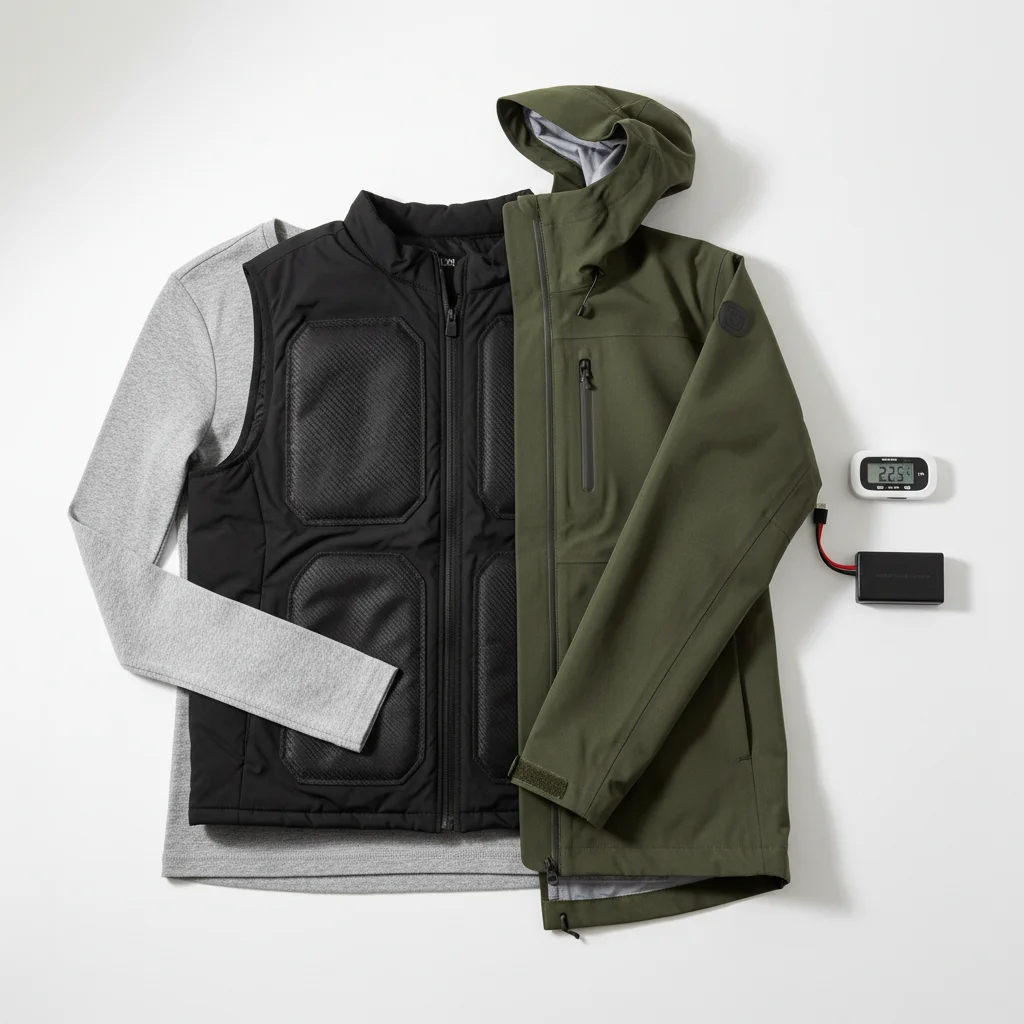
Three variables run the whole show: temperature, base layer, and battery life. Get those right, and everything else falls into place.
| Temp | Base Layer | Vest Setting | Runtime | Outer Layer |
|---|---|---|---|---|
| Above 0°C | Moisture-wicking mesh or thin synthetic | Low (90°F) | 7–12+ hrs | Lightweight softshell |
| –10°C | Fleece liner or jersey thermal | Medium (115°F) | 4–6 hrs | Insulated jacket with waist cinch |
| –20°C | Thin low-profile thermal | High (135°F) | 2–4 hrs | Heavy-duty shell with hood |
How heat moves: Carbon fiber panels push heat into your base layer. Your core takes it in. Your outer layer seals it there. Miss any step, and the whole chain breaks down.
Battery reality check: Most vests run 7.4V Li-Ion. A full charge takes 3 hours via USB-C. Klein stretches to 12 hours on low. Fieldsheer hits 1.8 hours on high. Plan around those numbers — start on low, stretch your warmth further, and cinch that outer layer tight.
Conclusion
Your heated vest is only as good as what you pair it with.
A moisture-wicking base layer isn’t just a “nice to have.” It’s the difference between staying warm and wearing an expensive gadget that falls short. Get the thermal base layer right, and your heated vest becomes a total game-changer. Get it wrong, and you’re sweaty, uncomfortable, and questioning why you bothered.
So here’s your move: ditch the cotton. Go with merino or synthetic. Match your layering system to your activity.
On a bike? There’s a setup for that. Hitting the slopes? There’s one for that too. Just surviving a brutal commute? Covered. The right system works for your body, not against it.
Ready to feel the difference? Browse CoolHeatech’s heated vest collection and find the perfect match for your lifestyle. Staying warm should feel effortless — and it can.