
Standing in the heat with sweat dripping down your back? You’ve wondered if cooling vests are worth buying—or just expensive ice packs wrapped in fabric. The truth? No single “best” cooling vest exists. The right choice depends on your situation. Are you working a 10-hour construction shift in Arizona? Running ultramarathons in North Carolina humidity? Managing a heat-sensitive medical condition? Each needs something different.
The cooling vest market offers many options now. You’ll find water-activated systems that use evaporation. There are phase change materials inspired by NASA technology. Battery-powered vests circulate cool liquid through tubes. This variety makes choosing harder.
I’ve spent weeks testing different types. I analyzed feedback from people in various jobs. I compared the science behind each cooling method. What I found will save you money. A vest that works great for someone else might fail in your specific situation.
This guide matches cooling technology with your real-world needs. No fluff. Just practical advice.
Four Main Types of Cooling Vest Technologies
Cooling vests use four different methods. Each method pulls heat from your body in its own way. Know these differences. Then you can pick the right tech for your job site.
Active Cooling Systems: Most Power, Most Gear
Active cooling vests pump cool air or liquid through channels on your skin. You need batteries or plug into external units.
Air-cooled models like the VRTX give 41 W·m⁻² average cooling power. Plug them in and they run non-stop. No refreezing. No water soaking. The cooling continues until you unplug.
Liquid-cooled systems like COMP push cold fluid through tubes. They hit 60 W·m⁻² peak power. That’s the strongest blast of cold you can get. Runtime drops to 151 minutes before you need ice refills. Over 8 hours, these systems give 331 W·h·m⁻² total capacity. Evaporative vests deliver one-third of that.
The tradeoff? Weight and bulk. Batteries add pounds. Tubes can kink. You’re tied to equipment. Construction sites don’t work well with this setup. But for controlled spaces—like industrial facilities with power access—active systems are the best choice.
Phase Change Materials and Ice Packs: Cold Storage That Works
PCM vests use materials that soak up heat as they melt. Paraffin inserts change from solid to liquid at set temperatures. Ice packs work the same way but colder.
The FLEX ice system peaks at 80 W·m⁻² with 90-100 W·h·m⁻² capacity. FICE feather ice hits over 90 W·m⁻² peak power. That matches active systems for the first blast of cold. The ICEVEST Class 2 with ICEPLATE Curve puts out 944,689 joules total energy. It weighs just 20.8 ounces dry (162 ounces with ice).
Standard PCM vests like STA cool for 3.5 hours at 65 W·m⁻² peak. Gel-based CRYO systems average 13 W·m⁻² for about the same time. Total capacity hits 164 W·h·m⁻² max across 8 hours. That’s double what evaporative models give.
Ice beats paraffin for heat absorption. Physics prove it. But ice weighs more. A FlexiFreeze vest jumps from 20.8 to 76.2 ounces with 56 fluid ounces of ice.
Cost runs around $200 for vest plus two insert sets. You need freezer access. Plan ahead—inserts need 4-6 hours to refreeze.
Evaporative Cooling: Light and Simple
Soak these vests in water. The moisture pulls heat away as it dries. No freezing needed. No batteries. Just water and airflow.
The IH wet vest gives 42 W·m⁻² peak and 15-22 W·m⁻² average cooling. Total capacity: 113 W·h·m⁻² max. TECH and XTREM models hit similar numbers—43 and 37 W·m⁻² peaks, with 97 W·h·m⁻² capacity each.
Performance depends on humidity. All of it. In Arizona’s 10% humidity, evaporative vests work great. In Houston’s 85% humidity? They become damp, heavy blankets that cool almost nothing. The SMART model hit just 6 W·m⁻² peak in one test. That’s useless.
These vests are perfect for outdoor work in dry climates. They’re the lightest option. They cost the least. But check your local humidity first.
Hybrid Systems: Mixed Results
Some makers layer evaporative fabric over PCM inserts. The idea: use two cooling methods for better results.
Reality? Results vary. Hybrid vests max out at 146 W·h·m⁻² capacity. That’s less than pure PCM systems. The GTEK hybrid averages 13 W·m⁻² over 3 hours. That matches standalone gel packs. But you get added bulk.
Some combos work. Most just add weight. You don’t get equal cooling gains.
Evaporative Water Cooling Vests: Best for Dry Climates
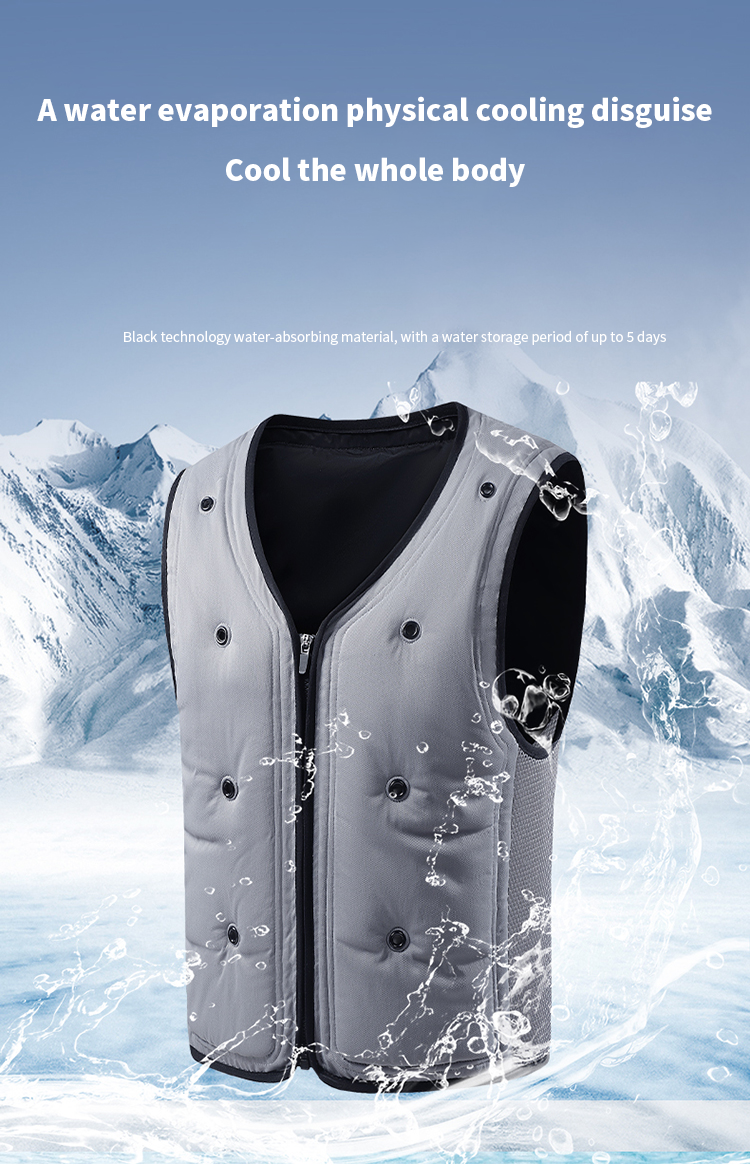
Water-activated cooling vests work best in bone-dry desert climates. The physics are simple. At 30% humidity, these vests pump out 67-89 watts of cooling power across temperatures from 30-40°C. Push that humidity up to 60%? Power crashes to just 42 watts. That’s a 45% performance loss from moisture in the air alone.
Here’s the deal-breaker: at 60% humidity, your vest runs at less than 30% of its dry-climate capacity. The environment matters more than the vest technology.
Why Desert Air Changes Everything
Hot, dry air makes evaporation spike. At 30°C with 30% humidity, water molecules escape the vest fabric fast. Much faster than in muggy conditions. The drier air pulls moisture away like a vacuum. This creates a stronger temperature gap between your skin and the vest surface. Heat flows from warm to cold—basic thermodynamics. A bigger temperature gap means your body dumps more heat.
Air movement amplifies this effect. Moving air carries water vapor away faster. This stops the saturated layer that kills cooling performance.
Real-World Runtime Numbers
Test data from thermal manikins shows big differences in cooling time:
-
IH wet vest: 3.5 hours at ≥20 W·m⁻² (the longest)
-
TECH and XTREM models: 3 hours each
-
ECOOL: 2.5 hours
-
IZI: 45 minutes
Maximum cooling capacity spans 17-113 W·h·m⁻². The IH wet tops the chart at 113 W·h·m⁻². It delivers mild but steady cooling compared to PCM vests‘ intense but brief cold blasts.
The Humidity Trap
Cover your vest with tight outer layers? Performance collapses. Moisture builds up underneath. Thermal stress goes up. Breathing gets uncomfortable. The cooling effect dies within 30 minutes.
Arizona construction workers? Perfect fit. Houston dock workers? Wrong tech for your climate. Check your local humidity averages before buying.
Phase Change Material (PCM) Cooling Vests: The Versatile All-Rounder
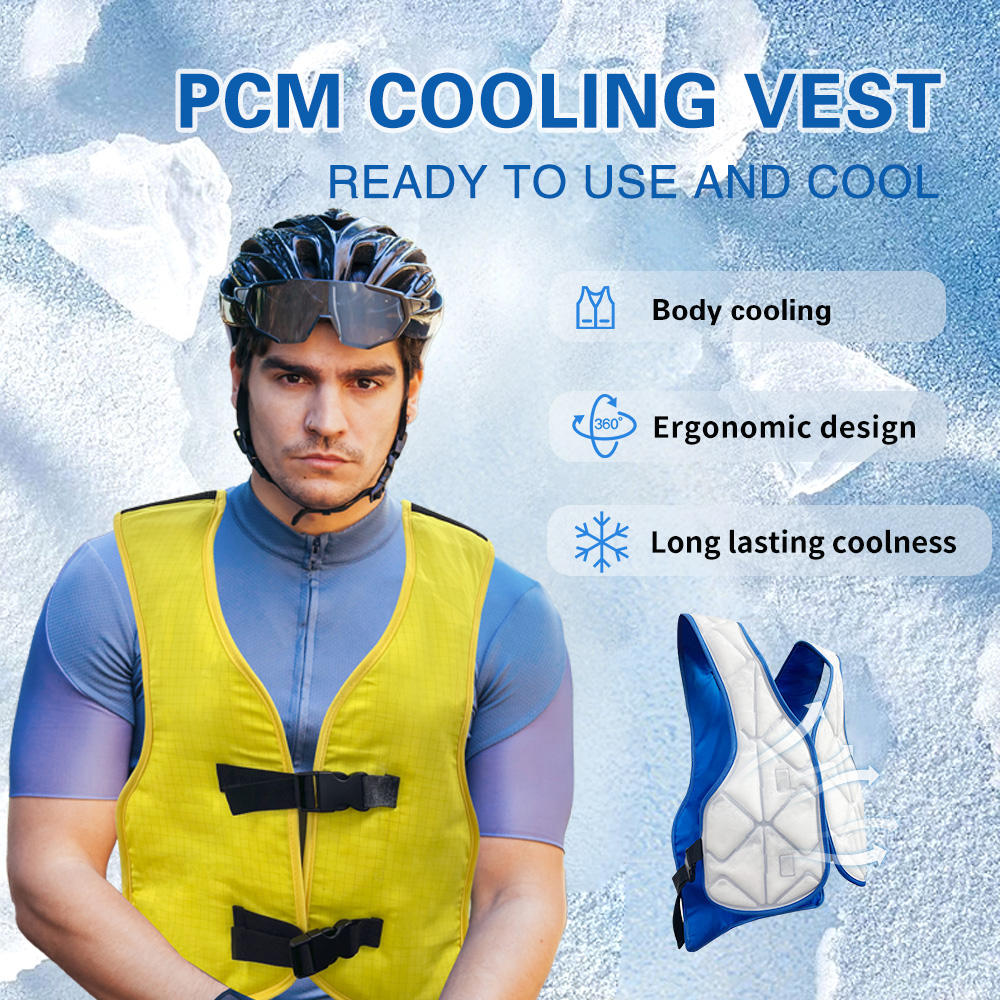
PCM vests lock temperature at 64°F (18°C) for up to 4 hours straight. No wild temperature swings. No ice burn. No dripping water pools. The material inside is paraffin wax in most cases. It melts at a set point between 59-65°F. The wax shifts from solid to liquid. This pulls heat from your body. Physics does the work.
Choose your temperature trigger: 64°F, 73°F, or 82°F. Pick based on how hard you work. Light office duty? Go warmer. Heavy construction? Choose the coldest option. The material soaks up 108 kJ/kg of heat energy during the melt. This keeps you comfortable through most shifts.
Why PCM Beats Ice for Most Jobs
Ice vests dump cold fast, then quit. PCM vests give steady cooling in the range your body needs. Your skin stays between 59-65°F—cool enough to help, warm enough to avoid shock. The paraffin melts at 24-34°C with a sweet spot at 30°C. That range is safe for skin contact.
The Techniche 6626HV weighs 6.4 pounds with inserts. You get four CoolPax packs and a cooler bag. Each aluminum pack holds 135g of paraffin in 0.125mm containers. The Ergodyne Chill-Its 6225 has flame-resistant fabric. It’s rated ATPV 7.1 cal/cm². Safe for electrical work.
Recharge takes 10 minutes in a cooler with ice. Some models need freezer time. Most refresh faster than you’d think. Machine wash the vest. Wipe down the inserts. Done.
The PCM Trap Nobody Mentions
The paraffin melts completely. It warms to air temperature. Cooling stops dead. The plastic case traps your body heat now. Temperature shoots up fast. You’re wearing an insulation layer at that point. Swap inserts mid-shift. Or accept weaker performance after hour four.
PCM works across humidity ranges. Evaporative vests fail in those same conditions. Construction sites, warehouses, outdoor events—PCM handles them all. Just watch the clock. Plan your insert swaps.
Ice Pack Cooling Vests: Maximum Cooling Power for Short Duration
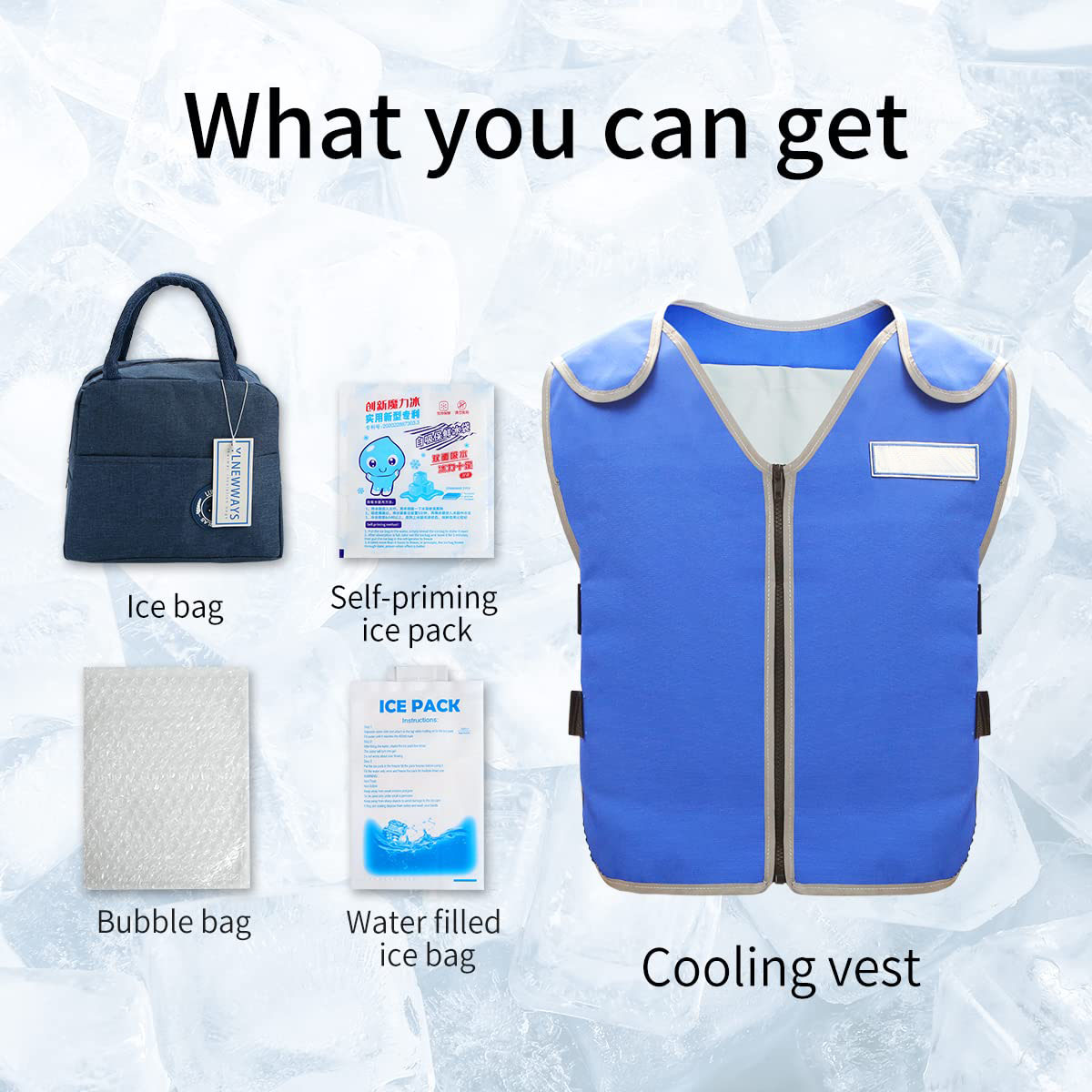
Frozen water delivers the hardest punch of cold available. Period. Ice pack cooling vests hit over 90 W·m⁻² peak power with feather ice inserts (FICE). That’s double what most PCM systems manage. The science is simple: one gram of ice melting at 0°C absorbs 80 calories of heat. That’s the same energy needed to raise one gram of water by 80°C. Your body feels that temperature drop fast.
The FLEX ice system pushes 80 W·m⁻² at peak performance. CRYO gel inserts reach 73 W·m⁻². The STA model is a PCM/gel hybrid. It delivers 65 W·m⁻² with the longest cooling duration at 3.5 hours. Plus, it has the highest total capacity of 164 W·h·m⁻² in its class. These numbers crush standard evaporative vests that top out at 43 W·m⁻².
The Short-Duration Reality
Here’s the catch: ice melts fast under load. Runtime spans 45 minutes to 5 hours. This depends on your work intensity and ambient temperature. Firefighters doing heavy rescue work? Closer to 45 minutes. Office workers in 85°F conditions? You might stretch to 4 hours. Research shows ice vests extend endurance by about 12 minutes in 2-hour maximum-effort scenarios. This happens as sweat rates push past 2 liters per hour.
The payoff comes in sweat reduction: ice and PCM vests cut perspiration by 20-30%. That’s 0.2-0.24 liters per hour saved. Field studies show workers drinking 27% less water. That’s about 0.35 liters less during 90-minute sessions. Your body stays cooler with less fluid loss.
Recharge takes 30-45 minutes in a standard freezer. Swap insert sets mid-shift and you’re back in business. Some vests provide cold drinking water as bonus once the ice melts. Smart design turns waste into hydration.
Ice pack vests work for burst cooling needs. Think emergency response, athletic events, short construction shifts. They don’t work well on 10-hour workdays. You need multiple insert sets and freezer access nearby.
Active Cooling Systems: Fan-Powered and Circulatory Vests

Battery-powered vests come in two types: air-circulating fans and liquid-cooling tubes. Both need outside power. Both work nonstop. Neither uses melting or evaporation. The trade-off? You carry batteries, motors, or air compressors.
Fan-Powered Vests: Mobile But Limited
Fan vests pump outside air across your skin using small motors. Most run on 18V brushless motors with 20,000mAh battery packs. Two fans sit at waist level. They pull air in and push it through channels in the polyester fabric. The airflow cools you through sweat evaporation.
This setup works in moderate heat. It fails once outside temperature climbs above your body temp. You just circulate hot air at that point. The fans blow 95°F air across your skin in summer construction zones. That doesn’t cool you. It makes things worse.
Battery life matters here. Most fan vests run 4-8 hours on a full charge. Recharge takes 2-3 hours. Bring backup batteries for long shifts. The fans add 1.5-2 pounds to the vest weight. Not terrible, but you notice it after hour six.
Price sits around $80-150 for basic models. High-visibility versions with safety compliance cost more. The build is simple: 100% polyester shell with built-in fan pockets. Machine washable once you remove the battery pack.
Compressed Air Systems: Heavy-Duty Cold
Vortec-style air vests connect straight to compressed air lines. These aren’t portable. You need 100 psig compressed air on site. The vest pulls air through vortex tubes. This drops the temperature 60°F (33°C) below outside air.
Cooling power changes with vest size:
– Large: 1,500 BTU/hr (440 watts) using 25 scfm air
– X-Large: 2,500 BTU/hr (733 watts) using 35 scfm air
– 2X-Large: 2,500 BTU/hr (733 watts) using 35 scfm air
That’s serious cooling capacity. More than ice. More than PCM. The catch? You’re tied to an air hose. Range is limited. This works in plants with compressed air set up. Foundries, metalworking shops, chemical plants. Not construction sites or outdoor events.
Temperature control adjusts with ease. Even with heavy gloves on. Flame-resistant fabric meets CPAI-84, Sec. 6 standards. The material blocks sweat and contaminants. No freezing. No dripping. Just constant cold as long as air flows.
Weight runs 6-9 pounds based on size. More than PCM vests. Less than ice-loaded options. The air hose adds bulk but the vest itself allows full range of motion.
Liquid Circulation Systems: The Coolest Option
Liquid-cooled vests pump chilled fluid through tubes against your skin. A small pump sits in a belt pack or backpack. Tubes run through channels in the vest. The fluid loops back to a cooling tank filled with ice or refrigerant.
These systems hit 60 W·m⁻² peak cooling power. That matches feather ice performance. But unlike ice, the cooling stays steady. Runtime depends on tank size and ice stock. Figure 2-3 hours before you need fresh ice. Over 8 hours, total capacity reaches 331 W·h·m⁻².
The pump runs on 24V lithium-ion batteries. Battery life: 4-6 hours at moderate settings. High-performance mode drains it faster. Total system weight sits around 8-12 pounds with fluid, battery, and vest combined.
Tubes can kink. Fittings can leak. The pump makes noise. You manage a complex system here. Not ideal for rough work environments. Better suited for controlled settings: race crews, medical use, military operations.
Cost jumps to $400-800 for quality systems. You’re paying for exact cooling. The trade-off is complexity and upkeep. Flush the lines each month. Replace seals each year. Check battery health often.
Active Systems Work Best With Support
Active cooling needs infrastructure support. Compressed air systems need air lines nearby. Battery systems need charging stations. Liquid systems need ice stock and upkeep.
These aren’t “throw it on and forget it” solutions like evaporative vests. They’re built systems for specific plant or professional use. The cooling power is real. The logistics matter just as much.
Note: NIOSH does not approve any cooling vest—including Vortec air systems—for use with Supplied Air Respirator (SAR) systems per CFR 84.131. Don’t combine them in regulated environments.
Climate-Based Selection Guide: Which Type Works in Your Environment
Your local weather decides which cooling vest tech works. A vest that rocks in Phoenix becomes a wet, useless blanket in Miami. Physics beats marketing hype.
Hot-Dry Desert Zones: Evaporative Vests Dominate
Arizona, Nevada, New Mexico, and inland Southern California fall into climate zones 2B and 3B. Summer temps push past 90°F for over 67 days each year. Humidity stays below 30% most of the time. This is evaporative cooling heaven.
Water-activated vests deliver 67-89 watts of cooling power here. Bone-dry air pulls moisture from the fabric fast. Your body dumps heat into the evaporation process. Physics works for you.
Construction workers in Phoenix get 3.5-hour runtimes from quality evaporative models like the IH wet vest. Landscapers in Tucson carry water bottles to re-soak their vests mid-shift. Simple. Cheap. It works.
The catch? Humidity above 40% kills performance. Check your local humidity averages before buying. Desert climates make evaporative vests the smart buy at $30-80 per vest. No freezer. No batteries. Just water.
Hot-Humid Zones: PCM and Ice Pack Territory
Florida, coastal Texas, Louisiana, and the Gulf Coast sit in climate zone 1A and 2A. Average temps stay above 64°F year-round. Precipitation tops 59 inches each year. Humidity hits 70-85% most days.
Evaporative vests fail here. Saturated air can’t absorb more moisture. Your vest stays wet and heavy. It won’t cool you. Performance drops to less than 30% of rated capacity.
PCM vests shine instead. They cool through phase change—not evaporation. The paraffin wax melts at 64°F (18°C) no matter the humidity. You get 3.5-4 hours of steady cooling. Houston warehouse workers swap PCM inserts at lunch. Miami event staff keep backup packs in coolers. Humidity doesn’t hurt performance.
Ice pack vests work too. They deliver 80-90 W·m⁻² peak power even in soup-thick air. Expect 2-3 hour runtimes in extreme heat. Firefighters doing training runs use ice vests. Nothing else cuts through 95°F humid air fast enough.
Budget $150-250 for quality PCM systems. Ice pack setups run $180-300 with multiple insert sets. Worth it since evaporative tech won’t work.
Cold Climate Zones: Active Systems Make Sense
Minnesota, Vermont, Montana, and other zone 5-7 regions see brutal winters. But summer heat still needs cooling. Construction and industrial work goes year-round. Workers need reliable cooling that doesn’t depend on weather.
Battery-powered fan vests work well here. Summer humidity stays at 40-60%. Fan circulation boosts natural evaporation. You don’t need desert-dry air. The 18V brushless motors run for 4-8 hours on lithium batteries. Outdoor summer temps stay below body temp most days. Circulating air gives real relief.
Indoor facilities do well with compressed air systems. Metalworking shops and foundries already have 100 psig air lines installed. Vortec-style vests drop air temp 60°F below ambient. A welder in Duluth gets 2,500 BTU/hr of cooling tied to plant air. No batteries. No ice. Just constant cold.
These systems cost more—$400-800 for liquid circulation setups, $300-500 for quality compressed air vests. They handle temp swings from sub-zero winters to 90°F summer days. No loss in performance. The investment pays off across seasons.
Mixed Climate Zones: Flexibility Wins
The Mid-Atlantic, lower Midwest, and parts of the Pacific Northwest sit in zones 4A and 4B. Summer brings heat and variable humidity (30-70%). You need a vest that adapts.
Hybrid PCM/gel systems give the best coverage. The STA model delivers 65 W·m⁻² cooling with 164 W·h·m⁻² total capacity. Performance holds across humidity ranges. Spring construction in Virginia? It works. Summer events in Oregon? It works.
Keep both evaporative and PCM inserts on hand if your work spans different areas. Roofers might use evaporative vests on dry days. Then switch to PCM after thunderstorms spike humidity. Total cost: $200-280 for complete flexibility.
Marine Coastal Zones: Temperature Moderation Changes Requirements
Pacific Northwest coastal areas (zone 8) see little extreme heat. Ocean breezes keep summer temps mild. But maritime workers, shipyard crews, and dock laborers still need cooling during hard work.
Lightweight evaporative vests handle most situations. Moderate humidity (50-65%) allows decent evaporation. Cooling demands stay lower since temps top out at 85°F. A basic $40-60 vest does the job.
Save your money. Don’t buy cooling capacity you won’t use. The ocean controls temp for you. Your vest just needs to handle work-generated heat. Not fight 100°F desert sun.
Budget Considerations: From $29.99 Entry-Level to Premium Systems
Cooling vests range from $29.99 to $800. You’ll find basic evaporative models at the low end. Premium active cooling systems sit at the top. This gap shows real differences in cooling power, how long they run, and what maintenance they need.
Entry-Level: $29.99-$80 (Evaporative Systems)
Basic water-activated vests own this price tier. You get polyester fabric with polymer crystals inside. Soak it. Wear it. The cooling uses simple physics. These vests deliver 42 W·m⁻² peak cooling in dry climates. Runtime hits 3-4 hours before you need to re-soak.
The IH wet vest costs $45-60. TECH and XTREM models run $50-75. Budget brands like ECOOL drop to $29.99-40. All use the same core tech. Price differences come from fabric quality and stitching strength. How many times can you wash them before the crystals break down? That matters too.
This tier works great in Arizona, Nevada, or any climate where humidity stays below 30%. Construction workers buy two vests. They rotate them during lunch. Total cost: $60-100. No ongoing costs beyond water. No batteries to replace. No freezer needed.
Mid-Range: $150-$300 (PCM and Ice Pack Systems)
Phase change vests dominate the middle price band. The Techniche 6626HV costs $180-220 with four CoolPax inserts and a cooler bag. Ergodyne Chill-Its 6225 fire-resistant models run $200-250. You’re paying for paraffin packs that hold temperature at 64°F for 3.5-4 hours.
Ice pack systems sit in the same range. The FlexiFreeze vest with two insert sets costs $180-240. ICEVEST Class 2 setups with ICEPLATE Curve inserts push $250-300. These deliver 80-90 W·m⁻² peak power. That’s double what evaporative vests manage.
Budget another $40-80 for backup insert sets. You need extras for shift work. Recharge time runs 10-45 minutes based on system type. You must have freezer access. Add those running costs into your total spend.
This tier makes sense for humid climates, indoor work, or places where evaporative tech fails. The vests last 2-4 years with proper care. Spread that $200 initial cost across 500+ work shifts. You’re paying $0.40-$0.50 per use. That’s fair for reliable cooling.
Premium: $400-$800 (Active Cooling Systems)
Battery-powered fan vests start at $400 for quality models with 20,000mAh power packs. Expect 4-8 hour runtime before recharge. The cooling is simple: circulate air across your skin. This works in moderate heat. It fails once air temp climbs above body temperature.
Compressed air systems cost $450-600 for Vortec-style vests. You need existing 100 psig plant air setup. The vest itself needs no maintenance. But you’re tied to an air hose. Range is limited. This affects facility layout planning.
Liquid circulation systems top the price chart at $600-800. These pump chilled fluid through tubes against your skin. You get 60 W·m⁻² continuous cooling with 331 W·h·m⁻² total capacity over 8 hours. The system includes pump, battery pack, cooling tank, and vest. Add $100-150 for backup batteries. Plan another $50-80 each year for seal replacements and maintenance.
Premium systems need support setup. Charging stations for batteries. Ice for liquid systems. Air compressor capacity for pneumatic vests. Add those running costs into ROI math. A $700 liquid vest makes sense for race teams or medical use. It’s too much for occasional outdoor work.
The Budget Decision Matrix
Match price to your actual cooling needs:
-
Dry climate outdoor work: Entry-level evaporative ($30-80)
-
Humid climate or indoor: Mid-range PCM/ice ($150-300)
-
Professional or medical use: Premium active systems ($400-800)
Don’t buy cooling capacity you won’t use. A roofer in Tucson wastes money on a $700 liquid system. An evaporative vest does the job at $50. But that same $50 vest fails for a Houston warehouse worker. Spend the $200 for PCM tech that works in humidity.
Calculate cost per cooling hour. A $60 evaporative vest running 4 hours each day for 100 workdays gives 400 cooling hours. That’s $0.15 per hour. A $250 PCM system over the same time costs $0.63 per hour. Pay the extra if your climate needs it. Save the money if simple tech works.
Conclusion
Price and technology don’t tell the whole story. The best cooling vest fits your environment, activity level, and budget. Evaporative cooling vests give you great value under $50 in dry climates. PCM cooling vests run steady for 2-4 hours across different conditions. Need fast, powerful cooling? Ice pack systems work best, even though they don’t last as long. Work in extreme heat every day? Active cooling technology pays off.
Here’s what to do next: Figure out your main use (outdoor work, sports training, or medical reasons). Check your area’s humidity levels. Set a budget you can stick to. Use our comparison chart to pick your top two choices. Then read reviews from people in your field or sport. Make sure the cooling time matches your shift or workout. Your cooling shouldn’t die halfway through—that’s the worst.
Ready to stay cool? Browse our phase change cooling vests and evaporative models. We’ve tested them in real conditions. Your comfort boost is just one choice away.