
Sweat-soaked and surrounded by radiant heat, the last thing you want is doubt about whether your cooling gear is working. PCM vests promise real relief. But as temperatures push past 40°C, 50°C, and beyond, one question needs a straight answer: what’s the maximum temperature a PCM vest can handle before it stops doing its job? The answer varies — and getting it wrong isn’t just uncomfortable. It’s a risk.
This breakdown skips the marketing language. You’ll get the real thermal limits, the phase change material melting points that matter for your environment, and a clear framework for picking the right vest before you need it most.
What’s The Maximum Temperature PCM Vests Can Withstand?
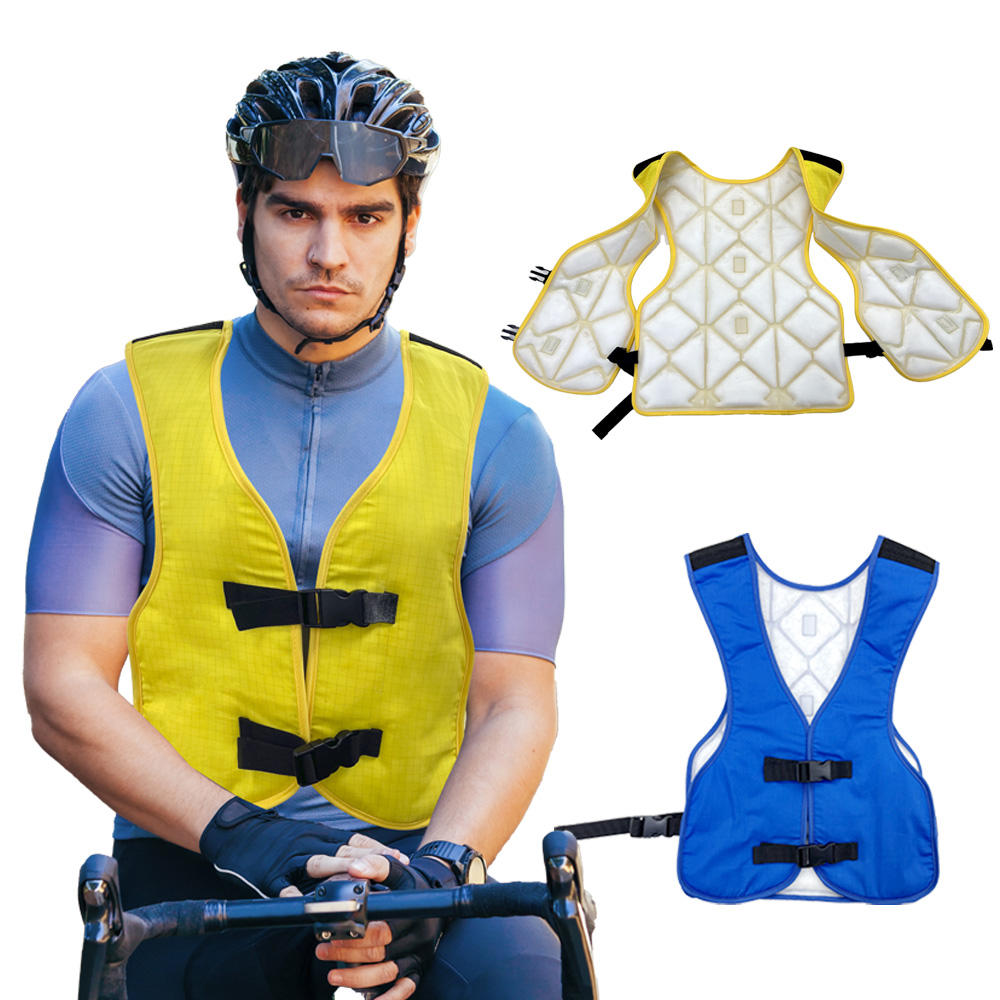
Here’s the short answer: most PCM vests stay functional in ambient temperatures up to 40°C (104°F). The packs don’t melt. They don’t degrade. They keep absorbing heat through phase transition — right up to that upper limit.
But “functional” and “optimal” are two different things.
The number that really defines performance isn’t the ambient maximum. It’s the phase change material melting point — the exact temperature at which the PCM absorbs heat by shifting from solid to liquid. That’s where the cooling kicks in. This threshold varies across products:
-
6.5°C – 18°C: Industrial and high-heat environments (Dräger, Cryopush, Texas Cool Vest)
-
21°C – 26°C: General-use and athletic applications (MEGACOOL, EZCooldown)
-
28°C – 29°C: Elevated ambient activation (INUTEQ-PAC®, Scicon CV11033)
Push past 40°C ambient, and the numbers shift. Heat absorption speeds up. Cooling duration — 1.5 to 4 hours under standard conditions — shrinks fast. High humidity makes it worse.
One controlled field study tested PCM vest performance at 39.91°C ambient with 39.92% relative humidity (WBGT: 31.88°C). The results matched ice vest performance across physical strain measures. That’s the outer edge of what these vests can handle — and they held up.
The real limit isn’t the vest breaking down. It’s the cooling window getting shorter.
What Is the Maximum Temperature a PCM Vest Can Withstand? (Direct Answer)
No published structural limit exists for PCM vests. That’s not a gap in the research — it’s by design.
The vest itself doesn’t fail at high temperatures. The phase change material inside defines the boundary. The PCM transitions from solid to liquid. Once that’s done, heat absorption stops. The vest stays intact. The cooling doesn’t.
This distinction matters more than most product pages let on:
-
Phase change temperature = when cooling activates (21°C, 25°C, or 28°C depending on formulation)
-
PCM exhaustion point = when cooling ends — after 4 hours of absorption capacity
-
Structural failure point = near zero under normal field conditions
So the vest can sit inside a 50°C foundry and not fall apart. What it can’t do is keep absorbing heat without limit. The PCM liquefies. At that point, cooling drops sharply. The liquid material warms a little more, but you’re far below peak performance.
One key advantage that gets overlooked: humidity doesn’t touch it. Evaporative cooling stalls above dew point. PCM vests don’t. No condensation. No performance drop in saturated air. That’s a real edge in places like Middle East job sites, tropical manufacturing floors, and enclosed industrial spaces — environments where evaporative options just stop working.
The ceiling isn’t structural. It’s thermal capacity.
How PCM Vests Work in High-Temperature Environments: The Phase Change Mechanism
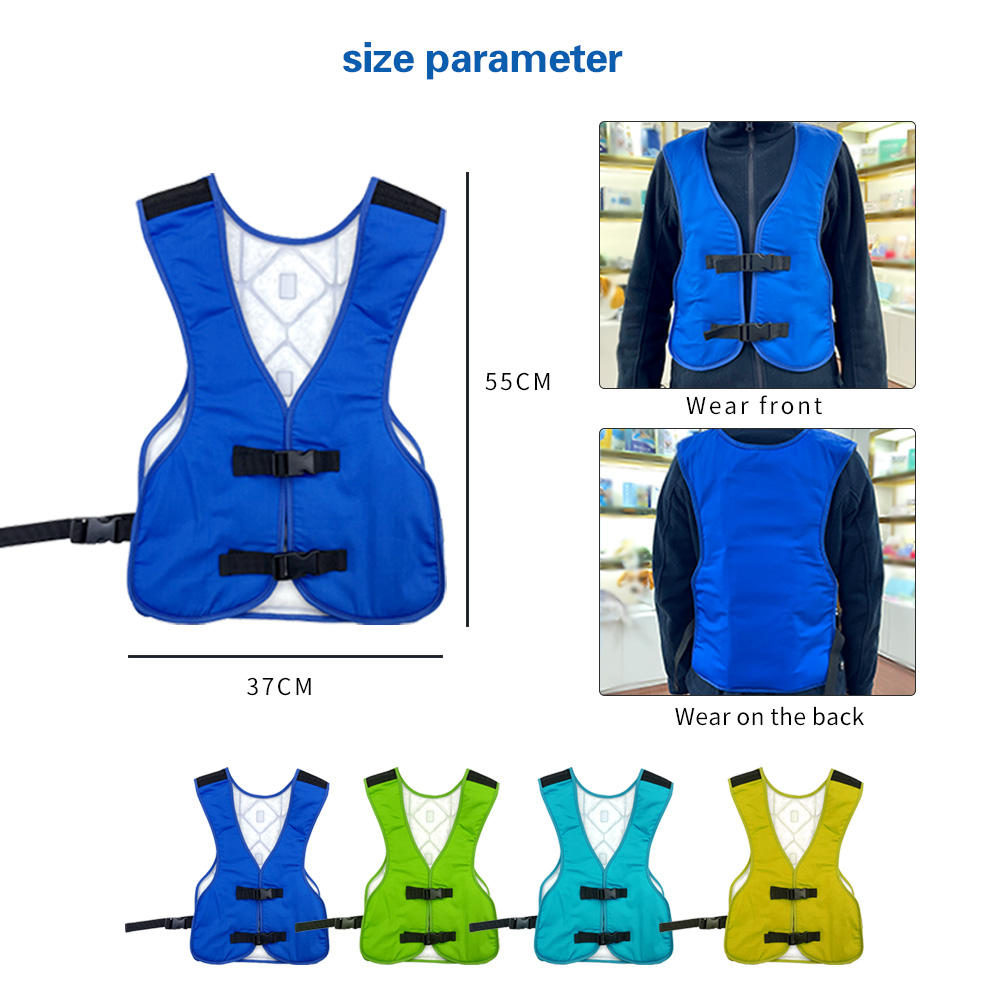
Physics doesn’t negotiate. A PCM vest exploits one of thermodynamics’ most reliable rules: matter absorbs enormous energy during phase transition — with zero temperature rise.
Here’s what that means in practice.
The PCM packs start solid, chilled below their phase point — say, 25°C. You put the vest on, and heat moves the only direction it ever goes: from warmer to cooler. Your body runs at 37°C. The PCM sits well below that. Heat transfers. The PCM begins to melt.
That melting process is the cooling. Not a side effect of it — the thing itself.
During the full melt cycle, the material stays locked at its phase temperature. It doesn’t warm up. It keeps pulling heat, gram by gram, until the last crystal liquefies. One gram of ice at 32°F absorbs enough energy to raise one gram of water 79.7°C — with its own temperature staying flat the entire time. That’s latent heat. That’s what PCM vests run on.
The research numbers back this up:
-
Core temperature rise reduced by 0.57°C (replaced PCM vs. no vest, post-rest)
-
Heart rate dropped 23 bpm under the same conditions
-
Skin temperature fell 0.61°C — measurable, sustained relief
A 1.12 kg vest covering the torso runs about 50 minutes at a 25°C phase point before full liquefaction. In enclosed hazmat suits, that window compresses to 20 minutes. In open-air industrial settings, it can stretch to hours.
Once liquid, the PCM warms toward ambient on its own — and cooling stops. The mechanism isn’t broken. It’s just spent. Recharge it below the phase point, and the whole cycle resets.
PCM Phase Change Temperature Range by Application: Which Melting Point Fits Your Environment
Not every PCM vest works in every environment. The melting point built into those packs decides when cooling starts. In the wrong setting, the wrong formulation either kicks in too soon or stays inactive when you need it most.
Three temperature bands cover most real-world use cases:
14–18°C PCM — Office environments, light activity, mild ambient heat.
– Glacier Tek runs at 15°C.
– Texas Cool Vest peaks at 18°C. That sits close to the PCM-16 profile — melting onset at 15.3°C, peak at 18.9°C, enthalpy at 150 J/g.
– These packs activate fast in moderate conditions. That’s the whole point.
21–28°C PCM — Industrial floors, heavy labor, sustained physical output.
– G-Heat offers a 21°C option in this range.
– Study-grade PCM at 25°C lands in the middle.
– PCM-18 runs from 31.8°C to 41.6°C. It carries a higher enthalpy around 180 J/g. Melt duration stretches to about 4 minutes, compared to 1.2–1.5 minutes for PCM-16.
– More heat capacity. Wider working range.
28°C+ PCM — Extreme outdoor heat, high-flux environments.
– G-Heat’s upper formulation covers this band.
– PCM-18’s extended range reaches into conditions where lower melting points would already be used up.
The selection logic is simple: match the PCM melting onset to the ambient temperature of your environment.
Put a 28°C formulation in a 22°C warehouse and activation stalls. Efficiency drops the whole time it sits idle. Put a 15°C formulation on a 45°C job site and it liquefies inside the first hour.
One thing worth knowing: all three formulations hold cycling stability across 0–50°C at 5°C/min. The chemistry stays intact through repeated use. What decides performance is the match between environment and melting point — not how long the material lasts.
Performance Limits at Extreme Temperatures: When Does a PCM Vest Stop Working?
Every PCM vest has a hard limit buried in its data sheet. Most buyers never find it — until they’re standing in a foundry asking why the cooling stopped.
The failure isn’t dramatic. No structural collapse. No visible damage. The vest runs out of thermal capacity. The cooling window closes. That’s it.
Three conditions speed up that closure:
1. Complete PCM exhaustion.
The phase change material melts. Cooling drops to near zero. The liquid PCM still absorbs a small amount of heat — but that trace effect is minor. The real cooling is done.
In standard work settings, the cooling window runs 2–4 hours. Advanced systems push it to 6–8 hours. The fix is simple: swap the pack during rest breaks.
One study looked at what happens during a 10-minute swap break. Workers who replaced the exhausted vest saw core temperature rise drop by 0.57°C. Heart rate fell by 23 bpm — compared to those who left the spent vest on.
2. Metabolic heat overwhelm inside sealed suits.
This is where PCM vests hit their real wall.
A Canadian Defence study had workers do steep-incline treadmill work plus weighted lifting for one hour inside chemical protective suits. The finding was direct: cooling vests were “probably not able to remove enough heat from the body at the work rates used.”
Workers in hazmat suits or mascot costumes report the cooling window shrinking to just 20 minutes. After that, the vest stops doing useful work.
3. Extreme ambient conditions.
At 39.4°C during sealed-suit treadmill tests, PCM vests showed “slightly more favorable results” than wearing no vest. That’s a thin margin.
The pattern is clear. Ambient heat alone doesn’t kill performance. The real problem is all three factors hitting at once — high metabolic output, sealed insulation, and extreme outside heat. Together, they overwhelm any PCM vest.
Bottom line: PCM vests work well within defined limits. Push past those limits — intense physical work, sealed protective gear, sustained extreme heat — and capacity gets overwhelmed. The vest isn’t broken. It’s just full. Build vest replacement into your rest schedule. That one habit keeps protection active across the full shift.
PCM Vest vs. Ice Vest Temperature Tolerance: A Real Comparison for High-Heat Workers
Ice wins on raw cooling power. That’s the honest starting point.
Ice melts at 0°C and carries higher latent heat capacity than paraffin PCM. Put a number to it: ice-based vests peak above 80–90 W·m⁻² of cooling output. Standard PCM vests top out at around 164 W·h·m⁻² total — solid, but behind active cooling systems by a clear gap.
So why do PCM vests hold their ground in serious heat environments? Because raw power isn’t the one variable that matters.
The controlled study result that shifts the picture:
Researchers tested both technologies at 39.91°C ambient, 39.92% relative humidity, WBGT 31.88°C — harsh by any standard. The Heat Strain Score Index came out equal: 13.37 for both vests. Same physiological protection at near-40°C ambient. That’s not a small finding.
Where the two technologies split apart:
|
Factor |
PCM Vest |
Ice Vest |
|---|---|---|
|
Melt point |
6.5°C–29°C (selectable) |
Fixed at 0°C |
|
Sustained cooling |
1.5–12 hours |
Shorter window post-melt |
|
Skin temp reduction |
1.0–3.6°C (chest) |
Comparable initial drop |
|
Humidity sensitivity |
None |
None |
|
Weight |
~2.2 kg |
~2.3 kg |
The selectable melt point is PCM’s core advantage. Ice gives you one phase temperature. PCM gives you six — matched to your specific environment.
Once ice melts through, performance drops fast. PCM transitions at a slower, steadier rate. It holds that flat thermal curve through the full phase cycle. The Dräger Comfort Vest sustains a 3–4°C reduction for up to 4 hours above 28°C ambient. That steady output is what high-heat workers need across a full shift. A short burst of intense cooling that fades to nothing doesn’t cut it.
The bottom line for industrial selection: Your environment runs at sustained extreme heat. You need cooling that matches your ambient temperature. PCM’s configurable phase points give you that. Ice’s fixed ceiling does not.
Choosing the Right PCM Vest Based on Your Working Temperature: A Buyer’s Decision Guide
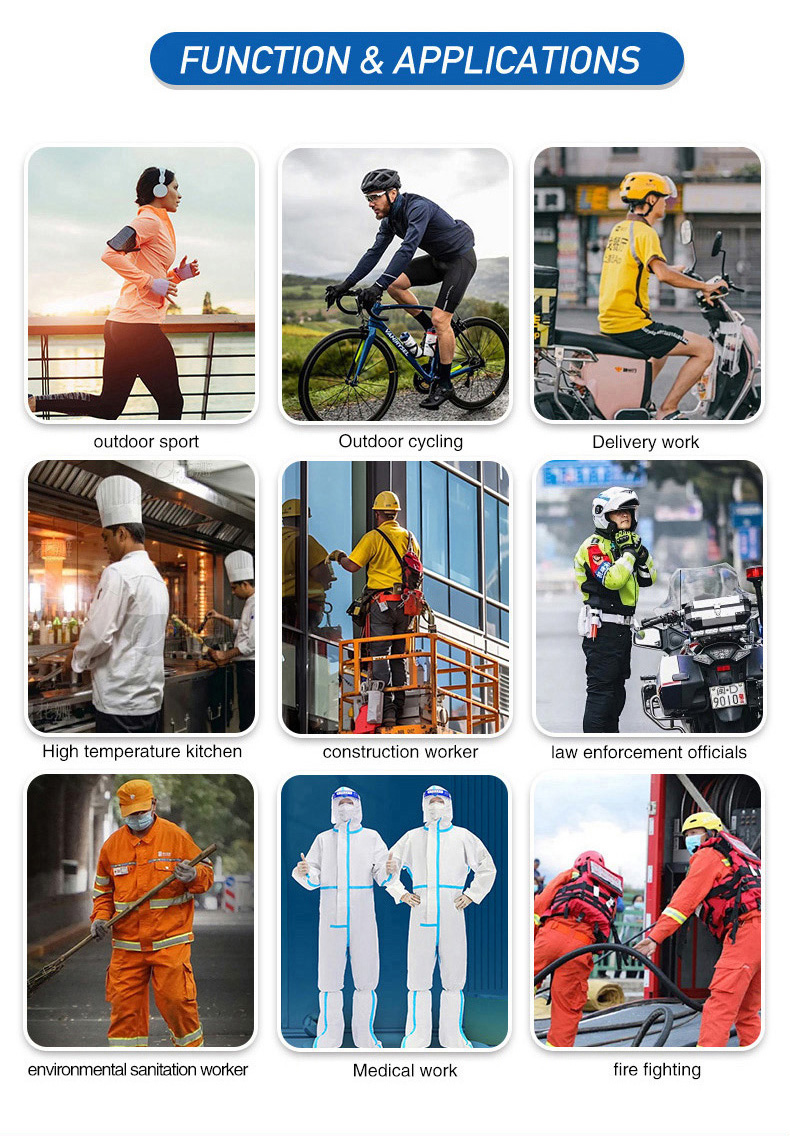
The wrong PCM vest doesn’t just underperform — it gives you a false sense of protection at the worst moment.
Getting the phase change temperature right for your work environment is the most important purchase decision you’ll make. Here’s how to get it right, no guesswork needed.
Match Your Phase Point to Your Environment
|
Working Environment |
Recommended PCM Tm |
Cooling Duration |
|---|---|---|
|
Subzero / Cold ambient |
24–32°C |
3–4 hrs |
|
Extreme heat / High WBGT |
15–25°C |
1.5–4 hrs |
|
Indoor manufacturing / Humidity |
18–21°C |
2–4 hrs |
|
Athletic / Exercise-induced heat |
21–25°C |
Varies |
Hot, humid environments — Middle East job sites, tropical factory floors — need a 25°C formulation. A 1.12 kg torso vest at that Tm holds core temperature near 37.5°C across the full work window. NASA sets its benchmark at 15–18°C (59–65°F) for sustained heat stress. That range works independent of humidity, delivers steady solid-to-liquid cooling, and carries no vasoconstriction risk.
What Else Affects Performance
Coverage area. Place packs across both chest and back. That combined torso coverage delivers 20–30 W/m² of heat loss reduction in the first two hours. Direct skin contact doubles output compared to wearing the vest over a jacket. Aim for 65% trunk coverage — that’s the efficiency threshold worth hitting.
Pack capacity. Light packs last about 1.5 hours. Standard packs reach 2.5 hours. Larger builds with 40% more coverage push that window out further. For construction workers in heavy PPE who can’t stop every 90 minutes, that extra time is critical.
Recharge speed. An ice cabinet brings packs below phase point in one hour. Room-temperature water also works — no frostbite risk — but takes longer. Plan your recharge setup before the shift starts, not during it.
Five-Step Selection Checklist
-
Measure your peak ambient temperature and WBGT
-
Match Tm: hot/humid → 15–25°C; subzero → 24–32°C
-
Size by body frame and shift length — go heavy if you’re wearing PPE
-
Confirm one-hour recharge access on-site
-
Test fit under your protective gear before the shift starts
How to Maximize PCM Vest Performance in High-Temperature Conditions
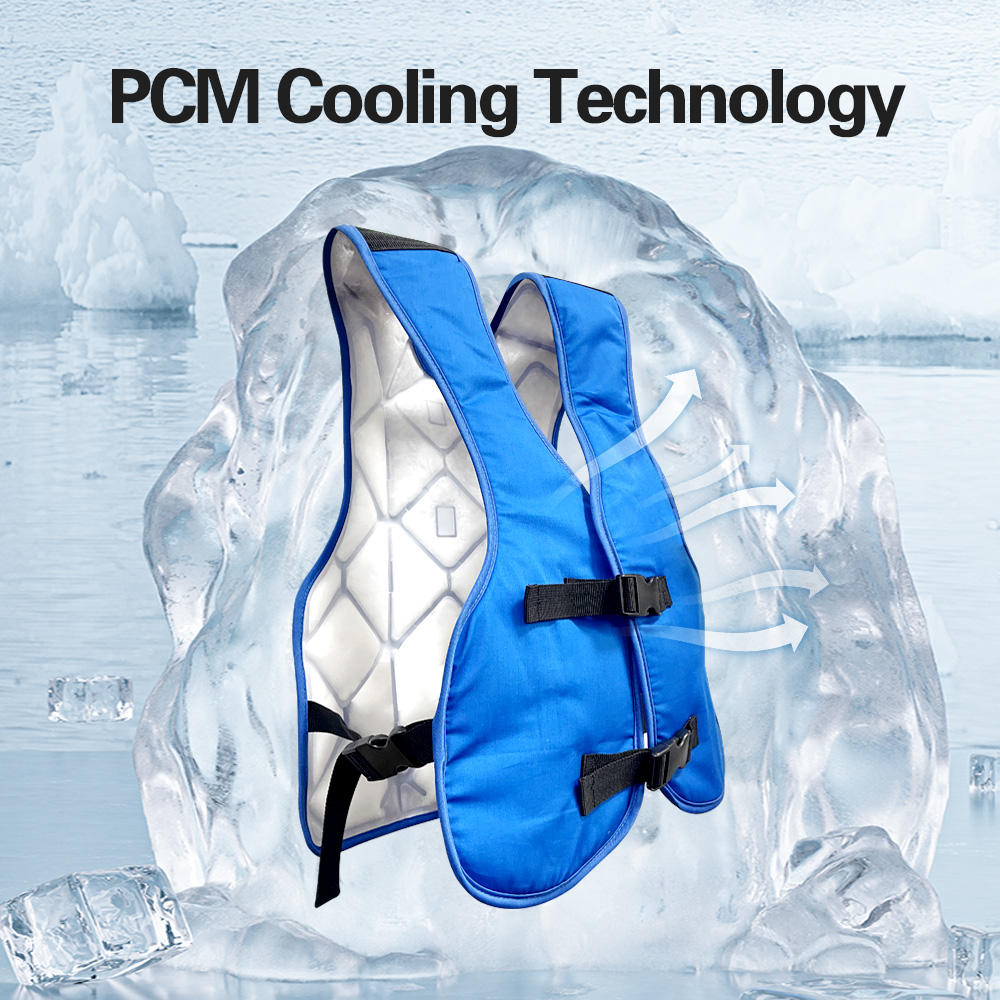
A PCM vest running at half capacity is worse than no vest at all. It gives you false confidence — and that’s dangerous.
Here’s what the data says about getting full performance from these systems in serious heat.
Pre-cool hard. One hour in a freezer gets packs solid. In a 55°C environment, a 24°C melting point vest beats a 28°C vest on both torso temperature and mean skin temperature. That 4-degree formulation gap shows up clearly in real working conditions. Formulation choice is a performance decision.
Swap at rest breaks — no exceptions. At 40°C in a 38 kg EOD suit, packs run out at the 50-minute mark. Workers who swapped their spent vest during rest breaks cut core temperature rise by 0.57°C, dropped heart rate by 23 bpm, and lowered skin temperature by 0.61°C — compared to those who kept the liquid pack on. A used-up vest isn’t neutral. It’s dead weight that gives you false security.
Pair the swap with hydration. The data treats these as two parts of one intervention. You don’t get to pick one and skip the other.
Keep packs away from radiant heat sources. Direct radiation speeds up the phase transition. Inside uninsulated protective suits, the cooling window drops to 20 minutes. Add an insulating outer layer. It slows heat from getting in and keeps the phase change window open longer.
Rotate multiple packs across long shifts. By cycle six of a repeated work-rest protocol, workers using fresh packs showed heat storage 0.49 J/g lower than those who kept running the same worn-out pack. That gap grows with every cycle.
Store packs below 60°C between uses. PCM stays stable across hundreds of cycles — but thermal breakdown starts above that point. Protect the chemistry and it keeps protecting you.
Frequently Asked Questions About PCM Vest Temperature Limits
Seven questions come up all the time. Here are direct answers — no padding.
Can a PCM vest be used in a 50°C environment?
Yes. Pick packs with a phase change material melting point of 24–29°C. Good options include INUTEQ-PAC® at 29°C or the Dräger Comfort Vest above 28°C ambient. You get 1–4.5 hours of cooling, with skin temperature dropping 3–4°C. Above 40°C, switch to a 15–18°C formulation. That protects your PCM vest heat absorption limit.
Will high temperatures damage the PCM material itself?
No. PCM is non-toxic, non-corrosive, and fully reusable — no wear-out over time. Lab and field trials back this up. Middle East refineries running 25°C melt-point packs have reported zero material degradation.
Will a 28°C vest start melting at room temperature?
Yes, if the room exceeds 28°C. That’s by design. Match your phase change material melting point to your work environment. Get this wrong and the vest activates early. Your entire cooling window disappears before the shift even starts.
How long does cooling last at extreme heat, and what’s the actual thermal capacity?
Standard duration runs 1.5–4 hours. Advanced systems reach 8–12 hours. Cooling power ranges from 16–90 W·m⁻² depending on formulation. Total capacity spans 118–331 W·h·m⁻² over eight hours. Go above the melt point and cooling vest thermal capacity drops fast — you’ll feel the difference quickly.
Does a PCM vest reduce heat illness risk according to safety standards?
Yes — by 20–50% during rest periods, per NIOSH HIIPP data. Trials at 39.91°C ambient kept the Physiological Strain Index between 3.65 and 5.14. The vest also meets OSHA compliance standards at heat index thresholds of 90°F and above.
Conclusion
Temperature doesn’t lie — and neither does your body when it’s overheating on the job.
PCM vests aren’t magic, but the science behind them is precise. Match the right phase change material melting point to your actual working environment. You get hours of reliable, passive cooling — no ice, no power, no compromise. Get it wrong, and you’re wearing an expensive nylon shell.
One question drives the decision: what’s the ambient temperature where you work? Above 40°C (104°F) on a regular basis? You need a high-tolerance PCM formulation. A consumer-grade vest built for yoga sessions in mild weather won’t cut it.
Stop guessing. Start choosing smart. CoolHeatech offers a full range of industrial and professional PCM vest solutions. Each one targets a specific heat environment, so you get cooling gear that actually fits the conditions you work in. Your environment has a temperature — your gear should match it.
Stay cool. Work safe. Choose right.