
Your dog curled up under a cozy blanket on a cold winter night looks sweet — but that warmth might be doing more harm than good. Heated blankets are common in most homes. What feels comfortable for you isn’t always safe for your dog.
The risks are real. Overheating, burns, and chewed-through wires are dangers many pet owners overlook until something goes wrong. So, are heated blankets safe for dogs? The honest answer is it depends — and the details matter.
Here, you’ll find what you need to make a clear, informed decision. We cover the hidden hazards of standard electric blankets and the safest warming options built with your dog’s wellbeing in mind.
Are Heated Blankets Safe For Dogs?
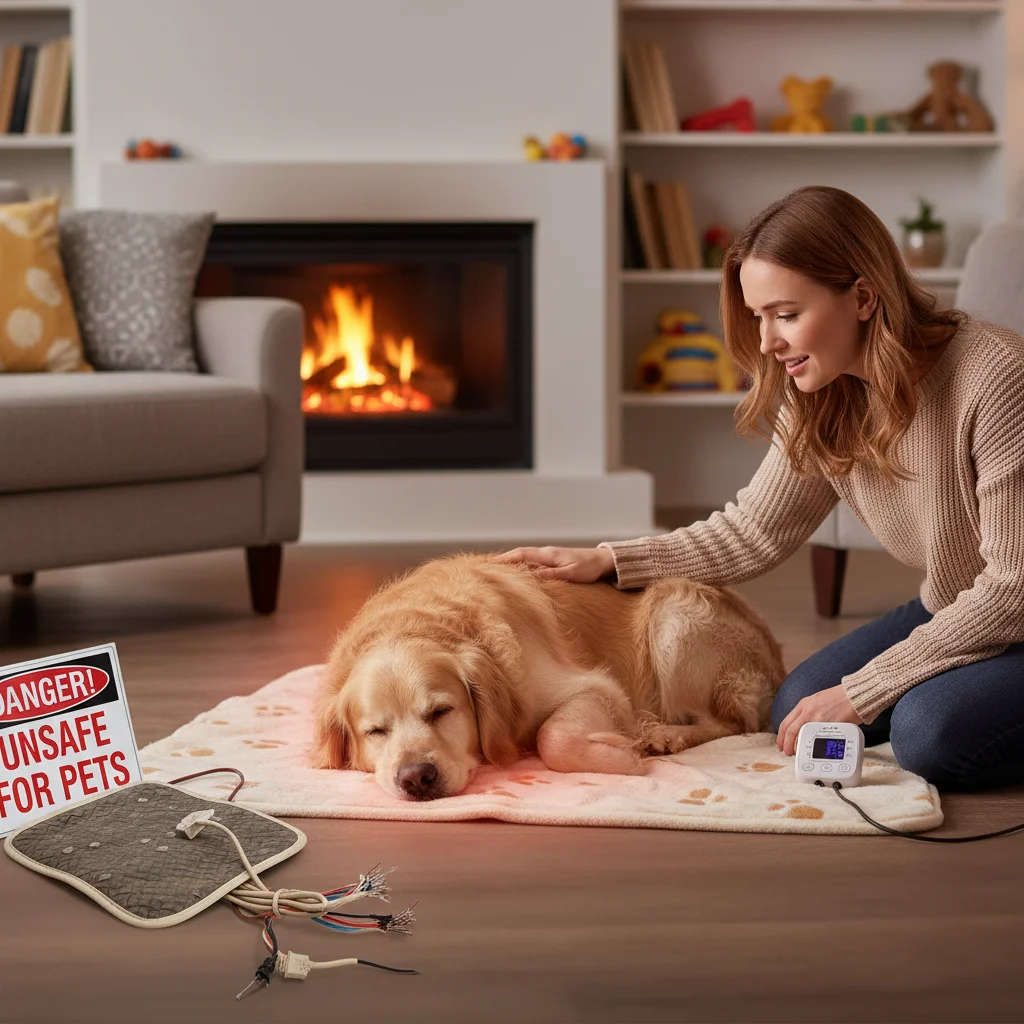
Most veterinarians agree: supervised use only. A regular bed is still the safer choice for overnight sleeping.
That said, “safe” isn’t a simple yes or no. It’s a sliding scale shaped by your dog’s breed, age, mobility, and the specific blanket you’re using.
Standard human electric blankets carry the highest risk. They run at higher voltages and lack pet-specific temperature controls. Surface temperatures can climb high enough to burn your dog’s skin before your dog even has a chance to react. Certain dogs face even greater danger:
-
Puppies — curious chewers who can’t judge heat
-
Senior or arthritic dogs — sleep so deeply they may not stir when overheating
-
Brachycephalic breeds like English Bulldogs — very sensitive to temperature shifts
-
Dogs with limited mobility — unable to move away from the heat source on their own
The safest heated blankets for dogs come with automatic shut-off, overheat protection, adjustable low heat settings, and chew-resistant cords. Standard blankets don’t include any of these features. To put the risk in numbers: one heated vest tested at a peak of 128°F — far beyond what’s comfortable or safe for prolonged contact.
Never use a heated blanket inside a crate. A confined space takes away your dog’s one line of defense: the ability to move away from the heat.
Are Heated Blankets Safe for Dogs? The Direct Answer
It’s not a simple yes or no. The answer depends on the type of blanket you’re using.
Human electric blankets: not safe. Standard blankets reach surface temperatures of 150°F or higher. Your dog’s healthy body temperature sits between 101–102.5°F. That gap matters. A human blanket doesn’t match your dog’s body needs — it overpowers them. The wiring inside is thin and breaks easily under a curious paw or a single chew. That makes it a real fire and burn risk in your home.
Pet-specific heated products: safe under the right conditions. These are built around a dog’s actual heat needs. They run on low voltage — 12 to 24V — and keep surface temperatures at around 125.6°F. Many have contact-activated thermostats that adjust based on your dog’s body warmth. That’s a 3 to 4°F difference from human versions. It sounds small, but tissue damage builds fast under sustained heat. That difference is real.
Vets across the board agree — from the AKC to Dr. Klein and Dr. Flaum:
-
Always supervise — no exceptions, no unsupervised use
-
Never inside a crate — your dog can’t move away from the heat source
-
Prioritize auto shut-off — 2 to 10-hour timers are a must-have safety feature
-
Choose chew-resistant, waterproof designs — cord damage is one of the top causes of pet heating incidents
The data supports this. An 8-dog trial using a thermostat-regulated pet bed showed a 40% reduction in limping in a 9-year-old Labrador. That same dog had shown signs of heat prostration on a standard human blanket before. Same dog. Different product. Completely different result.
The blanket itself isn’t the problem. The wrong blanket, with no safety features and no supervision, is.
Why Standard Heated Blankets Pose Real Risks to Dogs
Standard heated blankets weren’t designed with dogs in mind. That single fact explains most of what goes wrong.
Human electric blankets are set to match a human body temperature of around 98.6°F. Surface temperatures climb to 110–120°F during normal use. Your dog’s safe upper limit is 102–104°F. Above 107°F, direct skin contact — even through fur — starts causing tissue damage within 30 minutes. That’s not a worst-case scenario. That’s a Tuesday night on the living room couch.
The Burn Problem Nobody Talks About
Fur doesn’t protect. It makes things worse.
Thick-coated breeds like Huskies and Malamutes have dense fur that traps heat against the skin. Hotspots build beneath the coat without the dog feeling any discomfort. By the time the skin is burning, your dog may not have moved once.
Older and arthritic dogs face the highest burn risk. Deep, pain-dulled sleep means they don’t wake up when they should. They can’t shift position fast. The heat keeps building. Dogs recovering from surgery or managing hip dysplasia face the same danger — any condition that limits movement takes away the dog’s natural defense against overheating.
How Dogs Overheat — And Why Blankets Speed It Up
Dogs cool down through panting, not sweating. A heated blanket traps warm air around the body. That makes panting far less effective. Core temperature can climb past 104°F — the heat exhaustion threshold — with no clear warning signs until the damage is done.
Flat-faced breeds like Bulldogs and Pugs face extra risk. Their airways are already narrow. Any added heat pushes a system that has almost no room for error.
Electrical Hazards Are More Common Than You Think
Vet reports show that pets chew through electrical cords in 20–30% of heating-related incidents. The results are serious. Cord damage causes chemical mouth burns, electrocution, and — in severe cases — pulmonary edema, where fluid fills the lungs. It can be fatal.
Standard heated blankets run on 120V household current. Here’s what they’re missing:
-
No auto shut-off
-
No overheat protection
-
No chew-resistant cord sheathing
Each missing feature is a gap where something can go wrong.
Which Dogs Are Most Vulnerable to Heated Blanket Dangers
Some dogs handle a warm blanket just fine. Others face serious risks from the exact same product, used the exact same way, in the exact same room. The difference comes down to biology — and knowing where your dog stands on that line could prevent a real emergency.
Age Is the First Risk Factor
Puppies under 8 weeks haven’t developed stable body temperature control yet. Their bodies can’t manage heat the way an adult dog’s can. Their panting response is also less efficient. Senior dogs face the opposite end of that same problem — they lose heat regulation over time, and reduced mobility plus underlying health conditions make things worse. An older dog sleeping hard on a heated surface may not wake up and move away before harm sets in.
Breed Makes a Bigger Difference Than Most Owners Realize
Not all dogs respond to heat the same way. The data backs that up.
High overheat risk — thick and double-coated breeds:
– Chow Chows carry a heat-related illness (HRI) incidence of 0.50%, with an odds ratio of 16.17 compared to Labradors
– Siberian Huskies and Alaskan Malamutes trap heat beneath dense coats — warmth builds against the skin before any visible sign appears on the surface
– Golden Retrievers show an elevated HRI odds ratio of 2.67
Compromised cooling — brachycephalic breeds:
– Bulldogs show an HRI incidence of 0.42%
– French Bulldogs sit at 0.18%
– Pugs and Boxers have physically narrow airways — their panting is already limited, and added heat makes it even less effective
Short-haired breeds like Greyhounds sit in a different spot. They lose body heat fast and do need warmth in winter. But their thin skin sits close to the heat source, which raises burn risk. These dogs do best with pet-specific low-temperature products — not standard electric blankets.
Health Conditions That Raise the Stakes
Dogs with arthritis or hip dysplasia often need warmth for joint relief. But limited mobility means they can’t shift positions once heat starts building. The same stiffness that makes warmth feel good is what makes leaving them unsupervised risky.
Overweight dogs carry compounded risk. Body fat traps heat rather than releasing it. Even basic movement — standing up and lying back down — generates more internal heat in heavier dogs. HRI risk rises alongside bodyweight above the breed average.
Dogs with neurological conditions or diabetes face a risk that often goes unnoticed. Reduced sensation means they may not register a burn forming. Poor circulation also affects how their bodies handle and spread heat. For these dogs, chew-proof cordless designs aren’t just a nice feature — they’re a requirement.
A note on severity: A 2016 UK study tracking 905,543 dogs recorded a 14.18% fatality rate among heat-related illness cases. Not all of those were heating product incidents — but the number shows how fast heat events can turn fatal in vulnerable dogs.
Your dog falls into one of these categories? “Supervise use” isn’t enough on its own. The product itself has to be the right fit — low voltage, auto shut-off, no exposed cords, and a temperature your dog’s body can actually tolerate.
Safe Ways to Use a Heated Blanket Around Dogs (If You Must)
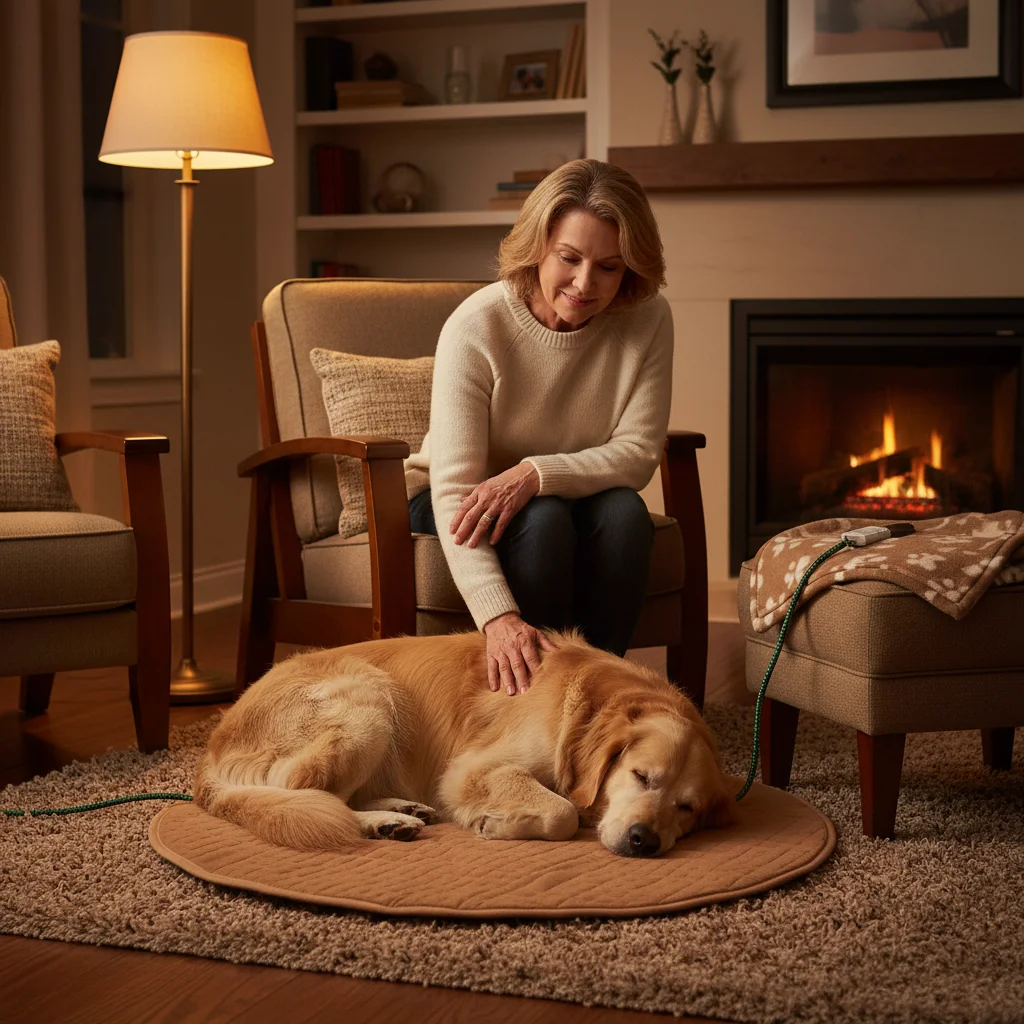
Here’s the truth: the safest heated blanket for your dog is one that never touches them while it’s on. That’s not a loophole — it’s the rule.
Use one the right way. These guidelines aren’t suggestions. They’re the line between a warm dog and a vet emergency.
Use It to Preheat, Then Step Away
Warm the bed or blanket before your dog settles in. Once it hits temperature, turn it off and unplug it before your dog makes contact. A pre-warmed surface holds heat long enough to do the job. No live wire under a sleeping body. No ongoing risk.
The Non-Negotiables
-
Lowest heat setting, always. Tests on pet heating products show effective warmth even at the lowest setting. There’s no reason to go higher.
-
Put a barrier between the blanket and your dog. A regular blanket, a shirt, or a pair of dog pajamas creates enough distance to prevent direct skin burns.
-
Short sessions only. Use the auto shut-off if your blanket has one. No auto shut-off? Set a timer yourself.
-
Stay in the room. Unsupervised use isn’t an option — not for five minutes, not ever.
-
Keep cords out of reach. Chewed cords cause chemical mouth burns, electrocution, and worse. Around 500 fires per year are linked to heating pads and blankets — most involving older units.
Know When to Stop
Watch for excessive panting, drooling, lethargy, or red skin. Any of those signs means the heat has already gone too far. Pull the heat source away. Cool your dog down at a slow, steady pace. Call your vet if symptoms don’t ease up.
Who Should Never Use One
Some dogs should stay away from a heated blanket, full stop — puppies, senior dogs with limited mobility, and flat-faced breeds like English Bulldogs. The margin for error is too small for these dogs. No amount of supervision changes that.
Pet-Safe Heated Blankets vs. Human Heated Blankets: Key Differences
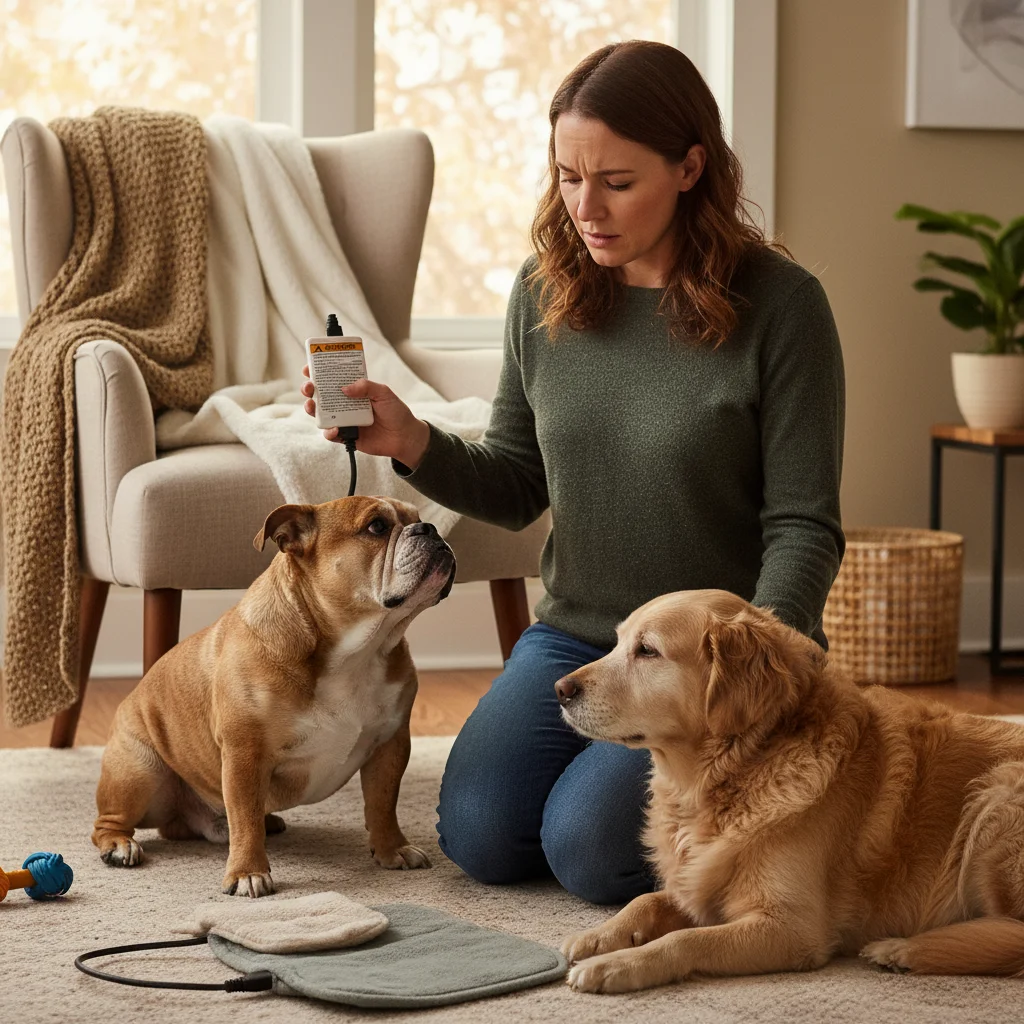
The product label makes it look simple. “Heated blanket.” Two words. The difference between a pet-safe version and a standard human one isn’t cosmetic. It’s the difference between a warm dog and a $4,000 vet bill.
Here’s where those differences actually land.
Temperature: The Number That Matters Most
A dog’s healthy body temperature runs between 101–102.5°F. Pet-safe heated blankets are built around that number. Their surface caps at 102°F — safe for long contact with no burn risk.
Human blankets run in a far higher range. On a low setting, surface temperatures hit 110–150°F. On high, that climbs to 160–180°F. Burns start after just 10 minutes of contact above 120°F. Scalding begins at 140°F. Your dog’s fur won’t protect them — it traps the heat against their skin.
Power and Electrical Risk
Pet-safe products run on 4–6 watts at low voltage. A chewed cord — and dogs will chew — stays a low electrical risk.
Human blankets draw 15–60 watts at standard household current. Chewed wiring on a 120V blanket isn’t a small problem. It’s a fire hazard and a real electrocution risk.
Built-In Safety Features — or the Absence of Them
|
Feature |
Pet-Safe |
Human Blanket |
|---|---|---|
|
Thermostat |
Adapts to pet body heat |
Fixed settings, no adaptation |
|
Auto shut-off |
Standard on quality models |
Rare |
|
Chew-resistant cords |
Steel braid or thick sheath |
Not included |
|
Non-skid base |
Common |
Not designed for this |
|
Burn risk |
None at 102°F |
High above 120°F |
The Cost of Getting It Wrong
Pet-safe heated beds and pads run $30–$80. A human blanket costs about the same — $40–$60 — and feels like the smarter shortcut. It isn’t. Burns and heat stroke treatment run $500–$4,000. The $10–$40 extra for a purpose-built pet product isn’t a luxury. It’s insurance.
One rule, put plainly: check the packaging. No “pet-safe,” no “UL-listed for pets,” no “low-voltage” label? That blanket belongs on a human bed — not your dog’s.
The Safest Warming Alternatives for Dogs in Winter
Winter cold hits fast. For dogs that feel the chill hard, the right warming option makes a real difference. The good news? Safer choices exist — and most are simpler than you’d think.
Warming Products That Work
Pet heated beds and low-voltage heated pads top the list for good reason. They reflect your dog’s body heat back rather than blasting external heat at them. Senior dogs and those with arthritis get the most out of these. The gentle, steady warmth loosens stiff joints without the burn risk that standard electric blankets carry. You still want to supervise, but the safety margin here is much wider.
Self-heating blankets and reflective pads cut out electricity from the equation. No cords. No voltage. No fire risk. They bounce your dog’s own body warmth back to them. Got a determined chewer? These are the clear pick.
Microwaveable heating pads are great to keep on hand for short sessions. They hold heat for 20 to 30 minutes. Wrap one in a towel before use, check the surface stays below 104°F, and never leave your dog alone with one.
Beyond the Blanket
Dog coats and sweaters earn their place at temperatures below 20°F (-7°C), especially for short-haired breeds. Pair them with booties for outdoor protection. Introduce boots slow — one at a time with a treat reward — until your dog accepts all four.
For outdoor dogs, lift the doghouse a few inches off the ground. Add an insulated door flap. Fill the floor with hay or cedar shavings so your dog can burrow in for warmth.
Inside, layered thick blankets do the job well. You can also tuck hand warmers into the bedding for extra comfort on the coldest nights. Keep them away from skin and out of chewing reach.
Dog comes in wet and shaking? Skip the heated blanket. Dry them off fast, wrap them in towels straight from the dryer, and call your vet if they don’t bounce back soon.
How to Choose a Dog-Safe Heated Product: Buyer’s Checklist
Not every heated product with a paw print on the box is built for your dog’s safety. Here’s what to check before you buy.
Check for Real Safety Certifications
Look for UL or MET certification. Both are OSHA-recognized testing labs. They hold products to the same strict standards. These aren’t decorative logos — they mean the product went through real testing. MET-certified products go through two follow-up inspections per year. UL products get checks every three months. You can confirm this yourself:
-
UL database: search by company name or model number
-
MET database: search by listing number or brand name
No certification mark? Walk away. Recalled heating products have started house fires and caused serious injuries to pets.
Match the Product to Your Dog’s Needs
|
Dog’s Condition |
Best Product Type |
|---|---|
|
Arthritic or senior |
Orthopedic heating pad with auto shut-off |
|
Chewer or puppy |
Self-warming cordless pad — no cords, no voltage risk |
|
Post-surgery recovery |
Electric pad with thermostatic control + washable cover |
|
Outdoor dog |
UL-certified weatherproof heated bed |
The Non-Negotiable Features
-
Auto shut-off — essential, not optional
-
Surface temperature ≤ 102°F — this matches your dog’s normal body temperature
-
Steel-wrapped or chew-resistant cords — a must for any dog that likes to gnaw
-
Removable, washable cover — hygiene matters, especially for long-term use
-
Low-voltage design — pet pads should run on far less wattage than human blankets do
Size and Session Rules
A 60-pound dog needs at least a 30-inch pad. That gives enough room to stretch out and, just as important, to move away from the heat. Keep sessions to 15 minutes maximum. Repeat no more than every 6–8 hours. For the first few uses, place a towel between the pad and your dog’s skin as an extra buffer.
FAQ: Heated Blanket Dog Safety Questions Answered
These questions come up again and again — and they deserve straight, honest answers.
Can dogs sleep on heated blankets overnight?
No. Overnight, unsupervised use is not safe. Burns, overheating, and electrical hazards don’t announce themselves. The risks build up while your dog sleeps — and you won’t see it coming until damage is done.
Will a heated blanket burn my dog?
Yes — it can. Peak temperatures on high settings have tested at 128°F. No auto shut-off means nothing stops that heat before it causes harm. No overheat protection makes it worse. The heat just keeps climbing.
Are electric blankets safe for pets at all?
Standard human electric blankets are not built for pets. High voltage is one problem. Chewable cords are another. There are no pet-specific temperature controls either. Together, these make standard electric blankets a poor and risky choice for dogs. Low-voltage, pet-specific products are different — but supervision is still required.
Is a heated dog bed safer than a heated blanket?
|
Feature |
Heated Dog Bed/Pad |
Heated Blanket |
|---|---|---|
|
Heat distribution |
Even, targeted |
Less consistent |
|
Auto shut-off |
Standard on quality models |
Rare |
|
Cord safety |
Chew-resistant as standard |
Not designed for pets |
|
Best use |
Seniors, arthritis, recovery |
Flexible warmth, constant monitoring required |
For everyday use, a heated bed wins on safety. It’s built with dogs in mind — the blanket simply isn’t.
How do I know if my dog is overheating?
Watch for these signs:
– Excessive panting or drooling
– Lethargy or sluggish movement
– Red gums
– Unusual restlessness or agitation
Spot any of these? Remove the heat source right away. Let your dog cool down at their own pace — don’t rush it. Fresh water and a cooler spot help speed recovery.
What’s the safest way to keep a dog warm in winter?
Start with a supervised, low-voltage heated pad that has auto shut-off — kept below 24V. That’s the baseline for safe use. Self-warming beds cut out electrical risk altogether. No cords, no voltage, no overheating concerns. For any heated product, the rule is simple: don’t leave it running without you in the room.
Conclusion

Your dog trusts you to keep them warm and safe — and those two things don’t have to come at the expense of each other.
Standard electric blankets weren’t built with your dog’s paws, coat, or instincts in mind. The risks are real: overheating, burns, chewed cords. The good news? All of it is preventable. Got a shivering senior pup? A tiny rescue who can never seem to get warm? The right heated blanket makes a real difference. Low-voltage settings, auto shut-off, and chew-resistant materials aren’t extras. For your pet, they’re must-haves.
This winter, take sixty seconds to browse pet-safe warming options at coolheatech.com. The best gift you can give your dog isn’t just heat. It’s the kind of warmth that keeps them safe all night long.