
Every summer, heat-related illness claims thousands of workers. Protective solutions exist — the real problem is that too many purchasing decisions run on gut instinct, not science.
You already know the stakes if you keep an industrial workforce safe in high-temperature environments: lost productivity, regulatory risk, and the genuine human cost of occupational heat stress.
PCM cooling vests rank among the most advanced answers to this problem. But why they work — and which specs hold up in real industrial conditions — gets little explanation with the depth the decision deserves.
What follows is a science-first breakdown. You get the evidence, the comparisons, and a clear selection framework to make a data-backed call you can defend.
Content Framework: The Scientific Basis For Choosing PCM Cooling Vest In Industrial Scenarios
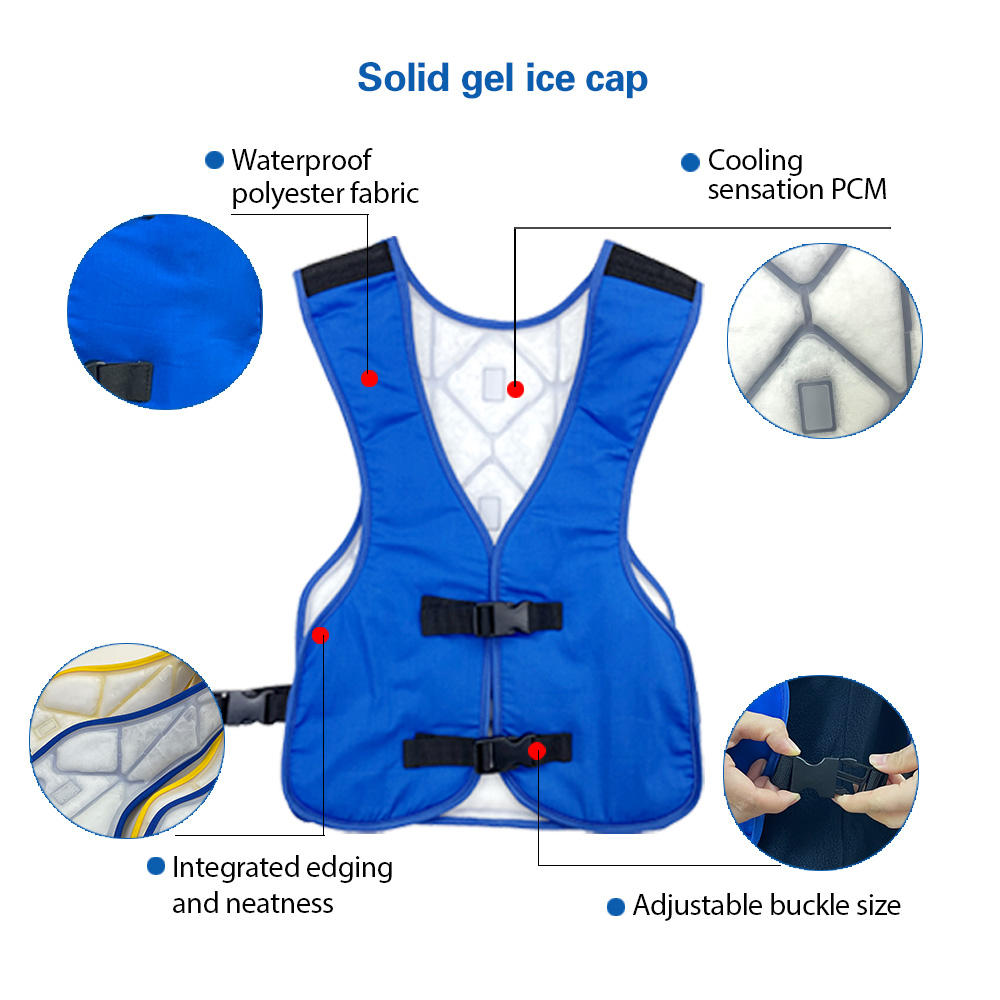
One premise drives this guide: thermal regulation decisions made without evidence end up costing more than the equipment they’re meant to replace.
Here’s what this article covers — and why each piece matters to the industrial buyer:
-
The physics of phase change — PCM materials absorb latent heat at fixed temperatures, within a 55–65°F solidification range. That flat thermal curve is something ice packs and evaporative cooling cannot replicate. Not even close.
-
Duration benchmarks grounded in real conditions — Standard PCM packs deliver 1.5–4 hours of active cooling. Advanced-generation materials push that to 8–12 hours, with a notable drop in vest weight at the same time.
-
Market validation — The industrial PCM cooling segment is projected to reach USD 351.96 million by 2028. Construction, oil/gas, and mining lead that growth — the same sectors where occupational heat stress risk is highest.
-
Honest technology comparison — PCM sits alongside circulating water systems and Peltier thermoelectric devices. Each has a defined use case. This guide lays out where each one fits.
-
A selection framework you can defend upward — environment, workload intensity, shift duration, compliance requirements, and total cost of ownership, structured as a decision checklist.
The science exists. It just hasn’t been pulled together in one place for the person who has to sign the purchase order.
How PCM Cooling Vests Work: The Phase Change Science Behind the Comfort
Physics, not marketing, is what separates a PCM cooling vest from a glorified ice pack sewn into a polyester shell.
Here’s how it works. The PCM material inside the vest — a salt crystal mixture or paraffin compound — stays solid at room temperature. Once body heat rises above its set melt point, the material starts turning to liquid. During that entire transition, it holds one fixed temperature. Not close to fixed. Exactly fixed.
That steady temperature is what makes PCM different. Your skin gets a consistent, controlled cooling effect — not the sharp cold blast of an ice pack followed by a warm, useless puddle.
The Numbers Behind the Comfort
Melt point selection matters a lot for industrial buyers. Different products suit different environments:
-
INUTEQ-PAC® gives you five melt point options — 6.5°C, 15°C, 21°C, 24°C, and 29°C — with active cooling lasting 1 to 4.5 hours
-
Dräger Comfort Vest kicks in above 28°C ambient, dropping skin temperature by 3–4°C, and holds that for up to 4 hours
-
Cryopush (18°C melt point) runs 3–4 hours with 550g back coverage plus 280g dual front panels
-
Ergodyne Chill-Its 6215 uses an 18°C melt point and meets ASTM F1506 and NFPA 70E CAT1 flame-resistance standards — a solid fit for electrical and manufacturing environments
Recharge Is Simple. Durability Is Not a Concern.
Recharging just reverses the process. Drop the temperature 3°C below the melt point. Ambient air works for some models. A freezer or ice bath handles others. Cryopush packs reset in 20 minutes in ice water. INUTEQ packs recharge faster as the environment gets colder.
These materials hold up under heavy industrial use. Cryopush’s non-toxic TPU construction handles 60,000 reuse cycles across a three-year service life. INUTEQ runs on 100% biobased, biodegradable PCM. Neither product drips, condenses, or breaks down against skin — a real edge over evaporative systems in controlled indoor settings.
The process comes down to five steps. None of them are complicated:
-
Recharge PCM packs to solid state
-
Insert into modular vest pockets
-
Body heat drives the phase transition at a constant temperature
-
Active cooling lasts 1–4.5+ hours based on exertion and ambient conditions
-
Recharge after melt and repeat
PCM cooling vests don’t ask workers to push through discomfort while waiting for relief. You get a measurable, repeatable thermal ceiling — shift after shift.
PCM vs. Ice Vests vs. Evaporative Cooling: A Data-Driven Comparison for Industrial Decision Makers
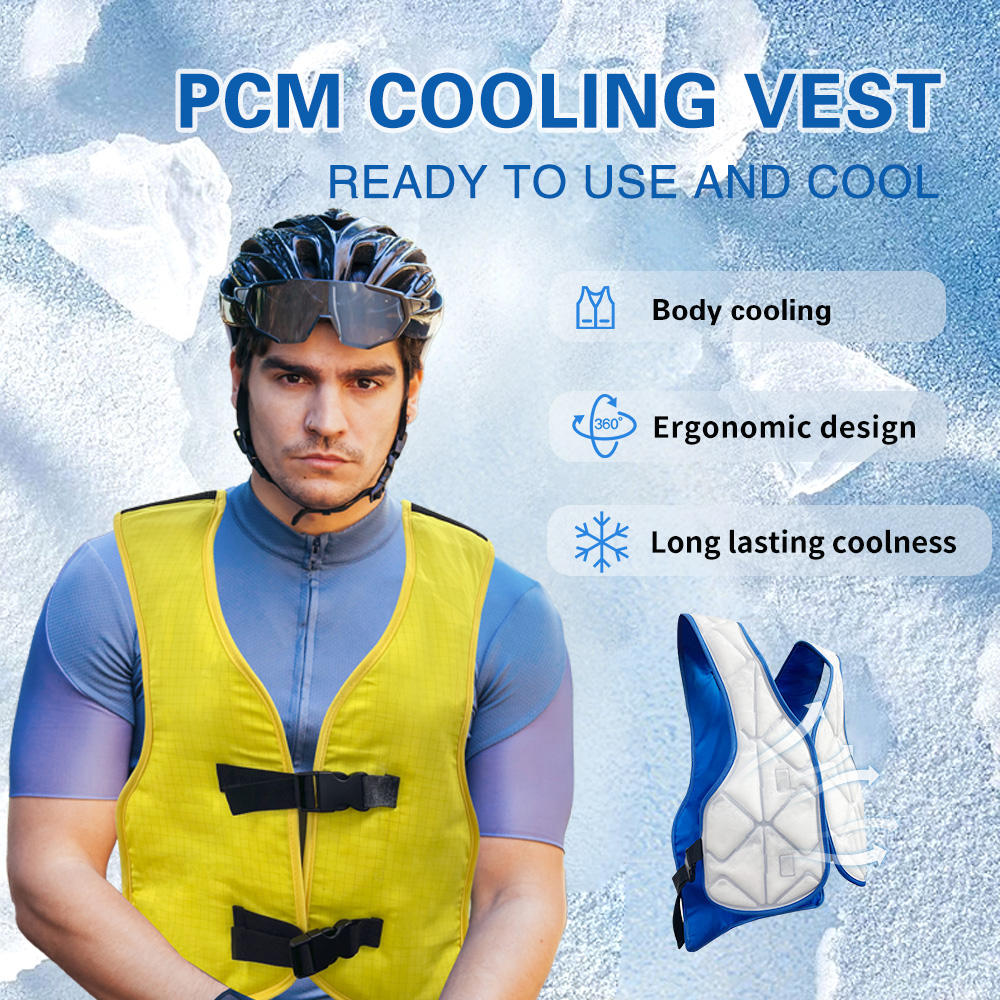
Three technologies dominate the personal cooling device market. Each one has a real use case. None of them is the best choice for every situation — and that’s the core problem when buyers rely on brand reputation instead of performance data.
Here’s what the numbers say.
Thermal Performance: What the Lab Data Reveals
A controlled study put PCM and optimized ice vests through harsh conditions — ambient temperature of 39.91°C, relative humidity at 39.92%, WBGT at 31.88°C. The result catches most buyers off guard: both vests delivered equal thermal strain control.
The mean Heat Strain Score Index (HSSI) came in at 13.37 for both technologies. The Physiological Strain Index (PeSI) during activity was 3.65 for ice versus 5.14 for PCM. The gap is small. Neither vest pulls ahead on core physical protection alone.
That changes how you should think about this comparison. You’re not picking between something that works and something that doesn’t. You’re picking between two different operational profiles.
Side-by-Side: The Metrics That Drive Industrial Decisions
|
Metric |
PCM Vest |
Ice Vest |
Evaporative Vest |
|---|---|---|---|
|
Weight |
2.2 kg |
2.3 kg |
Lighter passive designs |
|
Cooling Duration |
1.5–4 hrs standard; 8–12 hrs advanced |
Equal thermal control to PCM |
Variable — until fabric dries |
|
Production Cost |
Higher |
Lower |
Passive: Low / Active: Higher |
|
Humidity Sensitivity |
None |
None |
Severely limited in high humidity |
|
Recharge Method |
Freezer / ice bath |
Refreeze or replace |
Water rehydration |
|
Latent Heat Capacity |
Lower than ice |
Higher than paraffin PCM |
Evaporation-based — not comparable |
Where Each Technology Belongs
Ice vests win on upfront cost and latent heat capacity. The updated hydrogel-pack design — a 0.7mm PVC shell with 3mm EVA foam insulation — solves the skin irritation issues that made older ice pack designs a problem. Your budget is fixed and your shifts run under four hours in moderate heat? Ice vests give you full cooling at a lower price.
PCM vests win on consistency and performance across different environments. Humidity has no effect on phase change physics. A 14°C melt-point vest performs the same on a 40% RH construction site and a 90% RH foundry floor. Advanced-generation PCM materials also offer an 8–12 hour cooling window. One recharge cycle covers a full workday. That math matters for extended shifts.
Evaporative vests show the strongest market growth — a 12% CAGR projected through 2033, heading toward USD 950 million. But that growth comes from low-humidity outdoor environments where passive airflow does real cooling work. Relative humidity goes up, evaporation slows down, and so does the cooling effect. Active evaporative systems with built-in fans reduce that gap, but costs rise back toward PCM levels.
The Honest Selection Logic
-
Short shifts in dry heat, tight budget: ice vests
-
Extended shifts, variable humidity, or indoor industrial settings: PCM vests
-
Low-cost outdoor use in dry climates with short rotation cycles: passive evaporative
The data doesn’t crown a single winner. It points to the right tool for the right condition — and that’s the framework industrial safety buyers need before locking budget into one technology across the board.
The Physiological Evidence: What Happens to Workers’ Bodies With PCM Vests
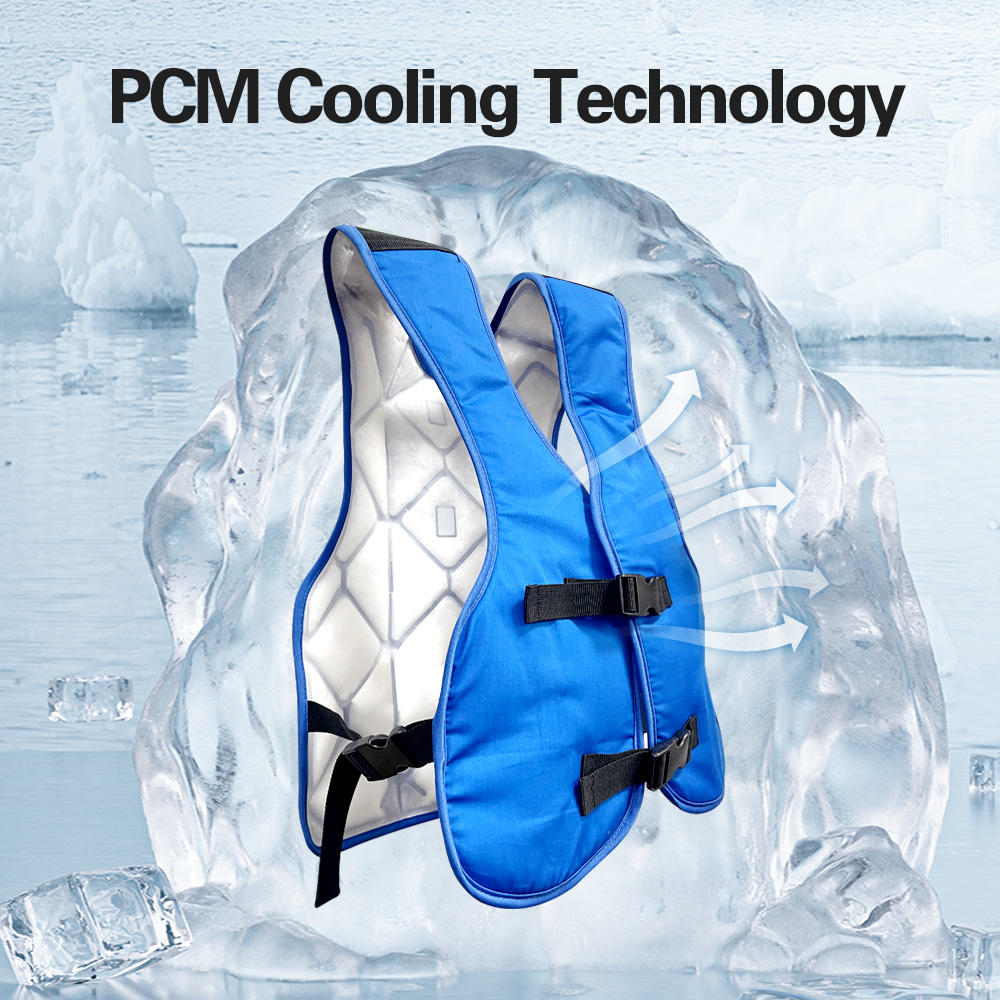
The research data is blunt. PCM cooling vests produce real, documented changes in human physiology — not marginal, not theoretical.
Core temperature control is where it starts. Workers wearing PCM vests held core temperature at 38.4°C during heavy exertion in full PPE. Without the vest, that number climbs. The vest absorbs the thermal load before it hits dangerous levels.
Skin temperature drops follow fast. Overall skin temperature falls 0.5–2°C. Chest-specific reductions reach 1.0–3.6°C. That beats previous ice and PCM benchmarks, which delivered just 0.8–1.5°C across the same measurement points. That’s not a minor improvement. That’s the difference between a worker who holds focus and one already fighting the heat.
Cardiovascular strain drops too. Heart rate fell 11% in vest-wearing workers — from 113.33 bpm down to 100.55 bpm under identical workloads. Lower heart rate means lower physical strain. Less strain means more capacity to keep working before fatigue takes over.
Subjective results back up the numbers. Perceived fatigue shifted from 2.80±1.23 in the control group to -0.55±1.46 in vest wearers (P<0.001). Perceived moisture and skin discomfort dropped. Cognitive response time — measured by CPT testing — also improved with the vest on.
Thermal sensation and comfort scores were lower across all active work phases (P<0.001). Workers felt cooler during the tasks that count most.
One trade-off the data doesn’t hide: 8 out of 12 participants reported some restriction to trunk movement, and 50% of female participants flagged vest weight as a concern. These are real design limitations worth discussing in any procurement conversation.
The physiology is clear. PCM vests don’t just feel cooler — they cut the heat burden your workers’ bodies carry every shift.
Industrial Scenario Mapping: Which PCM Cooling Vest Specs Match Your Work Environment
Four different job sites. Four different thermal problems. One product category — and the wrong spec means your gear fails at the worst possible moment.
This mismatch happens all the time. A purchasing manager orders a standard 1.5-hour PCM vest for a mining operation running 10-hour deep-shaft shifts. A safety officer buys evaporative gear for a Gulf Coast refinery where high humidity makes evaporation useless. The science was fine — the scenario matching wasn’t.
Here’s how to match specs to your environment, sector by sector.
Environment-to-Spec Matching Table
|
Work Environment |
Recommended PCM Specs |
What the Data Shows |
|---|---|---|
|
Construction |
55–65°F packs, 2–4hr cycles |
Largest industrial user group; Qatar 2022 World Cup deployed 30,000 workers using PCM/evaporative hybrid systems |
|
Mining |
4+ hr high-performance PCM or circulating water |
Industrial PCM segment hits USD 351.96M by 2028; vest cooling is cheaper than a full deep-mine ventilation retrofit |
|
Oil & Gas |
High-performance PCM, extreme-heat rated |
Gulf states dominate the premium segment; African operations are moving fast to meet mandatory heat-stress compliance |
|
Welding / High-Heat Plants |
PCM + IoT sensors for real-time regulation |
R&D investment up 24% since 2020 for efficiency gains in high-radiant-heat environments |
|
Sealed Chemical PPE Environments |
4-pack integrated designs (2 front, 2 back) |
Respirex Koolvest (2022) was built for sealed suit scenarios — upper body coverage where airflow is zero |
The Four Variables That Determine the Right Spec
Ambient temperature sets your melt-point floor. Above 40°C, you need packs that solidify at the lower end of the 55–65°F range. That’s what keeps the phase transition working under heavy thermal load.
Shift duration is where most buyers get it wrong. Standard PCM packs cover 1.5–4 hours. Advanced-generation materials push that to 8–12 hours — enough to cover a full industrial shift with no recharge rotation needed. Your operation can’t always support mid-shift cooling logistics. In that case, the longer-duration spec isn’t optional. It’s a requirement.
Workload intensity cuts cooling windows short. High exertion speeds up the phase transition. A vest rated for 3 hours at moderate activity can burn through its capacity in 90 minutes under heavy lifting or high-heat movement.
PPE integration cuts your options down further. Sealed suits block all passive airflow. That’s the reason the 4-pack Koolvest design exists — front and back panel coverage across the upper body, where no other cooling method can reach.
Actionable Mapping Steps Before You Buy
-
Benchmark your environment — measure WBGT, not just air temperature. Humidity and radiant heat raise the thermal load more than most people expect.
-
Match melt point to ambient conditions — lower melt-point packs for extreme heat; mid-range (21–24°C) for controlled indoor facilities.
-
Plan your recharge logistics — shifts running 8+ hours need either advanced-duration packs or a rotation system with enough spare packs to keep coverage continuous.
-
Verify compliance requirements — Middle East and Asia-Pacific markets now require heat-stress prevention equipment in many sectors. Spec selection isn’t just an operational decision. It’s a regulatory one.
The global PCM cooling market sits at USD 412 million (2022) and tracks a 6.5% CAGR through 2028. Asia-Pacific grows at 8% per year, led by China, India, and Japan — markets where industrial heat management moved from optional to legally required. That growth line shows you where heat stress prevention is heading. The real question is whether your current vest specs match the environments your workers face every day.
The Scientific Selection Checklist: 6 Specs That Separate Effective PCM Vests from Underperformers
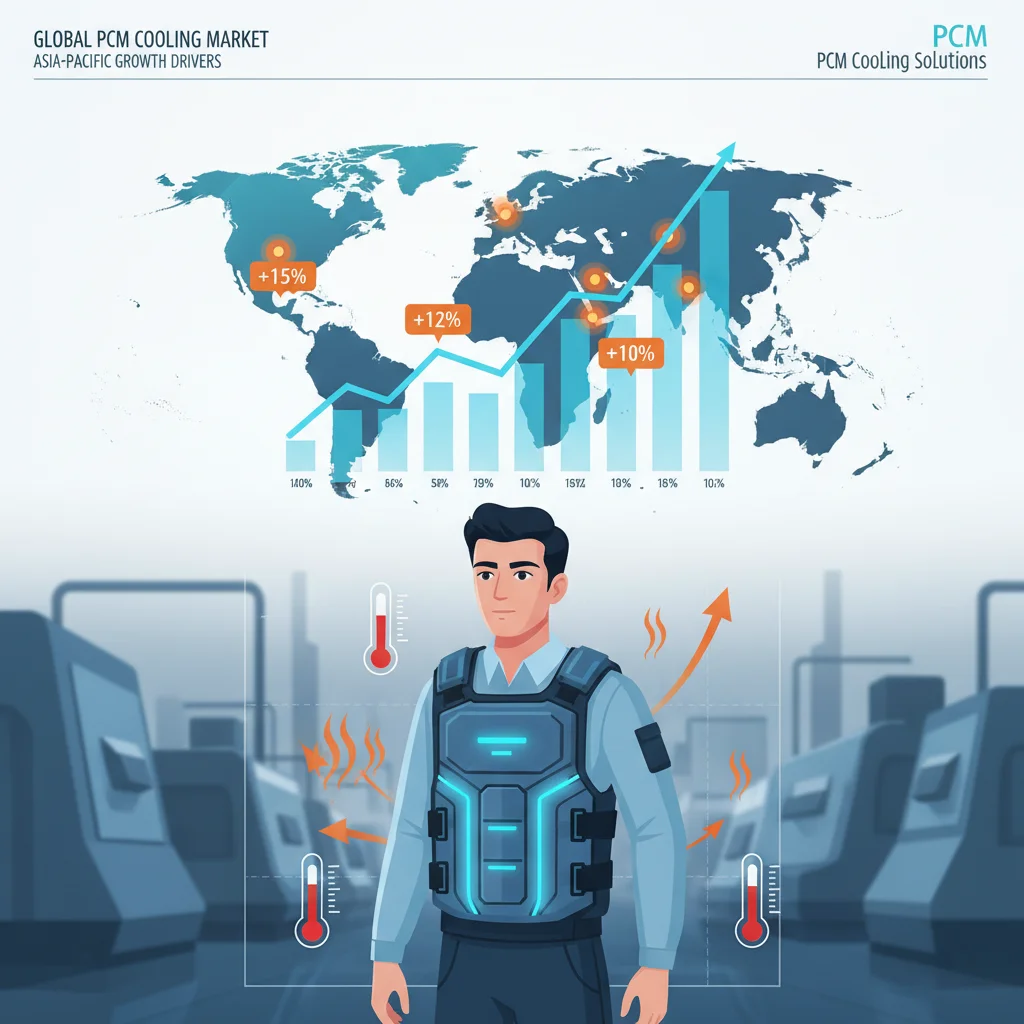
Six numbers. That’s what keeps a worker going through a full industrial shift — or leaves them struggling at the 50-minute mark.
Skip these specs in your procurement process, and you don’t just get a weak product. You get one that fails where the cost is human.
1. Melt Point Temperature
Match this to your environment, not a manufacturer’s default. The standard industrial comfort range sits at 14–18°C (58–64°F). Extreme-heat environments — Middle East refineries, foundries, deep-level mining — need packs set closer to 25°C (77°F). Get the melt point wrong, and the phase transition kicks in too soon or never activates at all.
2. Cooling Duration vs. Shift Length
Basic PCM packs run out in 2–3 hours. Add active exertion at 25°C ambient, and that drops to about 50 minutes. Advanced-generation materials push that out to 6–8 hours. Know your shift structure before you lock in a duration spec.
3. Vest Mass
Aim for 1.12 kg for full torso coverage across back and chest panels. Heavier vests build fatigue. Fatigue in high-heat environments makes the exact risk you’re trying to prevent even worse.
4. Physiological Strain Index (PSI) Reduction
Ask for documented PSI data — not summaries, actual figures. A PCM2-class system delivers a −2.2 PSI reduction compared to no vest, and −0.8 versus a lower-spec PCM alternative. Those are real, measurable numbers. Not marketing copy.
5. Ergonomic Compatibility
Pack distribution makes a real difference. Unbalanced designs limit trunk movement. Controlled trials showed this as a confirmed issue in 8 out of 12 participants. Check for adjustable sizing, breathable shell materials, and make sure the vest works with your existing PPE setup.
6. Recharge Logistics
Thirty to 45 minutes in a freezer brings packs back to solid state. Your recharge setup — freezer access, spare pack rotation, timing aligned to breaks — decides whether cooling stays consistent or breaks down mid-shift. A vest is useless if the recharge process doesn’t hold up.
Check every vest you’re considering against these six specs before you buy. The data is there. Use it.
OSHA/NIOSH Compliance: How PCM Cooling Vests Meet Occupational Heat Stress Prevention Standards

Federal heat stress standards are clear and strict. That’s good news for anyone building a compliance case around PCM cooling vests. The rules give you a solid framework to work with.
OSHA and NIOSH set two key trigger points. At ≥80°F heat index (NIOSH Recommended Alert Limit), employers must provide water, shaded rest areas, and acclimatization schedules. At ≥90°F (Recommended Exposure Limit), requirements go further: mandatory 15-minute paid rest breaks every two hours, continuous worker monitoring, and cooling equal to air conditioning.
PCM vests meet that “AC equivalent” requirement head-on. Phase change materials keep skin temperature below 90°F during high-heat conditions. NIOSH classifies this as an engineering control — the same category as dehumidification systems and mechanical ventilation. The difference? PCM vests are portable and worker-worn.
Where PCM Vests Fit Into HIIPP Requirements
NIOSH’s Heat Illness and Injury Prevention Program (HIIPP) runs on four pillars. PCM vests cover all of them:
-
Hazard assessment — Deploy vests once WBGT monitoring hits the RAL threshold
-
Response procedures — Vests cut heat illness risk by 20–50% during cool-down rest periods
-
Acclimatization — Support the 7–14 day ramp-up protocol without full work restrictions
-
Emergency response — Slow core temperature rise during heat exhaustion incidents
Here’s a practical compliance win worth noting. Documented vest usage logs count as HIIPP recordkeeping. That paper trail holds real weight during OSHA inspections.
ROI Calculation Framework: Quantifying the Business Case for PCM Cooling Vest Investment
One avoided injury pays for 15 to 30 basic PCM vests. That single number changes the whole procurement conversation.
The upfront cost is real: $150–$400 per unit, $6,000–$8,000 to outfit a 20-person crew, plus $200–$800 for freezer infrastructure. Budget approvers see that line item and flinch. What they don’t see — until you show them — is what heat incidents cost on the other side of the ledger.
Two documented deployments make the math hard to argue with.
A mill operation running $295 vests cut heat incidents by 83% — from 24 cases down to 4. Full ROI landed in 6.8 weeks. A second deployment cost $8,100 in Year 2. It recorded 72% fewer incidents, 76% fewer lost workdays, and an 18% productivity gain. Payback period: 4.2 months.
Build your own calculation in five steps:
-
Baseline — Document current incidents, lost days, and output per shift
-
Investment — (Workers × shifts × vest rotation needs) × unit cost, plus freezer overhead
-
Benefits — Use a 72–83% incident reduction rate, factor in saved lost days and productivity gains
-
Payback — Divide total avoided costs by total investment
-
TCO — A vest lasts 5–7 years. Budget $15–$30 per vest each year for pack replacement
Three avoided OSHA violations alone cover a full crew hybrid upgrade. These numbers aren’t optimistic projections. They’re documented outcomes from real industrial deployments.
Conclusion
The science doesn’t lie — and neither does the bottom line.
PCM cooling vests aren’t a workplace perk. They’re built on solid physiology, backed by compliance standards, and justified by real financial data. They address one of industrial operations’ most persistent threats: occupational heat stress. You have the mechanism, the comparative data, the regulatory framework, and the ROI math. That’s enough to make a strong case — to a safety board, to a budget committee, or to yourself.
The question was never whether thermal regulation clothing works. The real question is how much longer your operation can run without it.
Your next move is clear. Take these three steps:
-
Match your specific industrial scenario against the six-specification checklist
-
Run your numbers through the ROI framework
-
Identify the PCM vest tier that fits your environment
The evidence is already in your hands. Now it’s just a decision.
Make it before the heat does.