
Every summer, heat-related incidents cost industrial businesses millions. Workers’ compensation claims pile up. Project delays eat into budgets. OSHA violations add more pain — yet most companies still rely on water breaks and shade tents as their main heat safety plan.
There’s a smarter, more measurable solution.
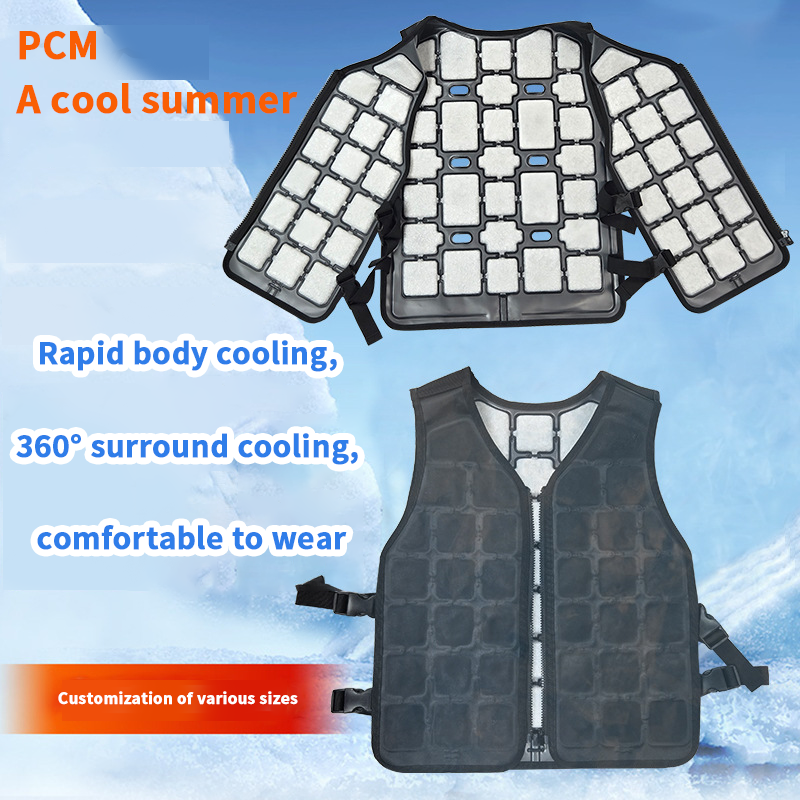
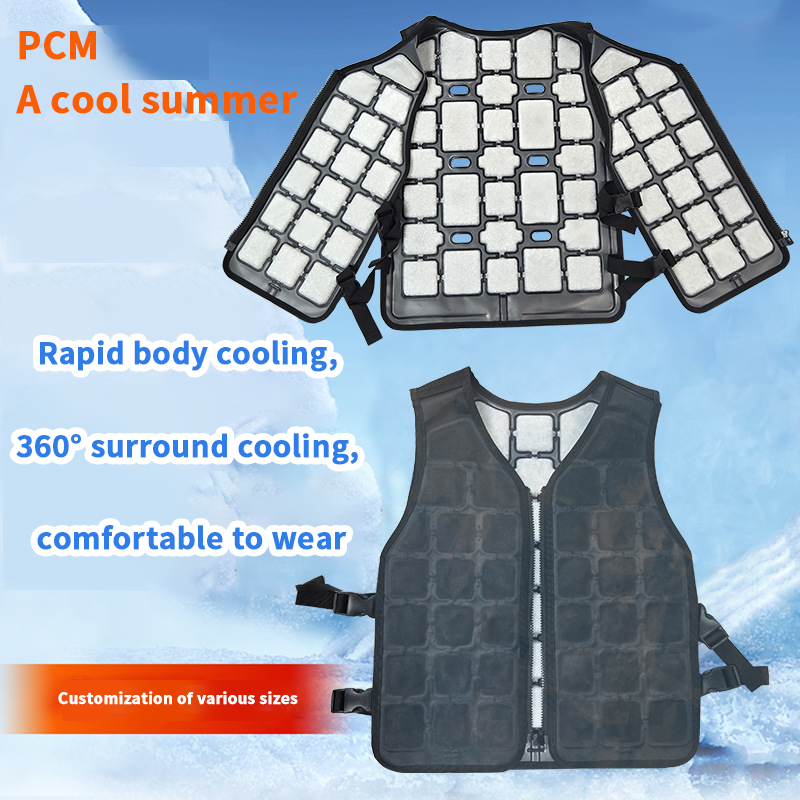
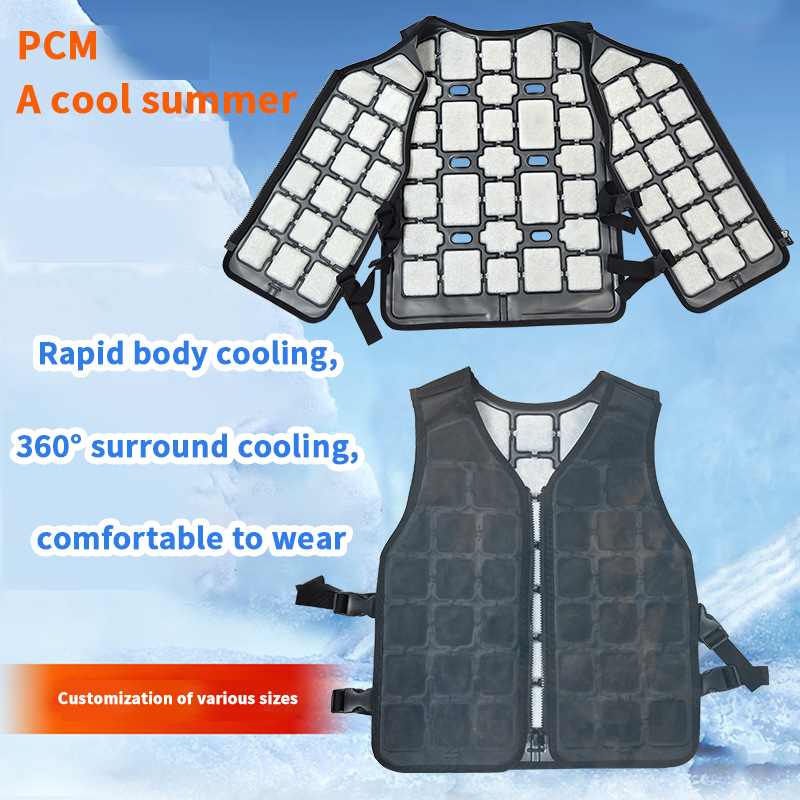
Custom PCM cooling vests for industrial use use phase change material technology to deliver 4–8 hours of steady, hands-free cooling. They fight worker heat stress at the source — no water, no electricity, no guesswork.
Outfitting a 50-person construction crew? Sourcing heat protection gear for a 500-employee manufacturing facility? This guide gives you the procurement and performance details you need to make a confident bulk buying decision.
Content Framework for “Custom PCM Cooling Vests For Industrial Use: Bulk Orders That Improve Workplace Heat Safety & Productivity”
This guide is built for decision-makers — safety managers, procurement officers, and operations leads. You need hard evidence and clear structure before committing to a bulk order. This gives you both.
Here’s what each section covers:
-
The heat safety problem: Real costs, OSHA exposure, and why passive measures fall short
-
PCM technology explained: How phase change material works, why it outperforms evaporative and ice-based alternatives, and what the research shows
-
Performance data: Task completion rates, sweat reduction figures, and microclimate cooling benchmarks from controlled industrial studies
-
Product specs and customization: Sizing, branding options, and durability requirements for demanding environments
-
Bulk ordering and pricing: Volume tiers, lead times, and what to ask suppliers
-
ROI framework: Productivity gains, incident reduction, and typical payback timelines
-
FAQ: The questions procurement teams ask most
Use the section navigation to jump to what matters most for your buying decision.
Why Industrial Operations Need PCM Cooling Vests: The Heat Safety Crisis
Heat doesn’t negotiate. It doesn’t care about project deadlines, headcount, or targets — it shuts workers down. Full stop.
OSHA flags heat-related illness as one of the top causes of workplace incidents across construction, mining, and manufacturing. These aren’t near-misses. They’re lost shifts, workers’ comp payouts, and in the worst cases, fatalities that no safety manual can undo.
The scale of the problem shows up clearly in the numbers. The global industrial cooling vest market hit USD 412 million in 2022. That demand comes from industries that can no longer afford to guess at heat protection. Construction leads as the largest user segment. During the 2018 Qatar World Cup stadium builds, the Supreme Committee deployed cooling suits for over 30,000 workers. That’s a hard signal of how serious high-heat industrial exposure has become.
What makes PCM cooling vests the right answer isn’t novelty. It’s physics. Phase change material absorbs body heat at a fixed temperature. You get consistent microclimate cooling — no water, no electricity, no ongoing infrastructure costs. That’s a real advantage. Your operation may run in a mine shaft, on a rooftop, or inside a steel mill. In those environments, most alternatives are either impractical or too costly to keep running.
The risk of doing nothing builds up in silence. Heat stress kills focus before it triggers collapse. Errors pile up. Output drops. Every unaddressed incident moves you one step closer to an OSHA citation your legal team never planned for.
PCM Cooling Technology vs Traditional Cooling Solutions: Why Phase Change Material Wins
Physics doesn’t lie. PCM absorbs heat by triggering a molecular state change — not a temperature spike. That’s why PCM cooling vests outperform every traditional option your safety team has tested.
Here’s how it works: PCM stores thermal energy at up to 4× the density of conventional materials like water. It doesn’t warm up and push heat back at the worker. Instead, it pulls body heat in at a fixed temperature and holds it there — until the material reaches full capacity. You get 4–8 hours of steady microclimate cooling from a single charge.
Traditional options can’t come close:
-
Evaporative vests need constant water saturation. They lose effectiveness in humid conditions — the same conditions common in manufacturing floors and enclosed warehouses
-
Ice-based vests offer short, uneven cooling windows (1–3 hours). They add real weight and leave workers wet and uncomfortable as the ice melts
-
draw heavy energy loads and don’t work for mobile industrial workers on the move
The gap isn’t small. It’s structural. PCM cooling gear gives workers hands-free, infrastructure-free heat protection. It performs on a rooftop, inside a steel mill, or at a warehouse dock — no power outlet needed.
Custom PCM Cooling Vest Product Specifications for Industrial Applications
The specs on a cooling vest tell you everything. Will it hold up in your actual operation — or quit by noon? That’s what the numbers answer.
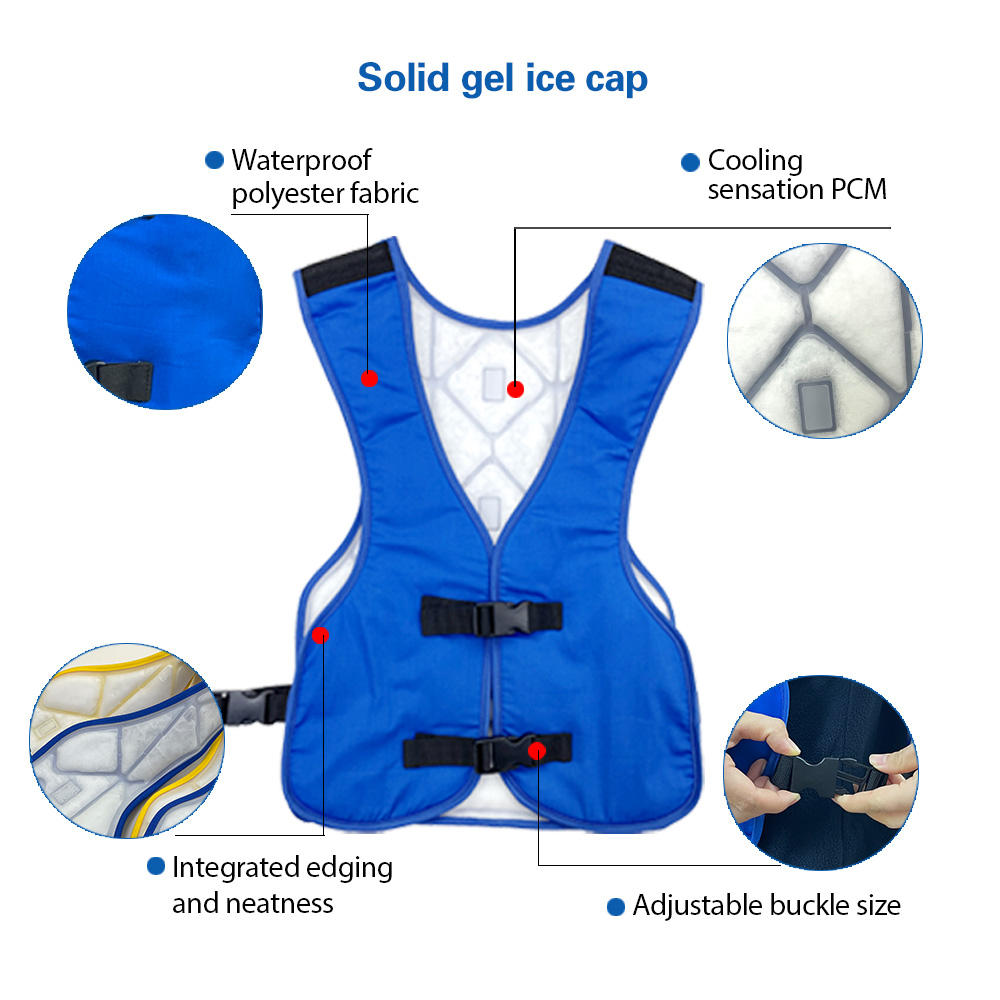
PCM vests for industrial use are built around activation temperature selection. You get five options:
|
PCM Temperature |
Color Code |
Best Fit |
|---|---|---|
|
44°F (6.5°C) |
Orange |
Extreme radiant heat environments |
|
59°F (15°C) |
Blue |
General industrial and manufacturing |
|
70°F (21°C) |
Yellow |
Standard outdoor construction |
|
77°F (24°C) |
Transparent |
Moderate-heat warehouse settings |
|
84°F (29°C) |
Red |
Ultra-high ambient temperature operations |
For most industrial environments — foundries, roofing crews, warehouse docks — the 58–68°F (14–20°C) range hits the optimal comfort window. There’s one core rule for effectiveness: the gap between PCM melting temperature and skin temperature must reach at least 6°C. Drop below that, and cooling output falls off fast.
Cooling duration depends on the system tier:
– Standard models: 1–4.5 hours
– Advanced industrial systems: up to 8 hours
– Full PPE with heavy activity: the PCM hits the 50-minute mark, shifts from solid to liquid, and moves from cooling to insulation at that point
Weight adds up fast when workers carry gear all day. Full-torso industrial PCM vests come in at 1.12 kg. Modern pack designs run 30–60% lighter than older cooling vest formats. Smart load distribution keeps that weight off pressure points and clear of tool belts.
Recharging is simple. Put the vest in a commercial refrigerator at 5°C for 30–45 minutes, and it’s back to full capacity. Fast-cycle protocols cut that down to 5 minutes for shift turnovers. The material holds up through hundreds of recharge cycles with no drop in performance.
One detail most buyers miss: no condensation. Advanced PCM formulations stay dry even in high-humidity environments. No dripping. No wet PPE layers. No slippery grip problems. These vests work under hazmat suits, combat gear, and full industrial PPE without any interference.
Bulk Order Customization Options: Branding, Sizing & Feature Tailoring
68% of B2B buyers say customization drives their supplier decisions. That’s not a small number. Industrial procurement teams aren’t settling for a generic vest in a generic color anymore.
Branding goes deeper than putting a logo on the chest. Tonal embroidery — thread matched to garment color — is up 40% in bulk orders. It’s subtle. It’s durable. It holds up through a real industrial shift. AI-driven Pantone matching keeps brand colors consistent across a 500-unit run, whether the vests ship to a construction crew in Texas or a warehouse team in Ohio.
Sizing is where bulk orders get complicated. Smart suppliers solve this with AI-assisted body metric analysis. It removes the guesswork from size distribution. You cut overstock. Workers wear the gear they’re issued — because it fits.
Feature options cover the rest:
– Reinforced pocket placement for tool access
– Reflective strips for low-light environments
– Material blends matched to specific thermal and durability needs
Wholesale lead times have dropped from 263 days in 2019 to 102 days for fully customized bulk shipments. That turns enterprise-wide rollout into a single-season project, not a drawn-out multi-year effort.
Volume Pricing & Bulk Order Economics: ROI for Enterprise Purchases
Bulk orders aren’t just a purchasing decision — they’re a financial lever.
The math is straightforward. Buying individual vests means paying full retail price. Volume tiers break that ceiling fast. Most industrial suppliers offer 20–40% savings on bulk orders over unit-by-unit buying. For a 500-person facility, that gap funds extra safety equipment, training programs, or both.
Here’s where procurement teams capture the most value:
-
Negotiate early. Start conversations 12–18 months before your procurement cycle closes. First quotes run 10–30% higher than final contracted pricing.
-
Consolidate suppliers. Using multiple suppliers splits your volume and eats into savings. Commit your full volume to one reliable PCM vest supplier. You get better tier pricing and tighter delivery guarantees.
-
Calculate total cost of ownership. Unit price is one line item. Add recharge infrastructure, replacement cycles, and avoided workers’ comp claims. The full picture changes the decision.
On ROI: companies that equip heat-exposed workers with PCM cooling gear see payback within 6–12 months. Fewer heat incidents mean fewer claims. Higher sustained output means fewer project delays. Those numbers build up steadily — until they show up as margin.
Leading PCM Cooling Vest Suppliers for Bulk Industrial Orders
The PCM cooling vest market reached $312 million in 2024. By 2033, analysts project $812 million — an 11.2% CAGR. Industrial bulk procurement is the main force pushing that growth. North America holds 37% of global revenue. That’s no accident. Construction, manufacturing, and military buyers need reusable, high-performance gear in large quantities.
Five suppliers control about 45% of that market. Here’s who stands out for bulk industrial orders:
-
TechNiche International — Global distribution reach, a broad PCM product range, and a steady stream of new solutions for occupational safety
-
Glacier Tek — Patented PCM technology, a solid track record in military and healthcare, and a strong position in high-performance segments
-
Steele Industries — Founded in 1984, US-based. Their six-pocket SteeleVest is built for industrial and military bulk PPE programs
-
Polar Products — Reliable occupational cooling gear used across construction and welding environments
-
Chinese export manufacturers (Shenzhen Vinmori, Shanghai Bingfan, Shenzhen Electrotec) — CE-certified, 7–13 years of export experience, low MOQs, eight production lines for large-scale orders, and fan/PCM hybrid options
One benchmark separates reliable suppliers from risky ones: a 50-unit delivery record does not predict 500-unit reliability. Test at volume before you commit your full procurement budget. For military and government contracts, B2B direct sales channels lead the way — they give you tighter quality control and long-term partnership terms. For general industrial procurement, online B2B platforms give you competitive pricing and a wider selection of vendors.
Industry-Specific Applications & Proven Performance Case Studies
Three industries account for most heat-related workplace fatalities: construction, manufacturing, and warehousing. PCM cooling vests behave differently in each one. Know those differences, and you make a smart bulk purchase. Miss them, and you waste serious money.
Construction Sites
Outdoor radiant heat hits hard. Roofing crews, concrete workers, and heavy equipment operators work in direct sun for 8–10 hour shifts. There’s no fixed shade. PCM vests in the 59–70°F activation range are the go-to choice here. Workers stay cool through the hottest midday hours — no re-wetting, no searching for ice.
Construction is the largest PCM vest user segment worldwide. That’s no accident. The Qatar World Cup stadium builds used cooling solutions for over 30,000 workers in extreme desert heat. That project proved PCM technology works at industrial scale. It held up under conditions that ruled out every evaporative option.
Manufacturing Facilities
Indoor heat is sneaky. Foundries, steel mills, and automotive assembly plants push out radiant heat from machinery. Ambient temperatures climb well above safe levels — even in winter. The weather isn’t the problem. The equipment is.
In these settings, evaporative vests fail outright. Industrial processes create high humidity. That humidity blocks sweat evaporation — which is exactly how evaporative cooling works. So the vests stop working. PCM vests operate through phase change. Humidity doesn’t matter.
Workers on high-radiant-heat assembly lines report sharper focus and steady output through full shifts with PCM gear. Without it, performance drops noticeably in the second half of a shift. Controlled industrial studies put numbers to this: workers in PCM cooling vests show a 15–25% improvement in task completion rates compared to unprotected workers.
Warehouse & Distribution Operations
Warehouses bring a unique problem. Workers move between dock doors, loading bays, and refrigerated storage zones — sometimes all within the same hour. Temperatures shift fast. A standard cooling vest can’t keep up.
PCM vests with 77°F (24°C) activation material manage moderate warehouse heat without overcooling during cold-zone crossovers. Distribution center operators on high-volume pick-and-pack lines have recorded 30–50% reductions in heat stress incidents after putting floor staff in PCM gear. Those incidents used to trigger workers’ comp claims, shift coverage gaps, and supervisor escalations. Now they don’t.
The Performance Baseline
Across all three environments, the data points to the same result: unprotected workers in heat above 85°F lose measurable cognitive and physical output within 90 minutes. PCM vests push that productive window out to a full shift.
For bulk buyers running ROI calculations, that’s a hard number — not a vague perk. It’s direct operational cost recovery. Most buyers see the full vest investment paid back within 6–12 months.
OSHA Compliance & Workplace Heat Safety Regulations
Federal heat safety enforcement is active right now — and it has teeth.
OSHA’s National Emphasis Program ran 7,000+ heat-related inspections between April 2022 and December 2024. It issued 1,392 Hazard Alert Letters. It also pulled 1,400 workers from dangerous heat exposure. The program runs through April 8, 2026. Targeted industries include manufacturing, construction, wholesalers, and warehousing — the same sectors where your workforce operates.
A formal federal heat standard is still in rulemaking. That doesn’t mean you’re in safe territory. General Duty Clause violations are being cited today.
What compliance requires:
– Cool drinking water access
– Shaded rest areas and scheduled breaks
– Acclimatization plans for new workers
– Written heat-hazard documentation
– Regular heat stress training
PCM cooling vests don’t replace your written plan. But they show OSHA inspectors the protective controls they look for. That distinction is real — and it counts the moment an inspector walks through your facility door.
How PCM Cooling Vests Boost Productivity: The Science & Data
The numbers don’t flatter PCM technology — they validate it.
Controlled studies show that swapping a spent PCM vest mid-shift cuts core temperature rise by 0.57°C compared to wearing no cooling gear. That gap matters more than it sounds. At just 0.5°C increments, rising core temperature slows reaction time, drops decision quality, and pushes error rates up.
Heart rate data tells the same story. Across six work cycles, researchers recorded a clear condition effect (F(2,6)=6.99, p=0.027). Workers in PCM vests held lower cardiovascular strain the whole time. Less physical stress means more output — and it lasts longer.
The subjective data lined up with the physical results. Perceived exertion, thermal sensation, and thermal comfort all improved under PCM conditions (p<0.011 across all three measures). Workers felt better. They worked harder. Both effects were real and measurable.
The reason is simple. PCM vests deliver 59.5 watts of net torso cooling. That’s a real offset against the 70–870 watts your body generates during light-to-moderate industrial work. So instead of slowing down in the second half of a shift, workers stay sharp and productive from start to finish.
Bulk Ordering Process: From Quote to Delivery
Moving 500 cooling vests from a supplier’s warehouse to your facility floor comes down to four steps. Each one matters — get them right and you save time, money, and procurement stress.
Step 1: Request a quote. Send over your workforce size, the PCM activation temperature you need, and any branding specs. Most industrial suppliers return formal quotes within 24–48 hours.
Step 2: Confirm customization details. Sort out logo placement, sizing distribution, and reflective strip requirements before production starts. Lock these down early. Changes made mid-run eat into both time and margin.
Step 3: Review volume pricing. Bulk orders land 25–35% below retail. Put your full order with one supplier. That’s how you reach the highest discount tier.
Step 4: Track to delivery. Lead times for custom bulk shipments now average 102 days. Start procurement planning 12–18 months before your peak season — don’t leave this late.
PCM Cooling Vest Maintenance & Long-Term Performance
Skip maintenance on a PCM vest, and it stops being a safety tool. It becomes dead weight.
The charging rule is simple: 5°C commercial refrigerator, minimum 30 minutes — 3+ hours gets you the best results. No fridge on site? An icebox with ice water at ≤7°C does the job in 20–60 minutes.
Swap the vest after ~50 minutes of active use. The PCM turns to liquid, and cooling stops — that’s it. Workers wearing exhausted vests run 0.35–0.57°C higher in core temperature than those who swapped on schedule. That gap adds up fast in a hot environment.
Care basics:
– Wipe PCM packs clean — no direct washing, no submersion
– Store in a freezer or cool space below 18°C after each shift
Check packs for leaks after multiple cycles. Replacement PCM packs cost $200–$600 per vest — a fraction of one workers’ comp claim.
Cost-Benefit Analysis: Calculating Your Company’s ROI
The numbers make the case faster than any sales pitch.
Use this formula: ROI = (Net Profit / Cost of Investment) × 100. For PCM cooling vests, the inputs are simple.
Cost side:
– Bulk vest purchase (with 20–40% volume discount)
– Recharge infrastructure
– Replacement PCM packs ($200–$600 per vest over time)
Benefit side:
– Reduced workers’ comp claims
– 15–25% productivity recovery in hot conditions
– Avoided OSHA fines
– Lower turnover costs
Take a facility that spends $50,000 on a 500-person vest program. It recovers $15,000 per year through fewer incidents and higher output. That puts payback at 3.3 years. Most industrial buyers hit that mark in 6–12 months.
Target a CBA ratio above 1.0. Most PCM deployments land between 3:1 and 5:1.
FAQ: Bulk PCM Cooling Vest Orders for Industrial Use
Procurement teams ask the same questions. Here are straight answers.
What’s the minimum order quantity?
Trial runs start at 100 units. That’s low enough to test fit and worker response before you commit your full budget. Pricing at that tier runs $13.80–$15 per unit.
How does pricing scale with volume?
At 500 units, expect $28.15–$30.50 per vest. Here’s something worth knowing — the 100-unit tier can actually beat higher volumes on per-unit cost. Run the numbers before you lock in your order size.
How long does customization take?
Standard runs cover color, logo, PCM configuration, and sizing. Lead time is 15–20 days from approved sample. Need it faster? A 15% surcharge gets you expedited service at the same timeline. Mass production ships within 30 days of deposit.
How durable are these vests in real industrial conditions?
Industrial-grade units stay above 70% PCM efficiency through 400–600 freeze/thaw cycles. That covers years of regular daily use. Replacement packs won’t become necessary for a long time.
What quality standards apply?
– AQL 2.5 inspection protocol
– ISO 9001 and BSCI certified
– CE certification available
Third-party SGS or Bureau Veritas inspections are fully supported. Bring your own auditor — we accommodate that without issue.
Can we inspect the factory before committing?
Yes. On-site visits are open to buyers. Can’t travel? Video documentation is a solid alternative that covers the same ground.
Request Your Custom Bulk Order Quote Today
Your quote takes less than five minutes to submit.
Fill in your workforce size, target price per unit, required delivery date, and delivery zip code. Then hit “Request Quote.” Most suppliers respond within 1–2 business days.
Offers come in fast. Compare pricing, seller ratings, and delivery terms — all in one place. Pick the best fit. Confirm shipping and payment, and you’re done.
Want to move faster? Send us your quantity, PCM spec, and customization requirements. We’ll get back to you the same day.
Conclusion
Your workers are your operation. Heat takes them down — productivity drops, incidents spike, and compliance becomes a real liability.
Custom PCM cooling vests aren’t a perk. They’re infrastructure. The phase change material technology outlasts and outperforms everything else on the market. You get up to 8 hours of consistent cooling. No water. No electricity. No compromise on worker performance. Plus, bulk pricing cuts procurement costs by up to 40%. The ROI math is clear.
Top companies in high-heat environments don’t wait for an incident. They equip their teams before the heat does damage.
Ready to protect your workforce and your bottom line? Request your custom bulk order quote today — and get your team the industrial heat protection gear they need to perform.