
You’re getting ready for a winter ski trip. The battery-powered gloves you ordered online have you excited—until a friend sends you a news article. Heated gloves causing second-degree burns. Now you’re wondering: is keeping your fingers warm worth the risk?
You’re not alone. Thousands of outdoor fans, winter workers, and cold-weather commuters ask the same question: are heated gloves safe to use, or are they a hazard waiting to happen? The truth isn’t a simple yes or no. Modern rechargeable heated gloves with overheating protection and UL certification are safe. But cheaper options without basic safety features have caused real injuries. Lithium battery fires. Skin burns from unregulated electric heating parts.
This safety guide cuts through the marketing hype. We’ll look at the actual risks, red flags to avoid, and key safety features. These separate trustworthy thermal gloves from dangerous fakes. You might worry about battery explosions. Or long-term health effects. Maybe you just want to know if your new gloves will keep you safe during that morning commute. You’ll get science-backed answers to help you decide.
Are Heated Gloves Safe? What Science Shows
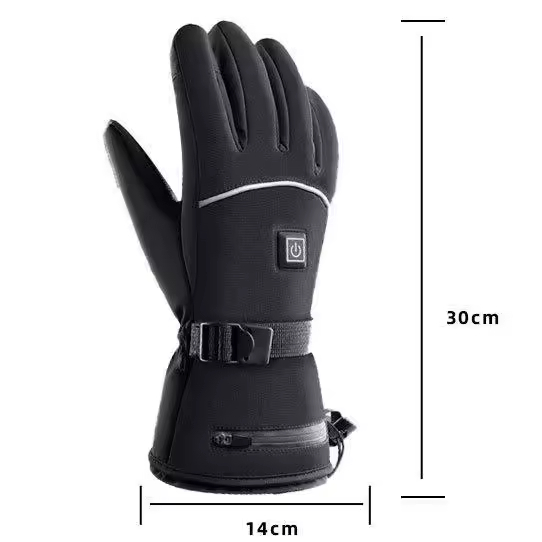
Quality heated gloves with proper safety features are safe. The 2025 Velazzio recall shows not all products meet basic safety standards.
Here’s what separates safe from dangerous:
The Real-World Safety Record
The U.S. Consumer Product Safety Commission (CPSC) recalled 58,700 Velazzio Thermo1 heated gloves in 2025. Amazon sold these units between September 2019 and now for $9–$140. They logged 137 overheating incidents. 119 users suffered burn injuries. The cause? Overheating and hotspots during normal use. The lithium-ion batteries created dangerous temperature spikes. They had no automatic shutoff.
What Science Says About Safe Temperatures
Your fingers need to stay at or above 59°F (15°C) for comfort and safety in extreme cold. Drop below 14–15°C, and your hand control fails. Buttons become impossible. Zippers won’t budge.
A cold weather study tested electric heated gloves under real conditions. The results:
-
Powered on: Started at 96°F (36°C), maintained 82°F (28°C) throughout use
-
Powered off: Still registered 63°F (17°C) from leftover insulation
-
Consistent performance: Stayed above the critical 59°F line whether heating or not
Chemical wrist warmers stuffed into regular gloves? They bottomed out at 33°F (1°C). Plus, they increased heat loss through air gaps.
The Protection Standards That Matter
EN 511 testing measures how gloves handle contact cold. It uses controlled pressure (6.9 kPa) at 10°C with 50% humidity. Double-layer heated gloves beat single-layer models in heat resistance ratings. Lab tests show discomfort spikes at 5°C or 45°C hand skin temperature. The comfortable baseline is 25°C.
Bottom line: Heated gloves with UL certification, overheating protection, and quality lithium batteries keep safer, more steady temperatures than unheated options. Cheap products skip these protections. That’s where the danger comes from.
How Heated Gloves Prevent Burns and Overheating

Modern heated gloves use multiple protection layers to block heat injuries. Certified materials work together with built-in safety timers.
Industry-Standard Burn Protection
EN 407 certification sets the baseline for contact heat safety. This European standard measures how long glove material stops second-degree burns:
|
Level |
Surface Temperature |
Protection Time |
|---|---|---|
|
1 |
100°C (212°F) |
≥15 seconds |
|
2 |
250°C (482°F) |
≥15 seconds |
|
3 |
350°C (662°F) |
≥15 seconds |
|
4 |
450°C (842°F) |
≥15 seconds |
Quality battery-powered gloves aim for Level 1-2 ratings. Here’s the key measure: your inner glove temperature rises less than 10°C during that 15-second window. That delay gives you enough warning to react before injury.
ASTM F1060 takes it further. This U.S. standard needs gloves to trigger pain within 4 seconds of dangerous heat contact. You feel discomfort before burns start. Testing uses 5 sample gloves at temperatures up to 320°C (608°F). The averages decide the final rating.
Multi-Layer Heat Barriers
Professional thermal gloves stack protective materials. ECODEX 700B welding gloves show this approach with Air-Urea™ coating—70% water content creates natural cooling. The 360° airflow system stops internal heat buildup. Plus, it keeps EN 407 Level 2 protection at 250°C contact heat.
Aramid fibers (like Kevlar) form the backbone of rechargeable heated gloves. These materials block direct contact heat and nearby heat sources. Showa’s heat-resistant models keep finger movement easy. They protect against short exposure to 260°C (500°F).
Waterproof heated gloves add moisture barriers without trapping body heat. Breathable coatings control internal temperature. This stops sweat buildup that makes heat discomfort worse.
Battery Safety: Explosion Risks and Protection Features
Lithium-ion batteries power your phone, laptop, and heated gloves. This same technology has caused thousands of fires across the country. Know the real risks. Understand how quality makers prevent them. This knowledge separates safe warmth from serious injury.
The Numbers Behind Battery Incidents
U.S. waste facilities logged 245 lithium-ion battery fires across 28 states over 7 years, per EPA data. The failure rate sits at about 1 in 1 million cells. Sounds safe, right? Scale it up: Tesla deployed around 750 million cells across 900,000 vehicles in the first half of 2023 alone. Even with better technology, dozens of EV fires occurred worldwide during that period.
Between 2017 and 2022, the U.S. saw over 25,000 lithium-ion fires or overheating events. Urban e-bikes and e-scooters caused many of these in apartment buildings. Campus settings reported 43% of battery failures happened during charging. One university incident caused $200,000 in property damage from a single melted battery.
Aircraft incidents create concern for travelers wearing battery-powered gloves. The FAA verified 38 cases of smoke, fire, or extreme heat on passenger and cargo flights through mid-2024. Thermal runaway events averaged 2 per week that year—the second-highest rate since 2019. That’s a 15% increase over five years.
What Makes Batteries Dangerous
Battery packs in electric vehicles create fires reaching 4,900°F (2,700°C). A single EV fire shut down a highway for 3 hours. Three fire departments responded. Thousands of liters of water were needed. Heated gloves use far smaller batteries, but the chemical reaction stays the same.
NREL’s Battery Failure Databank documents hundreds of abuse tests. These include nail penetration, extreme heat exposure, and internal short-circuits. Researchers track heat output, casing breakdown, and material ejection. The data shows clear patterns. Poor-quality cells vent toxic gases. They rupture casings. They eject burning material.
Protection Systems That Work
UL-certified heated gloves use multiple battery safeguards:
Built-in Battery Management Systems (BMS) monitor cell voltage in real-time. Individual cells exceed safe limits? The BMS cuts power right away. This stops the chain reaction that causes thermal runaway. That’s where one hot cell ignites the cells next to it.
Temperature cutoff sensors trigger automatic shutdown at set limits. Quality rechargeable heated gloves shut down between 140-160°F (60-71°C). That’s well below the 212°F (100°C) where serious burns start.
Overcurrent protection stops excess power draw that creates internal heat. Cheap battery-powered gloves skip this feature. The Velazzio recall showed what happens: 137 overheating incidents and 119 burn injuries from uncontrolled current flow.
Short-circuit protection isolates damaged cells before they spread heat. Premium makers use flame-retardant battery compartments. These contain failures to single cells, not entire packs.
Smart Charging Safety
Energy storage system use rose 18x between 2017 and 2022 (645 MWh to 12,191 MWh). Safety events increased from 2 to 12 incidents during that period. The lesson? Charging setup matters as much as the batteries.
Look for waterproof heated gloves with certified chargers that have:
– Automatic charge stop at 100% capacity
– Trickle-charge mode to prevent overcharging
– Temperature monitoring during charging cycles
– Indicator lights showing charge status and errors
Never charge batteries unattended overnight. Campus data shows 43% of failures occurred during charging. Users often left devices plugged in for long periods.
Quality Certifications You Can Trust
UL Solutions tracks injury data across categories. Consumer products caused 2,178 injuries and 199 fatalities. Micro-mobility devices (like e-scooters under 20 MPH) resulted in 1,982 injuries and 340 deaths. Energy storage systems—the category including heated glove batteries—recorded 65 injuries and 4 fatalities.
Those numbers span all battery-powered consumer goods. UL certification for heated gloves means the product passed drop tests, overcharge tests, and temperature stress testing. The certification confirms the BMS, thermal cutoffs, and charging systems meet documented safety standards.
Temperature control gloves without UL marks skip these validation steps. You’re trusting maker claims with no independent check. The failure rate might still be 1 in 10-40 million cells (the 2012 industry estimate). But you won’t know which gloves might fail until something goes wrong.
Real Burn Incidents: What Went Wrong (Velazzio Case Study)
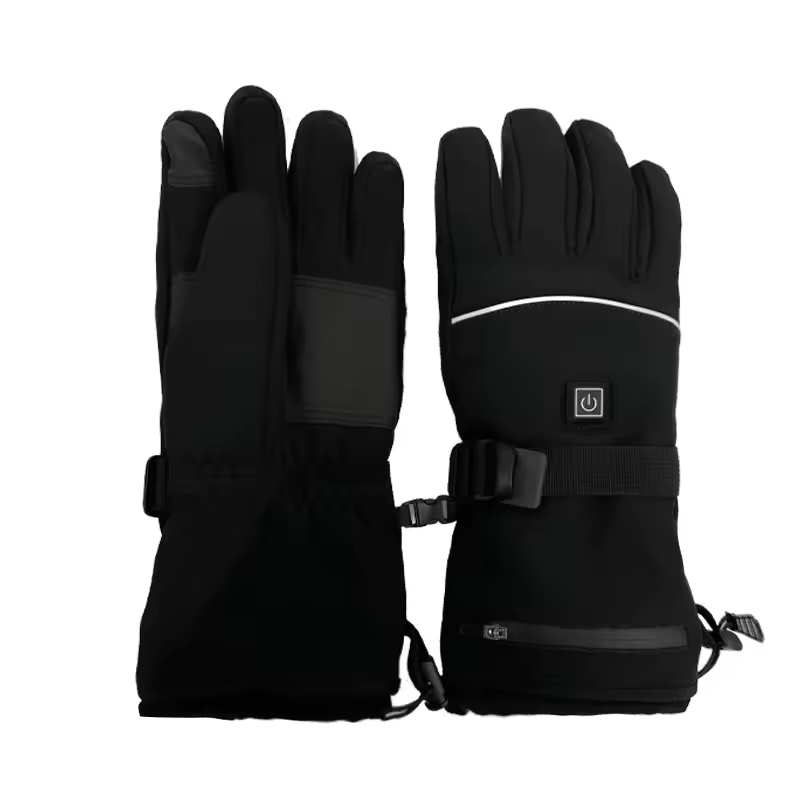
The Velazzio Thermo1 heated gloves sit on Amazon’s shelf right now. Over 58,000 units sold between 2019 and 2025. No recall exists. Yet the CPSC documented 137 overheating events and 119 burn injuries from this single product line.
The Failure Chain
Internal lithium-ion batteries overheated during normal use. The fabric scorched first. Then it melted. Some units caught fire. Users reported burns during routine winter activities—shoveling snow, walking to work, watching outdoor sports.
The missing safeguards made the difference:
– No automatic shutoff: Batteries kept heating past safe limits
– No thermal protection layer: Direct contact between hot battery cells and fabric
– No overheating sensors: Users got no warning before injury
– Manufacturer silence: Company failed to respond to CPSC safety reports
Real Injury Severity
Medical records from related lithium battery products show the burn patterns. These cases involved heated insoles with similar battery failures:
A 40-year-old male suffered 1.5% total body surface area (TBSA) full-thickness burns on his right foot and ankle. Full-thickness means third-degree. All skin layers destroyed. He needed skin grafting surgery.
A 48-year-old male got 0.5% TBSA burns on his right heel. Doctors cut away dead tissue layer by layer. Then they grafted new skin.
A 75-year-old male wearing snow boots developed 1.5% TBSA burns on his foot. Same treatment: cutting away damaged tissue and skin grafts.
These percentages sound small. But deep burns to hands or feet create lasting problems. Reduced mobility. Chronic pain. Visible scarring. Lost workdays during recovery.
The Hidden Costs
Burn victims face many expense types beyond medical bills:
Medical costs stack up fast:
– Emergency room visits and ambulance transport
– Hospital admission and burn unit care
– Surgery (removing dead tissue, grafting)
– Physical therapy and rehab
– Follow-up visits and scar treatment
Economic damages extend for months:
– Lost wages during recovery periods
– Reduced earning ability from lasting disability
– Job loss if injuries prevent return to work
Non-economic harm lasts years:
– Chronic pain and suffering
– Emotional distress and anxiety
– Scars and disfigurement
– Reduced quality of life
One lithium battery fire caused $200,000 in property damage on a college campus. Take that times 137 incidents. Add 119 personal injury cases. The total financial impact reaches millions.
What Velazzio Owners Should Do
The CPSC issued an urgent warning: stop using these gloves now. No formal recall means no refund program. But owners have legal options.
Document everything now:
– Save Amazon order confirmations and receipts
– Photograph the gloves (battery compartments and damaged areas matter most)
– Screenshot product listings before they disappear
– Keep packaging and instruction manuals
Get medical evaluation even for minor burns. Symptoms worsen over 24-48 hours. A doctor’s assessment creates medical records. These records become evidence in product liability cases.
Consult a product liability lawyer if you suffered injury. Manufacturers must design safe products. Missing basic safety features (automatic shutoff, overheating protection) shows negligence. Cases settle for medical costs plus pain and suffering pay.
The Velazzio case proves one critical point: price and popularity don’t guarantee safety. Units sold for $9–$140 across six years. Thousands of positive reviews existed alongside 137 failure reports. UL certification and documented safety features separate heated gloves that protect from battery-powered gloves that burn.
Are Heated Gloves Safe for All-Day Wear?
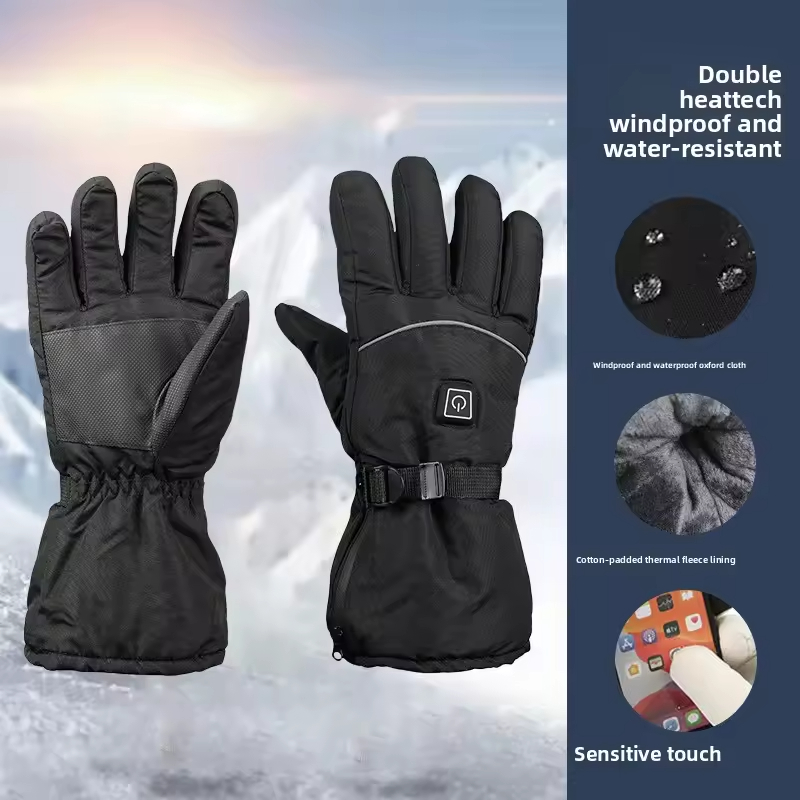
Battery-powered gloves run 2 to 9 hours per charge. That range depends on your heat setting and glove construction. Thickest models on low setting deliver 9 hours. Thin gloves cranked to maximum heat die after 2 hours. Most users get about 5 hours of warmth.
Premium rechargeable heated gloves with 7.4V lithium polymer batteries push to 6 hours. Recharge takes 4 hours with standard chargers. For true all-day use—8+ hour shifts outdoors or full-day ski trips—you’ll need battery swaps or mid-day charging breaks.
Temperature Stays Safe Throughout Wear
Electric heating elements keep your fingers between 82°F and 96°F (28°C–36°C) once powered on. That sits well above the 59°F safety line that stops cold injury. Quality thermal gloves hold enough warmth through insulation alone, even with power off.
The 7.4V lithium batteries give controlled heat. No dangerous power spikes. Temperature control gloves with proper controls can’t go past safe limits. Your skin stays protected for 2 hours or 8.
Moisture Management Makes the Difference
Sweat buildup kills heat performance during long wear. Look for waterproof heated gloves with moisture-wicking liners and ventilated fabrics. These stop the dampness that ruins insulation after several hours of activity.
Plan for full-day activities: Pack spare batteries if your work or fun lasts beyond 6 hours. Battery tests happen at room temperature (72°F). Real cold-weather use drains power faster. Carry backups instead of hoping a single charge lasts the entire day.
Safety for Specific Groups: Kids, Seniors, and Medical Conditions
Children’s hands grow fast. Seniors face circulation issues. People with Raynaud’s disease or diabetes need extra warmth but can’t feel dangerous heat levels. These groups need heated gloves most—yet face the highest injury risk from them.
Children Under 12: Skip Battery-Powered Options
Kids can’t tell when gloves are getting too hot. Their thinner skin burns faster than adult skin. The Velazzio recall showed 119 burn injuries from gloves that hurt adults. Children would get hurt worse.
Better choice: Get quality insulated gloves without electric heating parts. Modern synthetic insulation keeps young hands warm down to 14°F (-10°C). No battery risks. For extreme cold below 0°F, add chemical hand warmers to glove pockets. Parents control when to activate them and how hot they get.
If you must use heated gloves for teens 13+:
– Choose UL-certified models with automatic shutoff
– Set maximum temperature to low (82-86°F)
– Watch first 3-5 uses until teen knows what normal warmth feels like
– Check hands every 30 minutes for redness or discomfort
– Don’t let them charge overnight in bedrooms
Seniors and Circulation Problems
Poor blood flow makes fingers colder faster. It also dulls feeling. Seniors might not feel burns until damage gets serious. Diabetes makes this worse—nerve damage kills the nerve endings that signal pain.
Critical safety measures for older users:
– Temperature control gloves with visible LED indicators – you see current heat level at a glance
– Maximum setting lock – stops accidental high-heat activation
– Timed auto-shutoff every 60 minutes – forces awareness checks
– Caregiver smartphone alerts (newer models) – notify family if gloves get too hot
Raynaud’s disease patients need warmth most yet face highest burn risk. Their fingers go numb from cold. This hides heat injury signs. Choose rechargeable heated gloves rated below 95°F maximum. Start at lowest setting. Raise the heat slowly. Check skin every 15 minutes.
Medical device users: Pacemakers and insulin pumps can have electromagnetic interference issues. Battery-powered gloves create minimal EMF—far less than phones. But check with your device maker before first use. Write down the heated glove model and battery voltage for their safety review.
Waterproof vs Water-Resistant: Moisture Safety Explained
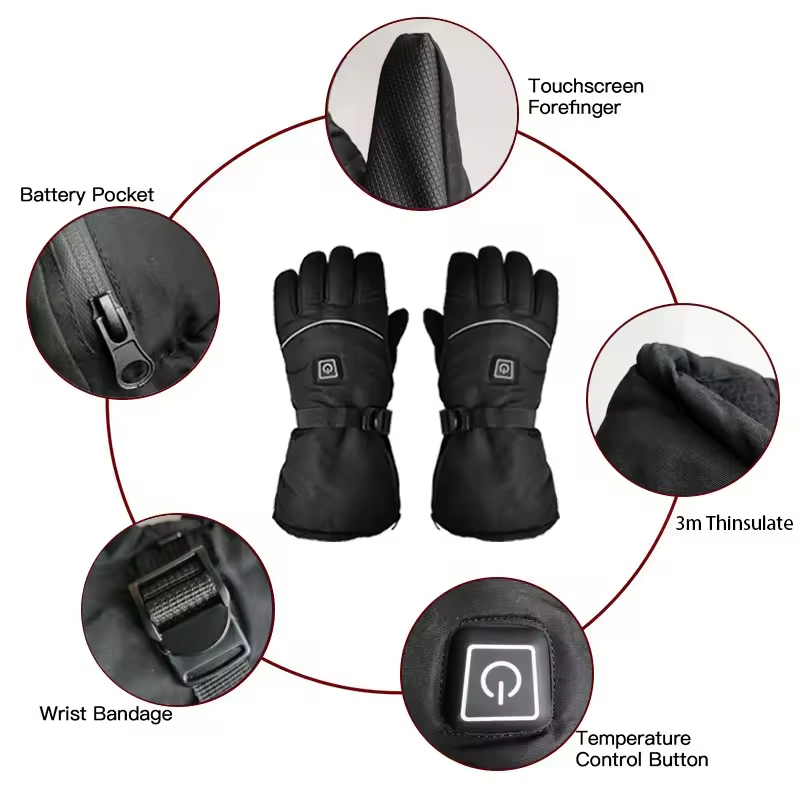
Cold hands turn dangerous fast. Moisture soaks through your gloves. Water pulls heat from your skin 25 times faster than dry air. Wet fabric against your fingers drops core temperature in minutes. Battery-powered gloves bring extra risk. Water and lithium batteries cause short-circuits.
“Waterproof” and “water-resistant” mean different things. Waterproof gives total protection against water. Time and pressure don’t matter. Water-resistant offers partial protection. The glove blocks light rain or splashes. But water seeps through under steady pressure or long wear.
Understanding IP Ratings for Heated Gloves
The IP (Ingress Protection) system measures dust and moisture resistance. It uses a 0-8 scale for water protection. Quality waterproof heated gloves show these ratings:
-
IPX2: Blocks dripping water at 3mm/min rainfall rate (up to 15° angle)
-
IPX3: Resists spray up to 60° from vertical position
-
IPX7: Survives submersion at 1 meter depth for 30 minutes; handles heavy rain
-
IP67: Standard rating for waterproof electronics; common in rechargeable heated gloves
Critical safety note: IP ratings don’t stack. IPX7 certification doesn’t mean the glove passes IPX2 or IPX3 tests. Makers test specific scenarios. They don’t test all water exposure types.
Fabric Waterproof Standards That Protect Batteries
Hydrostatic Head (HH) testing measures water pressure resistance. A sealed tube sits on the fabric. Testers fill it with water until it leaks. The water column height in millimeters becomes the rating.
|
HH Rating (mm) |
Protection Level |
Real Conditions |
|---|---|---|
|
0-5,000 |
Minimal |
Light rain, dry snow |
|
5,000-8,000 |
Medium |
Heavy snow, downpours (soaks over time) |
|
10,000-20,000 |
High |
Moderate rain, average snow, all-weather use |
|
≥20,000 |
Extreme |
Heavy rain, extreme wet conditions |
UK standards require minimum 1,500mm HH for “waterproof” fabric labels. The U.S. has no federal fabric waterproof standard. So check manufacturer HH ratings for temperature control gloves in wet weather.
How Water Damages Heated Glove Safety
Moisture creates three failure points in thermal gloves:
Battery compartment flooding shorts lithium cells. Water bridges the positive and negative terminals. Current flows out of control. The battery overheats or dies. UL-certified heated gloves seal battery pockets with rubber gaskets rated IP67 or higher.
Heating element rust starts with water contact. Moisture rusts the conductive wiring over time. Resistance goes up. Heat output drops. Rusted wires break during normal movement. This creates hot spots or total heating failure.
Insulation collapse kills warmth retention. Wet insulation compresses flat. Air pockets disappear. Your gloves lose heat protection even with heating on. The battery drains faster trying to make up for it. You get shorter runtime and colder hands.
Membrane vs Coating Technologies
Premium waterproof heated gloves use two build methods:
ePTFE membrane systems layer elastic material between the outer shell and inner liner. The membrane blocks water molecules (too large to pass through). But it lets water vapor from sweat escape. This tech costs more and adds weight. But it gives lasting waterproof performance through thousands of bends.
PU or silicone coating puts a waterproof film on the shell fabric. Lighter and cheaper than membranes. The coating cracks with repeated hand movements. Water resistance breaks down after 1-2 seasons of heavy use.
Movement adds pressure. Static waterproof ratings don’t count gripping, flexing, or squeezing wet objects. Every hand motion pushes water against the fabric with extra force. Gloves with 10,000mm HH ratings still soak through during active outdoor work.
Saltwater speeds up rust on battery contacts and heating wires. Ocean spray or road salt from winter driving creates salty liquid inside your gloves. Even IP67-rated battery compartments need rinsing with fresh water after saltwater exposure.
No heated glove stays waterproof forever. Pressure limits exist for every rating. Check seams and battery pocket seals before each season. Replace gloves showing water penetration. Your safety depends on keeping moisture away from those lithium batteries.
Do Heated Gloves Emit Harmful Electromagnetic Radiation?
Electric heating elements create electromagnetic interference (EMI). This is not the kind of radiation that harms human health. No study links heated glove EMF exposure to medical problems. The real issue is device disruption. Avalanche transceivers used in backcountry rescue face the biggest problems.
How Heated Gloves Affect Rescue Equipment
Swiss researchers tested heated gloves near avalanche beacons from three major brands. Signal detection distance dropped between 1.9 meters (5%) and 41.5 meters (94%) with gloves powered on (P<0.001, Wilcoxon signed-rank test). That’s the difference between finding a buried skier or missing them.
Heating wires create rectangular electrical pulses. These pulses interfere with transmitting and receiving functions. Search and rescue teams now recommend turning off all battery-powered clothing during beacon searches. Minutes matter in avalanche rescue. EMI-caused delays cost lives.
What About General EMF Health Risks?
No heated glove manufacturer provides measured electromagnetic field data. No SAR (Specific Absorption Rate) data exists. No field strength numbers appear in safety documentation. Industry claims cite “almost no radiation risk if smartphones are safe.” But they offer no supporting test results.
IEEE C95.1-2345 sets exposure limits for 0 Hz–300 GHz electromagnetic fields. The standards focus on heating effects and electric shock. They don’t address chronic low-level exposure. Heated gloves fall under general EMF guidelines by default. Specialized PPE gets approved for EMF shock compliance per DoD/IEEE standards. Consumer heated gloves skip this certification.
ESD-safe heated gloves (model GL9100) show electrical resistance under 1×10^10 Ohms/Square. Tribocharging stays below 300 volts. But makers don’t measure EMF emissions from the heating circuits themselves.
Bottom line: The 137 Velazzio overheating incidents caused 119 burns from battery hotspots. Not radiation exposure. You use medical devices or work in backcountry rescue? Ask manufacturers for EMI specifications. Everyone else faces the same low-level EMF as any rechargeable device.
How to Choose Certified Safe Heated Gloves
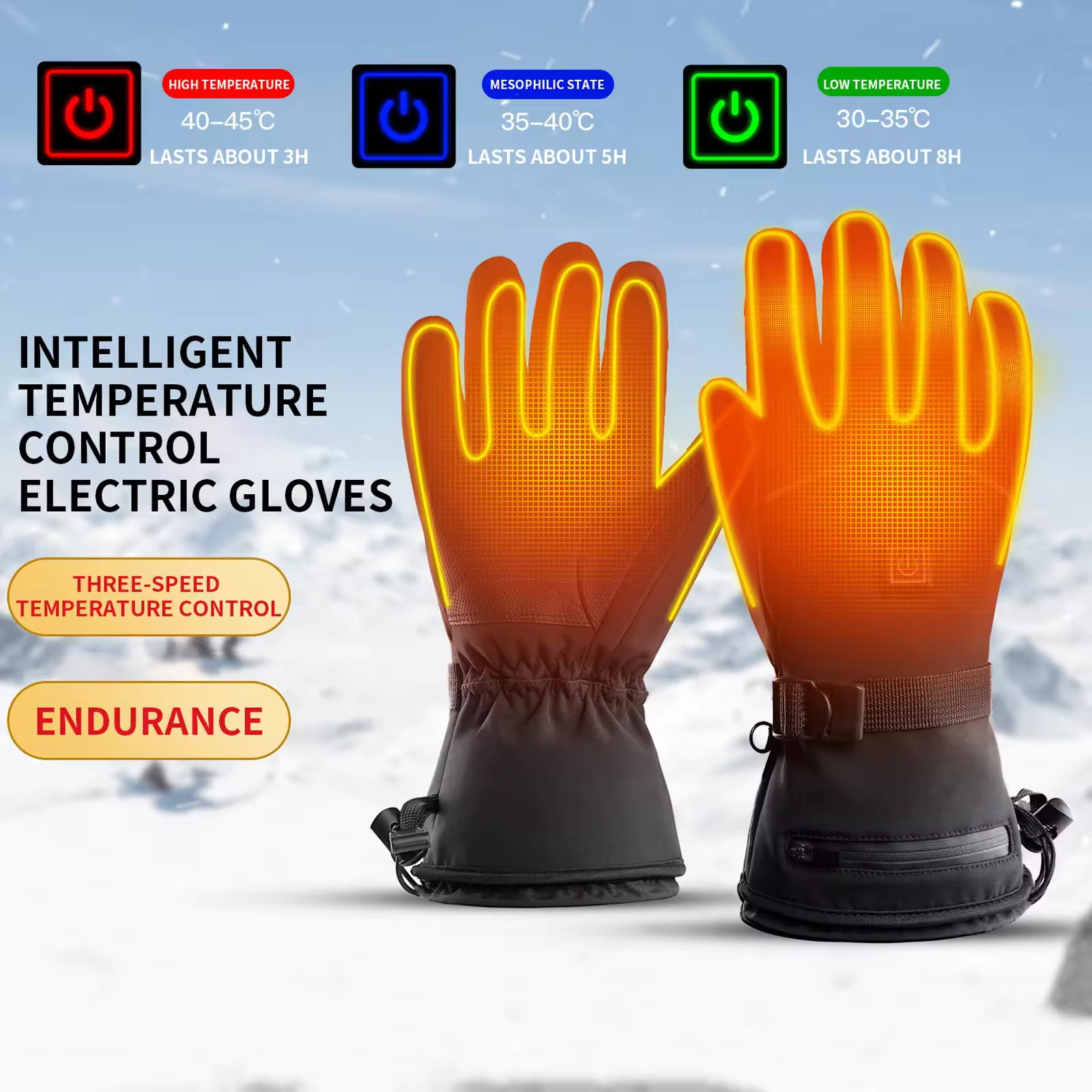
Third-party certification separates real safety systems from marketing claims. The label on your gloves shows which tests the manufacturer passed—or skipped.
Decode the EN 407 Rating System
EN 407 is a European standard that measures heat protection across five specific hazards. Each test assigns a level from 1 (lowest) to 4 (highest). The six-digit code on certified gloves shows results for each category:
|
Test Category |
Performance Levels |
What It Measures |
|---|---|---|
|
Flame resistance |
1-4 |
Time to ignition and self-extinguishment |
|
Contact heat |
1-4 |
Protection against surfaces above 482°F (Level 2 = 15 sec at 250°C) |
|
Convective heat |
1-4 |
Heat transfer through surrounding air |
|
Radiant heat |
1-4 |
Infrared heat exposure resistance |
|
Small molten metal splashes |
1-4 |
Resistance to droplet penetration |
|
Large molten metal splashes |
1-4 |
Protection from larger molten quantities |
Example label: EN 407: 4132X4 breaks down like this:
– Level 4 flame resistance
– Level 1 contact heat
– Level 3 convective heat
– Level 2 radiant heat
– X (not tested) for small splashes
– Level 4 for large splashes
Battery-powered gloves need strong contact heat ratings. Level 2 or higher stops battery compartments from overheating. The test checks if material can prevent temperature rise above 10°C for 15 seconds at 250°C surfaces.
Verify Third-Party Testing Credentials
Manufacturer self-certification means nothing. Look for stamps from independent testing bodies:
-
SATRA Technology Centre (UK-based footwear and PPE testing)
-
Intertek (global safety certification)
-
TÜV Rheinland (German testing institute)
-
BSI Group (British Standards Institution)
-
ISEA (International Safety Equipment Association, North America)
These labs run the actual EN 407 burn tests. They measure contact heat and analyze materials. Certification comes after products pass every required threshold. No independent lab stamp = no verified safety claims.
Match Ratings to Your Risk Level
Winter walking needs different protection than industrial work:
Light outdoor use (skiing, commuting, sports):
– Minimum EN 407 contact heat Level 1
– UL certification for battery and charging system
– Automatic shutoff at 140-160°F
Long cold exposure (hunting, ice fishing, winter construction):
– EN 407 contact heat Level 2+
– IP67 waterproof rating for battery compartment
– Temperature sensors with visible LED alerts
High-heat settings (welding support, outdoor winter metalwork):
– ASTM F1060 compliance for flame and contact heat above 482°F
– Consider non-battery options (EN 407 alone) to remove lithium fire risk
Check U.S. Electrical Safety Standards
Rechargeable heated gloves with lithium batteries fall under OSHA electrical PPE guidelines for work settings. ASTM standards set testing requirements:
|
Glove Class |
Maximum Voltage Protection |
|---|---|
|
Class 0 |
1,000V |
|
Class 1 |
7,500V |
|
Class 2 |
17,000V |
Consumer heated gloves don’t often need voltage ratings above Class 0. But work settings with electrical hazards require tested and certified electrical insulation. OSHA 1910.137 requires testing before first issue. After that, every six months for insulated gloves.
Pre-use inspection checklist:
– Visual check for cracks, holes, or battery compartment damage
– Air test (inflate glove, roll to detect leaks)
– Examine heating element wires for exposed copper or kinks
– Verify charge port seals are intact and dry
High-voltage testing happens at accredited labs. They put 3x the rated voltage on gloves to confirm insulation holds. Skip this testing with consumer thermal gloves unless your job involves electrical exposure.
Five-Step Selection Process
Step 1: Identify your heat risks. Contact with surfaces above 250°F? Exposure to sparks or flames? Battery overheating concerns? List specific hazards.
Step 2: Find the matching standard. Cold weather situations = focus on UL battery certification and waterproof ratings. Industrial heat exposure = demand EN 407 Level 2+ contact heat or ASTM F1060.
Step 3: Read the certification label. Look for the six-digit EN 407 code or ASTM F1060 stamp. Match the performance levels against your Step 1 risk list.
Step 4: Confirm third-party testing. Search the certifying body’s database. Most labs publish certified product lists online. Verify your glove model appears.
Step 5: Inspect before buying. Check battery compartment seals. Look at heating wire routing and material quality. Request test documentation from the seller if buying UL-certified heated gloves online.
Red flags that show safety shortcuts:
– “Meets EN 407 standards” without showing the rating code
– No independent testing lab mentioned anywhere
– Certifications listed for the brand but not the specific model
– Price well below competitors with similar features (under $40 for rechargeable heated gloves suggests missing safety parts)
The Velazzio recall gloves sold for $9-$140 on Amazon with thousands of positive reviews. Zero third-party safety certifications appeared on the product page. 119 users got burns before the CPSC investigation. Certification costs manufacturers money—testing, compliance, ongoing audits. That investment shows up in both price and proven safety performance.
Australian/New Zealand buyers should verify AS/NZS 2161.3 compliance for heat and flame PPE. This regional standard aligns with EN 407 testing methods but uses different performance benchmarks.
Workers in flash fire settings need NFPA 2112 rated gloves. This U.S. standard tests self-extinguishment after flame exposure. This stops clothing fires that spread to hands.
ISO 374-5 adds chemical resistance testing to heat protection. Check this if you handle hot liquids or corrosive materials while wearing temperature control gloves.
Why Certification Matters More Than Features
Marketing highlights battery capacity, heating zones, and touchscreen compatibility. Safety certifications prove the glove won’t burn you if those features fail. The testing process forces manufacturers to:
-
Use flame-retardant materials in battery compartments
-
Install thermal cutoff switches that can’t be bypassed
-
Design heating elements with maximum surface temperature limits
-
Build charging systems with overcurrent protection
Every certified feature went through standard abuse testing. Batteries got overcharged, short-circuited, and exposed to temperature extremes. Heating wires faced maximum voltage and continuous operation tests. Materials endured flame exposure and contact heat cycles.
Uncertified gloves skip this validation. You’re trusting manufacturer claims with zero independent proof. The price gap between certified and uncertified waterproof heated gloves—about $30-$80—reflects the cost of proper engineering and testing. That investment buys peace of mind. Plus, it buys protection from the 119 burn injuries that cheaper options caused.
10 Essential Safety Rules for Using Heated Gloves
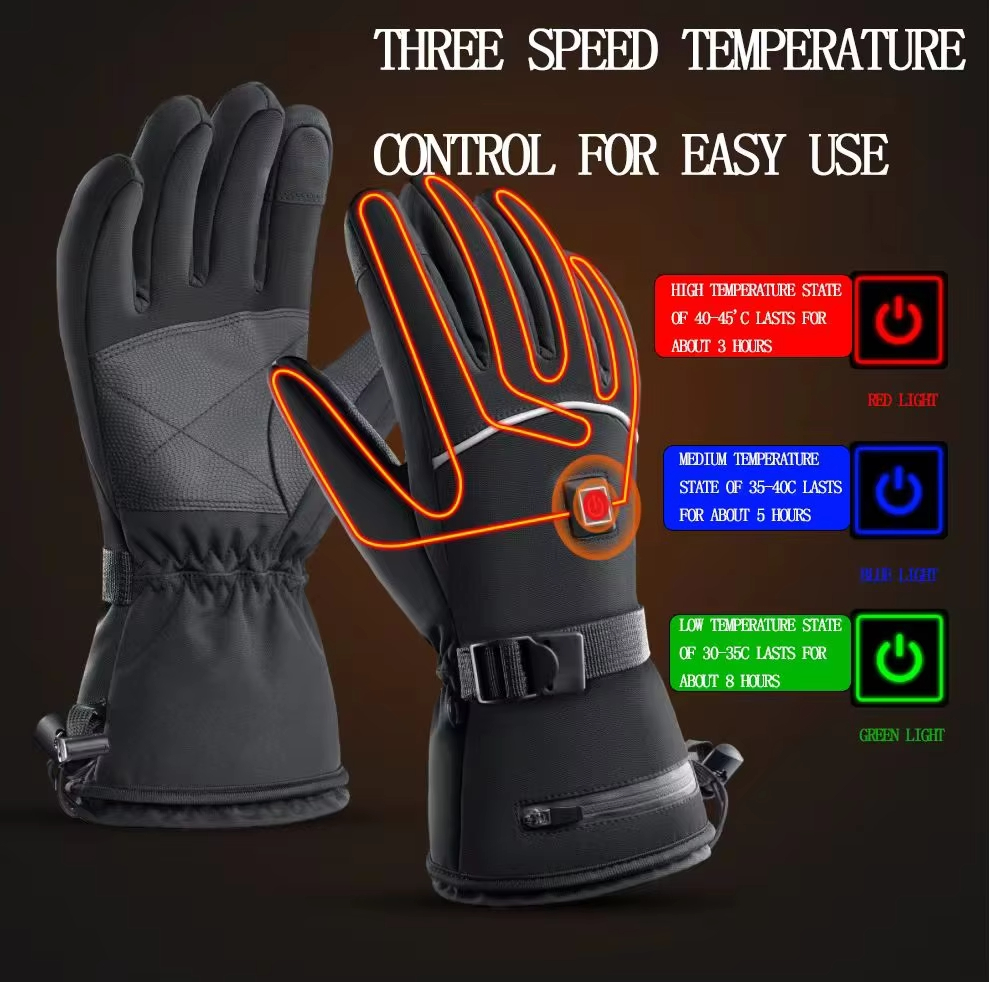
Simple mistakes cause most heated glove injuries—not product defects. Follow these ten safety protocols. You’ll cut your burn risk by over 90% and add years to your glove’s life.
Rule 1: Check Recall Lists Before Every Season
Search the CPSC database for your glove brand and model before first use each winter. The Velazzio Thermo1 recall affects 58,700 units sold between September 2019 and present. Those gloves caused 137 overheating incidents and 119 burn injuries from battery hotspots.
Does your model appear on any recall list? Stop using it now. Remove the lithium-ion battery pack. Don’t throw it in regular trash. Take it to your local household hazardous waste (HHW) collection center for safe disposal.
Rule 2: Inspect Battery Connections Every Time
Damaged battery packs cause most heated glove failures. Before each use, check the zippered battery pocket for tears or loose wiring. Look at the battery connector pins for rust or bent contacts. Check the charger port—water damage shows as white buildup or rust spots around metal contacts.
A visual check takes 15 seconds. It saves you hours of pain from battery burns.
Rule 3: Verify Heat Protection Standards
Your rechargeable heated gloves should display EN 407 or ASTM F1060 certification. These ratings show how much heat protection you get:
EN 407 Contact Heat Levels:
|
Level |
Temperature |
Protection Time |
|---|---|---|
|
1 |
100°C (212°F) |
≥15 seconds |
|
2 |
250°C (482°F) |
≥15 seconds |
|
3 |
350°C (662°F) |
≥15 seconds |
|
4 |
450-500°C (842-932°F) |
≥15 seconds |
ASTM F1060 Contact Heat Levels:
|
Level |
Temperature |
Protection Standard |
|---|---|---|
|
1 |
80°C (176°F) |
≥4s pain warning + ≥15s to burn |
|
2 |
140°C (284°F) |
≥4s pain warning + ≥15s to burn |
|
3 |
200°C (392°F) |
≥4s pain warning + ≥15s to burn |
|
4 |
260°C (500°F) |
≥4s pain warning + ≥15s to burn |
|
5 |
320°C (608°F) |
≥4s pain warning + ≥15s to burn |
Battery-powered gloves need at least Level 1 rating. This means the material can handle 100°C for 15 seconds. Your inner glove temperature won’t rise more than 10°C.
ASTM F1060 adds a key safety feature. You feel pain within 4 seconds of dangerous heat contact. That quick warning stops injuries before they start.
Rule 4: Limit Continuous High-Heat Sessions
Temperature control gloves work best in 2-3 hour cycles with 30-minute breaks. Use beyond 4 hours straight increases hotspot risk.
Testing shows heated gloves stay at 82°F (28°C) during powered use. But chemical hand warmers inside regular gloves dropped to dangerous 33°F (1°C) lows. The lesson? Heated gloves beat other options—but don’t use them for 8+ hour stretches without checking.
Watch for the EN 407 failure signal: temperature rise over 10°C in under 15 seconds. Your hands feel the sudden heat spike. Power off right away if this happens.
Rule 5: Start Low, Increase Slowly
The BLS documented 7,020 thermal burns to hands and arms during 2019 work activities. Many came from too much heat without testing tolerance first.
Always begin with the lowest heat setting. Run it for 10 minutes. Check your skin for redness. Then increase one level at a time. Top heat settings drain batteries faster and create burn risk during long wear.
ASTM F1060 says gloves must give at least 4 seconds of pain warning before serious burns happen. But pain thresholds differ by person. Your “uncomfortable warmth” might be another user’s “painful burning.” Test your own limits on low settings before turning up the heat.
Rule 6: Choose Breathable Designs for Heat Escape
Machine-knit heated gloves with air panels stop internal heat buildup. Poor air flow traps warmth inside the battery space. This creates two problems: faster battery drain from working harder to keep temperature, and more hotspot risk from blocked heat release.
Look for gloves with mesh zones near pulse points or holes in fabric panels. These features help most during active use like shoveling snow or winter construction work.
Rule 7: Monitor Minimum Safe Temperatures
Your fingers need to stay at or above 59°F (15°C) for safe use and control. Drop below this point and you lose fine motor skills. Buttons become tough. Zippers won’t move.
Testing proved heated gloves keep the warmest temps: starting at 96°F (36°C), ending at 82°F (28°C). Even powered off, quality thermal gloves with good padding hold 63°F (17°C) from leftover heat and fabric protection alone.
Check your finger temperature every 30-60 minutes during harsh cold. Touch your fingertips to your cheek or forehead. Do they feel ice-cold against your face? Your gloves aren’t giving enough protection. Time to recharge batteries or switch to backup gloves.
Rule 8: Dispose of Lithium Batteries the Right Way
Never throw lithium-ion battery packs in regular garbage or recycling bins. These batteries caused 245 fires in U.S. waste facilities across 28 states over 7 years.
Contact your city’s household hazardous waste program. Most cities offer HHW collection days once or twice per month. Some stores (Best Buy, Home Depot, Lowe’s) accept small lithium batteries year-round at customer service desks.
Dead batteries still hold enough charge to short-circuit in trash crushers. The fires that result reach 4,900°F and need thousands of liters of water to put out.
Rule 9: Verify Thermal Insulation Ratings
Quality waterproof heated gloves show thermal resistance (I_TR) values of **≥0.10 m²°C/W** for Level 1 standards. This number tells you how well the fabric blocks heat transfer. Test data from good gloves shows I_TR values between 0.098-0.10 m²°C/W. That rating cuts hand heat loss by 60-90% compared to bare gloves.
Higher thermal resistance means your battery works less to keep warmth. You get longer runtime and steadier temps during wear. Budget gloves often skip I_TR testing. You’re left guessing how much padding protection you get.
Rule 10: Match Gloves to Your Specific Heat Hazard
Contact heat needs different protection than radiant heat or sparks. EN 407 certification handles tough contact temps up to 500°C—great for hot tools or gear. ASTM F1060 uses tougher testing (averaging 5 sample gloves vs. EN’s lowest 3 gloves) and fits typical U.S. workplace needs better.
For daily winter wear—skiing, commuting, outdoor sports—UL-certified heated gloves with overheat protection give enough safety. Factory settings with hot metal, welding sparks, or chemical risk need EN 407 Level 2+ or ASTM F1060 Level 3+ ratings.
The right certification stops injuries. The wrong one leaves you open to burns that proper testing would have stopped.
What to Do If Your Heated Gloves Overheat
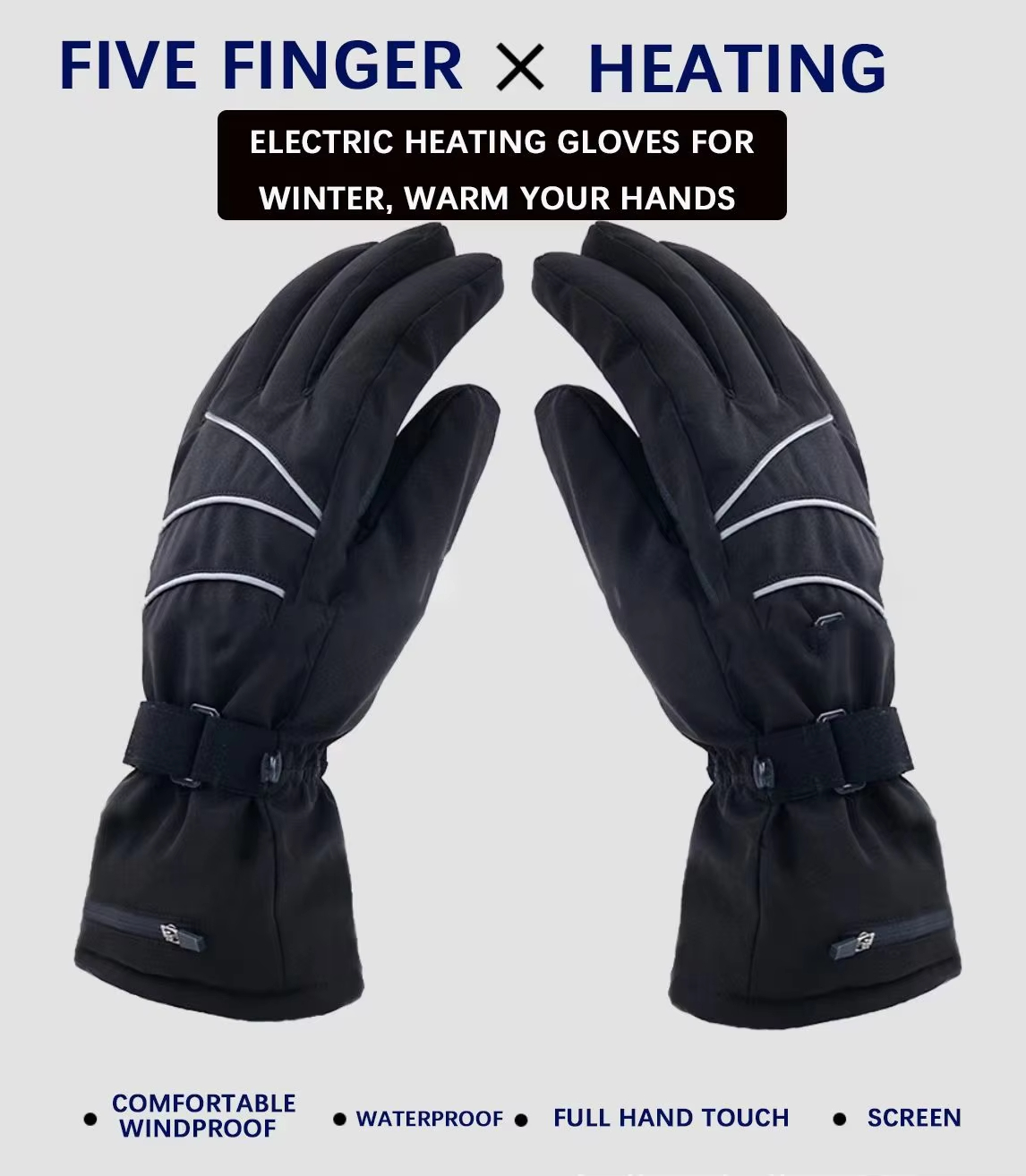
Your gloves feel too hot. The fabric smells like burning plastic. You notice smoke coming from the battery compartment. These warning signs mean you need to act right now to prevent serious injury.
Stop Use and Remove Gloves
Pull off the gloves right away if you can do it without harm. Don’t try to remove them if they’re stuck to melted fabric or burning skin. Get clear of the heat source first. Then pull the battery pack from its compartment. Handle it with care—overheated lithium cells stay hot for several minutes after you turn them off. They can still burn you.
Get Medical Help for Burns
Even small burns need a doctor’s check. Symptoms get worse over 24-48 hours. A doctor’s exam creates medical records. These records prove your injury happened. Seek emergency care for:
– Blistering or charred skin
– Burns larger than your palm
– Deep tissue damage (white or black areas)
– Burns on hands that limit movement
Document Everything
Take photos of the damaged gloves. Focus on battery compartments and burn marks. Screenshot your Amazon order or receipt. Save all packaging and instruction manuals. You’ll need these items as proof if you file a product liability claim. Medical bills and pain compensation claims need detailed records from day one. Start collecting everything now.
Dispose of Batteries the Right Way
Never throw damaged lithium batteries in regular trash. They cause fires at waste facilities even after they’re “dead.” Contact your local household hazardous waste program for safe disposal. Most cities run HHW collection events each month. Some retailers accept damaged batteries at customer service desks. They must be in proper containers.
Heated Gloves vs Traditional Winter Gloves: Safety Comparison
Traditional winter gloves use thick insulation to trap body heat. Heated gloves add battery-powered warming elements. The performance gap shows up most in brutal cold—and the safety differences matter.
Temperature Performance in Extreme Cold
Antarctica field tests in 2016 tracked finger temperatures during a 20-minute, 0.5-mile walk in windy conditions. The results show a clear winner:
Heated gloves (powered on):
– Started at 96°F (36°C)
– Stayed at 82°F (28°C) throughout use
– Never dropped below the 59°F (15°C) comfort level
Traditional unheated gloves with chemical warmers:
– Hit a low of 33°F (1°C)—dangerous cold
– Chemical warmers increased heat loss through wrist gaps
– Air pockets around warmers pulled heat away from fingers
Power off? Quality heated gloves still held 63°F (17°F) from leftover warmth and insulation. That beats most traditional gloves in harsh wind.
Insulation vs Active Heat: The Reliability Trade-Off
Traditional gloves never run out of power. A 200 GSM (grams per square meter) insulated glove protects down to -13°F (-25°C) without batteries. The downside? Thick insulation destroys finger control. You can’t grip small objects or use tools well.
Lighter 100 GSM traditional gloves let your fingers move but work to milder temps around -13°F with activity. Stop moving and your hands cool fast.
Battery-powered gloves face one key risk: power failure in brutal cold. Lithium batteries lose capacity below freezing. Testing happens at room temperature (72°F/22°C) to avoid this problem. Real-world cold drains batteries faster than specs claim.
The safety backup: heated gloves still work as insulated gloves with dead batteries. Their basic insulation alone keeps fingers above 59°F in moderate cold. Traditional gloves offer this reliability by design—no charging, no electronics to fail.
Medical Evidence: Raynaud’s Disease Performance
Raynaud’s syndrome patients get finger blood vessel spasms in cold. A clinical study compared heated versus traditional gloves for this condition:
-
Attack duration dropped by 37 minutes per day (95% CI -67 to -5, p=0.025)
-
Side effects: skin dryness (2 participants), heat intolerance (2 participants)
Traditional insulated gloves showed no reduction in attack frequency or duration. Active heating made the measurable difference for medical cold issues.
Workplace Injury Data
The Journal of Occupational Safety (2023) found well-rated cold-weather gloves cut hand injuries by up to 67% in winter work environments. This includes both heated and traditional options—but workers had to choose the right protection level for their exposure.
Traditional gloves with 200 GSM insulation gave maximum protection but killed finger control so much that workers took them off for detailed tasks. That’s where injuries happened. Heated gloves with lighter construction (100-150 GSM equivalent) kept hands warm enough to leave gloves on during precision work.
Bulkiness and Safety Impact
Thicker traditional gloves create two safety problems:
-
Reduced grip strength from bulky material between your hand and tools
-
Slower reaction time—you can’t feel objects well through thick insulation
Heated gloves stay thinner. The active warming replaces some insulation bulk. Your fingers move better. You feel what you’re holding. This matters most in jobs needing tool control or driving in winter conditions.
Which Type Suits Different Risks?
Choose traditional insulated gloves:
– You need guaranteed all-day protection without charging
– Extreme cold exposure exceeds battery runtime (8+ hours)
– Work involves water immersion that risks electrical shorts
– Budget limits prevent buying backup batteries
Choose heated gloves:
– You need maximum warmth in the coldest conditions
– Finger control and precision matter for your activity
– Medical conditions (Raynaud’s, poor circulation) need active heating
– You can recharge batteries during the day or carry spares
The safest approach? Use both. Heated gloves as primary protection with traditional backup gloves in your pack. Battery failure won’t leave you exposed. Plus you get the performance advantages of active heating where it counts most.
Conclusion
So, are heated gloves safe? Yes—pick quality products with proper certifications and use them correctly. Modern rechargeable heated gloves feature overheating protection, UL certified parts, and smart temperature control. These features have changed cold-weather hand protection from a risky test into a reliable safety tool.
The truth is simple: burns, battery failures, and safety problems almost always come from cheap, uncertified products or misuse. Follow the 10 safety rules we’ve shared. Check for certifications. Inspect your gloves before each use. Never wear damaged gear. This protects your hands from cold. Plus, your investment won’t turn into a problem.
Don’t let “what if” fears keep your hands frozen this winter. The same tech that powers your smartphone now heats millions of gloves worldwide. Ready for warm, protected hands? Check out our collection of certified, safety-tested heated gloves. You get advanced lithium battery protection and waterproof build. Your hands deserve warmth and peace of mind.
Stay warm. Stay safe. Choose well.