
Sourcing heated vests for global distribution seems simple at first. Then a retailer asks for your CE declaration. Amazon flags a missing safety report. Customs holds your shipment over electrical compliance documents. Your supplier’s certifications start to matter more than their price sheet.
This guide is for B2B buyers doing due diligence before placing a heated vest order. It answers the question we hear most: can your supplier deliver the test reports you need?
We’ve covered the full picture — from heated vest CE certification to UN38.3 battery documentation and electric heated vest FCC compliance. Here’s what’s available, what each target market requires, and how the compliance process works. So you can move from inquiry to purchase order with confidence, not guesswork.
Content Framework: B2B FAQ — Can We Get Heated Vest Test Reports For Regulatory Compliance?
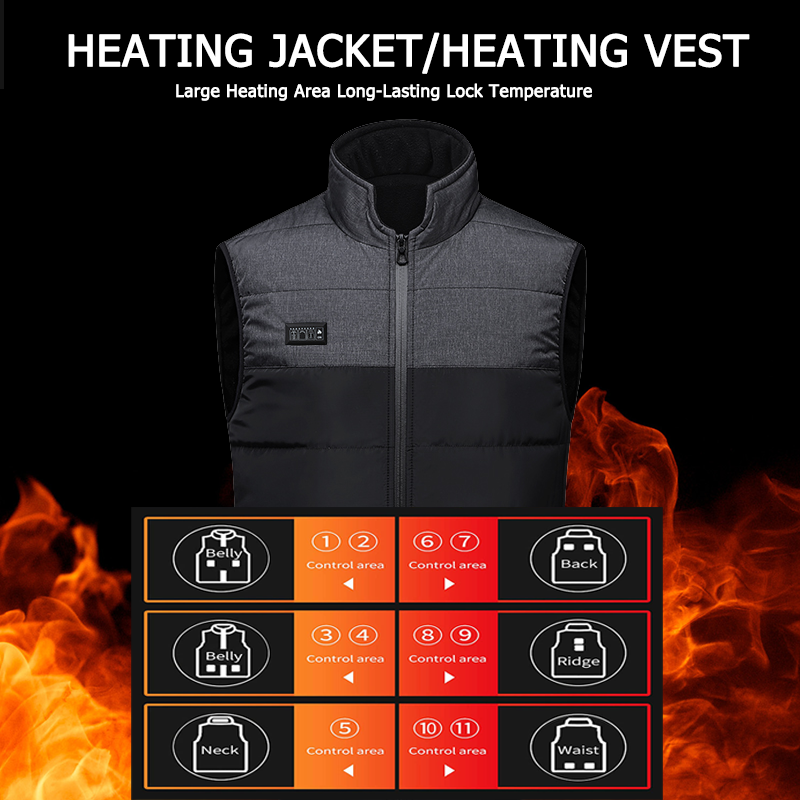
Compliance documentation for heated vests isn’t one report. It’s a stack — and that stack changes based on where you’re selling.
This FAQ covers the certifications B2B buyers need most: heated vest CE certification, heated clothing UL certification, electric heated vest FCC compliance, heated vest RoHS compliance, and battery documentation. Each section ties to a specific market requirement or platform rule.
The layout is built for speed. Find your target market. Pin down the required documents. Get clear on the process. Then make your sourcing decision with the full picture in hand.
What follows isn’t legal advice. It’s the practical compliance roadmap that experienced importers, Amazon sellers, and retail buyers use every day — to clear customs, pass platform audits, and keep products on shelves before problems show up.
Yes, We Provide Heated Vest Test Reports — Here’s What’s Included
The short answer is yes. The longer answer is what matters to your business.
Every heated vest we ship comes with third-party accredited lab reports — not internal checklists, not supplier self-declarations. These are real documents from recognized certification bodies. They cover CE, UL, FCC, RoHS, CA65, CUL, and WEEE approvals. Your customs broker, your Amazon account manager, and your retail buyers will accept them. No follow-up emails needed.
Here’s what those reports cover:
Electrical Safety
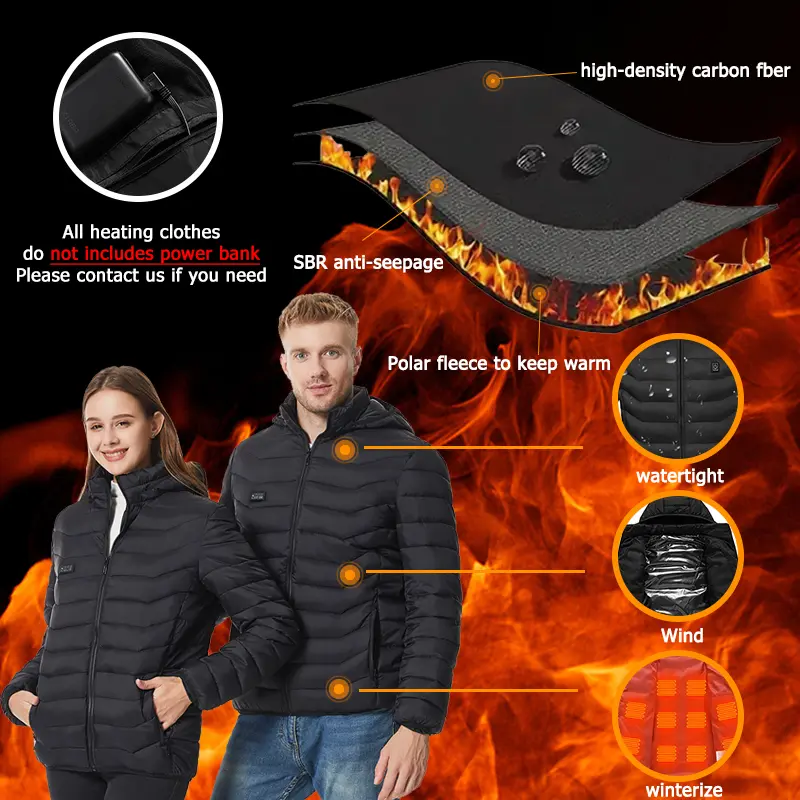
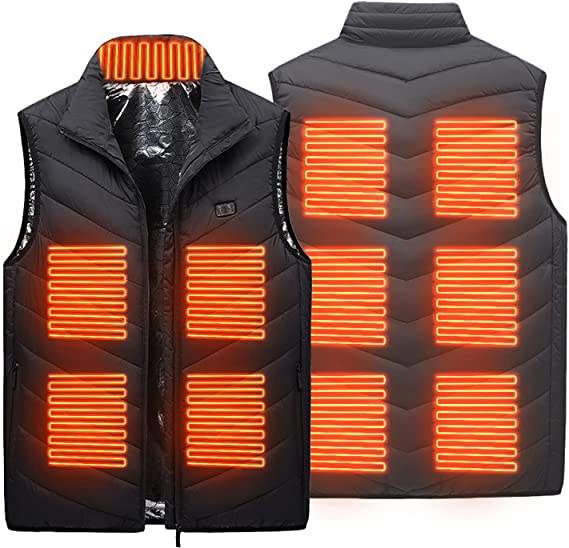
We test short-circuit protection, overcharge and over-discharge thresholds, and overheating prevention. The heating elements — TORAYCA™ carbon fiber panels — go through verification for uniform heat distribution. Zero hotspots, confirmed.
Battery Safety
Each cell carries UL, CE, and FCC certification. Integrated protection circuits are built in. Bend endurance holds up to 10,000+ cycles. Wash durability passes 50+ machine washes.
Chemical Compliance
RoHS and CA65 compliance reports come included as standard. No guesswork on restricted substances — the reports state it clearly.
Temperature Performance
NTC sensors are tested across all three heat settings:
– Low: 102°F (39°C)
– Medium: 108°F (42°C)
– High: 117°F (47°C)
On a 10,000mAh battery, runtime reaches up to 17.1 hours on low.
How You Receive Them
Digital copies arrive by email or download link with your sample or bulk order. Hard copies ship with the goods. Report validity runs 1–2 years. We reissue per production batch when required.
These aren’t summary sheets. You get the full documentation package — everything your compliance team needs to move fast, and everything your procurement lead needs to sign off with confidence.
What Types of Test Reports and Certifications Are Available for Heated Vests
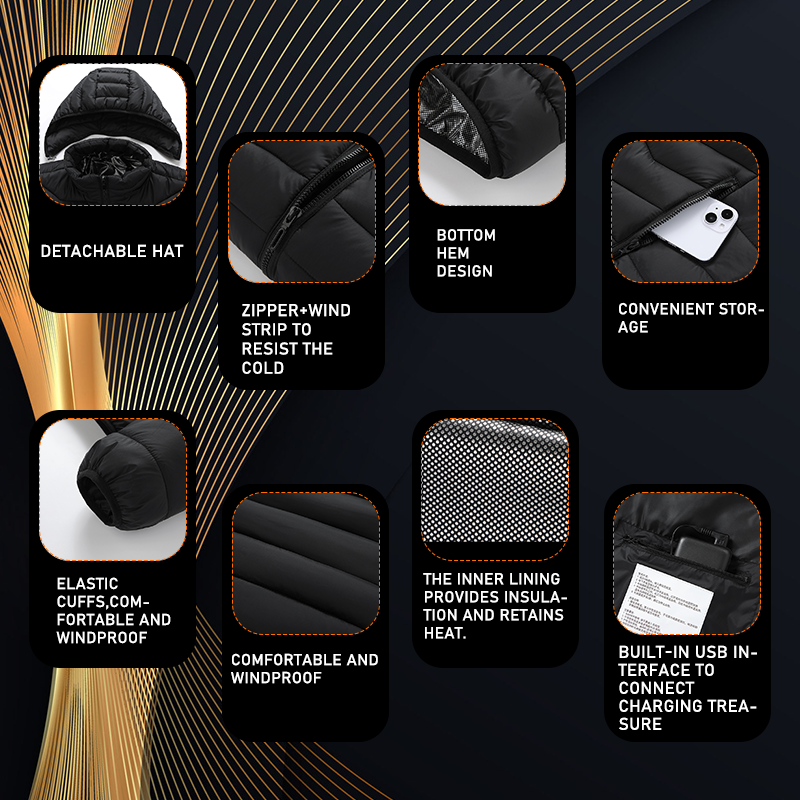
Heated vests sit in a tricky regulatory space. They’re textiles. They’re electrical devices. They carry lithium batteries. That mix means the certification requirements are wider than most buyers expect — and tighter than most suppliers let on.
Here’s a breakdown of every report type that matters.
Mandatory Certifications (Market Entry Required)
None of these are optional. Miss any one of them and you risk a blocked shipment, a platform takedown, or direct legal exposure.
CE Declaration of Conformity (DoC)
You need this to enter the EU market. It covers the low-voltage directive, electromagnetic compatibility, and RoHS alignment. This isn’t a single test. It’s a package of lab reports that your authorized representative puts together.
FCC Certification
This applies to any heated vest with wireless or Bluetooth controls. It confirms that electromagnetic emissions stay within US regulatory limits. Without it, you cannot sell the product in the United States.
UN38.3 Battery Transport Report
Every lithium battery shipment needs this report. It’s a transport safety certification — not a product quality stamp — but freight carriers and customs authorities require it all the same.
RoHS / REACH Chemical Compliance
This confirms that restricted substances — lead, cadmium, mercury, phthalates — stay within EU-set limits. Any product going into European retail or e-commerce channels needs it.
16 CFR 1610 Flammability Testing
This is a US federal standard for textile flammability. It applies to the fabric itself, not just the heating element. Selling into US retail? You need this.
Voluntary Certifications (Competitive Advantage)
UL / ETL Battery Certification
Most markets don’t require this by law. But Amazon, Walmart, and major retail buyers ask for it more and more. UL-tested batteries go through overcharge testing, extreme temperature exposure, and physical impact checks. It’s the gap between a product that passes compliance and one that buyers actually trust.
Specialized Reports for Specific Applications
ANSI/ISEA 107 (High-Visibility Workwear)
Targeting industrial buyers — construction crews, highway workers, oil field operations? This standard becomes relevant fast. It sets rules for background material coverage (Class 1: ≥0.14 m²; Class 2/3: full body), retroreflective stripe width (≥50mm), and pattern details including the back “X” configuration. Try sourcing for B2B industrial accounts without this certification and doors close before any real conversation starts.
CPC vs. GCC — Know the Difference
| Certificate | Adult Heated Vests | Children’s Heated Vests |
|---|---|---|
| GCC (General Certificate of Conformity) | Required | Required |
| CPC (Children’s Product Certificate) | Not applicable | Mandatory (US CPSC) |
Children’s heated vests fall under a separate compliance track. That means third-party CPSC testing, lead and phthalate limits, and full traceability documentation. Your product line includes youth sizing? Flag it now — not later.
Market-Specific Compliance Requirements: US, EU, UK, and Australia at a Glance
Four markets. Four different compliance frameworks. One wrong assumption and your shipment sits in a warehouse while lawyers sort out the paperwork.
The table below cuts through the noise. Each column shows what customs officers, platform auditors, and retail compliance teams check.
| Market | Key Regulations | What You Need |
|---|---|---|
| US | CPSC, CPSIA, FTC, CBP | CPSIA Certificate of Conformity (lead <90ppm, phthalates <0.1%), CPSC General CoC, FTC “Made in [Country]” label, CBP 19 CFR 134 permanent origin marking |
| EU | CE Marking, RoHS, REACH | EU Declaration of Conformity, CE Technical File, RoHS Statement (10 substances <0.1%), REACH SVHC Report covering 219 substances |
| UK | UKCA Marking | Separate UK Declaration of Conformity, UKCA Technical File — your EU DoC is invalid in Great Britain post-2024 |
| Australia | AS/NZS, ACMA | RCM Label, Supplier DoC per AS/NZS 3820, ACMA Registration for any wireless functionality |
Three Details That Trip Up B2B Buyers
The US origin labeling trap is real. CBP enforces 19 CFR 134 on 100% of port arrivals. Every import over $800 needs a permanent “Made in [Country]” mark on both product and packaging. In 2025, CBP seized 1.2 million origin violations worth $450 million. Amazon also flagged 15% of seller accounts for origin non-compliance that same year.
The EU’s REACH obligations go deeper than most suppliers admit. PFAS compounds — including PFOA and PFOS — must stay below 25ppb. Any SVHC substance exceeding 0.1% by weight triggers a mandatory ECHA notification within six months. Non-compliance isn’t a warning letter. You’re looking at product seizure, fines between €50,000 and €1 million, and recall costs averaging €500,000.
Post-Brexit UK runs on its own track. CE certification covers the EU. UKCA covers Great Britain. The two are not interchangeable. In 2025, 12% of UK import rejections came from exporters who assumed they were. Northern Ireland follows a separate protocol — CE acceptance runs through 2027 there. For England, Scotland, and Wales, that window has closed.
Australia enforces quietly but hits hard. The ACCC logged 220 product safety recalls in 2025. Electrical products made up 40% of that total. RCM registration isn’t a formality. It’s the gate you must pass through.
Sample Testing vs. Bulk Production Reports: What’s the Difference and Why It Matters
A sample report and a bulk production report are not the same document. Treating them as equal is one of the most common — and expensive — compliance mistakes B2B buyers make.
Here’s the structural difference:
| Aspect | Sample Testing | Bulk Production |
|---|---|---|
| Quantity | 1–3 pcs/style | Hundreds–10,000+ pcs |
| Timeline | 7–10 days (lab); 2–4 weeks total | 25–30 days (lab); 4–8+ weeks total |
| Cost/Unit | High (setup costs included) | Low (spread across volume) |
| Flexibility | High — changes still possible | Low — locked to approved sample |
| Materials Used | Stock or simulated | Final approved materials only |
| QC Focus | Design and fit validation | Consistency at scale |
Sample testing happens at the prototype stage. It confirms the design works. It catches failures before tooling and production ramp. That’s its job — and it does that job well.
Bulk production reports do something different. They verify that unit 8,000 off the line matches what passed compliance at unit one. The report must include the manufacturer name, production date, and production location. That’s how you get full batch traceability. Importers need that traceability to issue a GCC or CPC. Retail buyers need it before a single SKU hits their shelves.
A sample pass does not guarantee bulk compliance. Retailers know this. Major platforms know this. Post-production bulk re-testing is mandatory — not optional.
The variance risk is real. Bulk production runs 5–10% deviation from sample. Color shifts. Logo defects. Fabric shrinkage up to 5%. Insulation performance drops. None of these show up on a sample report. The sample wasn’t made with final factory settings, final machines, or final thread tensions — so it can’t catch these problems.
The Production Sequence That Eliminates Surprises
Skip these steps and you absorb 15–25% rework costs later. Follow them and your bulk report holds.
- PP Sample (1 pc at bulk factory): Confirms machine calibration, needle type, and thread tension. This piece becomes the master reference operators use throughout the entire run.
- TOP Sample (1–3 pcs): Validates the sewing line before bulk begins. It serves as the mid-production QC benchmark.
- Wash and wear testing: This step reveals 20–30% of hidden defects that visual inspection misses. Not optional.
- Post-bulk random testing: Pulled from warehouse stock — not the production line. This confirms the report reflects what buyers receive.
One or two minor revision rounds are built into the process. Go beyond that, and additional fees apply.
Buyers who skip bulk reporting bring a 10–20% error rate into their inventory. That’s not just a compliance risk. That’s a direct business risk.
How to Request Heated Vest Compliance Documents: Step-by-Step Process and Timeline
Most compliance delays aren’t caused by bad products. Buyers who start the documentation conversation too late — that’s the real problem.
The process is straightforward. Run it in the right order, with the right information ready upfront, and things move smoothly.
Tell your supplier these three things before anything moves:
– Your target market (US, EU, UK, Australia — each one requires a different document set)
– Final product use (outdoor sports, industrial workwear, consumer retail)
– User age segment (adults vs. children under 12 — this changes the entire certification track)
Skip any of these details and the lab runs the wrong test scope. That means restarts. That means weeks lost.
The four-stage sequence:
- Send your inquiry to the supplier. Confirm the target market and product specs upfront.
- Ship samples to an accredited third-party lab. SGS, Intertek, Bureau Veritas, and TÜV are all CPSC-recognized and accepted by EU regulators.
- You get the sample test report back within 2–4 weeks.
- Bulk production wraps up. Then you collect bulk certification within 4–8 weeks.
Total time from first inquiry to a full compliance package: 6–12 weeks.
Budget $500–$2,000 per report. The scope drives the cost. Battery safety, flammability, and EMF emissions each carry separate fees.
Start the clock now. Compliance documents run on their own schedule — not yours.
Common Compliance Questions B2B Buyers Ask Before Placing a Heated Vest Order
The questions come in fast once a buyer gets serious. Not questions about color options or MOQ. Questions about paper — the kind that keeps a shipment moving and a product listing live.
Here are the ones we hear most, answered straight.
“Do your certifications cover the EU’s new GPSR requirements?”
Yes. The EU General Product Safety Regulation took effect December 13, 2024, and it changed the rules. Online marketplaces now run pre-listing safety checks on heated apparel. That means documentation, risk assessments, the full stack. Suppliers without current technical files get rejected before any listing goes live. Our CE documentation is current and aligned to GPSR obligations. This includes updated risk assessment records for economic operators.
“We’re selling on Amazon US. Is UL certification mandatory?”
Not at the federal level. Amazon’s own rules, though, treat UL battery certification as a practical standard — especially for products with lithium cells that make direct body contact. Skip UL, and you face a higher chance of account review. We provide UL-tested battery documentation to close that gap.
“What voltage does your heated vest run on, and does that affect compliance scope?”
Most of our B2B line runs on 6–7V systems. That’s the segment with the largest market share and the broadest professional-use demand. Below-5V products carry a lighter compliance load. Products in the 8–20V range — used in military or industrial settings — draw extra regulatory attention. Know your voltage range before you pick a test scope.
“Can one compliance package cover multiple markets?”
No. Each market has its own document:
– CE declaration covers the EU
– UKCA covers Great Britain
– FCC covers the US
These are separate documents, filed separately. Three markets mean three document packages — at minimum.
“What happens if our products get recalled?”
The cost is real. Industry data puts average recall expenses at $500,000 per incident — and that’s before legal fees or platform penalties. A safety incident in heated apparel brings regulatory attention, negative reviews, and brand damage that can take years to repair. Full third-party documentation is what keeps your compliance position defensible. Without it, the exposure is expensive.
Risks of Sourcing Heated Vests Without Proper Test Reports
The math here is brutal and simple: a single compliance failure costs more than the testing ever would.
Skip the reports to save $1,500 in lab fees. Then watch a 5,000-unit batch trigger a CPSC recall. You’re writing a $75,000 check — and that’s the best-case outcome. That’s a 50x loss on a decision that felt like savings.
Here’s what that decision looks like in practice:
- US Customs detention. CBP pulls shipments without UL or CE electrical safety documentation. Your goods sit. Then they get destroyed. Warehouse fees run $5,000–$50,000 per month while that gets sorted.
- EU import refusal. Missing CE marking triggers fines up to €100,000 per shipment. Repeat violations push that ceiling to €1 million.
- Amazon delisting. In 2023, 15% of imported apparel listings were suspended over missing flammability and electrical reports. UL/ETL gaps are the most common trigger.
- Retailer rejection. Walmart won’t stock inventory that fails 16 CFR 1615/1616 flammability requirements. That includes the 50-laundering-cycle test. No exceptions.
The financial exposure stacks fast:
| Risk Category | Cost Range |
|---|---|
| Product Recall | $50,000–$500,000 |
| Fines & Penalties | $10,000–$100,000+ |
| Destruction & Disposal | $20,000–$200,000 |
| Legal & Storage Fees | $5,000–$50,000/month |
Brand damage compounds the financial hit. Post-recall, Amazon ratings drop from 4.5 to 2.8 stars. Customer churn runs 30–60%. Annual sales fall 40–70% for non-compliant DTC brands. Private labels lose around 25% of retailer partnerships. Recovery takes two to five years — and that’s the optimistic version.
Look at the 2022 heated apparel recall. DTC traffic dropped 55%. A big part of that came from SEO penalties. Those penalties took years to clear.
The compliant path costs $500–$2,000 per model in lab fees. That number looks very different once you’re staring at a destruction order for 10,000 units.
How Our Heated Vest Compliance Support Helps You Enter Global Markets Faster
Getting compliant documentation shouldn’t feel like a second job.
Share your target markets and vest specs — battery wattage, fabric composition, intended use. We build the full compliance package from there. That includes test reports, Declaration of Conformity, and label specifications. Everything is ready in under four weeks.
Here’s what that covers by market:
| Market | Core Standard | What We Deliver |
|---|---|---|
| US | FFA / CPSC | Flammability report + conformity docs + CBP-ready labels |
| EU | EN 1021 / GPSR | DoC + technical file + REACH alignment |
| UK | BS 5867 Type B/C | Separate UKCA documentation package |
| China | GB/T 14644 | 45° burn rate classification report |
We handle battery logistics too. Lithium cells under 100Wh meet TSA, FAA, and EU IATA carry-on rules. Your shipments keep moving — no airline holds, no customs flags.
One supplier. One process. No separate lab coordination.
Tell us where you’re selling. We’ll have your compliance package ready before your production run closes.
Conclusion
Compliance isn’t a checkbox — it’s the foundation your entire market entry strategy is built on.
Sourcing heated vests at scale? There’s a big difference between a supplier who has documentation and one who can work through it with you. One gets you smooth customs clearance. The other gets your shipment seized in a Rotterdam warehouse.
Every certification in this guide exists for one reason. From heated vest CE certification to UN38.3 battery reports — each one protects your business from risks that show up without warning.
You now know what to ask, what to demand, and what red flags to walk away from.
So don’t leave compliance to chance.
Contact our team today. You can request market-specific heated vest test reports, review available certifications, or discuss compliance packaging for your target region.
The paperwork that protects your products? It’s ready. Just ask for it.