
Every summer, thousands of Mexican farm workers push through brutal heat. Most people couldn’t last hours in those conditions. Too many of these workers pay for it with their health.
Shade breaks and water stations help — but they don’t solve the problem. You need more than that to keep your crew safe and productive.
The right evaporative cooling vest makes a real difference:
-
It can drop a worker’s core temperature by several degrees
-
It cuts heat stress incidents
-
It keeps your operation running without OSHA violations or unplanned downtime
Here’s the problem though. Not every supplier understands agricultural fieldwork. Pick the wrong one and you’re left with wasted budget, low-quality gear, and workers still struggling in the heat.
That’s why we put together this straight-to-the-point supplier guide. Use it to compare the best evaporative cooling vest suppliers for Mexican farm workers, make a smart bulk buying decision, and get the right gear out to your team fast.
What’s Inside This Guide
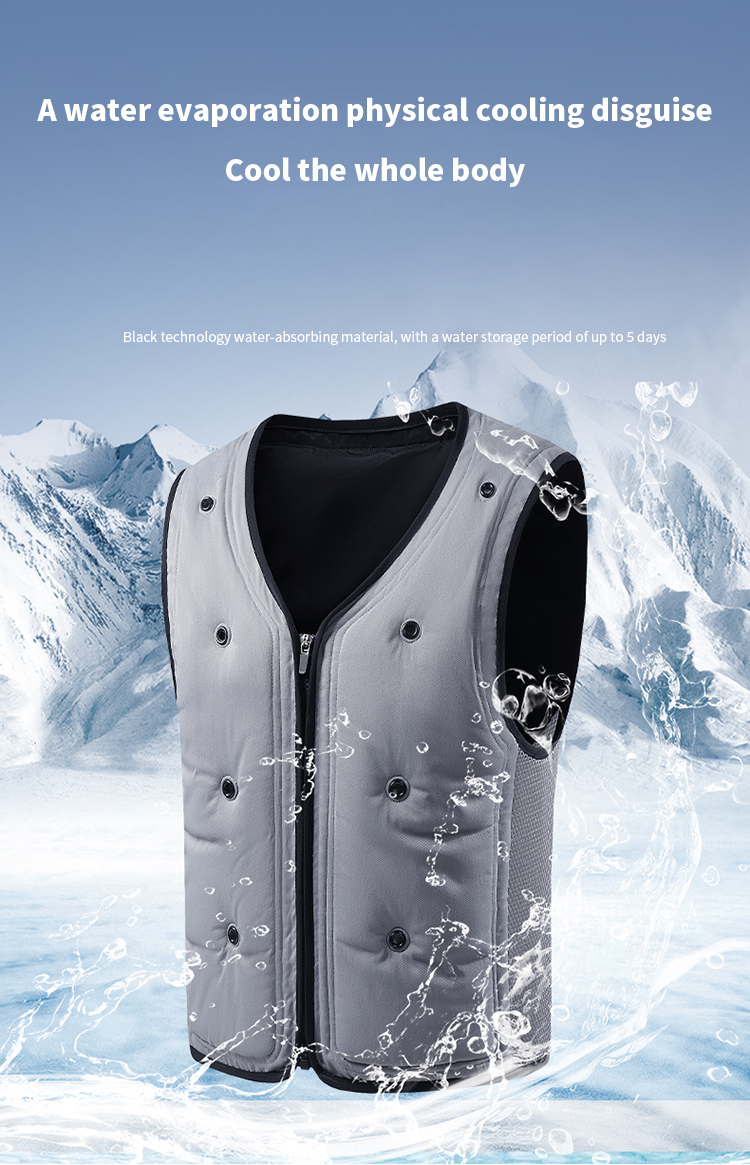
Agricultural heat exposure kills at a rate 35 times higher than the general workforce. Hispanic and Latino farmworkers face an even sharper risk — 20% above the average. Piece-rate pay structures push workers to skip rest breaks. That makes the situation on the ground far more dangerous than the numbers alone show.
This guide cuts through the noise and gives you:
-
Top supplier recommendations — vetted for Mexican farmworker use cases, with bulk pricing, MOQ, and lead time comparisons
-
Product performance breakdowns — evaporative cooling technology, fabric durability, and climate compatibility broken down per supplier
-
A practical buyer’s guide — so you know what separates a vest that works from one that just looks good in a catalog
-
FAQ answers — covering wear time, sizing, compliance, and order economics
The global cooling vest market hit $120M in 2024 and is projected to reach $210M by 2034. New suppliers keep entering the market. Not all of them deserve your budget.
Why Mexican Farm Workers Need Evaporative Cooling Vests
The data doesn’t lie — and it’s alarming.
Agricultural workers are 35 times more likely to die from heat exposure than workers in any other sector. Mexican farmworkers carry an outsized share of that risk. Many migrate from southern states like Chiapas. They end up in northern agricultural regions — Sonora, Sinaloa, Texas, Iowa — where temperatures hit 105°F and shifts run 65 to 70 hours a week.
That’s not just uncomfortable. That’s physically dangerous.
The Numbers Behind the Risk
Field research shows a clear picture of what happens to these workers mid-shift:
-
19.6% report extreme thirst during harvest labor
-
7.4% experience muscle cramps
-
5.4% report dizziness — a direct warning sign before heat collapse
-
Once WBGT (Wet-Bulb Globe Temperature) crosses 27°C, mean body temperature climbs above 100°F. Systolic blood pressure spikes past 150 mmHg. Productive work time drops from 154 minutes to just 129 minutes
Over six years, 121 heat fatalities were recorded in the agricultural sector. Farmworkers made up 20% of those deaths.
Piece-rate pay structures make everything worse. Workers earn per unit harvested. That gives them a financial reason to skip breaks, ignore early warning signs, and push past safe limits.
Why Evaporative Cooling Works Here
Not every cooling method holds up in agricultural field conditions. Here’s how the options compare:
|
Method |
Field Performance |
Key Limitation |
|---|---|---|
|
Evaporative cooling vest |
Steady passive cooling through water evaporation (~580 cal/g absorbed); works well in dry heat (RH <50%) |
Less effective in very high humidity |
|
Ice packs |
Quick localized cooling, lasts 30–60 min |
Bulky, impractical for active harvesting |
|
Fans |
Convective cooling only |
Useless above 95°F or in still-air field conditions |
Low-humidity agricultural regions match the climate profile of major Mexican and southwestern U.S. farming zones. That’s where evaporative vests outperform every passive alternative. The physics are simple: dry air speeds up moisture evaporation. Heat pulls away from the body fast. A well-designed vest can drop core body temperature by more than 0.5°F during continuous labor. That’s real, measurable protection across a six-hour harvest shift.
For workers who can’t step away from the field, wearable, hands-free cooling is the difference between a safe workday and a medical emergency.
What to Look for in a Cooling Vest Supplier for Agricultural Workers

The wrong supplier doesn’t just waste money. It puts workers at real risk on days when temperatures hit 110°F. There’s no room for error out there.
Here’s what separates a supplier worth your budget from one that lets you down.
Cooling Technology That Matches Your Climate
Not all vests cool the same way. The technology has to fit the environment your workers are in.
-
Evaporative vests: Water-activated, lightweight, easy to recharge at break time with a water bottle. Best for dry and semi-arid conditions — the climate profile of Sonora, Sinaloa, and southwestern U.S. farming regions
-
PCM (Phase Change Material) vests: Use frozen inserts for fully dry cooling. Better suited for humid zones where evaporation slows down. Freezer access on-site is required
-
Hybrid vests: Combine both technologies for mixed-climate operations
-
Chemical activation vests: No ice or refrigeration needed — just water. A solid choice for remote fields without infrastructure
Match the technology to your geography. No freezer within 10 miles of the field? A PCM vest won’t work for you.
Cooling Duration and Recharge Speed
This is where most buyers get burned. A vest that lasts 90 minutes sounds fine — until you’re running a 10-hour harvest shift.
Look for these minimums:
-
2–3 hours of cooling per pack set for standard agricultural work
-
20-minute recharge time or less so rotation systems can run smoothly
-
65°F maintained temperature to support core body temperature regulation
-
Heavy-duty packs for workers in 110°F+ heat or workers over 250 lbs — standard packs won’t hold up
Field studies have flagged a real problem. Workers reported inserts melting faster than expected. That makes vests feel heavy and uncomfortable mid-shift. Ask your supplier how their inserts perform under sustained high-heat conditions. No specific answer? Walk away.
Rotation System Support
The smartest farms don’t just buy vests. They build a rotation protocol.
A proven setup: 3 vests per worker with 4 cooling pack sets, rotating every 20–30 minutes. Your supplier needs to support this approach. Don’t settle for a supplier who sells you a one-vest-one-pack solution and calls it done.
Also confirm recharge requirements upfront:
– Evaporative systems → water only (easiest for field use)
– PCM systems → freezer access required
– Standard packs → ice water needed
Remote agricultural fields often lack reliable ice or power. Your supplier’s technology has to work within your real infrastructure — not some ideal setup that doesn’t exist in the field.
Compliance and Safety Standards
A reputable supplier leads with compliance documentation. They don’t make you chase it down.
-
ANSI/ISEA 107-2020: Required for high-visibility vests used near heavy machinery in agricultural settings
-
OSHA alignment: Your supplier should reference OSHA heat illness prevention guidelines directly and understand temperature thresholds for both acclimated and unacclimated workers
A supplier who can’t speak clearly about OSHA compliance is a red flag — not a minor oversight.
Agricultural Field Experience
This is non-negotiable. Cooling vests built for warehouse workers or construction crews don’t carry over to fieldwork. The demands are different.
Prioritize suppliers who:
-
Have field-tested products with agricultural workers
-
Understand piece-rate labor dynamics and why workers need passive, hands-free cooling
-
Can advise on realistic use cases — vests work best during heat peaks and rest-break recovery, not as continuous all-day wear
-
Treat cooling gear as part of a heat illness prevention system, not just a product to ship
The right supplier acts like a safety partner. Not just a vendor shipping boxes.
Top 8 Evaporative Cooling Vest Suppliers for Mexican Farm Workers
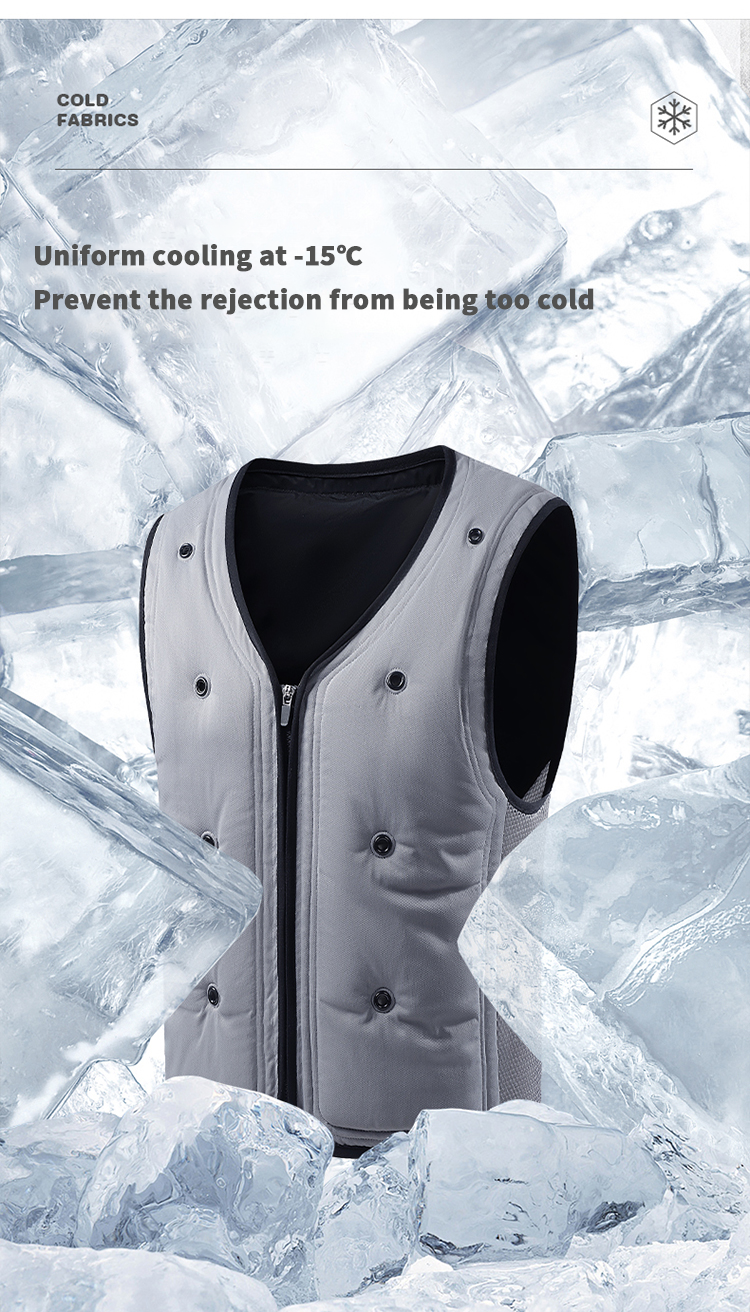
Eight suppliers made this list. Each one was tested against criteria that actually matters for Mexican farmworker conditions — not warehouses, not construction sites, not office settings. Think 105°F heat, no freezer access, and a piece-rate pay structure that punishes workers for stopping.
That’s the standard. Here’s who passed it.
Before the list, one number to keep in mind: 52% of workers find cooling vests too bulky or restrictive. That’s not a design complaint — it’s a productivity and adoption problem. Workers pull the vest off halfway through a shift. The gear ends up in the truck bed. You’ve spent money on nothing. Every supplier below was tested on fit and wearability, not just cooling output.
1. Ergodyne (Chill-Its Line)
Ergodyne’s Chill-Its 6665 is one of the most field-tested evaporative cooling vests available for outdoor labor. It’s water-activated, lightweight, and built for dry-heat conditions. That’s the climate across Sonora, Sinaloa, and the southwestern U.S. farming belt.
-
Cooling duration: 2–4 hours depending on temperature and humidity
-
Recharge: Water only, under 60 seconds at a tap or water station
-
MOQ for bulk orders: 12 units (distributor pricing available at higher volumes)
-
Best for: Dry heat zones, farms without freezer access, large crews needing fast recharge rotation
-
Compliance: Meets OSHA heat illness prevention guidelines; safety vest variants available with ANSI/ISEA 107-2020 compliance
-
Field note: The fabric holds moisture well without getting waterlogged — a common problem with cheaper alternatives
2. OccuNomix International
OccuNomix has built a solid reputation in agricultural and industrial safety gear. Their evaporative cooling vests feature moisture-wicking outer shells that keep cooling efficiency and breathability in balance.
-
Cooling duration: 2–3 hours per activation
-
MOQ: 6–24 units depending on distributor
-
Key differentiator: Multiple vest sizes including extended sizes — critical for farms with crews of different body types
-
Compliance: ANSI-compliant options available; solid documentation for OSHA audit purposes
-
Best for: Operations where sizing varies a lot across a crew
3. Techniche International (HyperKewl)
Techniche’s HyperKewl fabric is a standout in the evaporative cooling vest space. The fabric absorbs moisture and releases it at a steady pace — no inserts, no packs, no rotation to manage.
-
Cooling method: Fabric-integrated evaporative system (not insert-based)
-
Recharge: Submerge in water for 1–2 minutes
-
Cooling duration: 5–10 hours in low-humidity conditions — the longest passive cooling duration on this list
-
MOQ: Available through agricultural safety distributors at 10+ units
-
Best for: Remote fields without break stations; workers who need continuous cooling without insert swaps
-
Trade-off: Less effective above 60% relative humidity — check your climate zone before ordering at scale
4. PIP Global (Protective Industrial Products)
PIP Global works at a scale that fits large agricultural operations. Their cooling vest line supports both evaporative and PCM setups. That makes them a practical pick for farms that run across multiple climate zones in a single season.
-
Bulk pricing: Tiered discounts starting at 25-unit orders
-
Lead time: 5–10 business days for standard stock; custom orders 3–4 weeks
-
Compliance documentation: Strong OSHA and ANSI compliance paperwork — useful for farm safety audits
-
Support: Dedicated B2B account management for agricultural clients
-
Best for: Multi-site agricultural operations or farm labor contractors managing large crews across regions
5. Glacier Tek
Glacier Tek focuses on PCM (phase change material) vests. These work best where freezer access is available. For farms running field operations out of a central packing facility with cold storage, this is a serious option worth looking at.
-
Cooling duration: 2.5–3 hours per insert set at a steady 59°F
-
MOQ: 10 units
-
Insert replacement: Inserts sold as separate items; plan for ongoing supply costs
-
Best for: Humid growing zones (Gulf Coast operations, parts of Veracruz) where evaporative cooling loses effectiveness
-
Field note: Not the right fit for remote dry fields — insert recharging needs a freezer nearby
6. Bodycool / Aqua Coolkeeper
This is a European-origin brand with growing U.S. agricultural distribution. Aqua Coolkeeper vests use a polymer-based water retention fabric. It performs at a steady level across a wider humidity range than standard evaporative designs.
-
Cooling duration: 3–5 hours depending on conditions
-
Fit profile: Lightweight and close-fitting — built to address the bulkiness problem that affects 52% of workers
-
MOQ: 10–20 units via U.S. agricultural safety distributors
-
Best for: Workers who need full mobility — bending, reaching, carrying harvest loads — without bulk getting in the way
7. Portwest
Portwest is a high-volume supplier with a broad agricultural safety catalog. Their CV10 and CV11 cooling vest lines offer entry-level pricing without dropping essential field performance.
-
Price point: Among the lowest per-unit costs on this list — good fit for budget-tight operations
-
MOQ: Low (6–10 units), which makes them accessible for smaller farms
-
Cooling method: Evaporative; water-activated
-
Cooling duration: 1.5–2.5 hours — shorter than premium options, so factor that in for long-shift crews
-
Best for: Smaller farms making a first bulk purchase, or operations adding to an existing vest inventory
8. Kishigo / ML Kishigo
Kishigo focuses on high-visibility safety workwear with built-in cooling. That puts them in a strong spot for farms where workers operate near heavy equipment — tractors, forklifts, processing machinery.
-
Compliance: ANSI/ISEA 107-2020 Class 2 and Class 3 high-visibility certified
-
Cooling integration: Evaporative cooling panels built into compliant safety vest designs
-
MOQ: 12–24 units
-
Best for: Agricultural operations with a dual need — heat protection and high-visibility safety compliance in one garment
-
Trade-off: Cooling is secondary to visibility compliance; not the top pick for pure heat relief in open-field harvesting
Quick Comparison Table
|
Supplier |
Cooling Type |
Duration |
MOQ |
Best Climate |
OSHA-Ready |
|---|---|---|---|---|---|
|
Ergodyne Chill-Its |
Evaporative |
2–4 hrs |
12 |
Dry heat |
✅ |
|
OccuNomix |
Evaporative |
2–3 hrs |
6–24 |
Dry/semi-arid |
✅ |
|
Techniche HyperKewl |
Fabric evaporative |
5–10 hrs |
10+ |
Low humidity |
✅ |
|
PIP Global |
Evaporative/PCM |
Varies |
25 |
Multi-zone |
✅ |
|
Glacier Tek |
PCM |
2.5–3 hrs |
10 |
Humid zones |
✅ |
|
Aqua Coolkeeper |
Polymer evaporative |
3–5 hrs |
10–20 |
Mixed humidity |
✅ |
|
Portwest |
Evaporative |
1.5–2.5 hrs |
6–10 |
Dry heat |
✅ |
|
Kishigo |
Evaporative |
Moderate |
12–24 |
Open field/machinery |
✅ |
The bottom line: No single supplier wins across every use case. Ergodyne and Techniche lead on pure evaporative performance in dry-heat agricultural zones. PIP Global and OccuNomix are stronger on bulk logistics and compliance paperwork. Portwest is the starting point for smaller operations. Glacier Tek makes sense only if you have freezer infrastructure at the field site.
Match the supplier to your geography, shift length, and crew size — not the other way around.
Supplier Comparison Table: Side-by-Side Specs for Farm Buyers

Numbers cut through the noise faster than any product description. Here’s the full side-by-side breakdown — built for agricultural buyers sourcing cooling vests for Mexican farm crews.
|
Attribute |
Ergodyne Chill-Its |
Techniche HyperKewl |
PIP Global |
Aqua Coolkeeper |
Portwest |
|---|---|---|---|---|---|
|
Retail Price (per unit) |
~$28 |
~$35 |
~$30 |
~$32 |
~$20 |
|
Bulk Price (100+ units) |
~$20 |
~$25 |
~$22 |
~$23 |
~$15 |
|
MOQ |
12 |
10 |
25 |
10–20 |
6–10 |
|
Cooling Duration |
2–4 hrs |
5–10 hrs |
Varies |
3–5 hrs |
1.5–2.5 hrs |
|
Humidity Range |
<50% RH |
<60% RH |
20–90% |
Mixed |
<55% RH |
|
Size Coverage |
S–XXL |
S–XL |
S–XXL |
S–XL |
S–XXL |
|
Ship to Mexico (est.) |
7 days / ~$3/unit |
8 days / ~$3.50/unit |
5–10 days / ~$2.50/unit |
10 days / ~$4/unit |
6 days / ~$2/unit |
|
HS Code Tariff (8418) |
~5% |
~5% |
~5% |
~5% |
~5% |
|
ANSI/OSHA Compliant |
✅ |
✅ |
✅ |
✅ |
✅ |
|
Certifications |
OSHA, ANSI |
ANSI, ISO |
OSHA, ANSI, ISO |
CE, ANSI |
ANSI, UL |
How to Read This Table as a Farm Buyer
Your real cost isn’t just the unit price. Add shipping ($2–$4 per unit to Mexico) plus the HS Code 8418 tariff (5%) to get your landed cost per vest.
Quick math example:
– Portwest at 100 units: $15 base + $2 shipping + 5% tariff = ~$17.85 landed cost per vest
– Techniche at 100 units: $25 base + $3.50 shipping + 5% tariff = ~$30.13 landed cost per vest
That $12 gap per unit becomes $1,200 on a 100-unit order. Know what you’re paying before you commit.
Three rules for using this table:
1. Your fields run dry heat below 50% RH? Cooling duration is what matters most. Techniche wins outright.
2. Budget is tight and MOQ flexibility counts? Portwest lets you start small without locking up too much capital.
3. Your crews work across different climate zones? PIP Global covers the widest humidity range — 20–90% RH — so one vest line works across all your sites.
Evaporative Cooling Vest Buying Guide for Farm Operators
Most farm operators buy a cooling vest based on price. That’s the wrong starting point. Buy on price alone and you’ll end up with gear that fails by noon on a 105°F day.
Here’s what matters when sourcing evaporative cooling vests for agricultural field crews.
Cooling Duration: Match the Vest to Your Shift Length
Not all evaporative vests are built the same. The gap between models is significant:
-
Standard models deliver up to 4 hours of cooling per activation — workable for half-day shifts with a rotation system
-
Extended-duration models push up to 72 hours in conditions up to 104°F and 90% relative humidity — a real advantage for multi-day harvest operations
-
Polymer-based vests offer around 3 hours at about 5.5 lbs of weight — heavier, but reliable
Extended-duration vests can also be frozen for an extra 75 hours of total cooling. Got freezer access at your facility? Factor that into your cost-per-wear calculation. It changes the numbers.
Activation Is Simpler Than You Think
Soak the vest in water for 2–5 minutes. That’s it. Core temperature stabilizes within 5 minutes of putting it on. Cooling output then scales with airflow and how much water remains in the absorbent fibers. Dry, moving air in farming regions like Sonora boosts performance fast — more so than humid climates where evaporation slows down.
Sizing and Fit: Don’t Overlook This
A vest that doesn’t fit gets left in the truck. Check these standard sizing ranges:
|
Size |
Chest Measurement |
|---|---|
|
Small |
37–39 inches |
|
Large |
41–44 inches |
|
2XL |
46–48 inches |
Go for vests with adjustable side-flaps and a V-shaped comfort collar. Both features improve skin contact and cooling transfer during hard harvest work. A snug, adjustable fit means the vest stays in use instead of sitting in a pile.
Construction Features That Hold Up in the Field
Look for these specific build details:
-
100% quilted nylon exterior with mesh side panels for airflow
-
Super Absorbent Polymer (SAP) liner for steady water retention across a full shift
-
Water-repellant interior liner — workers stay cool without feeling soaked through
-
Antimicrobial treatment — critical for vests worn every day in heat and sweat conditions
The antimicrobial layer is worth checking on. Vests without it develop odor fast in field conditions and workers stop wearing them.
Maintenance Reality Check
Field gear takes a beating. Confirm washability before committing to bulk orders:
-
Quality evaporative vests handle around 100 machine wash cycles
-
Hand wash with hang dry pushes lifespan further
-
Hi-vis lime color options with reflective strips are worth prioritizing for workers operating near machinery
Durability across 100+ washes matters more than most buyers expect. Over a full growing season, a vest that holds up cuts your replacement costs and keeps crews protected from start to finish.
Heat Stress Prevention Beyond Cooling Vests: A Complete Farm Safety Toolkit
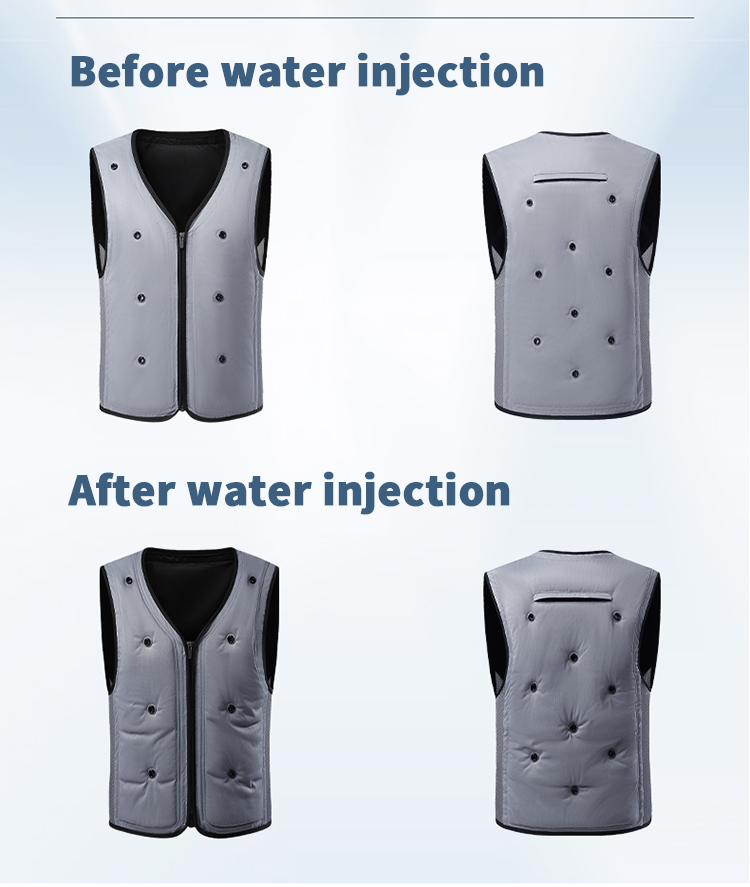
Cooling vests do real work — but they can’t carry the full load alone.
The NIOSH framework is clear: shade, water, rest, and timing are the foundation. Vests are a powerful supplement. Skip the basics, and even the best evaporative vest won’t stop a heat casualty on a 108°F harvest day.
Here’s what a complete farm safety toolkit looks like in practice:
-
Head protection: Baseball caps, ventilated hats, or bandannas paired with vests cut heat stress load by a real, visible margin
-
Hydration stations: Give workers electrolyte access every 1–2 hours — water first, sports drinks second, soda and caffeine never
-
Shift scheduling: Move heavy physical tasks to early morning or late afternoon. New workers need a slow ramp-up — start at ⅓ of a workday in week one, then scale up over six days
-
Shade and rest breaks: Check on workers every hour in extreme heat. Use air-conditioned rest areas where you have them
The ROI on this full-toolkit approach is well-documented. California farms that put statewide heat regulations in place — shade, water, breaks, acclimatization — saw clear drops in workplace heat injuries. Dairy operations lose 1% of annual yield to heat stress alone. That doesn’t include turnover costs, workers’ comp claims, or OSHA violations on top of that.
Farms that build strong heat protection systems consistently post the highest worker satisfaction and retention rates. That’s not a coincidence.
FAQ: Bulk Buying Cooling Vests for Mexican Farm Workers
Buyers ask the same questions before every large order. Here are straight answers.
How long does one vest last per shift?
Count on 2 hours before inserts start melting in 38–45°C field heat. Plan your rotation around that window — not the marketing copy. Once inserts melt, workers reported they felt heavy and uncomfortable. Set up a 3-vest rotation per worker. That covers a full shift with no gaps.
When is bulk buying worth it?
At 25+ units, most suppliers start offering real tiered discounts. Below that, you pay retail margins on safety equipment. That’s money left on the table.
What’s the minimum order that makes financial sense?
Run this calculation: unit cost + shipping ($2–$4/unit to Mexico) + 5% import tariff. At 100 units, a $5 price difference per vest saves $500 total. That gap grows fast across a full crew. So the bigger the order, the more the numbers work in your favor.
Do vests work during active harvesting or just breaks?
Both — but peak performance happens during rest-break recovery and the hottest hours of the day. These aren’t built for all-day non-stop wear. Pair vests with bandanas for better full-body coverage. Field data backs this up: 14 out of 20 workers soaked their bandanas multiple times per shift while wearing the vest.
Conclusion
Every hour your workers spend in a field without heat protection is a risk — to their health and your operation’s output.
The right evaporative cooling vest supplier isn’t just a vendor. They’re a partner in keeping your workforce safe, compliant, and working at full strength through the brutal summer harvest season.
Outfitting 20 workers or 2,000? The suppliers in this guide give you a solid starting point. Each one has been vetted for quality, agricultural durability, and bulk pricing that works at farm scale.
Here’s your next move:
-
Narrow your shortlist to two or three suppliers
-
Request samples before placing a bulk order
-
Check their specs against your local climate — dry heat in Sonora calls for a different vest than the humid fields of Veracruz
Heat stress prevention for farm workers starts with one smart purchase decision. Make it the right one.