
Every year, cooling vest shipments worth thousands of dollars get held at EU borders. The products aren’t defective. The paperwork is just wrong.
A missing Declaration of Conformity, a misclassified HS code, or a CE mark applied without proper notified body involvement — any one of these can stop your cargo cold. That means delays, forced re-exports, or destruction orders. Real money lost over fixable mistakes.
First-time manufacturers, traders, and importers often find personal protective equipment EU import rules overwhelming. The regulations aren’t designed to block you out — they just demand precision.
This guide breaks down everything you need:
-
EU PPE Regulation 2016/425 and what it means for cooling vests
-
CE certification standards and how to meet them
-
Customs tariff classification and how to get it right
-
Step-by-step clearance procedures to move goods without hold-ups
You get one clear, actionable roadmap. No drama, no guesswork — just a straight path into the European market.
Content Framework: Customs Clearance Tips For Cooling Vests To EU (CE Marking Guide)

This guide takes you from understanding the rules to clearing customs without delays. Each section builds on the last, so you move through the process step by step.
Here’s what each section covers:
-
EU PPE Regulation 2016/425 Explained — Why cooling vests fall under PPE classification and what that means for your compliance obligations
-
CE Marking Requirements — Physical specs, placement rules, and the six-step manufacturer approval process
-
Notified Body Involvement — Whether you need one, how to find accredited bodies through the NANDO database, and which conformity modules fit your product
-
Technical Documentation — What goes in your file, how long to keep it (10 years), and what customs officers check at the border
-
Declaration of Conformity — How to prepare it, who signs it, and when to present it at EU entry
-
HS Code Classification & Import Duties — Correct tariff headings, duty rate calculations, and how wrong classification causes shipment delays
-
Clearance Checklist — A document checklist to run through before your shipment moves
Work through the sections in order. That’s the fastest, cleanest path to cleared customs.
Is Your Cooling Vest Classified as PPE Under EU Regulation 2016/425?
The classification question sounds simple. It isn’t.
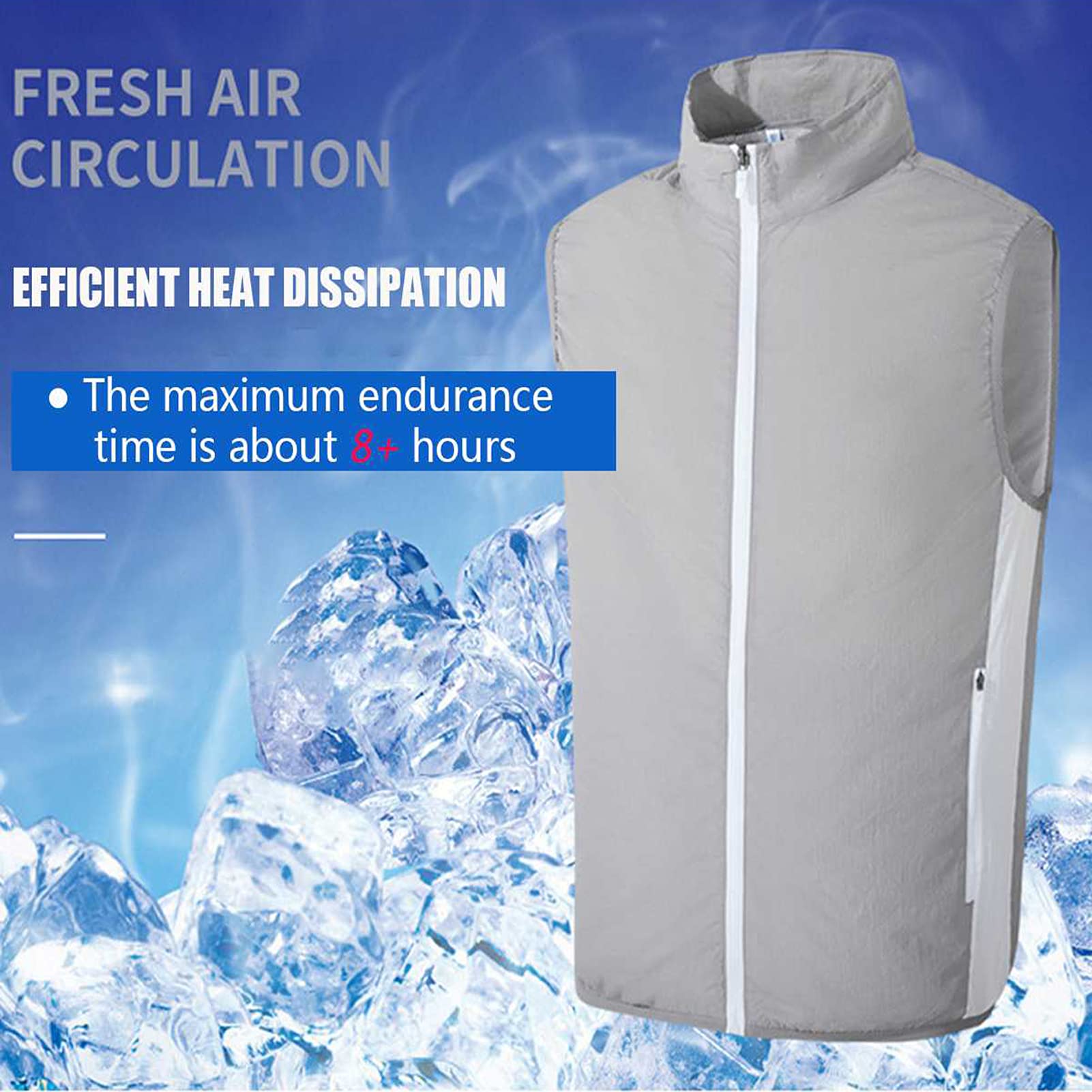
Your cooling vest’s status under EU PPE Regulation 2016/425 comes down to one thing: what claim you make about the product. Add “protects against heat effects” in an occupational context to your marketing, labeling, or technical documentation — you’ve triggered full PPE compliance obligations. No claim, no trigger. That’s the legal boundary.
The Claim Is the Threshold
A vest sold for factory workers near surfaces exceeding 50°C? That’s PPE — Category II by default. A vest marketed for cyclists, gym sessions, or casual summer comfort — with no protection language at all? That falls outside Regulation 2016/425. It’s treated as ordinary clothing, the same way an umbrella is.
The phrase matters more than the product itself.
How Cooling Vest Types Map to PPE Categories
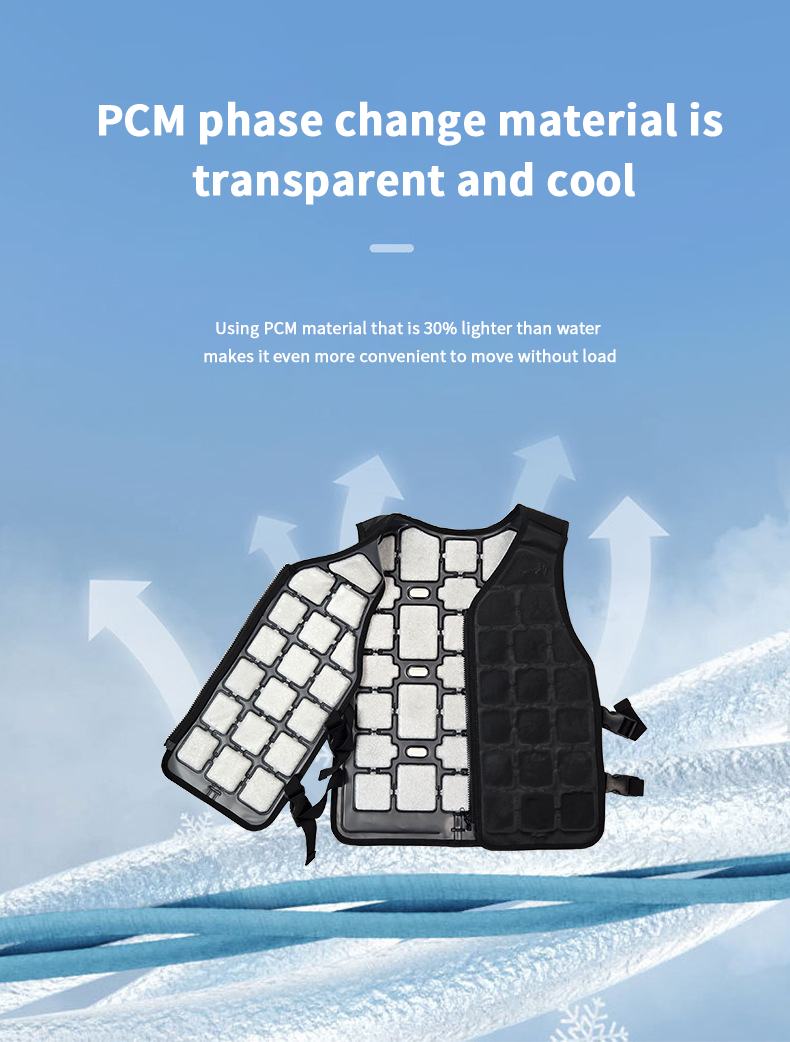
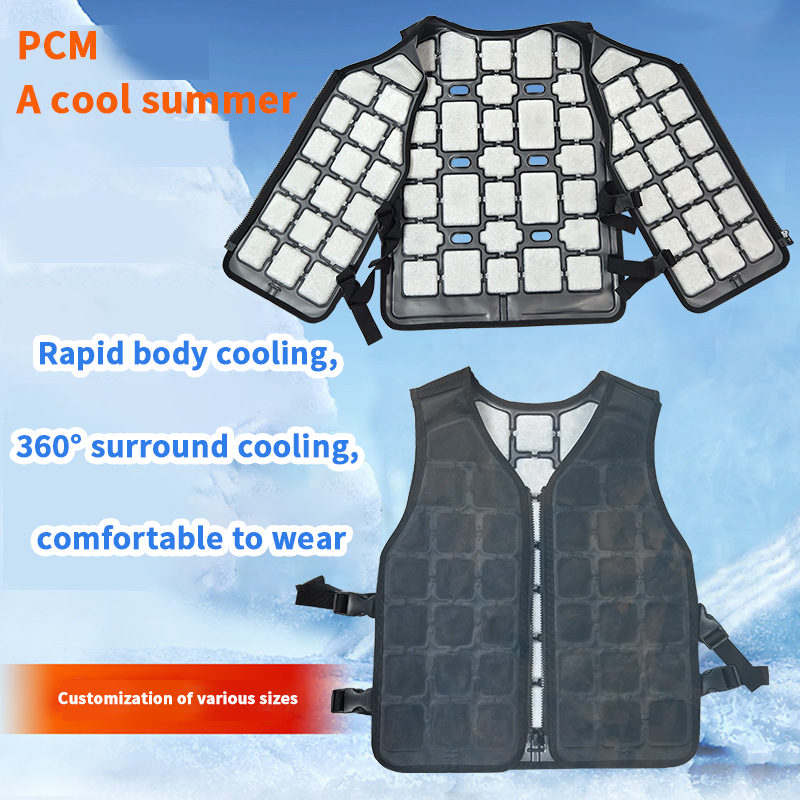
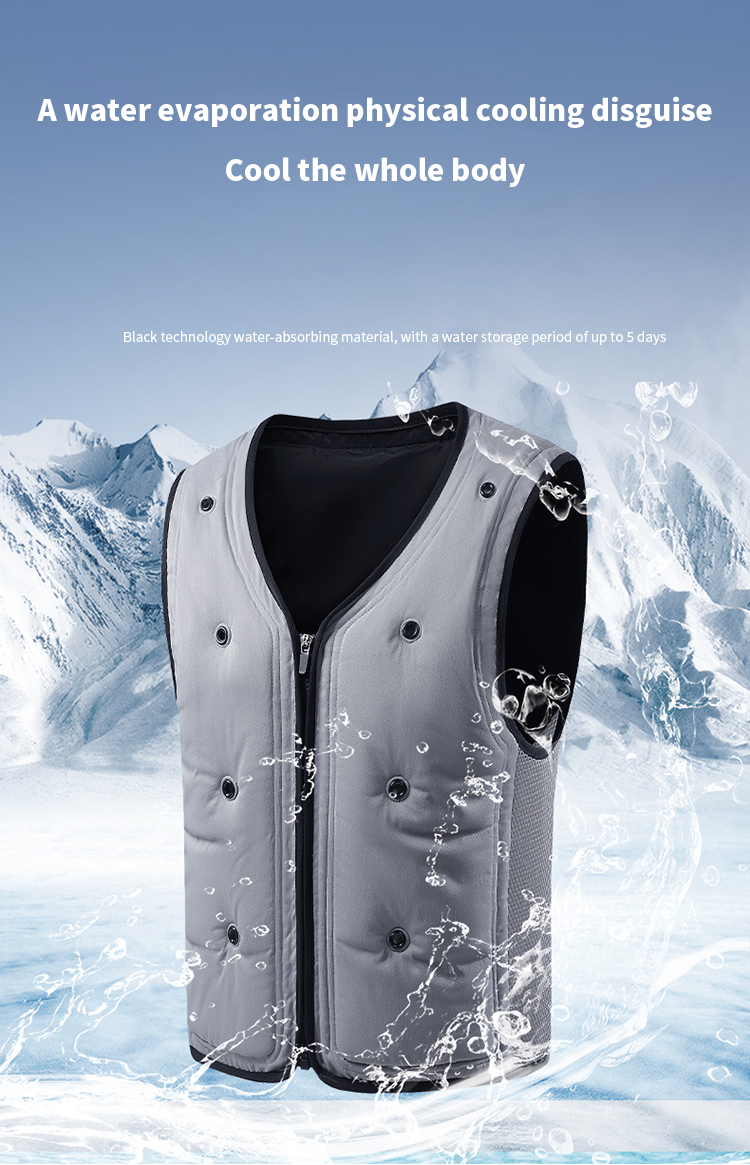
Most cooling vests land in Category II. That requires internal production control plus EU type-examination through a Notified Body. Here’s how the three main types break down:
|
Vest Type |
Mechanism |
PPE Category |
Core Compliance Requirement |
|---|---|---|---|
|
Evaporative |
Water evaporation |
Cat II |
Thermal insulation; minimal perspiration restriction |
|
Phase Change Material (PCM) |
Latent heat absorption |
Cat II |
Heat flux capacity match; non-flammable if flame contact risk |
|
Liquid Circulation |
Pumped coolant |
Cat II (or III if extreme heat) |
Insulation integrity; prevent liquid penetration injury |
Category III applies at extreme heat thresholds — conditions at or above 100°C. For most standard industrial cooling vests, Cat II is your baseline.
What “Non-PPE Positioning” Actually Costs You
Some manufacturers try to sidestep Regulation 2016/425 by dropping all protection claims. That strategy works — until it doesn’t.
Your vest implies heat protection through industrial-context marketing? Customs authorities and market surveillance bodies can step in with misclassification fines or a full market ban. There’s a worse scenario too. A worker suffers heatstroke wearing a vest positioned as “just clothing.” Your liability exposure is real — and most standard insurance won’t cover it.
The regulation isn’t punishing you for selling cooling products. It’s punishing ambiguity.
Bottom line: Check your product description, your instruction manual, and your sales materials. Heat protection language appears anywhere in those? Treat the vest as PPE Category II, engage a Notified Body, and build your compliance file before the shipment moves.
CE Marking Requirements for Cooling Vests: Which EN Standards Apply to Your Product?
The standard you test against determines everything — your certification path, your Notified Body workload, and whether your CE mark holds up under customs scrutiny.
There is no single universal EN standard for cooling vests. Which one applies depends on your product’s mechanism and operating environment. Get this wrong and your technical file is built on the wrong foundation. That’s not a paperwork problem. That’s a clearance problem.
The Two Primary Standards and Where They Split
EN 14058 covers protective clothing against cool environments above -5°C. Most industrial cooling vests fall here — PCM-based, evaporative, or light insulation designs used in moderate-heat workplaces. This is your standard.
EN 342 handles the colder side, below -5°C. It’s not relevant for cooling vests unless your product doubles as cold-environment protection gear.
The threshold is -5°C. Know which side your product sits on.
What EN 14058 Tests
Three parameters set your performance class under EN 14058:
|
Parameter |
Class 1 Minimum |
Class 2 Minimum |
Class 3 Minimum |
|---|---|---|---|
|
Thermal Insulation (Icl, clo) |
0.4 |
0.6 |
0.8+ |
|
Air Permeability (mm/s) |
≤100 |
≤20 |
≤5 |
|
Water Resistance (kPa) |
5.9 (optional) |
8.0 |
13.0+ |
Higher class = tighter performance threshold. Your product must hit the minimum for whichever class you declare on the label. Declaring Class 2 and testing at Class 1 levels is a compliance failure — not a technicality.
No Harmonized Standard: Evaporative and Liquid Circulation Vests
Here’s where it gets harder.
Evaporative cooling vests have no dedicated harmonized standard. Your vest may qualify as Category II PPE based on heat-stress protection claims. Route it through EN 14058 where thermal properties align. Then add a custom risk assessment. That document must show the evaporative mechanism meets EU PPE Regulation 2016/425 Annex II Essential Health and Safety Requirements (EHSR).
Liquid circulation vests face the same gap. No specific harmonized standard exists. Your path includes three things:
– A full EHSR-based technical file
– Notified Body review under Module B + C
– No harmonized standard number on the CE mark itself
That’s the non-harmonized route. It’s legal, but it demands tighter documentation discipline.
One practical note: No standard number on your CE mark will raise flags at the border. Customs officers are trained to catch this. Keep your technical file summary ready to present.
The ISO 15743 Cross-Check
ISO 15743 covers thermal environments and cold-work risk assessment. It doesn’t replace EN 14058. It fills gaps where your cooling vest is part of a larger PPE ensemble — especially where lower-body insulation affects the vest’s performance. Your product ships as a coordinated suit system? Cross-check Icl values across all components. Confirm no insulation gaps exist across the full assembly. Market surveillance bodies review ensemble performance — not just the vest on its own.
Bottom line on standards selection: Match the standard to the mechanism. Evaporative and liquid circulation vests need extra documentation work — the harmonized standard framework doesn’t cover them. Build your technical file around the EHSR and document every decision you make.
Step-by-Step CE Certification Process: From Lab Testing to Affixing the Mark
Five steps stand between your cooling vest and a legal CE mark. Miss one and the whole chain breaks.
Here’s how the process runs — in order, no detours.
Step 1: Classify Your Product and Select the Right Module
Start by identifying your PPE category. For cooling vests, that’s Category II. This locks you into Module B + Module C — EU type-examination through a Notified Body, then conformity to type. Cat II has no shortcuts.
Step 2: Lab Testing via a Notified Body (Module B)
Send your technical documentation and physical product samples to your chosen Notified Body. Check them first in the NANDO database. Bodies not listed there carry no legal weight.
The Notified Body tests your samples against your declared standard — EN 14058 or EHSR-based for evaporative or liquid cooling vests. They run the required tests. At the end, they issue an EC Type Examination Certificate. Set aside 4–12 weeks for this stage.
Step 3: Compile Your Technical File
Seven core items go into this file:
-
General product description
-
Design drawings and component diagrams
-
Explanations of design and operation
-
List of applied harmonized standards and test results
-
Design calculations and checks
-
Test reports
-
Risk analysis and compensatory measures where standards fall short
Hold this file for 10 years minimum from the last manufacture date. Customs authorities can request it with little warning. Keep it accessible and complete.
Step 4: Issue the Declaration of Conformity
The manufacturer signs this document — not the importer, not the logistics agent. Add the correct directive references, the Notified Body ID number, and full product identification details. A wrong format here is the top reason shipments get held at EU entry points.
Step 5: Affix the CE Mark
Place the mark on the product, the packaging, or the instruction manual. Minimum height: 5mm. The mark must be permanent and impossible to remove. For Category II, a Notified Body is always part of the process. Their four-digit ID number goes right after the CE symbol.
That’s the mark that clears customs.
Who Is the EU Authorized Representative and Why Non-EU Manufacturers Cannot Skip This Step
The EU Authorized Representative isn’t optional paperwork. It’s the legal anchor that keeps your product on European shelves.
EU PPE Regulation 2016/425 and the Market Surveillance Regulation (EU) 2019/1020 both require this. Any non-EU manufacturer must appoint an EU-established entity to act on their behalf. This must happen before a single unit crosses the border. No exceptions. No workarounds.
Here’s what that means in practice:
-
The AR’s name and address must appear on your product label and packaging — not your factory address in Guangzhou or Shenzhen
-
The AR holds copies of your Declaration of Conformity and technical documentation for 10 years
-
They respond to EU market surveillance authorities on your behalf — in the local official language
-
They pass authority requests for samples or facility access back to you
What happens without one? Customs flags the missing AR address on inspection. Goods get detained. Authorities request documentation. The results get worse from there — destruction orders, forced returns, re-shipment costs, and possible market bans for repeat violations.
An AR costs €500–€3,000 per year, depending on product class and support scope. That’s a small fraction of what one seized shipment will cost you.
So, take three steps before your goods move. Find an EU-established entity with PPE compliance experience. Draft a written mandate that sets out the scope and liability terms. Get their address on your labeling. Do all this before your shipment leaves.
Correct HS Code Classification for Cooling Vests: Stop Misclassification Before It Costs You
The wrong four digits on a customs form can cost you $21,200 on a single $100,000 shipment. That’s not a rounding error — that’s a pricing disaster buried inside a tariff table.
The Number That Changes Everything: Water Resistance
One test drives your duty rate more than anything else.
Run your vest through the water resistance test in HTS Chapter 62, U.S. Note 2. Pass it, and your code is HTS 6201.93.3000 — a 7.4% duty rate. Fail it, and you land on HTS 6201.93.3511 at 28.6%. Same product. Different test result. A 21.2 percentage point swing.
Here’s how the core classifications break down:
|
Classification Scenario |
HTS Code |
Duty Rate |
|---|---|---|
|
Men’s vest, man-made fiber, water-resistant |
6201.93.3000 |
7.4% |
|
Men’s vest, man-made fiber, non-water-resistant |
6201.93.3511 |
28.6% |
|
Men’s/boys’ vest, man-made fiber, other garments |
6211.43.9054 |
16.5% |
The Teflon Trap
Many cooling vest makers use Teflon coatings for moisture management. The logic seems fair: coated = visible treatment = HTS 6210. That logic is wrong.
Teflon coatings are not “visible” under tariff definitions. HTS 6210 does not cover them. Your water resistance test result controls the classification — not your coating type. The coating is simply not part of the equation.
File a coated vest under HTS 6210 and customs will recalculate your duty on review. The bill comes later, with interest.
Three Steps Before You File
-
Confirm fiber composition — Man-made fiber content shifts your entire subheading range
-
Run the water resistance test — HTS Chapter 62, U.S. Note 2 is the governing specification
-
Check coating visibility — Teflon does not move you into HTS 6210; don’t let it
Get the classification right. The gap between right and wrong is not a technicality — it’s $21,200 per container.
EU Import Duties, VAT & Total Cost Calculation for Cooling Vests
A $50 vest doesn’t land in Hamburg at $50. Clear customs, and that number sits closer to $70. Miss that, and your pricing model is already broken.
Here’s the math that matters.
The duty rate is 12% MFN. China graduated from EU GSP in 2015. No preferential rate applies. No EU-China FTA exists. Every cooling vest shipped from China pays full MFN — no exceptions, no workarounds.
Duty calculates on CIF value, not FOB. Most importers overlook this difference. It’s a costly mistake.
Full Landed Cost: 500 Units, FOB $50, Destination Hamburg
|
Component |
Total |
Per Unit |
|---|---|---|
|
FOB Cost |
€23,000 |
€46.00 |
|
Sea Freight |
€736 |
€1.47 |
|
Insurance |
€115 |
€0.23 |
|
CIF |
€23,851 |
€47.70 |
|
Customs Duty (12%) |
€2,862 |
€5.72 |
|
German VAT (19%) |
€5,075 |
€10.15 |
|
Clearance Fee |
€200 |
€0.40 |
|
Total Landed |
€31,988 |
€63.98 |
Effective burden: ~39% over FOB. That’s not a footnote — that’s your margin strategy.
VAT Varies by Destination
|
Country |
VAT Rate |
Per-Unit Impact |
|---|---|---|
|
Germany |
19% |
€10.15 |
|
France |
20% |
€10.70 |
|
Netherlands |
21% |
€11.25 |
|
Italy |
22% |
€11.80 |
VAT-registered B2B buyers reclaim it. For direct-to-consumer sales, it’s a real cost. You either pass it to the end customer or absorb it yourself.
Formula: CIF + Duty (12% × CIF) + VAT (rate × (CIF + Duty)) + Clearance Fees
One more thing to flag: vests with electronic cooling components like Peltier elements fall under Germany’s LUCID packaging registry. Check TARIC for anti-dumping duties tied to your specific CN code. Do this before filing — not after.
EU Customs Clearance Step-by-Step: From Pre-Arrival Declaration to Cargo Release
The clock starts before your cargo leaves the dock.
EU customs doesn’t wait for your shipment to arrive — the system needs data before it gets there. Under ICS2, your carrier submits the Entry Summary Notice (ENS) before loading. Miss the window and the system rejects the declaration flat. These deadlines are fixed:
-
Container maritime: 24 hours before loading at origin port
-
Short sea shipping: 2 hours before arrival
-
Road freight: 1 hour before arrival
-
Long-haul air (≥4 hours): 4 hours before arrival
File 3–5 days ahead. That buffer gives you room to fix correction requests without pushing your delivery date.
Five Steps from Port Gate to Free Circulation
Step 1 — ENS Submission (ICS2)
Your carrier submits the ENS through the electronic system. Include your 10-digit HS code, CIF value, and origin. Data mismatches between your bill of lading and invoice are the top reason for first-time rejections. Double-check both documents before filing.
Step 2 — SAD Declaration Upload
After arrival, your importer files the Single Administrative Document through the national electronic single-window. Bundle your commercial invoice, packing list, CE Declaration of Conformity, and Notified Body certificate into one PDF package. Your EORI number is required at this stage — no EORI means no declaration, full stop.
Step 3 — Duty and Tax Payment
Run your figures against CIF value using the TARIC duty calculator. Pay through your customs account or bank transfer. The system won’t release your goods until payment clears.
Step 4 — Risk-Based Inspection
EU border systems use AI-based risk scoring. PPE products face a 5–10% physical inspection rate. Your shipment gets flagged? You have 24 hours to supply samples or photographs. Routine clearance takes 1–2 days. Flagged shipments take 3–5 days — and storage fees kick in after 48 hours.
Step 5 — Release and VAT Declaration
Duties paid, documents verified, MRN issued. Your goods move into free circulation. Declare import VAT within 10 days of the MRN issuance date. Miss that deadline and interest starts at the national rate plus 0.02% per day — Germany uses 6% per annum as the base, with minimums between €25 and €500.
One Documentation Table Worth Printing
|
Document |
Key Data Required |
Format |
|---|---|---|
|
Commercial Invoice |
Value, HS code, quantity, origin |
Electronic, pre-arrival |
|
Packing List |
Weight, packaging detail (e.g., 10 boxes/50 pcs) |
Must match invoice figures |
|
Bill of Lading |
Consignee, HS code |
eBL upload |
|
CE DoC + NB Certificate |
Compliance standards, test references |
PDF attached to SAD |
One mismatch between any two of these documents and your shipment goes straight to the inspection queue. Keep them consistent. Cross-check them before the cargo moves — not after.
Top 5 Reasons Cooling Vests Get Detained at EU Customs (And How to Prevent Each One)
Customs detention isn’t random. The same five mistakes show up again and again — and every one of them is preventable.
1. Missing or Non-Compliant Declaration of Conformity (30% of PPE detentions)
EU customs officers reach for the DoC first. Most rejections come down to three format failures:
-
No Notified Body ID number (85% of cases)
-
An expired standard reference (EN 14058:2017 became invalid after 2023)
-
An unsigned or undated declaration
Fix all three before the shipment moves. Put the NB number in 0123/0456 format. Cite the current standard versions. Have your EU Authorized Representative sign with their full name, position, and date.
2. Counterfeit or Invalid CE Mark (15% of clothing/PPE IP detentions)
In 2024, EU border authorities detained 112 million counterfeit items worth €3.8 billion. Clothing was the top physical-goods category. Check your Notified Body’s active status on the NANDO database at ec.europa.eu/growth/tools-databases/nando before your shipment leaves. An invalid NB number on your CE mark gets your goods detained on the spot.
3. HS Code Mismatch (20% of mis-declaration cases)
Using 6110.30 (jerseys/pullovers) instead of 6210.40 (waterproof garments) for cooling vests creates instant value disputes at the border. Not sure which code applies? File for a Binding Tariff Information (BTI) ruling before the cargo ships. That ruling locks in your classification and removes the guesswork.
4. User Manual Not in the Destination Country’s Official Language (12% of non-compliance detentions)
EU PPE Regulation 2016/425 requires instructions in the official language of every member state where you sell the product. This detail is missing in 91% of cases that end in product destruction or litigation. Ship a multilingual PDF — at least five languages — plus one physical copy per ten units.
5. Technical File Inaccessible at Time of Inspection (18% of verification failures)
Your technical file stored on a server in China adds a 70% delay rate to customs queries. Upload everything as a single ZIP file under 50MB to the EU Single Window portal. That includes:
-
Declaration of Conformity (DoC)
-
EN 14058 test reports
-
Risk assessment
-
Bill of Materials (BOM)
Put a cloud access link on your packing list. Customs gives you three days to respond. Files stored overseas often miss that window — and a missed deadline means detained goods.
Pre-Shipment Compliance Checklist: 12 Items to Verify Before Your Cooling Vests Leave the Factory
Twelve things. That’s the gap between a cleared shipment and a customs nightmare.
Run through this list before the cargo moves. Every item ties to a real detention trigger. Miss one and you’ll face it at the border — on someone else’s schedule, at someone else’s cost.
Documentation
-
Declaration of Conformity (DoC) — Signed and dated. Current standard references included. Notified Body ID in 0123/0456 format. No blank fields.
-
EC Type Examination Certificate — A NANDO-listed Notified Body must issue this. Check its active status on the database before shipping.
-
Technical File — All seven parts must be there: description, drawings, design calculations, test reports, risk assessment, standards list, and compensatory measures. Someone in the EU must be able to access it within three days.
-
EN 14058 Test Reports — Use the current version. The declared performance class must match the actual test results.
-
User Manual — Available in the official language of every destination member state. Include at least one physical copy per ten units.
Labeling & Marking
-
CE Mark — Minimum 5mm height. Fixed to the product so it won’t come off. The Notified Body’s four-digit number goes right after the symbol.
-
EU Authorized Representative Address — Print it on the product label and outer packaging. Not your factory address. The AR’s address.
-
HS Code on Commercial Invoice — Cross-check it against TARIC. Complete the water resistance test. Lock the classification before you file.
Product & Process
-
PPE Category Confirmed — Document Category II or III. Complete the compliance route (Module B + C) to match the category.
-
Fiber Composition Verified — Confirm man-made fiber content against the HS subheading. Don’t rely on the production sheet alone.
-
Packaging Registry Check — Got electronic components? Germany’s LUCID registration is required. Sort this out before the container seals.
-
Document Consistency Review — Cross-check the commercial invoice, packing list, bill of lading, and DoC against each other. One mismatch puts the shipment straight into the inspection queue.
Print this. Work through it line by line. Then ship.
Conclusion
Getting cooling vests through EU customs isn’t about luck. It comes down to preparation — work that starts long before the shipment leaves the factory.
Three things separate a smooth clearance from a costly hold:
-
Does your product fall under EU PPE Regulation 2016/425?
-
Is your CE marking documentation complete and solid?
-
Are your goods classified under the right HS code from day one?
Miss any one of these, and you’re not just facing delays. You’re facing returns, penalties, and a damaged buyer relationship that’s hard to rebuild.
That’s exactly what the 12-item pre-shipment checklist in this guide is built for. Use it to catch the gaps before your shipment hits a wall.
Preparing your first EU shipment? Start there. Auditing an existing compliance process? Same answer — start there.
And if you’d like an experienced team to walk through your personal protective equipment EU import requirements with you, reach out. We’ve seen the pitfalls. We’ll help you avoid them.