
Sweat-soaked and overheated? You’ve wondered whether a cooling vest is just a fancy ice pack strapped to your chest — or something smarter. The honest answer: it depends on the type of vest you’re looking at.
Some cooling vests lock you into a fixed temperature the moment you activate them. Others give you real control over how hard they work to manage your body heat. That difference matters more than you’d think. It’s what separates a vest that fits your life from one that sits in a closet.
This guide breaks down how cooling vest technology handles temperature regulation — and which type is worth your money. So whether you’re a construction worker grinding through a brutal summer shift, an athlete pushing for peak performance, or someone managing a heat-sensitive medical condition, you’ll find clear answers here.
Do Cooling Vests Have Temperature Control Adjustments?
The short answer: some do, some don’t — and it comes down to the physics of how each vest works.
Here’s a quick breakdown of what you’re choosing between:
-
Vortec air-cooled vests give you a physical knob. Turn it. Dial in your comfort. These can drop temperature by 45–60°F relative to inlet air, with outputs up to 2,500 BTUH.
-
Liquid circulating vests let you adjust pump speed and ice volume. That’s real, responsive control — built for environments that push past 104°F.
-
Phase change material (PCM) vests offer zero adjustment. Melt points are fixed at 59–70°F. That fixed range is what makes them work so well. No controls needed. The material handles it.
-
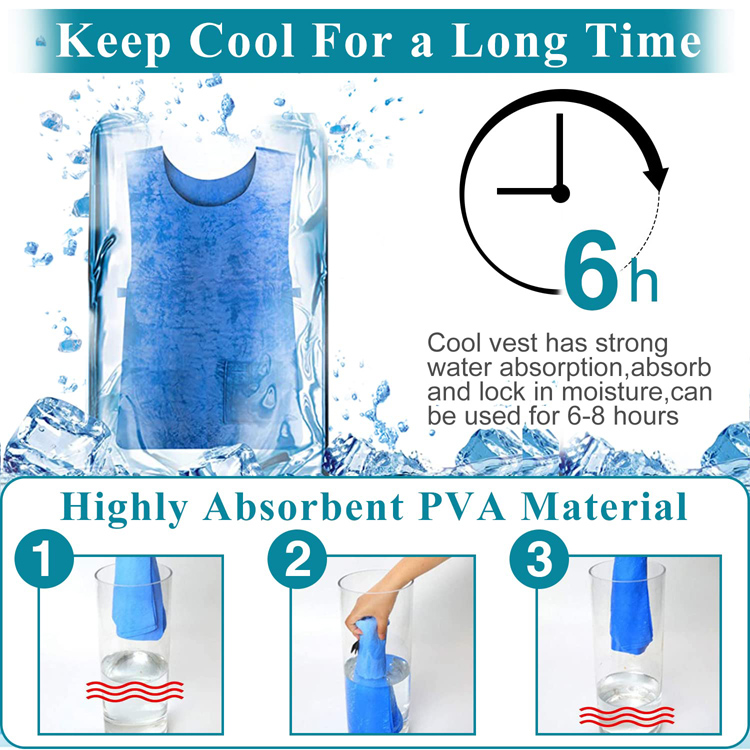
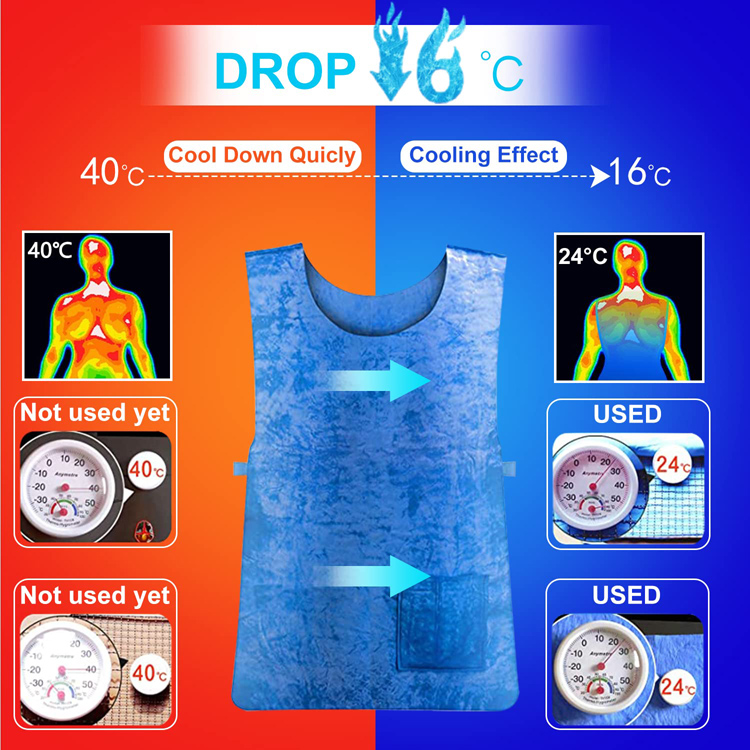
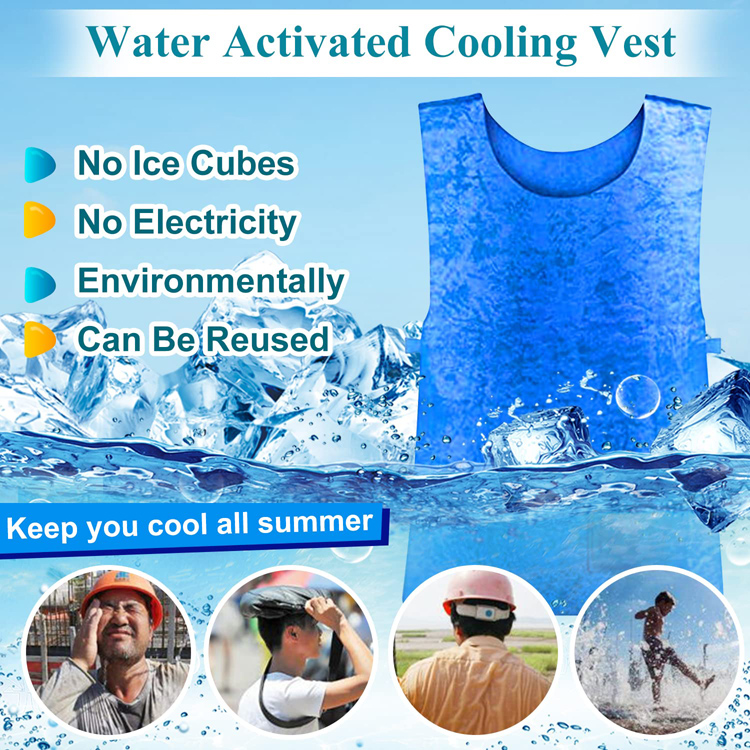
Evaporative vests are just as hands-off. Water evaporates. Heat leaves. Done.
Bottom line: Need precision? Go active. Need simplicity? Passive vests deliver steady, reliable cooling — no buttons, no settings, no fuss.
Do Cooling Vests Have Temperature Control? (The Short Answer)
Go to any workwear store and you’ll find cooling vests with big claims — advanced cooling technology, superior heat management, next-gen thermoregulation. Those labels sound impressive. But here’s what they skip: over 90% of cooling vests on the market have zero user-adjustable temperature control.
That’s not a flaw. It’s just physics.
Most vests cool through fixed, passive methods — evaporation, phase change, or melting ice. The material works by the rules of thermodynamics. Not by your comfort settings. There’s no dial. No display. No thermostat. PCM vests, for example, absorb heat at a set melt point of 59–70°F (15–21°C). That number doesn’t change because you want it to. The chemistry is fixed.
Active cooling vests — the ones you can actually adjust — make up a small part of the market. They’re built for industrial and extreme-performance use. They exist. They work. But they need power, they weigh more, and they serve a specific purpose.
Here’s the honest breakdown:
-
Passive vests → no adjustment possible, fixed output, simple and reliable
-
Active vests → adjustable airflow or liquid circulation, but they need power — either a compressed air source or a battery pump
One big misconception worth clearing up: a cooling vest is not air conditioning. You can’t set it to 20°C and expect it to stay there. Knowing this difference saves you from a bad purchase.
How Each Cooling Vest Type Handles Temperature Regulation
Four vest types. Four different relationships with temperature. Knowing what each one does — and doesn’t do — is the fastest way to match the right technology to your body and your environment.
Phase Change Material (PCM) Vests
PCM vests don’t negotiate with heat. They absorb it — at a fixed melt point of 55–65°F (13–18°C) — until the material is spent. That’s it. No dials. No modes. No user input required.
What you get is something more reliable than any manual setting: physics doing what it’s supposed to do. The material melts at a controlled rate. It pulls heat away from your core at a steady pace. Skin temperature stays close to natural levels for up to 3 hours. Ice-optimized PCM variants carry greater latent heat than standard paraffin — more energy stored, more cooling per gram.
The tradeoff? That fixed temperature range is locked in. You need something colder, or want more intensity? PCM can’t deliver that.
Evaporative (Hydrogel) Vests
Evaporative vests run on one mechanism: water evaporates, and heat leaves with it. Skin contact temperature sits around 36°C — close to neutral, not sharply cold. There’s nothing to adjust. The environment does the work for you. That’s either a feature or a limitation, depending on where you’re working.
In dry, low-humidity conditions, these vests perform well. In humid heat, evaporation slows — and so does the cooling. One data point worth knowing: wearers need 27% less water intake on average (about 0.352L less) compared to working without a vest. That’s a real physiological benefit, not just a comfort claim.
Water-Circulation Vests
This is where active temperature control enters. Cold water moves through tubing across your torso, drawing from an external reservoir. The result: a local temperature drop of around 15°C — the strongest sustained cooling of any vest type.
You control the output through power options — battery, 12V, or outlet — and by adjusting reservoir temperature. In hot, humid conditions where passive vests lose their edge, water-circulation vests stay consistent. Measured data backs this up: heat storage drops to just 7–13W in hot-wet climates, with core temperature settling at 37.4°C. That beats air-cooled alternatives by a clear margin.
Ice Pack Vests
Ice pack vests are blunt instruments — and sometimes that’s what you need. Replaceable packs freeze at 32°F (0°C) or below. They deliver the highest raw cooling intensity available in any wearable format. Carry spare packs, swap them mid-shift, and the cooling keeps going. These vests have held up in extreme conditions — ambient temperatures up to 50°C, humidity as low as 14% — with measurable gains in cardiovascular response.
At a Glance: Cooling Vest Comparison
|
Vest Type |
Temperature Effect |
Duration |
User Adjustability |
Humidity Sensitivity |
|---|---|---|---|---|
|
PCM |
55–65°F fixed melt point |
2–3 hours |
None |
Low |
|
Evaporative |
~36°C skin contact |
Variable |
None |
High |
|
Water-Circulation |
~15°C local drop |
Extended |
High (power-dependent) |
Low |
|
Ice Pack |
32°F+ per pack |
Extended (swap-based) |
Medium |
Low |
The best vest for temperature regulation isn’t the most expensive one. It’s the one that fits your conditions, your shift length, and your choice between fixed passive cooling or active adjustable control.
What “Temperature Control” Really Looks Like in Practice

Active cooling vests borrow their control logic straight from industrial temperature management systems. Once you see that connection, the technology stops feeling complicated.
Here’s what happens inside a high-end active cooling vest each time you adjust a setting:
The signal chain works like this:
1. A temperature sensor — a PT100 or thermocouple equivalent — detects your body surface temperature and converts it into a signal
2. That signal goes to a microcontroller, which compares the reading against your target setpoint
3. The controller tells the cooling mechanism — a pump, a fan, or a circulation system — to increase or reduce output
4. The cycle repeats in fractions of a millisecond, over and over
The result is a vest that responds to your body, not one that just runs at a fixed pace.
What adjustability really means in wearable form:
Most consumer-grade active vests break this down into two or three selectable power levels. Industrial-grade personal cooling systems go further. Some use multi-stage switching logic where:
-
Low output activates below a set skin temperature
-
Standard cooling runs within a normal operating band
-
High-stage cooling kicks in as heat load climbs
This is the same logic used in climate-controlled industrial environments. The hardware is smaller. The precision is a bit lower. But the core principle — sensor reads, controller decides, actuator responds — is identical.
The practical takeaway: A cooling vest that claims “precision temperature control” only earns that label if it includes a sensor. No sensor means no real regulation. You get a fixed-speed motor running at whatever level you picked — nothing more. Real temperature control is a closed loop. A speed dial is not.
Matching Temperature Control Needs to the Right Vest Type
The wrong vest doesn’t just underperform — it fails you at the moment you need it most. Your cooling strategy has to match your actual conditions. Get that wrong, and you’ve bought a liability, not a tool.
Here’s how real wearers think through it.
High-Heat Workers: Construction, Factory, Industrial Shifts
For anyone pushing through 2–4 hour shifts in sustained heat, the numbers matter more than the marketing. You need total energy capacity above 900,000 joules and a dry weight under 1.2kg.
Two vests deliver on both:
-
Qore ICEVEST HiVis Class 2 — 50.04 J/s cooling power, 944,688 J total energy. Wet weight climbs to 162 oz with ice, but that thermal reservoir keeps you functional through a full shift.
-
ICEPLATE EXO®-SLK — the lightest serious option at 14.55 oz dry, 48.27 J/s, and 946,880 J total. Same endurance. Much less to carry.
PCM and ice-plate designs dominate this category. Your shift runs past two hours? Sustained output beats peak intensity. Every time.
Athletes: Marathoners, Cyclists, Trail Runners
Movement changes everything. A vest that works great on a job site becomes dead weight at mile 18.
Athletes need target skin contact temperature between 32–36°C. Cool enough to cut heat strain. Not so cold it kills your warmup or slows circulation.
-
FlexiFreeze hits 59.59 J/s peak cooling — the highest of any vest tested. But total energy is only 427,521 J. It starts fast and fades. Wet weight is 76.20 oz (2.16kg), which is manageable but noticeable.
-
Ylnewways runs at 55.63 J/s with six 400ml ice packs, totaling 562,291 J. Shoulder and side adjustability covers a 9-inch range, from XS to 6XL. That fit precision matters — fit decides how much of that 55.63 J/s reaches your skin. Ylnewways transfers close to double the cooling of loose-fitting alternatives tested at 25 J/s.
Evaporative and PCM designs both work here. Put sub-1kg total weight and adjustable fit ahead of raw power numbers.
Medical Users: MS Patients and Heat-Stress Recovery
Precision matters more here than in any other category. The goal isn’t performance — it’s safety. Target skin temperature sits at 36–37°C, close to physiological neutral.
Trial data from optimized ice vests tells a clear story. Compared to a standard commercial paraffin PCM vest (Techkewl-7026, 2.2kg, melt point 14°C), optimized ice vest wearers showed:
-
Heart rate dropped to 100.55 bpm versus 113 bpm during activity
-
Skin temperature held at 36.83°C — just above the natural resting baseline of 36.29°C
-
Equal heat stress control, with higher latent heat and a lower cost
Water-circulation vests with preset cooling stages are the right choice for this group. These active systems hold output within a tight physiological range. Passive designs cool hard up front, then taper off — that inconsistency is the problem.
Urban Commuters and Office Use
Comfort is the goal here, not performance or medical management. That shifts the whole equation. Under 0.5kg. No setup. No maintenance.
The ICEPLATE EXO®-SLK weighs 14.55 oz dry (0.41kg), rising to just 21.90 oz with its hydrophobic layer. It handles on-and-off use without adding friction to your commute. The TechNiche HyperKewl takes the same approach — evaporative cooling plus fan assist, light and low-effort. It’s built for someone who wants a cooling edge, not a cooling system.
The Four-Step Match
Check the spec sheet before you check the price tag:
-
Assess duration first — shifts over 2 hours need total energy above 900,000 J and dry weight under 1.2kg
-
Read your environment — hot and humid calls for water-circulation or active cooling (target heart rate below 110 bpm); dry heat suits lightweight evaporative designs
-
Check the performance parameters — cooling power above 40 J/s, skin temperature ceiling below 37°C, at least four fit adjustment points
-
Test contact before you commit — a vest that doesn’t sit flush against your body drops half its efficiency before you’ve taken a step
Key Performance Specs That Matter More Than “Temperature Control”
Temperature control is the feature everyone asks about. But it’s rarely the spec that decides whether a vest works for you.
Researchers and industrial safety teams look at a different set of numbers. These numbers don’t show up on most product pages — but they tell the real story about performance.
The metrics that predict how a vest will perform:
-
Cooling Power Output (J/s): This is your rate of heat removal — the thermal equivalent of throughput. A vest running at 55 J/s pulls heat away from your body close to twice as fast as one running at 25 J/s. That gap shows up in your core temperature within the first 20 minutes.
-
Total Energy Capacity (Joules): Think of this as your vest’s total fuel tank. A high cooling rate means nothing if the energy reserve runs out at the 90-minute mark. For full-shift use, look for total capacity above 900,000 J.
-
First-Contact Efficiency: A loose-fitting vest can lose half its cooling power before you’ve broken a sweat. Fit precision matters here. The vest needs to keep steady surface contact with your body — similar to First Pass Yield in manufacturing. Poor contact turns into extra heat your body has to deal with.
-
Dry Weight (kg): Under 1.2kg for high-demand use. Under 0.5kg for commuter or casual wear. Each gram you carry creates more metabolic heat — so lighter is better.
-
Humidity Sensitivity Rating: Evaporative vests break down in high-humidity conditions. Your working environment pushes past 60% relative humidity? That one factor outweighs any cooling power figure on the label.
No single spec wins on its own. The right vest balances all five — matched to your shift length, your environment, and your body. That’s the one worth buying.
How to Choose a Cooling Vest for Temperature Precision
“Precision” gets thrown around a lot in cooling vest marketing. It almost never means what you think it means.
Here are three decisions to make — in order — before you spend a dollar.
Step 1: Define How Hard Your Environment Is Working Against You
Not all heat is equal. A 34°C day with moderate airflow and 60% humidity puts about 56–67W of thermal load on your torso. Most passive vests handle that fine. Push into extreme territory — 111°F with near-zero airflow — and the numbers shift fast.
At that point, research shows a 49% reduction in sweat rate with the right vest. All 14 test subjects finished a 6-hour task while wearing one. Without a vest, 5 didn’t make it. At 134°F, sweat reduction dropped to 38%. Still useful, but the vest was near its limit.
Know your conditions first. Then pick your technology.
Step 2: Set Your Endurance Requirement — Then Check It Against Real Data
Duration changes everything. A vest that performs well for 90 minutes can be useless by hour three.
-
2 hours: Look for vests that extend sustainable effort by at least 12 extra minutes under full load. That’s a proven benchmark for high-output situations.
-
3–3.5 hours: PCM vests that hold 21.1°C in 37.8°C ambient conditions reach this range. PCM inserts add about 60 minutes of extra cooling — but they add weight too.
-
Extended shifts: No passive vest gets through a 6-hour industrial shift without a swap strategy. Plan for that upfront.
Step 3: Match Cooling Power to Your Actual Goal
This is where most buyers go wrong.
Consumer passive vests — PCM and ice designs — do not cut core body temperature (Tc) in any real way. The data is clear. The cooling rate difference between wearing a vest and not wearing one is 0.0298°C/min vs 0.0280°C/min. That gap is statistical noise (p=0.830).
So what do passive vests actually do? Plenty:
-
20–49% sweat reduction
-
About 0.24L/hr less fluid loss
-
An 11% drop in heart rate under heat stress
That’s real. It’s just not core temperature control.
For true Tc precision — the kind used in medical monitoring, hazmat PPE, or hyperthermia recovery — you need active powered systems that output above 67W. Below that level, core temperature impact is too small to matter, no matter what the label says.
Red Flags to Watch For
“Precise temperature control” is one of the most misused phrases in this space. Spot these warning signs before you buy:
-
No power output specs listed — any “maintaining exact °C” claim without a wattage figure (minimum 56W baseline, >67W for core impact) is marketing copy, not engineering data
-
Short test windows — endurance claims from less than 3-hour trials don’t reflect real-shift performance
-
Hyperthermia language — no cooling vest replaces ice immersion for severe heat emergencies. A product that implies otherwise is a liability risk, not a safety tool
-
Overstated sweat savings — verified averages land around 0.24L/hr. Claims well above that, with no cited data, deserve real skepticism
The right vest isn’t the one with the most impressive claim. It’s the one with the most honest number.
FAQ: Common Questions About Cooling Vest Temperature Adjustment
Real questions deserve straight answers. Here’s what people get wrong about cooling vest temperature adjustment — and the truth behind each one.
Can I adjust the temperature on my cooling vest after I put it on?
It depends on the type. PCM and evaporative vests? No. The cooling is locked in from the moment you activate them. Your real control happens before you wear it. How long you freeze or chill the packs determines how cold they start. That’s it. Vortec compressed air vests are the exception. They include a physical adjustment knob. You dial the temperature difference up or down — anywhere from ±45–60°F relative to inlet air.
Does colder always mean better cooling?
No — and this is one of the most stubborn myths out there. PCM technology is built on purpose to avoid extreme cold. The 58–64°F range isn’t a limitation. It’s a design choice. It removes the ice burn risk and keeps cooling steady over hours, not just minutes. A 44°F advanced pack hits harder but burns out in 45 minutes. A 64°F PCM pack runs for up to 4 hours. Colder trades duration for intensity.
How do I control the cooling intensity on a passive vest?
Through activation method and time — that’s it. Ice water takes 10–20 minutes. A freezer runs faster and delivers colder packs. A refrigerator is slower, with a gentler starting temperature. Longer activation means colder packs. Colder packs mean more intense cooling at the start. That’s the one dial passive vest users have.
Can I customize how many packs I use?
Yes, on adjustable multi-pack vests. Polar’s design, for example, takes anywhere from 5 to 12 individual 4.5″ × 6″ packs. You choose the number and the placement — back, front, sides — plus the total weight you’re willing to carry. Fewer packs means lighter wear. More packs means longer coverage.
Do cooling vests work differently in humid vs. dry conditions?
Yes — and the difference is big. Evaporative vests lose effectiveness as humidity rises. Above 60% relative humidity, the physics break down. PCM and ice-based vests hold their output no matter the moisture level around you. Working in a humid environment? Passive evaporative cooling is the wrong tool for the job.
Are the packs reusable?
Yes, completely. Reactivate in a freezer for the fastest results, ice water for field use, or a refrigerator for a slower recharge. The phase change material runs through the cycle over and over — it absorbs heat while you wear the vest, then releases it during reactivation. No replacement needed.
Conclusion
The right cooling vest does more than keep you comfortable. It keeps you functional when heat tries to slow you down.
Not all cooling vests control temperature the same way. That difference matters. Phase change and water-circulating vests deliver a true personal cooling system — steady, predictable output you can count on. Evaporative vests are lighter and simpler, but their performance depends on the environment around you. Active electric vests land in the middle — adjustable, but tied to battery life.
Your next move? Match the vest to your reality:
-
Your climate
-
Your activity level
-
Your medical or occupational needs
Don’t just go by the spec sheet.
Head to coolheatech.com. You’ll find a curated selection of wearable cooling devices sorted by cooling type and use case. Less time researching. More time beating the heat.
Because the best cooling vest isn’t the most expensive one. It’s the one built for your heat problem.