Your team sweats through an outdoor event. Your gym members wipe their faces with regular towels that feel warm in minutes. Your promotional giveaway sits unused because those cheap terry cloth freebies don’t work.
Custom cooling towels in bulk aren’t all the same. Not all cooling technology performs equally. Choose the wrong type, and you get a product people forget in their gym bag. Pick the right one, and people rave about it.
Maybe you’re sourcing microfiber cooling towels for a corporate wellness program. Or you need industrial-grade PVA options for outdoor workers. Perhaps you want branded cooling towels that showcase your logo and keep athletes comfortable. Understanding evaporative cooling fabric matters.
We’re breaking down every type of cooling towel on the market. You’ll find instant cooling technology that activates in seconds. Green blends appeal to customers who care about sustainability. We’ll share real-world pricing insights. You’ll see customization options. We’ll give you honest performance comparisons. This helps you make the smartest bulk purchase for your specific needs.
Understanding Different Types of Cooling Towels
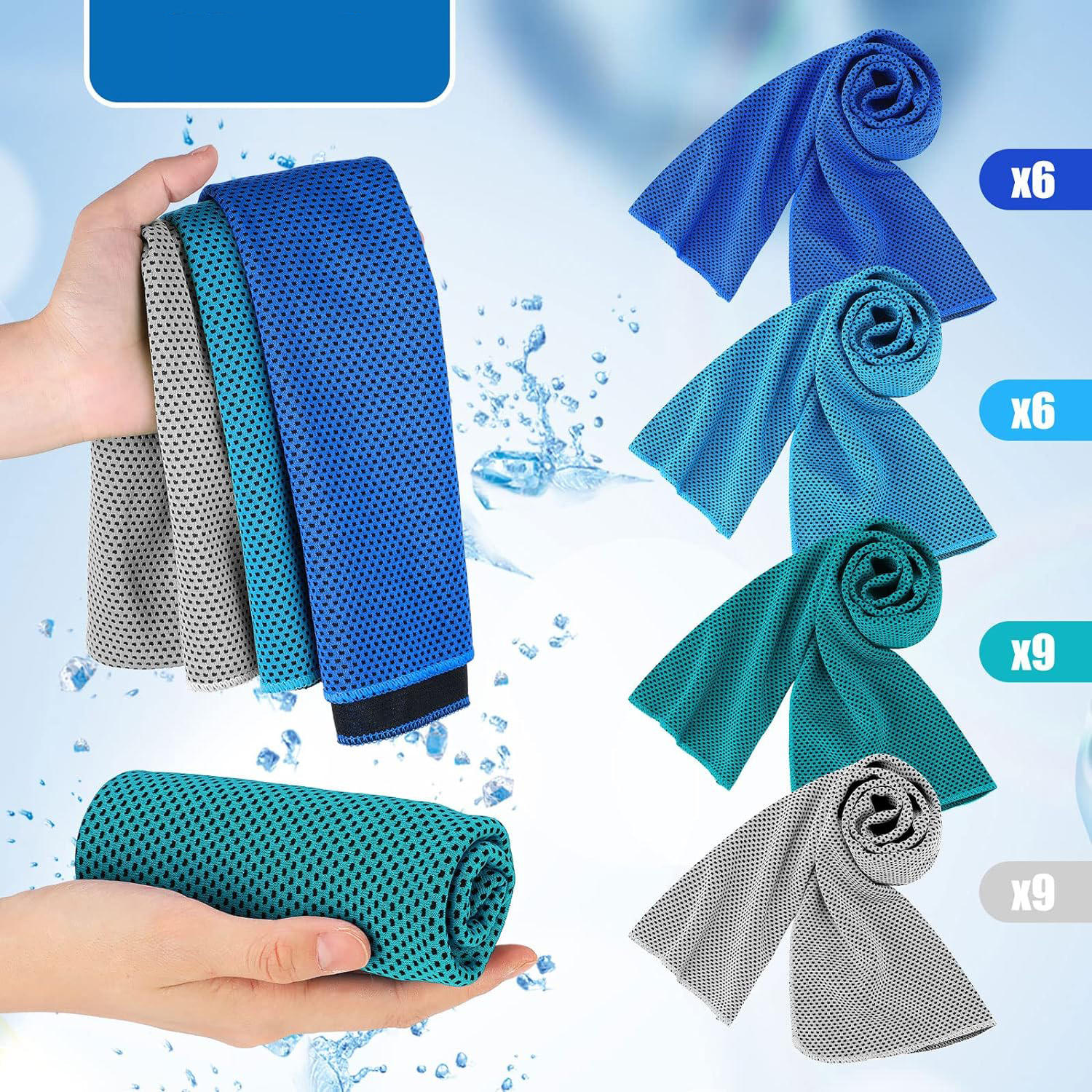
The cooling towel market has seven main categories. Each one serves different needs. Synthetic materials take 61.9% of the market. They beat natural fabrics in absorption, evaporation speed, and how long they last. Here’s what works.
PVA Cooling Towels: The Marathon Performers
PVA (Polyvinyl Alcohol) towels cool the longest. One soak keeps them active for up to 4 hours. The material soaks up water like a sponge. But it feels dry to touch. Wet PVA becomes soft and flexible. It molds around your neck or wrists.
The trade-off? PVA gets stiff after it dries out. Think of a kitchen sponge between uses. Toss it in water for 30 seconds. It’s ready to work again.
Top PVA options include:
-
MCR Safety CGBD03 Bandanna – Lightweight with anti-microbial protection
-
CGNW03 Neck Wrap – Made for neck coverage
-
CGT03 Towel – Oversized design that wraps around your neck twice
These towels are machine-washable. Outdoor workers love them. So do construction crews and athletic teams. They need all-day cooling without constant reactivation.
Microfiber Cooling Towels: Soft and Ready
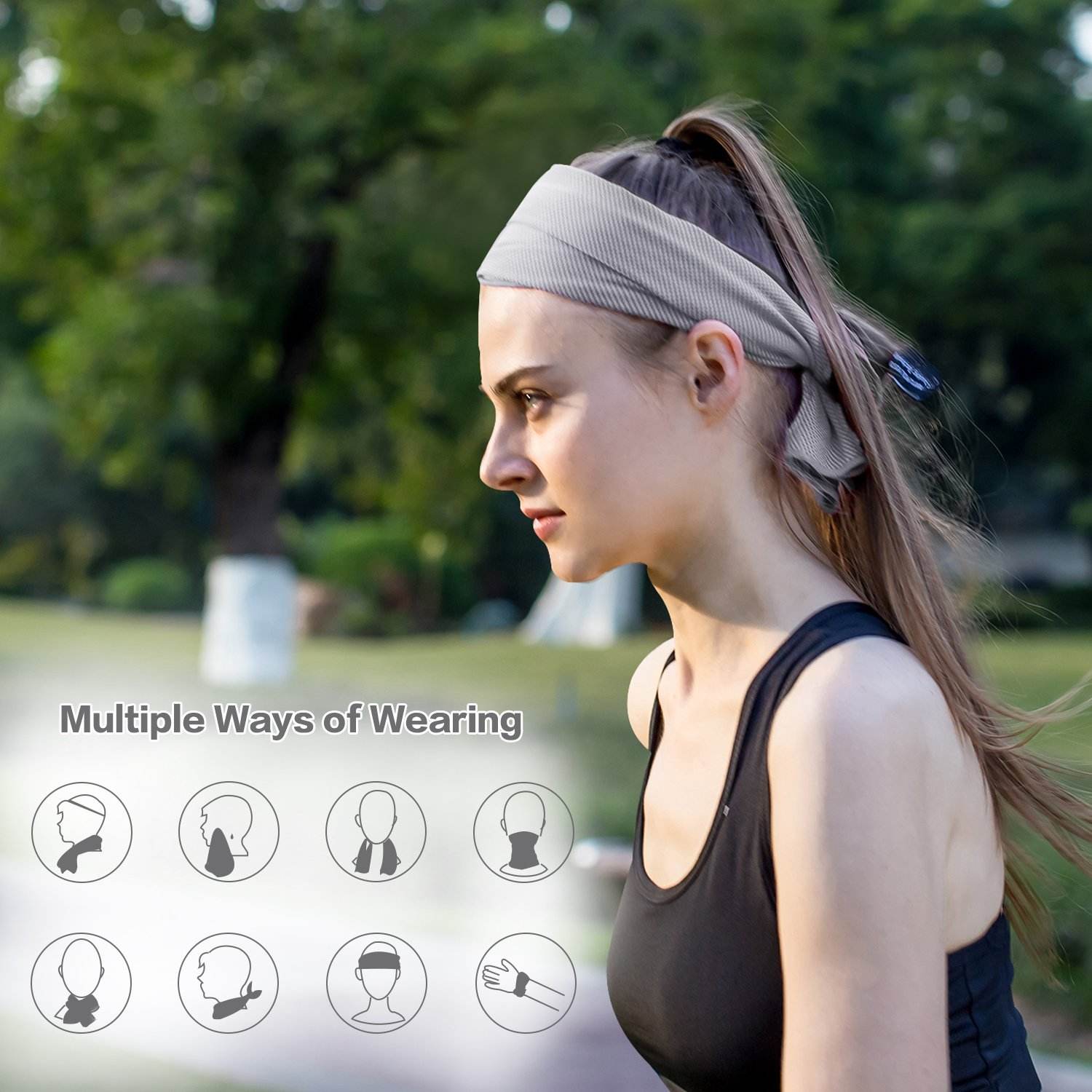
Microfiber polyester towels stay ultra-soft wet or dry. No stiffening. No crunchy texture. They hold water better than standard terry cloth. You get about 2 hours of cooling per use.
The MCR Safety CGT13 weighs almost nothing. It’s the featherweight champion of microfiber towels. The Mission EnduraCool and Fieldsheer Mobile Cooling Hydrologic feel similar. They just come in different sizes.
Gyms love microfiber cooling towels. They feel like a regular workout towel. But they deliver real evaporative cooling. Your members use them instead of leaving them in their bags.
Hybrid Towels: Best of Both Worlds
PVA + Microfiber/Cotton combinations mix long-lasting PVA cooling with soft microfiber comfort. You get 3-4 hours of cooling. No rigid dry texture.
The AlphaCool Ultra Neck Cooler leads this category. The Chill-Its Cooling Bandana with PVA and MiraCool Evaporative Cooling 2-in-1 Towel work the same way. These premium options cost 20-30% more than single-material towels. But the user experience is worth it for branded promotional products.
Specialty Options: Gel Beads, Ice Bands, and Performance Fabrics
Cooling gel bead bandanas (like the MiraCool Neck Cooling Bandana) deliver long-lasting cooling at low prices. They’re perfect for bulk workforce orders. The downside? Those beads lose absorbency after heavy use.
Ice band wraps give intense, fast cooling through frozen gel packs. The AlphaCool Ice Band and Black Ice Personal Cooling System work great for recovery. But you need freezer access. Cooling stops once the ice melts.
88/12 Polyester/Spandex blends (like the MCR Safety CGNG8 Neck Gaiter) stretch and breathe well. They’re featherweight and anti-microbial. But they cool short-term – think 30-45 minutes per use.
Quick Reference: Performance Comparison
Here’s how the major categories stack up:
|
Cooling Type |
Material |
Weight |
Duration |
Best For |
|---|---|---|---|---|
|
PVA Bandanna |
PVA |
Lightweight |
4+ hours |
Outdoor workers, athletes |
|
Microfiber Towel |
Polyester |
Ultra-light |
2 hours |
Gym members, casual sports |
|
Hybrid Towel |
PVA + Microfiber |
Medium |
3-4 hours |
Premium promotions |
|
Gel Bead Bandana |
Polymer beads |
Medium |
3 hours |
Budget bulk orders |
|
Ice Band |
Frozen gel |
Heavy |
Until melted |
Recovery, medical |
|
Stretch Gaiter |
Polyester/Spandex |
Featherweight |
30-45 min |
Face/neck coverage |
Size Matters More Than You Think
Standard generic towels measure 66×43cm. Too short to tie around your neck well. Coolcore towels and premium brands run larger. You get enough length to secure them right. Ordering custom cooling towels in bulk? Verify the real dimensions. A towel that slips off defeats the purpose.
The right cooling towel type depends on your use case. Construction crews in Arizona summer heat need PVA’s 4-hour duration. Corporate wellness programs want microfiber’s soft feel. Promotional giveaways might focus on hybrid towels for that premium look. Match the technology to your audience. You’ll get a product people keep using.
Microfiber Cooling Towels: Performance & Customization Options
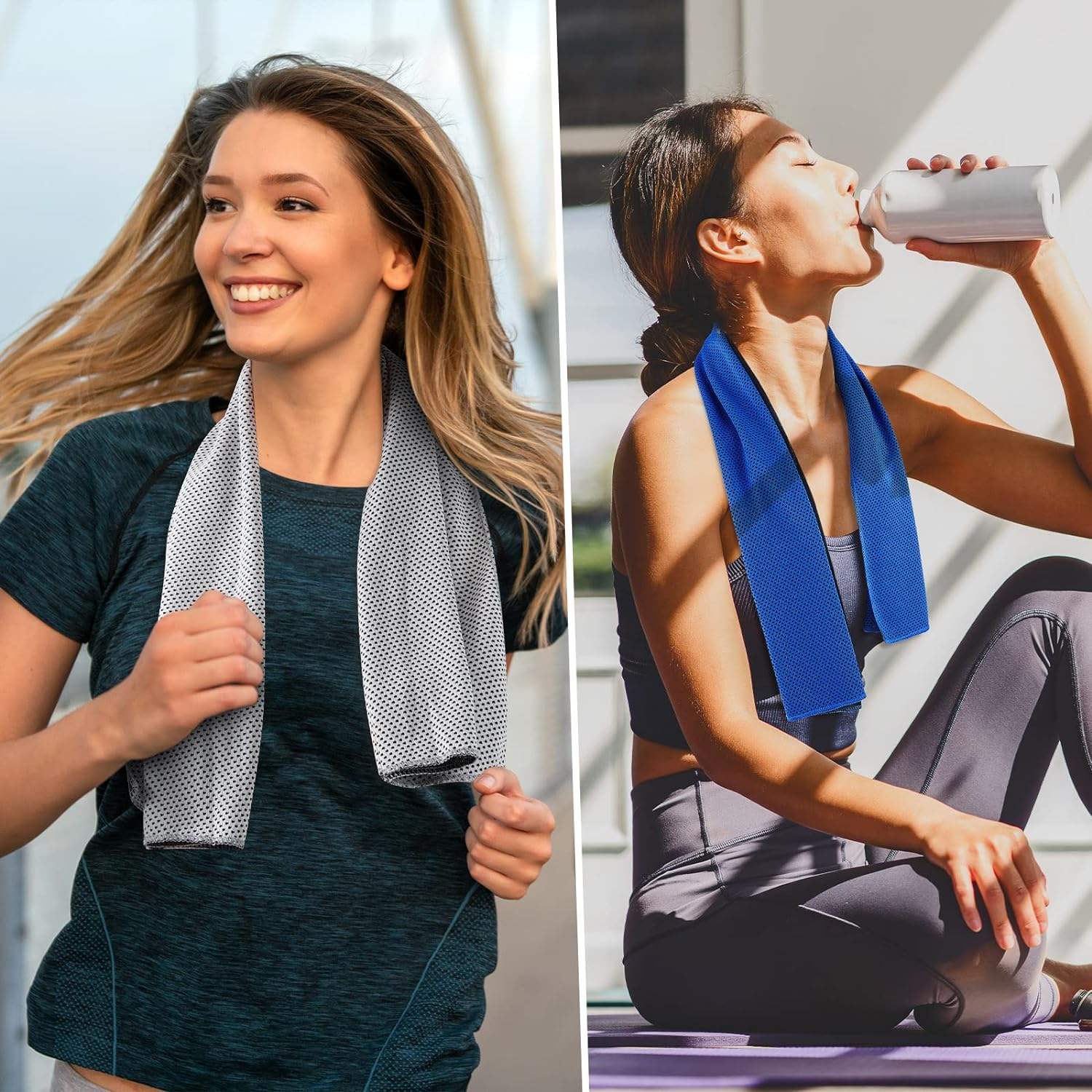
Microfiber polyester towels absorb up to 7 times their weight in water. That’s not marketing fluff. Lab tests prove it. Take a 12×12″ microfiber sample and dunk it for 30 seconds. It soaks up 340ml of water. Cotton? Just 180ml. Chamois fabric maxes out at 240ml.
Premium 800 GSM microfiber models work faster. They absorb 24-28 ounces in under 45 seconds. That’s three times quicker than cotton. You wet the towel. You wring it out. It cools your skin before cotton finishes soaking.
Why Microfiber Beats Everything Else
The secret? Those tiny split fibers. Each strand measures less than 1 denier across. Small channels run through the polyester-polyamide blend. Water moves through these channels fast. Your skin feels the cooling effect right away.
Drying speed matters for gym towels. Microfiber dries in 3-5 minutes. Cotton takes 8-12 minutes. That quick-drying feature shows up in 21.7% of positive consumer reviews. Campers and travelers talk about it all the time. Nobody wants a wet towel in their gym bag.
Microfiber lasts longer. It handles 500+ wash cycles. Cotton quits after 150-200 washes. Chamois might reach 300-400 cycles if you’re lucky. Buy quality microfiber once. It works for years.
Customization Options That Matter
Most athletic cooling towels measure 25×36 inches. Brands like Wooly Mammoth offer 1100 GSM at that size. You get SUV-sized coverage. These dry 40% faster than lighter versions.
Tech upgrades worth considering for bulk orders:
-
Micro cooling minerals embedded in the fabric for triple chill effect
-
Fast-wicking channels built into premium weaves
-
UV protection coatings for outdoor sports teams
-
Germ-fighting treatments that keep towels fresh through dozens of uses
Microfiber drives the fastest market growth. Cooling towel sales hit USD 1.56 billion in 2023. The market grows at 5.9-7% each year through 2035. Asia Pacific leads the microfiber boom. Fitness centers and outdoor brands push demand. Europe holds 30% market share with fresh, sustainable designs.
Your customization checklist for branded cooling towels:
-
GSM weight: Pick 800+ for high absorption, 300-500 for easy portability
-
Size options: Standard 25×36″ or compact travel sizes
-
Printing method: Screen print for bold logos, sublimation for photo-quality designs
-
Packaging: Single plastic bags, bulk bundles, or gift-ready tubes
-
Add-ons: Mesh carrying bags, carabiners, or waterproof pouches
Bundle kits cut per-unit costs. Order a 2-towel set. One handles bulk water removal. The other gives final cooling polish. Your customers get better performance. You gain better margins on promotional cooling products.
PVA (Polyvinyl Alcohol) Cooling Towels: Industrial-Grade Solutions

PVA cooling towels absorb eight times their weight in water and sweat. Construction crews working Arizona summers? Warehouse teams loading trucks in 95-degree heat? That absorption rate matters. These towels deliver cooling that lasts through full shifts.
Built for Real Work Conditions
The magic of PVA fabric? It holds moisture like nobody’s business but feels dry to the touch. Your workers stay cool without that clammy, soaked-rag feeling. Natural evaporation keeps the cooling effect active for up to four hours. No stopping to re-wet every thirty minutes. No breaks in productivity.
UPF 50+ protection adds another layer of safety. Outdoor crews get sun defense alongside heat relief. One product handles two workplace hazards.
Size options match different job site needs:
-
26″ x 17″ – Compact bandanna style for hard hat wear
-
13″ x 31″ – Full neck wrap that covers more skin
-
13″ x 29.5″ – Mid-length option for wrist or forehead use
-
29.5″ length – Extended coverage for maximum cooling surface
Cut these PVA cooling towels to custom sizes. Fit them under hard hats. Wrap them around wrists. Tuck them under safety vests. The material doesn’t fray or fall apart after trimming.
Smart Packaging for Bulk Orders
Industrial buyers need smart logistics. The 10-towel bulk bag (Part #396-602-B-BULK) makes inventory management simple. Warehouse managers get easy counting. Safety coordinators get hassle-free distribution.
Premium bundles offer color variety. The 15-pack Chill-Its collection includes blue, hi-viz lime, grey, orange, and pink. Color-code teams by department. Match company branding. Give workers choices that boost morale.
Activation takes under one minute. Rinse the towel. Wring it out. Hand it to your crew. They’re protected right away. No complicated prep. No special training needed.
Durability That Reduces Replacement Costs
Reinforced athletic mesh handles rough workplace conditions. These aren’t delicate promo products that fall apart after two uses. PVA towels withstand machine washing. They’re hand-washable too. Unopened inventory lasts forever. Used towels stay functional with basic care.
Anti-microbial treatment stops that sour smell. Your team won’t dread using yesterday’s towel. The fabric stays fresh through repeated sweat sessions.
NFPA safety ratings confirm workplace readiness:
– Health: 1
– Flammability: 1
– Instability: 0
CFR 1910.1200 lists these as non-hazardous. They meet safety standards without complex paperwork.
Construction sites, manufacturing plants, outdoor maintenance crews, warehouse operations – heat stress threatens worker safety in all these places. PVA cooling towels deliver reliable protection at scale.
Hyper-Evaporative & Quick-Dry Technology Towels
The towel stays dry to the touch even when it’s soaking wet. Sounds impossible, right? That’s hyper-evaporative technology at work. These cooling towels use special fabrics. They pull moisture away from your skin. Plus, they speed up evaporation. The result? Cooling that feels instant. And it lasts way longer than standard microfiber.
Chill-Its 6602 leads the PVA hyper-evaporative category. It measures 13″ x 29.5″ (33cm x 75cm). Soak it for one minute until saturated. Wring it out. Snap it a few times to activate airflow. You get four solid hours of cooling from one activation. The fabric holds more than its own weight in water. But it never feels clammy or heavy. It dries stiff like a kitchen sponge? Just rewet it. Good as new.
Polyester-nylon blends work a bit different. A 50/50 nylon-polyester mix delivers two hours of cooling per wetting. The latex-free build helps workers with sensitivities. 100% polyester models at 34.5″ x 12″ give you extra length. Better neck coverage. The 10% nylon/90% polyester microfiber option weighs in at 200 GSM. Thick enough to absorb serious sweat. Light enough to pack in your gym bag.
HyperKewl Plus fabric takes performance up a notch. One soaking keeps it active for 5-10 hours. Temperature drops hit 10-15°F below ambient air. But you need airflow for maximum effect. Stand still, and the cooling slows down. Move around, and you feel the difference right away.
Activation Is Simple, Performance Is Serious
Every hyper-evaporative towel follows the same three-step process. Soak it in water. Wring out the excess. Snap or shake it to activate the airflow channels. The fabrics wick moisture away non-stop. They never develop that musty smell cotton towels get. Machine wash them on gentle cycle. Some nylon blends need hand washing. Always air dry or hang dry. Heat damages the evaporative properties.
Smart sizing options for different needs:
-
11″ x 29″ (Perfect Fitness) – Slim bandanna style
-
31.49″ x 11.81″ (200 GSM microfiber) – Mid-weight workhorse
-
12″ x 32″ (155-160 GSM) – Stays dry to touch, perfect for athletes
-
34.5″ x 12″ (high-performance polyester) – Maximum coverage
Pleneal’s hyper-evaporative fabric adds odor-eliminating treatment. Your branded cooling towels stay fresh through dozens of uses. This matters for promotional cooling products at summer events.
Here’s what separates these from regular cooling towels. They absorb sweat even dry. Most towels quit working once the moisture evaporates. Hyper-evaporative fabrics keep pulling sweat away from skin. Athletes love this dual-action performance. Wet, they cool through evaporation. Dry, they work as high-performance sweat towels.
Bulk-free design means they drape around your neck. No thick, bunched-up feeling. Some models ship with 210D polyester mesh pouches (2.36″ x 6.69″) for easy storage. The packaging works great for gyms. Sporting goods stores too.
Customizable sports towels in this category cost 15-25% more than basic microfiber. But your logo sits on a towel that performs. That’s marketing people remember. Construction companies order them for crew safety. Corporate wellness programs give them to employees. Marathons hand them out at finish lines. The technology backs up your brand promise.
Eco-Friendly RPET & Bamboo Blend Options
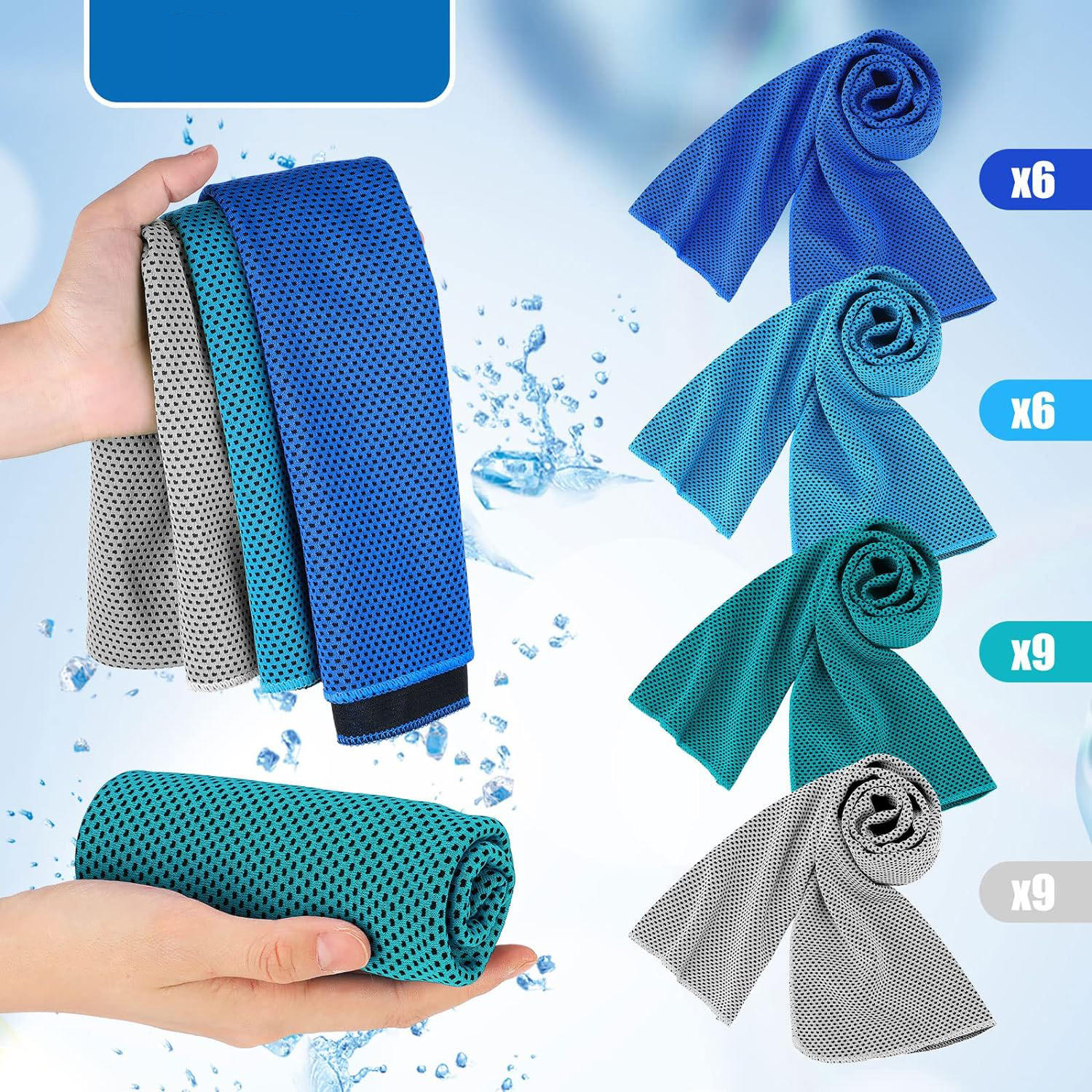
Recycled plastic bottles turn into premium cooling towels. That’s RPET (recycled polyethylene terephthalate) technology at work. Five empty water bottles make enough material for one full t-shirt. Scale up for custom cooling towels in bulk. You divert serious waste from landfills. Plus, you deliver products your customers want to use.
The 49% Bamboo + 49% RPET + 2% Lycra blend works great for eco-conscious brands. You get 230 g/m² fabric weight. It’s thick enough to absorb sweat. It’s light enough for athletic cooling towels. The blend comes in rust, magenta, bordeaux, and navy. These aren’t boring promotional colors. They’re rich, saturated tones. Your branded cooling towels stand out at events.
Performance That Backs Up the Green Claims
Sustainable doesn’t mean low quality here. The 50% recycled PET + 50% recycled Bamboo mix delivers solid numbers:
-
8,500 rubs abrasion resistance (tested at 15 kPa pressure)
-
470 N warp / 430 N weft tensile strength
-
8.5% moisture absorption rate
-
39-second wicking time from dry to activated
That 8.5% absorption beats recycled modal (6.2%) for gym cooling towels. The 39-second wicking speed tops modal’s 47 seconds. Recycled lyocell absorbs more at 10.1%. But costs jump 30-40% higher. For bulk orders, bamboo-RPET balances performance and budget.
Look at straight microfiber cooling towels. Standard polyester wicks in 45-60 seconds. This eco-blend cuts 20 seconds off activation time. Your promotional cooling products work faster. They support sustainability messaging too.
The Environmental Math That Matters to B2B Buyers
Corporate purchasing managers care about green credentials. Here’s the honest comparison:
|
Category |
rPET Score |
Bamboo Score |
|---|---|---|
|
CO₂ Emissions |
3/5 |
4/5 |
|
Water Usage |
4/5 |
4/5 |
|
Cost Efficiency |
4/5 |
4/5 |
|
Material Sourcing |
High (abundant) |
Low (China/Taiwan) |
Both materials score the same on water use and cost. Bamboo beats RPET on carbon emissions. But RPET wins on availability. You won’t face sourcing headaches with recycled PET. Bamboo comes mostly from China and Taiwan. Lead times stretch during peak seasons.
Blend both materials. You get the marketing win without sourcing risk. Your customizable sports towels carry real sustainability credentials. You avoid single-source material shortages.
The lycra addition (2%) adds just enough stretch for comfortable neck wraps. No bunching. No slipping during workouts. That small percentage makes these towels work well, not just look green.
Fabric width runs 150 cm—wide enough for efficient cutting. Waste drops to under 5% on standard 12×32″ towel dimensions. You get maximum material usage. Scrap stays minimal. Order by the half-meter for test runs. Scale to full rolls once your design locks in.
Construction crews appreciate durability. These blends handle 490-455 pilling cycles before showing wear. That’s months of regular washing for industrial use. The tensile strength means workers can wring them hard. Fabric won’t break down.
Marketing teams love the story. “Made from recycled bottles and sustainable bamboo” connects with eco-aware consumers. Trade show giveaways. Corporate wellness programs. University athletic departments. These audiences look for sustainable promotional products. Give them cooling towels that perform AND match their values.
Bulk Pricing & MOQ Analysis for Custom Orders
Ordering 50 custom cooling towels costs you $12 per unit. Order 500? That drops to $4.50. Order 5,000? You’re looking at $2.80 per towel. The math changes your promotional budget completely.
But here’s the catch: Minimum Order Quantities (MOQ) aren’t random numbers suppliers throw at you. Suppliers build these around break-even points, production efficiency, and logistics costs. Know how these numbers work. You’ll negotiate better deals and avoid tying up cash in excess inventory.
The Real Math Behind Supplier MOQs
Most cooling towel manufacturers set MOQs using the Economic Order Quantity (EOQ) formula:
EOQ = √[(2 × Annual Demand × Order Cost) ÷ Holding Cost per Unit]
Say your company needs 1,000 branded cooling towels per year. Each order costs $50 to process (admin, shipping coordination, quality checks). Storing each towel costs $2 per year (warehouse space, insurance, handling). Plug those numbers in: EOQ ≈ 223 units per order.
That’s your sweet spot. Order less? You’re paying for frequent shipments. Order way more? Warehouse costs eat your savings.
For break-even MOQ, suppliers calculate: Fixed Costs ÷ (Selling Price – Variable Cost per Unit). Take a factory with $5,000 in setup costs (custom printing plates, color matching, quality testing). They sell towels at $20 each with $15 variable costs. They need to sell 500 units just to cover expenses. That’s why many custom orders start at 500-piece minimums.
How Bulk Discounts Work (With Real Numbers)
Here’s pricing data from real cooling towel SKUs averaging $4 per unit at moderate volumes:
-
Quantity 1-2: You’re losing money or breaking even. Suppliers won’t quote these.
-
Quantity 3-12: Profit margins hit 20-25%. This is the “small business sweet spot” for test orders.
-
Quantity 36-114: Margins drop to 10-13% as bulk discounts kick in. Still profitable. Watch for over-discounting though.
-
Quantity 500+: Per-unit costs drop fast. But logistics get complex (palletized shipping, customs documentation for imports, longer lead times).
See the non-linear pattern? Quantities like 36 or 114 sometimes show margin dips. They hit awkward shipping thresholds—too big for small parcel, too small for full pallet efficiency.
Smart Price Break Strategies for Custom Orders
Set your order quantities around natural customer behaviors. Gyms order in multiples of their trainer count. Corporate wellness programs align with employee headcount by department. Sports teams order by roster size plus coaching staff.
Green zone quantities (3-12 units for sampling, 250-500 for standard promotions) keep you profitable without overcommitting. Red zone quantities (1-2 units) signal you need different pricing or a setup fee to cover costs.
Say a supplier offers a $1-per-unit discount at 500 pieces. Calculate if it’s worth it:
– Annual demand: 1,000 towels
– Savings: $500 total
– Extra holding costs: 500 units × $0.50/year = $250
– Net benefit: $250
The discount works. But if holding costs hit $1 per unit, you break even. Not worth the cash flow tie-up.
Five Steps to Calculate Your Perfect MOQ
1. Forecast your real demand. Check historical sales, seasonal patterns, upcoming events. Don’t guess—use data.
2. List all your costs. Fixed setup ($5,000 example), variable per-unit ($15), ordering admin ($50 per order), storage ($2 per unit per year).
3. Run the EOQ formula. Find the balance. Ordering too often costs money. Holding too much also costs money.
4. Check supplier terms. Do they offer discounts at 500 units? 1,000? Do they charge penalties below certain MOQs?
5. Weigh the risks. High MOQs mean fewer orders but more risk if trends change. Low MOQs mean flexibility but higher per-unit costs.
Quick-Reference Impact Table
|
Factor |
High MOQ Impact |
Low MOQ Impact |
|---|---|---|
|
Order Frequency |
Fewer orders, lower admin |
More orders, higher transaction costs |
|
Per-Unit Price |
$2.80-$4.50 range |
$8-$12+ range |
|
Inventory Risk |
Stuck with 2,000 towels if trend dies |
Easy to pivot, minimal waste |
|
Cash Flow |
Large upfront payment |
Smaller, manageable payments |
|
Profit Margin |
10-15% at volume |
20-25% at small batches |
Most successful custom cooling towel buyers set MOQs at 80-90% of their calculated EOQ. This gives negotiation room and flexibility while staying close to best efficiency. Say your EOQ is 223 units. Negotiate for 200-piece minimums. You get good pricing without overextending.
The difference between a smart bulk order and an expensive mistake? Know these numbers before you contact suppliers. Calculate your EOQ. Know your storage costs. Match MOQs to real demand cycles. Your promotional cooling products budget will thank you.
Customization Capabilities: Logos, Colors & Branding
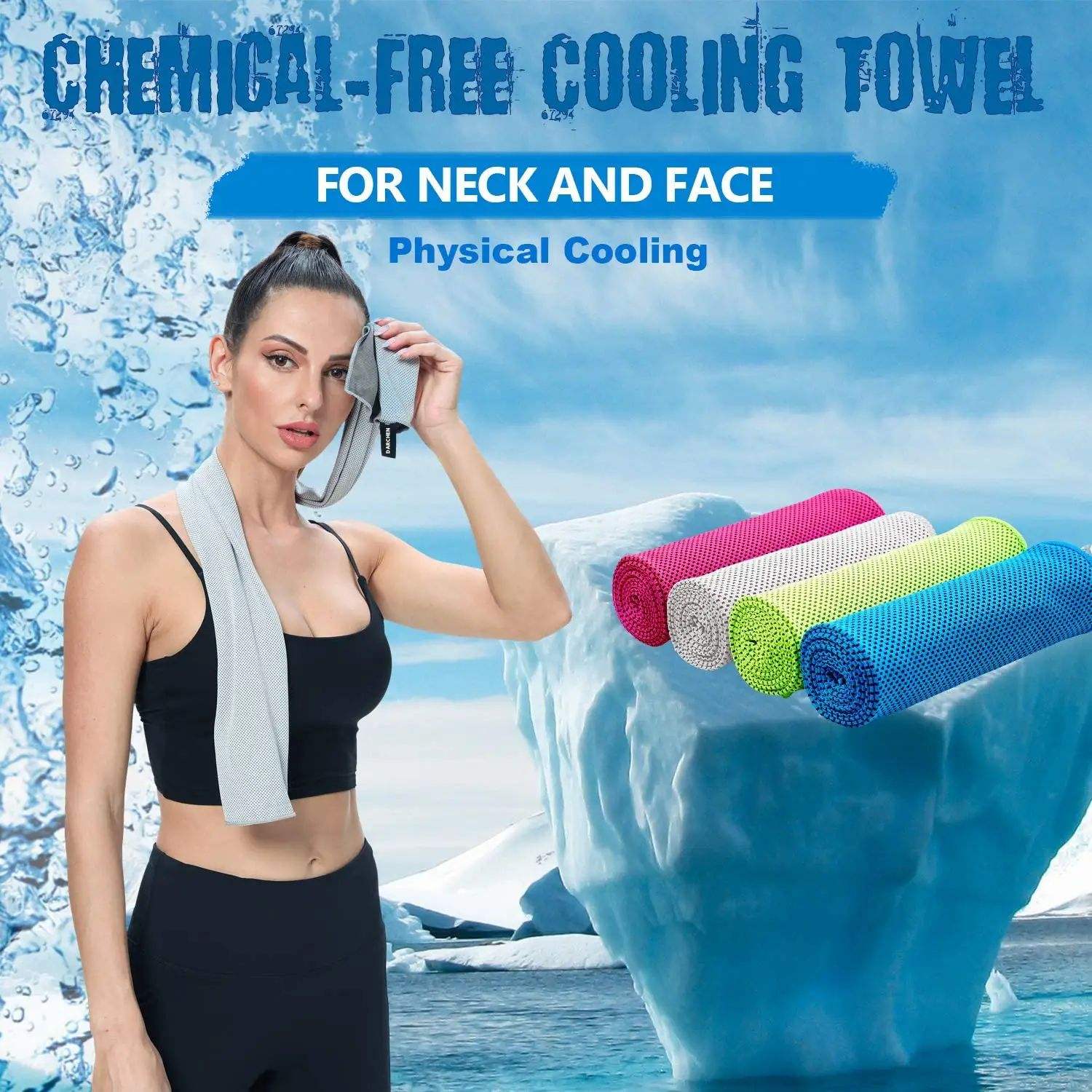
Your logo deserves better than a blurry print that fades after three washes. Custom cooling towels become walking billboards with sharp branding that survives real-world use. Let’s talk about making your brand stick.
Print Methods That Last
Screen printing handles bold, simple logos well. Think Nike swoosh or your gym’s name in block letters. The ink sits on top of the fabric. Colors pop. It’s cost-effective for bulk orders of 500+ units. But intricate designs? Photo-quality graphics? Screen printing has limits.
Sublimation printing embeds your design into the microfiber cooling towels. The ink becomes part of the fabric. You get full-color photos, gradients, and detailed artwork—all without that stiff, plastic feel. Sublimation works best on light-colored polyester athletic cooling towels. White and pastels show off vibrant designs. Dark base colors blur the effect.
Embroidery adds a premium touch to branded cooling towels. Your logo gains texture and dimension. Country clubs love it. Corporate gifts too. The downside? Embroidery adds weight to one section of the towel. That thick patch can feel odd during intense workouts. Use it for smaller logos (3″ x 3″ max) on corners rather than center placements.
Color Psychology That Converts
High-contrast palettes grab attention at crowded trade shows and sporting events. Black towels with neon green logos cut through visual noise. Deep navy with bright orange creates energy without looking loud. These combinations photograph well for social media. Your promotional cooling products show up in athlete selfies and gym check-ins.
Warm organic colors work better for wellness brands and yoga studios. Soft sage green paired with cream. Dusty rose with taupe. These earth-tone towels signal calm and trust. They fit with brands focused on mindfulness, recovery, and holistic health.
Bold accent blocking highlights specific elements. Say you run a rock climbing gym. Your logo features a mountain silhouette. Use vibrant teal for the peak. Keep the rest neutral gray. Eyes go straight to that teal accent. Strategic color placement tells your brand story in seconds.
Adaptive Logo Design for Different Towel Sizes
A detailed logo looks great on a 25″ x 36″ gym cooling towel. But it turns into mush on a 13″ x 29″ PVA bandanna. Smart branding uses responsive design. Create a simple icon version for compact towels. Save the full logo with tagline for larger formats.
Nike does this well. The swoosh works solo on small items. The full “NIKE” wordmark appears on bigger products. Your branded cooling towels need the same flexibility. A 2″ icon for neck wraps. A 6″ full logo for oversized workout towels.
Print Placement That Works With Movement
Center-chest placement? Bad idea for cooling towels. People fold them, wrap them around necks, drape them over shoulders. That centered logo ends up hidden or twisted.
Corner placements (bottom right or top left) stay visible no matter how users wear the towel. Your logo shows up folded. Wrapped. Hanging from a gym bag. It’s always doing marketing work.
Border designs create visual interest without fighting the towel’s function. A repeating pattern around all four edges. Your company name running along one long side. These designs look good even during a crumpled mid-workout.
Packaging That Extends Your Brand
Standard bulk packaging—clear plastic bags with generic labels—wastes branding space. Premium promotional cooling products need better presentation.
Mesh carrying pouches (210D polyester, about 2.5″ x 7″) turn each towel into a gift-ready item. Print your logo on the pouch too. Recipients get a reusable storage solution that keeps advertising your brand.
Tube packaging with custom labels works great for corporate gifts and retail displays. The tubes stack well. They protect towels during shipping. Your branding covers the entire exterior. Pop one open, and the towel slides out fresh and ready.
Carabiner clips attach towels to gym bags and backpacks. Your brand dangles in plain sight at fitness centers, marathons, and outdoor events. A $0.30 add-on that delivers ongoing visibility.
Customization Order Minimums
Most suppliers need 100-piece minimums for single-color screen printing. 250 pieces for multi-color designs. 500 pieces for full sublimation. Embroidery often starts at 50 pieces but costs $3-5 more per unit than printing.
Order samples first—always. See how your logo translates to fabric. Check if the colors match your brand guide. Feel the print quality. A $50 sample order prevents a $5,000 mistake.
Colors That Photograph Well
Your branded cooling towels will end up on Instagram, Facebook, and LinkedIn. They need to look good through phone cameras under gym lighting, outdoor sunshine, and indoor fluorescent bulbs.
Deep saturated colors (royal blue, crimson red, forest green) photograph well. Pastels (baby blue, mint green, pale pink) often wash out in photos unless paired with darker accent colors. Neon shades (electric yellow, hot pink, lime green) pop in low light but can look blown-out in bright sun.
Test your color choices by taking phone photos under different lighting. If they look washed out or muddy in your test shots, your customers’ social media posts will too.
The best custom cooling towels in bulk carry your brand without screaming “cheap promo product.” Thoughtful color choices. Smart logo placement. Print methods matched to your design needs. These details separate memorable marketing tools from forgettable giveaways.
Conclusion
Finding the perfect custom cooling towels in bulk is easier than you think! You’ve got options: microfiber soaks up sweat fast, PVA gives instant cooling, and bamboo blends go easy on the planet. Pick what fits your brand best. The secret? Match the towel to your crowd. Gym fans want quick-dry microfiber. Industrial crews trust PVA for its toughness.
Here’s what makes bulk customization special: you’re building branded moments, not just ordering towels. Your logo stays visible every time someone cools down. Flexible order sizes give you room to test or scale up. Whatever your business needs, you’re covered.
Ready to boost your cool factor? Grab some samples and get a custom quote. See how microfiber cooling towels or PVA options work as your next marketing tool. Your cooling solution is one chat away. Let’s get started!