
You’re halfway through your outdoor shift. The sun beats down hard. Your body feels like it’s running at half speed.
Sound familiar?
Heat stress derails workdays. It sabotages training sessions. It makes life uncomfortable. That’s why thousands of professionals, athletes, and heat-sensitive people now use cooling vests as their secret weapon.
Traditional cooling methods give you temporary relief. They tie you to one spot. Modern cooling vest technology works differently. You get sustained body temperature control wherever you need it.
Construction workers face scorching job sites. Endurance athletes push their limits. Some people manage medical conditions that make heat worse. The science-backed advantages of cooling vests can transform how you handle hot environments.
Work productivity improves measurably. Heat-related health risks drop. The benefits go beyond comfort. You maintain your physical capability. You protect your health. You reclaim control in extreme temperatures.
What Are The Advantages Of A Cooling Vest?
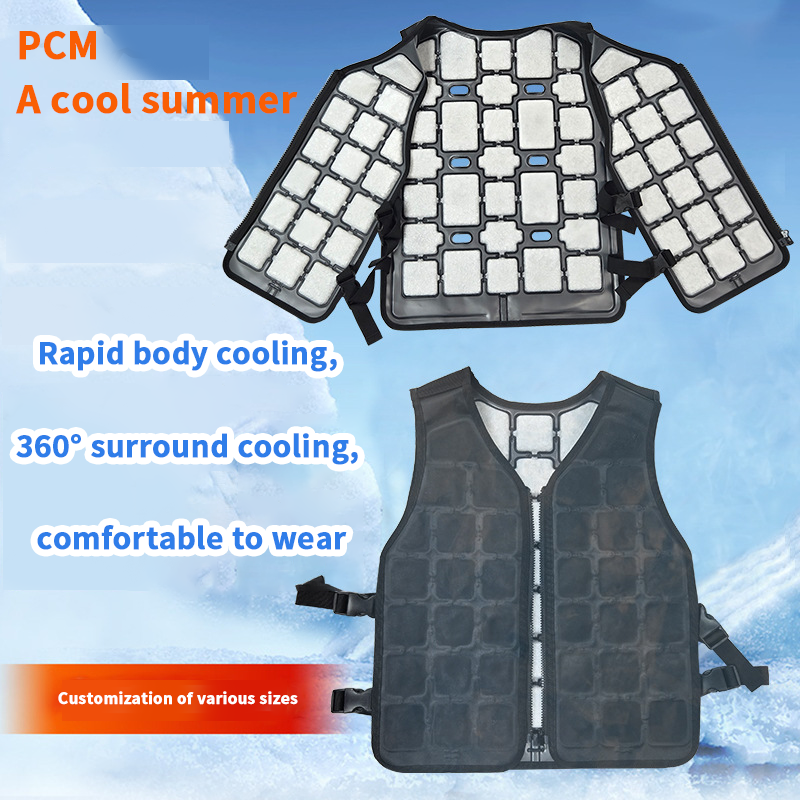
Cooling vests offer real benefits backed by science. Research shows clear performance gains that work in everyday use.
Core Body Temperature Control
Your internal temperature affects how well you perform and stay safe. Cooling vests help control this key factor.
Liquid cooling systems cut core temperature by 22% in 60 minutes during moderate activity. Your temperature stays between 37.0°C and 37.6°C. Without a vest, it climbs to 37.9°C. Ice-cooling systems work even better. They drop temperature by 36% in the same time.
The data speaks clearly: Studies show temperature drops from 13% to 65%. Results vary based on the cooling tech and weather. Ventilation systems cut temperature by 30% during 120-minute walks. Test conditions were 35°C heat with 60% humidity.
Cardiovascular Stress Reduction
Heat makes your heart work harder. Cooling vests ease this load.
Heart rate drops by 17% at the 60-minute mark with liquid cooling tech. Ice-cooling systems reduce heart strain by 8%. Ventilation designs cut it by 18-19%. Recovery after exercise shows bigger gains. Ice vests lower heart rate by 9 beats per minute in the first 15 minutes. This is the most critical recovery period.
Skin Temperature and Comfort Enhancement
Surface cooling brings instant relief. Soccer players wore cooling vests during 15-minute halftimes. Their skin temps measured 31.46°C. Control groups hit 32.40°C. Recovery data after exercise shows skin cools by -1.07°C in the first 15 minutes. Over 60 minutes, it drops -1.62°C. That first 15 minutes gives you 56% of the total cooling benefit.
How Cooling Vests Regulate Body Temperature
Modern vests use three cooling technologies. Each one pulls heat from your body in different ways.
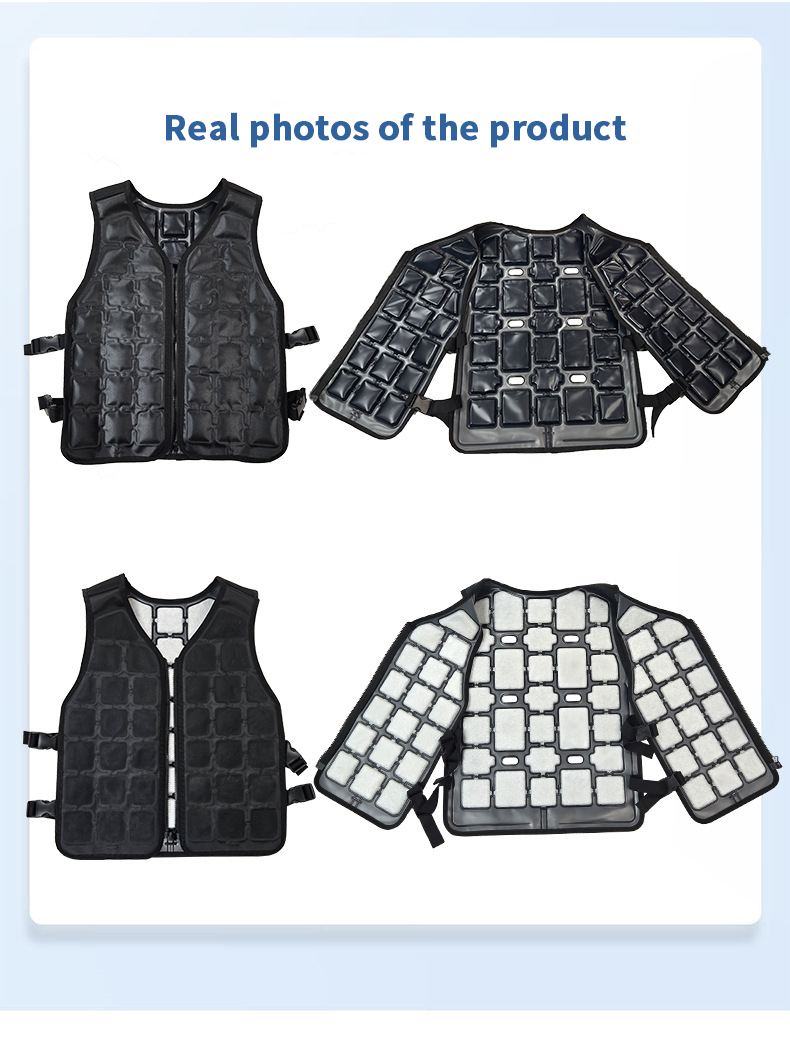
Phase Change Materials (PCM) work by changing their form. These materials go from solid to liquid at set temperatures—usually 15°C to 28°C. During this change, they soak up a lot of heat. But they don’t get warmer themselves. The vest keeps your skin temperature steady. Heat moves from your warm skin to the cooler vest surface. Here’s the smart part: PCM won’t drop your skin below 20°C. This stops the cold discomfort and tissue damage you’d get from ice-based systems.
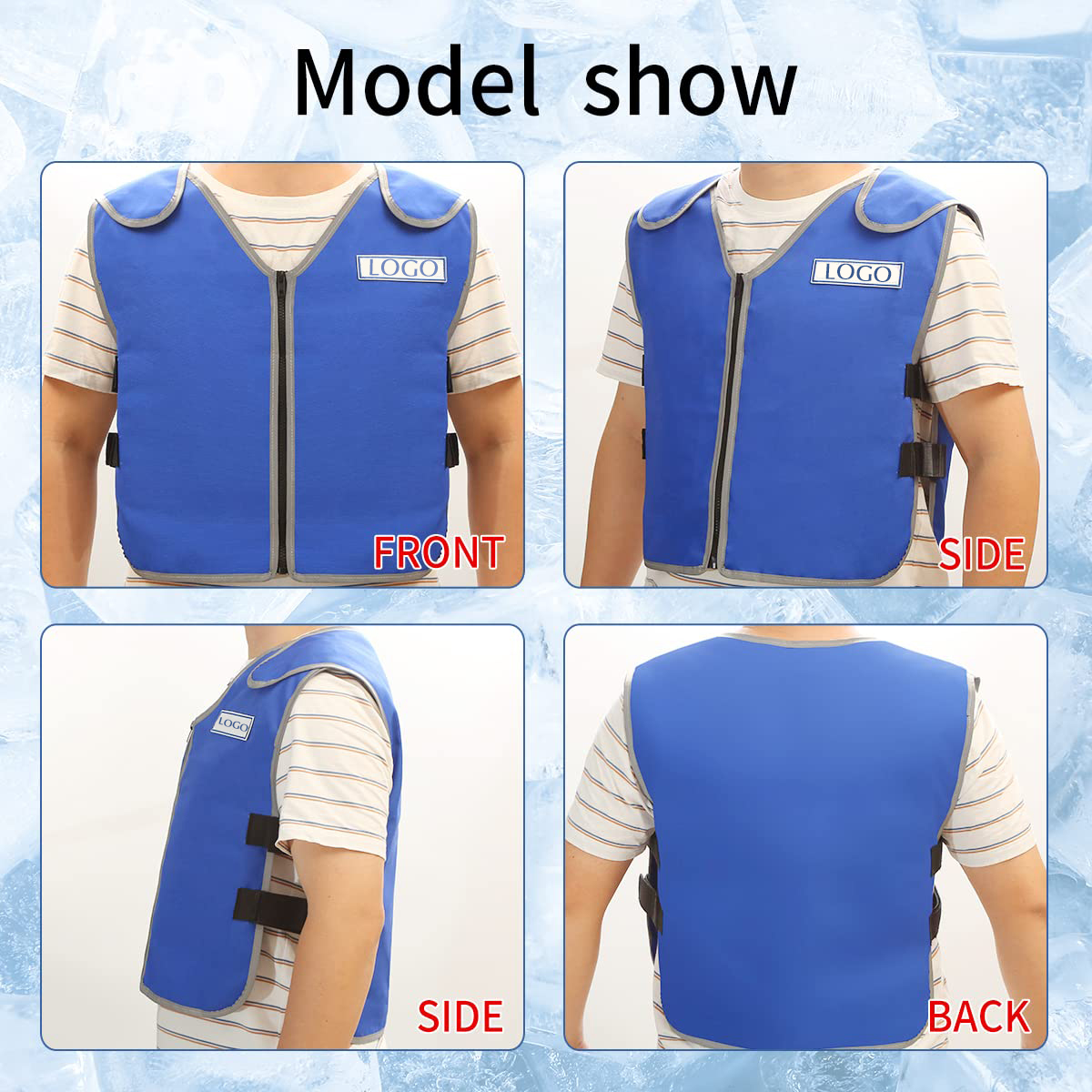
Ice pack vests cool through direct contact. The ice touches your skin through thin fabric. Your body heat moves into the frozen material. Studies show this drops core temperature by 0.0298°C per minute. Your skin temperature falls to 33-35°C. This is the sweet spot where blood vessels open up the most. More blood flows to the skin. This speeds up heat transfer from your core to the cooling surface.
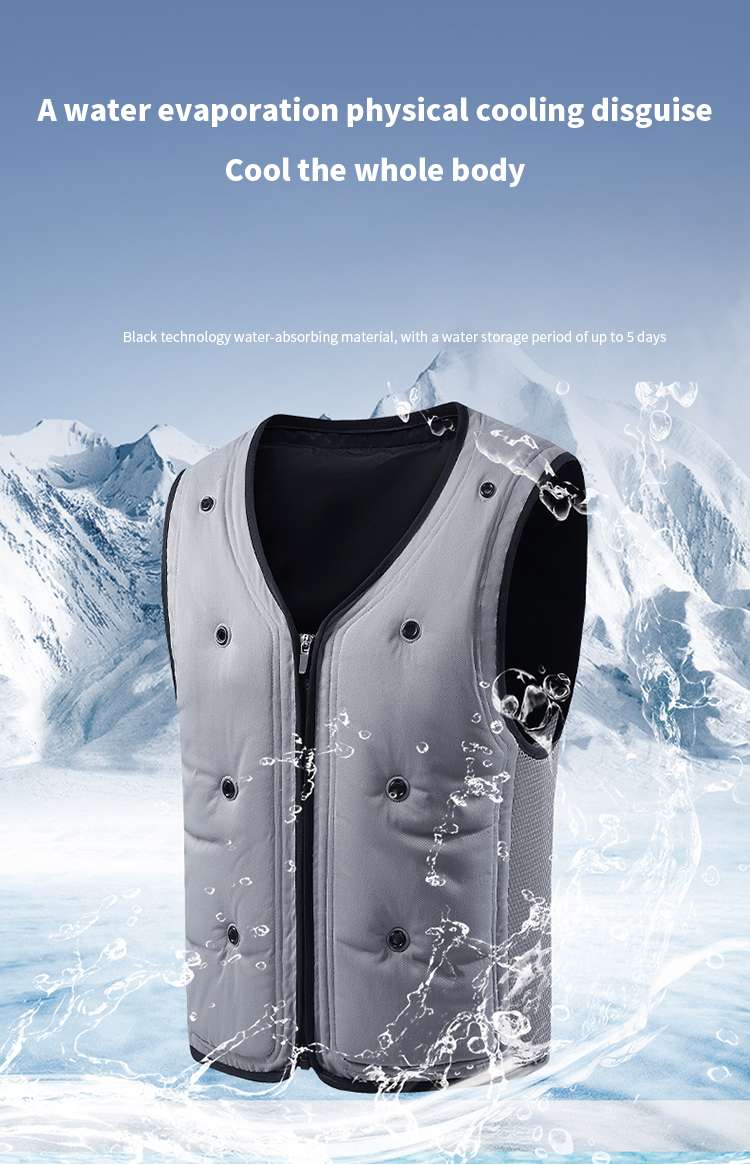
Evaporative cooling vests use two methods at once. Water-soaked fabric touches your skin and cools it directly. As the water dries, it takes even more heat with it. These systems keep cooling for 3-4 hours straight. At 35°C air temperature, evaporative vests keep your core temperature rise to just 0.3°C. Without a vest, you’d see a 0.6°C increase—twice the heat stress.
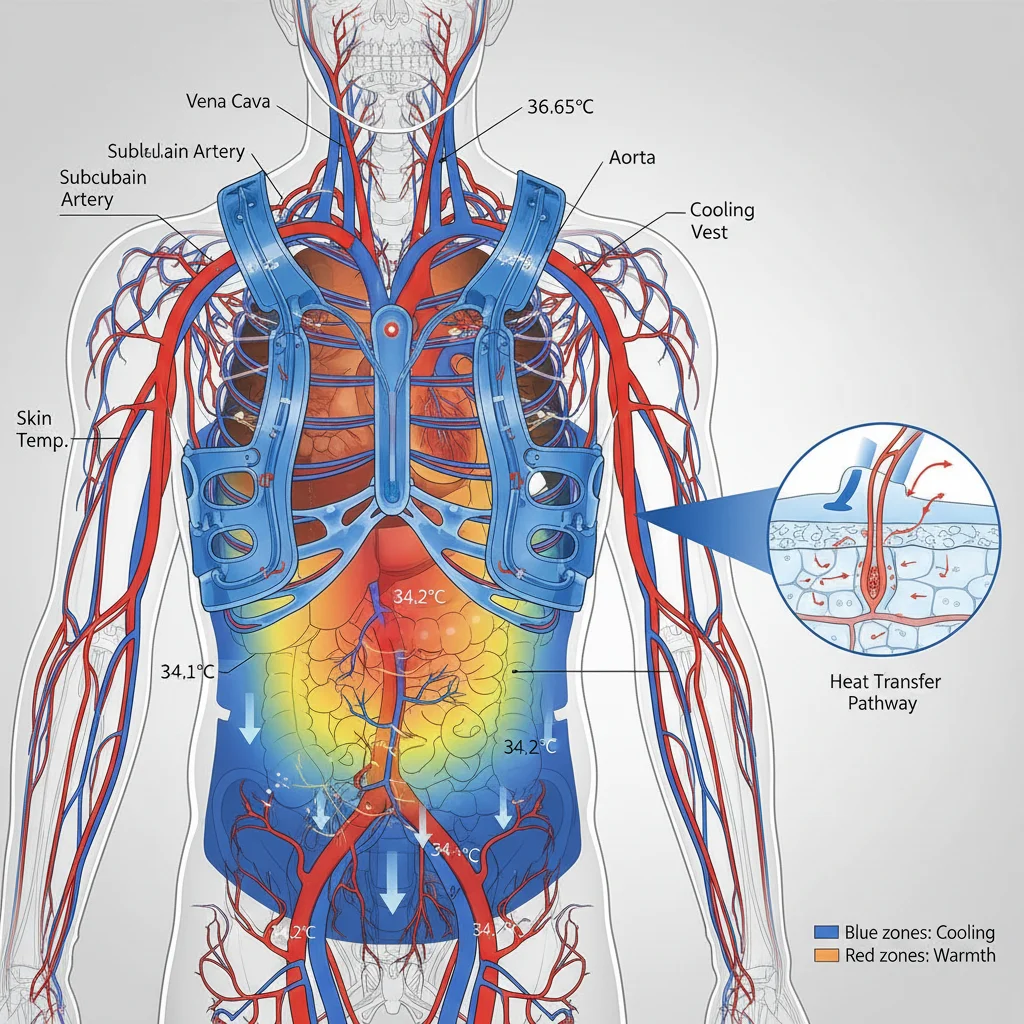
Temperature control happens step by step. Your skin cools within minutes. Blood vessels near the surface open up in response. More blood flows to the cooled areas. This blood carries heat from inside your body outward. Your core temperature drops next as blood moves through the cooling zones on your torso.
Vest placement makes a difference. Your torso has major blood vessels near the surface. Cool this area and you affect your whole blood system. One 15-minute session drops core temperature to 36.65°C. Skin temperature drops too, and you can measure it. The body’s response is real and backed by science.
Reduces Physical Fatigue and Boosts Endurance
Fatigue isn’t what most people think it is. Your muscles don’t give out first. Your mind does.
Research shows something surprising: athletes hit the wall while their leg muscles can still produce three times the power output they’re using. The limiter isn’t physical capacity. It’s how hard the effort feels—the mental signal telling you to stop.
Cooling vests attack this mental barrier at its source. They lower how intense the effort feels to your brain during exercise.
Fatigue data shows two clear patterns. Physical exhaustion from knee muscles cuts cycling endurance by 6.4% to 25.9%. Marathon runners finish with 70% less work capacity in their leg muscles. But mental fatigue hits harder. Mental effort alone—no physical activity—drops cycling performance by 15%. The common link? Both types of fatigue spike how hard the effort feels.
Heat makes every fatigue signal worse. Tennis players lose 49.6% of stroke accuracy under high-intensity training in hot conditions. Tennis drills in heat produce the strongest fitness drop measured: −1.67 SMD. That’s major decline in trained athletes.
Cooling vests break this cycle. They control core temperature. This blocks the effort signals that force you to stop too soon. Your heart runs easier with lower heart rates. Your brain gets fewer stress signals. The exhaustion point moves further away.
High-intensity work creates fatigue through weak muscle contraction. Low-intensity long work damages muscle activation itself. Cooling addresses both. It keeps muscles strong during intense bursts. It keeps nerves firing during long tasks.
Studies on exercise pain confirm this: reduce the discomfort signals and performance improves during long efforts. Cooling vests don’t just make you comfortable. They remove the mental blocks that stop you before your body needs to stop.
The endurance advantage is real. How hard it feels stays manageable. Your performance window extends. You work longer at higher output levels.
Lowers Skin Temperature and Enhances Thermal Comfort
Cooling vests drop skin temperature fast. That surface cooling makes the difference between miserable and manageable.
Whole-body cryotherapy (WBC) vest systems drop thigh skin temperature by an average of 12.1°C right after use. That’s more than cold water immersion’s 8.4°C drop. The reduction starts within 30 seconds. It continues through the first 4 minutes. After 2 minutes and 30 seconds, you’ve captured most of the cooling benefit. Push longer and the gains flatten out.
The recovery pattern tells the real story. Your skin temperature climbs back up fast once you remove the vest. Normal-weight users see a 12.30°C increase in the first 5 minutes. Overweight users gain 11.71°C in the same window. This rapid recovery means no lingering cold stress on your tissues. You get cooling on demand. Warmth returns quickly.
Cold water immersion works another way. It drops skin temperature less at first. But it keeps skin cooler for longer. At the 20-minute mark, water immersion maintains cooler skin than cryotherapy vests. Through 60 minutes post-treatment, water-cooled skin stays well below vest-cooled skin. Both methods reduce core temperature by similar amounts: 0.3°C for vests, 0.4°C for water immersion at the 60-minute mark.
Environmental temperature matters. In cold conditions from 0°C to 20°C, your extremities cool in a clear pattern. Fingers drop fastest, then hands, then forearms. Finger skin hits critical dexterity thresholds at 22.9°C before rewarming and 25.7°C after. Hand function falters at 24.9°C cold and 27.1°C recovered. Cooling vests prevent these extreme drops. They maintain trunk temperature. This keeps blood flowing to your extremities.
Thermal comfort isn’t just about numbers. You need skin temperatures in the zone where your body works best. This prevents distress signals from flooding your brain.
Boosts Athletic and Sports Performance
Athletes operate on margins. A tenth of a second separates podium finishes from forgettable performances. Heat strips those margins away faster than poor training ever could.
Cooling vests give you back what heat steals. They preserve explosive power, precision, and decision-making that define elite performance. This isn’t about comfort—it’s about keeping your competitive edge as body temperature climbs.
Jump Performance and Power Output
NCAA Division I basketball players wore cooling vests during a controlled five-session study. Researchers tracked countermovement jump (CMJ) metrics every two weeks. Two measurements mattered most: reactive strength index modified (RSImod) and jump height.
The model statistic method caught performance changes that traditional measurements missed. It compared differences between sessions against critical thresholds at p<0.05 significance. Athletes showed clear improvements in explosive power. The coefficient of variation (CV) backed this up. It tracked how consistent the gains were across multiple sessions.
Power assessment data from Proteus 3D resistance tools reveal the real-world impact. These systems measure total power output. They also identify right-left muscle imbalances that limit performance. Football players, basketball athletes, and track competitors all showed gains in sprint speed and jump height after adding cooling protocols. Your muscles generate force better with controlled core temperature.
Precision and Decision-Making Under Heat
Basketball shooters increased their percentages from specific court positions. Positioning data guided their shot selection. The improvement came from keeping mental clarity during high-intensity quarters. Heat degrades the brain’s processing speed before it touches your legs.
Soccer players tracked distance covered and sprint frequency through wearable sensors. Cooling vest protocols reduced fatigue markers. Training loads adjusted based on real-time strain data. Heart rate zones stayed lower. Muscle strain indicators decreased. Teams finished matches with more capacity left in reserve.
Agility metrics tell a similar story. Reaction time sharpens as thermal stress drops. Movement efficiency improves because your nervous system isn’t fighting heat-induced delays. Player Efficiency Rating (PER) and usage rate statistics in basketball show athletes maintain output deeper into games. Cooling strategies protect their core temperature. This keeps performance stable through the final minutes.
Enables Longer Work Duration in Hot Environments
Heat doesn’t just make you uncomfortable. It dismantles your workday hour by hour.
Each degree of heat above comfort levels cuts into how long you can stay productive. The math is brutal and holds true across industries. For every 1°C increase in Wet Bulb Globe Temperature (WBGT) above 20°C, productivity drops by 2-3%. Push that threshold to 24°C and the losses jump to 2.6% per degree. Some work settings see performance drops between 0.3% to 10% per degree. This depends on physical demands and protective gear needs.
The costs add up fast. Workers lose an average of 22 hours per summer season to heat slowdowns and stoppages. That’s 1% of their total work hours gone. In dollars, it means $711 per person in lost output each year. Workers try to make up time with overtime. But that recovery brings the figure down to just $655. The time is still lost. The strain still happened.
Between 11% and 81% of workers in heat-exposed jobs report direct hits to productivity. Three in ten admit they fail to meet output targets during hot periods. Seventy percent work at reduced capacity. Seven percent miss at least one full workday each year. Heat makes continuation impossible.
The 38°C Core Temperature Ceiling
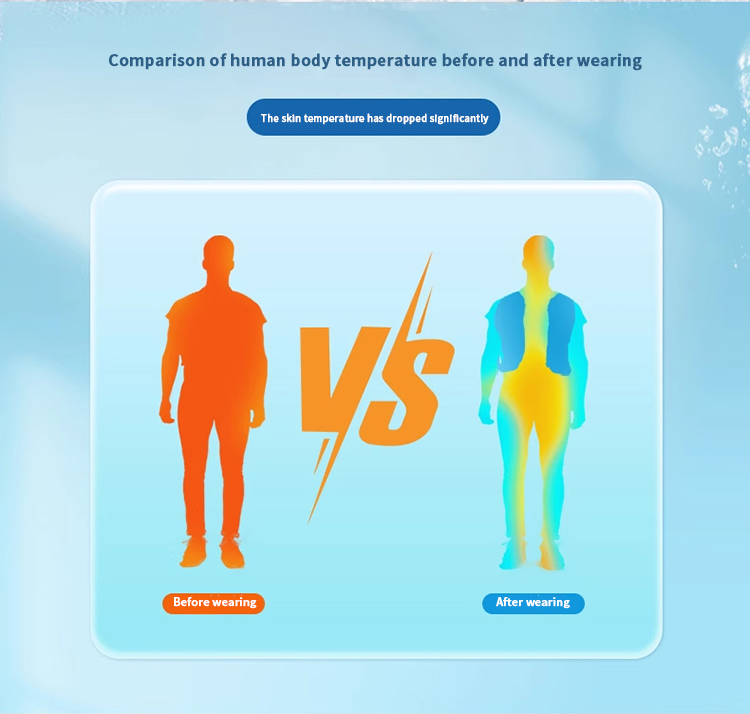
Your body enforces a hard limit. Core body temperature must stay below 38°C to sustain an 8-hour work shift without risk. Cross that threshold and heat injury risk climbs fast. The body’s cooling systems can’t keep pace. Performance drops before safety does.
NIOSH (National Institute for Occupational Safety and Health) publishes work-rest schedules based on this body reality. Temperatures exceed 80°F (27°C)? Workers need 15-minute breaks every two hours. As WBGT climbs to extreme levels, those ratios flip hard. Workers spend 80% of each hour resting—just 15 minutes of actual work per hour. New workers need gradual adjustment. Day one: 20% of usual work duration. Then add 20% each day until full capacity returns.
Cooling vests extend the work window. They hold core temperature below that 38°C danger zone. The extra duration builds over weeks and months. Your core hits critical levels at hour five? Without a vest, you stop. With one, you complete hour six, seven, and eight at full capacity.
Mining operations show this effect. Heat cuts productivity. But workers who use cooling strategies reduce the impact. Morning and afternoon shifts (6-9am and 12-3pm) show much higher output compared to the brutal 9am-noon window. That’s when temperatures peak (p<0.001). Statistical models confirm a beta coefficient of -0.6 for productivity drop per temperature increase (p<0.001). Cooling vests flatten that curve.
Heat Illness Prevention and Real Injury Data
Thirty-five percent of workers in frequent hot conditions get heat-related illnesses. These range from exhaustion to stroke-level events. More than one-third face dangerous body strain. Fifteen percent of outdoor workers report heat exhaustion symptoms during a single season. During heat waves, 40% of all heat illness cases come from job exposure.
The injury stats paint a grim picture worldwide. Heat stress at work causes 22.85 million injuries per year around the globe. In the United States alone, the Bureau of Labor Statistics tracks 33,890 heat-related injuries and illnesses each year. Broader estimates reach 170,000 injuries and 2,000 heat-related deaths per year. Construction and agriculture lead these numbers. These sectors see rising Days Away, Restricted, or Transferred (DART) cases each year. That includes 5,770 time-loss incidents tied to heat exposure.
Cooling vests cut into these numbers. They stop the body chain reaction that goes from discomfort to impairment to injury. Core temperatures stay safe. Workers stay in the productive zone longer. Shifts finish on schedule. Output targets get met. Safety incidents drop.
The extended work duration isn’t theory. You can measure it in hours retained, injuries avoided, and output delivered. Heat would otherwise shut operations down.
Real-World Uses Across Industries
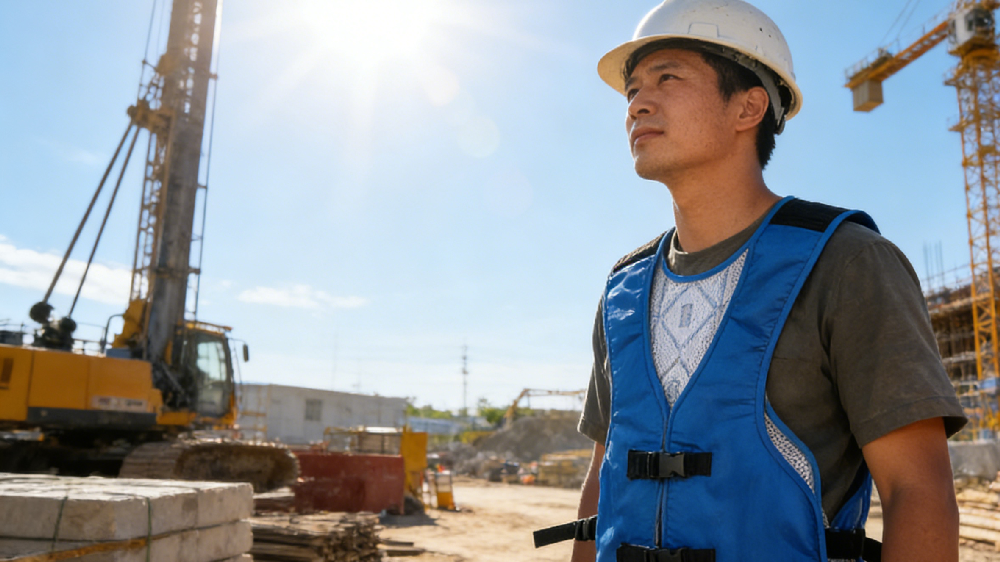
Cooling vests aren’t niche gear anymore. They’re now standard tools in jobs where heat kills productivity and puts lives at risk.
Construction and Industrial Safety
Construction sites face tough conditions. Workers wear heavy protective gear. Temperatures rise past safe levels. Traditional cooling doesn’t work while carrying tools, climbing scaffolding, or pouring concrete.
Cooling vests give workers mobility plus protection. They keep body temperature stable during 8-10 hour shifts. Control body temperature, and injury rates drop. OSHA data shows heat stress causes 35% of all construction site incidents during summer. Sites using cooling protocols see fewer heat-related emergency calls.
Welders face two heat sources: torch heat and air heat. Phase change material vests fit under welding jackets. They pull heat away while letting arms move freely. Forge workers and foundry operators get similar results. The cooling adds 2-3 hours to each shift.
Military and Tactical Operations
Soldiers carry 60-100 pounds of gear in desert heat. Each degree of body temperature rise slows decisions and hurts shooting accuracy. Military studies show brain function drops 15% above 38.5°C body temperature.
Tactical cooling vests fit under body armor. They use ice packs or PCM technology. Special operations units wear them in training and missions. The vests keep alertness high during long patrols. They help speed recovery between intense action.
Bomb disposal techs work in sealed suits. Internal temperatures can reach 45°C in 20 minutes. Ice-cooled vests boost their safe work time from 15 minutes to 40 minutes. That extra time can save missions and prevent heat injuries.
Professional Athletics and Training
NFL teams rely on cooling vests at training camps. Summer practices in Florida, Texas, and Arizona push athletes hard. Teams using cooling protocols between drills stay more intense. Players do more reps at full speed.
Marathon runners wear them before races. The goal: start with the lowest safe body temperature. A 0.3°C drop in starting temperature adds 8-12 minutes of endurance for elite runners. That’s 3-5 minutes saved over 26.2 miles.
Tennis players use them during breaks at outdoor events. Grand Slam matches in Melbourne and New York see court temps above 50°C. Cooling vests between sets keep serve speed and shot accuracy high through five-set battles.
Medical Conditions and Personal Health
MS patients struggle with heat. Just 0.5°C body temperature rise causes flares. Vision blurs. Muscle control drops. Fatigue hits hard. Cooling vests let MS patients work full days, exercise, and join outdoor activities they couldn’t do before.
Menopausal women use light evaporative vests for hot flashes. The vests give fast relief during temperature spikes. Users sleep better and feel less anxious about symptoms in public.
People with hyperhidrosis—excessive sweating—find relief through skin cooling. The vests stop the sweat cycle that makes more sweat. Life gets better: social confidence returns and normal clothes become possible.
Emergency Response and Firefighting
Firefighters work in deadly heat. Structural fires hit 600°C. Wildland fires spread across land where air reaches 40°C before flames show up. Cooling vests under turnout gear add 15-20 minutes of safe work time per entry.
Recovery between entries matters as much as initial protection. Fire crews wear cooling vests during rest periods. Body temperature drops faster. Heart rate returns to safe levels quicker. Teams get back to work sooner with less heat stress buildup.
Paramedics and EMTs work summer shifts in ambulances without AC. Patient care means hard work in tight spaces. Cooling vests keep their energy up through 12-hour shifts. Response quality stays the same from first call to last.
Conclusion
The science backs it up: cooling vests provide real physical benefits. These benefits show up as actual performance improvements. Managing a construction crew in 95°F heat? Training for an ultramarathon? Dealing with medical conditions that affect your body’s cooling system? These vests give you a proven way to control your core body temperature and prevent heat stress.
Look at the numbers—15-25% productivity boost in factories and warehouses. Athletes experience delayed fatigue. Plus, there’s clear evidence of protection against heat-related illness. Cooling vests rely on basic physics (evaporative cooling technology), not tricks. This makes them a solid investment in your health, safety, and performance.
Want to try these benefits yourself? Check out our personal cooling devices built for your specific needs. Not sure which style works for you? Our product comparison guide explains evaporative, phase-change, and active cooling systems. You’ll find the right temperature control gear for your situation.
Don’t let heat hold you back at work or during activities. You deserve better protection.