
The scorching factory floor. The relentless summer sun on a construction site. The sudden heat flush that derails your workout—or your workday. You’ve Googled “cooling vest” at 2 AM while battling night sweats? Or maybe you’re a safety manager watching productivity drop during heat waves? You’re asking the right question: Is this technology for me?
Here’s the truth: cooling vests aren’t just for astronauts and extreme athletes anymore.
Warehouse workers use them to prevent heat exhaustion. MS patients rely on them to manage thermal sensitivity. Personal cooling devices now serve a wide range of professions, health conditions, and lifestyles.
This guide cuts through the marketing fluff. You’ll see who benefits most from cooling garment technology. You’ll learn which cooling method matches your specific heat stress scenario. And—crucially—you’ll know whether investing in thermal comfort is worth it for your situation.
Protecting a team of outdoor workers? Or addressing your own heat-related struggles? You’ll walk away knowing if a cooling vest belongs in your toolkit.
Outdoor Workers Face Extreme Heat Exposure

Every workday, 1.6 billion people worldwide clock in under open skies. Construction crews pour concrete. Farm workers harvest crops. Delivery drivers navigate hot parking lots. Road crews patch asphalt that radiates heat like a stovetop.
These workers face a real threat: heat stress that damages their health, safety, and ability to earn a living.
The data tells a clear story. In the United States alone, 32 million outdoor workers—33% of the workforce—work in direct heat exposure. Between 2011 and 2020, these workers had 33,890 heat-related injuries and illnesses. Since 1992, about 1,000 have died from work heat exposure. In 2023 alone, 55 workers died from heat-related causes.
Those numbers miss the full picture. Many cases go unreported.
Worker productivity drops in heat. Research shows performance falls 2-3% for every degree Celsius above 20°C. Construction sites see productivity losses between 29% and 41.3% due to heat stress. Temperatures above 75°F (wet-bulb globe temperature) cut worker efficiency by an average of 2.6% per 1.8°F increase. Over a full workday in extreme heat, that adds up to massive costs—both money and physical strain.
The Geographic Reality
Your location sets your risk. High-risk states mix brutal heat waves with large outdoor workforces:
-
Texas: 91.3 heat wave risk score, 22.6% outdoor workforce (9.7% of national outdoor workers)
-
Oklahoma: 91.6 risk score, 23.4% outdoor work
-
Mississippi: 82.0 risk score, 24.7% outdoor workforce
-
Florida: 63.6 risk score, 21.8% outdoor workers (6.8% of national total)
-
North Carolina: 74.3 risk score, 20.8% outdoor work
Nationwide, 65.1% of outdoor workers live in areas with top-quartile heat wave risk. In high-risk zones (above 75th percentile), that figure climbs to 65.5%. Add wildfire smoke exposure—hitting 38.4% of outdoor workers in high-risk areas—and the heat burden grows worse.
Urban centers make the problem worse. The urban heat island effect traps 696 million urban poor—many working casual outdoor jobs like street vending—in places that run 5-10°F hotter than nearby areas.
The Health Cascade
Heat exposure causes serious medical problems. Heatstroke. Severe dehydration. Kidney damage. Brain disorders that can become permanent. Fifteen percent of U.S. outdoor workers have already had heat exhaustion or other heat illness.
The good news? Personal cooling devices work. California’s 2005 heat illness prevention standard—requiring shade, water, and rest breaks at temperatures above 95°F—cut heat injuries by 30%. Cooling vests go further. They keep body temperature stable all day, not just during breaks.
Who Needs Cooling Vests in This Category
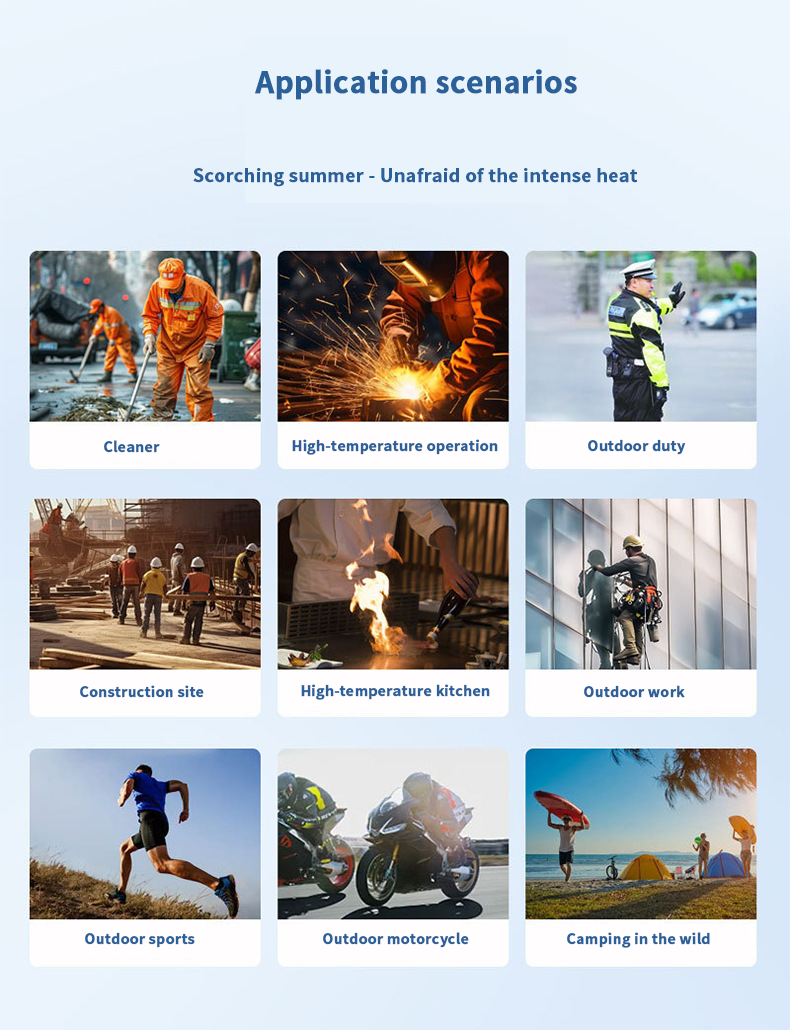
You’re a priority if you work:
-
Construction and infrastructure: Roofers, pavers, concrete workers, welders in direct sun
-
Agriculture and landscaping: Field workers, tree service crews, groundskeepers during peak heat months
-
Transportation and delivery: Package delivery drivers, postal carriers, tow truck operators
-
Emergency services: Firefighters (wildland and structural), paramedics, utility repair crews
-
Industrial outdoor operations: Oil and gas workers, port workers, mining crews
Cooling garment technology solves your main challenge: long heat exposure that builds up hour after hour. Phase-change and evaporative cooling vests keep you comfortable for 2-8 hours. That covers full shifts in many cases. They stop the productivity drop that costs your employer money—and costs you energy, focus, and long-term health.
The link is clear: counties with more outdoor workers show more worry about heat exposure (r=0.18). Workers see the danger. Smart employers and safety managers see it too.
You’re supervising outdoor crews or handling your own heat exposure in 2025—the year after 2024’s record-breaking temperatures across 17 U.S. states. Heat-related illness prevention isn’t optional anymore. Decades of injury data and productivity research back this up. It’s a work necessity.
Personal cooling devices belong in your work gear next to hard hats and safety glasses.
Industrial and Factory Workers in High-Temperature Environments
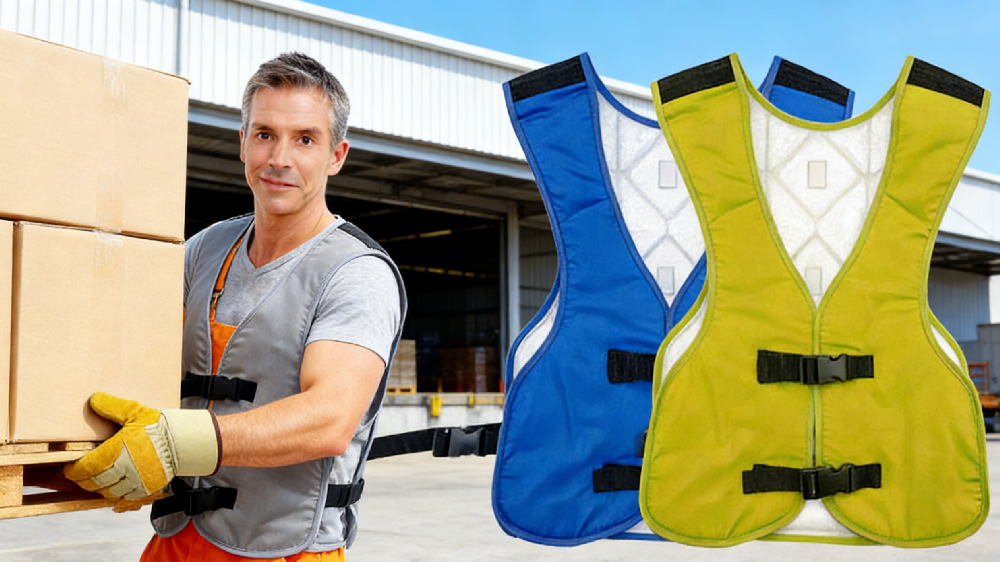
Factory floors bake workers from two directions at once. Overhead heat radiates down from metal roofs. Ground-level heat rises from machinery, ovens, and industrial processes. Add poor ventilation. You’ve got an indoor furnace that never shuts off.
Forty-two percent of American workers clock in at sites without climate control. Warehouses, manufacturing plants, foundries, and processing facilities. These spaces trap heat and chemical exposure. Outdoor jobs don’t face this. A cooling system fails or doesn’t exist? Indoor temps spike faster than outside. Workers can’t escape to shade. They’re stuck in enclosed heat chambers for eight-hour shifts.
The Indoor Heat Burden Nobody Talks About
The numbers reveal a hidden crisis. Fourteen percent of all workers spend their days in indoor spaces without climate control. Among them, 20% report heat exhaustion symptoms each year. That’s higher than many outdoor roles. Nine percent of indoor workers in these settings got heat-related illness in the past year alone.
Why does indoor factory heat hit harder? It’s all about concentration. Industrial processes pump out huge amounts of heat. Furnaces for metal casting. Steam systems in food processing. Chemical reactors in manufacturing. Server rooms in fulfillment centers. That heat doesn’t go anywhere. It builds up in enclosed spaces.
Transportation, warehousing, and utilities sectors show the split: 66% of workers have outdoor exposure. But 30% work in indoor facilities without climate control. Those indoor workers face unique dangers. Heat plus tight spaces. Heat plus chemical fumes. Heat plus hard physical work moving inventory or running heavy machinery.
Heat Drives Up Every Workplace Injury
Temperature pushes injury rates up in ways we can measure. For every 1°C above average temp, work injuries increase 1%. During heatwave periods, injury risk jumps 17.4%.
The threshold matters. Heat index hits 70°F? About 1.18% of all workplace injuries trace back to heat. That’s around 27,953 injuries in 2023 based on 2.37 million total injuries. Push that to 80°F, and 0.69% of injuries link to heat. At 90°F: 0.33% tie back to heat.
But watch what happens at extreme temps. At 85°F, the injury trend curve bends upward fast. Hit 90°F, and odds climb a few percentage points higher. Reach 105°F, and injury odds spike 15% higher than at 80°F. At 110°F, workers face 20-22% higher injury odds compared to the 80°F baseline.
California data proves the scale. High temps above 60°F cause about 20,000 extra workplace injuries per year in that state alone. The Bureau of Labor Statistics undercounts heat injuries by 20-70%. Official numbers hide most of the problem.
The Fatal Math
Between 2011 and 2020, heat caused 33,890 recorded injuries and illnesses. It killed about 1,000 workers. In 2023 alone, 55 workers died from heat at work. The year before, 51 died. In 2021, 36 perished.
OSHA estimates the real toll each year: 170,000 injuries and up to 2,000 deaths nationwide. Most cases never get reported.
States without heat protection rules see 22% higher injury odds at temps above 110°F (OR=1.22). States with heat rules? Just 9% higher odds (OR=1.09). Rules save lives. Cooling technology saves workers between gaps in the rules.
Who Needs Cooling Vests in Factories
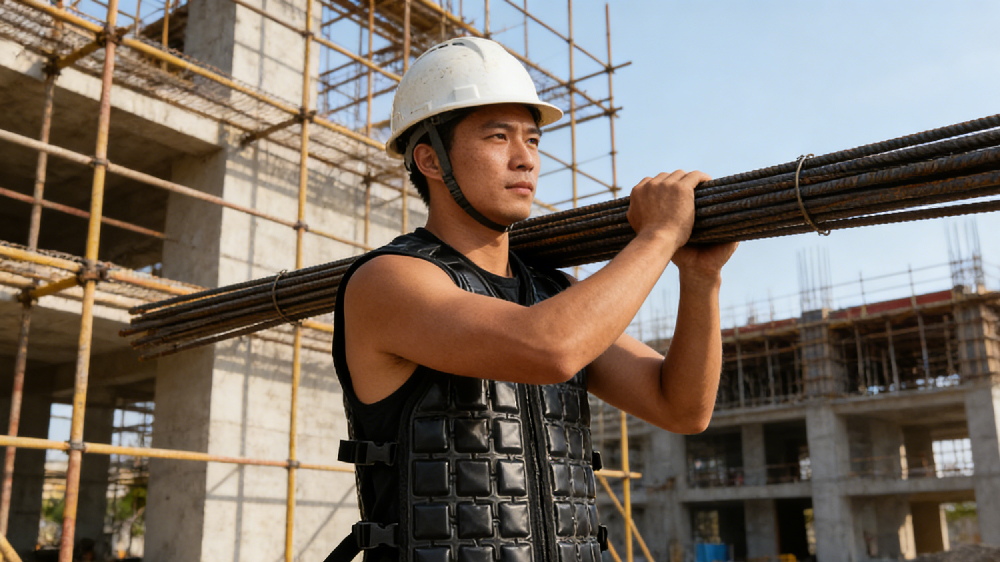
You need personal cooling devices if you work in:
-
Warehousing and logistics: Fulfillment center workers, inventory handlers, forklift operators in facilities without air conditioning
-
Manufacturing: Line workers, machine operators, quality control inspectors near equipment that generates heat
-
Food processing: Workers in cooking, canning, and packaging areas where steam and heat are constant
-
Metal and foundry work: Welders, casters, forge operators, metal fabricators near furnaces
-
Chemical and pharmaceutical: Process operators, batch mixers, packaging staff in areas next to reactors
-
Automotive and heavy equipment: Workers in paint booths, engine testing facilities, and production zones without cooling
Twenty-two percent of all workers do hard physical work at their jobs. Mix heavy effort with trapped indoor heat. You’ve got the perfect storm for heat illness.
Cooling garment technology solves the core problem. Long heat exposure in spaces where you can’t control the environment. Phase-change cooling vests keep your body temperature stable for 2-6 hours. Evaporative vests work longer—up to 8 hours—in factory settings with lower humidity. Both technologies let you work in conditions that would otherwise cause dangerous heat buildup.
Heat stress costs 295 billion lost work hours each year around the world. Your factory cooling solution isn’t just about comfort. It’s about keeping production moving, stopping injuries, and saving lives in spaces built to make heat, not get rid of it.
Athletes and Fitness Enthusiasts Who Need Performance Optimization
Elite performance lives in the margins. That extra 2% in sprint recovery. The ability to push through one more high-intensity interval without hitting the wall. The difference between a personal record and another plateau.
More than 70% of athletes track biometric data now. Heart rate variability, sleep patterns, training load. They guide workouts and recovery with these numbers. They’re not just collecting data. They use it to make real decisions: push harder, back off, or protect the body from overheating during peak effort.
The sports analytics market tells the story. It jumped from $2.5 billion in 2021 to $8.4 billion by 2026. Athletes at every level want gains they can measure. Weekend warriors to pros. They’re investing in tools that work.
Body temperature regulation sits at the center of athletic performance. Core temp rises during intense training. Every system slows down. Cardiac output drops. Muscle efficiency falls. Mental focus degrades. Your body diverts resources to cooling instead of power generation.
The Performance Edge Through Thermal Control
Smart athletes build training programs around three pillars. Long-term development, systematic progression, and relentless consistency. Cooling garment technology fits into all three.
During off-season strength building, cooling vests extend high-intensity sessions. Heat-induced fatigue won’t cut them short. In pre-season power development, they prevent thermal stress from sabotaging explosive efforts. In-season, they maintain performance during warmups. Hot venues or outdoor events.
The timing systems market is growing from $1,189.72 million in 2026 to $1,574.03 million by 2035. This tracks the obsession with gains you can measure. Athletes optimize every variable they can control. Temperature is one of them.
Who Benefits Most
You’re a priority if you:
-
Train outdoors in warm climates: Runners, cyclists, triathletes logging high-mileage weeks in heat
-
Compete in hot conditions: Soccer players, track athletes, tennis players facing tournament schedules in summer
-
Do high-intensity interval work: CrossFit athletes, HIIT enthusiasts, bootcamp participants generating massive internal heat
-
Manage weight with training: 49% of Americans manage weight while exercising. Many combine GLP-1 medications with intense workouts
-
Recovery-focused athletes: Those using HRV-guided training who need faster recovery between sessions
Personal cooling devices extend your work capacity in the zone that matters most. Elite athletes train with intensity. Deliberate effort in every sprint, lift, and jump. Cooling vests don’t make you faster. They remove the thermal barrier that stops you from training at the intensity that makes you faster.
Training load goes beyond GPS metrics and external volume. It includes your body’s adaptive capacity. Heat stress eats that capacity. Remove the heat stress. You free up adaptation for actual performance gains.
You’re not chasing marginal gains through expensive supplements or questionable recovery gadgets. You’re addressing basic physiology: keep core temperature down, maintain power output up. Thermoregulation apparel does that for 2-8 hours per session. Depends on the cooling method you choose.
Military Personnel and Emergency Services in Tough Environments
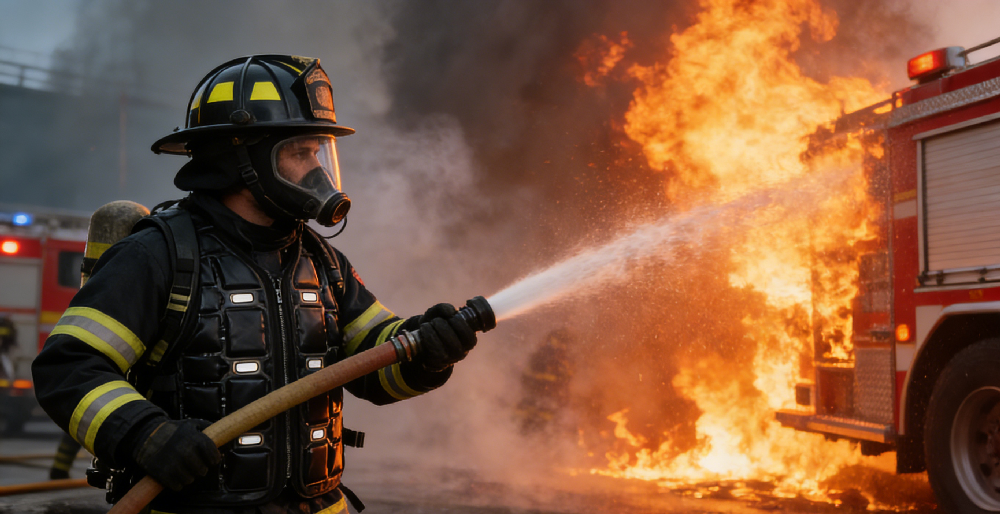
Combat zones don’t come with climate control. Disaster sites don’t either. Same for wildfire perimeters and chemical spill zones. Military personnel and emergency responders work where conditions break most people. Heat becomes a tactical problem.
The military heat illness numbers show the scale. Soldiers and Marines get heat exhaustion and heat stroke more than any other service branch. Young male recruits take the hardest hit. Cases spike from May through September. This happens at temperatures as low as 70°F. Fort Benning, Georgia and Fort Bragg, North Carolina lead in incidents. Intense training schedules mix with regional heat and humidity. This creates a perfect storm.
Severe heat stroke cases are dropping. This happens despite more overall heat exposure. Why? Better protocols help. Heat stress prevention technology helps too. This includes cooling vests for high-risk operations.
The Mental Load Adds to Physical Stress
Emergency responders face a different but just as dangerous heat reality. First responders carry crushing mental burdens on top of physical demands. The lifetime statistics are stark: 28% have felt life wasn’t worth living. 10.4% had serious thoughts of suicide. 3.1% attempted suicide.
Fire and EMS personnel attempt suicide at 6.6%. That’s thirteen times the civilian rate of 0.5%. Emergency physicians show depression rates of 3.1%. These aren’t just numbers. They’re colleagues, neighbors, the people who show up at your 911 call.
Combat stress during operations tells a similar story. Between 42-52% of U.S. Army soldiers saw combat and stress reactions in their peers during deployment. Psychiatric evacuations climbed to 24% of all medical evacuations in 2017. They hit 28% in 2018. After combat drawdowns in 2013-2015, psychiatric medevacs still reached 19%.
Post-9/11 combat veterans use emergency departments 1.84 times more than non-combat veterans (95% CI 1.83-1.85). Mental health problems rank in the top three ED visit reasons. Suicidal thoughts especially. But this is true for combat vets alone. Study sample: 1.3 million veterans, 70.4% with combat deployment history, mean age 32.6, 83.5% male.
Climate Disasters Add to the Exposure
Military and emergency services deploy into worse environmental conditions. The World Meteorological Organization tracked a five-fold increase in climate disasters between 1970 and 2019. Those disasters caused 2 million deaths and $3.64 trillion in losses around the world.
In 2023 alone, the U.S. faced $28 billion in disaster costs. The military spent $2.6 billion across 393 emergency deployments that year. Hurricane response. Wildfire suppression. Flood rescue. All happen in extreme heat. This makes every other stressor worse.
Who Needs Cooling Vests in This Category
You’re a priority if you work:
-
Military roles: Infantry during training exercises, vehicle crews in desert operations, special operations teams in hot climates
-
Firefighting: Wildland firefighters on long containment operations, structural firefighters in heavy gear during summer calls
-
Emergency medical services: Paramedics and EMTs working outdoor scenes, disaster response medics in field hospitals
-
Law enforcement: SWAT team members during long operations, border patrol agents in desert regions
-
Search and rescue: Mountain rescue teams, dive teams in dry suits, disaster zone personnel
Thermoregulation apparel solves your core problem. You need to stay effective as heat breaks down both physical ability and mental clarity. Phase-change cooling vests provide 2-4 hours of relief during tactical operations. Evaporative systems extend that to 8 hours for sustained field work.
A study of 586 active military personnel serving over 18 months on COVID-19 frontlines in Peru showed something important. Those with longest exposure showed 35% higher rates of high resilience (PR 1.35, 95% CI 1.05-1.75). Mean resilience score: 22.18 out of 40. Personnel reported: 42.3% faced difficulties head-on, 40.3% handled tough feelings well, 40.4% achieved goals despite obstacles, 40% adapted to changes and bounced back fast.
Resilience matters. But resilience shouldn’t mean suffering through heat stress you can prevent. Personal cooling devices remove one variable from an already impossible equation. You can’t control the mission. You can’t control the environment. You can control your core temperature.
Mental clarity means life or death. For you or the people counting on you. Cooling garment technology isn’t comfort equipment. It’s mission-critical gear.
Cooling Vest Technology Matching for Different User Groups
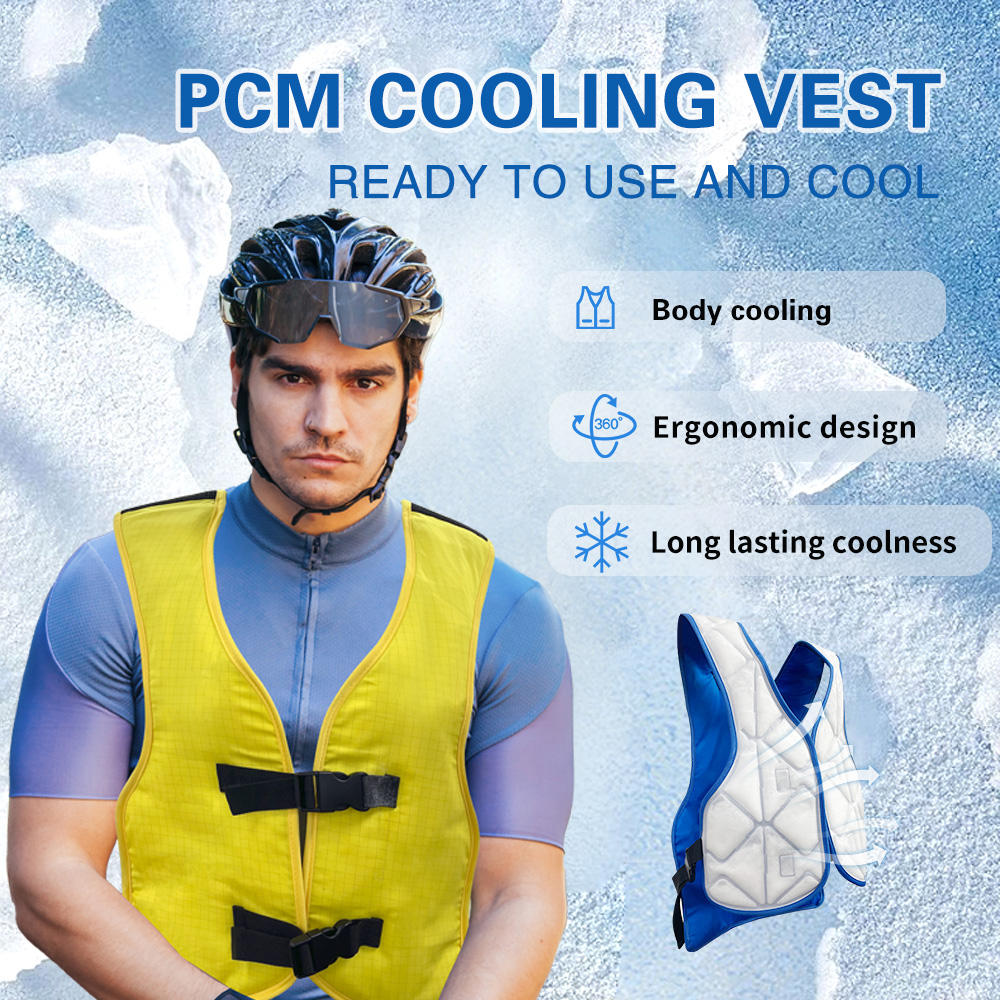
Five cooling technologies exist. Each solves heat problems in its own way. Your job, your environment, your budget—these factors determine which technology works for you.
The market reached $98 million in 2024. It’ll hit $151.29 million by 2033. Companies aren’t buying feel-good products. They’re investing in proven thermoregulation apparel that prevents heat injuries. Plus, it keeps workers productive.
Let’s cut through the tech specs and match you with what works.
Evaporative Cooling: The Industrial Workhorse
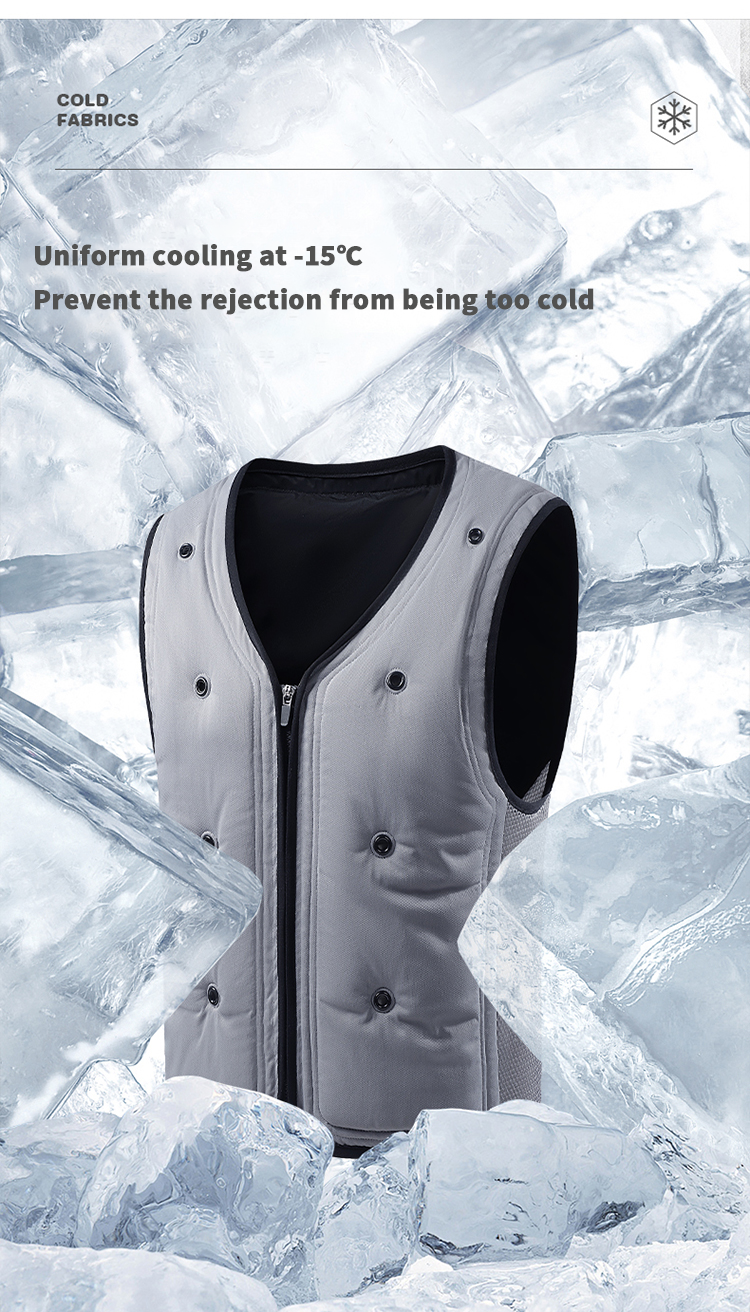
Water evaporates. Physics pulls heat away from your body. Simple. Effective. Cheap to run.
Evaporative vests dominate industrial settings for good reason. They cost less than other technologies. They work for full eight-hour shifts. No freezers needed. No charging stations. Just water.
Who this fits: Manufacturing line workers, warehouse personnel, logistics crews, general laborers in environments with decent airflow. You move all day and need unrestricted range of motion? Evaporative cooling delivers.
The catch? Humidity kills the effect. Evaporative vests fail in muggy environments. Sweat already won’t evaporate there. High-humidity warehouses need different technology. So do tropical job sites.
Phase Change Materials: Sustained Regulation
PCM vests freeze solid. You wear them. They melt over time. They hold a consistent temperature for hours. Ice packs dump all their cooling fast then quit. Phase change cooling maintains steady thermal regulation.
Healthcare workers proved this works under tough conditions. Doctors and nurses wore full PPE during COVID response—gowns, masks, face shields, gloves. They tested PCM vests. Heart rate dropped to 100.55 bpm wearing the vest versus 113.33 bpm without it. That’s an 11% reduction. Microclimate temperature stayed 3.6°C lower. Cognitive performance response time improved (p < 0.001). Fatigue scores told the story: -0.55 ± 1.46 with the vest versus 2.80 ± 1.23 without (p < 0.001).
Thermal sensation scores flipped from uncomfortable heat to comfortable cool. Median -3.0 with cooling versus +2.0 without. Skin and clothing stayed drier (p < 0.001).
Who this fits: Healthcare workers in isolation wards, hazmat teams, anyone wearing sealed protective equipment. Evaporative cooling can’t function there. PCM also works for industrial jobs that need sustained temperature control over predictable shift lengths.
Composite PCM variants mix materials to boost efficiency. These advanced versions cost more. But they deliver better performance for tough operations.
Gel Pack Systems: The Firefighter’s Choice
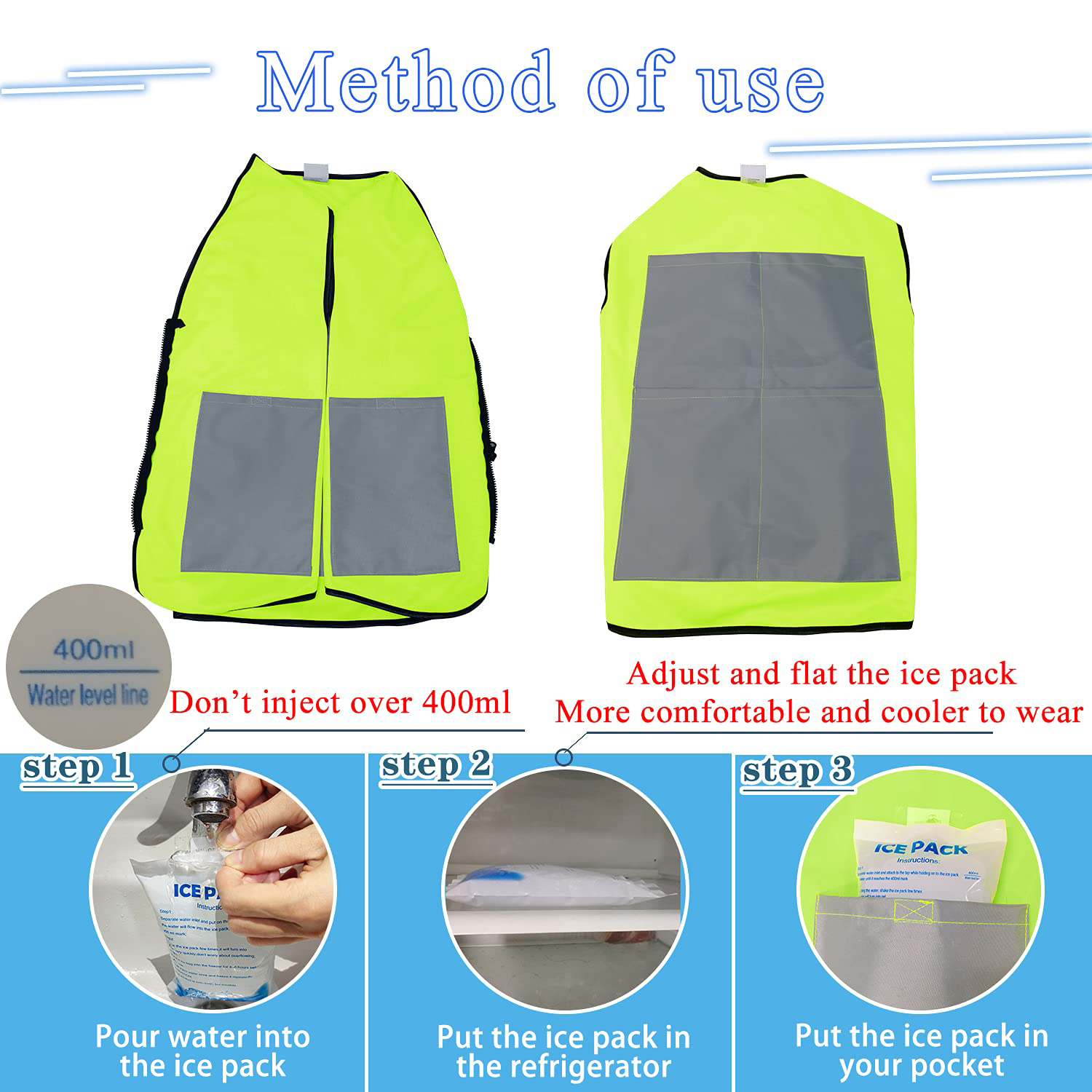
Gel packs sit in pockets across the vest. You freeze them overnight. They cool hard for shorter durations than PCM.
Firefighters tested 4-pack and 6-pack gel vests against no cooling. Tests ran during simulated firefighting work in hot, humid conditions. Both vest configurations beat the control group hard. Tolerance time jumped from 92.8 ± 19.9 minutes without cooling to 120 ± 0 minutes with either vest. That’s a 29% increase in working time before heat stress forced them to stop.
The 6-pack delivered maximum cooling power. Lower core temperature rise rates. Lower skin temperature increases. Lowest heart rate climb during exertion. But firefighters preferred the 4-pack for field use. Better fit. Less weight. Easier to move in.
Every test subject said they’d wear these vests during real firefighting operations. The cooling didn’t interfere with their ability to judge fire behavior. It didn’t mess with tactical decisions either.
Who this fits: Firefighters (wildland and structural), emergency responders in heavy protective gear, military personnel during training exercises. Gel packs work best worn outside clothing. You need intense cooling for 90-120 minute operations followed by recharge time.
Circulatory and Advanced Systems: Specialized Applications
Ice water circulates through tubes connected to a backpack pump. Compressed air jets blast cooling across your torso. Thermoelectric Peltier chips create temperature differentials through electrical current.
These technologies deliver the most precise body temperature regulation. Circulatory systems give you continuous cooling for extended periods in extreme heat. Air-based and thermoelectric vests work in environments without air conditioning. They integrate smart sensors. These monitor heart rate, core temperature, and hydration status in real-time.
Who this fits: Workers in environments above 110°F. Personnel spending entire shifts in sealed industrial facilities. Operations that need personalized thermal adjustments based on biometric feedback.
The downside? Cost and complexity. These systems need power sources. They need maintenance. Higher upfront investment too. They make sense for high-risk roles. Heat illness in those roles means death or permanent disability.
Making Your Match
Industrial and warehouse settings with moderate heat: evaporative cooling. Cost-effective. Proven productivity gains. Dominant market choice.
Sealed protective equipment or sustained regulation needs: phase change materials. Healthcare. Hazmat. Composite variants for maximum efficiency.
Firefighting and emergency response in heavy gear: gel pack systems. The 4-pack balances cooling with mobility. The 6-pack maximizes thermal protection.
Extended exposure above 110°F or biometric monitoring requirements: circulatory or thermoelectric systems with smart sensor integration.
The $1.12 billion heat stress mitigation market in 2024 proves organizations see measurable returns. Your personal cooling device isn’t a nice-to-have anymore. It’s occupational heat protection backed by performance data. Backed by injury reduction statistics. Backed by workers who wear them in the field.
Match the technology to your heat profile. Not the other way around.
Conclusion
Finding the right cooling vest is about matching tech to your body’s heat challenges. Construction supervisors face 100°F job sites. Athletes chase better performance. Some people manage heat-sensitive health issues. The right personal cooling device changes how you work, train, and live in hot places.
The science proves it: heat stress prevention matters now. Businesses gain a competitive edge. Athletes perform better. People with heat sensitivity improve their quality of life. Professionals who switched report real results—fewer sick days, better output, more comfortable working hours.
What’s your next step? Check your heat exposure. Count how many hours you spend in uncomfortable or unsafe temps. Look at cooling solutions built for your situation. Start simple: know your environment, spot your peak heat stress times, and pick tech that works with your routine instead of breaking it.
You’ve got one body to protect. Keep it cool.