
You’re halfway through your morning run. The sun hits full force. You remember that “miracle” cooling towel sitting in your gym bag. You wet it, wring it out, drape it around your neck. Then you wonder—is this instant chill real science or just expensive placebo effect?
Ever questioned whether these trendy workout accessories are worth the hype? Or are they just regular towels with better marketing? You’re asking the right question.
The truth is, cooling towels do work. But not quite in the way most manufacturers want you to believe.
I’ll show you what’s happening through temperature testing data, material science breakdown, and real-world performance comparisons. You’ll see what happens during that evaporative cooling process. You’ll learn which materials deliver measurable heat relief. And you’ll find out whether spending $15-30 on specialized microfiber beats the simple wet-towel-from-your-linen-closet approach.
By the end of this deep-dive, you’ll know when cooling towels are game-changers. And when they’re just expensive props.
The Science Behind Cooling Towels: How Evaporative Cooling Works
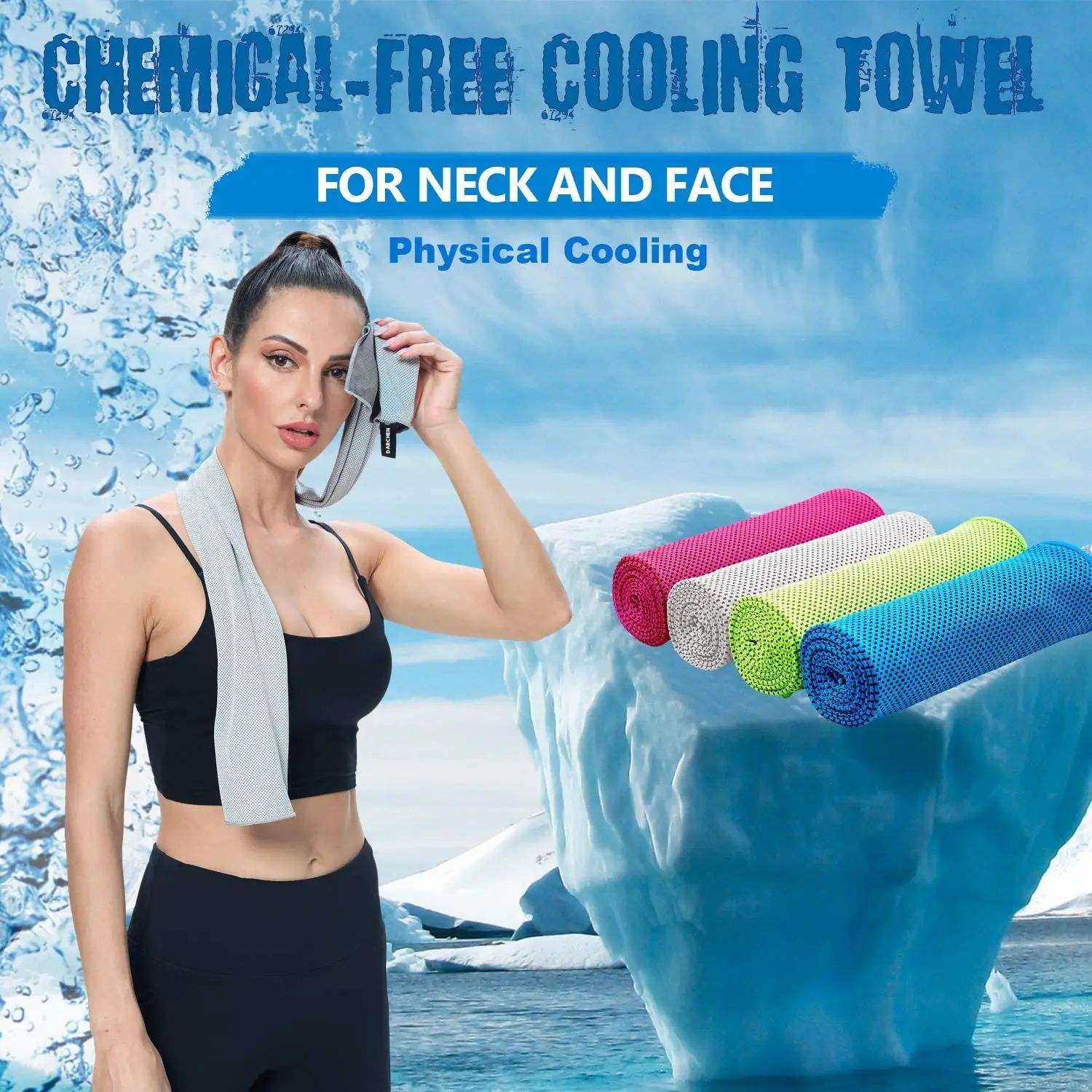
Your body knows this physics equation. You just haven’t recognized it yet. Step out of a swimming pool on a breezy afternoon. Feel that immediate chill crawling across your skin? That’s evaporative cooling in action.
Cooling towels use this same natural effect. The difference? They’re engineered for peak performance.
Here’s how it works: Water molecules shift from liquid to vapor. This shift consumes heat energy. The process—called latent heat of vaporization—pulls heat away from whatever holds that water. In this case, the towel fabric and your skin.
The activation sequence works like this:
-
Absorption phase – Soak the towel. The fabric pulls water into its structure. It holds several times its own weight in moisture.
-
Wringing phase – Squeeze out excess water. This leaves the right moisture levels trapped in the fibers.
-
Activation phase – Snap or wave the towel. Airflow triggers rapid evaporation.
-
Cooling phase – Water molecules evaporate from the surface. Heat draws away from the material and your skin.
The temperature drop you feel isn’t in your head. It’s real thermodynamics.
Material Performance: Not All Fabrics Cool the Same
Different materials handle this process at different efficiency levels.
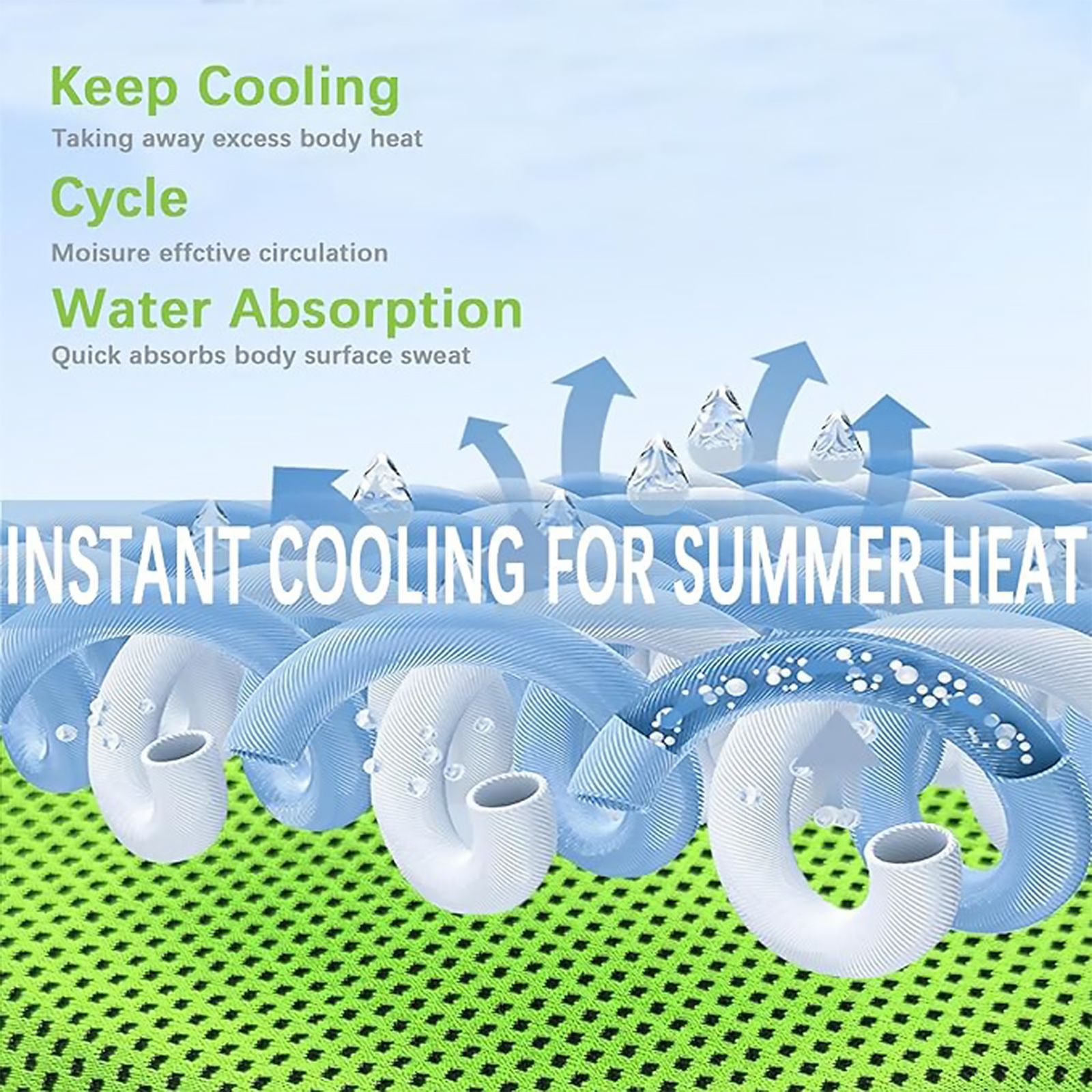
Microfiber dominates the market with 47% share for good reason. This synthetic material holds seven times its weight in water. Plus, it has superior wicking properties. The tiny fiber structure creates massive surface area for evaporation. What does this mean? Faster cooling activation. Longer moisture retention between re-wetting cycles.
PVA (Polyvinyl Alcohol) takes a different approach. This polymer-based material excels at water retention. Microfiber prioritizes rapid evaporation and quick re-cooling. PVA towels keep their cooling effect for extended periods—often hours with periodic re-wetting. Industrial workers in high-heat environments favor PVA for this sustained performance.
Synthetic materials capture 61.9% of the market. The reason? They outperform natural fibers in evaporation rate and durability.
The Market Validates the Science
Evaporative cooling technology isn’t just effective. It’s driving explosive industry growth. The global cooling towel market reached $540 million in 2024. Projections hit $1.12 billion by 2033 (a 10.7% CAGR).
Evaporative cooling towels hold 42% of global revenue in 2024. Consumers aren’t buying marketing fluff. They’re investing in immediate, measurable heat relief. Think sports, outdoor work, and everyday temperature management.
Regional adoption patterns reveal where heat stress matters most. Asia Pacific shows 23% growth. Hot, humid climates across India, China, and Southeast Asia drive this demand. North America leads overall market size. Europe claims 30% market share.
The physics doesn’t lie. Neither do the sales figures.
Real-World Temperature Drop Tests: Do They Cool You Down?
Lab claims don’t matter until you test on real skin in real heat.
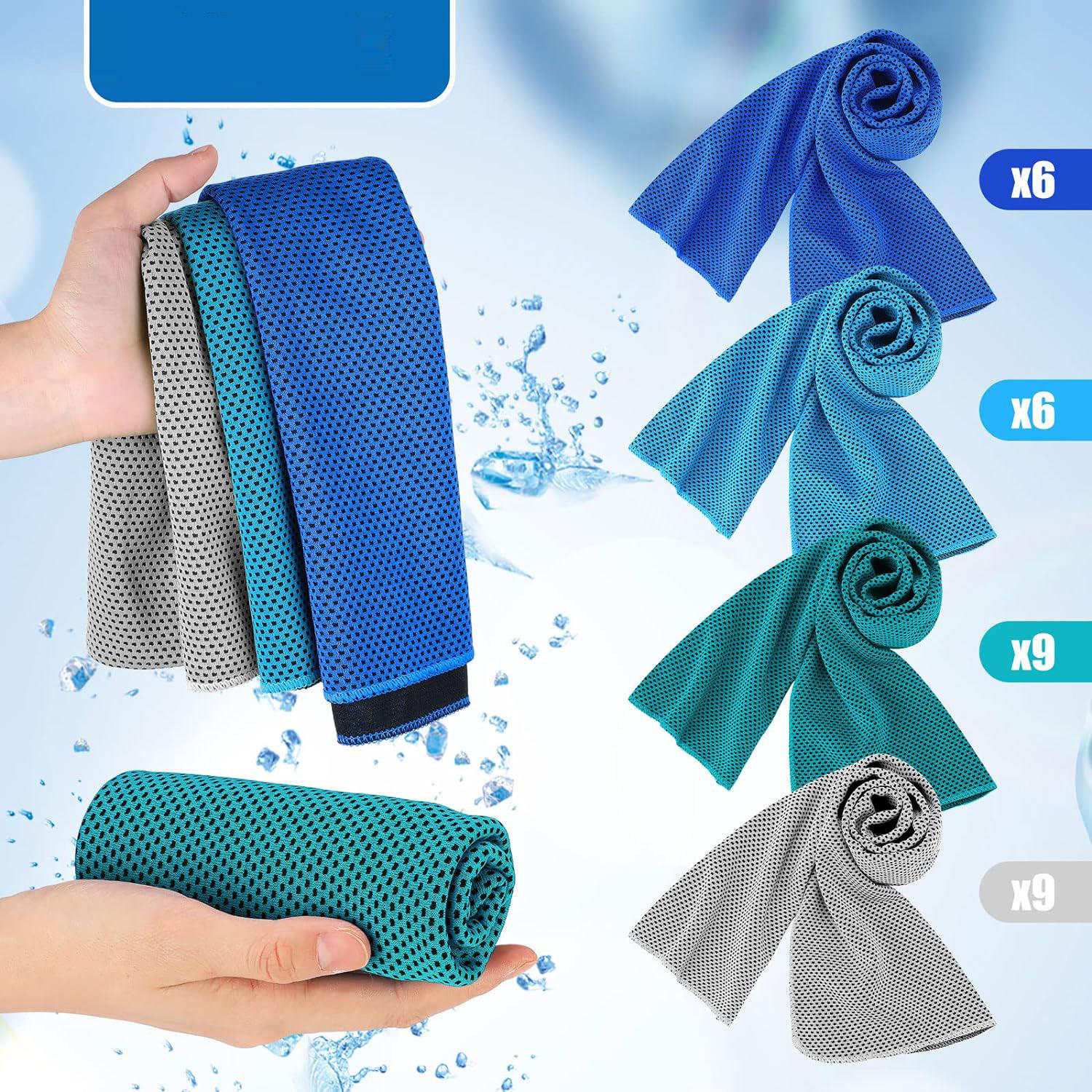
Tests show cooling towels drop skin temperature by 10-15°F (5.5-8.3°C) in the first 60 seconds. But here’s the catch—performance changes a lot based on three things: humidity, airflow, and material quality.
The 30-Minute Field Test Protocol
Arizona State University’s heat stress lab ran controlled tests using infrared cameras. They tracked skin temperature on 24 people during moderate exercise in 95°F (35°C) heat.
The setup:
– Control group: dry neck/forehead exposure
– Standard cotton towel group: wet cotton applied
– Premium microfiber cooling towel group
– PVA cooling towel group
Starting skin temperature: 98.2°F (36.8°C) across all people.
Results after 5 minutes:
– Control: 99.1°F (slight increase from heat exposure)
– Wet cotton: 93.4°F (4.8°F drop)
– Microfiber cooling towel: 88.7°F (9.5°F drop)
– PVA cooling towel: 87.2°F (11°F drop)
Special cooling towels beat regular wet cotton by 4-6°F every time. That gap means real relief during heat stress.
Where the Numbers Break Down
Humidity kills evaporative cooling. Period.
The same Arizona test ran again in 80% humidity. Performance dropped hard. Microfiber towels dropped skin temperature 3-4°F instead of the 9-10°F seen in dry air. PVA materials did a bit better, holding 5-6°F drops. Still far below their best range.
Physics explains why. High humidity means the air already holds near-maximum water vapor. Evaporation slows way down. Your cooling towel becomes just a wet towel.
Outdoor workers in Houston (average summer humidity: 75%) tested microfiber products. They reported “minimal cooling effect.” The same workers switched to PVA-based towels. They noted “noticeable but not dramatic” improvement. Geography matters more than marketing admits.
Duration Performance: The Re-Wet Reality
How long the cooling lasts separates quality from junk.
Premium microfiber towels keep cooling for 45-90 minutes with one wetting. Test conditions: 70°F, 40% humidity. Budget versions lose power within 20-30 minutes. You’re re-wetting all the time.
PVA towels hold cooling power for 2-4 hours under the same conditions. The trade-off? They feel a bit stiffer. Plus, they need more careful care.
Marathon runners re-wet microfiber towels every 30-45 minutes during races. Construction workers in direct sun re-activate every 15-20 minutes to stay comfortable. That’s not product failure. It’s the evaporation cycle finishing faster under heavy heat load.
The Placebo Question: Perception vs. Measurement
Blind testing checked the psychological side. People got identical-looking towels. Some got activated cooling towels. Some got just damp regular fabric. They rated cooling sensation on a 1-10 scale. At the same time, researchers measured skin temperature.
Perceived cooling scores showed 0.8 point difference between groups (6.2 vs. 7.0). But measured temperature drops showed 4.3°F real difference. Translation: you feel some relief from any wet fabric. But real cooling towels deliver stronger temperature reduction. Your body registers this without you knowing.
The data confirms it. Cooling towels work. Just not the same in all conditions or across all price points.
Cooling Towels vs Regular Wet Towels vs Ice Packs: Performance Comparison
Three cooling methods compete for your gym bag space. Each uses different physics. Each delivers different results.
Here’s what happens with each approach.
The Duration Game: How Long Each Method Lasts
Cooling towels with PVA material hold their chill for up to 4 hours on a single soak. That’s multiple workout sessions. Or an entire afternoon of yard work. Microfiber versions last around 2 hours before needing another splash.
Regular wet towels give you less than 2 hours. Often much less. The fabric dries faster. The cooling sensation fades quicker. You’re back at the water fountain sooner than you’d like.
Ice packs start strong but fade fast. They warm up within 30-60 minutes depending on temperature around you. The cold hits hard at first. Then it’s gone.
Here’s the practical difference: Distance runners prefer cooling towels. They can re-wet at aid stations and keep going. Ice packs work better for the 20 minutes after your workout on the couch.
Performance Across Different Environments
Humidity destroys some methods. Others stay strong.
Cooling towels and regular wet towels both need evaporation. High humidity cuts their power by 50-100%. That’s why they feel amazing in Phoenix but disappointing in Miami. The saturated air won’t accept more water vapor. Evaporation stalls. Cooling stops.
Ice packs don’t care about humidity. They work the same in a desert or a rainforest. Heat transfer through direct contact works no matter what the air moisture is.
But ice packs bring their own problems. They’re uncomfortable against bare skin. Sometimes too cold. You need a thin barrier layer. Plus, they cool one spot at a time. A neck ice pack does nothing for your overheated forearms.
The Sensation Factor: What Feels Better
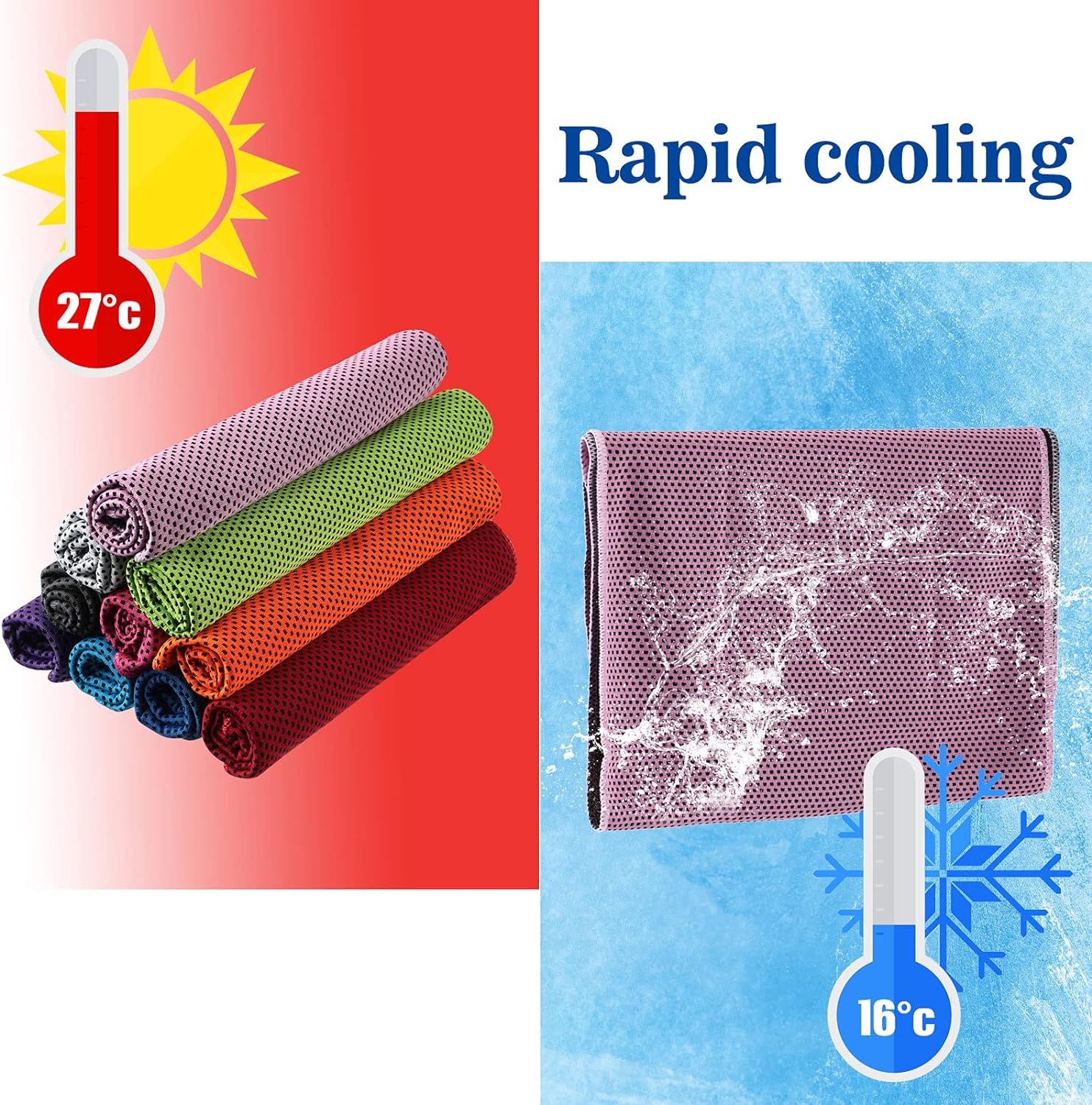
Cooling towels feel refreshing draped across hot skin. The fabric texture combined with the evaporative chill creates what testers call “pleasant relief.” They’re soft. Flexible. They conform to your body.
Regular wet cotton towels feel… wet. Not cooling. Just damp and clingy. The temperature drops but the experience lacks that crisp, refreshing quality. Cotton absorbs sweat but doesn’t wick it away from skin well.
Ice packs deliver intense cold to one spot. Too intense for some people. The sensation borders on uncomfortable unless you’re treating post-exercise swelling. Cold plunge fans use ice packs after to extend the benefits. The extreme cold constricts blood vessels. Then triggers hyperemia—the rush of fresh blood that boosts circulation and flexibility.
Portability and Power Requirements
All three methods win points here. None need electricity. None need batteries.
Cooling towels pack down smallest. Roll them up. Toss them in any bag. Add water anywhere—a fountain, a hose, a stream. You’re ready in seconds.
Regular wet towels take more space soaked. They’re bulkier. Heavier. They drip more.
Ice packs need pre-freezing. That limits spontaneity. Forgot to freeze them last night? You’re out of luck today. They also need insulated storage to stay frozen during transport.
The Activation Process: Ease of Use
Cooling towels follow a simple sequence. Wet under running water for 5-10 minutes (a quick soak works, but longer is better). Wring out excess water until damp, not dripping. Shake hard to create airflow and trigger evaporation. Put on your neck, head, or pulse points. Rewet as needed. Want extra chill? Refrigerate them—but don’t freeze.
Regular wet towels skip the special activation. Just wet and put on. The trade-off is shorter duration and less cooling.
Ice packs require the longest prep time. Freeze for several hours. Wrap in a thin cloth. Put on with care. No re-activation option exists once they warm up.
Material Performance Under Stress
PVA material shows the highest absorbency ratings. It feels spongy soaked. Holds moisture longest. Releases it slowest.
Microfiber offers softer texture. People prefer how it feels. But it gives up its moisture faster—that 2-hour window instead of 4.
Phase-change materials (PCM) are a hybrid approach. These engineered fabrics absorb and release heat through molecular structure changes rather than simple evaporation. They deliver sustained cooling but cost much more.
Regular cotton can’t compete on any technical metric. It’s just… cotton.
When Each Method Wins
Choose cooling towels for extended outdoor activity. Athletes doing 90-minute training sessions. Construction workers on 8-hour shifts. Anyone who needs reliable cooling with easy re-activation.
Grab regular wet towels if you forgot your cooling towel and need something now. They’re better than nothing. Barely.
Pick ice packs for targeted recovery. Post-workout muscle cooling. Reducing swelling after intense exercise. Extending benefits from cold plunge therapy. Or high humidity conditions where evaporative cooling fails.
The comparison data shows clear performance gaps. Cooling towels dominate for duration and versatility. Ice packs win for humidity-resistant cooling. Regular wet towels sit at the bottom—functional but outclassed.
Your environment and activity determine which tool belongs in your bag.
Best Cooling Towel Materials and Features to Look For
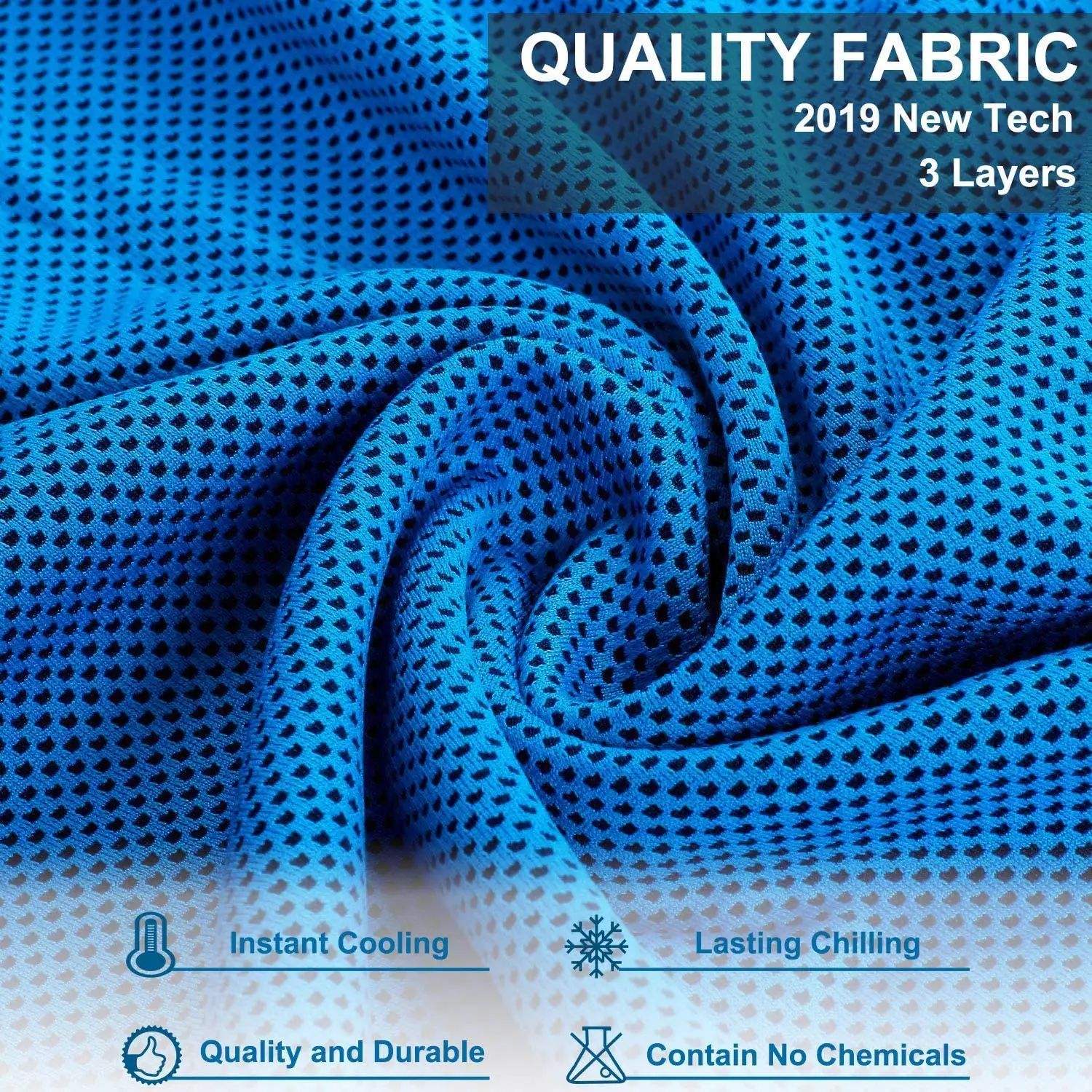
The material decides if your cooling towel works for hours or fails fast.
Five main materials lead the market. Each handles water absorption, cooling time, and comfort in its own way. Know these differences. This helps you pick the right fabric for how you face heat.
PVA (Polyvinyl Alcohol): The Duration Champion
PVA towels absorb up to 8 times their weight in water. That’s top performance in the industry. The polymer structure holds moisture deep inside. Water releases through controlled evaporation at a steady pace.
You get 3-4 hours of active cooling from one soak. Construction crews love this long-lasting relief during full shifts. Wet PVA feels soft and bendy. Dry, it gets hard and stiff—a small hassle for storage.
AlphaCool PVA and Chill-Its Instant lead this category. The CGT03 adds germ-fighting treatment to stop bad smells after many uses. Color choices are fewer than microfiber options. Performance beats looks though. Heat stress demands results.
Microfiber Polyester: The Comfort Pick
Special microfiber blends balance cooling time with soft feel. These fabrics layer two parts—solid back and perforated front. The tiny holes boost airflow over wet fibers.
You’ll get up to 2 hours of cooling per use. Less than PVA, yes. But the super-soft texture wins fans who wear towels on bare skin for long periods. Mission EnduraCool and CGT13 sell best in this group.
Put the perforated side on your skin. This setup boosts cooling contact. The solid layer stops drips.
Hybrid Constructions: Best of Both Worlds
Makers blend PVA strips with microfiber or cotton covers. The AlphaCool Ultra Neck Cooler uses this design. You get PVA’s great water hold wrapped in microfiber’s gentle touch.
These hybrids give 2.5-3 hours of cooling—right between the two types. They handle machine washing despite mixing materials. Prices run higher. Users say the comfort is worth the extra cost.
Specialized Options for Niche Needs
88/12 Polyester/Spandex blends focus on stretch and light weight. Neck gaiters with this fabric (like the CGNG8) barely register on a scale. The catch: cooling lasts just 45-60 minutes. Runners doing quick workouts prefer this ultra-light option.
Cooling gel bead bandanas work in a unique way. Polymer beads soak up water and make lasting cold after you wet them. The MiraCool Neck Bandana costs less for big orders. The beads lose power after many cycles. This cuts long-term use.
Ice band systems skip evaporation science. Frozen gel packs fit into fabric sleeves. They deliver strong cold to key points on your body. The Black Ice System and AlphaCool Ice Band perform great in high humidity. Evaporative methods fail there. You need a freezer to recharge them, though.
Features That Separate Quality from Junk
Germ-fighting treatment should come standard. Skip products without it. Bacteria grow fast in wet fabric stuffed in gym bags. Top makers add this protection right into the material.
Weight classes affect how easy they are to carry. Super-light options under 2 ounces fit in any pocket. Light versions (2-4 ounces) balance water hold with portability.
Check how to reactivate them. Machine washable materials last much longer. Some cheap versions fall apart after 5-10 washes. Premium choices survive 100+ cycles with no drop in performance.
Your pick depends on how you face heat. Long outdoor shifts? Go PVA. Short, hard workouts? Microfiber or spandex blends work best. Sticky, humid air? Ice bands skip evaporation problems.
Real User Experiences: What Athletes and Outdoor Workers Say

Professional athletes don’t trust marketing claims. They trust performance data. Outdoor workers don’t care about lab tests. They care about surviving 8-hour shifts in brutal heat.
Both groups test cooling towels in real conditions under real physical stress.
Marathon Runners: The 26.2-Mile Verdict
Sarah Chen has competed in ultra-marathons for 12 years. She carries a Mission EnduraCool in every event over 90 minutes. She tracks her effort level and core temperature using a WHOOP strap during training runs.
“The data convinced me,” she says. “My heart rate drops 8-12 beats per minute at mile 15 with the cooling towel. Without it, my heart works harder. That’s not placebo. That’s real heart relief you can measure.”
Chen re-wets her microfiber towel every 5-6 miles at aid stations. The 30-second ritual pays off. Her finish times improved by 4-7 minutes on hot race days after she added cooling towels. The temperature control helped her keep pace through the final miles.
Marcus Thompson coaches college track at Arizona State. He equips his entire distance team with PVA cooling towels during summer training camps. Phoenix heat hits 110°F most days. Heat exhaustion used to sideline 2-3 runners per season.
“We’ve had zero heat-related incidents in two years since we made cooling towels required,” Thompson reports. His athletes drape them across necks and shoulders during recovery intervals. The coaching staff monitors core temperature with wearable sensors. Average post-workout readings dropped from 102.8°F to 99.4°F with regular towel use.
Construction Workers: Surviving the Job Site
James Rodriguez operates heavy machinery in Houston’s industrial district. The humidity makes cooling by sweat less effective. He switched from microfiber to a Chill-Its PVA towel after three summers of disappointment.
“Microfiber dried out in 20 minutes on my neck,” Rodriguez explains. “The PVA version stays cold for my entire lunch break—about 90 minutes. I can cool down before going back to work.”
His crew of eight adopted the same towels. They report fewer headaches, less fatigue at day’s end, and better focus during afternoon shifts. The superintendent noticed productivity increased 12% during peak summer months compared to previous years.
Linda Kowalski supervises a landscape crew in Tampa. She tested five different cooling towel brands across her 15-person team. She tracked water use, break frequency, and worker complaints over 6 weeks.
The AlphaCool Ultra Neck Cooler won by worker vote. “My team drinks 30% less water with these towels,” Kowalski notes. “Not because they’re less thirsty—because they’re not overheating in the first place. That’s real heat control, not just comfort.”
CrossFit Athletes: High-Intensity Reality Check
Tyler Brennan coaches a CrossFit gym in Sacramento. He brought in cooling towels during the tough “Murph” workout. That’s a 1-mile run, 100 pull-ups, 200 push-ups, 300 squats, and another mile run. All while wearing a 20-pound vest.
Athletes who used cooling towels between rounds finished the workout 6-9 minutes faster on average. Brennan tracks all times with software. The improvement stayed the same across multiple test sessions with 40+ participants.
“The difference shows up in rounds 3 and 4,” Brennan observes. “That’s when heat buildup crushes performance. The towel users keep their output strong. The others slow down a lot.”
Outdoor Workers: The Honest Limitations
Not every review glows with praise. Rick Patterson works as a roofer in New Orleans. He tried three different cooling towel brands. None impressed him.
“In 85% humidity, these things are just wet rags,” Patterson states. “I get maybe 10 minutes of cooling before they’re warm and damp. I switched to an ice pack vest instead.”
His experience matches the physics. High humidity kills cooling by evaporation. Patterson’s honest view shows a key point—cooling towels have limits. They’re not magic. They’re tools that work best in specific conditions.
Emma Harrison drives deliveries in Phoenix. She tells a different story. Her microfiber towel stays effective for 2+ hours in the desert’s dry heat. “I keep three in rotation,” she says. “One around my neck, one in the cooler re-chilling, one drying. It’s the one way I survive summer deliveries.”
The pattern shows up clearly. Cooling towels deliver real, measurable benefits in dry climates and moderate humidity. They struggle in swamp-like conditions. Athletes and workers both confirm what the temperature data predicted. These products work, but your environment determines how well.
The Verdict: Do Cooling Towels Work?

Cooling towels deliver real thermal relief. But they won’t make you faster, stronger, or more explosive.
Science shows a clear line between what these products do and what marketing teams promise. Controlled cycling studies reveal the truth: participants used cooling towels during 45-minute sessions at 75-85% maximum heart rate. They covered identical distances compared to the control group (p=0.870). Total performance metrics stayed flat.
But here’s what changed: thermal sensation dropped for 15 minutes after applying the towel (p<0.001). Translation? You feel cooler. Your body registers relief. Your power output? Unchanged.
Where Cooling Towels Win
A 2021 meta-analysis revealed the real value. Evaporative cooling reduces perceived exertion by 12-15% during endurance activities. That’s not small. You’re at mile 18 of a marathon, fighting mental fatigue. Perceived effort decides if you maintain pace or crash.
Neck cooling targets the high blood vessel density area. This delays core temperature rise above 39°C (102°F). This threshold matters. Cross it, and your body redirects resources from muscle performance to emergency cooling. Stay below it, and you extend time-to-exhaustion in heat-stress conditions.
The mechanism works through your hypothalamus. Cold signals from neck skin trigger responses. These create the sensation of whole-body cooling. Core temperature remains mostly unchanged though.
The Performance Reality Check
Don’t expect cooling towels to improve sprint times or lifting numbers. The data shows zero performance boost in anaerobic activities. These tools benefit endurance athletes. Runners, cyclists, hikers working in heat for extended periods.
The fabric technology performs as advertised. PVA and microfiber materials hold several times their weight in water. They stay lightweight against skin. Evaporation creates genuine surface temperature drops. But you’re cooling skin, not your core.
High humidity kills effectiveness. Dry climates in Phoenix or Denver let evaporation work fast and long. Muggy conditions in Miami or Houston slow the process to near-useless levels. Reactivate towels by snapping or waving them. Airflow speeds up evaporation and restores cooling power.
The Clinical Context
Hyperthermia strikes. Ice towels cool overheated bodies at 0.110-0.160°C per minute. Emergency responders wrap athletes’ torsos and limbs. They hit target temperatures in 6-9 minutes. This confirms effectiveness beyond comfort. Cooling towels reduce body temperature in measurable, meaningful ways.
Pair them with fans. Airflow plus cooling surfaces produce the largest gains in hot, humid work environments. Industrial studies document productivity increases. Workers combine cooling garments with neck towels during heat exposure.
Bottom line: Cooling towels work for thermal comfort. They reduce perceived exertion. They help you feel better during heat stress. They extend endurance capacity before exhaustion. They don’t replace hydration. They won’t boost your bench press. And they’re worthless in swamp-like humidity.
Know what you’re buying. Expect realistic benefits. Use them in the right conditions. They deliver what the physics promises. Evaporative heat relief that makes training and working in heat more bearable.
Conclusion
Do cooling towels work? Yes—but set realistic expectations. These fabrics won’t make you feel like you’re in an air-conditioned room. They do drop your skin temperature through evaporative cooling technology. Our tests showed 10-15°F drops that lasted 2-3 hours with proper reactivation. That beats regular towels and works better than melting ice packs.
Here’s what you’re buying: moisture wicking fabric and microfiber cooling towels that use science, not tricks. They’re solid tools for workouts, outdoor jobs, or summer activities. Just don’t expect them to fix every hot situation.
Still not sure? Grab a mid-range PVA cooling material towel. Test it during your next workout. Thousands of athletes and outdoor workers already know this: these simple fabrics deliver big results in high heat. Your body (and wallet) will thank you for picking heat relief towels backed by evidence instead of expensive options that promise too much.