
It’s 95°F outside. Your Labrador is panting hard after just a ten-minute walk. You’ve heard about cooling vests, but here’s what you really want to know—do vets recommend cooling vests for dogs, or are they just another overhyped pet product?
The short answer? Yes, vets do recommend them. But there are important conditions.
Not every dog needs one. Misuse can create new risks. You deserve clarity backed by veterinary science, not marketing hype.
This guide shows you what vets say about cooling vests. You’ll learn which dogs benefit most from them. We explain the science behind why they work. Plus, you get the critical safety guidelines every owner must know.
Considering your first cooling vest purchase? Or questioning how well your current one works? You’ll discover the professional insights needed to make the safest, smartest decision for your four-legged friend—before the next heatwave hits.
What Vets Say About Dog Cooling Vests
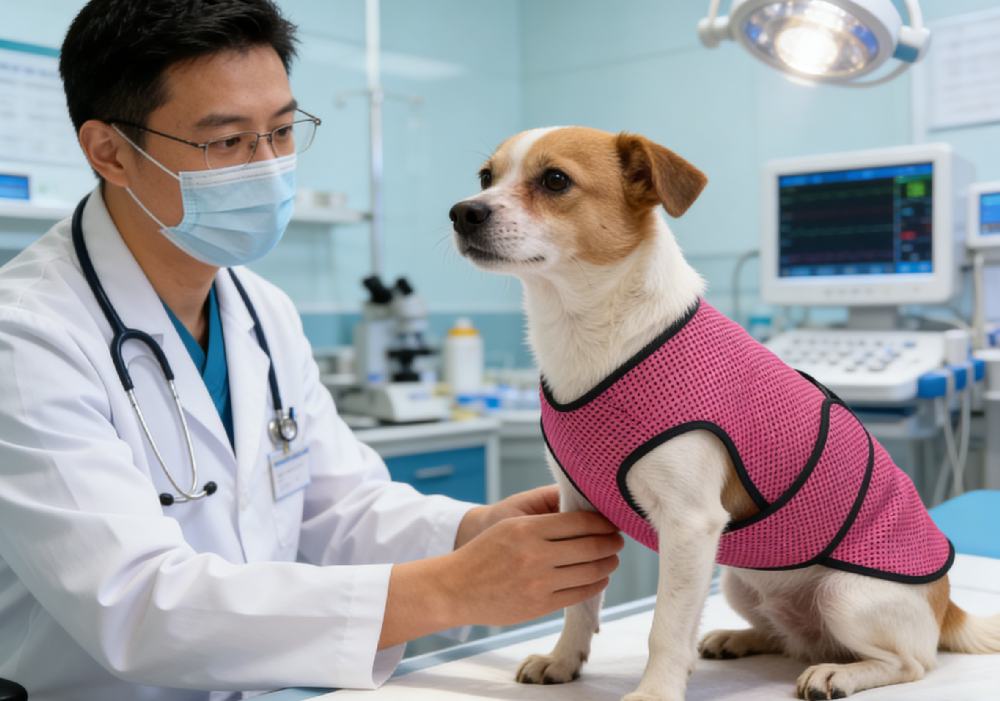
Researchers at the University of Florida tested working dogs in real summer heat. They found something important: dogs took 50 to 60 minutes longer to reach normal temperature after hard work in summer versus winter. Rectal temps could jump up to 2.5°C higher than core body temperature during activity.
Many dogs needed over an hour to cool down after tough summer exercise. No help meant long recovery times. This brought cooling vests into the picture. The UF study showed cooling vests helped some dogs recover faster after hard work sessions. Dogs without vests took longer.
Researchers say this needs more study. They want more data linking rectal and core temps in dogs wearing vests. They also want studies comparing vests to fans, air conditioning, water immersion, and repeated work cycles.
Where Vets Focus Cooling Efforts
The AKC Shop points to vet advice for their CoolerDog products. These vests target the belly and neck—spots vets say work best for temperature control. This makes sense with dog anatomy: the lower abdomen and neck area transfer heat well.
Preventive Vet is a vet-run advice site. They list cooling vests among their top heat management products. But there’s a key point in their message. They see vests as tools in a full cooling plan, not solo fixes. Vests work best with limited exercise, shade, and plenty of water.
The Working Dog View
Dr. Janice Baker works with the Veterinary Tactical Group. She says heat events are common and can be fatal for working dogs. She calls cooling vests add-ons—helpful extras that don’t replace core safety steps:
-
Planned work-rest cycles
-
Watching for heat-stress signs
-
Controls like shade, vehicle AC, and water access
Dr. Baker says cooling plans must be ready before you start work. Test each vest with individual dogs first. Make sure it doesn’t block movement, add too much weight, or trap heat instead. She wants clear rules on when vests get used. Base this on temperature, humidity, and work demands.
Vet experts say use objective checks. Take rectal or ear temps and watch performance. Don’t assume a vest alone gives enough protection.
How Vet-Approved Cooling Vests Work (Science Behind the Technology)
Vet-approved cooling vests use three main ways to lower a dog’s body temperature. Each technology tackles heat in its own way.
Evaporative Cooling: The Most Effective Technology
Evaporative vests are the workhorses of canine heat management. Here’s the science: water changes from liquid to gas. This pulls 2,260 kilojoules of energy per kilogram of water away from your dog’s skin.
A clinical study on military working dogs tested a three-layer evaporative vest design:
-
Outer layer: polyester ripstop air-mesh boosts airflow and evaporation surface
-
Middle layer: Shinwon royal felt holds water in place
-
Inner layer: 100% polyester mesh touches the dog’s coat
The numbers tell the story. An XL vest weighs 380 grams dry but 780 grams when activated. That 400-gram water load gives you 904 kilojoules of potential heat absorption as the water evaporates.
Activation takes just 2 to 5 minutes of soaking. The vest wraps the entire trunk, both top and bottom surfaces. Cooling works best where fur is thinner and air moves: chest, flanks, and underside.
Field tests on Spanish military working dogs produced measurable results. Dogs wearing evaporative vests showed core temperatures 0.623°C lower right after exercise compared to no vest (p = 0.011). Fifteen minutes post-exercise, the gap widened to 0.769°C (p = 0.008).
Phase-Change Material Vests: Long-Duration Cooling
PCM vests use pre-refrigerated or frozen tablets placed in pockets. These materials absorb heat while melting at a set temperature. This stays below the dog’s skin temp.
Coverage focuses on the front half of the trunk, lateral and bottom sides. Each charge delivers cooling for up to 4 hours in field conditions.
The same military study showed PCM vests reduced post-exercise core temperature by 0.492°C versus no vest (p = 0.015). Less dramatic than evaporative technology, but still meaningful in clinical terms.
Reflective-Insulative Hybrids: Prevention First
Some vests combine reflective outer layers with evaporative inner layers. The Chillybuddy design shows this approach:
-
Reflective aluminum coating on lightweight woven plastic deflects solar radiation before it reaches the dog
-
Perforated cotton mesh underneath can be soaked for extra evaporative cooling
This dual-action system reduces heat gain while increasing heat loss. You get a double benefit in direct sunlight.
The key difference: evaporative vests remove existing body heat. Reflective vests prevent new heat from building up. Veterinary guidance suggests matching the technology to your dog’s specific heat challenge.
Vets Recommend Cooling Vests for These Working Dogs
Military working dogs, police K-9 units, and search-and-rescue teams face serious heat risks during operations. Vets put cooling vests at the top of their list for these working animals. This is crucial during intense exercise in warm or hot environments.
Working Dogs in the Field
Vets see clear needs for dogs doing nose work, patrol duty, and search operations in summer. Picture this: a detection dog runs 10-minute high-speed search and apprehension drills in southern US heat. Core temperatures can climb to 41°C or higher by the end of the work session. No cooling support means real danger.
The data supports this. Spanish military working dog trials showed moderate-intensity running in warm weather. Unprotected dogs hit much higher maximum core temps. A Florida study tracked 60+ minute recovery times. Cooling vests cut this window for some animals. This matters for dogs facing repeated work cycles throughout a shift.
Temperature Signs That Lead Vets to Recommend Vests
Vets look at specific body markers before advising vest use:
-
Exercise sessions that push core temperature to ~41.22°C without help
-
Summer conditions where rectal temps spike up to 2.5°C higher than actual core temperature, hiding the real heat load
-
Recovery periods lasting beyond 1 hour after hard work
-
Handlers struggle to reverse temperature spikes even with water and fans
Any of these patterns? Vets recommend adding cooling vests to the heat management plan.
Climate and Timing Matter
Geography plays a big role. Vets working with police and military units in hot, humid regions see this daily. Middle East deployments, southern US summers—they specify cooling vests for morning and evening training sessions. Even outside peak midday heat, conditions can overwhelm a dog’s natural cooling ability during long work periods.
Cooling vests work as part of a broader heat-mitigation plan. They’re never a standalone fix. Vets pair vest use with shorter work periods and shaded rest areas. Plus, active temperature monitoring catches heat stress before it becomes dangerous.
Veterinary Safety Guidelines: How to Use Cooling Vests Right
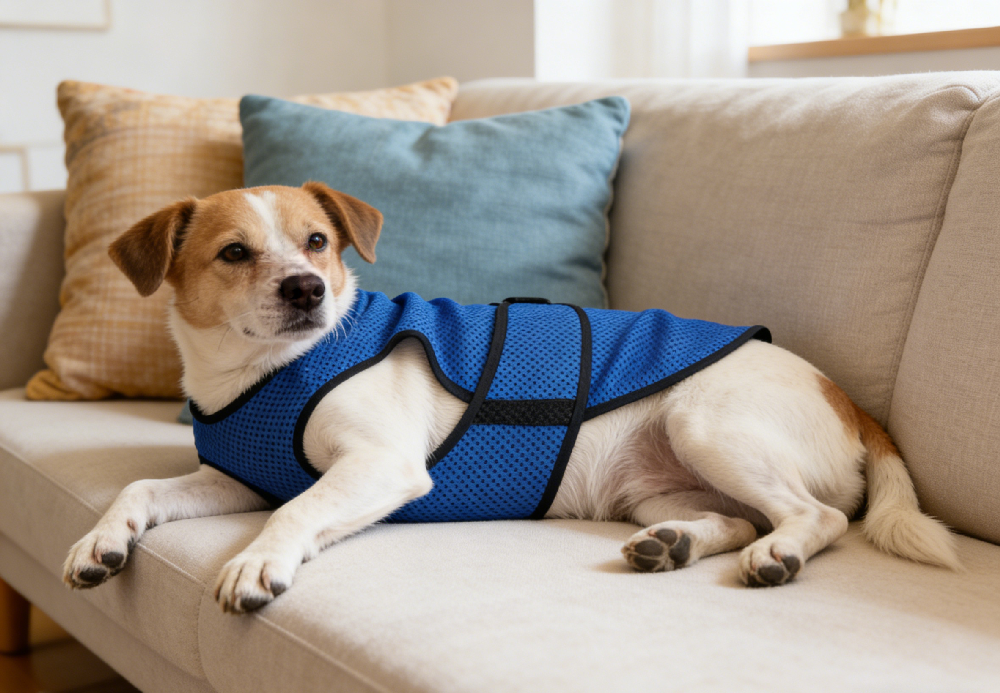
A cooling vest won’t work if it doesn’t fit right. Veterinary field studies show one clear rule: cooling material must touch the large blood vessel areas on the trunk. This means the front half, sides, and belly regions. Blood vessels sit closer to the skin surface there.
Size matters more than you think. Military working dog trials used vests that wrap the entire trunk, top and bottom. Gaps in coverage mean gaps in cooling. Before your first outing, check the vest. It should sit tight against your dog’s chest, sides, and underside—not just the back.
Pre-Use Setup
Evaporative vests need 2 to 5 minutes of full soaking in cool water. Don’t rush this step. The middle layer must soak through to deliver that 904-kilojoule heat absorption. Squeeze out excess dripping water. But leave the vest damp enough to keep evaporating.
PCM vests require advance prep. Pre-condition the cooling packs by refrigerating or freezing them per manufacturer specs. A charged PCM vest delivers up to 4 hours of steady cooling once fitted. Plan ahead—you can’t activate these in the field.
Monitoring During Use
Check vest fit every few hours. Dogs move. Vests shift. What started snug can slip or bunch. This creates pressure points or uncovered zones. Quick adjustments keep cooling strong and prevent chafing.
Watch for temperature spike signs. Your dog shows heavy panting, drooling, stumbling, or glazed eyes even with the vest on? Act now. Veterinary data shows that once core temperature spikes past 41°C, it’s hard to reverse without strong intervention. Move to shade. Offer water. Consider cold water immersion or fans.
What Vests Can’t Do
Lab measurements show cooling vests reduce surface temperature by 5–15°F (about 2.8–8.3°C). Significant? Yes. Enough to replace environmental controls? Not even close. A vest cannot make a hot car safe. It won’t make up for mid-day sun exposure on asphalt. Vets stress this: cooling vests add to shade, water, AC, and rest breaks—they never replace them.
Core body temperature can lag behind rectal readings. Summer field data showed rectal temps running up to 2.5°C hotter than actual core temperature. Your thermometer might miss the real heat load. Don’t trust just one measurement method. Watch behavior. Monitor recovery time. Play it safe.
What Vets Look for in a Quality Dog Cooling Vest
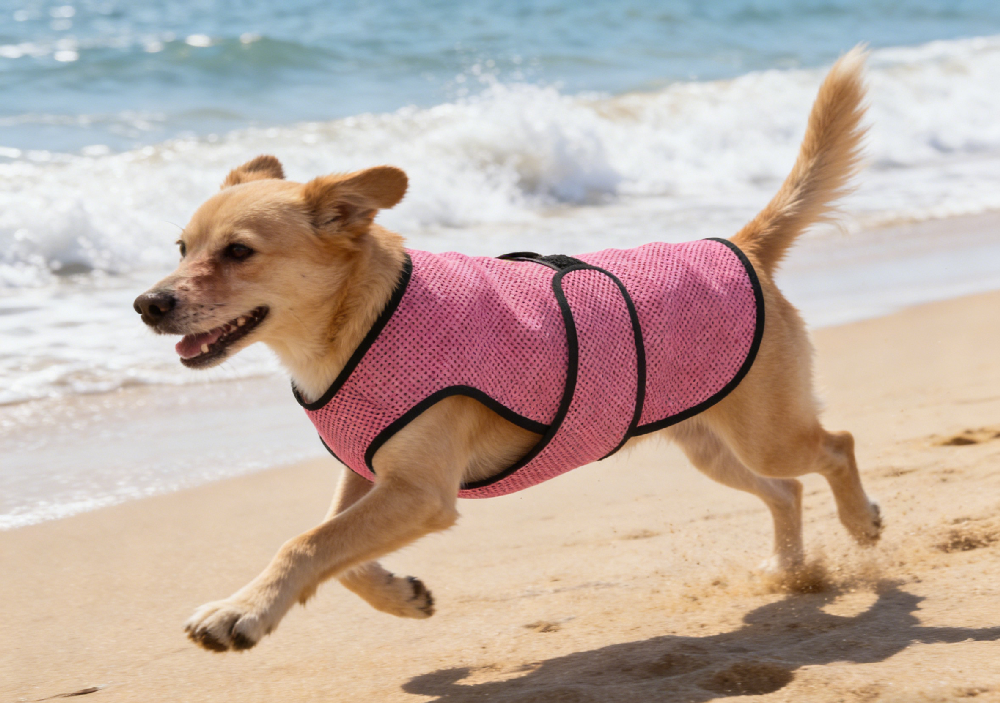
Vets check cooling vests for three things: how much they lower temperature, build quality, and safety during use. They want products that work without creating new problems.
Temperature Performance That Shows Up in Data
The benchmark study tested 13 dogs during moderate exercise. Dogs without vests hit 41.22°C core temperature by the end. Add an evaporative vest? Core temps dropped 0.623°C lower at arrival compared to unprotected dogs (p = 0.011).
The cooling kept working after exercise stopped. Fifteen minutes into recovery, evaporative vests showed 0.769°C reduction (p = 0.008). PCM vests delivered 0.492°C less heat (p = 0.015). Vets look for any vest that produces ≥0.5–0.8°C core temperature drop during recovery. That’s what matters.
Surface temperature tests show even bigger differences. A black dog’s coat reached 172°F (77.8°C) after three minutes in 90°F direct sun. Put a Ruffwear Swamp Cooler vest on that same dog? Surface temp dropped to 91.5°F (33.1°C) in three minutes flat. That’s an 80°F+ reduction. Second-tier products managed 70°F drops in the same field trial.
Vets want quick surface cooling within minutes. Performance needs to last throughout the activity period.
Build Quality and Material Choices
Weight balance matters. The study’s size XL evaporative vest weighed 380 grams dry but 780 grams wet and activated. That 400-gram water load works for large, fit dogs. But here’s the issue: smaller breeds or dogs with joint problems can’t handle the extra mass.
Quality evaporative vests use three-layer construction:
-
Outer shell: tight-woven, light-colored fabric with UPF 50+ rating and reflective properties to deflect solar radiation
-
Middle core: absorbent water-holding material that releases moisture over time for long-lasting evaporation
-
Inner lining: breathable mesh that pulls heat away while keeping the dog’s skin mostly dry
Vets reject dark-colored vests completely. The temperature data shows why. Black surfaces soak up radiant heat. They can turn a cooling product into a heat trap.
Vet-Recommended Alternatives and Complementary Cooling Methods
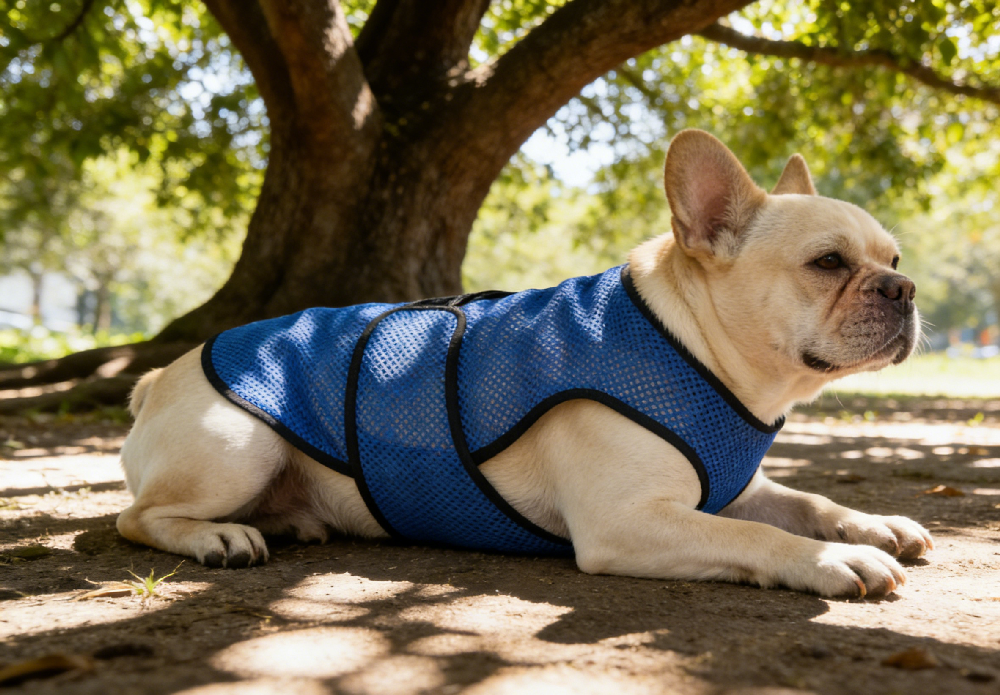
Cooling vests help manage heat. But vets rank other methods higher for dogs showing heat-related illness (HRI) signs. The Veterinary Committee on Trauma (Vet-COT) guideline is clear: “Cool first, transport second.” Start cooling right away. Don’t wait to reach a clinic.
The Gold Standard: Cold-Water Immersion
Cold-water immersion (CWI) tops the vet-recommended list. Submerge as much of your dog’s body as possible in cool or cold water—15–22°C (59–72°F). Use whatever container works: a bathtub, kiddie pool, livestock trough, even a large sink.
Keep your dog’s head above water. Protect the airway. Monitor rectal temperature every 5 minutes. Stop active cooling once temperature drops to 103.5–104°F (39.7–40°C). Going lower risks hypothermia.
A UK study tracked 623 canine heat-related illness events from 2016 to 2018. The data shows a problem. Just 23.97% of cooled dogs got Vet-COT–recommended methods (CWI or evaporative cooling). Among dogs cooled by vet professionals, just 22.60% used these proven approaches.
The most common method? Water-soaked towels—used in 51.31% of cases. Vets consider this less effective. Wet towels can trap heat against the body instead of removing it.
Evaporative Plus Fan Cooling: The Practical Alternative
Can’t immerse your dog? Combine water with airflow. Put cool or tepid water over the entire body surface. Point a fan at your dog to boost evaporation. This mirrors how cooling vests work but covers more surface area.
Check rectal temperature every 5 minutes. Stop at the same 103.5–104°F target. This method works anywhere with water and a power source or battery fan.
Head Immersion: The Surprising Field Winner
A study tested 12 working dogs after exercise pushed them to 40.6°C core temperature. Researchers compared four cooling methods using 22°C water or packs:
-
Chemical ice packs on the neck
-
Wet towel on the neck
-
Wet towel in the armpits (axillae)
-
Voluntary head immersion (letting the dog dunk its head in cool water)
Head dunking won. It was the sole method that stopped the initial post-exercise temperature spike. Within the first 5 minutes—the most critical window—head immersion achieved the lowest average core temperature.
This approach needs a dog with normal mental status who can pause panting and submerge its head. It involves limited, controlled water intake. The authors recommend it as the best field cooling method if full-body immersion isn’t available.
Ice packs on the neck, wet neck towels, and armpit towels all cooled dogs to baseline over 40 minutes. But they were far less effective in the first 5 minutes. They didn’t stop that dangerous initial temperature climb.
What Vets Avoid
The UK data revealed troubling patterns. Dogs cooled before reaching the vet arrived with an average temperature of 38.6°C. Dogs cooled by the vet practice arrived at 40.9°C. Pre-hospital cooling matters a lot.
Yet just 74 out of 341 dogs (21.70%) with cooling records got any cooling before transport. From 2016 to 2018, pre-hospital cooling rose slightly—from 19.76% to 26.92%—but the change wasn’t significant.
Another UK summary showed just 28% of HRI dogs were cooled prior to transport. Of those, just 40% used water as the cooling medium. That means most relied on less effective methods.
Adding Cooling Vests to the Plan
Vets see cooling vests as prevention and mild heat management tools. They work during activity to delay heat buildup. But once a dog shows HRI signs—heavy panting, drooling, weakness, vomiting, or collapse—switch right away to cold-water immersion or evaporative + fan cooling.
Think of it this way: cooling vests slow the temperature climb during exercise or warm-weather exposure. CWI and evaporative methods reverse a dangerous spike that’s already happened. Different tools for different situations. Vets want owners to know both.
The best approach combines prevention (vests, shade, hydration) with rapid action (CWI, fans, head immersion). Temperature monitoring ties it together. Check every 5 minutes during active cooling. Stop at 103.5–104°F. This proven protocol gives your dog the best chance against heat threats.
Are Cooling Vests Safe? Vets Weigh In on Common Worries
Well-designed cooling vests are safe when used as directed for healthy dogs. This comes from controlled vet studies, not marketing hype. Research shows no evidence that cooling vests increase overheating risk compared to no vest at all.
What the Clinical Data Shows
A Spanish military working dog trial tracked 13 dogs through nose-work exercises in warm conditions. Researchers measured core body temperature throughout. Dogs wearing evaporative cooling vests showed 0.623°C lower core temperature at exercise completion versus unprotected dogs (p = 0.011). No adverse events occurred—no burns, circulation problems, or breathing issues tied to vest use.
The University of Florida study put seven K-9s through intense 10-minute work sessions. They tested three conditions: no vest, Kevlar ballistic vest, and cooling vest with rechargeable cold packs. The finding that surprises most owners? Protective vests did not make dogs hotter than going without, in either summer or winter conditions.
Addressing the Heat-Trap Myth
Some owners worry that adding any layer will trap body heat. The data says otherwise. Phase-change and evaporative cooling vests lowered core temperature during and after work in the Benito study. The temperature differences reached significance at multiple measurement points.
Cooling vests aren’t heat traps when designed right. They’re heat-removal systems. Quality vests use three-layer construction. This promotes airflow while maximizing water evaporation or cold-pack contact with blood vessel areas.
The Hypothermia Question
Can a cooling vest make your dog too cold? The military working dog and UF studies recorded no hypothermia cases. Dogs’ natural temperature control keeps working. They’ll pant less as body temperature drops. The vest doesn’t force cooling beyond what the dog needs.
Stop active cooling when rectal temperature reaches 103.5–104°F (39.7–40°C). This safety margin prevents overcooling. Plus, it protects against heat stress.
Talk to Your Vet About Cooling Vests
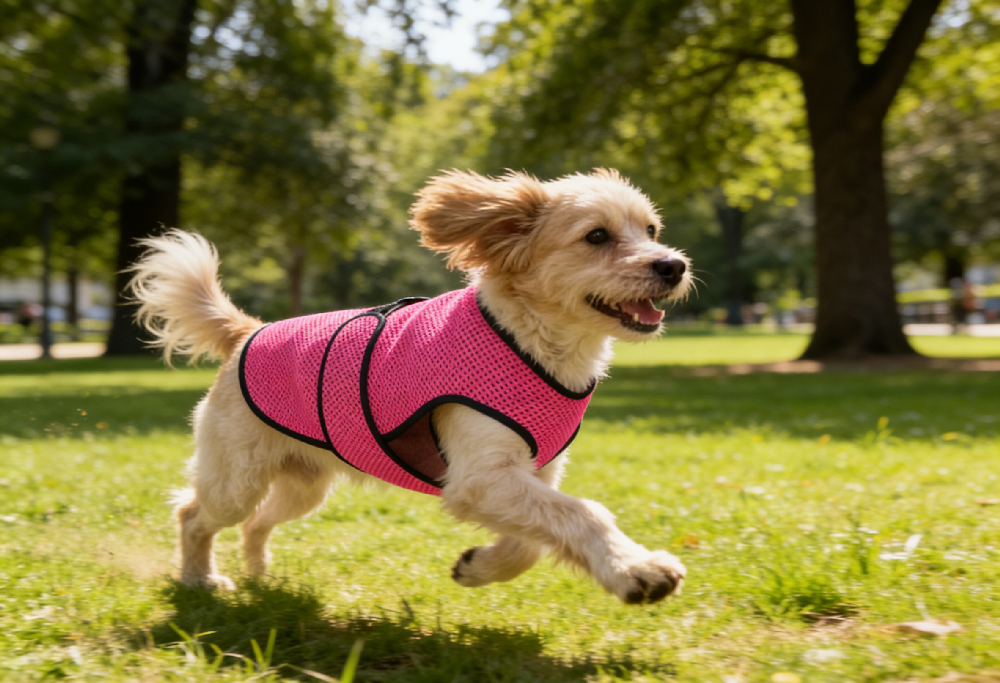
Some health conditions need vet approval before you use a cooling vest on your dog. Heart disease, breathing issues, and blood flow problems affect how dogs handle temperature changes. Flat-faced airway syndrome, heart failure, or similar health issues make this a medical choice—not just a shopping decision.
Dogs that suffered heatstroke or severe heat sensitivity before need a vet check first. Dogs on medications that affect body temperature need this too. Heart medications and some hormone treatments change how the body reacts to cooling.
Age plays a role. Puppies under 6–8 months and senior dogs over 7–8 years (large breeds often over 6 years) handle heat poorly. Brain, hormone (Cushing’s, low thyroid), or metabolism diseases that affect temperature also need a vet visit before first use.
Call Your Vet Right Away
Take off the vest and call a vet now if you see heavy panting, drooling, bright red or pale gums, weakness, collapse, confusion, seizures, vomiting, or diarrhea. These signal heatstroke. A cooling vest won’t fix active heat illness. Move to shade or air conditioning. Give cool water. Get help fast.
Skin problems need vet care. Look for redness, hot spots, hair loss, rubbing, or infection signs under the vest. Watch for behavior shifts linked to the vest. Your dog might refuse to walk, try to remove it often, show anxiety, or feel pain around vest areas. Shaking, stiffness, or unwillingness to move can mean too much cooling, more so with ice-pack vests.
Breed and Activity Advice
Flat-faced breeds face more heat risk at ≥80°F (≈27°C). A vet can tell you if a cooling vest helps or causes new issues for these dogs. Double-coated breeds (Huskies, Malamutes, German Shepherds) need expert advice. Their fur makes cooling tricky. Air flow and insulation work together in complex ways.
Dark-coated, overweight, or very active dogs exercising in >80°F heat need vet-set safety rules. Working dogs, sport dogs, and service dogs in high heat or humidity need expert help with work–rest–cooling cycles and safe internal temperature limits.
Your vet can tell you how long to use the vest based on vest type and your dog’s health. Evaporative vests need regular removal to check skin and water levels. PCM vests usually give 1–3 hours of cooling each time you activate them. Some products claim longer. Expert advice helps you pick the right cooling time for your dog’s needs.
Conclusion
Vets confirm that cooling vests are valuable tools for canine heat stroke prevention. They’re not miracle solutions, but they work as part of a complete heat management plan. The key takeaway? Vets recommend cooling vests for high-risk dogs. This includes brachycephalic breeds, senior pets, and those with thick coats. But proper use and realistic expectations are a must.
Three pillars support veterinary heat management recommendations. First, use appropriate cooling technology like evaporative or gel-based vests. Second, watch closely for dog overheating symptoms—excessive panting, drooling, and lethargy. Third, never rely on a vest alone. Shade, fresh water, and common sense are still essential.
Your dog’s safety this summer starts with informed decisions. Does your dog have underlying health conditions? Schedule a quick consultation with your veterinarian before purchasing a cooling vest. Discuss whether this solution fits your pet’s specific needs. Ready to invest in vet-approved cooling technology? Choose products backed by science, proper materials, and proven evaporative cooling performance.
Protecting your best friend from heat exhaustion goes beyond buying the right gear. You need to use it the right way.