
You press your hand on your dog’s cooling mat. That refreshing chill feels amazing, right? Ever wonder what creates that cooling effect?
Most pet parents buying a cooling mat ask one big question: what are dog cooling mats made of? Plus, are these materials safe for their furry friends?
The answer goes beyond “just gel.” Modern cooling mats use several materials working together. You’ll find pressure-activated gel technology and phase change material PCM. These come wrapped in non-toxic cooling gel inside durable nylon fabric or Oxford cloth covers.
This multi-layer design does two things. First, it helps you pick the safest option for your pet. Second, it explains why some mats stay cool for hours while others warm up fast.
Maybe you’re comparing gel-based mats to water-based ones. Or you’re trying to figure out what “heat-absorbing polymer” means on the label. This material breakdown gives you the knowledge you need. You’ll go from confused shopper to confident buyer. You’ll know what keeps your dog comfortable on hot summer days.
Dog cooling mats rely on passive or semi-passive cooling mechanisms, with materials playing a pivotal role in their effectiveness, durability, and safety. Below are the primary materials used in modern cooling mats, along with their pros, cons, and ideal use cases.
1. Gel-Based Cooling Mats: The Most Popular Choice
Composition: Gel mats contain a non-toxic polymer gel (often a blend of water, cellulose, and synthetic polymers) sealed within a puncture-resistant outer layer (typically PVC, nylon, or polyester). Some premium versions add aloe vera or chamomile for skin-soothing benefits.
How They Work: The gel absorbs body heat from your dog, triggering an endothermic reaction that lowers the mat’s surface temperature by 10–15°F (5–8°C) below ambient levels. No electricity or refrigeration is needed—just pressure from your dog lying on it activates cooling.
Pros: Portable, lightweight, reusable, and requires zero maintenance (except occasional wiping). Ideal for indoor/outdoor use (e.g., crates, cars, patios).
Cons: Gel may leak if punctured (high-quality mats have reinforced seams); cooling lasts 2–4 hours before needing “recharge” (simply leave unused for 1–2 hours to reset).
Ice Bear Insight: Our gel mats use food-grade polymer gel, certified safe for pets even if accidentally ingested in small amounts.
2. Water-Filled Cooling Mats: Budget-Friendly and Versatile
Composition: These mats consist of a durable, leak-proof inner bladder filled with distilled water, wrapped in a breathable fabric cover (cotton or mesh). Some designs include a valve for easy refilling.
How They Work: Similar to gel mats, water-filled mats absorb heat via conduction. For enhanced cooling, some models allow you to freeze the inner bladder briefly (30–60 minutes) for a colder surface.
Pros: Affordable, eco-friendly (no chemicals), and customizable (adjust water volume for firmness). Great for large dogs or multi-dog households.
Cons: Requires periodic refilling; freezing may cause slight expansion (ensure bladders aren’t overfilled). Less portable than gel mats due to weight.
3. Phase Change Material (PCM) Mats: Long-Lasting Cooling Power
Composition: PCM mats embed microcapsules of phase change materials (e.g., paraffin wax or salt hydrates) into foam or fabric. These materials melt at a specific temperature (usually 82°F/28°C) to absorb heat, then solidify to release it.
How They Work: Unlike gel or water, PCM maintains a consistent cooling temperature for hours (up to 8–12 hours) without external input. Once activated (by body heat), they “store” cold and release it gradually.
Pros: Ultra-long cooling duration, stable temperature output, and reusable. Perfect for all-day use (e.g., camping trips, outdoor events).
Cons: Higher cost than gel/water mats; bulkier design. Not ideal for dogs who chew aggressively (microcapsules could leak if damaged).
4. Memory Foam with Cooling Additives
Composition: These mats combine memory foam (for joint support) with cooling additives like silica gel beads, graphite particles, or evaporative fabrics. The foam contours to your dog’s body, while additives enhance heat dissipation.
How They Work: Memory foam reduces pressure points, while additives either absorb heat (silica gel) or wick moisture (evaporative fabrics) to cool the surface.
Pros: Excellent for senior dogs or those with arthritis (support + cooling). Soft and comfortable for extended naps.
Cons: Slower cooling response than gel/PCM; may retain moisture if not dried properly.
5. Hybrid Designs: The Best of All Worlds
Many brands (including Ice Bear) now offer hybrid mats that combine materials—e.g., a gel layer atop a PCM-infused base for instant + sustained cooling, or a water-filled core with a gel top for dual mechanisms. These cater to dogs with varying needs (e.g., short-nosed breeds prone to rapid overheating).
Main Types of Dog Cooling Mat Materials & Their Compositions

Dog cooling mats come in five main types. Each uses different materials to cool down your pet.
Gel-Based Mats (Pressure-Activated Technology)
Gel-infused memory foam mats lead the market. They’re simple to use. The internal gel contains a food-grade mix of propylene glycol (PG), carboxymethyl cellulose (CMC), and purified water.
Propylene glycol is the main liquid part. You’ll find it in cosmetics and food products too. CMC is a cellulose-based ingredient. It creates the thick gel that holds the cooling formula together. Mix these with purified water, and you get the non-toxic cooling gel that brands talk about.
Polyvinyl chloride (PVC) forms the outer layer. Multiple PVC coating layers keep water from evaporating too fast. You’ll also see covers made from strong nylon fabric, vinyl, or polyethylene. These resist punctures.
Many brands switched to heat-absorbing polymer formulas. They replaced the PG-CMC mix. These synthetic gels don’t need detailed labels. But they might release tiny plastic particles over time.
Water-Filled Cooling Mats
Simple water-filled designs use no chemicals. These mats have compartments you fill with tap water. Some come pre-filled. A breathable mesh layer or waterproof shell holds the liquid.
Advanced models use several layers. The Hydro Cooling Mat has three parts. A soft waterbed cushion sits on top. A FlexiFreeze® Ice Sheet with 88 built-in ice cubes (100% purified water) goes in the middle. A 0.5-inch foam layer insulates at the bottom. The Oxford cloth cover has three pockets with Velcro. This makes washing easy.
Phase Change Material (PCM) Mats
Phase change material (PCM) mats use paraffin-based formulas sealed in polymer cells. These waxes melt at safe temperatures for pets. They absorb heat as they change from solid to liquid. Some PCM designs add water-based gel filling. This boosts heat absorption without adding chemicals.
Gel-Based Self-Cooling Mats: Polymer & PCM Gel Construction
The best cooling mats mix polymer science with phase change material (PCM) technology. These mats trap cooling compounds inside 3D polymer networks. They won’t leak—even if your dog bites through the cover. Simple water-based designs can’t do this.
How Polymer Networks Trap PCM Without Leaking
Smart makers put paraffin-based PCMs like n-octadecane inside polymer support structures. Engineers call this “shape-stabilized PCMs” (SSPCMs). The polymer works like a sponge. It holds the PCM in place. At the same time, it lets the PCM melt and freeze.
Here’s the smart part. Load 66.4% by weight of n-octadecane into the right polymer matrix. You get a mat that delivers 121.11 joules of cooling energy per gram. The PCM melts at 20.87°C (about 69.6°F). That temperature sits right in your dog’s comfort zone.
The polymer carriers vary by brand. You’ll find porous polyethylene, polypropylene foams, or crosslinked PMMA. Better mats use materials with the right polarity. This maximizes PCM absorption. More polymer content means better shape stability. But it cuts total cooling capacity. Makers balance these two factors.
Multiple Melting Points for Extended Cooling
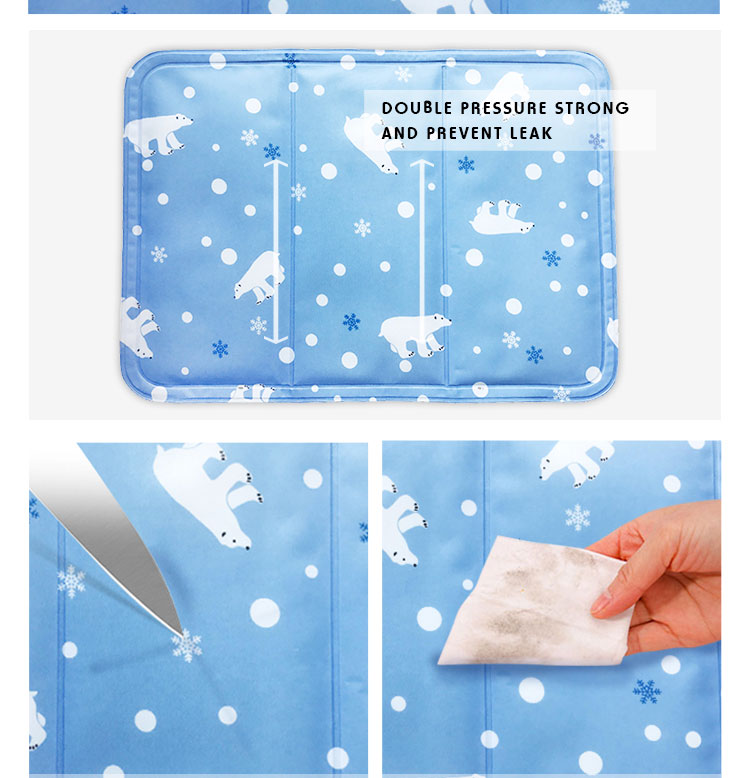
Premium gel-based mats use multiple PCM types. They blend non-toxic cooling gel formulas with different trigger temperatures. Common setpoints include +3°C, +18°C, +23°C, and +26°C (37°F, 64°F, 73°F, and 79°F).
This layered setup works like a cooling relay race. Ambient temperature hits 26°C? The first PCM starts working. Things get hotter? More PCMs jump in. Your dog feels steady cooling across a wide temperature range—not just one quick cold burst.
Some flexible PCM mats use solid-to-solid composite gels. These don’t need a liquid phase to work. They’re wrapped in polymer pouches that stop any mess. You get the pressure-activated gel technology effect without spills.
Hydrogel-PCM Hybrid Construction
The newest mat designs use heat-responsive hydrogels. Think polyacrylamide mixed with glycerol. These build physical barriers around the PCM during phase changes.
Makers build these through UV light treatment at 365 nanometers. They dissolve monomers, crosslinkers, light triggers, glycerol, and PCM building blocks in water at 50°C. UV light turns this mixture into a 3D network. The PCM melts during hot weather? The polymer chains and glycerol molecules hold everything in place.
Another method uses cellulose nanocrystal (CNC) hydrogels filled with melted polyethylene glycol (PEG). Strong hydrogen bonds between CNC fibers and PEG chains stop leakage. This also increases mechanical strength. Your dog can dig, scratch, or chew without breaking the cooling core.
Heat-Absorbing Polymer Performance Data
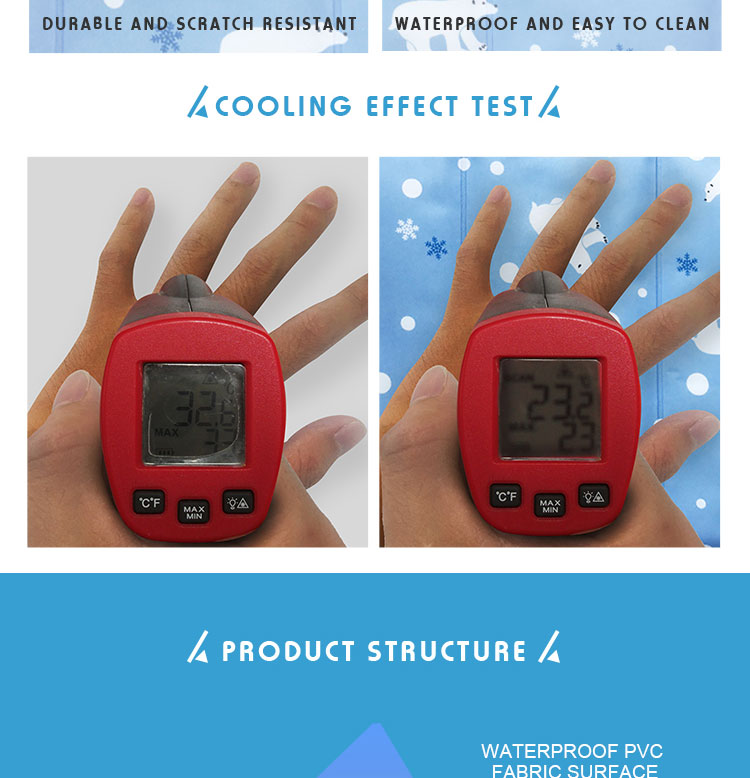
Large-format PCM blankets show what these materials can do. A flexible mat measuring 60 cm × 160 cm and weighing 3.5 kg stores between 540 to 600 kilojoules of latent heat. That’s about 154 to 171 kJ per kilogram. This gives enough cooling power to keep a medium-sized dog comfortable for 6-8 hours.
Better heat transfer makes a huge difference. Adding 28.7% boron nitride to a graphene oxide scaffold increases heat transfer to 3.18 W/m·K. What does this mean? The mat pulls heat away from your dog’s body faster. Even small amounts help. Just 4.1% graphene nanoplatelets multiplies heat transfer by four compared to pure paraffin wax.
The pore structure inside these polymer supports runs the show. Pore size, shape, and wall chemistry affect how PCM forms crystals, melts, and freezes again. Better-designed pores give more stable performance over hundreds of freeze-thaw cycles. Your investment lasts longer.
Water-Filled Cooling Mats: Super-Absorbent Polymer Systems
Water-filled cooling mats turn regular tap water into strong cooling gel. They use super-absorbent polymers (SAPs). These tiny particles come as powder, granules, beads, microcapsules, or pellets. They sit inside a sealed space between two flexible layers. Add water through the fill spout. The SAPs start working right away.
How SAP Technology Creates Long-Lasting Gel
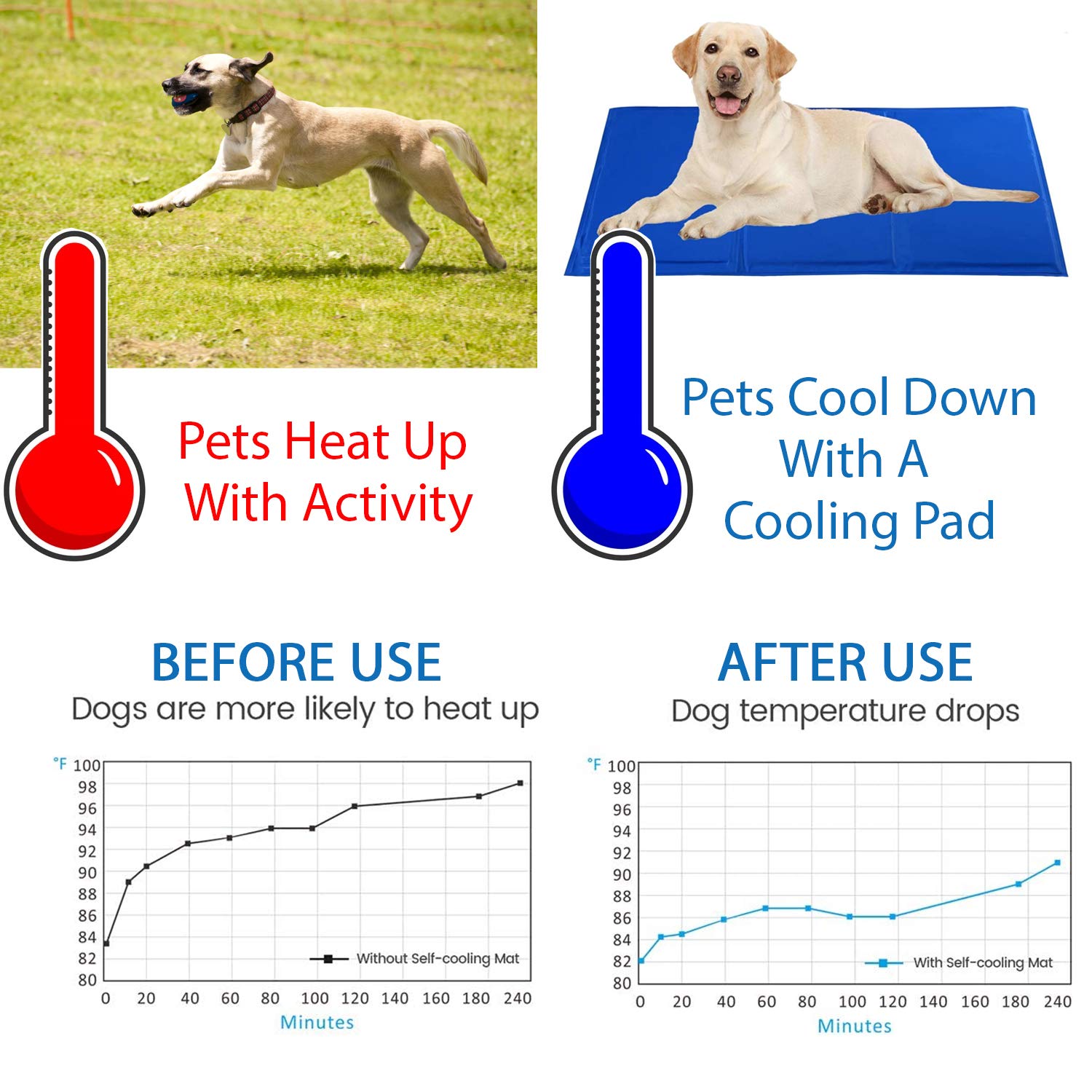
Sodium polyacrylate is the most common SAP in cooling mats. This white powder absorbs 280–490 grams of distilled water per gram of polymer. Some premium versions reach up to 300 ml of pure water per gram. The polymer particles swell up big. They trap liquid molecules inside a gel network.
The patented cooling mat design (US9854783B2) uses nylon-coated PVC (polyvinyl chloride) as the shell material. The first layer and second layer bond at the edges to create a watertight space inside. A self-sealing cavity at the fill spout stops any gel from escaping. Even during heavy use.
Here’s the simple math. Just 10 grams of SAP can store about 3 liters of water as gel. A mat with 50 grams of SAP holds 15 liters inside its compact form. Your dog lies on a thin, portable mat. It has the cooling power of multiple water bottles.
Superior Cold Storage Performance
SAP-based GEL ICE formulas deliver strong thermal performance. The phase change latent heat exceeds 300 joules per gram. This gives six times the cold storage capacity of the same volume of regular water ice packs.
The cooling works through controlled water evaporation. Water evaporates from the gel surface. It pulls heat from your dog’s body and the air around it. The water-based gel filling holds consistent temperature longer than free-flowing water.
Absorption speed matters for easy use. Quality SAPs reach balance in just 12–26 seconds after you add distilled water. The gel forms in seconds. Even under your dog’s weight (0.3 psi pressure), the SAP keeps 23–29 grams of water per gram of polymer. Heavier pressure (0.7 psi) still holds 9–13 grams per gram.
You can reuse the system over and over. Drain the mat and let it dry. The SAP particles shrink back to their original size. Refill any time you need cooling again. This gives the same durability as the Oxford cloth cover and breathable mesh layer construction in quality water-filled designs.
Phase Change Material (PCM) Technology in Premium Cooling Mats
Premium cooling mats use phase change material (PCM) as their secret weapon for steady temperature control. Basic gel or water systems warm up over time. PCM works differently. It absorbs heat at an almost constant temperature as it changes from solid to liquid. Your dog gets steady cooling instead of a quick cold burst followed by warmth.
How PCM Maintains Constant Cooling Temperature
The science behind PCM is simple and smart. The material reaches its specific phase-change temperature. Then it starts melting. During this melt, it absorbs large amounts of heat. But it doesn’t get warmer itself. The mat surface stays near that trigger temperature for extended periods—sometimes hours. The PCM keeps changing from solid to liquid during this time.
TechNiche CoolPax PCM shows how this works. It freezes at 58°F (14.4°C). It holds that temperature steady while absorbing your dog’s body heat. After it melts all the way, the material warms up. But the phase-change period gives much longer cooling than standard gel formulas.
Strategic PCM Temperature Selection for Pet Comfort
Premium mat makers choose PCM melt points with care. Most body-cooling products use the 14–29°C range (about 57–84°F). This matches comfortable skin-level temperatures for pets and humans.
Commercial PCM mats come in specific temperature options:
-
-21°C for extreme cold therapy
-
+5°C (41°F) for chilled cooling
-
+18°C (64°F) for moderate relief
-
+23°C (73°F) for gentle comfort cooling
-
+27°C (81°F) for ambient temperature regulation
The 14.4°C (58°F) CoolPax formula hits the sweet spot for dog cooling mats. It’s cold enough to provide relief on hot days. But it’s not so cold that it shocks your pet’s system.
Flexible PCM Mat Construction and Reusability
Modern PCM cooling mats use flexible designs that mold around your dog’s body. This eliminates “thermal dead zones” where cooling doesn’t reach. TempAid-style flexible PCM mats come in practical sizes:
-
10″ × 7″ pads available at +5°C, +18°C, +23°C melt points
-
11″ × 10″ mats available at +5°C, +18°C, +23°C melt points
These mats spread PCM weight across the entire surface. The material won’t shift or create lumps during use or shipping.
The best part? PCM is non-toxic, biodegradable, and reusable. After use, put the mat in a refrigerator or cool space. The PCM turns solid again and recharges for the next cooling session. You can repeat this freeze-melt cycle hundreds of times without performance loss.
Advanced PCM Encapsulation Methods
Premium mats wrap PCM inside HDPE (high-density polyethylene) shells or polymer pouches. This prevents leakage even if your dog punctures the outer fabric. Some rigid module designs contain 27°C PCM sealed in durable polyethylene compartments. These modules store heat during the melt phase. They release it during re-freezing.
At operating temperature, PCM materials soften and turn to liquid. This improves contact with your dog’s body. Take 3M 5500T PCM as an example. It has a phase change temperature around 50°C. Heat it above its melt point. The material compresses 10–40% thinner under typical pressure. This creates better thermal contact. The required force ranges from 20–40 N/cm² for stable heat transfer.
Other PCM formulations show strong thermal performance:
-
Laird Tpcm 7000: 7.5 W/m·K thermal conductivity, softens between 50–70°C, compresses to just 35 µm thickness
-
T-Global TG-V833: 3.3 W/m·K thermal conductivity, available in 0.13 mm, 0.2 mm, 0.3 mm thickness options
These specs guide manufacturers in building PCM layers. They need the right thickness, heat transfer, and compression behavior for maximum cooling efficiency.
Layered Construction: From Top Contact Surface to Bottom Anti-Slip Layer
Modern cooling mats stack multiple specialized layers. Each layer serves a specific purpose. Together, they create a system that cools your dog, resists damage, and stays in place.
Top Contact Surface: The Cooling Interface
The top layer touches your dog’s body. It controls comfort and cooling power. Most premium mats use Oxford cloth cover or durable nylon fabric as the contact surface.
Oxford cloth works well. This tightly-woven polyester or nylon fabric creates a smooth, breathable barrier. Heat moves from your dog’s body to the cooling layer below. The tight weave stops scratches from claws. It also prevents gel leakage if your dog digs at the surface.
Some makers add texture to the top fabric. Small raised patterns or quilted designs increase surface area. This boosts heat transfer between your pet’s skin and the cooling core. The patterns also stop your dog from sliding around on the mat.
Breathable mesh layer construction appears in water-filled designs. The mesh lets air flow around the water compartments. This speeds up cooling. Your dog gets relief faster compared to solid fabric covers.
Premium gel-based mats often use vinyl or polyvinyl chloride (PVC) as the top contact surface. These materials resist punctures better than fabric. They also clean up fast with a damp cloth. The smooth PVC surface transfers heat well to the pressure-activated gel technology below.
Middle Functional Layers: The Cooling Core
The middle section holds the actual cooling mechanism. This varies based on mat type.
Gel-infused memory foam mats sandwich the cooling gel between two PVC or vinyl sheets. The gel layer measures 3–6 mm thick. Thicker gel stores more cooling energy. But it also makes the mat heavier and less portable.
Heat-absorbing polymer formulas need containment structures. Makers seal the polymer gel inside welded PVC pockets. These pockets prevent gel migration even if your dog puts all weight on one spot. The welded seams handle pressures up to 0.7 psi without failure.
Water-filled systems use separated chambers. The water-based gel filling spreads across multiple sealed sections. One chamber gets punctured? The others keep working. Advanced designs add phase change material (PCM) capsules within the water chambers. This mix combines cooling from water plus heat storage.
Bottom Layer: Stability and Protection
The bottom surface does two key jobs. First, it stops the mat from sliding on floors. Second, it protects the cooling core from punctures from below.
Non-slip textures cover most bottom layer designs. Makers press dot patterns, hexagonal grids, or wave patterns into the vinyl or PVC base. These raised textures create friction against tile, wood, or concrete floors. The mat stays put even when your dog jumps on or off.
Some premium mats use rubberized coatings on the bottom. These formulas contain 60–80% rubber particles mixed with adhesive polymers. The rubber creates higher friction—often 0.50 or greater. Textured vinyl only reaches 0.30–0.35.
The bottom layer also acts as a moisture barrier. It stops water from condensation or spills from reaching your floor. Waterproof PVC or vinyl materials prevent mold growth between the mat and floor surface.
Multiple layers bonded together strengthen the entire system. Better mats bond three or more layers using heat-sealing or RF welding technology. These welding methods create bonds stronger than the base materials themselves. Edge seams get extra support to prevent layers from separating during repeated folding and unfolding.
Pick the Right Material for Your Dog
Your dog’s lifestyle shapes which cooling mat material works best. A Great Dane who chews everything needs different materials than a senior Chihuahua with sensitive skin.
Match Material to Your Dog’s Behavior
Heavy chewers and scratchers need the toughest outer fabrics. Canvas and Oxford cloth cover materials earn ★★★★☆ chew resistance ratings. They handle aggressive digging and gnawing. Polyester drops to ★★★☆☆. Cotton and velvet manage ★★☆☆☆. Skip these if your dog tears up beds often.
Dogs with incontinence or excessive drooling need strong water protection. Oxford fabric leads with ★★★★★ water resistance. The tight weave blocks liquid from reaching the cooling core. Polyester scores ★★★★☆. Coated canvas manages ★★★☆☆. Cotton and velvet fail at ★☆☆☆☆. Pair waterproof fabrics with sealed non-toxic cooling gel compartments. This stops accidents from reaching the cooling layer.
Climate and Coat Needs
Heat-sensitive breeds with thick coats need breathable top layers. Cotton earns ★★★★☆ for warm climates. It lets air flow to the pressure-activated gel technology below. Velvet works differently—★★★★★ in winter but ★★☆☆☆ in summer. It traps heat against your dog’s body.
Cold-climate dogs do well with plush velvet or fleece covers over phase change material PCM cores. The soft texture gives comfort. The PCM keeps stable cooling during active play indoors.
Safety for Sensitive Dogs
Allergy-prone pets need organic cotton, hemp, or linen outer layers. These natural fibers breathe better than synthetics. Skip unknown chemical coatings on polyvinyl chloride PVC material. Check for certified non-toxic labels on both the outer fabric and internal water-based gel filling.
Care and Cleaning
Busy pet parents should pick durable nylon fabric or polyester covers. Both score ★★★★★ and ★★★★☆ for cleaning ease. They handle frequent machine washing. Canvas and Oxford rate ★★★☆☆. Velvet drops to ★★☆☆☆—you’ll need professional cleaning.
Cost matches durability. Cotton and polyester sit at low-medium price points. Oxford ranges medium-high. Velvet costs more but gives less value for active dogs.
Eco-Friendly & Sustainable Material Options in Dog Cooling Mats
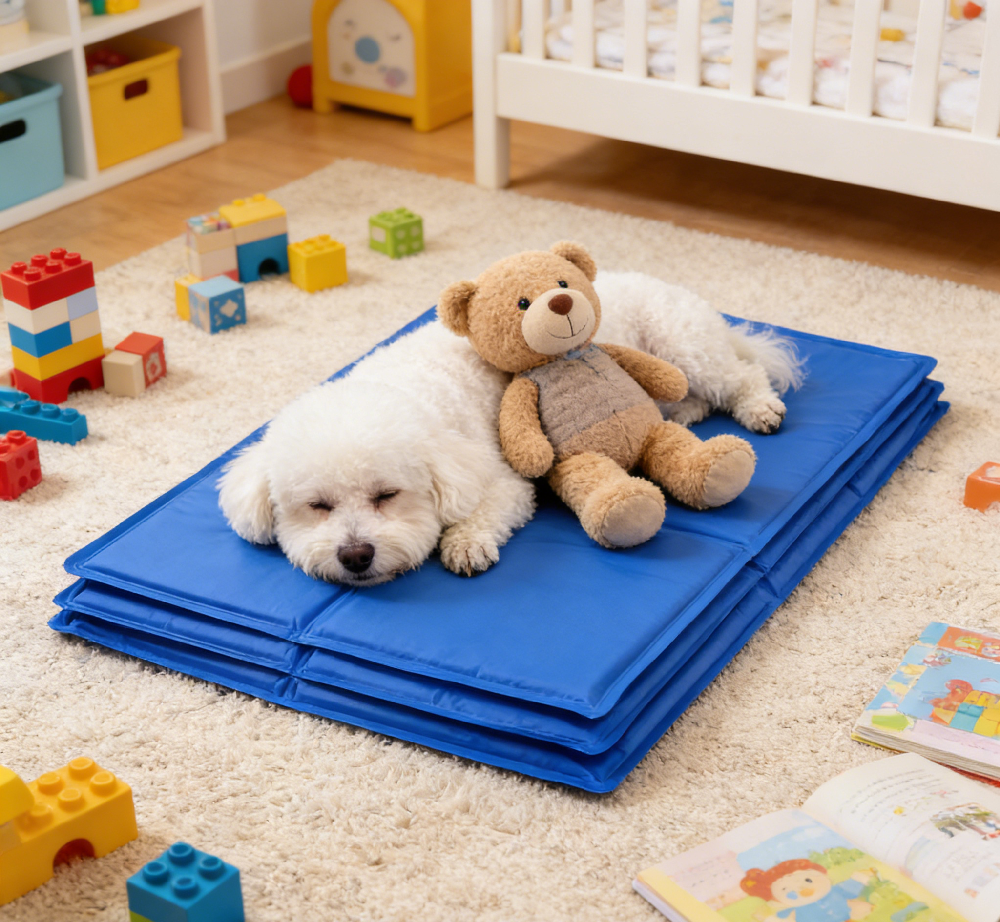
Pet owners want cooling solutions that protect their dogs and the planet. Petroleum-based materials fill most store shelves. Sustainable alternatives cool just as well. They leave a smaller environmental mark.
Bio-Based and Recycled Outer Shell Materials
Recycled PET (rPET) replaces new polyester in eco-conscious mat covers. Manufacturers make this material from recycled plastic bottles. You get the same durability and water resistance as new polyester. Carbon emissions drop by up to 75% during production. OEKO-TEX Standard 100–certified rPET fabrics keep harmful substances off your dog’s skin.
Bio-based TPU (thermoplastic polyurethane) creates flexible shells that resist punctures. No petroleum needed. These plant-based polymers match the toughness of standard vinyl. They break down faster in landfills. Some premium mats blend recycled nylon 6 with bamboo viscose for covers. You get breathable comfort plus responsible sourcing.
Organic cotton and TENCEL lyocell work well for fabric cooling mats. TENCEL starts as wood pulp from managed forests. The production process recycles 99% of water and solvents in a closed loop. These natural fibers pull moisture away from your dog’s body. No chemical treatments like synthetic fabrics use.
Water-Based Systems That Eliminate Chemical Gels
Pure water-filled mats offer the cleanest cooling option. They use 100% tap water as the cooling medium. No chemical gels needed. Advanced designs put water + foam cores inside recyclable polyolefin films (PE/PP) instead of PVC shells. These mats support dogs weighing 80+ pounds without leaking.
The three-layer ice mat shows smart design. A recycled polyester cover goes on top. The middle layer holds frozen water inserts in recyclable PE/PP housings. A bottom layer uses recycled PET fiber insulation to reflect heat. Freeze the water inserts to recharge the mat. No electricity needed during use. Just passive cooling from phase change.
Plant-Derived Gel Formulations
Makers now create pressure-activated gels from bio-based glycerin, plant-derived glycols, and cellulose thickeners. These plant ingredients replace petroleum polymers. The gels still deliver 3+ hours of cooling. They recharge in 15–20 minutes of non-use. They break down faster than synthetic formulas after disposal.
Phthalate-free and BPA-free certifications matter for any gel mat. Eco-friendly gels should carry clear non-toxic labels. Look for products that list ingredients. Skip vague terms like “polymer blend” or “proprietary gel formula.”
Energy-Free Operation: The Ultimate Sustainability Feature
Zero operational energy brings the biggest environmental win. Pressure-activated gel mats draw 0 kWh per use. Powered cooling beds consume 20–60 watts non-stop. You save substantial electricity over a summer season. Your carbon footprint drops. Your dog stays comfortable.
Choose mats with sewn channels instead of glued PVC compartments. This method cuts out chlorine-based plastics. Recycling becomes easier at end-of-life. You can sort the fabric and gel components. Different waste streams can process them.
Conclusion
Knowing what dog cooling mats are made of helps you pick the safest option for your furry friend. You can choose pressure-activated gel with non-toxic cooling gel, water-based polymer systems, or phase change material PCM construction. Each material keeps your dog cool in hot weather. The layers work together—durable nylon fabric, breathable mesh, and heat-absorbing polymer cores create a safe cooling solution.
You know the science now. Think about your dog’s size, activity level, and where they spend time. Does your pup need instant pressure-activated relief? Or would sustained PCM cooling work better? Look for cooling mats that show their materials and safety certifications. At CoolHeaTech, transparency builds trust. That’s why every product specification shows what goes inside our cooling mats, from the Oxford cloth cover to the innermost gel layer.
Ready to give your dog science-backed comfort? Explore our material-certified cooling mat collection and choose with confidence.