
Standing in intense heat with sweat running down your back? A cooling vest sounds like the perfect answer. But here’s what you really need to know: will it last through your full shift, workout, or outdoor event?
The answer goes beyond a simple product label check. Cooling vest duration changes based on the technology inside. Basic ice pack models give you 1-2 hours. Advanced Phase Change cooling vests can perform for 8+ hours.
You might be a construction worker fighting summer heat. Or an athlete in heavy training. Maybe you need steady body temperature regulation for medical reasons. These timeframes matter for more than just comfort. They help you make a smart buy that works right at the moment you need it most.
We tested the numbers. We looked at real performance data across all major cooling technologies. Here’s what affects how long your vest stays cold. This breakdown helps you pick the right solution and avoid wasting money on gear that disappoints.
Cooling Duration by Vest Type: Real-World Performance Data
Lab tests on thermal manikins ran for 8-hour periods. The results show big differences in how long each cooling technology performs. These controlled tests measured cooling power non-stop. You get precise data on what to expect in real conditions.
Active Cooling Systems: The 8-Hour Champions
Powered cooling vests win for long shifts. The air-cooled VRTX model delivered an average cooling power of 41 W·m⁻² for the full 8 hours. That’s steady, reliable temperature control from start to finish.
Liquid-cooled systems like the COMP vest averaged 17 W·m⁻² over the same period. The average power is lower. But active vests as a group extracted up to 331 W·h·m⁻² total cooling capacity. That’s the highest of any technology tested. What does this mean? These vests work all day. No recharging or replacement needed.
PCM and Ice Pack Vests: Strong Mid-Duration Performance
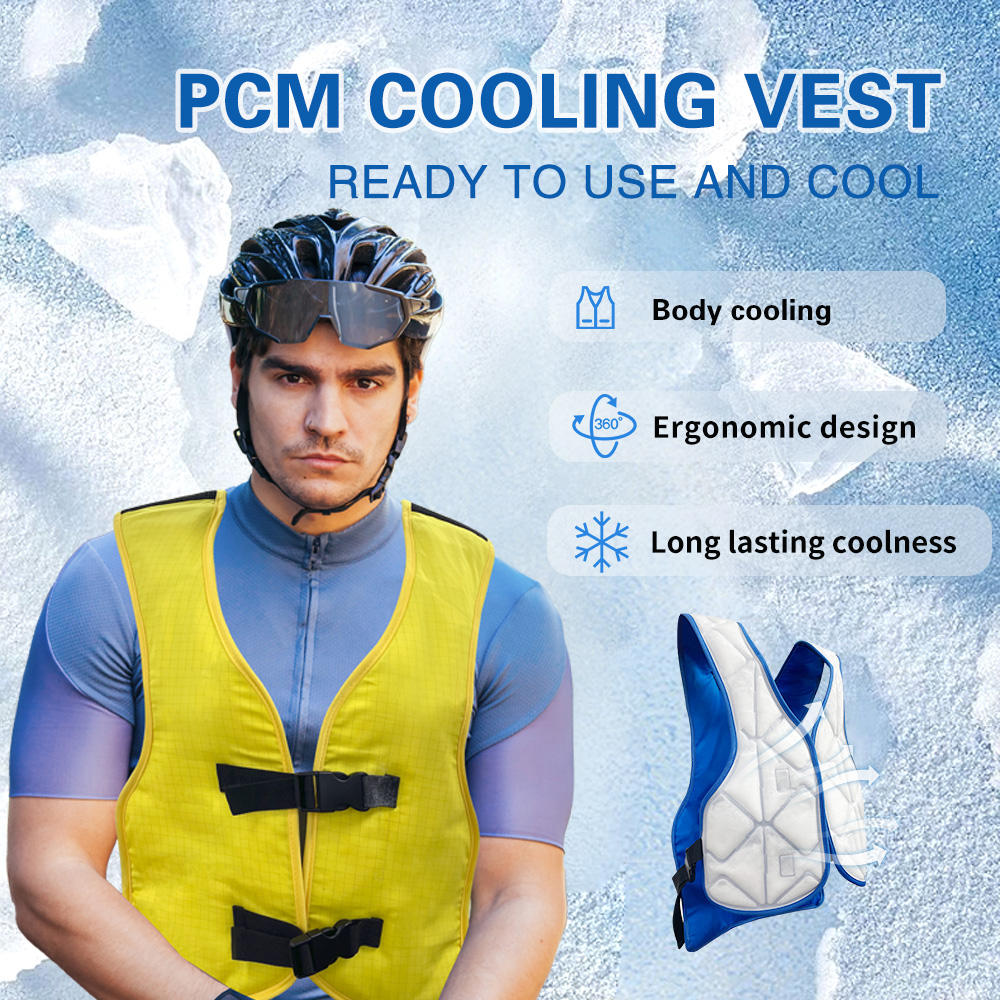
Phase change cooling vests showed great staying power in the middle tier. The STA vest topped this category with 164 W·h·m⁻² total cooling capacity over 8 hours. Average power output was 23 W·m⁻².
Ice insert models like FLEX performed well with 90-100 W·h·m⁻² capacity. The POLAR PCM vest matched this range at 16 W·m⁻² average power. Gel insert vests (CRYO) and other PCM variants (GTEK) delivered similar 90-100 W·h·m⁻² performance.
Peak cooling matters too. The FICE ice vest hit maximum power right away. But this advantage fades as packs warm up. Expect 2-4 hours of strong cooling. After that, performance drops.
Evaporative Vests: Steady Low-Level Cooling
Evaporative technology takes a different approach. You get mild but extended cooling across the full 8-hour window. The IH wet model led this group with 113 W·h·m⁻² total capacity. XTREM and TECH vests both delivered 97 W·h·m⁻².
The TECH vest achieved the highest average in this category at 22 W·m⁻². Peak power reached 43 W·m⁻². ECOOL matched that peak at 43 W·m⁻² but delivered just 74 W·h·m⁻² total capacity. The IZI vest fell short at just 17 W·h·m⁻² with a peak of 24 W·m⁻².
Bottom line: Evaporative vests last all day but provide gentler cooling. They work well for moderate heat. But they’re less suitable for extreme conditions or heat stress prevention in tough environments.
Key Factors That Impact How Long Your Cooling Vest Stays Cold
Your vest’s cooling time depends on more than the brand name. Technical and environmental elements work together. They determine actual performance. Understanding these factors helps you predict real-world results. You can choose gear that matches your specific conditions.
Cooling Technology Type Sets the Baseline
The cooling method inside your vest sets the foundation for duration. Active cooling systems deliver up to 331 W·h·m⁻² total capacity in 35°C environments with 35% humidity. You get all-day performance without interruption.
Phase change cooling vests reach maximum capacity around 164 W·h·m⁻². The top-performing STA model provides about 3.5 hours of efficient cooling above the critical 20 W·m⁻² threshold. This threshold equals one-third of metabolic heat production for a typical adult. That’s based on a body surface area of 1.7 m² generating 100 W total heat.
Hybrid designs combine PCM with evaporative technology. They hit 146 W·h·m⁻². Pure evaporative systems max out at 113 W·h·m⁻². But they maintain steady mild cooling for extended periods.
Environmental Conditions Change Everything
Temperature and humidity shift performance numbers. All reference data comes from controlled testing. That’s 35°C air temperature and 35% relative humidity.
Evaporative vests lose effectiveness fast in humid conditions. Higher moisture in the air blocks water evaporation from the fabric. This cuts both cooling power and temperature control duration. The same vest performing 3.5 hours in dry heat might deliver under 2 hours in muggy weather.
Phase change materials and active systems resist humidity changes better. But they face different challenges. Higher ambient temperatures and radiant heat exposure deplete stored capacity faster. A PCM vest rated for 3 hours at 35°C might last just 2 hours at 40°C under direct sun.
Cooling Power Intensity Creates Trade-offs
Stronger doesn’t always mean longer. Some PCM vests with peak power below 50 W·m⁻² run for shorter periods than models with moderate but sustained output. The FICE ice vest hits maximum cooling right away. But it fades fast. Smart cooling gel packs placement and thermal retention technology design determine what you get. You either get intense short bursts or moderate all-day protection for heat stress prevention.
Fan-Powered Cooling Vests: Battery Life & Runtime Optimization
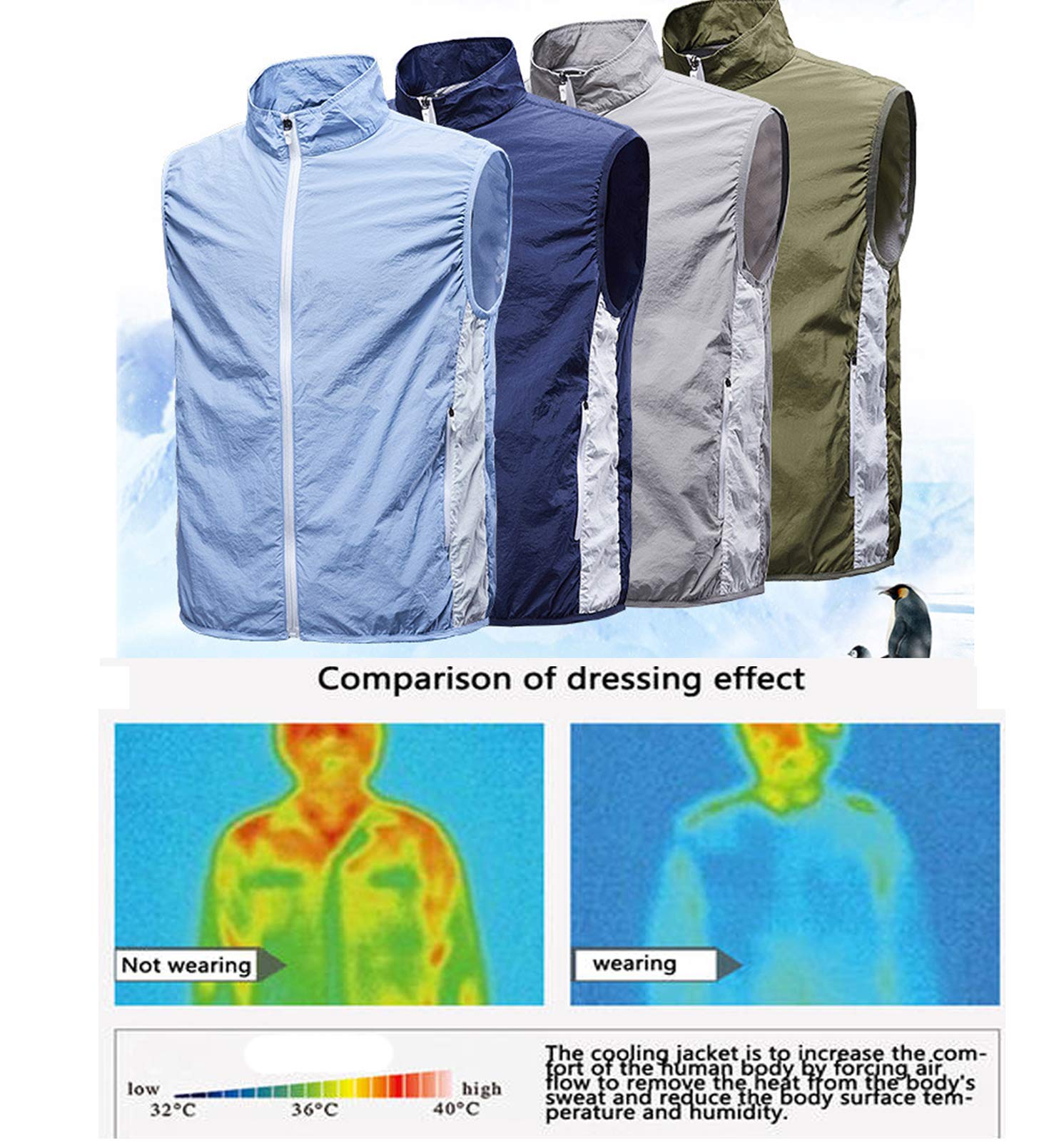
Battery-powered fan vests fix the duration problem with rechargeable cooling vest tech. Passive systems fade after a few hours. These active cooling systems keep working as long as power flows. The real question: how do you get the most from your battery?
Understanding Fan Vest Power Consumption
The 24V fan-cooled vest from Entropy Survival shows how power settings control runtime. This model uses a 24V battery with 3.2A maximum output current. That’s about 76.8W electrical capacity at peak. Typical use draws just 27.5W for the fan and electronics.
At max speed, you get 6 hours of cooling. Drop to the lowest setting and runtime jumps to 30 hours. High-speed mode pulls all 27.5W. Minimum settings use just 5.5W average draw. That’s one-fifth the power for five times the run time.
The 5V AlphaCool fan vest works differently. It runs on standard USB power banks with two high-powered back fans. Three speed settings let you balance airflow against battery drain. A quality power bank gives you up to 10 hours runtime at lower speeds.
Real-World Performance Numbers
Lab tests show why Fan-Powered cooling vests work best for all-day heat stress prevention. The VRTX air-cooled model held 41 W·m⁻² average cooling power across a full 8-hour test. Peak power hit 44 W·m⁻² and stayed there. Total cooling capacity reached 331 W·h·m⁻².
Liquid-cooled active systems can’t match this. The COMP vest averaged just 17 W·m⁻². Its temperature control duration lasted 2.5 hours. Total capacity was 118 W·h·m⁻². That’s one-third of the fan system’s output.
Optimizing Your Battery Runtime
Good cooling vest maintenance starts with power management. Multi-level fan controls give you the most control. Run at 25% max wattage and you can stretch runtime by 4-5x. You still get effective body temperature regulation.
Battery size matters too. A full 10-hour workday at 27.5W needs about 275Wh pack capacity. That means a 24V × 11.5Ah battery setup. Smaller packs work fine for shorter shifts. They also work at lower fan speeds.
Most systems recharge in 4 hours. Plan your charging around work patterns. Plug in during lunch breaks or overnight. This keeps your vest ready for the next cooling pack replacement cycle.
Temperature range affects battery performance. These systems work from 0°F to 104°F (0–40°C). Cold weather cuts battery capacity a bit. Hot conditions make the fan work harder to maintain airflow.
PCM (Phase Change Material) Vests: Cooling Time & Recharge Cycles
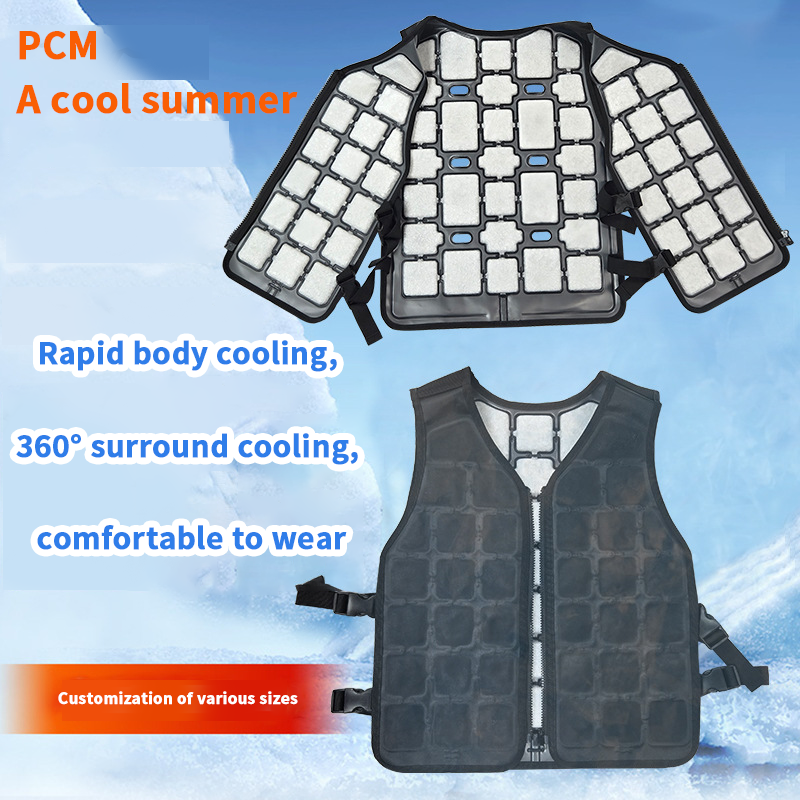
Phase change cooling vests sit between budget ice packs and premium powered systems. PCM technology uses materials that absorb heat as they change from solid to liquid at set temperatures. This transition point—usually 25°C to 28°C—controls cooling performance.
Real Cooling Duration in Work Environments
Makers claim 4-12 hours of cooling from PCM vests. Field tests tell a different story. Your body produces 70-870W of heat based on activity level. A standard PCM vest delivers just 59.5W of net torso cooling. Research shows you should expect 1-2 hours of effective use in real work conditions.
That time depends on three key factors: body surface area covered, PCM melting temperature, and total PCM mass in the vest. A heavy-duty EOD (bomb disposal) study showed the harsh truth. Operators wore 1.12 kg of 25°C PCM in 40°C heat while carrying 38 kg protective gear. The PCM melted in just 50 minutes of active work.
The study’s key finding: replacing PCM vests after 50 minutes cut core temperature rise. But once spent, the warm liquid-filled vest increased heat strain compared to wearing nothing. Cooling pack replacement timing matters for safety.
How PCM Performs Against the Efficiency Threshold
The 20 W·m⁻² cooling power mark separates effective body temperature control from weak performance. Top PCM models like the STA vest with gel inserts held this mark for 3.5 hours in controlled 35°C testing. Average power output was 23 W·m⁻² across the full 8-hour test period. Total cooling capacity reached 164 W·h·m⁻².
Mid-range PCM vests (POLAR, FLEX, GTEK) delivered 90-100 W·h·m⁻² capacity with 2-3 hours above the mark. Basic models fell short fast. The IH 21 vest dropped below effective cooling in under 30 minutes. The IH 29 model never reached 20 W·m⁻² at all—delivering 0 W·h·m⁻² useful cooling.
Peak power changes widely by design. The FICE ice insert vest spiked above 90 W·m⁻² at first. Gel inserts (CRYO) hit 73 W·m⁻². The STA PCM/gel hybrid peaked at 65 W·m⁻². But high peaks fade fast. Steady moderate output beats short bursts for full-shift heat stress prevention.
Recharging Your PCM Vest Between Uses
Thermal retention technology in PCM vests needs proper recharge cycles. Makers specify minimum 30-minute cooling times to re-solidify the material. Real-world use needs more patience.
Store your vest in a 5°C refrigerator for 3+ hours to ensure full solidification. This matters most for high-mass PCM loads above 1 kg. Partial recharging cuts your next cooling cycle short. You might get 90 minutes instead of the full 2+ hours.
Plan your recharge schedule around work patterns. Evening shift workers can recharge overnight. Day crews need a spare vest or extended lunch breaks. The math is simple: cooling vest maintenance takes longer than the real working cooling time. Plan for cooling pack replacement cycles.
Higher PCM melting points (above 25°C) recharge faster in warm spaces. But they also give less strong cooling. It’s the classic trade-off between ease and performance.
Ice Pack & Ice Sheet Vests: Short-Term High-Intensity Cooling
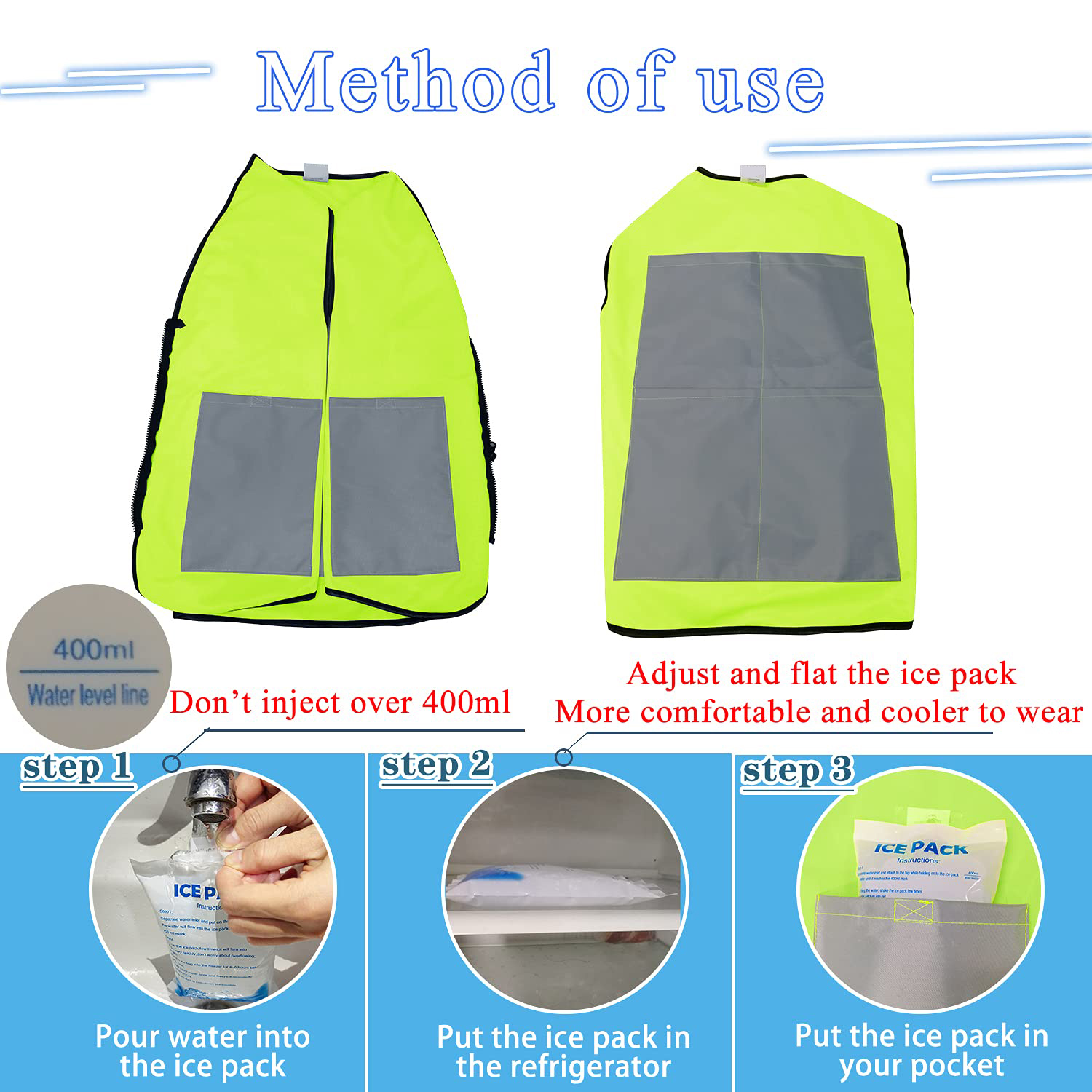
Ice and gel insert vests pack serious cooling power. They beat almost every other technology. But they don’t last long. These systems trade duration for raw strength. You get extreme temperature drops right when you need them. Then the cooling fades fast.
Peak Performance Numbers That Stand Out
Feather-ice insert vests (FICE model) topped the cooling power charts in lab testing. Peak output exceeded 90 W·m⁻². That’s the highest reading among all passive cooling technologies tested. Most PCM vests deliver less than half that amount.
Traditional ice insert vests (FLEX model) hit 80 W·m⁻² peak power. Gel insert designs (CRYO) reached 73 W·m⁻². These numbers beat the competition for instant body temperature control. Put the vest on and feel the cold hit right away.
Compare this to the STA PCM vest—the capacity champion in the passive category. It peaked at just 65 W·m⁻² but lasted much longer. Ice vests give up staying power for that first blast of cold.
The Reality of Short Duration
Ice technology loses strong performance fast. The FICE feather-ice vest held effective cooling (above 20 W·m⁻²) for just 1.5 hours. FLEX ice inserts and CRYO gel packs managed 2 hours above the threshold.
Average power tells the duration story. Over a full 8-hour test period, FLEX averaged 14 W·m⁻². CRYO gel matched that at 13 W·m⁻². The math is clear. Peak power vanishes within the first quarter of your shift.
Total cooling capacity reached 90-100 W·h·m⁻² for ice and gel systems. That’s respectable. But it’s nowhere near the 331 W·h·m⁻² from active air vests. Top PCM designs hit 164 W·h·m⁻². You get massive initial power that melts away before lunch.
When Ice Vests Make Sense
Short-term high-intensity cooling works for specific scenarios. Critical tasks need that 80-90 W·m⁻² blast for emergency heat stress prevention. Firefighters in turnout gear need this. Athletes between competition heats need this. Outdoor workers taking strategic cooling breaks need this.
Plan your cooling pack replacement schedule around these limits. Ice vests need freezer access every 1.5-2 hours. That means multiple vest sets or frequent breaks. Active cooling systems cost more upfront. But they run all day without refreezing.
Budget plays a role too. Ice pack vests cost less than powered systems. Your work allows regular breaks near refrigeration? This trade-off might work. Just don’t expect all-day temperature control from technology built for sprints.
Evaporative Cooling Vests: How Long They Last in Different Climates
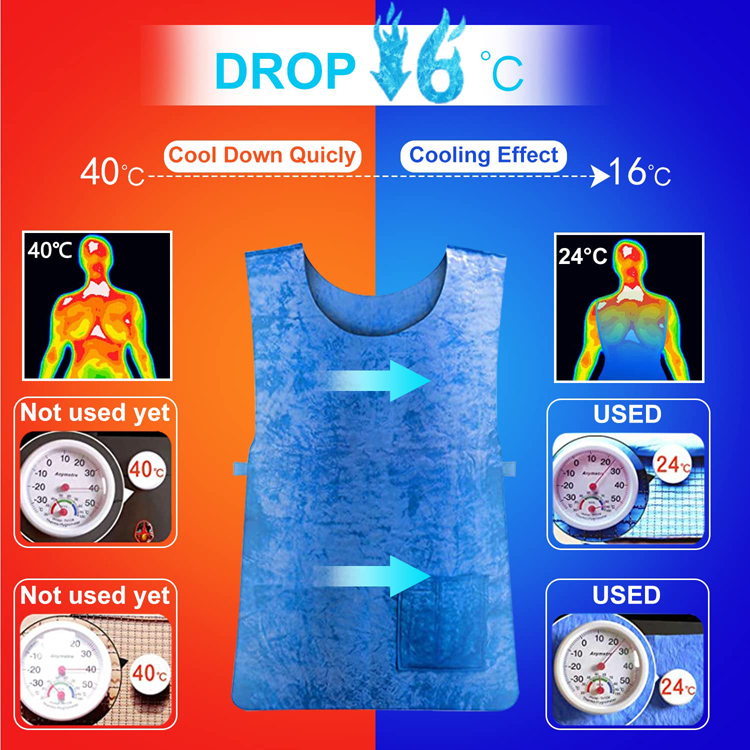
Evaporative vests use water evaporation to pull heat from your body. Performance shifts heavily based on location. A vest cooling you for 3.5 hours in dry heat may stop working after 2 hours in humid air.
Hot-Dry Climates: Best Performance
Desert conditions get the most from evaporative technology. Lab tests at 35°C with low-to-moderate humidity showed the IH wet model gave 3.5 hours of strong cooling above the 20 W·m⁻² threshold. No other Evaporative Vest lasts longer.
The TECH and XTREM vests both reached 3 hours of solid cooling under the same conditions. ECOOL fell below the efficiency mark after 2.5 hours. The IZI vest quit fast—just 45 minutes of useful performance.
Field data from 30-40°C environments with 30% relative humidity backs these numbers. Higher temperatures boost cooling power in dry air. Water evaporates faster. You get bigger temperature drops. The downside: your vest dries out quicker. You’ll need to re-soak it sooner.
Humid Conditions Cut Duration in Half
Moisture in the air stops evaporative cooling. Tests at 60% relative humidity versus 30% RH at the same temperatures showed clear drops. Evaporation slows down. Cooling power falls. Duration gets shorter.
A vest running 3 hours in dry heat might last under 1.5 hours in muggy weather. The physics work against you. Humid air can’t hold much more water vapor. You’ll be re-soaking constantly. This makes evaporative systems a poor choice for tropical or coastal jobs where heat stress prevention matters most.
Cooling Vest Duration for Specific Use Cases
Different jobs and medical cases need different cooling times. Construction workers doing 8-hour shifts need different tech than emergency heat stroke patients. The data shows specific scenarios where cooling duration affects safety and performance.
Medical Emergency: Heat Stroke Treatment Requires Fast Cooling
Exertional heat stroke patients need fast cooling. Every minute counts. Core body temperature hits dangerous levels. The CAERvest® uses chemical activation to target this critical window.
Manufacturer specs claim 60 minutes of cooling effect. The vest absorbs about 843 kJ of heat energy during this time. Clinical performance tells a more precise story.
Lab measurements showed the vest cools patients at 0.06°C per minute. Start from a rectal temperature of 41.4°C. You reach the safe zone of 38.9°C in about 41 minutes. Severe cases starting at 42.8°C need around 64 minutes.
Emergency room data confirmed these numbers. Men cooled to 38.25°C in 31.2 ± 12.7 minutes wearing the vest. Without it, passive cooling took 53.1 ± 23.4 minutes. Women showed similar benefits: 24.7 ± 14.4 minutes with the vest versus 29.0 ± 9.5 minutes passive.
The vest works. But it’s not the fastest option. Cold-water immersion remains the gold standard for heat stroke. Patients in ice baths cool in just 11.4 minutes average starting from 41.4°C. Severe 42.8°C cases take up to 18 minutes.
Bottom line for medical teams: The CAERvest provides reliable 30-40 minute cooling for field treatment. It fills the gap where cold-water immersion isn’t available. Plan for vest replacement or extra cooling methods if transport exceeds 30 minutes.
Full Work Shifts: 8-Hour Performance Across Industries
Construction crews, warehouse workers, and outdoor maintenance teams face full 8-hour heat exposure. Your vest needs to last the entire shift. Or you need a practical replacement plan.
Active air-cooled systems lead this category. The VRTX model kept efficient cooling (above 20 W·m²) for the complete 8-hour work period. Average power output stayed at 41 W·m² the whole time. This means reliable body temperature control from clock-in to clock-out. No recharging needed.
Phase change cooling vests offer a middle option. The STA gel insert model delivered 3.5 hours of efficient cooling. POLAR and GTEK PCM designs reached 3 hours each. That covers about half a standard shift. You’ll need cooling pack replacement during lunch break.
Mid-range PCM options like ERGO, FLEX ice inserts, and CRYO gel packs provide 2 hours of strong performance. Budget ice models (FICE feather-ice, IH variants) fade after 1.5 hours or less. The IH 21 model quit in under 30 minutes. One IH variant never reached good cooling levels at all.
Evaporative vests match PCM duration in dry climates. The IH wet model lasted 3.5 hours. TECH and XTREM designs gave 3 hours each. These numbers assume low humidity. Muggy conditions cut performance in half.
Planning your shift: Single-vest solutions work with active cooling systems. PCM or ice tech needs spare vests and freezer access. Plan your break schedule around 2-3 hour replacement cycles for passive systems.
Short-Duration High-Intensity: Sports and Tactical Operations
Athletes and tactical pros need maximum cooling power for brief periods. A 15-minute halftime break or 45-minute mission has different needs than all-day work.
Ice-based vests excel here. The FICE feather-ice model peaks above 90 W·m²—the highest power recorded in testing. Traditional ice inserts (FLEX) hit 80 W·m². Gel packs (CRYO) reach 73 W·m². You get intense temperature control that drops core heat fast.
Soccer halftime shows practical use. After 45 minutes of game play, players get 15 minutes of recovery. Ice vests provide maximum heat removal during this short break. Cooling intensity matters more than duration. Players don’t need 3-hour performance. They need fast core temperature drops before returning to play.
Tactical teams face similar patterns. Bomb disposal suits create extreme heat loads. The EOD study showed operators wearing 38 kg protective gear in 40°C heat. Their 1.12 kg PCM vest (25°C melting point) lasted just 50 minutes of active work. Those 50 minutes provided critical heat stress protection during high-risk operations.
Replacement timing matters for safety. Once PCM melts, the liquid-filled vest increases heat strain compared to wearing nothing. The warm gel packs trap heat against your torso. Remove or replace spent vests right away.
Best practices for short missions: Ice tech gives you 1.5-2 hours of peak performance. Plan operations around this window. Carry spare pre-frozen packs for extended missions. Accept the trade-off—maximum power for minimum duration.
Cost vs. Cooling Time: Finding the Best Value
Budget spreadsheets tell half the story. You need to combine upfront cost with actual cooling hours and how often you replace parts. A $50 ice vest runs 2 hours, then needs refreezing twice per shift. A $300 active system runs 8 hours straight. Which saves money over a season?
Calculate Your True Cost Per Cooling Hour
Active cooling systems cost $250-500 but deliver 8+ hours per day. That’s $0.80-1.60 per cooling hour over a 200-day work season (assuming 3-year lifespan). The VRTX air-cooled model proved this math with 331 W·h·m⁻² total capacity across full shifts.
Phase change cooling vests run $80-150 and provide 2-3 hours before needing refrigeration. The real cost jumps once you factor cooling pack replacement cycles. You need two vest sets for an 8-hour day. That’s $160-300 total investment for $1.05-1.95 per cooling hour over the same season.
Ice pack vests look cheap at $40-80. But 1.5-hour duration means buying multiple units or accepting frequent breaks. Three rotations per shift at $60 each = $180. Add freezer access requirements and time lost swapping packs. The real cost hits $2.20-3.50 per cooling hour.
Hidden Costs That Change the Value Equation
Downtime matters more than sticker price in professional settings. The FICE ice vest peaks at 90 W·m⁻² but quits after 90 minutes. Workers lose productivity during cooling pack replacement breaks. Construction crews billing $75/hour pay $18.75 every time someone stops to swap gear.
Cooling vest maintenance adds up based on the technology. Battery systems need replacement every 2-3 years ($50-100). PCM packs last 3-5 years before performance drops. Ice packs split or leak within 1-2 seasons of regular use.
Energy costs favor passive systems—zero ongoing power expense. But active vests drawing 27.5W at $0.12/kWh cost just $0.21 per 8-hour shift to operate. That’s $42/year for 200 work days. The convenience premium pays itself back fast.
Match Investment to Your Usage Pattern
Short missions (1-2 hours): Ice vests give you maximum cooling intensity for minimum upfront cost. Athletes and tactical teams get 80-90 W·m⁻² peak power right away. Budget $60-100 per vest.
Half-day work (3-4 hours): PCM technology hits the sweet spot. The STA model’s 3.5 hours above 20 W·m⁻² covers morning or afternoon shifts with one recharge. Invest $100-150 for reliable body temperature control.
Full shifts (8+ hours): Active systems justify the $300-500 price tag. Zero interruptions mean zero lost productivity. The 41 W·m⁻² sustained output from air-cooled models eliminates all replacement hassles. You get the best heat stress prevention value for professional use.
Conclusion
Finding the right cooling vest rechargeable option or phase change system? Match the cooling time to what you need. Construction workers need 2-4 hours of strong cooling. Outdoor activities work better with 8+ hours of gentle evaporative cooling. Health conditions require medical-grade temperature control duration. There’s a solution for each case.
The smartest approach? Look beyond maximum cooling time. Consider how easy it is to recharge. Think about your activity level. Factor in your climate. Calculate the total cost of ownership. A 4-hour PCM vest with quick freeze beats an 8-hour system that takes forever to prepare.
Your next step: Know your primary use case. Figure out how long you need cooling. Check your access to recharging spots. Compare these against the data we’ve shared. Invest in quality, not the cheapest option. Proper cooling vest maintenance and solid construction give you better value over time.
The vest that stays cold longest? It won’t always keep you comfortable longest. Pick the tech that fits your workflow. You’ll use it when you need it most.