
At 100°F, every minute counts for your dog. Unlike humans, dogs can’t sweat through their skin. They depend on panting to release heat. That’s it. And if panting isn’t enough, their body temperature can spike to dangerous levels in under 20 minutes.
That’s not a scare tactic — that’s just biology working against your best friend on a brutal summer day.
So whether your dog is panting hard right now in the heat, or you’re getting ahead of the problem before it starts, this guide covers what you need. You’ll find the first warning signs of overheating, the cooling products that deliver results, frozen treat ideas, and no-AC strategies that hold up when temperatures refuse to drop.
Content Framework: “How Do I Keep My Dog Cool In 100 Degree Weather?”
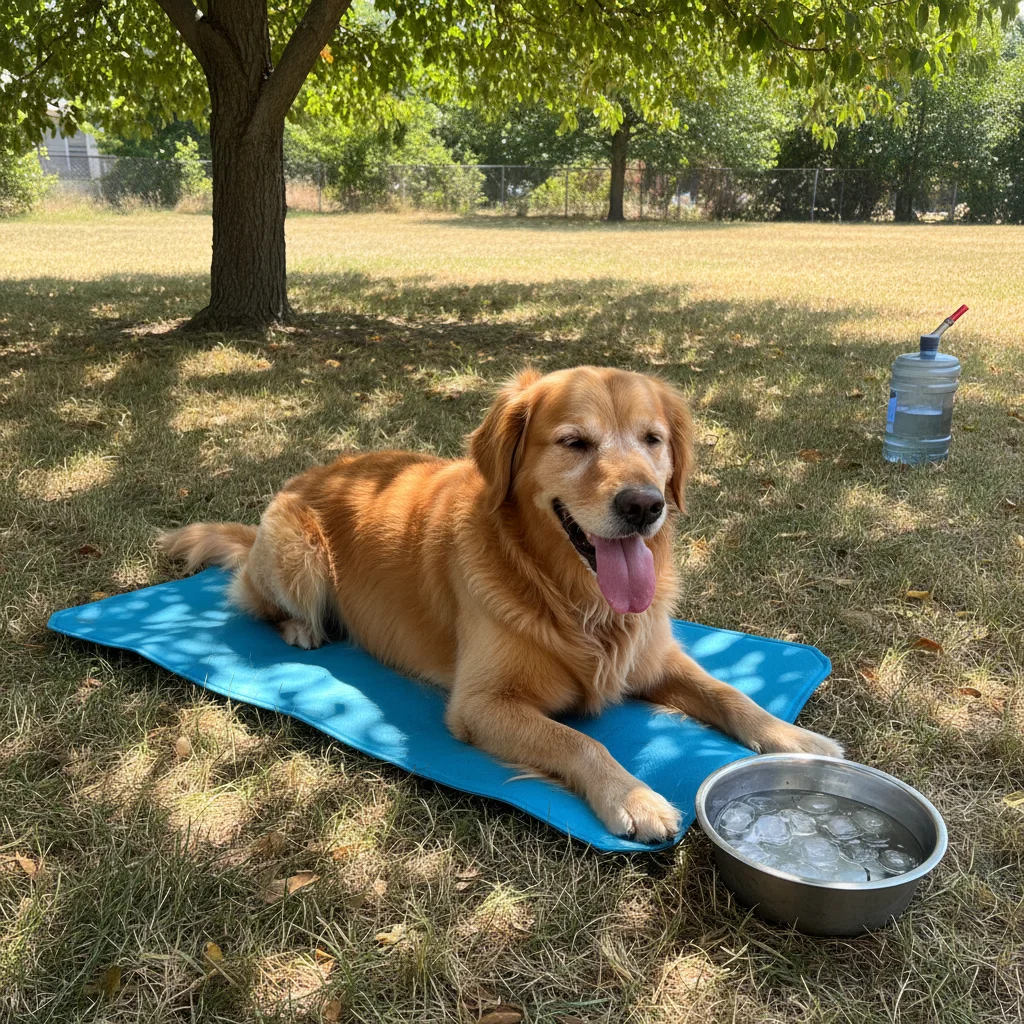
This guide has one goal: get you the right information, in the right order, before the heat causes harm.
Here’s what you’ll find inside — and why each part matters:
-
Know the numbers first. A dog’s normal body temperature runs between 100.5°F and 102.5°F. Past 103°F, heatstroke risk becomes real. Past 109°F, organ failure follows. These numbers are your decision points — not just statistics.
-
Walk timing and surface dangers. At 100°F air temperature, asphalt hits 150°F–170°F. That’s not warm — that’s a burn. You’ll find walk limits mapped by temperature, from moderate risk at 80°F to stay indoors at 100°F+.
-
Cooling methods that work. Wet towels draped over a dog? They trap heat. Cold-water immersion at 59°F–60°F, combined with evaporative cooling, is what veterinary research backs up.
-
Emergency steps you can take right now. Just 21.7% of heat-affected dogs get cooled before reaching a vet — a gap that costs lives. This guide helps close it.
Each section goes from prevention to recognition to action.
Is 100°F Weather Dangerous for Dogs? What Every Owner Must Know First
The National Weather Service classifies 100°F as “Extreme Caution” territory — and for dogs, that label doesn’t go far enough.
Here’s the hard truth: mortality risk climbs 1% for every degree above 77°F. Above 90°F, that risk jumps 10% in a single day. In 2024, heat killed 111 animals in the US — and those are just the reported cases.
So why does 100°F hit dogs so hard? A few factors work against them at once:
-
Their baseline temperature is already high. A healthy dog runs between 100.5°F–102.5°F at rest. That leaves almost no buffer before heatstroke kicks in at 104°F.
-
Cities make it worse. Outdoor dogs in urban areas have recorded peak body temperatures of 36.9°C — well above what rural dogs show in the same heat.
-
Exercise is the #1 trigger. A full 74.2% of heat illness cases in dogs are exercise-related. A midday walk at 100°F isn’t just uncomfortable — it’s a real danger.
-
Some breeds can’t cool down properly. Brachycephalic dogs — bulldogs, pugs, French bulldogs — struggle to regulate heat even at rest. About one in three of these dogs has heat regulation problems that turn extreme heat into a life-threatening situation.
Watch for these heatstroke signs right away:
1. Body temperature above 104°F
2. Excessive panting or heavy drooling that won’t stop
3. Rapid heartbeat or sudden collapse
4. Vomiting or diarrhea after outdoor activity
One more thing worth knowing: most owners underestimate how hot their dog is. Studies show owners read their dog’s temperature 1–2°C lower than the real number. Your gut says your dog feels warm? The actual temperature is probably higher than you think.
Warning Signs Your Dog Is Overheating Right Now (Act Within Minutes)
Your dog’s body sends distress signals in a clear order. Learning to read them fast is the difference between a close call and an emergency vet visit.
Once a dog’s temperature crosses 106°F (41°C), the body hits a metabolic crisis. Self-cooling shuts down. Things go wrong fast from there.
The Signs, In Order of Urgency
First signals — act now, don’t wait:
– Frantic, relentless panting that doesn’t ease after your dog moves into shade. This isn’t normal hot-day breathing. It’s labored, loud, and desperate.
– Thick, ropy drool streaming from the mouth. Sticky saliva means dehydration has already started.
– Bright red gums and tongue. The body pushes blood to the surface to shed heat. Check the gums — they should be pink and moist, not red, pale, or grayish-purple.
Escalating signs — this is becoming an emergency:
– Rapid, shallow, noisy breathing — a serious warning sign in flat-faced breeds like bulldogs and pugs
– Unsteady legs, stumbling, or sudden collapse
– Vomiting or diarrhea after outdoor activity. Bloody stool points to severe heatstroke
– Confusion, disorientation, or no response to your voice
Critical signs — organ damage is possible:
– Seizures or loss of consciousness
– Gums turning gray or purple — this means oxygen deficit, not just overheating
– Muscle spasms with no response at all
Mild vs. Emergency: Know the Line
A dog with mild overheating pants hard, seeks shade, and drinks more water. Move them somewhere cool — they’ll stabilize.
A dog in heatstroke gets worse even after you bring them indoors. Gums stay red or turn purple. Vomiting keeps going. Collapse comes next. That’s your sign to skip home treatment and drive to a vet right away.
These situations can push a dog into crisis in minutes: parked cars, any enclosed hot space, hard exercise at midday, no shade or water nearby, and flat-faced breeds sitting in direct sun.
Emergency Cooling: How to Cool Down an Overheated Dog Fast (Step-by-Step)
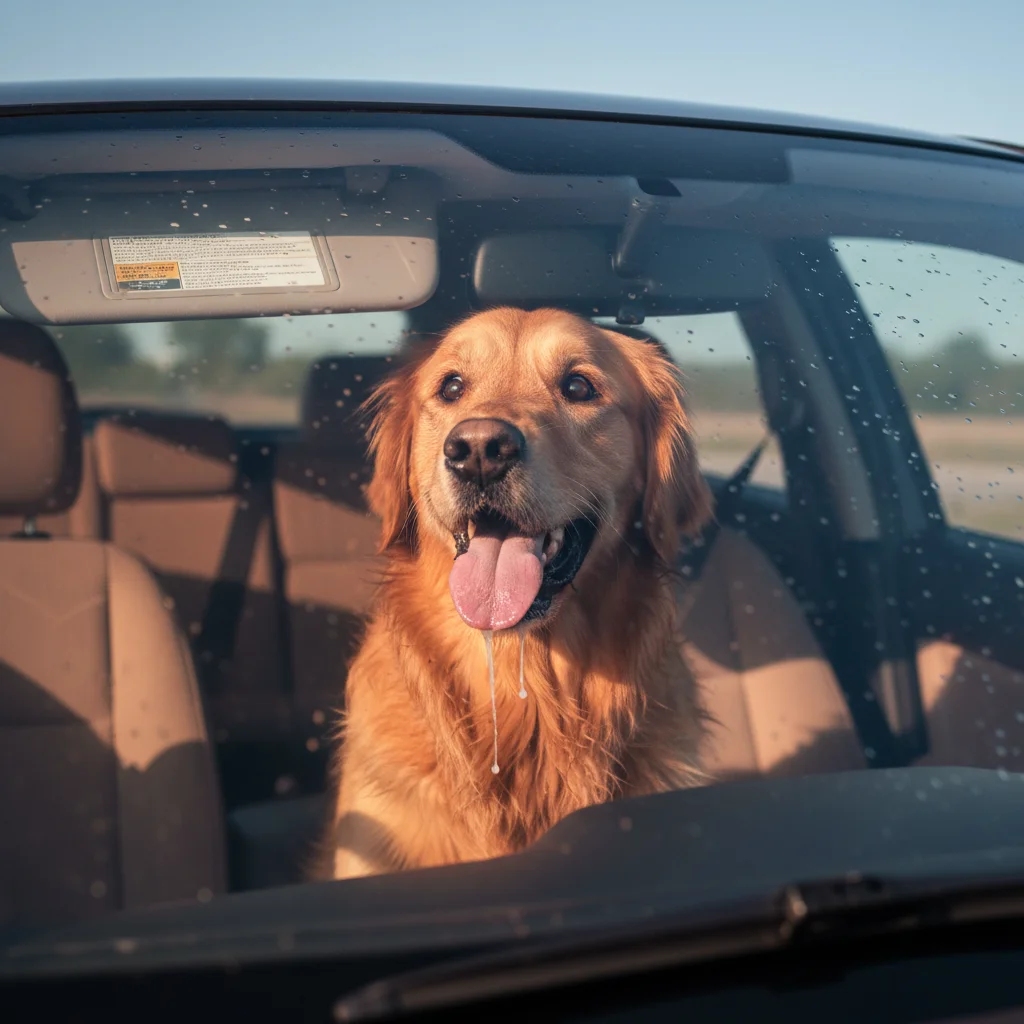
Most owners don’t learn this until it’s too late. Only 21.7% of dogs with heat-related illness got cooled before reaching a vet. That gap — between collapse and clinic — is where dogs die.
Cool first. Transport second. That order saves lives.
The Method That Works Fastest
Drop the wet towel idea. It feels helpful. It isn’t. Research shows 51% of owners use this method — and it actually traps heat against the body instead of letting it escape. Body temperature keeps climbing while you wait.
Here’s what works:
-
Voluntary head dunking — the fastest method on record. Fill a bucket with cool water (~70°F/21°C). Let your dog lower their head in. The head, nose, tongue, and ears carry heavy blood flow. Temperature starts dropping within 30 seconds. No other field method beats this one.
-
Cold-water immersion — best for young, healthy dogs. Full body submerged. Water as cold as 0.1°C is safe and effective. The old “tepid water” rule has zero research behind it.
-
Water spray + airflow — the right choice for older, sick, or unconscious dogs. A fan turns the spray into an evaporative cooling system. Fast, simple, and it works.
Step-by-Step Emergency Protocol
-
Stop and assess. Temperature above 103°F (39.4°C) with panting or labored breathing — act now.
-
Move to shade. Get your dog off hot pavement and out of direct sun.
-
Begin cooling. Start with a head dunk. Then move to full-body immersion or spray-plus-fan based on your dog’s condition.
-
Monitor temperature. Check rectally every 1–2 minutes. Keep cooling for up to 20 minutes, or until temperature drops below 103°F.
-
Watch the threshold. Above 107°F (41.7°C), home cooling alone won’t cut it. Head to a vet and keep applying cool water during the drive.
-
Don’t rush transport. Moving your dog too fast after cooling slows the body’s natural recovery. Let your dog rest in shade first — unless temperature stays at a dangerous level.
What the Numbers Say
Dogs cooled before reaching the hospital arrived with a mean temperature of 38.6°C. Dogs cooled after arrival came in at 40.9°C. That’s a major difference — and lower admission temperature ties to better survival odds.
The fatality rate for heat-related illness in dogs sits at 14.18%. That number drops when owners act before the vet does.
Keep Your Dog Cool Indoors: Best Strategies at 100°F Outside
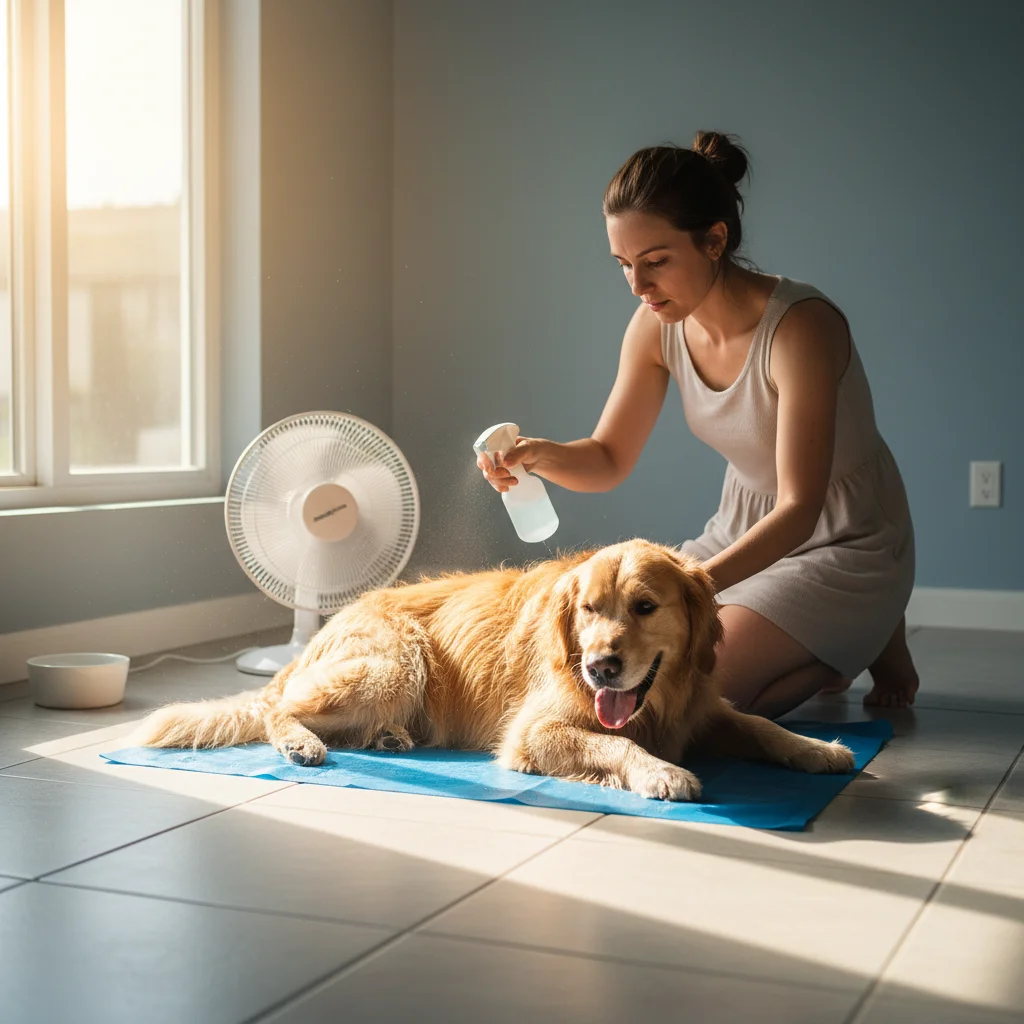
The house becomes a refuge — but you have to use it right.
At 100°F outside, bringing your dog indoors is not enough on its own. The indoor environment has to fight the heat too. Here’s what makes a real difference:
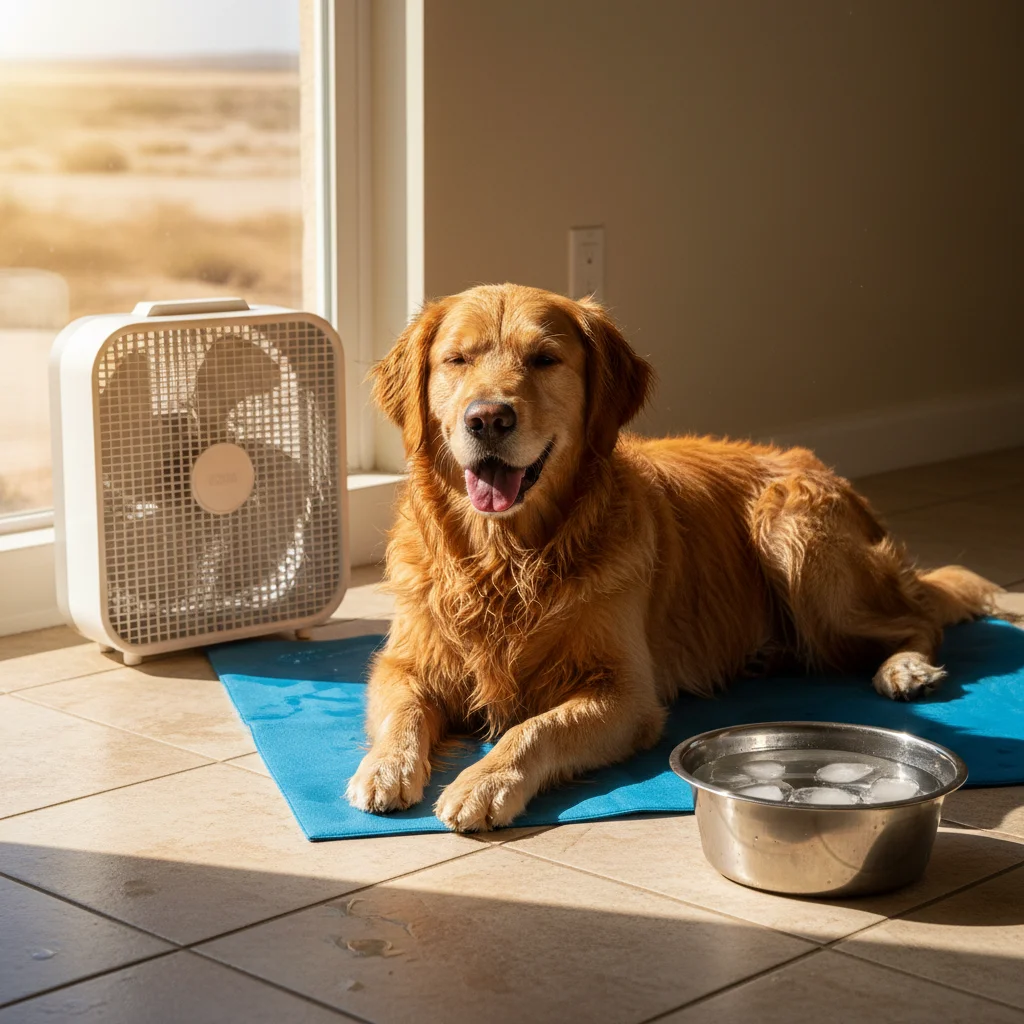
Air conditioning paired with fans is your first line of defense. Fans alone won’t do the job. Dogs cool through panting, not skin sweating. Moving air helps only when the room temperature is already low enough. Without AC, a fan just pushes hot air around.
Your dog’s water bowl needs ice. Drop ice cubes in throughout the day. Cold water cools your dog from the inside. It slows the body temperature from creeping up toward the danger zone of 103°F. Keep refilling — warm water loses that edge fast.
Wet coat plus airflow is a simple, underrated combo. Dampen your dog’s fur, then place a fan nearby. The moisture evaporates and pulls heat away from the skin. It’s the same idea as sweating, applied from the outside.
Cooling mats work best on tile or hardwood floors. Set them on an already-cool surface for maximum effect. Soakable mats stay cold for a long time. Your dog gets a dedicated cold spot to press against and rest.
Ice packs can help — place them at the armpits or groin, where blood vessels sit close to the surface. Don’t leave them in direct contact with skin for too long. A thin cloth barrier between the pack and skin keeps it safe.
What to Avoid Indoors
-
Fans alone — not enough without cooled air
-
Ice baths — sharp temperature swings put stress on the body
-
Isopropyl alcohol on paws — it spikes heart rate and causes irritation
-
Plastic crates — they trap heat. Use ventilated wire crates in shaded spots instead
Safe Outdoor Time in 100°F Heat: Timing, Surfaces, and Pre-Cooling Tactics
The clock matters more than the thermometer at 100°F.
Direct sunlight adds up to 15°F on top of the air temperature. So a 100°F day in full sun feels closer to 115°F on your dog’s body. That’s not a small gap — it’s the difference between manageable and dangerous.
The Safest Times to Go Out
The safe window is narrow. Peak heat runs from 10:30 a.m. to 2 p.m. Skip outdoor activity during these hours. Go out in the early morning or after sundown instead. Even then, keep it short and watch your dog the whole time.
At 100°F, the honest advice is this: cancel outdoor activity if you can. That’s not being overly cautious. Heat exhaustion can hit your dog before any clear warning signs appear.
The Ground Your Dog Walks On
Pavement traps heat long after the air cools down. Grass and shaded paths stay much cooler than open concrete or tarmac. Stick to shaded routes. Before your dog steps anywhere, press your palm on the surface for a few seconds — if it’s too hot for your hand, it’s too hot for their paws.
Pre-Cooling Before You Head Out
Got no choice but to go outside? Prep your dog first.
-
Wet the coat first. Damp fur starts cooling your dog right away through evaporation.
-
Offer cold water before you leave. Internal temperature matters just as much as surface temperature.
-
Keep it short. No fetch, no running, no extended play. Slow, brief, and shaded — that’s the rule.
Go out early. Keep it short. Get back inside before the heat builds up.
Best Cooling Products for Dogs in Extreme Heat: What Works
The dog cooling product market has grown into a $300–350 million industry. That number says a lot. Millions of owners have already decided that shade and water bowls alone aren’t enough.
Here’s what’s worth buying — and what separates products that deliver from ones that just look good in photos.
The Products That Hold Up
Cooling mats work on evaporation. Your dog lies down, body heat moves into the material, and the temperature drops. They work best on already-cool surfaces like tile. For most dogs, this is the easiest place to start.
Cooling vests do more. The best ones use phase-change materials — materials that soak up and hold heat as they shift state. It’s the same science found in athletic performance gear. High-energy breeds and flat-faced dogs overheat fast. A well-fitted vest is a smart buy for those dogs.
Cooling bandanas are the budget-friendly option. They won’t replace a vest in serious heat. Still, they’re better than nothing for short trips outside.
What to Look For
-
Breathable, moisture-wicking fabric — skip plain cotton. It holds water instead of moving it away
-
Size-matched fit — a vest that gaps at the sides loses most of its cooling power
-
UV protection — newer products block sun and cool at the same time. Most owners overlook this feature, but it matters
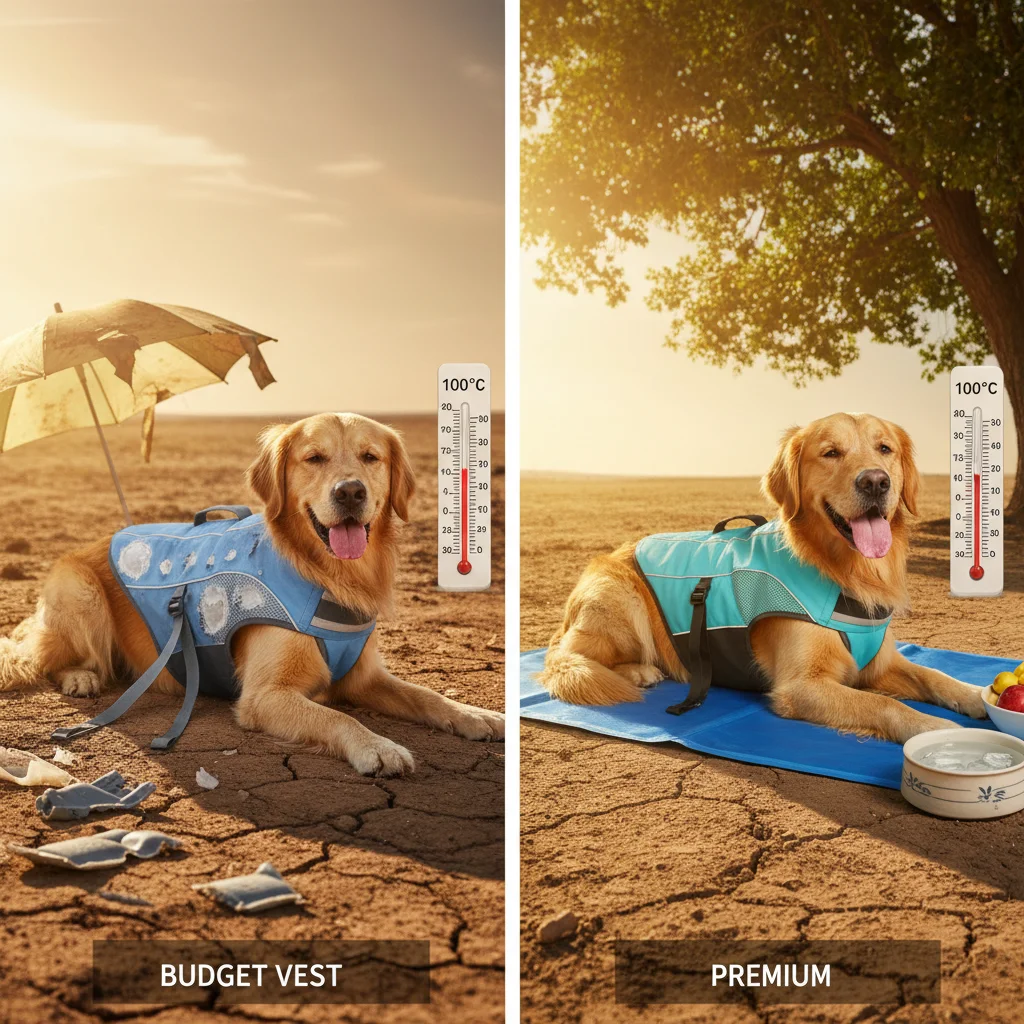
Skip low-quality products. Budget materials lose cooling power within minutes — right when your dog needs it most. The price gap between budget and premium exists for a good reason.
How to Keep Your Dog Cool Without AC: Budget-Friendly Solutions
Not everyone has central air. Not every rental allows window units. And sometimes the power goes out right when the heat index climbs past bearable. None of that changes what your dog needs — it just means you work with what you have.
The good news: some of the most effective cooling methods cost nothing at all.
Water Is Your Best Tool — Used the Right Way
A bucket of room-temperature water does more than most people expect. Let your dog choose to dunk their head in on their own. Studies show this drops body temperature within 30 seconds after exercise. It beats ice packs, neck towels, and armpit towels — all three combined. All you need is a bucket and something worth dunking for, like a treat held just below the surface.
For a faster full-body drop, partial immersion works. A bathtub, a kiddie pool, a hose — any of these will do. Submerge the lower body for about 20 minutes after heat exposure. Research shows this method brings core temperature down 0.42°C more than passive cooling alone.
A sprinkler in the yard costs nothing to run. A cool bath costs even less.
Budget Cooling Methods at a Glance
|
Method |
Cost |
What to Know |
|---|---|---|
|
Head dunking |
Free |
Fastest method — 30-second drop |
|
Partial immersion |
Free |
Lower body in cool water, 20 min |
|
Sprinkler/hose play |
Free |
Great for active dogs outdoors |
|
Box fan near crate |
Under $20 |
Open windows to move cooler air |
|
DIY cooling mat |
Under $10 |
Frozen water bottles under a towel |
|
Shade tent |
Under $30 |
Canvas canopy or patio shelter for outdoor dogs |
Keep the Water Cold, Keep It Coming
Your dog needs 1 ounce of water per pound of body weight every day — more in extreme heat. Drop ice cubes in the bowl throughout the day. Add a spoonful of plain frozen yogurt to the water dish to get a reluctant drinker going. Watch for dehydration signs: tacky gums, lethargy, sunken eyes. Those show up fast in the heat. Unflavored pediatric electrolytes mixed into water can help bring hydration back on track.
Find the Coolest Corner in the House
Without AC, the coolest room becomes the most important one. A basement, a tiled bathroom floor, a shaded north-facing room — aim to keep your dog’s resting space between 65°F and 75°F. A box fan near an open window pulls in cooler evening air. It also pushes out the heat that built up during the day.
One thing worth repeating: fans alone don’t cool dogs the way they cool people. Your dog doesn’t sweat through skin. Moving air helps — but only when the air around your dog is already cooler than their body heat. Pair the fan with water — wet fur, a damp mat, a cool floor — and then it actually does its job.
Special Cases: Senior Dogs, Large Breeds & Brachycephalic Dogs in 100°F Heat
Three types of dogs face a much crueler version of 100°F than other dogs. Not a little harder. Dangerously harder. Life-threatening harder.
Senior dogs lose heat tolerance over the years, and it happens without warning. Small and medium breeds hit senior age at 7. Large breeds reach it at 6. Giant breeds — Great Danes, Newfoundlands — get there at 5. Their cooling systems become less efficient with age. The risks grow higher at the same time.
Overweight and large-breed dogs carry extra fat like a layer of insulation they can’t take off. Even sitting still in the shade, their bodies generate and trap more heat than a lean dog on a light walk. Heat exhaustion can hit them with no warning at all.
Brachycephalic breeds — pugs, bulldogs, French bulldogs — were not built for heat. Their shortened airways make panting less effective. Panting is a dog’s main cooling tool, and for these breeds, it barely works. Humidity makes it worse. At 80–90°F, outdoor time should be counted in minutes. At 100°F, it should not exist at all.
The Rules Are Different for These Dogs
At 100°F, the standard advice gets much stricter for all three groups:
-
Stay indoors. No unsupervised outdoor time. No exceptions.
-
Walk only before 68°F/20°C — early morning, before heat builds up for the day
-
Watch the pavement. At 100°F air temperature, asphalt reaches 140°F. Paws burn in seconds
-
Heatstroke starts at 106°F — just 4 degrees above their normal range. For these dogs, that gap closes fast
Your dog is elderly, overweight, or flat-faced? Treat 100°F like a medical emergency waiting to happen. Keep them cool indoors. Swap walks for puzzle toys and indoor play. Call your vet at the first sign of heavy panting or staggering.
FAQ: Your Top Questions About Dogs in 100-Degree Weather Answered
These are the questions owners ask most — sometimes in a panic, sometimes the night before a heat wave hits. Either way, the answers matter.
Q: What is a dog’s normal body temperature, and when should I worry?
A healthy dog runs between 100.5°F and 102.5°F. At 103°F, heatstroke risk becomes real. At 104°F, you’re in dangerous territory. The fatal threshold sits at just 106°F — four degrees above normal. That gap closes faster than most owners expect.
Q: How hot is too hot to take my dog outside?
At 100°F, outdoor activity should stop for most dogs. Full stop. Humidity makes it worse. Add the air temperature and humidity percentage together. Go above 150? It’s dangerous for almost every breed. Pavement adds another layer of risk. Asphalt hits 170°F in extreme heat. That burns paws in seconds.
Q: Can my dog die from heatstroke?
Yes. Heatstroke kills between 36% and 50% of affected dogs, depending on the study. Researchers in Israel, Germany, and the United States all back these numbers. Above 104°F, organ damage starts fast — kidney failure, blood clotting problems, and shock can set in within minutes of prolonged exposure.
Q: What’s the single biggest risk factor?
Hot cars. Every major study points to the same answer. A parked car builds dangerous heat fast — even with the windows cracked. The second leading cause? Exertional illness. That means exercising dogs during the hottest hours of the day.
Q: How do I know if my dog’s temperature is climbing too fast?
Take a rectal temperature reading at 5, 10, and 15-minute intervals. No improvement? Skip home treatment. Get your dog into the car, cool them down with water on the way, and drive straight to an emergency vet.
Conclusion
Your dog is counting on you — and now you have everything you need to show up for them.
At 100°F, a safe dog and a dog in crisis often come down to a few simple choices. Move them to shade or AC. Offer cool (not ice-cold) water. Spot the warning signs before they get worse. And never assume that because you feel fine, they do too. Dogs can’t sweat it out. They depend on you — completely.
Keep a cooling mat nearby. Know your dog’s breed-specific risks. Save that emergency cooling checklist somewhere you can find it fast.
Your dog is panting hard in the heat right now? Stop reading. Go check on them first.
This knowledge takes one round of learning. But it can protect your dog every summer for the rest of their life.
That’s worth it.