
Your dog isn’t just hot — he’s spiraling. The pacing, the whimpering, the inability to settle even in the shade — these aren’t just signs of summer restlessness. Rising body temperature hijacks your dog’s nervous system. That triggers full-blown anxiety. It’s a feedback loop most pet owners never connect to heat.
Cooling your dog down isn’t just about comfort. It’s one of the most powerful calming interventions you can offer. Soft-strap cooling vests tackle both the physical and emotional toll of heat stress. Here’s how to use them to help your anxious dog find relief — starting today.
Content Framework: “How To Address Pet Anxiety With Soft-Strap Cooling Vests”
This guide covers five clear areas. You’ll go through symptom recognition, the science behind cooling therapy for anxious pets, how to pick the right soft-strap vest, a step-by-step fitting tutorial, and how to tell if it’s working.
What you’ll find here:
-
Dog heat anxiety symptoms — the exact behavioral signals that separate heat-triggered anxiety from ordinary summer fatigue
-
The cooling-to-calm mechanism — why dropping core temperature by even 0.6–0.8°C can shift your dog’s nervous system out of stress mode
-
Soft-strap vs. traditional harness cooling vests — which design works better for anxious dogs, and why strap construction matters more than most owners think
-
A use-it-today fitting protocol — built for dogs that are already reactive and don’t like being handled
-
Behavioral benchmarks — clear signs that your dog’s calming vest for summer is doing its job
Think of this as your full decision-to-action guide. No guesswork. No wasted purchases.
Why Hot Weather Triggers Anxiety in Dogs (Not Just Discomfort)
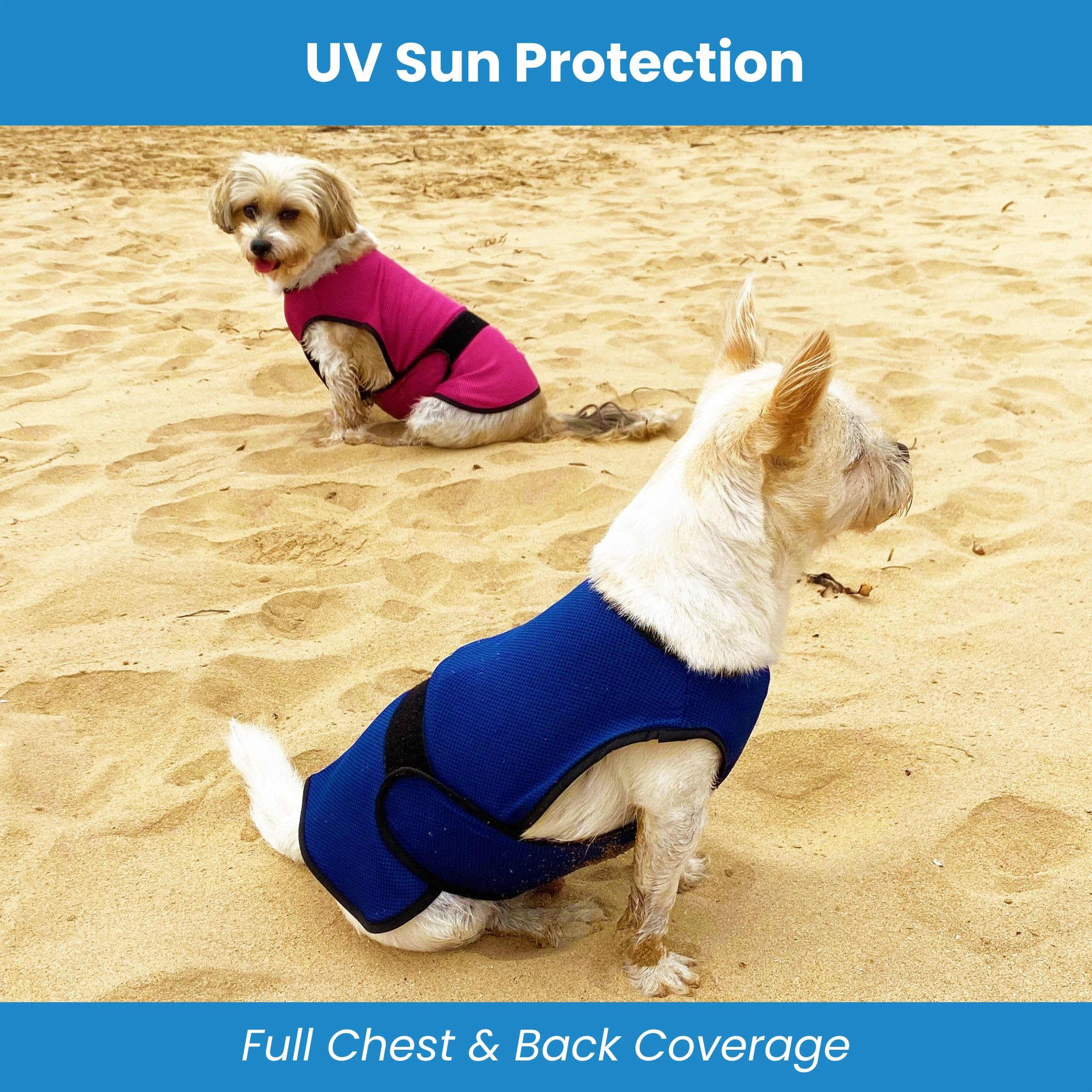
There’s a number every dog owner should know: 104°F. That’s the rectal temperature where your dog’s body stops coping. At that point, organs come under pressure, the nervous system floods, and the stress response kicks in hard. Your dog isn’t “being dramatic” in the heat. That behavior is a precise physical chain reaction happening in real time.
Here’s how it works. Rising body temperature forces your dog to pant harder. Sustained panting pushes up the respiratory rate. That triggers respiratory alkalosis — blood chemistry shifts, muscles tire out, blood sugar drops, and heart output falls. The nervous system reads all of this as a threat. Physical discomfort has now crossed into anxiety.
The data on this is hard to dismiss. A major analysis of 70,000 dog bite incidents across eight U.S. cities (2009–2018) found that aggression rose 4% on the hottest days. UV radiation peaks pushed that figure to 11%. Not because dogs are mean — but because UV exposure cuts brain dopamine levels. That disrupts the serotonin and dopamine systems that control emotional regulation.
The gap between discomfort and anxiety shows up in the numbers too:
-
Discomfort: Mild panting, shade-seeking — seen in about 17% of dogs at home
-
Anxiety onset: Sustained panting in stressful environments jumps to 63%, with a +16% rise in blood pressure and a +11% increase in pulse rate
Some dogs hit that danger zone much faster. Brachycephalic breeds — French Bulldogs, Pugs, British Bulldogs — get there sooner because their shortened airways make panting physically inefficient. It doesn’t cool them down the way it should. Thick-coated breeds like Chow Chows and Samoyeds hold heat longer in their coat. High-drive breeds like Border Collies and Labrador Retrievers turn physical exertion heat into agitation fast — faster than most owners expect.
This isn’t a comfort issue with an anxious edge. It’s an anxiety issue with a thermal trigger — and that distinction changes everything about how you treat it.
Recognizing Heat-Induced Anxiety vs. Normal Panting: Symptom Checklist
Most pet owners miss the moment it tips. Your dog is panting after a backyard run — that’s normal. Then something quieter and more worrying takes over. The pacing that won’t stop. The whine with no clear target. Knowing where that line falls could save your dog’s life.
Early Warning Signs: What Separates Anxiety From Recovery
Normal post-exercise panting stops in under five minutes. You’ll see rapid, shallow breaths (40–100 per minute), bright alert eyes, and pink moist gums. Your dog finds a cool spot, drinks some water, and settles down.
Heat-induced anxiety looks different:
-
Panting that deepens, not slows — breaths exceed 100 per minute and grow labored, not lighter
-
Restlessness beyond 10–15 minutes — persistent pacing, unable to lie down even in shade
-
Unprovoked vocalization — whining or barking for more than 10 minutes with no obvious trigger
-
Low-threshold irritability — snapping during gentle petting, a behavior you won’t see in simple heat fatigue
The 5-Minute Owner Self-Check
Run through this list if you’re not sure:
-
Panting timer (30 sec) — Still panting 10+ minutes after rest? Move to the next step.
-
Settle test (1 min) — Offer cool shade and fresh water. No change? Heat anxiety is the likely cause.
-
Gum check (30 sec) — Pink and moist is fine. Red, dry, or pale means act now.
-
Behavior scan (1 min) — Count breaths. Over 100 per minute is your concern threshold.
-
Temperature reading (2 min) — Below 39°C is normal. Between 39–40.5°C, keep a close watch. Above 40.5°C is a veterinary emergency.
Score your results: 0–1 signs = normal panting. 2–3 signs = heat anxiety is starting, begin cooling now. 4 or more = call your vet now.
When It Becomes an Emergency
Some symptoms need action right away — no waiting, no second-guessing:
-
Lethargy or unresponsiveness — untreated heat illness carries a 14–56% fatality rate
-
Gum color shifts — bright red signals dangerous hyperemia; pale or white indicates shock
-
Seizures or collapse — mortality reaches 50% even in treated cases
Two or more of these signs, plus a rectal temperature above 40°C? Start active cooling right away and get to a veterinarian within 30 minutes. The numbers are stark: heat-related illness carries a 14.18% fatality rate, and risk climbs 10% on days exceeding 32°C.
Brachycephalic breeds — Pugs, French Bulldogs, British Bulldogs — and Labrador and Golden Retrievers fall into the highest-risk categories. For these dogs, spotting the first warning signs isn’t optional. It’s urgent.
How Soft-Strap Cooling Vests Calm an Anxious Dog (The Science)
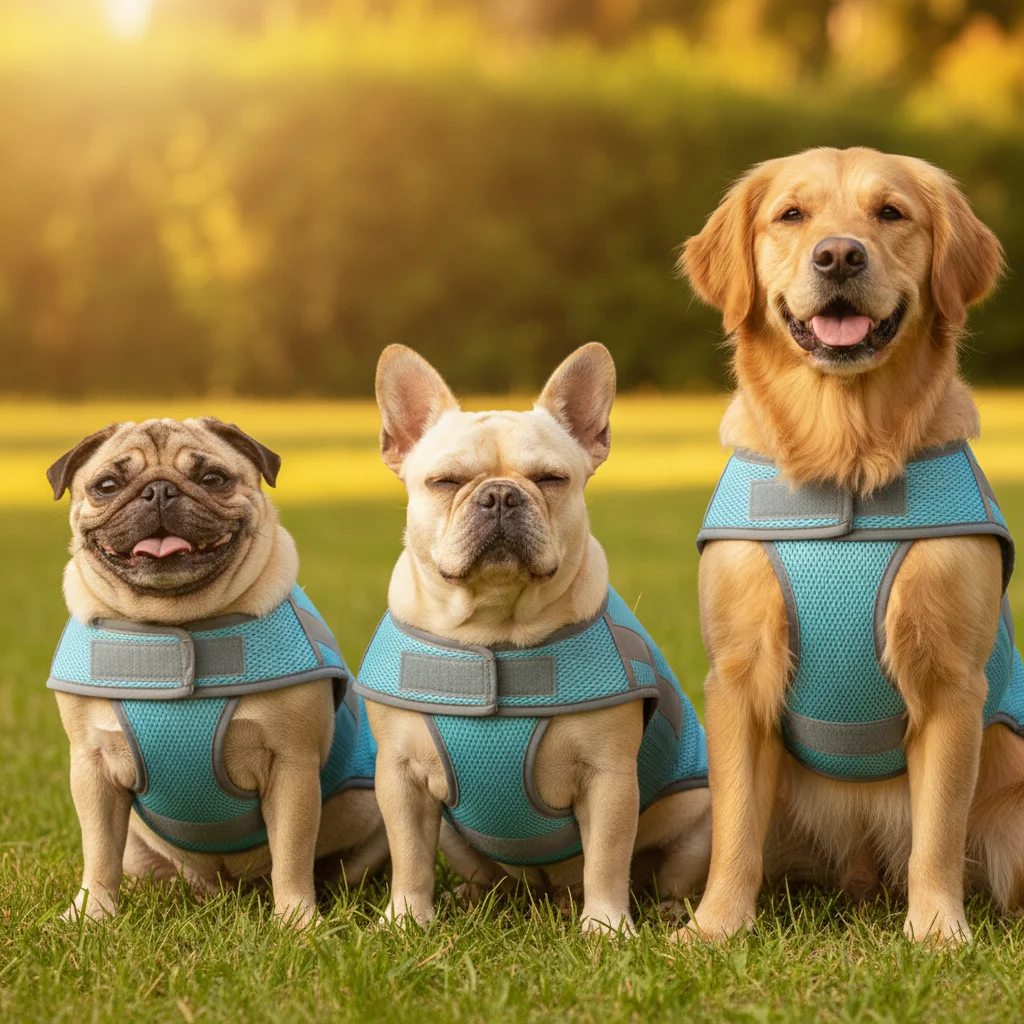
A well-fitted cooling vest does something most pet owners don’t expect. Put it on an anxious dog, and you get a real, measurable shift in their body — not just comfort, but a physical change you can track.
The vest works on two separate tracks. The first is thermal: evaporative cooling materials pull heat away from the body’s surface, dropping the core temperature down. The second is neurological — and this is the part that explains the calm you see in your dog’s eyes after.
The Pressure-Calm Connection
Gentle, steady pressure on a dog’s torso activates the parasympathetic nervous system. Think of it as a built-in off switch for stress. Research tracking mean anxiety scores (MAS) found that dogs in a snug-fitting vest showed a 34% reduction in MAS compared to dogs with no vest (1.9 ± 0.4 vs. 2.9 ± 0.4, P=0.0031). During simulated thunderstorm sounds — one of the strongest anxiety triggers out there — that drop climbed to 40%.
Heart rate data backs this up. A well-fitted vest produced an 8% decrease in heart rate, plus clear drops in stress behaviors like door-orienting, restless yawning, and inability to settle. Fit is the key word here. A loose vest showed zero measurable benefit. The compression needs full, consistent contact to work.
There’s one more data point worth noting. Steady, mild pressure around the torso raises urinary oxytocin levels — the same bonding hormone that goes up during calm, safe interactions. Your dog’s nervous system gets a chemical nudge away from the stress response. That’s not a side effect. That’s the mechanism.
Why Soft Straps Work Better for Anxious Dogs
Cooling vests work differently from traditional deep-pressure wraps like ThunderShirt. Deep-pressure vests need a tight, precise fit to do their job — and that close, unfamiliar feeling is the exact thing many anxious dogs push back against. The adjustment period alone can take five or more sessions before a reactive dog accepts it without resistance.
Soft-strap cooling vests use adjustable, lighter contact. That gives you more flexibility for dogs that are already stressed. The vest goes on without a struggle. So the calming effect starts sooner — before any fight over fit adds more stress on top of the original problem.
|
Soft-Strap Cooling Vest |
Deep-Pressure Vest |
|
|---|---|---|
|
Anxious Dog Acceptance |
Higher — mild contact, easier to wear |
Needs habituation (5+ sessions) |
|
Fit Flexibility |
Quick adjustments mid-session |
Snug or ineffective |
|
Measured Anxiety Reduction |
34% MAS drop; 40% during noise events |
89% partial effect (owner-reported, subjective) |
|
Added Cooling Benefit |
Yes — evaporative or phase-change cooling |
None |
You get a dual-action tool: lower body temperature + gentle proprioceptive pressure working at the same time, not just one or the other. For dogs whose anxiety spikes with heat, that combination is the whole point — not a bonus.
How to Choose the Right Soft-Strap Cooling Vest for an Anxious Dog
Not every vest labeled “cooling vest” will calm an anxious dog. The wrong fit, the wrong material, the wrong strap design — any one of these turns a potential solution into a new stressor. Here’s what matters most for a dog that’s already on edge.
Get the Measurements Right First
Start with two numbers: chest circumference and back length.
Measure chest circumference at the widest point behind the front legs. The vest should sit snug — but leave one finger of space (about 1–2cm). That’s not just a comfort tip. A snug fit reduces heart rate elevation by 8% compared to a loose vest. A vest that gaps or shifts gives zero benefit.
Back length runs from the base of the neck to the base of the tail. Use both numbers together to find the right size tier:
-
XS: 30–45cm chest
-
XL: 80–120cm chest
Look for adjustable soft straps that cover 20–50% of body girth. This lets you fine-tune the fit as your dog moves around.
What the Materials Need to Do
For anxious dogs, fabric choice isn’t about looks — it’s about function. Look for:
-
Ice silk or open mesh construction — breathable, non-irritating, won’t trap heat against the skin
-
Strap width over 2cm — wider straps spread pressure without chafing
-
Gel or evaporative cooling with 200–400g density per size — you get at least 2 hours of active cooling, with phase-change materials keeping temperatures between 15–20°C
-
Velcro or detachable straps — machine-washable, air dry between uses
Red Flags to Rule Out
Skip any vest with these features — they’re instant disqualifiers for anxiety-prone dogs:
-
Rigid or hard straps — these raise agitation instead of lowering it
-
Fixed, non-adjustable sizing — no adjustment means no way to hit the right pressure level
-
Non-pet fabrics — human synthetics trap heat and irritate skin
-
Partial coverage designs — pressure needs to wrap the full torso and shoulders to work. Partial vests don’t cut it.
A Simple 5-Step Selection Checklist
-
Measure chest and back. Target a one-finger-loose soft strap fit
-
Check that straps are wider than 2cm, adjustable, and Velcro-fastened
-
Confirm the fabric is breathable or phase-change cooling with 2+ hour duration
-
Skip any vest with hard materials or fixed sizing
-
After fitting, watch your dog for 15 minutes. A vest that’s working shows reduced door-orienting, less restless yawning, and a dog that can settle down
On budget: models in the $20–$45 range hit the 80%+ efficacy threshold seen in pressure vest research. This isn’t a small upgrade. It’s a low-cost, drug-free option that can save hundreds per year in anxiety medication costs — and your dog may feel relief the same afternoon.
Step-by-Step: How to Put a Cooling Vest on an Anxious Dog Without a Struggle
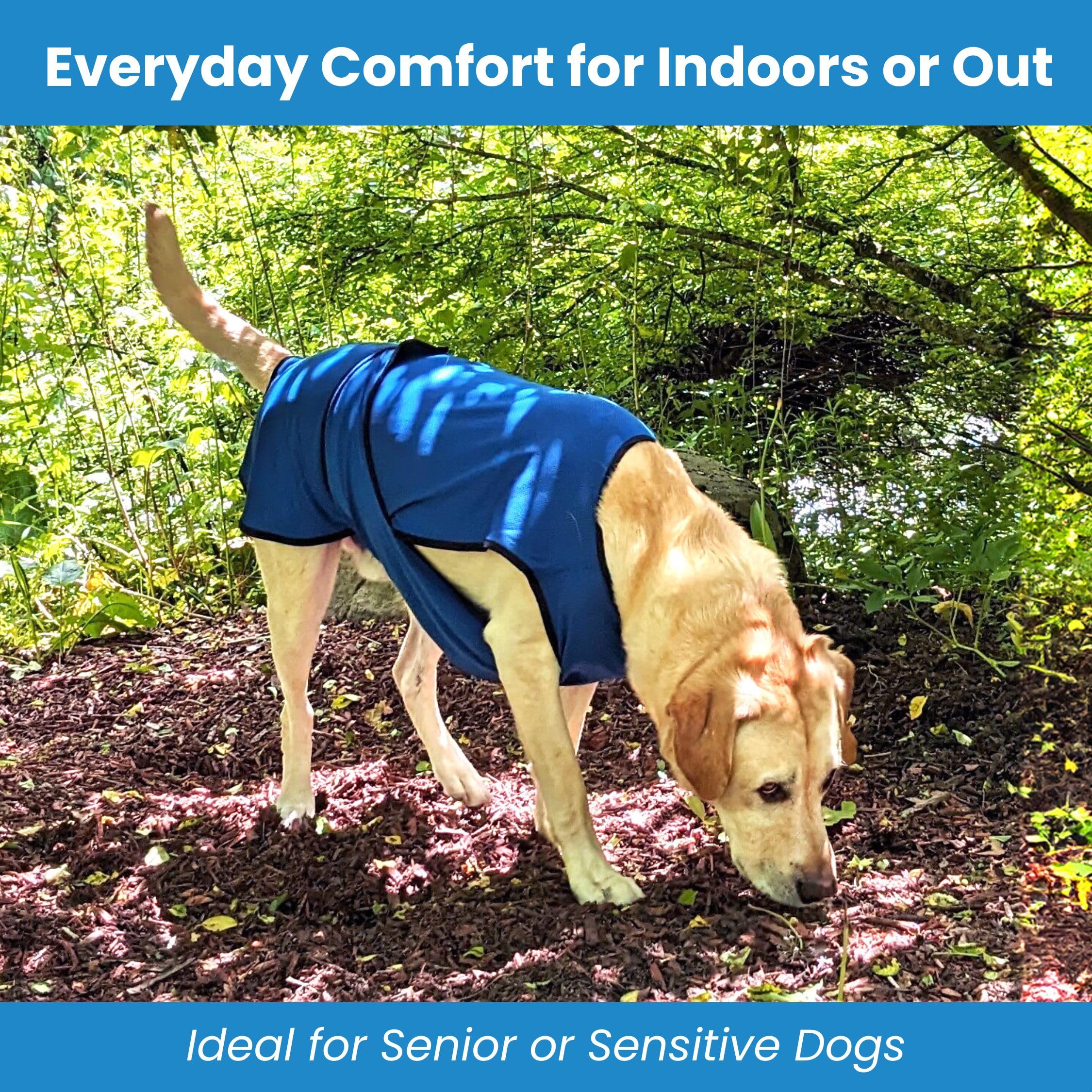
Rush the fitting session and you can undo everything. An anxious dog that gets wrestled into a vest learns one thing fast: the vest means a fight. So before you think about cooling technology or compression levels, focus on timing and approach. Done right, this takes under three minutes — and your dog ends up calmer than before you started.
Prepare the Vest Before Your Dog Is Involved
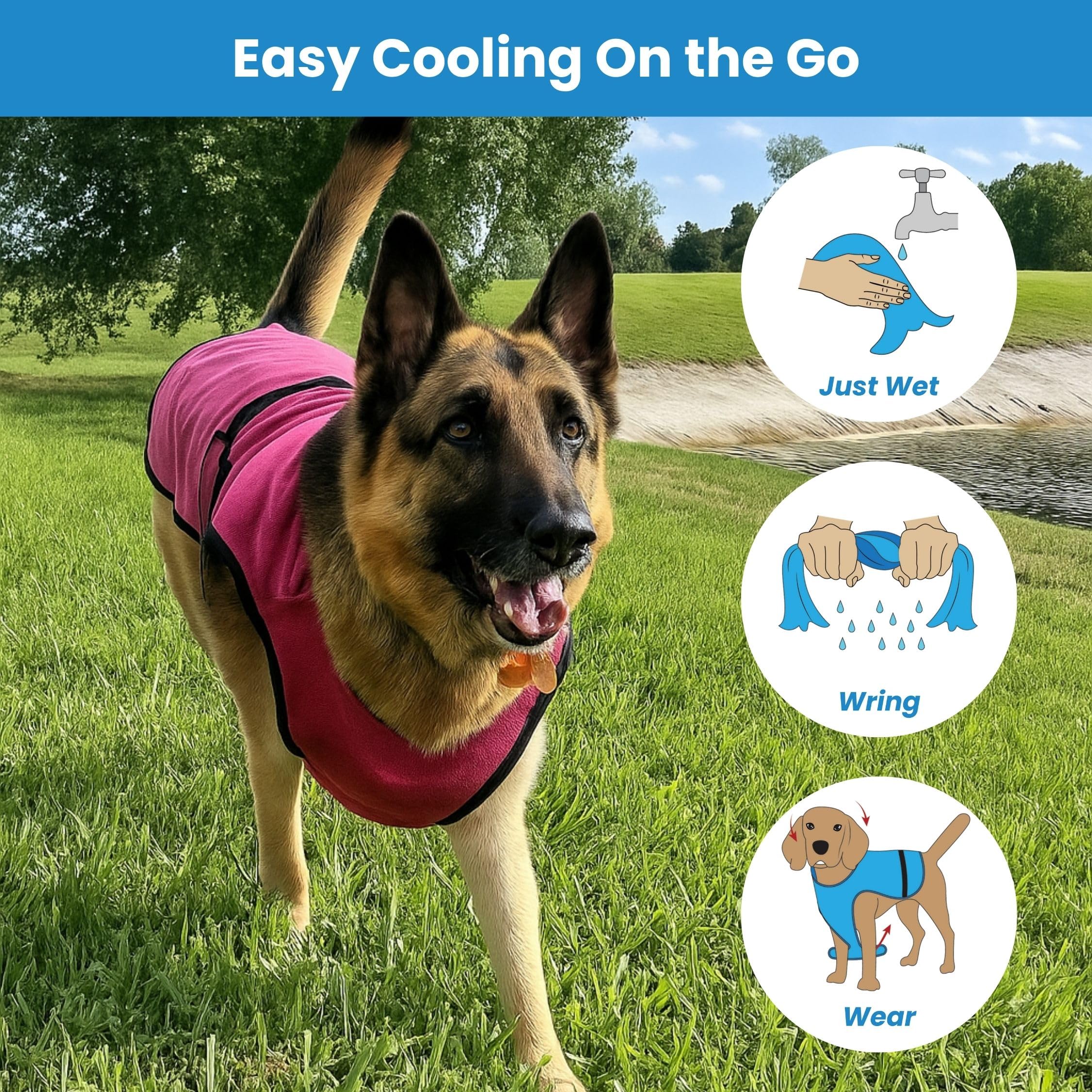
Activate the vest away from your dog first. For evaporative cooling vests, soak in cold water for 5 minutes (or up to an hour for full saturation), then wring it out until it’s damp but not dripping. For phase-change models, freeze the cooling packs 20–30 minutes ahead, then slot them into their pockets. Your dog doesn’t need to watch any of this. A cold, ready vest means no fumbling once they’re involved.
The 8-Step Fitting Protocol
Pick a moment when your dog is relaxed — after a meal, after a rest, not mid-pant. Then move through this sequence with a steady, unhurried pace:
-
Confirm the fit — measure chest girth with your dog standing. Wrap the tape around the widest point behind the front legs. One finger should slide under the tape with ease.
-
Present the vest without fanfare — let your dog sniff it. Drop a treat nearby. No drama, no ceremony.
-
Start from the underbelly — wrap the vest upward around the body. Skip fasteners that press against the belly or neck. That contact point is where most dogs first resist.
-
Guide front legs through — use a treat lure instead of lifting the legs by hand. Studies on stress-reduction show an 80%+ success rate tied to this one distinction: guiding vs. forcing.
-
Close the zipper or set the compression level — most vests offer three compression levels. Start at the loosest. Adjust upward until the fit is snug but not tight.
-
Stretch chest straps forward — wrap them around the neck area and snap together.
-
Fasten back Velcro to the bottom strap — adjust belly and neck straps last, once everything else sits in place.
-
Smooth the fabric across the torso — pay close attention to the chest area. Full, even contact activates both the cooling effect and the gentle pressure response. Gaps cancel out both benefits.
Watch for Stop Signals
A vest going on well looks like this: soft eyes, loose body, your dog willing to stand still for a treat. You see increased panting, active struggling, or avoidance behavior? Pause. Loosen the straps one level. Let your dog shake it off for a moment, then try again. Forcing through resistance raises cortisol levels and makes the next fitting harder.
Once It’s On
Cooling effect starts within 1–2 minutes of wear. For outdoor use, keep sessions to 30 minutes at a time. Re-wet the vest once it starts feeling dry — that could mean several times throughout the day, depending on heat and humidity. Always give your dog access to shade and fresh water alongside vest use. The vest manages the thermal load; the environment covers the rest.
Take the vest off at regular intervals to prevent skin irritation. Build a consistent wearing routine across several sessions. Dogs that wear the vest on a regular basis — not just during heat emergencies — show steadier heart rate reductions and accept the vest faster each time.
How to Measure Whether the Cooling Vest Is Reducing Your Dog’s Anxiety
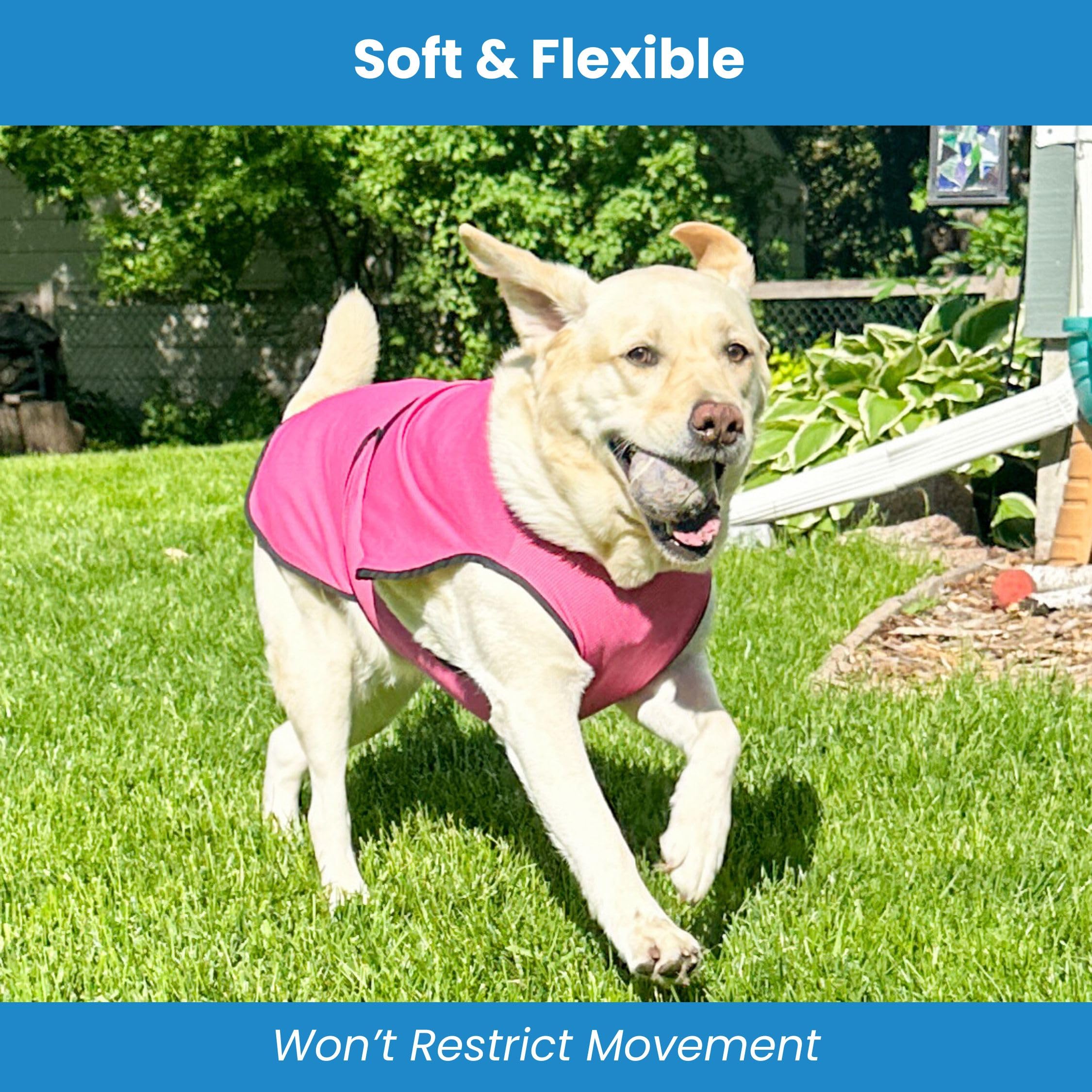
Three days of quiet observation before the vest goes on will tell you everything. That’s your baseline — skip it, and you’re guessing.
For three days before using the vest, track three numbers each day:
-
Panting frequency — breaths per minute during a resting period
-
Restless duration — how many minutes per hour your dog can’t settle
-
Avoidance or aggressive behaviors — count each episode
Average those numbers across the three days. That’s your benchmark. Now you have something real to measure against.
What “Working” Looks Like
After one to two weeks of consistent vest use, look for these specific shifts:
-
Panting frequency drops by half — from 60 breaths per minute down to 30 is a meaningful, measurable win
-
Calm time increases by more than 50% — say your dog could settle for only 20 minutes per hour before. You’re aiming for 32 minutes or more
-
Aggressive or avoidance behaviors reach zero — not reduced. Gone.
The physiological data backs this up with the same precision. Cooling vests bring core temperature down by 0.43–0.77°C faster than no intervention. That difference is significant (p=0.008–0.012). And that temperature drop is what drives the behavioral shift you’re seeing.
Four separate studies found that owner-assessed improvement crossed the 70% threshold once these benchmarks were met. Subjective relief and objective numbers — both pointing the same direction.
The Vest Isn’t Working — Now What?
Two weeks pass. Calm time hasn’t improved by 50%. Panting frequency stays the same. Stop and reassess. There are two likely causes:
-
Fit issue — a loose vest delivers zero measurable benefit. Re-check the fit. Then give your dog one to two days of gentle re-habituation before drawing any conclusions.
-
Non-thermal cause — separation anxiety, pain, or a noise phobia won’t respond to cooling therapy. Talk to your vet next. A different vest won’t solve this.
The vest is a precision tool for heat-triggered anxiety. Right dog, right time, right fit — the numbers show up.
Safety Guidelines and Where Cooling Vests Fall Short
Cooling vests are remarkable tools — but they have a hard ceiling. Knowing where that ceiling sits is the difference between smart pet care and a false sense of security.
The hard limit is 40.5°C (104.9°F). Your dog’s core temperature crosses that threshold, and a cooling vest can no longer remove heat fast enough. The vest becomes background noise at that point. You need a different protocol right away.
Drop the Vest and Act
Your dog hits emergency territory — move through these steps without hesitation:
-
Apply ice packs to the neck, groin, and armpits — these are your dog’s fastest heat conduction points
-
Switch to evaporative cooling — wet towels plus a fan pull heat away faster than any vest material
-
Get to a veterinarian — this is non-negotiable. Do not wait to see if the vest helps.
Where Vests Can’t Keep Up
Cooling vests have real capacity limits, even below emergency thresholds. Research shows vests cut sweat-equivalent heat loss by 20–49% under moderate conditions. Push activity higher — extended running, rough play in direct sun — and that benefit gets wiped out fast.
Two rules worth keeping:
-
Replace gel packs every hour. They stop working once they reach skin temperature. A warm gel pack inside a vest is dead weight.
-
Cap outdoor vest sessions at 30 minutes on days above 32°C. Beyond that, pair the vest with shade breaks and fresh water. The vest alone won’t cut it.
What a Cooling Vest Cannot Fix
Heat-triggered anxiety responds well to soft harness cooling dog solutions. Separation anxiety, noise phobias, and pain-based reactivity do not. Two weeks of consistent vest use with no change in your dog’s behavior — the anxiety is not thermal in origin. That’s a conversation for your veterinarian, not a reason to buy a different vest.
A soft-strap cooling vest is one of the most effective heat stress dog calming solutions you can get without a prescription — as long as you use it within its limits. Push past those limits, and you create a false ceiling of safety. Know the difference. You’ll stay one step ahead of the heat.
Conclusion
Your dog can’t tell you they’re overwhelmed — but their body already is. Summer heat pushes their internal temperature past a safe range. Then it starts: the pacing, the whimpering, the restless eyes scanning for relief. Now you know why it happens. You also know what to do about it.
A well-fitted soft-strap cooling vest isn’t a luxury item. It breaks the anxiety loop that heat creates. Cool the body down, and the nervous system calms with it. The two are tightly connected.
Start small. Put the vest on your dog during a quiet morning. Watch how they move and settle. Track the changes over three to five sessions. The behavioral shifts will show you what’s working.
Looking for a cooling vest built for sensitive, anxious dogs? Check out the soft-harness cooling dog collection at coolheatech.com. Your pet deserves to feel safe and calm — even on the hottest days.