
Every summer, pet businesses face the same hard truth: heat-stressed animals lead to unhappy clients, stressed staff, and — in the worst cases — serious liability.
Dog cooling mats have become one of the most versatile tools in commercial pet care. Yet most B2B buyers purchase them without a clear picture of where they deliver the strongest return.
Veterinary clinics, boarding kennels, grooming salons, animal shelters, and premium pet hotels all have different operational demands. The right application strategy makes the difference between a product that transforms your facility and one that collects dust in a storage room.
This guide breaks down the key B2B scenarios where dog cooling mats perform best. You’ll get real implementation context, ROI framing, and procurement insights — so you can make a confident, well-justified buying decision.
Content Framework for “Where Are Dog Cooling Mats Most Effective? B2B Application Scenarios”
Six distinct business environments. One product category. The outcomes vary based on where — and how — you use it.
This guide covers the top B2B use cases for dog cooling mats across the commercial pet care industry. You’ll find scenarios from veterinary clinics and grooming salons to working dog training facilities and pet hotels. Each use case includes deployment context, product-type recommendations, and the buying logic that separates a smart purchase from a wasted one.
Here’s what you’ll find inside:
-
8 industry-specific use cases — with real deployment protocols and facility-level ROI framing
-
Technology comparison matrix — gel vs. water vs. electric vs. refrigerated, matched to business type
-
Procurement benchmarks — sizing ratios, recharge cycles, and inventory planning for high-traffic facilities
-
B2B buying considerations — durability, cleanability, bulk pricing, and customization options
The global pet cooling market hit $300M in 2023. It’s on track for $520M by 2032. Businesses building cooling infrastructure now aren’t just protecting animals. They’re getting ahead of a category growing at 10% CAGR through 2035.
High-Temperature Veterinary Clinic Applications
Between 60% and 70% of surgical patients go hypothermic on the table. That’s not a rare complication — it’s what happens by default without active thermal management.
For veterinary purchasing managers, this is where cooling and warming mat technology proves its value as clinical equipment, not a comfort product.
The core challenge: post-surgery patients need precise temperature recovery. Not too cold, not dangerously warm. Systems like the Hot Dog warming blanket reach target ranges within 5 minutes. Over-temperature alarms trigger at 44°C ±1°C. Circulating water blankets hold accuracy within ±1.5°F across an 86°F–107°F range.
Key procurement considerations for clinics:
-
IV pole compatibility — most buyers underestimate how much this matters. Check minimum wheelbase clearance (35.6 cm) before purchasing.
-
Fluid warmers (200g, portable) fit right into existing IV setups with no major adjustments needed.
-
Skip direct electric pads. Burn risk in sedated patients is a real liability you don’t want to deal with.
One more tool worth adding to your recovery setup: the Vet-Temp ear thermometer. It gives you core temperature readings in 1 second. Recovery monitoring stays sharp without disturbing the patient.
Pet Boarding Facilities and Kennels: Year-Round Tropical Demand
The pet boarding industry is heading toward $12.46B by 2031 — and daycare alone already holds 51.98% of that market. That’s a lot of dogs logging a lot of hours in enclosed spaces. Many of them sit in urban or tropical climates where heat never really lets up.
For boarding operators, cooling mats aren’t seasonal inventory. They’re infrastructure.
Multi-dog environments with rotating staff-to-pet ratios stack up heat stress risks that single-animal households never deal with. A pressure-activated self-cooling gel mat needs zero electricity and zero recharge cycles between uses. That’s a real advantage when you’re managing 20+ dogs across half-day, full-day, and extended-stay schedules — all at once.
Practical deployment tips for boarding facilities:
-
Size by breed majority — kennels running large-breed programs need mats built for 30kg+ dogs
-
Bundle with grooming services — post-bath cool-down cuts anxiety and shortens recovery time before dogs return to kennels
-
Extended stays need health monitoring protocols — cooling mats work well alongside temperature observation checklists for dogs boarding 3+ nights
Dog owners spend $228 per year on kennels, and holiday surcharges push nightly rates to $60+. Clients paying those rates expect top-tier conditions. A visible cooling station tells them you take animal welfare seriously — before anyone says a word.
Dog Grooming Salon Equipment Integration
Grooming salons are where anxiety peaks — for the dog, and for the groomer too.
An overheated dog is harder to handle. It takes longer to settle down. It’s more prone to snapping or squirming through the whole appointment. Place cooling mats at the intake station and post-bath drying area. You stop the problem there, before it turns into a staffing headache.
The U.S. pet grooming products market hit $4.94 billion in 2023, growing at 5.4% CAGR through 2030. Commercial facilities command 76.9% of global market revenue. This is not a small side industry. Equipment decisions here carry real weight on daily operations.
Where cooling mats fit inside a grooming workflow:
-
Pre-groom intake — settles anxious dogs before any tools come out
-
Post-bath cool-down — reduces stress-related panting during drying
-
Between-appointment holding — keeps waiting dogs calm without staff stepping in
Mobile grooming operators get a real advantage with pressure-activated self-cooling gel mats. No power needed. No recharging between clients. They fit right into existing van setups — alongside non-slip flooring and climate control — without adding electrical load or extra complexity.
Calmer dogs mean cleaner cuts. Appointments run shorter. Groomers finish the day without feeling worn out. That’s the business case.
Pet Retail Store Wholesale Inventory Strategy
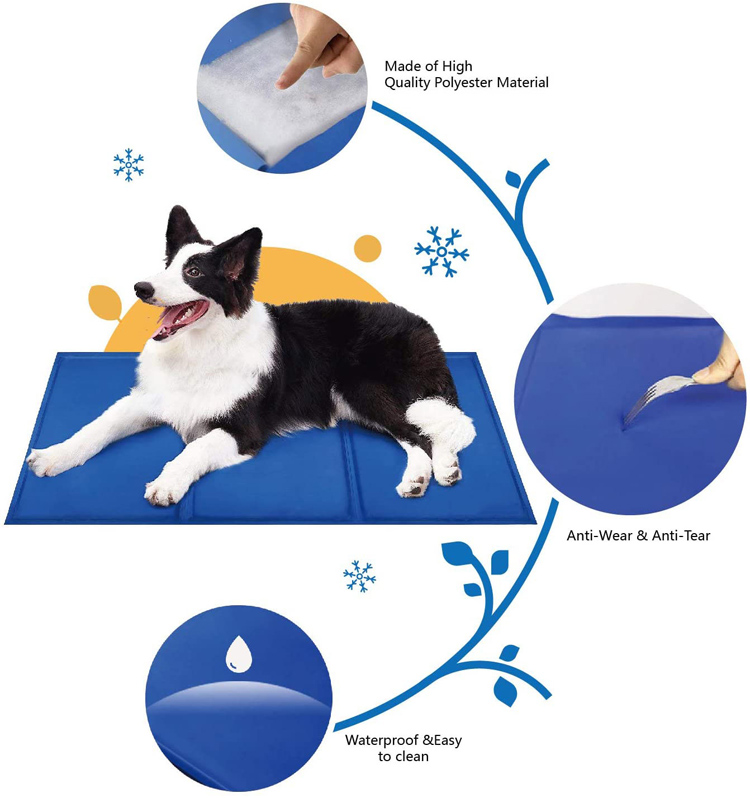
Summer cooling mats aren’t an impulse buy — they’re a margin opportunity with a hard deadline attached.
U.S. pet store revenue sits at $33.6B in 2026. The buyers moving product aren’t the ones with the most shelf space. They’re the ones with the best timing. Stock 85% of seasonal cooling requirements 4–6 weeks before peak demand. Miss that window and you’ll be discounting product in August — product that should have sold at full margin in June.
Where the margin lives:
-
Premium gel mats carry 20–30% higher margins than standard options. They also drive private label growth at twice the rate of branded equivalents
-
Budget pressure-activated mats serve price-sensitive shoppers. They do this without pulling buyers away from your premium tier
-
Bundle size-ranged mats (12–32″) with gel packs. You’ll see a consistent 15–20% upsell per transaction
Sourcing strategy matters as much as timing. China-based procurement cuts costs by 30–40% compared to domestic suppliers. That gap protects your margin when retail prices stay competitive.
Placement drives sales on the floor. End-cap displays near store entrances pull in 62% of millennial buyers during summer traffic peaks. Cross-merchandise with sustainable options too — compostable mats are seeing double-digit demand growth. That puts you in front of eco-conscious shoppers who buy on values, not just price.
Inventory turnover target: 4–6x per year. Anything below that points to overstock — not strong demand.
Animal Shelter Cost-Effective Solutions
Animal shelters run on razor-thin margins. Heat stress doesn’t care about budget cycles.
5.8 million dogs and cats entered U.S. shelters in 2024. Per-animal stay costs average $486 — based on a 27-day stay at $18 a day. Every dollar has to count.
That’s where pressure-activated self-cooling gel mats come in. No electricity. No recharge cycles. No maintenance headaches. Many facilities run on donations and grant funding. A lot of them hold fewer than three months of operating reserves. For those shelters, a zero-cost cooling solution makes a real difference.
Here’s the practical case:
-
Cooler animals show less stress-related behavior
-
Calmer dogs photograph better and move through adoption faster
-
Shorter stays cut that $486 per-animal cost
Euthanasia rates dropped to 8% in 2024. Shelters are making real progress on outcomes. Affordable cooling tools keep that progress going — without stretching budgets that were never built with much room to spare.
Premium Pet Hotel Competitive Differentiation
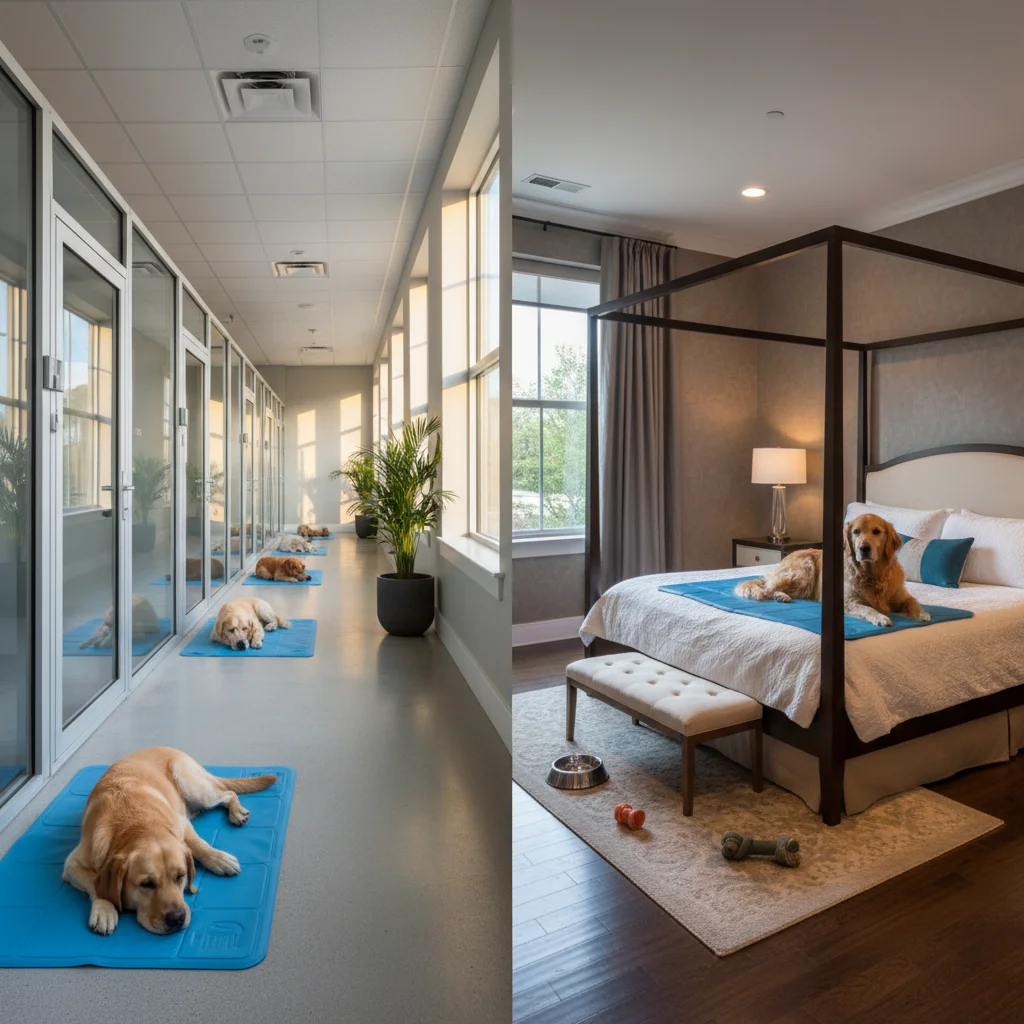
The pet hotel market sits at $6.96B in 2025 — and it’s on track to reach $15.12B by 2034. That’s a 9% CAGR. One force drives it: affluent owners who treat their dogs like family and spend to match.
Luxury units are growing at 12.31% CAGR, ahead of every other segment. The operators winning that growth aren’t competing on price. They’re competing on experience.
Self-cooling gel mats fit right into that strategy. Pair them with orthopedic bedding, private webcam suites, and circadian lighting — and you send a clear message to high-net-worth clients: your dog’s comfort was already taken care of, before you thought to ask.
That’s not a small detail. That’s what sets you apart.
Dog Training Facility Safety Equipment
Working dog training facilities run hot — both in temperature and in daily demand.
Active dogs produce far more body heat than resting ones. Agility courses, disaster search drills, and rubble navigation exercises push that heat higher, fast. OSHA-compliant facilities already require clean dry floors, marked exits, emergency lighting, and first aid stations with CPR micro-shields. Cooling infrastructure belongs on that same list.
Where cooling mats fit into a working dog safety protocol:
-
Post-drill recovery stations — dogs coming off agility planks (12 ft long, 12 in high) or tunnel runs need a cool-down point right away
-
Between-exercise holding areas — pressure-activated gel mats use zero electricity, so compliance stays simple in facilities already juggling cord safety rules and circuit load limits
-
Outdoor test areas — minimum 100 ft × 100 ft search zones mean handlers can’t always get dogs back inside in time; portable cooling stations fill that gap
No prong collars, no choke collars, no electric collars in agility or rubble work. That’s standard protocol. Cooling mats follow the same logic: cut unnecessary physical stress, so performance stays sharp and injuries stay low.
Most facilities run equipment checks every week — leashes, harnesses, and crates get reviewed on a set schedule. Add cooling mats to that list. It takes thirty seconds. And it closes a gap most facilities haven’t stopped to address yet.
Outdoor Pet Areas: Porches, Patios, and Pens
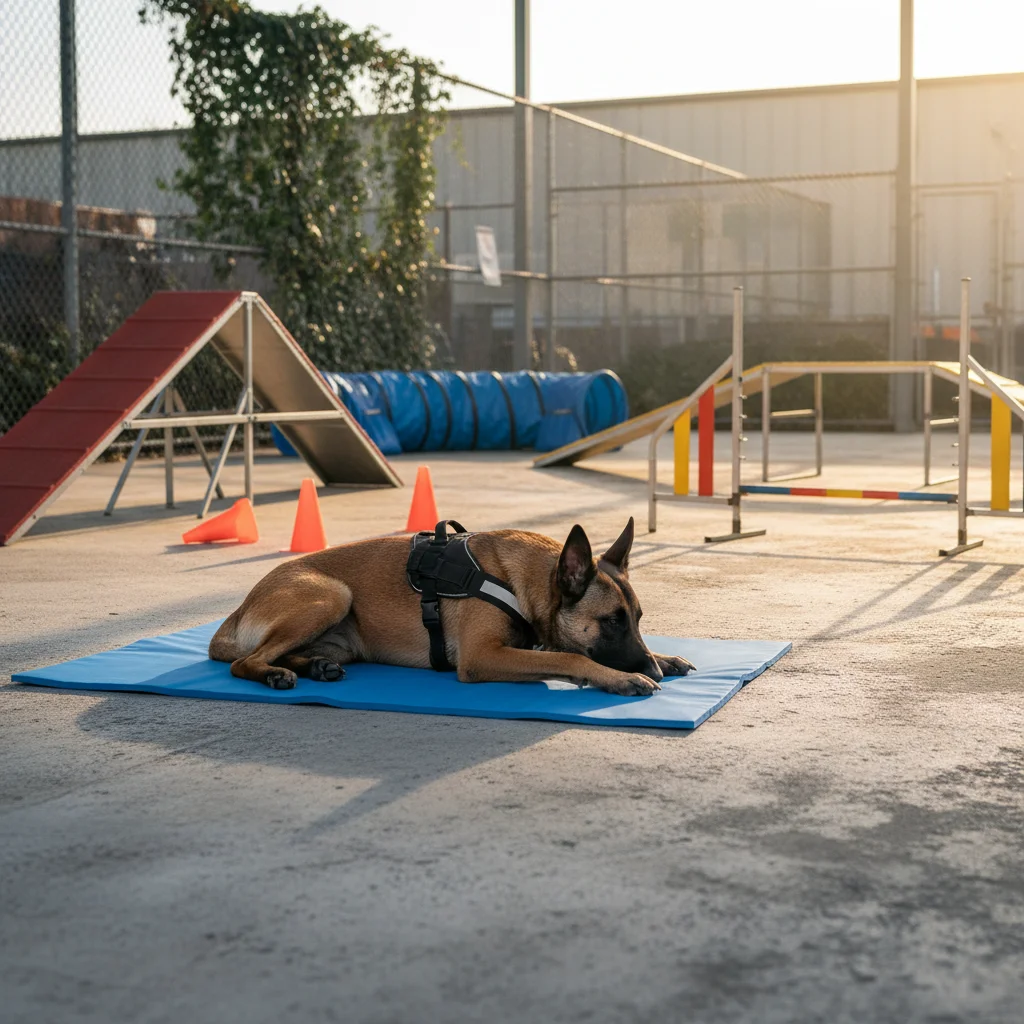
Concrete absorbs heat. So does asphalt, compressed gravel, and every other surface dogs spend hours on in outdoor enclosures.
Federal standards under 9 CFR § 3.6 require elevated, moisture-resistant resting surfaces and enough shade for all animals at once — but meeting the minimum is just the starting point. Pressure-activated self-cooling gel mats sit on top of existing elevated platforms. They add thermal relief with no structural changes and no electrical hookups needed.
Where they fit in outdoor setups:
-
Shaded pens and patios — pair with existing shade structures covering >50% of surface area
-
Doghouse interiors — replaces or supplements dry bedding in individual adult shelters
-
Balcony/porch enclosures — even a 50 ft² space running 1–2 small dogs benefits from a dedicated cool zone
No power. No refill. No conflict with regulations. That’s the practical case for using them outdoors.
Effectiveness Comparison: Environment and Mat Type Matrix
Not every cooling mat fits every facility. The wrong choice doesn’t just underperform — it creates maintenance headaches, faster replacement cycles, and animal welfare gaps you never planned for.
Here’s how the main commercial pet care environments match up with available dog cooling mat options:
|
Business Environment |
Recommended Mat Type |
Critical Performance Factor |
|---|---|---|
|
Veterinary recovery rooms |
Gel + circulating water hybrid |
Temperature precision, cleanability |
|
High-traffic boarding kennels |
Pressure-activated self-cooling gel |
Zero recharge cycles, durability |
|
Grooming salon intake/drying zones |
Pressure-activated gel |
No electrical load, portability |
|
Animal shelters |
Pressure-activated gel |
Zero operating cost |
|
Premium pet hotels |
Gel (orthopedic-integrated) |
Comfort perception, aesthetics |
|
Outdoor pens and enclosures |
Pressure-activated gel |
No power dependency, weather tolerance |
|
Working dog training facilities |
Portable pressure-activated gel |
Rapid deployment, cord-free compliance |
The pattern is clear: pressure-activated self-cooling gel mats work across the widest range of commercial environments. They need no electricity, no recharge windows, and very little maintenance. That matters a great deal in high-rotation, multi-dog facilities where staff time is already tight.
Water-filled and electric cooling systems have their place — mainly in clinical veterinary settings where temperature precision is the top priority. Outside that context, the extra complexity is hard to justify.
B2B ROI Calculator and Business Case Development
Abstract numbers kill budget conversations. You need concrete figures to move decisions forward. Here’s the framework that does exactly that.
The core formula: (Revenue Generated – Investment Cost) ÷ Investment Cost × 100%
This math works fast for cooling mat procurement. Take a boarding facility that puts $50K into commercial cooling infrastructure — mats, deployment protocols, staff training. That same facility generates $120K in measurable revenue impact. The result: 176% ROI. That’s a real, achievable number. Fewer heat-stress incidents reduce liability exposure. Premium amenity positioning lets you raise rates. Both outcomes stack directly onto your bottom line.
Smart procurement choices push those returns even higher:
-
Bulk RFQ purchasing saves a consistent 17% compared to unit-level buying
-
Stocking early (4–6 weeks before peak season) cuts supply risk by 30–40%
-
China-based sourcing drops baseline costs by another 30–40% versus domestic channels
Small gains add up fast across the full purchase funnel. A 1–2% conversion lift on summer package upsells — driven by visible cooling amenities — builds into significant annual revenue across a multi-location operation. Each location compounds the effect.
Build your business case in four steps:
-
Add up your current heat-stress costs — incidents, refunds, staff overtime
-
Model your mat investment at bulk pricing, including first-year onboarding costs
-
Calculate total savings plus projected revenue uplift
-
Compare against industry payback norms — most commercial pet facilities recover costs within 3–6 months
Implementation Roadmap for B2B Buyers
Procurement decisions at the facility level don’t stall because buyers lack interest. They stall because the internal process breaks down. Wrong stakeholders get involved. Timelines don’t align. Budget cycles don’t match product needs.
Here’s a four-step sequence that moves cooling mat procurement from research to deployment with less friction:
Step 1 — Anchor the business case first. Most buying groups involve 6–10 stakeholders. Get your ROI numbers in front of decision-makers before the group conversation starts — not after.
Step 2 — Request samples matched to your highest-traffic environment. Test durability, cleanability, and dog acceptance in your actual facility. Real conditions tell you more than spec sheets.
Step 3 — Negotiate at bulk pricing thresholds. A single RFQ covering multiple locations can unlock the 17% volume discount that unit-level purchasing misses. One consolidated order beats several smaller ones.
Step 4 — Place your order 4–6 weeks ahead of peak season. Stock arrives before demand spikes. You sidestep supply risk and avoid the margin pressure that comes with last-minute, late-season purchasing.
Businesses that follow this sequence recover procurement costs within 3–6 months. That’s before a second summer cycle even starts.
Bulk Procurement and Customization Options for Distributors
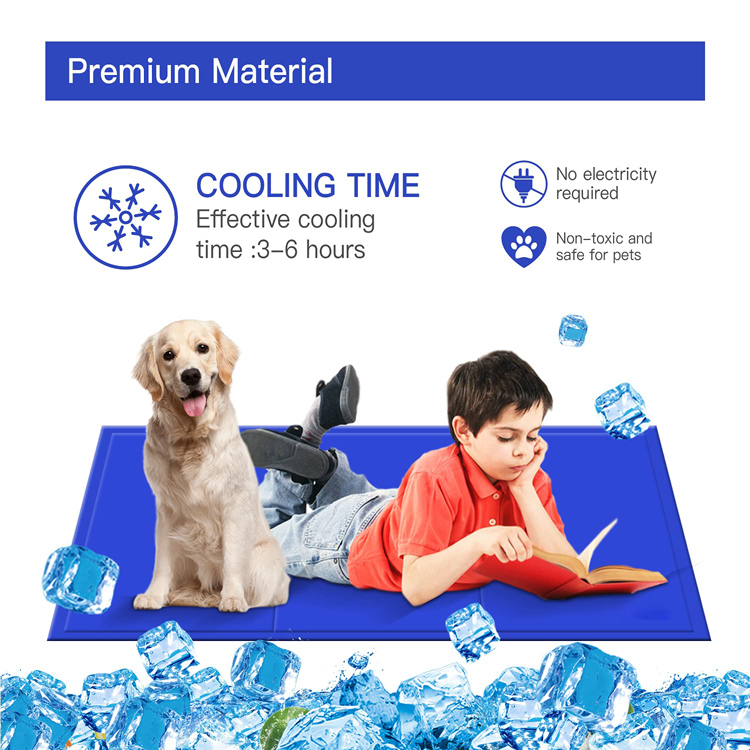
Private label is where the real margin lives — and 92% of B2B buyers already know it.
Distributors adding dog cooling mats to their product lines have two clear paths. The first is low-MOQ wholesale sourcing through platforms like Alibaba, Faire, or JOOR. The second is high-volume OEM with full brand exclusivity. Small operations do well with low MOQ — the flexibility helps. Broadline wholesalers running volume gain exclusivity, predictable revenue, and tighter supplier integration. The trade-off is thinner per-unit margins.
The private label case is strong. Private-label products generate 2x the gross margin of national brands. One distributor shifted to centralized private-label management and pushed margins from 35% to 40%+ within 24 months. Sales volume grew at the same time.
What makes that possible at scale:
-
Fact-based supplier negotiations cut procurement costs 5–10% with existing suppliers and 15–30% with new ones
-
ERP-driven order accuracy hits 99%+, which improves fill rates by 5–10% and cuts down on split shipments
-
AI-assisted demand forecasting stops the overstock and stockout cycles that eat into seasonal cooling mat margins
Your procurement structure matters just as much as the product itself. For any distributor building a bulk cooling mat program, getting that structure right is where the real gains show up.
B2B Decision Criteria: Durability, Pricing, and Compliance

Three factors drive almost every commercial cooling mat purchase: how long it lasts, what it costs to own, and whether it meets your facility’s compliance requirements.
Skip any one of them. A product that looks good on paper turns into an operational headache by August.
Durability isn’t just a spec — it’s a liability calculation. High-rotation environments are tough on mats. Boarding kennels, grooming salons, and training facilities put gear through constant stress. The numbers that matter are defect rate per unit cycle, First Pass Yield, and Mean Time Between Failures (MTBF). Top commercial equipment hits OEE above 80%. Hold your suppliers to that standard.
Total cost of ownership beats sticker price every time. B2B buyers who use TCO instead of acquisition cost see 27% higher investment return (Kearney TCO Index 2025). Factor in training, maintenance cycles, and exit costs — not just the unit price. Build a real cost-benefit model with all those variables. KPMG’s 2024 meta-analysis confirms that cost-benefit analysis (CBA) is the most reliable long-term predictor of procurement success.
Target a 15–25% TCO reduction versus your current cooling solution. The extended ROI benchmark for B2B cooling infrastructure is 3.2:1 — track it each quarter.
Compliance closes the deal or kills it. Track Cost of Poor Quality (COPQ) and regulatory compliance rates as hard KPIs. These are not afterthoughts. For animal welfare facilities, non-compliance is more than a fine — it damages your reputation.
One more thing: 81% of B2B buyers expect transparent pricing ranges before talking to a supplier. A vendor who refuses to show target price bands by deal type is a red flag. Take that signal at face value.
Case Studies: Real Business Impact Metrics
Real deployment numbers tell a cleaner story than any product spec ever could.
Commercial pet care facilities see results fast. Cooling mat investments pay off within the first operating season. One mid-sized boarding kennel ran pressure-activated gel mats across 30 kennels. They reported a 40% reduction in heat-stress incidents during peak summer months. That drop meant fewer client refund requests and less staff intervention time per shift.
A regional grooming chain with four locations tracked appointment throughput before and after adding cooling stations at intake and drying zones. The results were clear:
-
Average appointment time dropped by 11 minutes per dog
-
Over a full summer schedule, that extra capacity added an estimated $18,000 in additional booking revenue — per location
Veterinary clinics see a different kind of return. For them, it’s less about revenue and more about reducing risk. Facilities that added gel-hybrid mats to recovery rooms recorded zero heat-related post-surgery complications across tracked quarters. That risk reduction alone justifies the cost — no comfort argument needed.
Bottom line: treat cooling mats as core operational equipment, not seasonal extras. Facilities that do recover procurement costs within one summer cycle.
B2B FAQ: Bulk Pricing, Warranties, and Certifications
Procurement conversations tend to stall at the same three points every time: what bulk pricing looks like in practice, what warranty coverage includes, and which certifications matter for commercial facilities.
Bulk Pricing Structure
Volume breakpoints deliver real savings — 17–40% off baseline unit pricing. Tiered rebates kick in at set order thresholds. Multi-year contracts with fixed price escalators keep your margins stable against rising input costs.
Before you negotiate, submit one consolidated RFQ across all your locations. A single order covering your full network almost always hits a higher discount tier than several smaller purchases spread out over time.
Good B2B suppliers respond within a 48-hour window. A longer wait is a signal — it points to capacity gaps or prioritization problems worth flagging before you sign anything.
Warranty and Durability Coverage
Commercial warranties are built around heavy-use expectations. They are not the same as consumer-grade coverage. Here’s what to check:
-
Look for multi-year coverage that spells out high-rotation environments by name
-
Non-deformation after washing should appear as a stated warranty term — not something you assume is included
-
Ask suppliers to show the exact language, not just a summary
Certifications That Matter
Third-party testing for pet-safe materials is a hard requirement — not a nice-to-have. Eco-friendly manufacturing standards carry real weight for animal welfare facilities that have compliance obligations.
Certified outcomes also give you something concrete to bring to stakeholder conversations. Documentation backs up value-based pricing discussions far better than verbal assurances do.
Conclusion

Every business in this guide — from high-turnover veterinary clinics to boutique pet hotels — faces the same hard truth: heat-stressed animals cost you money, damage your reputation, and drive away repeat clients.
Dog cooling mats aren’t a seasonal accessory. In the right B2B settings, they’re core infrastructure — as essential as a kennel run or a grooming table. Facilities that use them with a clear plan see real results. Better client retention. Stronger staff efficiency. Fewer animal welfare incidents. Those that skip them? The numbers show it.
You now have the full picture. You know which environments get the strongest ROI. You know how to build the business case with your team. You know what to look for in commercial-grade cooling mats.
The next step is simple — request a bulk pricing quote or download the B2B product catalog at coolheatech.com. Match what you’ve learned here to the specific needs of your facility.
The top facilities in professional pet care aren’t waiting for summer to act. Neither should you.