
How Do Phase Change Cooling Vests Work: The Science Behind ICE Bear’s Advanced Body Cooling Solutions
As global temperatures rise and industries from construction to logistics demand prolonged outdoor work, heat stress has emerged as a critical threat to worker safety and productivity. For over 16 years, ICE Bear—a Nanchang-based industrial manufacturer specializing in human and pet cooling solutions—has pioneered innovative thermal management technologies. At the heart of our mission lies the phase change cooling vest, a game-changing innovation designed to combat heat stress through cutting-edge cooling vest technology. In this guide, we’ll demystify how does phase change cooling work, explore its advantages over traditional methods, and explain why our Pcm Cooling Vest stands out as the best cooling vest for construction, outdoor work, and industrial applications.
What Are Phase Change Materials (PCMs) and How Do They Enable Cooling?
Phase change materials store and release heat energy. They do this by changing between solid and liquid states. Traditional insulation just slows down heat transfer. PCMs work differently—they absorb heat while keeping a steady temperature. This heat absorption makes them perfect for cooling gear.
The Science Behind PCM Thermal Storage
PCMs for cooling vests melt between 70–80°F (21–26°C). The material hits this temperature and starts pulling heat from your body. This absorbed heat changes the PCM from solid to liquid. The PCM stays at a stable temperature while it keeps absorbing your body heat.
The heat storage capacity follows this formula: Q = m · L + m · cp · ΔT. Here’s what this means for you: PCMs store 5–14 times more heat energy per unit volume than water or ice in the 18–30°C range. Quality PCM packs at just 10mm thickness give you 4 times more compact cooling power than water-based options.
How PCMs Create Targeted Body Cooling
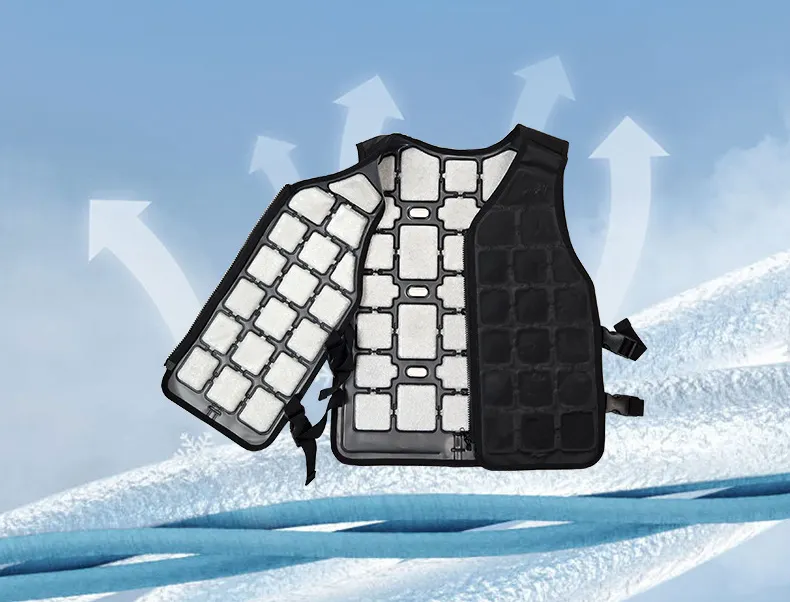
The cooling process has three phases:
Activation Phase: Freeze the PCM packs or put them in your refrigerator. This turns the material solid and loads up its cooling power.
Cooling Phase: Wear the vest against your body. The PCM pulls heat from your skin and core. It melts at its set temperature (58–64°F for most vests). It holds that cooling point for 2–4 hours. Ice works differently—it starts warming up right away from 32°F.
Recharge Phase: The PCM turns completely liquid. Take out the packs and cool them down below their melting point. They turn solid again overnight or in your fridge. Now they’re ready to use again.
Performance Specs That Matter
Good PCMs keep >99.5% enthalpy retention after 100 freeze-thaw cycles. They have thermal conductivity above 0.2 W/m·K. This pulls heat efficiently from your body. The density sits between 800–1,200 kg/m³. This spreads weight comfortably across the vest.
Volume expansion stays under 10% during the phase change. This stops the packs from breaking. Low supercooling (<2°C) means the material starts working at its rated temperature. You don’t need extreme cold to prep it.
The Complete Phase Change Cooling Cycle: From Activation to Heat Absorption
Phase change cooling runs on a continuous thermal cycle. Each stage pulls heat from your body. It keeps cooling temperatures stable. The process turns stored thermal energy into active cooling power through three phases.
Stage 1: Activation Through Freezer or Refrigeration
PCM packs need prep before use. Place them in a standard freezer at 0°F (-18°C) for 2-4 hours. This turns the phase change material solid. It loads up the thermal storage capacity. The material shifts from liquid to solid state. Your cooling potential is now locked in.
Refrigerator activation works too but takes longer. Set your fridge to 35-40°F (2-4°C). Leave packs overnight for 8-12 hours. This method suits sensitive PCMs that don’t need deep freezing. The activation temperature must drop below the PCM’s melting point—around 58-64°F (14-18°C) for most cooling vests.
Important activation rule: Never over-freeze PCM packs beyond recommended times. Extra freezing time doesn’t boost performance. It can damage the pack structure. Too much volume expansion causes this.
Stage 2: Active Heat Absorption During Wear
Insert activated packs into your vest’s pockets. Position them against major heat zones—upper back, chest, and sides. The PCM starts pulling your body heat right away through latent heat of fusion. This is the energy needed to change the material from solid to liquid. Temperature stays the same during this change.
Here’s what happens at the molecular level: Your body gives off heat at 98.6°F (37°C). This thermal energy moves to the PCM surface. The material begins melting at its designed transition point. During this melting phase, the PCM absorbs 5-14 times more heat energy per unit volume than ice or water-based cooling systems. This happens in the critical 64-86°F range.
The cooling plateau effect keeps your skin temperature stable. Most quality PCMs hold at 58-64°F (14-18°C) against your body for 2-4 hours of continuous wear. Ice-based systems can’t match this. They start at 32°F. They warm up fast. They create uncomfortable temperature swings.
Peak performance window: The first 90-120 minutes deliver maximum cooling capacity. PCM soaks up heat from physical work. No temperature spikes occur. Construction workers report stable core temperatures even during heavy lifting in 95°F conditions.
Stage 3: Complete Phase Transition and Heat Release
The PCM reaches full liquid state after pulling your body heat for several hours. At this point, the material has moved heat from your body into its structure. Cooling capacity drops off. You’ll notice the vest feels warmer. It provides less temperature relief.
Remove the packs when cooling fades. The liquid PCM now carries stored thermal energy. Place packs in your freezer or refrigerator to restart the cycle. The material releases absorbed heat to the cooling space. It turns solid again as temperature drops below its melting point.
Recharge timeframes:
– Freezer method: 2-4 hours at 0°F for full reset
– Refrigerator method: 8-12 hours at 35-40°F for gentle recharge
– Overnight preparation: Most reliable for regular use schedules
Quality PCM packs maintain >99.5% enthalpy retention after 100+ freeze-thaw cycles. The cooling capacity stays consistent across hundreds of uses. Cheap alternatives lose 10-15% efficiency after just 20 cycles. The phase change temperature selection affects long-term durability. It also affects cooling consistency.
Phase Change vs. Other Cooling Technologies: Performance Comparison
Three major cooling technologies fight for your heat management budget: phase change materials, evaporative systems, and ice-based packs. They work on different principles. Performance gaps become clear fast in 90°F+ heat during long shifts.
Cooling Duration: Where PCM Dominates
Phase change cooling vests give you 2-4 hours of stable cooling at 58-64°F against your skin. The heat absorption keeps temperature steady through the whole cooling cycle. No temperature drops or spikes.
Ice pack vests start strong at 32°F but warm up fast. Most ice systems cool for 45-90 minutes before becoming uncomfortable water weight. Construction crews say ice vests lose 60% cooling power in the first hour during active work in direct sunlight.
Evaporative cooling vests need airflow and low humidity to work. They perform well in dry climates with constant movement—outdoor runners or cyclists. Still work kills their performance. Humidity above 60% cuts cooling power by 70%. Warehouse workers in humid Florida get little benefit from this technology.
Temperature Stability and Heat Control Performance
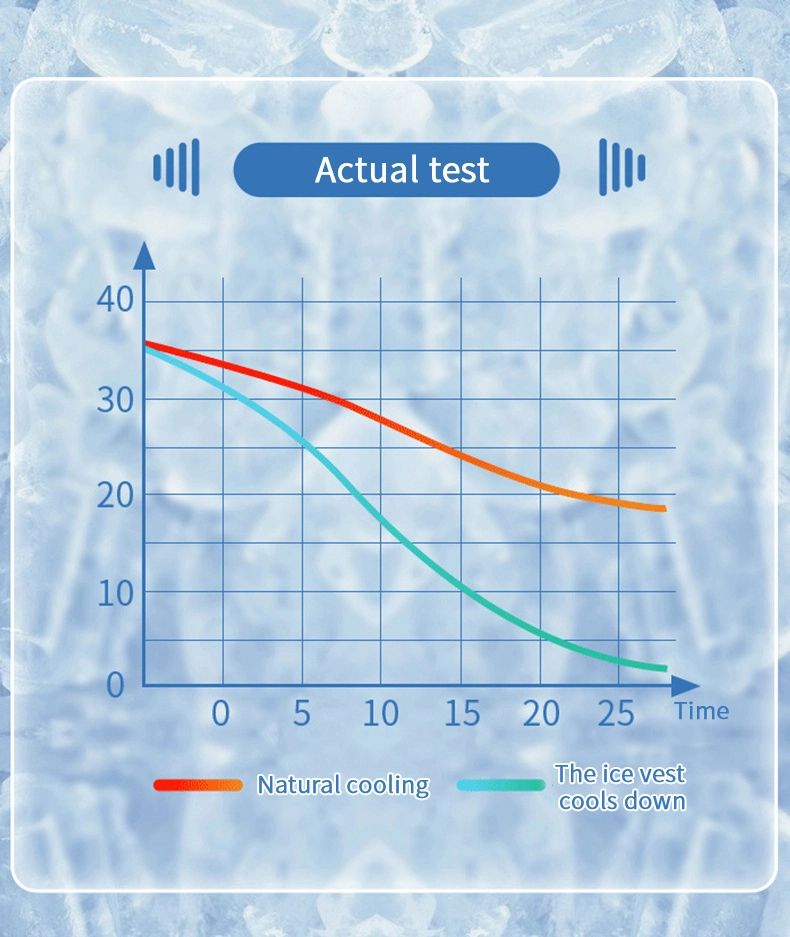
PCM technology wins on steady temperature control. Phase change absorbs your body heat while keeping the material at its melting point. Your skin stays in the comfortable 60-65°F zone for hours. This steady cooling stops the shock-and-fade cycle of ice packs.
Ice systems create uncomfortable temperature swings. The 32°F contact feels too cold against skin. Workers add fabric barriers that cut cooling power by 30%. Ice melts, wet fabric blocks heat flow. Cooling drops fast.
Evaporative systems can’t target core body areas. They cool your entire torso evenly—less efficient for heat stress prevention. PCM packs focus cooling on high-heat zones: upper back, chest, and neck. This focused method cuts core body temperature 2-3°F faster than evaporative methods in the critical first 30 minutes of heat exposure.
Recharge Time and Field Use
PCM pack activation needs 2-4 hours in a standard freezer. Refrigerator charging takes 8-12 hours overnight. Most work sites have freezer access in break rooms. Construction managers keep backup PCM packs for shift rotations. Workers swap used packs during lunch breaks.
Ice needs constant replacement. You can’t recharge melted ice on-site without special equipment. Evaporative vests need water refills every 1-2 hours plus active airflow. Neither matches the convenience of PCM systems for all-day outdoor work.
Cost-Per-Cooling-Hour Analysis
Starting prices vary: evaporative vests cost $30-50, ice pack vests run $40-80, and phase change cooling vests range from $80-200. The performance gap makes up for the price difference in serious heat stress conditions.
Pcm Cooling Vest recharge adds little operating cost—just electricity for freezer use. A quality PCM vest lasts 100+ freeze-thaw cycles with >99.5% performance kept. Your cost per cooling hour drops to $0.15-0.30 over two seasons. Ice pack systems need constant ice production or purchase. Evaporative vests wear out fabric after 50-75 wash cycles.
Industrial buyers picking cooling solutions for 20+ workers find PCM technology delivers 40% lower total cost over 12 months compared to ice replacement programs. The freezer activation cooling vest method works better for crew operations than managing ice coolers.
Key Technical Specs That Control Cooling Power
PCM vest performance relies on measurable heat properties. These numbers split industrial-grade cooling from consumer products that fail in real heat stress.
Phase Change Temperature Range
The melting point sets your cooling comfort zone. Quality cooling vests use PCMs with shift temperatures between 58-64°F (14-18°C). This range keeps your skin cool without the ice-burn effect of frozen water systems.
Match the PCM temperature to your use: Construction workers in 95°F+ heat need 58-60°F PCMs for top heat absorption. Medical cooling for MS patients works better with 62-64°F materials. These provide gentler, longer relief. Lower shift temperatures pull more heat from your body. But they run out faster during heavy physical work.
Heat Storage Capacity (Latent Heat of Fusion)
Latent heat absorption sets how long your vest cools. Measured in joules per gram (J/g) or BTU per pound, this value shows total heat energy the PCM can absorb during phase shift.
Premium PCM materials deliver 150-250 J/g of cooling capacity. A vest with 1.5 kg (3.3 lbs) of high-grade PCM at 200 J/g absorbs 300 kilojoules of body heat. That’s enough to offset 2-3 hours of moderate physical work in direct sunlight. Cheaper options using water-gel substitutes manage 80-120 J/g. This cuts your cooling time by 40-50%.
Thermal Conductivity Rating
Thermal conductivity above 0.2 W/m·K ensures fast heat transfer from your skin to the PCM pack core. Low conductivity materials create a barrier that blocks heat absorption. Your skin stays hot. The PCM doesn’t activate properly.
Real impact: High thermal conductivity PCMs reach full cooling capacity within 5-10 minutes of wear. Poor conductivity materials take 20-30 minutes to stabilize. This wastes critical cooling time during peak heat exposure.
Cycle Stability and Energy Retention
Body heat control needs steady performance across hundreds of uses. Industrial-grade PCMs keep >99.5% energy retention after 100+ freeze-thaw cycles. Your cooling capacity on day 100 matches day 1 performance.
Budget PCM vests lose 10-15% power after just 20-30 cycles. The phase change temperature shifts upward. This reduces heat absorption. By month three, your “64°F” PCM now activates at 68-70°F. You lose cooling power during heat stress prevention work.
How to Activate and Use PCM Cooling Vests for Best Results
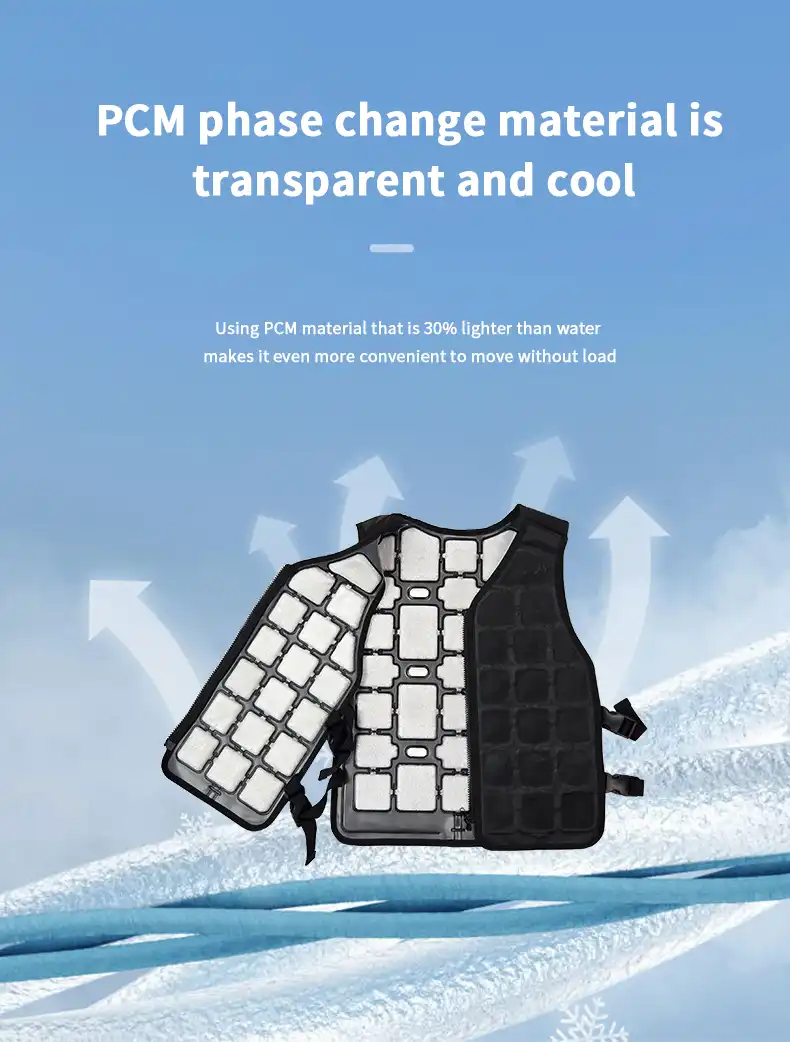
Get full cooling power from your PCM vest with correct pack activation and smart wearing. Skip these steps? You’ll cut your cooling time by 50% or more.
Fast-Track Activation: Pick Your Method
Ice water cooler delivers the fastest recharge at 5-20 minutes. Drop your PCM packs in ice water. They’ll turn solid fast. Construction crews use this method during lunch breaks for quick turnarounds.
Freezer activation takes 8-40 minutes based on pack thickness. Lay packs flat—don’t stack them. Stacking triples activation time. The flat position spreads cold across the PCM material better.
Refrigerator charging needs 12-60 minutes for full activation. This gentle method works overnight. Medical users prefer refrigerator prep for MS cooling each day.
Room temperature activation takes several hours but needs zero gear. PhaseCore PCM can reset at room temps below its phase change point. Place packs in air-conditioned spaces around 60°F. Wait 1-2 hours for complete hardening.
Step-by-Step Activation Process
-
Remove PCM packs from all vest pockets (most vests hold 4-8 packs)
-
Pick cooling method based on your time and what you have
-
Place packs flat in your chosen cold source—never fold or stack them
-
Wait for complete hardening—packs turn firm when ready
-
Insert recharged packs back into vest pockets right before use
Get Most Cooling During Wear
Wear against skin or thin fabric. PCM cooling needs direct contact. Thick clothing blocks heat transfer. Your cooling drops 40% with heavy overshirts.
Position packs smart. Put high-capacity packs on your upper back. This pulls heat from your core fastest. Lower-capacity packs work for chest and side areas.
Use two sets for all-day cooling. Wear one set while the second recharges. Swap packs every 2-3 hours. Industrial sites keep backup sets in break room freezers. Workers get continuous heat relief across 8-10 hour shifts.
Mix temperatures to boost performance. Try 70°F (21°C) PCM packs on your back for longer duration. Pair with 59°F (15°C) chest packs for intense cooling. The back packs last 4+ hours. Chest packs deliver stronger relief for 2-3 hours.
Weight advantage matters: Loaded PCM vests weigh around 4 lbs (1.8 kg). That’s 30-60% lighter than ice pack systems at the same cooling power. Less weight means less fatigue during physical work.
Maintenance, Lifespan, and Performance Limits of PCM Cooling Vests
PCM cooling vests need minimal upkeep. But you must follow specific handling rules to protect performance. Most problems happen from improper storage. Others occur from pushing parts past their design limits.
Cleaning and Storage Guidelines
For vests with fans or battery systems: Remove all electronics before washing. Take out PCM packs, fans, and battery units. Machine wash the vest fabric at ≤30°C (86°F) with mild detergent. Never dry clean PCM vests. Chemicals damage the pack seals.
Stubborn stains? Gently scrub them with a wet cloth. Skip the harsh chemicals and brushes. You can iron the fabric at 80-120°C (176-248°F) if needed. Dry the vest in a well-ventilated area. High-heat dryers will ruin it.
Long-term storage: Clean and dry the vest before storing. Lay it flat or hang it. Don’t fold it tight for months. This stops crease damage to internal pockets. Clean and dry all fans on their own. Store PCM packs at room temperature in their liquid state.
Critical Handling Limits
Never pull hard on fan-equipped vests. You’ll break the fan mounts and wiring. Don’t block or cover active fans during use. Never stick objects into fan vents. Don’t try to stop spinning fans by hand.
PCM packs expand a bit during freezing. This is normal. The design prevents bursting. Don’t stack heavy items on packs during activation. Keep battery packs and wiring dry at all times. Water ruins electrical parts for good.
Performance Duration in Real Conditions
PCM vests deliver 50 minutes of active cooling during moderate-to-high intensity work. That’s in 40°C heat at 12% relative humidity. Studies show the PCM finishes its solid-to-liquid change after three 16.5-minute work cycles. This data comes from explosive ordnance disposal suits.
Cooling time changes a lot based on four factors:
-
PCM mass in the vest: More material = longer cooling (1.12 kg vests standard)
-
Melting temperature choice: 21°C (70°F) PCMs last longer than 15°C (59°F) versions in moderate heat
-
Work intensity: Heavy labor drains PCM 40-60% faster than desk work
-
Ambient temperature: 95°F+ heat cuts cooling time versus 80°F conditions
Manufacturers claim 4-12 hours of cooling time. Real-world performance? 2-4 hours for most industrial uses. The vest keeps constant cooling at 59-65°F (15-18°C) against your skin. This lasts until PCM turns liquid.
Recharge Time Requirements
Ice water method: 20 minutes for full recharge. Fastest option for quick turnarounds.
Standard freezer: 60 minutes at typical home freezer temperatures.
Refrigerator: Several hours needed. Best for overnight prep.
Commercial refrigeration: 5°C (41°F) commercial fridges need 3+ hours minimum. Some guidelines say at least 30 minutes. But longer time ensures it solidifies all the way.
Temperature rule: PCM must cool ≥3°C below its melting point to reset. A 21°C (70°F) PCM needs cooling to ≤18°C (64°F). Lower temperatures speed up the recharge.
When to Replace PCM Packs During Work
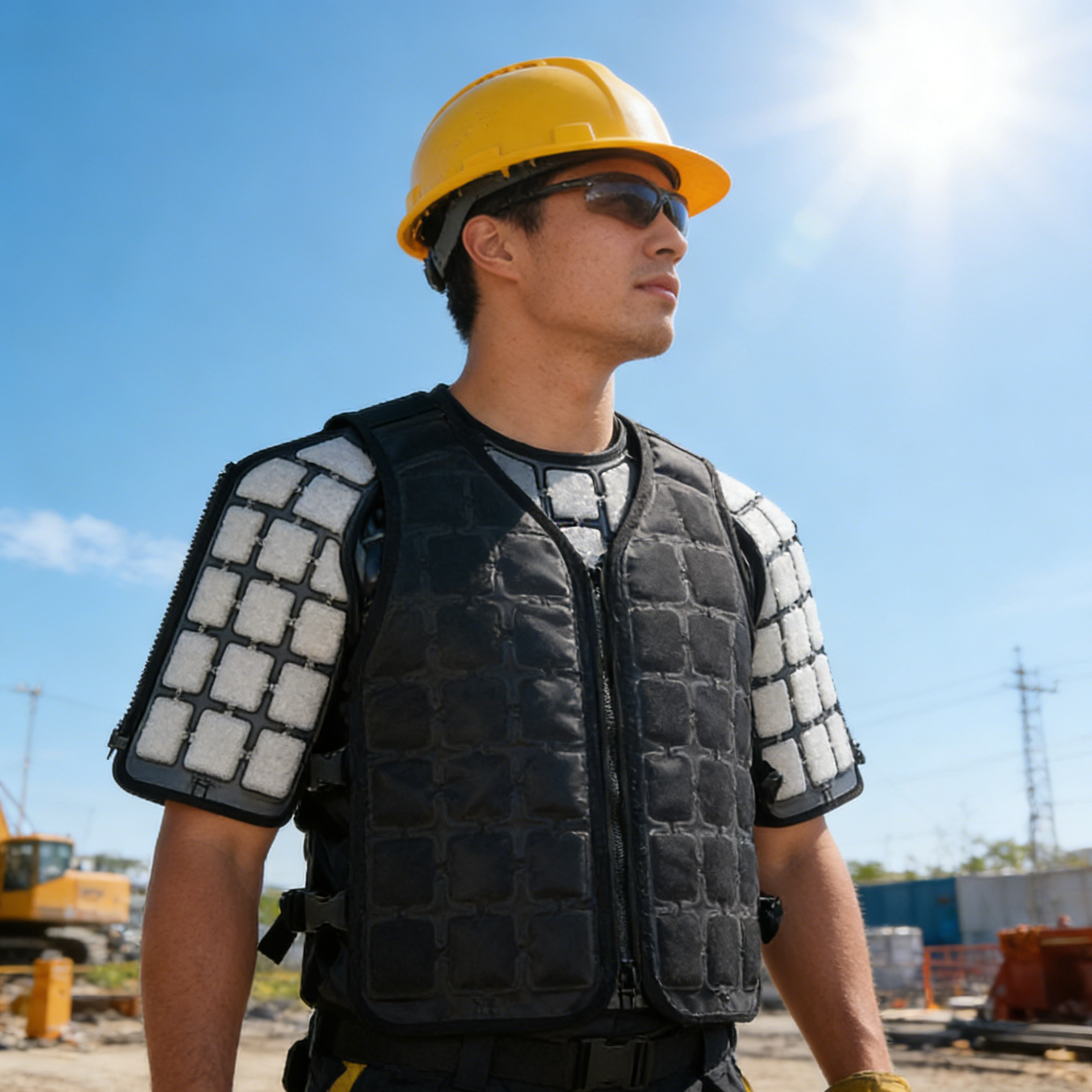
Your core body temperature jumps up fast once PCM runs out during heat exposure. Replace spent vests after 50 minutes of activity during your 10-minute rest break. This swap cuts core temperature rise by 0.57°C. That’s compared to keeping the exhausted PCM on.
Vests after phase change make heat strain worse. Your core temperature rises faster than working without any vest. The liquid PCM adds insulation weight. But it gives you no cooling benefit.
Optimal PCM Temperature Selection
65°F (18°C) PCM works best per NASA thermal management studies. This temperature balances cooling power against tissue damage risk. It stays comfortable for long wear times.
PCM temperatures outside this sweet spot cut performance:
– 50°F (10°C) PCMs: Too cold. Risk of tissue discomfort and reduced wear tolerance.
– 70°F (21°C) PCMs: Not enough temperature difference for good heat absorption in high-heat spots.
Where PCM Technology Excels
Humidity immunity sets PCM vests apart from evaporative systems. PCM cooling works the same in 10% or 90% relative humidity. This makes phase change vests ideal for:
-
Humid outdoor work: Southern U.S. construction, tropical climates
-
Indoor facilities: Warehouses, manufacturing plants without climate control
-
PPE/encapsulated suits: Hazmat, EOD, firefighting gear where airflow gets blocked
PCM performance relies on latent heat absorption. Moisture levels in the air don’t touch the solid-to-liquid transition. Evaporative vests lose 70%+ cooling power above 60% humidity.
Heat Injury Prevention Variables
PCM vests cut heat stress risk. But protection levels change based on:
-
Relative humidity: Higher humidity bumps up baseline heat strain
-
Wind speed: Still air cuts natural body cooling, making PCM more critical
-
PPE coverage: Full-body suits trap more heat, demanding higher PCM capacity
-
Worker heat acclimation: Workers new to heat gain more benefit from PCM cooling
Workers in explosive ordnance disposal suits show clear core temperature drops with PCM vests. The same thermal management gear stops heat exhaustion in construction crews during summer peaks. Your results depend on your specific heat exposure setup.
Real-World Applications: Who Benefits Most from Phase Change Cooling Vests
PCM cooling vests provide proven heat relief in high-risk environments. Workers trapped in heat-generating PPE get help where traditional cooling methods fail.
Explosive Ordnance Disposal and Military Operations
EOD operators wear 38 kg protective suits in 40°C conditions. They face extreme heat stress. PCM vests with 1.12 kg of material at 25°C melting points create real body benefits. Field data shows rectal temperature rise drops by −0.57°C (95% CI: −0.95 to −0.20) compared to no cooling. The Physiological Strain Index (PSI) improves by −2.2 points versus no PCM use.
Military sectors are the main buyers. China’s defense operations lead the market. The 2022 Respirex Koolvest entered service for sealed chemical PPE uses. Four PCM packs cool the torso during hazmat missions.
Healthcare Workers in Full-Body PPE
Nurses managing COVID-19 patients wear sealed protective equipment. Heat builds up fast. Vests using 21°C PCM with 36 inserts lower air temperatures under the PPE. This relief matters during 4-6 hour shifts. PPE insulation creates dangerous heat buildup. Workers report less heat strain. Task performance stays steady.
Hazmat Response and Chemical Handling
Heat-trapping hazmat suits allow only 20 minutes of cooling during active work. PCM packs deliver 59.5 watts of torso cooling. Humans produce 70-870 watts during physical labor. The cooling isn’t enough to match body heat. But it prevents heat exhaustion in the first phase. Teams swap out spent PCM packs during 10-minute rest breaks. This extends protection time.
Construction and Agricultural Workers
The global cooling vest market hit USD 412 million in 2022. It’s growing at 6.5% CAGR through 2028. Construction crews and farm workers in hot climates need heat stress prevention gear. Workers doing moderate-to-heavy labor get longer cooling periods. PCM vests keep skin contact temperatures at 59-65°F for the first 2-3 hours of heat exposure. Core temperature rises fastest during this window.
Conclusion
Phase change cooling vests offer a major advance in body temperature control. They use latent heat absorption to provide steady, reliable cooling. PCM technology gives you 2-4 hours of stable temperature control at your body’s comfort level. No batteries needed. No dripping water. Just freeze the packs and you’re ready to go.
Construction workers face extreme heat. MS patients deal with heat sensitivity. Athletes push their bodies hard. Understanding PCM technology helps you pick the right cooling option. Match the PCM pack size and activation temperature to your activity level. Consider your work environment too.
Want to try science-backed cooling? First, figure out your main need. Do you need medical-grade temperature control? Or do you need tough industrial performance? Check the PCM activation temperature specs. Calculate how long you need cooling based on your typical work periods. Think about recharge time logistics too.
Don’t let heat control your life. PCM technology gives you back your productivity. You get comfort and safety, even in the toughest hot conditions.
Your body needs precise cooling. Not guesswork.
The phase change cooling vest represents the future of heat stress management, and ICE Bear is proud to lead the charge. By understanding how does phase change cooling workand investing in advanced cooling vest technology, you’re not just buying a product—you’re protecting your team’s health, enhancing productivity, and future-proofing your business against rising temperatures.
Whether you need the best cooling vest for construction, a reliable cooling vest for outdoor work, or an industrial cooling vest for harsh environments, ICE Bear’s PCM solutions deliver unmatched performance. Contact us today to learn more about our body cooling vests and join the thousands of companies that trust ICE Bear to keep their teams cool under pressure.