
Every year, non-compliant cooling vests slip through procurement pipelines. Importers find out too late — a customs officer in Rotterdam or Hamburg flags the shipment, and the damage is already done.
The fallout hits fast: detained goods, emergency re-sourcing, and a supplier relationship held together by paperwork that didn’t survive inspection.
Verifying CE marking on a cooling vest isn’t a box you tick after signing the purchase order. It’s the due diligence that protects your market access before a single unit ships.
This guide is for you if you’re:
-
An EU importer sourcing cooling vests from overseas
-
A compliance officer stress-testing a new supplier
-
An exporter preparing to enter the European market for the first time
Inside, you’ll learn how to authenticate certifications, cross-check notified bodies, and spot fraudulent documentation — before it costs you.
Content Framework: How To Verify Cooling Vest Certifications For EU Market Entry
The EU doesn’t care how good your supplier’s brochure looks.
What matters is whether the cooling vest in your shipment connects to a documented compliance chain. That chain runs from the correct PPE category down to the notified body number stamped on the label.
Here’s how that chain breaks down:
-
Regulation (EU) 2016/425 governs all PPE entering the EU market
-
Cooling vests fall under Category III — the highest risk tier. This requires full EU Type-Examination (Module B) plus ongoing conformity (Module C2 or D)
-
Applicable standards include EN 17353 (heat stress protection) and EN 342:2017 (cold environments ≤ −5°C)
-
Every compliant vest must carry a CE mark, a notified body number, and a valid EU Declaration of Conformity
This framework is your baseline. Every verification step in this guide runs through it.
Why EU Cooling Vest Certification Verification Matters Before You Place An Order
Between 40% and 60% of imported PPE entering the EU carries falsified CE marks. That number comes from EU RAPEX alerts spanning 2022 to 2025 — and cooling vests are right in the middle of it.
This isn’t a compliance technicality. It’s a business risk with a real price tag.
In 2023, EU customs seized 15,000 uncertified cooling vests at Rotterdam. The supplier received a €250,000 fine. Every unit was destroyed. The importer lost everything.
The fraud patterns are consistent:
-
Forged notified body numbers — fake references to legitimate bodies like NB 2777 (SATRA)
-
Expired certificates reused — EU type-examination certificates have a maximum 5-year validity
-
Missing EU Declaration of Conformity — no DoC means no legal market access, full stop
The performance gap is real. Uncertified vests fail core temperature reduction tests 32% of the time. A certified vest brings core temp down to 37.5°C. An unverified one? 38.4°C. That gap matters when your workers are in 35°C heat for eight-hour shifts.
Pre-verification cuts supply chain disruption risk by 70%. It also shortens EU buyer approval timelines from 90 days down to 30.
The math is simple. Verify before you order.
Step 1: Identify Which Cooling Vest Category Applies Under PPE Regulation EU 2016/425
Classification determines everything that follows. Get this wrong, and every certificate your supplier hands you becomes worthless — no matter how official it looks.
Regulation (EU) 2016/425 divides PPE into three risk categories. Each one requires a different level of third-party review before a product can enter the EU market.
-
Category I — low risk, minimal hazards. Manufacturers self-certify. No notified body required.
-
Category II — intermediate risk. Requires EU Type-Examination (Module B) plus production conformity assessment (Module C2).
-
Category III — highest risk. Full-body protection against irreversible or fatal harm. Requires Module B plus ongoing quality surveillance (Module D, F, or G).
Most cooling vests used in occupational heat environments fall under Category III. This is true for vests worn alongside encapsulating gear — chemical suits, full-body PPE — where trapped heat creates a life-threatening core temperature risk.
How Cooling Technology Affects Classification
Not every vest lands in the same category. The cooling mechanism matters.
|
Cooling Technology |
Risk Category |
Certification Modules Required |
|---|---|---|
|
PCM (Phase Change Material) with FR fabric |
Category III |
Module B + C2 or D |
|
Compressed Ice (worn with full PPE) |
Category III |
Module B + D/F/G |
|
Evaporative (wet or dry) |
Category II |
Module B + C2 |
|
Air-cooled (mechanical) |
Category II |
Module B + C2 |
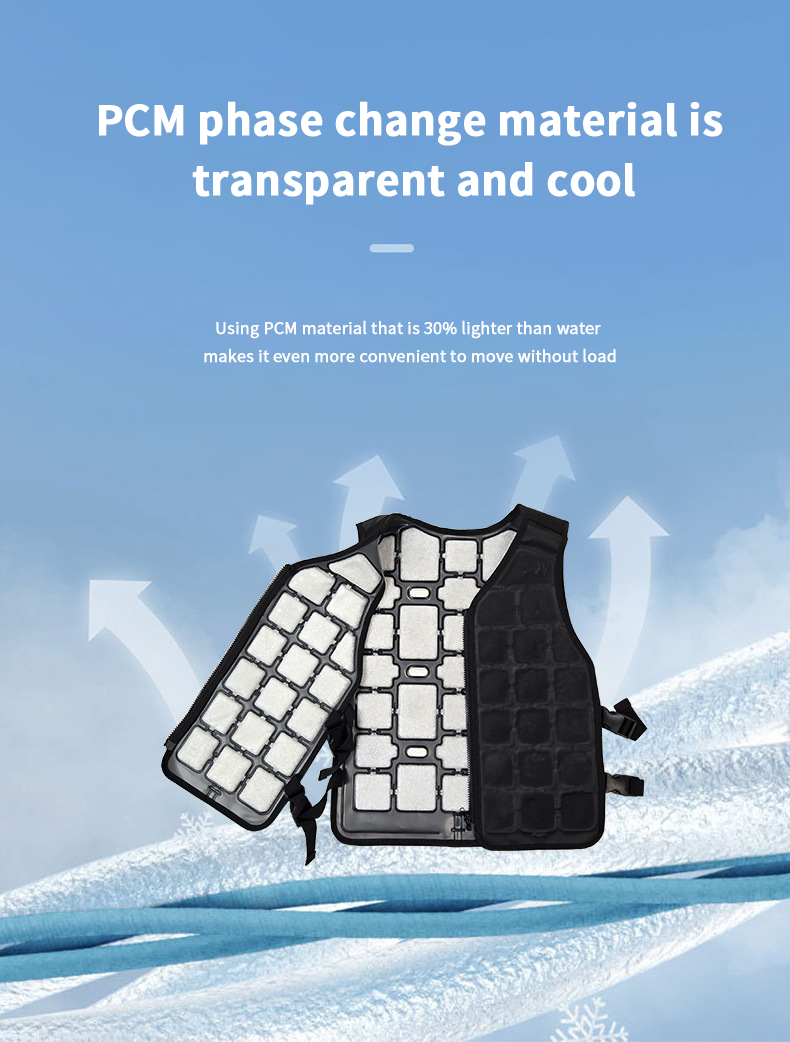
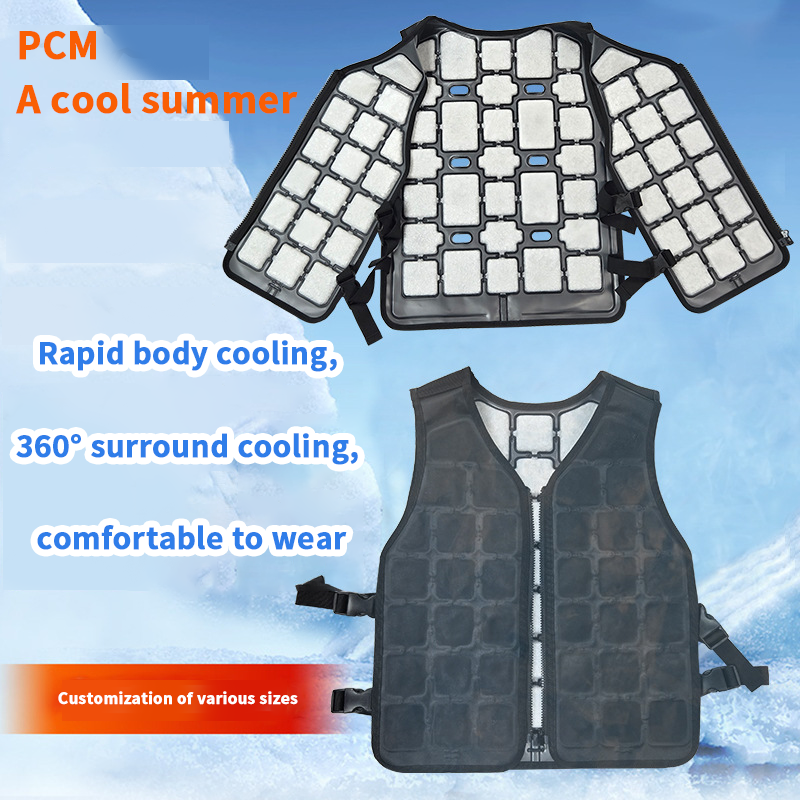
PCM vests — including flame-resistant versions built for industrial use — hold a steady cooling range of 14–18°C for up to four hours. That controlled heat output, combined with full-body heat risk, puts them squarely in Category III. Compressed ice vests carry the same classification under PPE use, even with shorter cooling duration and less stable temperature output.
The Misclassification Red Flag You Cannot Ignore
This is where supplier fraud often starts. A manufacturer drops a Category III vest down to Category II or even Category I. The reason is simple: a lower category means lower certification costs and faster time to market.
Watch for these warning signs:
-
Supplier claims Category I or II for a PCM or ice vest meant for use with chemical or thermal PPE
-
No notified body number appears anywhere on the documentation
-
Certificate references Module C2 alone — with no Module D, F, or G for high-risk surveillance
-
Core temperature stability data (Tc) is missing or looks too clean, with none of the 0.1°C SD variance you’d expect from real lab testing
The risks of accepting a misclassified vest are very real. An invalid CE mark from a downgraded category can bring fines up to €100,000, force a mandatory product recall, and expose you to direct injury liability if a worker suffers heat stroke.
Confirm the correct category for the specific vest type, use case, and PPE environment before you request a single certificate from your supplier. That classification is the filter through which you must read every document you receive.
Step 2: Locate And Cross-Check The Notified Body In The NANDO Database
The notified body number on your supplier’s certificate is either a real authorization or a four-digit lie. NANDO tells you which.
NANDO — the European Commission’s official database of notified bodies — is your primary verification tool. Access it at:
https://webgate.ec.europa.eu/single-market-compliance-space/notified-bodies
How To Run The Search
Two paths work well here.
Option A — Search by NB number:
1. Go to the NANDO homepage
2. Select Free Search
3. Enter the NB number from your supplier’s certificate (e.g., 0123)
4. Hit submit — an active body returns a full profile
Option B — Navigate via PPE Regulation (recommended):
1. Click Legislation in the left menu
2. Select PPE Regulation (EU) 2016/425
3. Browse the list of 111 registered notified bodies
4. Filter by protection category — this cuts the list down to 30–40 relevant bodies
5. Click the NB number to open the full profile
The Cross-Check That Matters Most
Finding the body isn’t enough. Open its Scope of Notification section and match it against your product.
A notified body approved for medical devices (MDR) has no authority to certify a cooling vest under PPE Regulation 2016/425. That certificate is invalid — even if the NB number shows up in the database.
Check that the scope lists personal heat protection or PPE Category II/III descriptors. No mention? Reject the certificate. Full stop.
Five Red Flags To Reject Right Away
|
Signal |
What It Means |
|---|---|
|
NB number returns no results |
Number is fabricated |
|
Status shows Suspended or Withdrawn |
Certificate no longer valid |
|
Address lists a UK office with no EU presence |
Post-Brexit scope may be void |
|
Scope covers other legislation only |
No authority for PPE |
|
No tasks listed under 2016/425 |
Authorization doesn’t extend to cooling vests |
Document What You Find
Don’t just look — record. Take a screenshot of the scope description. Note the NB contact details. Save everything against the purchase file. Scopes change. A body approved today may carry a narrowed scope at your next reorder cycle.
Verify once. Keep a permanent record.
Step 3: Authenticate The CE Certificate — What A Valid Document Must Contain
A CE certificate is a structured legal document. Every field serves a specific purpose. A missing field is not a paperwork error. It’s a compliance failure.
Pull out the certificate your supplier sent you. Check it against this list.
A valid EU Type-Examination certificate under Regulation (EU) 2016/425 must include:
-
Certificate reference number — unique, traceable, non-generic
-
Notified body name and 4-digit number — must match what you found in NANDO in Step 2
-
Official NB stamp and authorized signature — check for security features. A clean laser-printed signature with no seal is a red flag
-
Exact product model or type range — “cooling vest” is not enough. The cert must name the specific model
-
Module type stated — Category III vests require Module B plus Module C2, D, F, or G. Module B alone is not enough
-
Issuance date and expiry — maximum validity is five years. No expiry date means the document cannot be verified
-
Direct reference to Regulation (EU) 2016/425 — the legislative basis must appear by name
Product Certificate vs. QMS Certificate: Know The Difference
Suppliers sometimes hand over a QMS certificate (ISO 13485 or similar) instead of a product certificate. These two documents are not the same thing.
|
Product Certificate |
QMS Certificate |
|
|---|---|---|
|
What it covers |
Specific vest model, test results, module |
Manufacturer’s quality system only |
|
Useful for EU market entry? |
Yes — required |
No — supporting document only |
|
Contains product specs? |
Yes |
No |
A QMS certificate tells you a factory has processes in place. It says nothing about whether that specific vest passed testing.
Contact The Notified Body
Documentation looks borderline? Go to the source.
-
Pull the NB’s contact details from the certificate itself
-
Send them an email. Include the certificate reference number, exact product model, issuance date, and a clear request to confirm validity for import compliance purposes
-
Attach a scanned copy of the certificate plus product label photos
-
Give them 3–10 business days to respond
-
No answer after 14 days? File a complaint through the NANDO contact form
Reject the certificate right away if you spot any of the following:
-
No 4-digit NB number anywhere on the document
-
Product description is too broad — “all models,” “various cooling products”
-
No expiry date or validity period stated
-
Issued by a testing lab, not a notified body
-
Module B listed with no production surveillance module attached
One document that fails this checklist breaks the entire compliance chain. Don’t talk yourself into accepting it. Replace the supplier.
Step 4: Review The Declaration of Conformity (DoC) For Legal Completeness
The CE certificate proves the vest was tested. The Declaration of Conformity proves the manufacturer takes legal responsibility for it. These are two different documents. Both are required. Missing one means losing market access.
A DoC is not a formality. Under Regulation (EU) 2016/425, it’s the manufacturer’s signed, dated, binding statement. It confirms every unit shipped matches the tested product. No DoC means no legal basis for the CE mark on the label — no matter what the certificate says.
What A Complete DoC Must Contain
Pull the document your supplier sent. Go through this list line by line:
-
Manufacturer name and full registered business address — a PO box or city-only entry is not enough
-
EU Authorized Representative (AR) — required if the manufacturer is outside the EU. Name, address, and registration ID must all appear
-
Exact product description — model number, type, materials, and layer composition. “Cooling vest” alone is not a complete product description
-
Specific legislation cited — the DoC must name Regulation (EU) 2016/425 by name, not just a generic EU safety reference
-
Harmonised standards listed by version — check that EN 17353 or EN 342:2017 citations match the version published in the EU Official Journal. An outdated standard version breaks presumption of conformity
-
Notified body name, address, and 4-digit ID — must match the certificate you reviewed in Step 3
-
Issuance date — undated DoCs are invalid. No exceptions
-
Authorized signature with named function — the signatory must be identified by role (e.g., Quality Director). A scanned generic signature with no function listed carries no legal weight
Three Mismatches That Invalidate The Document

Cross-check the DoC against the CE certificate you already verified. These three inconsistencies come up often — and each one breaks the compliance chain:
|
Mismatch Type |
Why It Matters |
|---|---|
|
Model number differs between DoC and certificate |
DoC no longer covers the product being shipped |
|
Harmonised standard version is older than current OJ publication |
Presumption of conformity no longer applies |
|
Signatory not listed as authorized per company records |
Signature has no legal validity |
One mismatch is enough to trigger rejection. Don’t explain it away as a translation error or admin oversight. A document with mismatched fields cannot support market entry. Full stop.
One Final Check Before You File It
Go to eur-lex.europa.eu and verify the harmonised standards cited in the DoC against the EU Official Journal. Standard versions get replaced over time. A DoC citing a withdrawn version of EN 342 — even one that was valid at the time of issue — may no longer provide presumption of conformity at the point of import.
Check the current publication. Note the date. File your screenshot alongside the DoC. That record protects you if a market surveillance authority questions your documentation down the line.
Step 5: Verify Technical File Completeness And Annual Audit Compliance
The CE certificate and DoC are the visible surface. The technical file is everything underneath — and a notified body audits it every single year.
Under Regulation (EU) 2016/425, every Category III cooling vest needs a technical file. The manufacturer must keep this file current across the product’s full lifecycle. Ask your supplier for access to its core components. A supplier who hesitates has something to hide.
A complete technical file must include:
-
Design documentation — drawings, Bill of Materials, material certifications, component specs
-
Risk assessment records — proof of conformity with essential health and safety requirements in Annex II
-
Test reports — lab results showing compliance with EN 17353 or EN 342:2017 by version
-
Manufacturing and QC procedures — production location, quality controls, supply chain details
-
Post-Market Surveillance (PMS) documentation — field data collected over time, incident records, corrective actions
The Annual Audit Requirement
Category III products need ongoing notified body surveillance — not a one-time approval. The notified body runs annual audits against the technical file. Ask your supplier for the most recent audit confirmation date. The last audit was more than 14 months ago? The surveillance cycle may have lapsed.
Ask your supplier these questions:
-
When did the notified body last conduct an audit?
-
Did the technical file pass without deficiency notes?
-
Do all document revisions fall under ISO 13485 Clauses 4.2.4 and 4.2.5?
No audit record? That’s not an administrative gap. That’s a broken compliance chain — treat it the same way you’d treat a fabricated NB number.
Step 6: Confirm EUDAMED Registration And Product Labeling Requirements
EUDAMED is live. The deadlines are real. From 28 May 2026, manufacturers, importers, and authorized representatives must register in the EU database before any device enters the EU market. Your supplier isn’t in the system? Your shipment has no legal ground.
Here’s what to verify:
Check the Actor Module first. Every manufacturer and importer needs a Single Registration Number (SRN). Go to EUDAMED, open the Actor module, and confirm your supplier’s SRN is active. No SRN by 28 May 2026 means no compliant market entry.
Then query the UDI/Device module. Input the cooling vest’s UDI. It holds both a Device Identifier (DI) and a Production Identifier (PI). Confirm the entry exists. Then check the database fields against the physical label. Model name, version, and GMDN codes must all match.
Inspect the physical label against these hard requirements:
-
CE mark height: minimum 5mm
-
NB number in 4-digit format (e.g., 0123)
-
EU Authorized Representative name and full address
-
UDI barcode present and scannable
Skipping this step does not get you a warning letter. Non-compliant products face mandatory withdrawal, recall, and a full market ban. Importers carry joint liability. Fines reach €20 million or 4% of global turnover.
Legacy products placed on the EU market before 28 May 2026 have until 28 November 2026 to register. Don’t wait.
Step 7: Evaluate The EU Authorized Representative (EC REP) Legitimacy
The EC REP on your supplier’s paperwork is either a real legal entity — with an EU address, documented responsibilities, and an active EUDAMED registration — or it’s a name someone typed into a field to patch a compliance gap.
Under Regulation (EU) 2016/425, every non-EU manufacturer must appoint an EU Authorized Representative based in an EU Member State. This isn’t a formality. The EC REP shares legal liability with the manufacturer for non-compliant products. That shared liability means nothing if the representative doesn’t exist.
How To Verify The EC REP Is Real

Run three checks at the same time:
-
EUDAMED SRN search — confirm the EC REP holds an active Single Registration Number
-
Member State Competent Authority — contact the authority in the EC REP’s declared country and request registration confirmation
-
National company registry — match the stated address against Germany’s Handelsregister, France’s INPI, or the relevant national business register
Don’t stop at finding a name in a database. Fraudulent EC REPs follow predictable patterns:
|
Fraud Type |
How To Catch It |
|---|---|
|
Hang-name agent — no real operations |
Request a site visit or direct Competent Authority contact |
|
Dissolved company still listed on DoC |
Cross-check the company registry against the stated address and registration status |
|
Unverifiable address |
Google Maps Street View + postal verification test |
What A Legitimate EC REP Mandate Looks Like
Ask your supplier for the written mandate that names the EC REP. Under MDR/IVDR Article 11, this contract must confirm three things:
-
The EC REP can access the technical file
-
The EC REP can verify PMS and vigilance records
-
The EC REP can hand documentation to authorities on request
No mandate? No legitimate EC REP relationship — no matter what the DoC states.
Common Red Flags: Fraudulent Cooling Vest Certifications That Bypass EU Standards
Fraudulent certification doesn’t announce itself. It shows up looking like the real thing — same format, same terminology, same confident presentation from a supplier you’ve been talking to for weeks.
Here’s what separates a fake from a legitimate document.
Certificate Document Red Flags
These signals live inside the paperwork itself:
-
No 4-digit NB number — every genuine CE certificate under Regulation (EU) 2016/425 carries a 4-digit notified body ID. No number means no valid certificate.
-
Perpetual validity — real EU Type-Examination certificates expire. Five years maximum. A document with no expiry date, or one that claims indefinite validity, is fabricated.
-
Single-page certificates — a legitimate cert comes with technical annexes and test reports attached. One clean page with a logo and a signature? That’s a template, not a compliance document.
-
QR codes that route to fake NB websites — this fraud pattern is growing. Scan the code. A landing page cloned from TÜV or BSI with off-brand visuals is a forgery. Look closely at the branding details.
-
Batch numbers that don’t match the physical product — a cert referencing different lot numbers than the units in your shipment gives zero legal coverage for what you’re importing.
-
Standards cited outside EU harmonisation — a document referencing Chinese GB standards with no EN/ISO alignment to Regulation (EU) 2016/425 has no legal foundation for a CE claim.
Notified Body Red Flags
A name on a certificate means nothing. You need to verify the body behind it.
-
NB number absent from NANDO — no results in the database means the number is invented.
-
Scope doesn’t cover PPE Category II or III — cooling vests as thermal protective equipment require Type-Examination under Module B plus Module C2. An NB approved for electrical equipment cannot certify a cooling vest. The scopes are separate.
-
No physical EU address, no contactable office — some Chinese manufacturers list firms that look like European notified bodies. They are not. A legitimate NB has a verifiable EU address and answers the phone.
Product Label Red Flags
-
CE mark printed below 5mm height, or missing the 4-digit NB number beneath it
-
Claims like “EU Certified” printed on packaging with no DoC reference number visible
-
Performance statements — “cools for 8+ hours” — that appear nowhere in verified test data
-
Chinese GB certification marks printed next to the CE mark with no clear distinction between them
What Real Cases Look Like
These aren’t hypotheticals. EU RAPEX alerts document this pattern across multiple markets:
In 2020 (Germany), a shipment of Chinese cooling vests carried falsified CE marks with no verified notified body. Independent testing showed a 2.2°C core temperature reduction against a claimed 5°C. The risk classification: heat stroke.
In 2021 (France), 15,000 units of heat-protective vests were recalled. The phase-change material melted at 28°C — the standard requires 32–35°C. The EN 14058 certificate had been falsified in full.
One failed data point in any of these areas — NB number, scope, label format, test result — breaks the entire compliance chain. There is no partial compliance under Regulation (EU) 2016/425. The documentation holds, or it doesn’t.
EU Cooling Vest Certification Verification Checklist (Downloadable Reference)
Seven checks. One reference. Use it on every supplier before you sign a purchase order. Print it. File it. Keep it close.
Mandatory Checks — Required For EU Market Placement
-
CE mark present with a valid 4-digit NB number below it
-
Module B + Module C2 or D both confirmed — Module B alone does not pass Category III
-
NB status shows active in NANDO under PPE Regulation 2016/425
-
Technical file is available: design drawings, test reports, risk assessment, DoC
-
DoC lists product ID, manufacturer details, applicable modules, and harmonised standards
-
EUDAMED actor registration confirmed — UDI must match
Recommended Checks — Risk Mitigation Layer
-
OEKO-TEX Standard 100 confirmed for any skin-contact materials
-
MSDS shows latex-free status and no restricted substances
-
Label carries batch number, manufacturer address, and instructions in multiple languages
Official Verification Links
|
Resource |
URL |
|---|---|
|
NANDO Database |
ec.europa.eu/growth/tools-databases/nando |
|
EUDAMED |
ec.europa.eu/tools/eudamed |
|
PPE Guidelines (4th Ed.) |
ec.europa.eu/docsroom/documents/39029 |
One failed item breaks the whole chain. There is no partial pass.
Conclusion
Certifications can be faked. Rubber stamps can be copied. But a legitimate notified body record in NANDO? That’s not easy to fabricate.
The seven-step verification process here isn’t bureaucratic box-checking. It’s your real line of defense. On one side, you get a smooth EU market entry. On the other, a customs seizure that wipes out months of sourcing work. Get the CE marking right. Cross-reference the DoC against PPE Regulation 2016/425. Confirm your supplier’s EC REP is a real, traceable entity. These aren’t optional extras — they’re the foundation.
Your next step is simple: run your current or prospective cooling vest supplier through the NANDO database today. Do it before the next purchase order goes out.
Want to skip the verification process? CoolHeatech’s cooling vests ship with authenticated EU certification documents, ready for your compliance review. Ask us for the full file.