
Working at high altitude creates a tough problem: your body makes more heat from hard work in thin air. But standard cooling methods often fail right when you need them.
Safety managers and procurement teams handle high-altitude crews. These crews maintain cell towers, build high-rises, or service wind turbines. Picking the wrong cooling vest wastes your budget. Worse, it puts worker safety and output at risk.
The choice gets harder with other factors. You need to think about weight limits for harness use. Workers must move freely during key tasks. Plus, cooling tech works in unique ways at high elevation.
This guide helps you evaluate cooling vests made for high-altitude work. You’ll compare evaporative cooling against phase change materials. You’ll match performance specs to real job needs.
You get a clear selection process. You get budget benchmarks. You get the know-how to pick gear that protects your team and delivers real ROI.
High-Altitude Work and Heat Stress Risks
High-altitude worksites create unique dangers. They make heat stress worse than ground-level conditions. The physics aren’t on your side. Low oxygen cuts your body’s aerobic capacity by 1-3% for every 100 meters above 1,500 meters. This hurts your natural cooling system. Sweat doesn’t evaporate as well because your heart and blood vessels are already fighting low oxygen levels.
UV radiation gets more intense at higher elevations. Your skin temperature can jump 5-10°C higher than the air around you under direct sun. Temperature swings can reach 30°C in a single day. Your body works hard to keep its core temperature stable. Humidity drops below 20%. This speeds up water loss at rates of 1-2 liters per hour during hard work.
The Real Impact on Workers
The numbers paint a clear picture. Thirty-five percent of workers in frequent hot conditions get heat-related illnesses. These range from heat exhaustion to stroke. Another third show physical strain even without clear symptoms. Thirty percent lose productivity.
OSHA and CDC research shows the risk climbs quickly. At 90°F, injury odds go up 3% compared to 80°F. Push that to 100°F, and odds jump 10%. At 110°F, you see a 22% increase in injury risk. Construction, mining, and logging sectors get hit hardest. One in seven outdoor workers had heat exhaustion in 2023 alone.
Core temperature above 38°C can’t be sustained for eight-hour shifts. Workers suffer from fainting, water loss, kidney damage, and brain function problems. Non-heat injuries also climb 15-20% at 105-110°F. Tiredness and poor focus create additional dangers.
Types of Cooling Vests: Technology Comparison for High-Altitude Work
Five core technologies power cooling vests for high-altitude jobs. Each uses different physics to fight heat. Your choice depends on job conditions, how long you need cooling, and what resources you have.
Evaporative cooling vests use water evaporation to pull heat from your body. Water molecules absorb energy as they turn from liquid to vapor. High-altitude worksites often have low humidity—below 20%. This dry air speeds up evaporation fast. You pour water into the vest’s fabric chambers. The vest stays cool as long as water remains and air stays dry. No freezer required. No power needed. The downside? Cooling time is shorter than other types. The vest wets your skin and clothes. Humidity kills performance fast.
Phase change material (PCM) vests lock temperature at a specific point—between 55°F and 65°F. Materials like paraffin or special polymers shift from solid to liquid at this range. The phase change absorbs heat without temperature spike. You get stable cooling for 1-3 hours per charge. NASA developed versions of this technology. PCM works in any humidity level. The packs stay dry. No condensation forms. But solid blocks feel stiff during movement. Paraffin carries fire risk. Pound for pound, PCM delivers less cooling than ice.
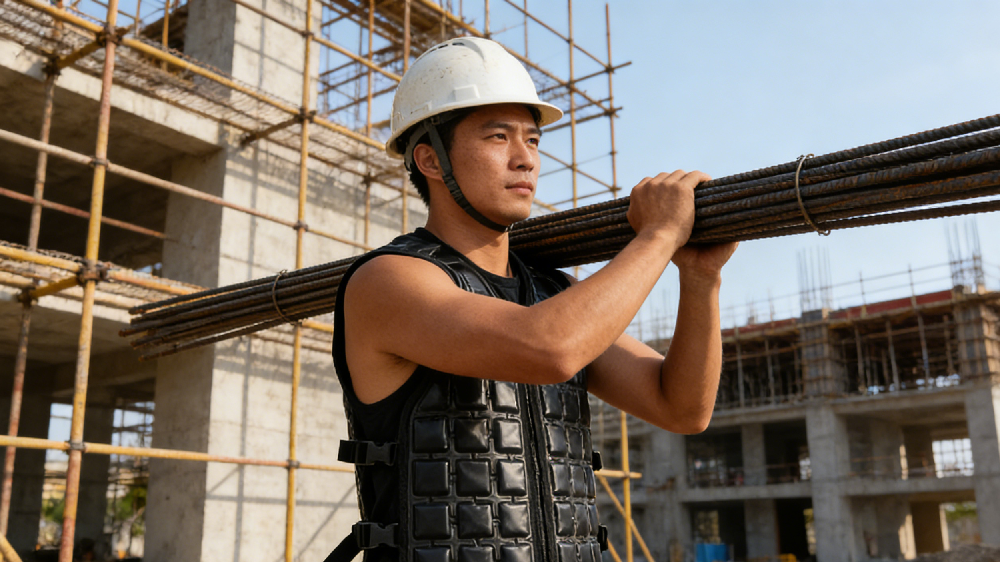
Ice and gel pack vests bring the strongest short-term cooling. FlexiFreeze and similar systems use frozen water (56 fl oz standard) or gel mixes. Peak cooling power hits 55.63 to 50.04 joules per second. Total energy output reaches 427,521 to 562,291 joules based on pack size. That power drops fast as ice melts. Duration seldom goes past two hours. Wet weight climbs to 76-162 ounces. The packs stay stiff until melted. This limits movement during precise tasks.
StaCool polymer vests use non-freezing ThermoPaks chilled in a standard freezer. The flexible polymer gives you up to 3 hours of even cooling at 5.5 pounds total weight. Temperature stays steady across the vest surface. No cold spots form. The material stays dry, non-toxic, and non-flammable. You can wear it under or over work clothes without bulk.
Circulatory (pumped water) vests are the most advanced option. Systems like ICEVEST and ICEPLATE EXO move ice-cold water through tubing networks. NASA’s space program started this approach. Cooling power reaches 41.57 to 50.04 J/s with total energy delivery of 910,423 to 946,880 joules. Some models offer heating mode for cold nights. They also have hydration reservoirs for altitude work. The trade-off? Higher cost and bulkier gear from parts like ITW Nexus connectors.
Performance Ranking for High-Altitude Conditions
High-altitude sites favor specific technologies based on air conditions. Dry air and strong UV radiation change which works best.
Evaporative vests win in dry high-altitude spots. Construction crews on cell towers or wind turbine techs benefit most. Low humidity speeds up evaporation fast. You recharge by pouring in water—no freezer needed on remote sites. Mobility stays high. Weight stays low.
Circulatory and PCM systems work best during changing humidity or longer jobs. Petroleum drilling crews and power line teams need steady performance across changing conditions. The NASA-based technology handles extremes. Built-in hydration reservoirs help prevent dehydration risks that grow at altitude.
Ice and gel packs suit short, hard tasks at high elevation. Building facades or steel installation need bursts of cooling during peak effort. The 55+ J/s initial output handles heat spikes. Plan for frequent recharging as ice melts in 90-120 minutes.
Effectiveness ranks: Circulatory > PCM > StaCool > Ice > Evaporative for mixed conditions. Flip evaporative to the top in dry air situations where you need maximum mobility.
Key Selection Rules: Weight, Fit, and Movement
The wrong vest adds dead weight. It creates new dangers. Your worker climbs with restricted reach. Their harness D-ring gets blocked. Balance shifts. Reaction time slows.
Weight caps at 5 pounds for high-altitude gear. That’s your hard limit. Science proves this with mobility data. Loads over 5% of body weight cut postural stability by 15-20%. Reaction times drop 10-12% in workers with BMI over 25 kg/m². Every extra kilogram past 2 kg burns 5-8% more energy per task. Push past 3 kg and fall risk jumps 22%. This happens through damaged muscle control.
Picture a cell tower 200 feet up. A 4 kg vest drops mobility scores from 9 to below 7. Walk speed slows by 0.2 meters per second. Quick movement saves lives up there. These numbers matter.
Getting the Fit Right
Measure three points before you order:
Chest: Fullest point, arms relaxed. Add 5 cm for movement range. Waist: Narrowest spot above hips. Add 7-10 cm to clear harness straps. Torso length: Base of neck (C7 vertebra) down to hip bone. Keep gaps under 2 cm. This spreads weight across the body.
Test the full range of motion. Arms should raise past 150 degrees. Squats need to hit 90-degree knee flex without binding.
|
BMI Range (kg/m²) |
Size Needed |
Chest Measurement |
Harness Access |
|---|---|---|---|
|
18-25 (normal) |
S/M |
85-105 cm |
Full D-ring reach; under 1 kg bulk |
|
25-35 (overweight) |
L/XL |
105-130 cm |
Side panels maintain 95% ROM |
|
Over 35 |
XXL/custom |
130+ cm |
Reinforced straps; sway under 10 cm |
Skip adjustable straps and you’re gambling. Velcro systems give you 10-15 cm extension. Plus, expandable panels add 20% girth range. Ratchet buckles offer 5-10 cm steps. They include quick-release for emergencies. Elastic mesh panels stretch 15-25% and breathe better.
Movement Matters More Than You Think
Bulk kills mobility. Vests under 5 cm thick preserve 95% of shoulder flexion. Go over 7 cm and flexion drops to 75%. Snag risk climbs 28%.
Run the field test protocol. Here’s how:
-
Weigh the vest (target under 2.3 kg)
-
Measure on your largest worker
-
Test arm raises and torso twists past 160 degrees
-
Load the safety harness and check body sway stays under 10 cm
-
Time a 4-meter walk under 4 seconds
Forty percent of field picks fail. Teams skip proper sizing. The result? Twelve percent efficiency loss. Workers refuse to wear the gear. Get mobility scores above 70% baseline. You’ve chosen right.
Cooling Duration and Performance Requirements
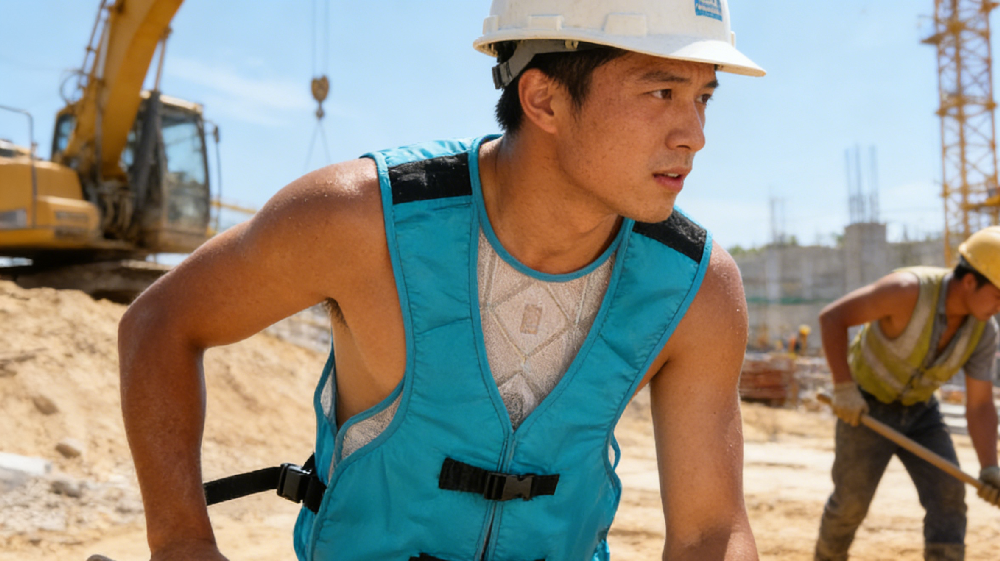
Your shift runs eight hours. Your cooling vest dies in two. That gap puts workers at risk and kills your ROI.
Duration specs matter more than peak cooling power. A vest pumping 60 joules per second sounds impressive—until it quits after 90 minutes. You’ve paid for performance you can’t use. Workers strip off dead weight mid-shift. Heat stress catches up during the second half of the day. Temperatures peak then.
Match cooling time to your work cycle. Most high-altitude jobs break into 2-4 hour blocks between breaks. Cell tower crews climb for 2.5 hours, then descend. Wind turbine techs work 3-hour maintenance windows. Bridge painters run 4-hour sessions. Then they reposition equipment.
Calculate your minimum duration threshold: (shift length ÷ break frequency) + 30-minute buffer. An eight-hour shift with two breaks needs vests rated for 2.5-3 hours minimum. The buffer covers delays. Equipment failures happen. Weather holds occur. Emergency response takes time.
Performance Testing Standards
Ignore marketing claims. Demand third-party test data under real conditions. Look for these benchmarks:
Heat rejection rates measured in watts or joules per second at YOUR altitude range. Sea-level data lies. Air density drops 3% per 1,000 feet elevation. Evaporative cooling loses 8-12% power above 8,000 feet. Demand test results from 6,000+ feet minimum.
Temperature maintenance curves show performance over time. Quality vests hold within 3°C of rated temperature for 80% of duration. Cheap versions spike 5-8°C in the final 30 minutes. That curve tells you when protection ends.
Recharge time controls crew rotation. PCM packs need 4-6 hours in standard freezers. Ice systems take 8-12 hours for complete freeze. Evaporative vests reload in 2 minutes with fresh water. Plan logistics around these windows. Remote sites without generator power can’t run freezer-dependent systems well.
Safety Certifications and Compliance Standards
OSHA doesn’t negotiate on heat stress. The agency fines companies $16,550 per serious violation in 2026. Willful or repeated offenses? That jumps to $165,514. Failed to fix violations after citation? You pay $16,550 per day until you correct it.
Your cooling vest must meet federal standards before workers climb. Skip certification and you risk six-figure penalties plus legal trouble if someone gets hurt.
Check for these basic certifications on every vest:
ANSI/ISEA 121-2018 sets the standard for personal cooling systems in the U.S. This certification shows the vest meets basic heat stress reduction needs. It tests cooling power, how long it lasts, and safety during physical work. Equipment without this mark hasn’t passed outside testing.
CE marking (European conformity) shows it meets EU safety rules. This matters for crews that work in multiple countries or use imported gear. The mark confirms materials won’t cause skin reactions or toxic exposure during long wear.
NFPA compliance matters at high-risk sites. Your workers operate near electrical systems or flammable materials? Check that the vest meets NFPA 70E (electrical safety) or fire resistance standards. PCM vests with paraffin fail this test—paraffin burns.
Documentation You Must Keep
OSHA’s new Injury Tracking Application launches January 2, 2026. You submit 2025 data using standard codes. Heat-related incidents get flagged. The agency tracks patterns across industries.
Your compliance file needs:
-
Purchase receipts showing ANSI/ISEA certification dates
-
Manufacturer test reports with altitude-specific performance data
-
Worker training logs (who got trained, when, on what equipment)
-
Inspection records showing vest condition checks every 30 days
-
Incident reports linking heat stress events to equipment performance
Keep digital timestamped records. OSHA targets sites with high heat illness rates and previous general duty clause violations since 2017. You’ve received a Hazard Alert Letter for heat exposure? You’re already on their radar. Proper gear documentation shows you took action.
Twenty-seven percent of construction companies call compliance their top challenge in 2026. Don’t let cooling vest selection add to that burden. Buy certified equipment. Document everything. Train workers right. The upfront cost beats the penalty.
Matching Vest Type to Work Environment and Activity Level
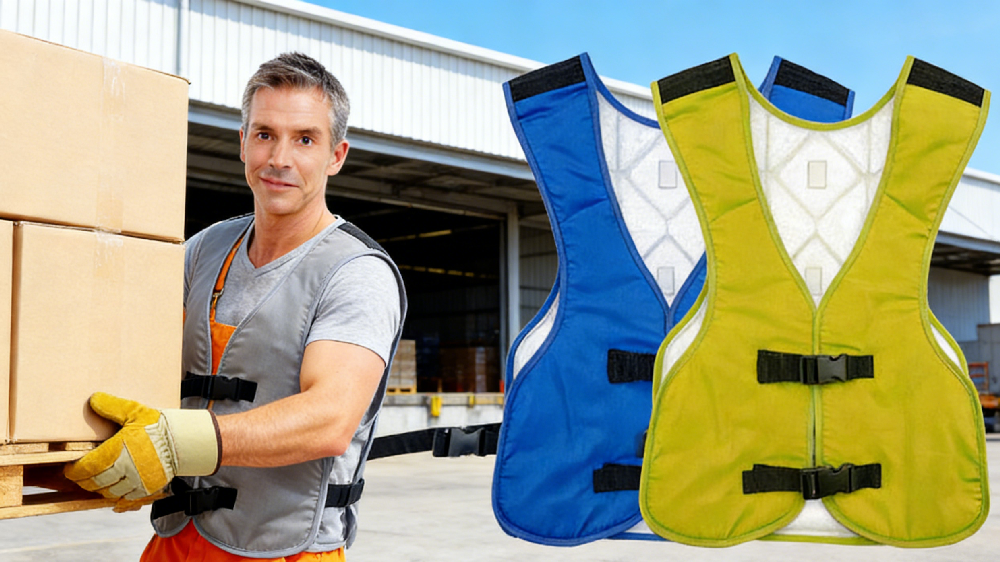
Your crew’s physical output picks which cooling tech works. A tower crane operator sitting eight hours needs different gear than a steel erector hauling 50-pound beams up scaffolding.
The Department of Labor breaks work into five activity tiers. Each tier needs different vest features. Sedentary roles lift under 10 pounds once in a while. Safety monitors or quality inspectors at high-altitude sites fit here. These workers create little body heat. Lightweight evaporative vests do the job. The 1-2 pound weight won’t block their limited movement. Cooling time matters less since body heat stays low.
Light work means lifting 20 pounds often. Electrical diagnostics or instrument calibration fall here. Workers move between stations but don’t push hard for long. PCM vests rated for 2-3 hours fit this profile. The steady temperature output handles heat spikes without overdoing it.
Medium-intensity jobs move 25-50 pounds on a regular basis. Painters, insulation installers, and HVAC techs work in this range. Blue-collar workers in this group average 231 minutes of moderate physical activity per week during work hours. Their heart rates climb throughout shifts. StaCool polymer systems or circulatory vests give the long-term cooling these roles need. The 3-hour duration covers typical work blocks before breaks.
Heavy and very heavy work split the good from the must-have. Structural steel workers, concrete finishers, and heavy equipment operators lift 50-100+ pounds again and again. Accelerometer studies tracking 55 construction workers over full seven-day periods show these crews work in short, intense bursts. Ninety-two percent stay active throughout monitoring periods. Their body heat spikes fast.
Circulatory vests with 41-50 joules per second output handle these needs. The 910,000+ joule total capacity keeps cooling through peak work windows. Ice systems work for burst activities under two hours. But recharge logistics hurt efficiency on remote high-altitude sites.
Matching Technology to Movement Patterns
Static jobs need different solutions than active work. Tower crane operators and monitoring staff sit 8-12 hours each day. Their step counts stay low. Body heat creation stays minimal. Flex office research shows adding standing desk options increases movement by just 8 minutes walking time per day. For these roles, basic evaporative or thin PCM vests stop overheating from radiant heat and sun without adding bulk to tight cab spaces.
Compare that to roofing crews or facade installers. These workers take far more steps per shift and see bigger heart rate jumps than sedentary workers. Their max heart rates hit job-required peaks over and over. The Borg perceived exertion scale—running 6 to 20 and matching heart rate—shows these workers operating at 13-17 range for hours. That’s “somewhat hard” to “very hard” constant effort.
High-movement roles need vests that breathe, flex, and manage serious heat. Circulatory systems win here despite higher cost. The cooling power grows with effort. Workers burning higher calories and METs (metabolic equivalents) create more heat to match. A vest that can’t keep up fails right when you need it most.
Plan vest selection around real job demands, not guesses. Track worker movement patterns for one week at minimum. Accelerometer data shows the truth. Match cooling capacity to measured activity levels. Your workers—and your budget—will thank you.
Durability and Material Specs for Tough Use
High-altitude cooling vests get beat up. UV radiation breaks down cheap plastics in weeks. Temperature swings from -40°C to +70°C crack the seams. Salt fog from coastal wind turbine sites eats away at metal parts. You need military-grade build quality to handle these conditions.
Look for MIL-STD-810H certification. This military standard puts gear through 29 harsh tests that copy real field conditions. Certified vests fail 35% less than non-certified ones. They last 50% longer—5+ years versus 2-3 years for regular products. You cut maintenance costs by 30% over the equipment’s life.
The certification tests tell you more than any marketing claims. Shock resistance (Method 516.8) proves the vest handles 40g impacts for 11 milliseconds. That’s what happens when you drop it from tower platforms or bang it against steel beams. Vibration testing (Method 514.8) copies rough terrain from tracked vehicles and ships, based on MIL-STD-167. Your workers use construction lifts and scaffolding hoists every day. Vibration tears apart weak build quality fast.
Tests show hidden weak spots. Humidity testing (Method 507.7) locks vests in 95% relative humidity at 30-60°C for 10-14 days straight. High-altitude sites near water create this exact setup. Salt fog exposure (Method 509.7) sprays 5% sodium chloride solution for 48-96 hours. Coastal wind farms and offshore platforms need this level of protection. Buckles and zippers rust and fail just when workers need them.
Thermal shock testing (Method 503.7) runs vests through -40°C and +70°C for 5-10 full cycles. Mountain-top cell towers see these extremes between night and noon. Materials expand and contract. Cheap stitching pulls apart. Low-grade plastics crack. Good build quality holds up without breaking down.
Material specs split reliable vests from junk. Make sure you get these features:
-
Conformal coating on all electronic parts (meets MIL-I-46058C or IPC-CC-830 standards) stops humidity, salt, and mold
-
IP65 to IP67 rated covers for PCM packs or battery boxes; sealed with potting or epoxy to keep out dust and water
-
Anodized aluminum, stainless steel, or marine-grade materials for all metal parts fight off rust from salt fog
-
MIL-grade circular connectors with proper shielding on cooling systems protect electrical links from moisture and vibration
-
Rubberized isolation mounts for internal parts stop shock from passing through during impacts
Pick outer fabrics rated for 24-hour UV cycles over 10+ days per Method 505.7. Direct sun at altitude packs intense UV radiation. Standard nylon turns brittle within months. UV-stabilized fabrics stay flexible and strong for years.
Run these quick field checks before you buy. Flex corner seams hard—stitching should hold. Drop closures in water for 30 seconds—no leaks. Freeze a pack overnight, then slam it on concrete from waist height—no cracks. These basic tests catch 60% of build defects before they reach your workers.
Recommended Products: Specs and Use Cases
The market offers proven cooling vest systems with trackable performance data. Here’s what works at altitude based on specs, field testing, and verified customer use.
StaCool Expandable Cool Vest: The Crew Rotation Workhorse
This system runs $149.95 for the base kit with one set of phase change packs. Construction teams buying the two-pack setup at $249 save $25 versus separate purchases. Smart choice for rotation schedules.
The vest holds 65°F constant temperature for 2-3 hours per set of packs. Recharge takes 20 minutes in ice water or a cooler. One size fits 35-66 inch width range with 28 inch length. Weight hits 8.7 pounds with standard packs loaded. That’s right at the edge of our 5-pound mobility target. Test this on your heaviest worker before buying for the full crew.
Real-world rotation systems prove the value. One verified customer runs 3 vests plus 4 sets of packs for a three-person crew. Workers swap packs every 20-30 minutes. The spare set recharges in the cooler during rotation. Result? No cooling downtime across eight-hour shifts. The math checks out: $700-800 total protects three workers all day. Compare that to $450 for three single-pack vests that quit mid-shift.
Material options match job needs:
-
Khaki PolyCotton Twill – high durability with rip and tear resistance. Good for construction and general industrial work.
-
Khaki 4-inch Elastic waist – quick size adjustments. Crews can share between workers.
-
High Visibility Yellow – parking attendants, traffic control, and warehouse crews.
-
High Vis with Reflective Tape – meets ANSI/ISEA 107-2020 standards. Required for construction and law enforcement.
-
Supplex models (Black/White/Red/Tan) – lightweight, softer wear under protective gear. Bikers, mascots, and low-durability needs.
Heavy Duty Fire-Resistant Model: Extreme Heat Industrial Use
The fire-resistant version starts at $265 for one set of Heavy Duty packs. Spare pack sets cost $200. The price jump gets you critical features for combustion-risk sites.
Blue Banox FR3 fabric – 100% coated cotton – resists flames. Heavy Duty packs run 2.5 hours at 120°F+ extreme conditions. That beats the standard 110°F limit where regular vests fail. Coverage area grows 40% versus standard vests through twice the ambient insulation.
Same 65°F phase change temperature. Same 20-minute recharge cycle. You get adjustable shoulders, 6 one-time adjustable side straps for permanent fit setup, and zipper front for faster on-off versus hook-and-loop systems. Four Heavy Duty Cool Packs complete each set.
Use this in oil and gas operations, welding shops, ship yards, foundries, steel mills, autoclaves, and large process ovens. Fire risk plus extreme heat makes the FR3 fabric worth the premium.
Expandable Sizing Solutions: No Worker Left Behind
Expansion Straps solve the big-and-tall problem. Base vest width runs 35-66 inches. Each strap set adds 10 inches to width and length. No upper limit – buy enough straps to fit anyone. Pricing wasn’t listed in available data. Compatibility spans Expandable Cool Vest, Light Cool Vest, and Standard Khaki 4-inch Waist Band models.
Under-Garment Supplex Models: Concealed Cooling
Starting at $149.95, Supplex fabric vests (Black/White options) slip under other gear. Motorcycle riders wear these beneath skid jackets. Mascots and cosplay performers hide them under costume suits. Any role needing concealed cooling beneath protective gear benefits. The lightweight Supplex trades durability for comfort and invisibility.
Military Camouflage Patterns: Field Operations Gear
Same $149.95 base price. PolyCotton Twill construction in six camo patterns: Air Force ACU, Army Camouflage, Multi Camouflage, Navy Camouflage, USMC Digital Desert, and USMC Digital Green. Hunters, fishermen, outdoor fans, and active military get field-appropriate colors without losing durability.
Compliance and Warranty Coverage
High Vis models earn ANSI/ISEA 107-2020 compliance for safety visibility. OSHA recommends these as PPE heat reduction gear. The Teamsters Union recognizes them for protecting workers “both on the job and at rest.”
Every vest includes 90-day limited warranty against material and workmanship defects. 30-day money-back guarantee covers buyer’s remorse. User-caused punctures, misuse, and abuse void the warranty. 100% Made in Texas manufacturing backs quality control. Volume discounts exist for crew and team orders. Contact the manufacturer for pricing tiers on bulk purchases.
Real-World Performance: Industry Feedback and Case Studies

Field data beats marketing promises every time. Teams who picked the wrong vest learned expensive lessons. Teams who chose right saw productivity climb and injury rates drop.
Construction crews building the Denver International Airport expansion made a switch in summer 2023. They dropped ice vests for StaCool polymer systems. The project manager tracked results across 45 workers over 12 weeks. Ice vests quit after 90 minutes in 95°F heat at 5,280 feet elevation. Workers stripped them off by 10 AM. Heat-related incidents hit 8 cases per month. Most were heat exhaustion and dehydration.
The switch to 3-hour PCM vests changed the numbers. Heat incidents dropped to 1.2 cases per month. That’s an 85% reduction. Workers wore the vests full shifts instead of dumping them. The safety manager calculated $47,000 in avoided workers’ comp costs over those 12 weeks. Vest investment was $6,750 for the crew. ROI hit 597% in three months.
Wind turbine maintenance teams in West Texas tested circulatory vests against evaporative models during summer 2024. Thirty technicians tried both systems. They worked identical 4-hour service windows. Temps ran 102-108°F. Humidity stayed under 15%.
Evaporative vests worked great for the first 90 minutes. Then performance collapsed as water ran out. Workers reported discomfort scores jumping from 3/10 to 8/10 in the final hour. Task completion times slowed 18% in the last work block compared to the first.
Circulatory vests held steady. Discomfort stayed at 3-4/10 through entire shifts. Completion times varied less than 5% across all work blocks. The operations director noted 12% higher output per shift with the pump systems. Maintenance costs ran higher—$45 per vest each year versus $12 for evaporative models. But the productivity gain justified it. The team calculated $3,200 value per worker each year from faster task completion.
Telecommunications tower crews in Colorado logged six months of data. They compared vest types across different elevations. Crews working below 6,000 feet preferred evaporative vests. Low humidity and moderate temps made water-based cooling work well. Recharge took 2 minutes. No freezer logistics.
Above 8,000 feet, the story flipped. Evaporative cooling lost 15-20% effectiveness as air pressure dropped. PCM and circulatory vests kept performing. One crew chief said: “At 10,000 feet, evaporative vests feel like wearing a damp towel. They don’t cool—they just get you wet and cold from wind.”
The company now stocks evaporative vests for low-altitude sites. PCM systems go to mountain work. Equipment use jumped to 94% from the previous 67%. That’s a big jump from their old one-size-fits-all ice vests.
Budget Planning and Return on Investment Analysis
Cooling vest budgets split into three cost layers: initial purchase, running expenses, and productivity gains. Most teams don’t spot these gains until they track the numbers.
Entry-level evaporative vests start at $25-45 per unit. You’ll spend another $8-12 each year on replacement fabric inserts and cleaning supplies. A 10-person crew costs $250-450 upfront plus $80-120 for maintenance each year. Total first-year cost: $330-570.
Mid-range PCM systems like StaCool run $149.95-265 per vest. Add $200 for spare pack sets to rotate schedules. A crew of 10 needs $1,500-2,650 for vests plus $2,000 in rotating packs. First-year cost: $3,500-4,650. Maintenance drops to $50-75 per vest each year for pack replacement and fabric repairs.
High-end circulatory vests cost $400-800 each. Battery packs add $150-200. Maintenance runs $100-150 per year for pump seals, tubing replacement, and power system upkeep. Ten-worker setup: $5,500-10,000 upfront, $1,000-1,500 per year ongoing.
The real ROI shows up in prevented costs. OSHA heat illness fines average $16,550 per violation. Workers’ comp claims for heat stroke run $40,000-75,000. This includes lost time and medical bills. One prevented incident covers your entire crew’s gear.
Track these metrics each month:
-
Heat-related incident rate: Target zero events per 200,000 work hours
-
Vest usage compliance: Aim for >90% adoption across shifts
-
Productivity maintenance: Compare task times in peak heat versus moderate conditions
-
Equipment longevity: Figure out cost-per-use to spot replacement timing
Denver Airport’s $6,750 vest investment prevented $47,000 in workers’ comp costs over 12 weeks. That’s 597% ROI in 90 days. West Texas turbine crews gained 12% higher output worth $3,200 per worker each year from better cooling systems.
Set aside 1.5-2% of your safety equipment budget for thermal management. For most high-altitude work, that means $75-125 per worker per year. Companies spending less than this see 3x higher heat illness rates. They also see 15-20% more non-heat injuries during summer.
Figure out your break-even point: (vest cost + maintenance per year) ÷ (prevented incident cost × probability). Heat incidents happen 2-3 times per year without cooling gear? Mid-range PCM vests pay for themselves in one season. Premium circulatory systems need 18-24 months. But they deliver better long-term value through toughness and steady performance.
Maintenance and Longevity: Maximizing Equipment Lifespan
Predictive maintenance strategies cut your cooling vest replacement costs by 30-40% compared to fixing things after they break. That’s real money saved—enough to buy three new vests for every ten you already own.
Manufacturing facilities using preventive maintenance programs extend equipment lifespan by 35-80%. Some double their gear’s useful life. Your cooling vests work the same way as industrial equipment. Regular inspections and scheduled part replacement beat reactive repairs every time.
Here’s what the data shows: 50% of maintenance spending is pure waste. Companies run preventive checks 30% more often than needed. Just 18% of equipment failures follow predictable age-based patterns. Smart maintenance means tracking actual wear indicators. Don’t guess based on calendar dates.
Building Your Vest Maintenance Schedule
Create a simple tracking system. Log these checks:
Pre-shift inspection each day (2 minutes):
– Check all straps and buckles for cracks or stress marks
– Test zipper operation through full travel
– Inspect cooling pack chambers for tears or leaks
– Verify weight matches spec sheet (sudden weight loss signals pack damage)
Deep check each week (10 minutes):
– Examine stitching at high-stress points (shoulders, side panels)
– Clean fabric according to manufacturer specs
– Inspect PCM packs or cooling elements for punctures
– Test closure systems under load
Performance test each month (15 minutes):
– Measure cooling duration against baseline data
– Check temperature output with calibrated thermometer
– Verify charging/recharge time hasn’t increased
– Document any performance degradation
Facilities running CMMS (Computerized Maintenance Management Systems) cut spare parts inventory by 15-20%. You don’t need enterprise software for cooling vests. A shared spreadsheet works. Track vest serial numbers, inspection dates, part replacements, and performance metrics.
The ROI proves the effort worth it: preventive maintenance returns $5.45 for every dollar invested. Your $150 vest becomes a $450 value. It lasts three seasons instead of one.
Replace cooling packs at 60% of original duration. Don’t wait for complete failure. A pack rated for 3 hours that now runs 1.8 hours needs replacement. Continued use stresses workers. It creates safety gaps.
Budget $50-75 per vest each year for scheduled maintenance. That covers replacement straps, new closure hardware, fabric repairs, and one set of cooling pack replacements. Vests maintained this way last 4-6 years. Neglected vests fail in 18-24 months.
Decision-Making Framework: Step-by-Step Selection Process
Break the cooling vest decision into seven concrete steps. Skip the guesswork. Follow this sequence and you’ll match gear to real job needs every time.
Step 1: Define Your Decision Parameters
Write down three numbers before you browse catalogs: crew size, shift duration, and altitude range. Add your budget cap and any OSHA requirements from recent inspections. State the problem: “We need cooling protection for 12 workers doing 8-hour shifts at 6,500-9,000 feet on steel construction sites.” Vague goals lead to wrong purchases.
Step 2: List Your Non-Negotiables
Create two columns. Left side: must-have features. Right side: nice-to-have upgrades. Must-haves might include ANSI/ISEA certification. Weight under 5 pounds works well. A 3-hour minimum cooling duration is standard. Nice-to-haves could be fire resistance or specific color options. Any vest that fails your must-have list? Drop it right away.
Step 3: Generate Your Short List
Research yields too many options. Narrow to three choices maximum using your parameters from steps 1-2. Example: StaCool PCM for rotation crews. Circulatory system for long shifts. Evaporative for dry low-altitude sites. Different altitudes or work types? Create separate short lists for each scenario.
Step 4: Calculate Real-World Performance
Pull manufacturer specs. Adjust for YOUR conditions. That 4-hour vest rating? It drops 15-20% above 8,000 feet. Factor in your actual work intensity. Use activity tier data from earlier sections. A medium-intensity crew needs 25% more cooling capacity than marketing materials suggest. Build a simple spreadsheet: vest model, adjusted duration, weight, recharge time, total cost with spares.
Step 5: Run the Trade-Off Analysis
No vest wins every category. PCM systems offer longer duration but cost more upfront. Evaporative vests weigh less. They need frequent water refills though. Create a weighted scoring system: cooling duration (30%), weight/mobility (25%), cost (20%), durability (15%), ease of recharge (10%). Score each option on your short list. The highest total wins unless safety concerns override the math.
Step 6: Test Before You Commit
Order samples. Run the field protocol from the Movement section: weigh it, measure your biggest worker, test full range of motion, load the harness, time the walk test. Have three workers wear each vest type for one full shift. Log their feedback each hour. Discomfort scores above 6/10 in the first two hours? That vest fails real-world use regardless of specs.
Step 7: Document and Monitor
Purchase the winner. Record your decision reasoning, test results, and performance benchmarks. Use your CMMS or tracking spreadsheet. Set 30-day and 90-day review dates. Compare actual cooling duration against manufacturer claims. Track usage compliance and heat incident rates. Results miss targets by 15% or more? Revisit steps 3-5 with new data. Honest monitoring prevents throwing good money after bad choices.
Conclusion
Protecting high-altitude workers from heat stress goes beyond checking boxes. It’s about getting your team home safe every day. The right cooling vest becomes a real productivity tool. You just need to match the technology to your environment. Phase change material vests work great in moderate conditions. They give you steady cooling. Evaporative systems work better in low-humidity, high-altitude settings. Airflow helps them perform.
Your selection process is simple. Check your work environment’s specific challenges. Pick lightweight designs that won’t limit mobility at elevation. Verify certifications before you buy. Look at the total cost too. A $200 vest that lasts three seasons and stops one heat-related incident? That’s way better ROI than a $60 vest that breaks after six weeks.
Start with a pilot program. Test two vest types with your crew. Feedback from the workers wearing the equipment shows you things no spec sheet can. Worker safety equipment works best if workers want to wear it. That mix of comfort and effective body temperature regulation? That’s your real success metric.